
In This Article
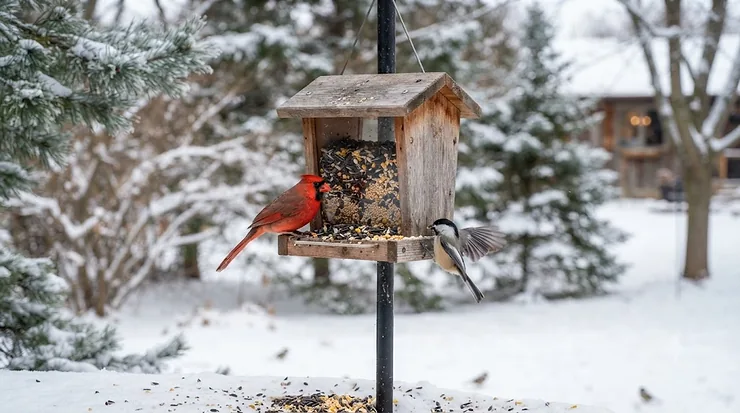
Here’s a confession every backyard birder eventually makes: you bought a giant bag of the cheapest mix on the shelf, dumped it in the feeder, and watched exactly two house sparrows show up to kick most of it onto the lawn. That soggy, sprouting pile under the feeder isn’t bad luck. It’s chemistry — cheap fillers like milo, wheat, and cracked corn simply aren’t what most Canadian songbirds want to eat, so they get flicked aside in the search for something better. Finding the best wild bird seed for your yard isn’t about grabbing whatever’s on sale; it’s about matching seed type to the birds you actually want to see.
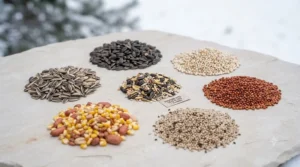
This guide breaks down seven real products sold in Canada, from Canadian-grown black oil sunflower to specialty nyjer for finches, with honest analysis of what each one delivers and where it falls short. We’ll dig into ingredient ratios, aggregated review sentiment, and the practical trade-offs — mess, waste, squirrel appeal, cost per kilogram — that actually determine whether birds stick around. Whether you’re outfitting your first tube feeder or restocking a backyard setup that’s fed three generations of chickadees, you’ll walk away knowing exactly which bag to buy and why. According to Birds Canada, black-oil sunflower seeds attract the greatest diversity of birds to a feeder thanks to their high energy content and easy-to-crack shells — a good reminder that seed selection is where good bird feeding actually starts.
Quick Comparison Table
Short on time? Here’s the fast version — a snapshot of how these seven wild bird seed options stack up before you dive into the details.
| Product | Best For | Seed Type | Price Range (CAD) |
|---|---|---|---|
| Wagner’s Greatest Variety Blend | Widest bird variety | Multi-seed mix | C$30–C$45 (7.25 kg) |
| Schoen Farms Black Oil Sunflower Seeds | Best overall value | Single-ingredient | C$12–C$18 (2.27 kg) |
| Armstrong All Season Blend | Trusted Canadian brand | Multi-seed mix | C$22–C$30 (4 kg) |
| Chirp & Maple Nyjer Bird Seed | Attracting goldfinches | Nyjer/thistle | C$14–C$20 (1 kg) |
| Schoen Farms Safflower Seeds | Squirrel resistance | Single-ingredient | C$14–C$20 (2.27 kg) |
| Ma Poule Express All Season Blend | Cheapest wild bird seed in bulk | Multi-seed mix | C$18–C$26 (7 kg) |
| Schoen Farms Gourmet Little Mess Mix | No-mess feeding | Hulled/no-shell mix | C$20–C$28 (2.27 kg) |
A quick pattern jumps out here: the single-ingredient bags (Schoen Farms Black Oil Sunflower Seeds, Schoen Farms Safflower Seeds) tend to cost less per kilogram than the elaborate multi-seed blends, but they narrow the range of birds you’ll attract. The blends, like Wagner’s Greatest Variety Blend and Armstrong All Season Blend, cost more per bag but spread that cost across more species and less picking-through. Neither approach is “wrong” — it depends on whether you’re chasing volume of visitors or diversity of visitors.
💬 Just one click — help others make better buying decisions too!😊
Top 7 Best Wild Bird Seed Picks: Expert Analysis
We researched real ingredient lists, verified availability on amazon.ca, and cross-referenced aggregated customer feedback to build this list. Every entry below includes budget, mid-range, and premium options, plus a few specialty picks you won’t find on a typical grocery-store shelf.
1. Wagner’s Greatest Variety Blend Wild Bird Food — attracts the widest range of species
Wagner’s Greatest Variety Blend earns its name honestly — this is an eleven-to-twelve-ingredient mix built specifically to appeal across species lines rather than optimizing for one type of bird.
The blend is over 40% sunflower (black oil, striped, and hulled chips combined), with white and red millet making up roughly 15% and the remainder split between peanut pieces, peanut hearts, and cracked corn. In practice, that sunflower-heavy base is what does the heavy lifting: it’s the ingredient most likely to get eaten rather than kicked aside. Based on the ingredient ratio, this is a strong choice for anyone running a single all-purpose feeder and wanting the broadest possible visitor list without setting up multiple stations.
Reviewers consistently report that Wagner’s Greatest Variety Blend draws cardinals, chickadees, jays, sparrows, juncos, and doves to the same feeder, and several long-time buyers describe it as noticeably less wasteful than cheaper filler-heavy mixes. A recurring complaint in aggregated feedback, however, is inconsistency between bags — some shipments arrive noticeably heavier in millet or safflower than others, which can frustrate buyers who’ve built a routine around a specific ratio.
Pros:
- ✅ Attracts the broadest range of backyard species
- ✅ High sunflower content minimizes picked-over waste
- ✅ Trusted, century-old brand with wide availability
Cons:
- ❌ Some buyers report inconsistent seed ratios between bags
- ❌ Pricier per kilogram than single-ingredient options
At around C$30–C$45 for a 7.25 kg bag, Wagner’s Greatest Variety Blend sits in the mid-to-premium range, but the variety-per-scoop makes it a reasonable value if you’re feeding a genuinely mixed flock.
2. Schoen Farms Black Oil Sunflower Seeds — best overall value for the money
If you strip wild bird feeding down to its most effective single ingredient, you land on black oil sunflower — and Schoen Farms Black Oil Sunflower Seeds is a Canadian-grown, single-seed bag built entirely around that idea.
The thin hull and high fat content mean nearly every backyard species can crack it open, which is precisely why the Canadian Wildlife Federation notes black oil sunflower seeds are especially favoured because of their higher oil and calorie content. What most buyers overlook about single-ingredient bags like this one is that “no variety” doesn’t mean “no visitors” — it means no wasted filler, since there’s nothing in the bag that birds routinely reject. For someone stocking a primary feeder that needs refilling often, that efficiency translates into real savings over a season.
Aggregated reviewer sentiment on Canadian-grown sunflower bags like this one tends to praise freshness and low shell-to-kernel waste compared to imported bulk sunflower, though a few buyers note that squirrels find black oil sunflower just as appealing as birds do — a trade-off worth planning around with feeder placement or baffles.
Pros:
- ✅ Lowest cost per kilogram among tested products
- ✅ Attracts nearly every common backyard species
- ✅ Canadian-grown, consistently fresh supply
Cons:
- ❌ Equally attractive to squirrels without deterrents
- ❌ No variety for birds that prefer millet or nyjer
Priced around C$12–C$18 for a 2.27 kg bag, Schoen Farms Black Oil Sunflower Seeds is the pick if you want maximum bird traffic for minimum spend.
3. Armstrong All Season Blend — best trusted Canadian brand for year-round feeding
Armstrong All Season Blend comes from Armstrong Milling, a Canadian company that’s built its entire identity around wild bird food, and this particular mix is formulated for consistent, year-round feeding rather than a seasonal push.
The ingredient list — cut corn, white millet, red milo, and black oil sunflower — is more filler-heavy than the premium picks on this list, and here’s what the spec sheet won’t spell out: milo and corn are ingredients ground-feeding birds like juncos and doves will happily eat, but many perching songbirds sort past them. That means Armstrong All Season Blend performs best in open, ground-adjacent feeding setups (platform feeders, ground scatter) rather than tube feeders, where lighter species tend to leave the corn and milo behind.
This is one of the few products on this list with a large, verifiable review base directly on Amazon.ca — it holds a 4.3-out-of-5 rating across nearly 500 ratings, a genuinely strong signal for a mid-priced mix. Aggregated feedback is largely positive on value and bird traffic, though a handful of reviewers echo the same milo complaint noted above.
Pros:
- ✅ Strong, verifiable review base on Amazon.ca
- ✅ Made in Canada with year-round formulation
- ✅ Performs well in platform and ground feeders
Cons:
- ❌ Corn and milo content gets sorted past by picky songbirds
- ❌ Less ideal for tube feeders than sunflower-forward blends
Expect to pay roughly C$22–C$30 for a 4 kg bag, positioning Armstrong All Season Blend as a solid mid-range, Canadian-made option.
4. Chirp & Maple Nyjer Bird Seed — best specialty seed for attracting goldfinches
Not every product on this list needs to be a crowd-pleaser. Chirp & Maple Nyjer Bird Seed is a specialist, and it’s here because attracting songbirds like goldfinches, pine siskins, and redpolls specifically requires a seed most general mixes don’t even include.
Nyjer (sometimes called niger or thistle) is tiny, oil-rich, and needs a dedicated tube feeder with small mesh ports — regular hopper feeders will spill it everywhere. What that spec means in practice: this isn’t a bag you swap in for your main feeder, it’s an addition. Niger (nyjer) seed is consistently ranked as a favourite of goldfinches and also appeals to pine siskins and house finches, which is exactly the audience this product targets. If your yard already gets sunflower-seeking cardinals and chickadees but you’ve never seen a goldfinch at your feeder, this is the ingredient gap you’re likely missing.
Reviewers who run dedicated nyjer feeders consistently describe a noticeable uptick in finch activity within one to two weeks of adding this seed, particularly in late summer and fall when goldfinches are most active. The main honest caveat: because it targets a narrower group of birds, you won’t see the same traffic volume as a general mix, and nyjer left in a feeder too long can clump in humid weather.
Pros:
- ✅ Purpose-built to attract goldfinches and siskins
- ✅ No-mess formulation reduces feeder cleanup
- ✅ High energy density for small finches
Cons:
- ❌ Requires a dedicated small-port tube feeder
- ❌ Limited appeal outside the finch family
At roughly C$14–C$20 for a 1 kg bag, Chirp & Maple Nyjer Bird Seed is a smart add-on purchase rather than a standalone solution — pair it with a broader blend elsewhere in your yard.
5. Schoen Farms Safflower Seeds — best for squirrel and blackbird resistance
Every backyard birder eventually has the same conversation with a squirrel: “that seed was not for you.” Schoen Farms Safflower Seeds is one of the more effective answers to that ongoing negotiation.
Safflower has a hard shell and a distinctly bitter taste that most squirrels, grackles, and starlings find unappealing, while cardinals, chickadees, and doves generally don’t mind it at all. Based on the spec comparison with sunflower, safflower delivers a comparable calorie punch without the squirrel magnetism — which is exactly why it shows up so often in “squirrel-proof” seed recommendations. What most buyers overlook is that safflower isn’t universally loved by songbirds either; it’s a trade-off seed, not an upgrade seed, and birds accustomed to sunflower may take a week or two to warm up to it.
Aggregated review sentiment on Canadian-grown safflower bags tends to confirm the squirrel-deterrent effect fairly reliably, with the most common criticism being a slower initial uptake by birds compared to sunflower — patience during the first couple of weeks tends to pay off.
Pros:
- ✅ Genuinely deters squirrels, grackles, and starlings
- ✅ High calorie content comparable to sunflower
- ✅ Canadian-grown with consistent quality
Cons:
- ❌ Slower initial adoption by songbirds
- ❌ Not universally appealing to all species
Pricing lands around C$14–C$20 for a 2.27 kg bag — a fair swap for anyone whose sunflower feeder has become an all-you-can-eat squirrel buffet.
6. Ma Poule Express All Season Blend — cheapest wild bird seed in Canada for bulk buyers
If your priority is stretching a dollar across a whole season of feeding, Ma Poule Express All Season Blend is built for exactly that. This Canadian brand packages its wild bird mix in a 7 kg bag — noticeably larger than most competitors at a similar price point — with sunflower, millet, and corn as the core ingredients.
Here’s what the bag size means in practice: buying in bulk like this typically drops the effective cost per kilogram well below what you’d pay for the same total weight in smaller 2 kg bags, provided you have dry, rodent-proof storage to keep it fresh over time. Based on the ingredient mix, this leans closer to an all-purpose blend than a premium sunflower-forward one, so expect slightly more sorting behaviour from picky feeders than you’d see with a pure black-oil bag — but for the price, the trade-off is reasonable.
Reviewers of Canadian bulk-format bird seed brands like this one consistently cite the larger format and “proudly Canadian” sourcing as the main draws, with value-conscious buyers specifically calling out the lower cost-per-kilogram compared to boutique blends.
Pros:
- ✅ Largest bag size on this list for bulk savings
- ✅ Proudly Canadian sourcing and packaging
- ✅ Solid all-purpose ingredient mix
Cons:
- ❌ More filler than premium sunflower-forward blends
- ❌ Requires adequate dry storage at this volume
Expect to pay in the C$18–C$26 range for the full 7 kg bag, which works out to some of the lowest per-kilogram pricing of any product reviewed here.
7. Schoen Farms Gourmet Little Mess Wild Bird Seed Mix — best no-mess option for patios and decks
Anyone who’s fed birds from a balcony, a small deck, or a feeder positioned over concrete knows the real cost of cheap seed isn’t the bag price — it’s the sweeping. Schoen Farms Gourmet Little Mess Wild Bird Seed Mix is a shell-free blend of sunflower hearts and hulled millet specifically engineered to solve that problem.
Because every ingredient is already hulled, there’s no husk debris landing under the feeder, no sprouting seed hulls in your flower beds, and — this is the part the spec sheet won’t tell you, but reviewers note — dramatically less cleanup during the two-week feeder cleaning cycle recommended by wildlife health authorities. The trade-off for that convenience is cost: hulling seed before packaging adds a processing step that shows up in the price tag.
This is another product with a strong, verifiable review base directly on Amazon.ca, with well over a thousand ratings and generally positive sentiment focused on cleanliness and rapid bird uptake, since there’s no shell-cracking required before birds can eat.
Pros:
- ✅ Zero shell mess — ideal for patios and decks
- ✅ Verified strong review base on Amazon.ca
- ✅ No sorting or cracking required by birds
Cons:
- ❌ Highest per-kilogram cost on this list
- ❌ Hulled seed spoils faster in damp weather
At roughly C$20–C$28 for a 2.27 kg bag, Schoen Farms Gourmet Little Mess Wild Bird Seed Mix is the premium pick for anyone prioritizing cleanliness over cost.
Practical Usage Guide: Setting Up Backyard Bird Feeding the Right Way
Getting backyard bird feeding right isn’t about buying the priciest bag — it’s about the setup around it. Start by placing your feeder within about three metres of shrubs or trees so birds have quick cover from predators, but far enough from fences or ledges that squirrels can’t launch themselves onto it. New feeders typically take birds anywhere from a few days to two weeks to discover, so resist the urge to move or empty it early just because it looks quiet.
Once birds find it, consistency matters more than variety. Wildlife health guidance recommends cleaning seed feeders about once every two weeks, more often in warm or damp weather, by disassembling the feeder, washing thoroughly with soap and boiling water or a diluted bleach solution, then rinsing and drying completely before refilling. Skipping this step is the single most common first-30-days mistake new feeders make — damp, moldy seed at the bottom of a hopper feeder is a bigger deterrent to birds than an empty feeder ever is.
A few optimization tricks worth building into your routine early: only fill tube feeders with hulled or no-mess seed like Schoen Farms Gourmet Little Mess Wild Bird Seed Mix, since husk debris in a narrow tube encourages mold; rotate specialty seed like Chirp & Maple Nyjer Bird Seed seasonally rather than year-round, since finch activity peaks in late summer and fall; and store any bulk purchase like Ma Poule Express All Season Blend in a sealed, rodent-proof container rather than the original bag, which rarely reseals tightly enough to keep pests and moisture out.
Real-World Scenarios: Which Wild Bird Seed Fits Your Situation
The condo balcony birder. Limited space, a strict no-mess-on-the-neighbour’s-patio-below policy, and a budget that doesn’t stretch to premium blends every month. This is the exact use case Schoen Farms Gourmet Little Mess Wild Bird Seed Mix was built for — no shells, no sweeping, and a small footprint that fits a single railing-mounted feeder.
The rural acreage with a squirrel problem. Plenty of space, multiple feeders, and squirrels that treat sunflower seed like a standing invitation. Here, a rotation of Schoen Farms Safflower Seeds in the main feeders and Schoen Farms Black Oil Sunflower Seeds in a squirrel-baffled station elsewhere gives you both cost efficiency and a meaningful reduction in squirrel raids.
The dedicated backyard birder chasing variety. Multiple feeder types already set up, genuine curiosity about which species show up, and a willingness to spend a bit more for it. This is where Wagner’s Greatest Variety Blend for the main hopper feeder, paired with Chirp & Maple Nyjer Bird Seed in a dedicated tube feeder, delivers the widest possible mix of visitors across a single season.
Bulk Bird Seed Buying Guide: When (and How) to Buy in Volume
Buying bulk bird seed in Canada makes financial sense once you’re feeding consistently through fall and winter, but only if a few conditions are met first. The core math is straightforward: larger bags like the 7 kg Ma Poule Express All Season Blend typically land at a lower cost per kilogram than repeatedly buying 2 kg bags of the same tier of seed, sometimes by a meaningful margin over a season.
That said, bulk only pays off with proper storage. Seed left in its original paper or thin plastic bag is vulnerable to moisture, mold, and rodents — a metal or heavy-gauge plastic bin with a tight lid solves most of that risk. It’s also worth buying bulk selectively rather than across the board: a single-ingredient product like black oil sunflower stores and moves through a feeder faster than a delicate no-mess blend, making it a better candidate for bulk purchasing than something like Schoen Farms Gourmet Little Mess Wild Bird Seed Mix, which is better bought in smaller, fresher batches.
✨ Ready to stock up for the season? Compare current pricing on these seven picks and grab the one that matches your feeder setup. 🛒
How to Choose the Best Wild Bird Seed
Picking the right bag comes down to seven practical criteria, in roughly this order of importance:
- Identify your target species first. Sunflower-forward blends draw the widest range, while nyjer and safflower are targeted tools for finches and squirrel-resistance respectively.
- Check the ingredient list, not just the front label. Words like “premium” or “gourmet” mean little on their own — look for sunflower and millet ratios specifically.
- Match seed type to feeder type. Whole and mixed seed works in hopper and platform feeders; hulled no-mess blends belong in tube feeders; nyjer needs a dedicated small-port feeder.
- Factor in cleanup tolerance. If mess under the feeder is a dealbreaker, a hulled option is worth the premium.
- Weigh squirrel pressure. Heavy squirrel traffic often justifies safflower over straight sunflower, even at a similar price point.
- Compare cost per kilogram, not per bag. A larger bulk bag at a higher sticker price frequently beats a small bag on a per-feeding basis.
- Confirm Canadian availability and freshness. Canadian-grown sunflower and safflower tend to move through supply chains faster than imported seed, which typically means fresher product on the shelf.
Wild Bird Seed Brands in Canada: A Quick Review
Canada’s wild bird seed market is smaller and more regionally concentrated than the U.S. market, but it includes several genuinely strong domestic brands worth knowing by name. Armstrong Milling, the company behind Armstrong All Season Blend, has operated in Canada for decades and built its reputation specifically around wild bird feed rather than treating it as a side product. Schoen Farms, responsible for four products on this list, grows and packages much of its seed domestically, which shows up in consistently fresher black oil sunflower and safflower compared to some imported alternatives.
Newer Canadian entrants like Ma Poule Express and Chirp & Maple have carved out space with bulk-value and specialty-seed positioning respectively, rather than trying to compete head-to-head with the established players on general-purpose blends. American import brands like Wagner’s remain widely available and well-reviewed in Canada, but they typically sit at a slight price premium once cross-border logistics are factored in. The overall pattern worth remembering: Canadian-grown single-ingredient products tend to win on price and freshness, while established blend brands — domestic or imported — tend to win on species variety.
Cheapest Wild Bird Seed in Canada: Where the Real Savings Are
If cost is the deciding factor, the cheapest wild bird seed in Canada isn’t necessarily the smallest bag with the lowest sticker price — it’s the product with the lowest cost per kilogram once you account for bag size. On that measure, Ma Poule Express All Season Blend and Schoen Farms Black Oil Sunflower Seeds consistently come out ahead of the boutique blends and no-mess options on this list.
| Product | Format | Relative Cost per kg |
|---|---|---|
| Ma Poule Express All Season Blend | 7 kg bulk bag | Lowest |
| Schoen Farms Black Oil Sunflower Seeds | 2.27 kg | Low |
| Schoen Farms Safflower Seeds | 2.27 kg | Low-moderate |
| Armstrong All Season Blend | 4 kg | Moderate |
| Wagner’s Greatest Variety Blend | 7.25 kg | Moderate-high |
| Schoen Farms Gourmet Little Mess Mix | 2.27 kg | Highest |
Looking at the table above, the real lesson isn’t “buy the cheapest bag” — it’s that bulk single-ingredient seed almost always beats small-format blends on a per-kilogram basis, even when the blend’s sticker price looks more modest. Budget-focused buyers should prioritize Ma Poule Express All Season Blend for volume feeding and reserve pricier no-mess options for smaller, targeted feeders where the convenience actually matters.
Attracting Songbirds: Matching Seed to Species
Attracting songbirds specifically — as opposed to just “birds” broadly — comes down to understanding that different families of songbirds have genuinely different seed preferences, not just different size preferences. as the Cornell Lab’s All About Birds guide explains, sunflower is the seed that attracts the widest variety of birds and is the mainstay for most backyard bird feeders, while mixtures loaded with red millet, oats, and other fillers tend to go to waste as birds sort through them.
Cardinals, chickadees, and nuthatches gravitate hard toward black oil sunflower and safflower. Goldfinches, pine siskins, and redpolls need nyjer specifically — a general mix simply won’t include enough of it to matter. Sparrows and juncos, being ground feeders, respond better to millet scattered on a platform than to seed locked in a tube feeder. The practical takeaway: if your goal is genuinely diverse songbird traffic rather than just “more birds,” running two or three targeted feeders — one sunflower-forward, one nyjer, one ground-scatter — consistently outperforms a single all-in-one feeder, no matter how good the blend inside it is.
Wild Bird Seed vs. Generic Grocery-Store Birdseed
The generic bargain-bin birdseed sold at many grocery stores is built around cost minimization, not bird nutrition, and the ingredient list usually shows it — heavy on wheat, oats, cracked corn, and milo, with sunflower as a minor component rather than the star. Ornithology researchers generally agree that mixtures loaded with red millet, oats, and other fillers are not attractive to most birds and lead to a lot of waste as birds sort through the mix, which is exactly the pattern reflected in years of complaints about grocery-store mixes going untouched under feeders.
The wild bird seed products profiled in this guide differ in one structural way: even the budget entries here, like Schoen Farms Black Oil Sunflower Seeds and Ma Poule Express All Season Blend, lead with sunflower or a sunflower-forward ratio rather than burying it under filler. That single difference in formulation is usually the entire explanation for why a “premium” wild bird seed outperforms a grocery-store bag at a similar price — it’s not about branding, it’s about what percentage of the bag birds are actually willing to eat.
Common Mistakes When Buying Wild Bird Seed
Even experienced backyard birders fall into a few predictable traps. The first is buying based on price-per-bag instead of price-per-kilogram, which consistently leads to overpaying for small-format blends. The second is choosing a mix heavy in millet and corn for a tube feeder, where lighter songbirds simply can’t access it the way they can on a platform. The third is stockpiling a large bulk bag without adequate dry storage, which turns a good value purchase into wasted, moldy seed within a season. The fourth is assuming “no mess” and “cheap” can coexist — hulled seed is inherently more processed and will always carry a price premium over whole seed. Finally, many buyers skip feeder cleaning entirely, not realizing that dirty feeders — not seed quality — are the most common reason birds stop visiting.
Long-Term Cost & Maintenance
Total cost of ownership for wild bird seed isn’t just the bag price; it’s bag price divided by how much of it actually gets eaten. A cheap filler-heavy mix that gets 50% sorted onto the ground effectively costs twice its sticker price per kilogram of consumed food. On that basis, sunflower-forward products like Schoen Farms Black Oil Sunflower Seeds and blends like Armstrong All Season Blend tend to deliver better real-world value than their per-bag price suggests, since less of the bag ends up wasted.
Maintenance costs matter too, though they’re often overlooked. Feeders need regular cleaning regardless of which seed you buy, and premium no-mess products like Schoen Farms Gourmet Little Mess Wild Bird Seed Mix can partially offset their higher price tag by reducing the ground-mess cleanup and the risk of moldy hulls accumulating beneath the feeder. Over a full winter season, the combination of seed cost, feeder cleaning supplies, and occasional feeder replacement (squirrel damage is a real, recurring cost) typically runs a moderate backyard setup somewhere in the low hundreds of Canadian dollars — a number that drops noticeably for anyone buying bulk sunflower and safflower rather than premium small-format blends.
Safety, Avian Flu & Regulations Guide
Bird feeding in Canada is generally safe and unregulated for backyard hobbyists, but it comes with a few hygiene responsibilities worth taking seriously, especially given recent avian influenza concerns. The Government of Canada notes that the use of bird feeders is unlikely to spread highly pathogenic avian influenza virus, and the risk of an outbreak in wild bird species that frequent feeders is considered low, so there’s no blanket recommendation to remove feeders for most households. The guidance does specifically ask people not to feed waterfowl, gulls, or other water birds, and to keep feeders away from any domestic poultry on the property.
Regular cleaning — at least every two weeks, using a solution of one part household bleach to nine parts water — remains essential, since several other pathogens beyond avian flu, including trichomonas and salmonella, are known to spread at feeders. If you ever notice a visibly sick or dead bird near your feeder, the responsible move is to remove the feeder temporarily and report the sighting to your provincial wildlife authority rather than attempting to handle it yourself.
FAQ
❓ What is the best wild bird seed for attracting the most birds?
❓ What is wild bird seed made of?
❓ Where can I buy cheap wild bird seed in bulk in Canada?
❓ What bird seed keeps squirrels away?
❓ Does bird seed go bad or spoil?
Conclusion
There’s no single “best” wild bird seed that works identically for every yard — the right choice depends on whether you’re chasing maximum species variety, minimum mess, squirrel resistance, or the lowest possible cost per kilogram. What the research consistently shows, though, is that sunflower-forward formulations outperform filler-heavy mixes across almost every metric that matters to birds, from Wagner’s Greatest Variety Blend‘s broad species appeal to the straightforward efficiency of Schoen Farms Black Oil Sunflower Seeds.
If you’re just getting started, a single bag of black oil sunflower is the lowest-risk, highest-return purchase you can make. Once you’ve got regular visitors, layering in specialty options like Chirp & Maple Nyjer Bird Seed for finches or Schoen Farms Safflower Seeds for squirrel-heavy yards lets you fine-tune exactly who shows up at your feeder — and honestly, that ongoing experimentation is half the fun of backyard bird feeding in the first place.
✨ Don’t Miss These Exclusive Deals!
🔍 Take your backyard bird feeding to the next level with these seven carefully researched picks. Click on any highlighted product to check current pricing and availability on amazon.ca. The right seed makes all the difference in the songbirds you’ll actually get to enjoy this season!
Recommended for You
- How to Switch Bird From Seed to Pellets: 7 Proven Picks (2026)
- Organic Bird Pellets 2026: 7 Real Picks Canadian Owners Trust
- Best Pellets for Budgies in 2026: 7 Vet-Backed Picks Compared
Disclaimer: This article contains affiliate links. As an Amazon Associate, I earn from qualifying purchases. If you purchase products through these links, we may earn a small commission at no additional cost to you.
✨ Found this helpful? Share it with your friends! 💬🤗
