
In This Article
If you’ve ever watched your parrot fling perfectly good pellets across the room like they personally offended him, you already know how to switch bird from seed to pellets is one of those topics that sounds simple until you’re three weeks in, covered in millet dust, and your bird still won’t touch the “healthy” bowl. You’re not doing it wrong. You’re doing something genuinely hard, and most bird owners underestimate exactly how hard until they’re in the thick of it.
Here’s the short version, because you deserve a straight answer before the long one: pellets are formulated diets that deliver balanced vitamins, minerals, and amino acids in every single bite, unlike seed mixes, which let birds cherry-pick the fattiest, least nutritious pieces and leave the rest untouched. A seed-only diet is a bit like letting a toddler build their own plate at an all-you-can-eat buffet — they’re going to go straight for the fries and skip the broccoli every time, and over years that selective eating adds up to real health consequences. This guide walks through seven real pellet products available to Canadian bird owners, a step-by-step transition method backed by avian care research, and honest troubleshooting for when your bird flatly refuses to cooperate.
This article also digs into pellet conversion tips for parrots, what to do when your bird won’t eat pellets, strategies specific to a picky eater bird, how a gradual diet transition should actually look week by week, and why seed addiction in parrots is a real behavioural and physiological pattern, not just stubbornness. Companion parrots have complex nutritional needs that vary by species, as outlined in the Wikipedia overview of companion parrot care, and getting the pellet switch right is one of the single biggest things you can do for your bird’s long-term health.
Quick Comparison Table
Before the deep dive, here’s a snapshot of how the top contenders stack up on price range, formulation style, and who they suit best.
| Product | Best For | Price Range (CAD) | Standout Trait |
|---|---|---|---|
| Hagen Tropican | Budget-conscious Canadian owners | Under C$40 | Made in Canada, granule texture |
| ZuPreem FruitBlend | Picky eaters new to pellets | C$25-C$45 | Fruit-flavoured, high palatability |
| Roudybush Daily Maintenance | Weight-conscious owners | C$30-C$55 | Low-fat, no added sugar |
| Harrison’s Bird Foods | Health-focused, allergy-prone birds | C$45-C$70 range | Certified organic, no soy/corn |
A quick scan tells most of the story: Hagen Tropican wins on value and homegrown manufacturing, ZuPreem FruitBlend wins on getting a stubborn beak to actually try something new, and Harrison’s Bird Foods wins on ingredient purity for birds with sensitivities. None of these are “better” in a vacuum — the right pick depends on your bird’s species, current weight, and how many prior attempts at conversion have already failed. Budget shouldn’t be the only lens either, since a C$15 bag your bird refuses to eat is objectively more expensive than a C$45 bag they finish.
💬 Just one click — help others make better buying decisions too!😊
Top 7 Pellet Brands: Expert Analysis
Below are seven real, currently available pellet products spanning budget, mid-range, and premium tiers, along with honest analysis of who each one suits.
1. Hagen Tropican Lifetime Formula — Canadian-made everyday granules
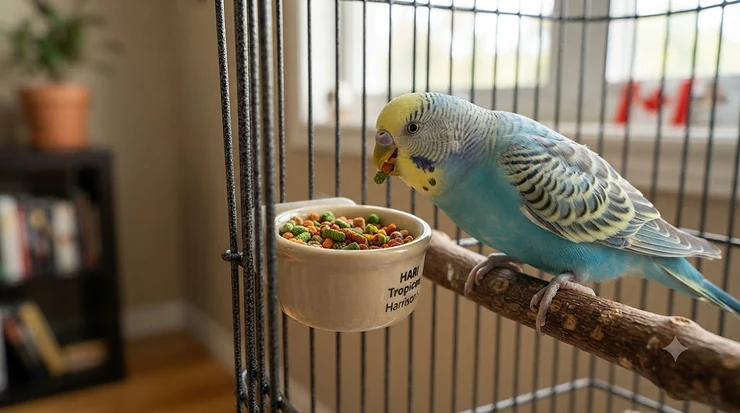
Manufactured by Hagen in Quebec, Hagen Tropican is one of the few pellet lines actually produced domestically rather than imported, which matters if you care about supply chain and freshness. The granules come in multiple sizes (2mm through 4mm) matched to bird size, so a budgie and a macaw aren’t eating the same pellet scaled up. Nutritionally, Tropican is formulated around a corn-and-grain base with added vitamins and amino acids, and its granule shape mimics the texture of shelled seed, which research from Canadian avicultural sources notes can ease the transition for stubborn seed eaters. Based on the formulation, this is a strong first pellet to try precisely because the texture doesn’t feel like an alien food to a bird raised on seed. Aggregated owner feedback across Canadian avian retailers consistently describes Tropican as reliably accepted by budgies, cockatiels, and conures, though larger parrots sometimes need a slower introduction. If you cannot verify individual reviews for your specific bird species, that’s honest — acceptance really does vary bird to bird.
Pros:
- ✅ Manufactured in Canada — shorter supply chain, fresher stock
- ✅ Granule texture eases the seed-to-pellet transition
- ✅ Widely stocked at Canadian avian specialty retailers
Cons:
- ❌ Corn-forward formula less suitable for corn-sensitive birds
- ❌ Fewer flavour varieties than some US competitors
At around C$20-C$40 depending on bag size, Hagen Tropican offers strong value for owners starting their first serious conversion attempt.

2. ZuPreem FruitBlend — best flavour hook for stubborn eaters
ZuPreem FruitBlend leans hard into palatability, using natural fruit flavouring and bright, varied pellet shapes to catch a bird’s attention in a way plain brown pellets often don’t. The formula includes whole grains, added vitamins, minerals, and amino acids, and is sized separately for small, medium, and large birds, so a lovebird and an Amazon each get an appropriately sized piece. What most buyers overlook about this brand is that the flavour and colour variety isn’t just marketing — it directly addresses one of the biggest barriers to conversion, which is a bird’s instinctive suspicion of unfamiliar, uniform food. Reviewers consistently note that FruitBlend tends to be one of the higher-acceptance starter pellets, particularly for birds that have already rejected plainer formulas once or twice. The trade-off is that FruitBlend contains more sugar and artificial colouring than some purist competitors, something health-focused owners should weigh.
Pros:
- ✅ High palatability due to natural fruit flavouring
- ✅ Sized specifically by bird category (small to large)
- ✅ Widely available and easy to find on Amazon.ca
Cons:
- ❌ Contains added sugar and colouring some owners avoid
- ❌ Not ideal as a sole diet for diabetic-prone species
Priced in the C$25-C$45 range depending on bag size, ZuPreem FruitBlend earns its reputation as the classic “gateway pellet” for reluctant converts.
3. Roudybush Daily Maintenance — best for weight-conscious diets
Roudybush Daily Maintenance has been formulated since 1975 around a lower-fat, no-added-sugar profile, which matters enormously for species like Amazon parrots and cockatoos that are prone to obesity and fatty liver disease on seed-heavy diets. The crumble and pellet textures are engineered specifically for pickiness reduction — birds can’t isolate a “favourite” piece the way they can with a seed mix, because every crumble is nutritionally identical. Here’s what to weigh: because Roudybush skips added sugar and flavouring almost entirely, it can be a harder sell to a bird already hooked on the sweetness of seed hulls and fruit-flavoured competitors. Aggregated owner sentiment frequently describes Roudybush as the pellet avian vets recommend most often for weight management cases, precisely because its low-fat, low-sugar formulation doesn’t undercut a calorie-restricted plan the way flavoured pellets can.
Pros:
- ✅ Low-fat, no added sugar formulation
- ✅ Frequently recommended by avian veterinarians
- ✅ Crumble texture prevents selective picking
Cons:
- ❌ Less immediately palatable to sugar-accustomed birds
- ❌ Smaller retail footprint than ZuPreem or Kaytee
In the C$30-C$55 range, Roudybush Daily Maintenance delivers strong long-term value for birds already showing signs of weight concern.
4. Lafeber Premium Daily Pellets — best for gradual, gentle conversion
Lafeber Premium Daily Pellets are naturally flavoured with molasses, a deliberate choice the company made specifically to ease “seed junkies” into pellet acceptance without leaning on artificial sweeteners. The base recipe uses ground corn and soybean meal along with whole egg for digestible protein, plus a full vitamin and mineral package. On paper this means Lafeber sits in a nutritional middle ground — not as stripped-down as Roudybush, not as sugar-forward as FruitBlend. What most buyers overlook is that Lafeber also sells companion products like Nutri-Berries, which combine hulled seed with pellet coating, giving owners a genuine bridge food for the transition period rather than an all-or-nothing switch. Aggregated customer sentiment on Lafeber’s own product pages and third-party retailers describes long-term multi-decade use by owners of Amazons and cockatoos, with many noting their birds “wouldn’t eat anything else” once fully converted — though as always, individual acceptance takes patience.
Pros:
- ✅ Molasses flavouring specifically designed to ease conversion
- ✅ Companion bridge products (Nutri-Berries) available
- ✅ Long manufacturing track record and strong brand trust
Cons:
- ❌ Molasses flavouring adds some natural sugar content
- ❌ Bridge products should stay treats, not a full diet
Expect a price around C$20-C$40 for standard bag sizes, making Lafeber Premium Daily Pellets a smart mid-range pick for a slow, low-stress transition.
5. Harrison’s Bird Foods (High Potency) — best for allergy-prone or health-focused diets
Harrison’s Bird Foods occupies the premium end of the pellet market, built around certified organic ingredients with no soy, corn, or peanuts — three ingredients some avian nutritionists flag as common sensitivities or contamination risks (peanuts in particular can carry aflatoxin risk if improperly stored). The absence of corn as a base is a meaningful formulation choice, since corn-heavy pellets are the industry default and not every bird tolerates corn well. Based on the spec comparison with more mainstream brands, Harrison’s trades some flavour appeal for ingredient purity, which is exactly the trade-off a health-focused owner wants. Reviewers and avian professionals consistently frame Harrison’s as a “vet’s pellet” — the option recommended when a bird has existing liver, kidney, or allergy concerns and needs the cleanest possible baseline diet. The cost reflects that positioning.
Pros:
- ✅ Certified organic, no soy, corn, or peanuts
- ✅ Frequently recommended for birds with health complications
- ✅ Trusted by avian veterinary professionals
Cons:
- ❌ Premium price point compared to mainstream brands
- ❌ Less flavour appeal may slow initial acceptance
At roughly C$45-C$70 depending on size, Harrison’s Bird Foods is worth the premium specifically for birds with dietary sensitivities or existing health concerns.
6. TOP’s Organic Parrot Pellets — best for owners avoiding fillers entirely
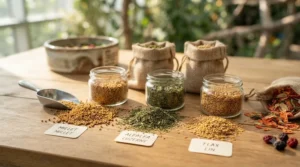
TOP’s Organic Parrot Pellets are cold-pressed rather than baked, a manufacturing choice the company says preserves natural enzymes and nutrients that heat-extrusion can degrade. The ingredient list reads almost like a health-food label: organic alfalfa, hulled millet, barley, rice, and quinoa, naturally preserved with rosemary and citrus peel rather than synthetic preservatives. What the spec sheet won’t tell you, but owner reports on retailer sites suggest, is that the cold-pressed texture is noticeably different from baked pellets — some birds adjust to it faster precisely because it’s less uniformly hard than extruded competitors. TOP’s markets itself as the only major non-corn-based USDA-certified complete diet, a specific and verifiable claim rather than vague health marketing. For an owner deliberately avoiding corn, soy, wheat, and peanuts across the board, TOP’s covers more allergen bases than almost any competitor on this list.
Pros:
- ✅ Cold-pressed processing preserves natural nutrients
- ✅ Free of corn, soy, wheat, and peanuts
- ✅ USDA Organic certified, non-GMO ingredient sourcing
Cons:
- ❌ Smaller bag sizes mean more frequent reordering
- ❌ Texture may require a longer adjustment period for some birds
Priced around C$20-C$40 for a 1-3 lb bag, TOP’s Organic Parrot Pellets suits owners prioritizing ingredient transparency above brand recognition.
7. Kaytee Forti-Diet Pro Health — best budget entry point
Kaytee Forti-Diet Pro Health rounds out the list as the most budget-accessible option, built around a base formula fortified with vitamins, prebiotics, and probiotics aimed at digestive support. It’s worth being direct here: Kaytee sits closer to a conventional pet-store staple than a boutique avian-specialist brand, and the ingredient panel reflects that positioning with more grain filler than premium competitors. That said, for owners testing whether their bird will accept pellets at all before committing to a pricier bag, starting cheap is a legitimate strategy — there’s little point buying a C$60 bag of Harrison’s for a bird that may reject pellets outright on the first attempt. Aggregated reviews commonly describe Kaytee as “good enough” rather than exceptional, with digestive-health additions like probiotics seen as a genuine value-add at this price tier, particularly for cockatiels and budgies transitioning off a straight seed diet for the first time.
Pros:
- ✅ Lowest price point among major pellet brands
- ✅ Added probiotics support digestive health
- ✅ Widely available at general pet retailers, not just specialists
Cons:
- ❌ Higher grain filler content than premium alternatives
- ❌ Less ingredient transparency than boutique competitors
At under C$25 for most bag sizes, Kaytee Forti-Diet Pro Health is the sensible starting point if you’re not yet sure your bird will convert at all.
How to Switch Your Bird From Seed to Pellets: The Step-by-Step Transition Method
This is the practical core of a gradual diet transition, and it’s worth doing right the first time because a botched attempt often makes a bird more resistant on the second try, not less.
Days 1-3: Establish your baseline. Weigh out your bird’s current daily seed intake using a kitchen scale, and track droppings for a normal reference point. You cannot safely monitor a transition without knowing what “normal” looks like first.
Days 4-7: Introduce pellets alongside seed, in separate dishes. Never mix them in one bowl — birds will simply pick around the pellets. Offer pellets first thing in the morning when hunger is highest, then the usual seed ration a few hours later.
Week 2: Reduce seed volume by roughly 25%. Keep pellets available at all times. Watch droppings daily; a modest reduction in volume is expected, but any bird losing more than 1-2% of body weight per week needs the pace slowed immediately.
Week 3: Reduce seed to about 25% of the original daily amount. Some owners find lightly dampening pellets with warm water, or crushing a small amount over the remaining seed, helps bridge the taste and texture gap, according to conversion guidance published by Hagen’s Avicultural Research Institute.
Week 4 and beyond: Continue tapering seed to a small treat-only portion (roughly 10-20% of intake for most species) while pellets become the dietary base. Full conversion often takes four to twelve weeks, and for birds with years of seed-only history, it can take considerably longer.
Throughout the process, never withhold food entirely to force pellet acceptance — starving a bird into compliance is dangerous and can be fatal, particularly for small species with fast metabolisms like budgies and lovebirds. If your bird ever refuses all food for more than 24 hours during conversion, revert to the previous ratio and consult an avian veterinarian before continuing.
My Bird Won’t Eat Pellets: Troubleshooting Common Conversion Problems
A bird won’t eat pellets for a handful of predictable, fixable reasons. Here’s how to diagnose and solve the most common ones.
Problem: Pellets look “wrong” to a visually-driven eater. Solution: Try a differently coloured or shaped pellet from another brand — some birds respond to bright, varied shapes like FruitBlend, while others prefer plain, seed-coloured granules like Tropican.
Problem: Your bird associates the food bowl location with seed only. Solution: Offer pellets in a completely separate dish, in a different spot in the cage, so there’s no learned association pulling attention away.
Problem: Texture mismatch — pellets feel foreign in the beak. Solution: Lightly moisten a small portion with warm water for a softer initial texture, discarding uneaten damp food within two hours to avoid bacterial growth.
Problem: The bird simply hasn’t been hungry enough to try something new. Solution: Offer pellets earliest in the morning, when natural hunger drive is highest and curiosity about new food is at its peak.
Problem: Underlying stress or environmental change is suppressing appetite generally. Solution: Pause the diet transition and address the stressor first — a bird actively stressed by a recent move, new pet, or cage change is a poor candidate for simultaneous dietary change.
If none of these solutions produce any pellet interest after several weeks of consistent effort, that’s a sign to consult an avian veterinarian rather than escalating pressure on your own; some birds have underlying medical issues that a home troubleshooting checklist simply can’t diagnose.
Real-World Conversion Scenarios: Matching Pellets to Your Bird’s Personality
Scenario one: The lifelong picky eater bird. A ten-year-old African Grey who has eaten nothing but a sunflower-heavy mix since adoption is a textbook seed addiction case. For this profile, the slowest possible taper (10-12 weeks), starting with a flavour-forward option like ZuPreem FruitBlend, and pairing it with Lafeber’s Nutri-Berries as a bridge food, tends to produce the highest success rate without triggering food refusal.
Scenario two: The recently weaned juvenile. A young cockatiel just off hand-feeding formula has no entrenched seed habit yet, making this the easiest conversion window that exists. Hagen Tropican‘s granule size for small birds, introduced as the primary food from day one with seed offered only as an occasional treat, typically converts within one to two weeks.
Scenario three: The weight-management case. An overweight Amazon parrot flagged by an avian vet for fatty liver risk needs a low-fat, low-sugar formula rather than a flavour-forward one, even if it’s a slower sell. Roudybush Daily Maintenance, paired with a strict portion-controlled taper and closer veterinary monitoring, prioritizes health outcomes over speed of conversion.
Each of these profiles shares one non-negotiable: consistent daily weighing and dropping checks during the active transition window, regardless of which pellet brand or timeline applies.
How to Choose the Right Pellet for Your Bird
- Match pellet size to bird size. A macaw choking down cockatiel-sized crumbles, or a budgie struggling with oversized pellets, is a preventable acceptance barrier from the start.
- Check for existing allergies or sensitivities. Birds with known soy or corn sensitivity should start with Harrison’s or TOP’s, not corn-forward mainstream brands.
- Weigh flavour appeal against nutritional purity. A flavoured pellet a bird actually eats beats an unflavoured “perfect” pellet sitting untouched in the bowl.
- Consider your budget for the long haul. Pellets become a daily staple food, so factor in monthly cost, not just the price of the first bag.
- Look at texture format — crumble, granule, or block. Smaller species often do better with crumbles; larger parrots frequently prefer chewable blocks that mimic foraging behaviour.
- Prioritize brands with documented conversion support. Companies like Lafeber and Hagen publish detailed conversion protocols, which is a meaningful signal of formulation intent, not just marketing.
- Consult an avian veterinarian before finalizing your choice, especially for birds with any pre-existing health condition.
Seed Addiction in Parrots: Why Birds Get Hooked and How to Break the Cycle
Seed addiction in parrots isn’t a behavioural quirk — it’s a predictable outcome of feeding a naturally selective eater an unlimited, high-fat food source. Wild psittacine birds forage across dozens of food types seasonally, but a bowl of sunflower-heavy seed mix offers constant access to the fattiest, most calorie-dense option with zero foraging effort required. Birds will eat to satisfy energy needs first, and once that high-fat threshold is met from seed alone, they simply stop eating anything else, according to the companion parrot overview on Wikipedia, which notes formulated diets exist specifically because birds cannot self-balance a nutritionally complete diet from a seed-only bowl.
The physiological hook is real: high-fat foods trigger stronger reward responses, and a bird that has spent years selecting sunflower and safflower seeds has effectively reinforced that preference every single day. Breaking the cycle requires removing the easy high-fat option gradually rather than abruptly, which is exactly why a slow taper outperforms a cold-turkey switch. Some behavioural researchers have also linked heavily seed-based, high-fat diets to increased screaming and biting in captive parrots, with several documented cases showing calmer behaviour after dietary correction, as detailed in a behavioural analysis published in the IAABC Foundation Journal. That’s a genuinely underappreciated angle — the pellet switch isn’t purely a nutrition project, it can be a behaviour project too.
✨ Don’t Miss These Exclusive Deals!
🔍 Take your bird’s nutrition to the next level with these carefully selected pellet brands. Click on any highlighted product to check current pricing and availability. A properly converted diet is one of the best long-term investments you can make in your bird’s health!
Pellet Conversion Tips for Parrots: Common Mistakes That Sabotage the Switch
The single most common mistake is mixing pellets directly into the existing seed bowl — birds will simply forage around them and eat only the familiar seed, leaving the pellets untouched at the bottom. A close second is moving too fast: cutting seed by 50% in the first week routinely triggers either outright food refusal or dangerous weight loss, particularly in small species. Another frequent misstep is giving up after just one or two weeks; most successful conversions take a minimum of four weeks and often several months, so early abandonment simply resets progress. Owners also commonly forget to monitor droppings and weight during the process, which means early warning signs of excessive weight loss go unnoticed until they’ve become serious. Finally, many owners stick rigidly to a single pellet brand even after clear rejection — if a bird has firmly refused one formula for two to three weeks with zero interest, switching brands or textures is a legitimate strategy, not giving up.
Pellets vs Seed: What the Science Actually Says
| Factor | Pellets | Seed-Only Diet |
|---|---|---|
| Nutritional completeness | Balanced in every bite | Bird selects fattiest pieces only |
| Fat content | Formulated, typically lower | Often high, especially sunflower-heavy mixes |
| Long-term health risk | Lower risk of obesity, fatty liver | Elevated risk of obesity, atherosclerosis |
| Foraging enrichment | Limited unless paired with foraging toys | Naturally encourages some manipulation behaviour |
| Best For | Long-term daily nutrition base | Occasional treat portion only |
The data above reflects a genuine trade-off worth naming honestly: pellets win decisively on nutritional completeness and long-term disease risk, but seed does offer a texture and foraging engagement that a pellet-only diet can lack unless owners deliberately add foraging toys and enrichment activities. Avian veterinary consensus, reflected across university veterinary resources, treats seed as appropriate only as a minority treat portion — generally cited around 10-20% of intake for most companion species — rather than a viable primary diet. This isn’t a case where reasonable experts disagree; the imbalance risk of seed-only feeding is well documented, even though a small seed allowance still has a legitimate place in a well-rounded routine.
Long-Term Cost & Maintenance: Is Switching to Pellets Worth It?
On a pure per-kilogram basis, premium pellets like Harrison’s or TOP’s often cost more than a comparable volume of seed mix, but that comparison misses the bigger picture. Seed mixes generate significant waste — birds discard hulls and reject less-preferred seeds, meaning a portion of every seed purchase is thrown away uneaten, while pellets are consumed in full since there’s no shell to discard. Factor in the veterinary cost side: obesity, fatty liver disease, and atherosclerosis linked to seed-heavy diets can generate ongoing vet bills that dwarf the price difference between a mid-range pellet and a bag of seed. Maintenance-wise, pellets also store more predictably; most formulas have an 8-10 week shelf life once opened if kept in a cool, dry container, with freezing extending usable life for bulk purchases. Viewed as a total cost of ownership question rather than a per-bag price comparison, pellets represent reasonable long-term value for most owners, particularly when weighed against the compounding health costs of an unmanaged seed-only diet.
Safety, Regulations & Compliance for Canadian Bird Owners
Canada does not currently mandate a single national nutritional standard specifically for pet bird food, and oversight is shared across several federal bodies rather than one dedicated agency. The Canadian Food Inspection Agency primarily manages import controls and animal health safeguards for pet food entering Canada, while labelling accuracy and marketing claims fall under separate consumer protection legislation. In practice, this means many pellet manufacturers voluntarily align with nutrient adequacy standards developed elsewhere, rather than a Canada-specific regulatory benchmark, so checking a brand’s own stated formulation standard is a reasonable due-diligence step for cautious owners. For personal travel with pet food across the border, CFIA does apply specific quantity and origin limits, which matters if you’re stocking up on a Canadian pellet brand while travelling. None of this changes the core health guidance: regardless of regulatory framework, a formulated pellet base remains the most consistently recommended daily diet across avian veterinary sources.
FAQ
❓ How long does it take to switch a bird from seed to pellets?
❓ Can I mix pellets and seed in the same bowl?
❓ Is it normal for my bird to lose weight during pellet conversion?
❓ What percentage of a parrot's diet should be pellets?
❓ My bird won't eat pellets at all — what should I try next?
Conclusion
Switching a bird from seed to pellets is rarely a fast process, and anyone promising an overnight fix is oversimplifying a genuinely gradual physiological and behavioural shift. What actually works is patience: a slow taper measured in weeks rather than days, consistent weight and dropping monitoring, and a willingness to try a second or third pellet brand if the first attempt stalls. Whether you start with the Canadian-made accessibility of Hagen Tropican, the flavour-forward appeal of ZuPreem FruitBlend, or the ingredient purity of Harrison’s Bird Foods, the right choice depends far more on your individual bird’s history and health status than on any single “best” product. Seed addiction in parrots is real, it’s fixable, and thousands of owners have successfully converted lifelong seed eaters using exactly the gradual method outlined above. Give the process the months it deserves, lean on your avian veterinarian for anything that doesn’t track normally, and trust that a fully converted pellet diet is one of the most meaningful long-term investments you can make in your bird’s health.
✨ Ready to start the switch? Compare pellet brands above and take the first step toward a healthier diet for your bird today!
Recommended for You
- Organic Bird Pellets 2026: 7 Real Picks Canadian Owners Trust
- Best Pellets for Budgies in 2026: 7 Vet-Backed Picks Compared
- Best Parrot Pellets 2026: 7 Top Picks Vets Actually Trust
Disclaimer: This article contains affiliate links. As an Amazon Associate, I earn from qualifying purchases. If you purchase products through these links, we may earn a small commission at no additional cost to you.
✨ Found this helpful? Share it with your friends! 💬🤗
