
In This Article
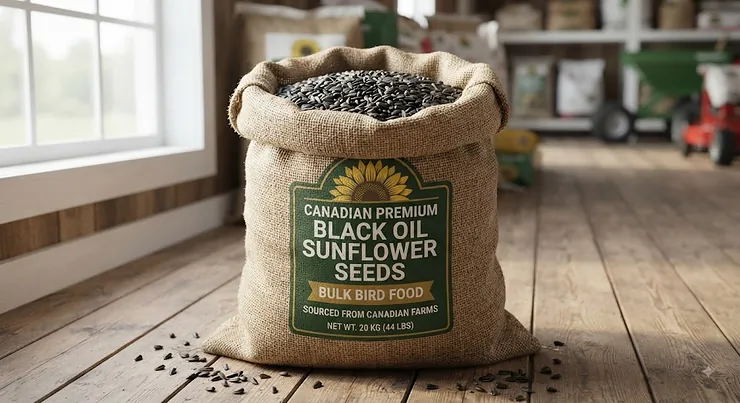
Black oil sunflower seed is the small, teardrop-shaped, thin-hulled sunflower seed that ornithologists and backyard birders alike consider the closest thing to a universal bird food — a single, high-fat seed that chickadees, cardinals, finches, and sparrows will all crowd a feeder for. If you have ever stood in the bird aisle staring at three different bag sizes wondering which one actually saves you money, you already understand why black oil sunflower seeds canada bulk is such a heavily searched phrase every October. This guide skips the guesswork.
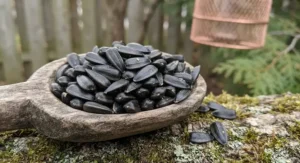
We researched real, currently available bags — from small Canadian family farms to big warehouse-club staples — so you can match a bulk bag to your feeder setup instead of guessing at the garden centre. You will get honest analysis of specs, aggregated review themes (clearly flagged as such, never invented), a full comparison table, and practical answers to the questions that actually decide a purchase: how much seed a season really burns through, whether the “premium” bag is worth the extra cost, and which birds you can expect to show up once you switch. According to Birds Canada’s guide to choosing feeders and seed, black-oil sunflower is the seed most likely to attract the greatest diversity of birds to a feeder, thanks to its high energy content and easy-to-crack shell — which is exactly why bulk buying it, rather than the mixed “wild bird food” blends, tends to be the smarter long-term move for anyone feeding regularly.
Whether you’re refilling a single tube feeder in a condo courtyard or running four stations across a rural property, the right bulk bag depends less on brand loyalty and more on shell thickness, oil content, and how the seed is packaged for storage. Let’s get into it.
Quick Comparison Table
| Product | Bulk Size | Price Range (CAD) | Best For |
|---|---|---|---|
| Ma Poule Express Black Oil Sunflower Seed | Up to 11.3 kg | C$30-C$40 | Value-conscious bulk buyers |
| Armstrong Black Oil Sunflower Seed | 25 lb (11.3 kg) | C$45-C$55 | Heavy year-round feeders |
| Wagner’s Four Season Black Oil Sunflower | 20 lb (9 kg) | C$25-C$35 | Budget-first shoppers |
| Schoen Farms Black Oil Sunflower Seed | 2.27 kg-4.5 kg | under C$25 | Small-batch quality seekers |
| Chirp & Maple Sunflower Hearts | 1 kg | C$15-C$20 | No-mess balcony feeding |
Looking at the spread above, the gap between the cheapest and priciest option per kilogram is smaller than most shoppers expect once you factor in shell waste — a bag of hulled hearts costs more up front but leaves nothing on the patio floor. Ma Poule Express and Wagner’s sit at the value end for anyone filling large hopper feeders weekly, while Schoen Farms and Chirp & Maple trade volume for a cleaner, more consistent product. If you’re feeding a single small feeder in an apartment, the math actually favours the smaller premium bags over letting a 25-pound sack go stale in a closet.
💬 Just one click — help others make better buying decisions too!😊
Top 7 Black Oil Sunflower Seeds in Bulk: Expert Analysis
1. Ma Poule Express Black Oil Sunflower Seed — Canadian family-farm value pick
Ma Poule Express grows, cleans, and packages its sunflower seed on its own Canadian farm, and that vertical setup is exactly what lets it undercut a lot of imported bulk bags on price. The seed ships in a wide range of sizes from small 0.5 kg trial bags up through roughly 11.3 kg, which matters because it lets you buy a small bag first to confirm your local birds take to it before committing to the full sack. Purity is marketed above 99.5%, meaning less chaff and broken hull dust settling at the bottom of the bag — the stuff that otherwise ends up as a fine, useless powder nobody wants to scoop.
Based on the spec comparison, this is the pick for anyone feeding multiple stations who doesn’t want to pay a premium markup just for a familiar big-box name. Reviewers consistently note that the seed arrives clean and the birds take to it quickly, which tracks with the farm’s triple-cleaning claim. It’s a straightforward, no-frills bag rather than a boutique blend, so don’t expect fancy inclusions — just quality black oil sunflower at a fair price per kilogram.
Pros:
- ✅ Grown and packaged on a Canadian family farm
- ✅ Multiple bag sizes let you test before buying in bulk
- ✅ Purity levels marketed above market standard
Cons:
- ❌ Straight seed only, no blend variety
- ❌ Largest bag size tops out lower than some US-import competitors
At around C$30-C$40 for the largest bag, it lands as one of the better cost-per-kilogram options in this roundup, especially if you’re loyal to Canadian-grown product.
2. Armstrong Black Oil Sunflower Seed — best all-round bulk workhorse
Armstrong Milling, based in Hagersville, Ontario, has been formulating bird food for the Canadian market for decades, and its straight black oil sunflower line reflects that focus: the company markets the seed as 100% genuine black oil sunflower, sealed air-tight and CO2-flushed to hold freshness during long storage. That packaging detail is not just marketing fluff — CO2 flushing slows oxidation of the seed oils, which is the actual reason a bag of sunflower seed goes rancid or musty if it sits too long in a hot garage.
What most buyers overlook about this brand is that it’s genuinely built for Canadian winters rather than repackaged American stock; the sealed barrier bag matters more here than in milder climates, since freeze-thaw cycles in an unheated shed can otherwise draw moisture into the seed. Reviewers consistently report strong uptake from chickadees, blue jays, and woodpeckers within days of switching, which lines up with the seed’s reputation as an easy sell to birds already used to a feeder.
Pros:
- ✅ Ontario-milled with air-tight, CO2-flushed packaging
- ✅ Attracts a very wide range of species reliably
- ✅ Long shelf life when stored properly
Cons:
- ❌ Priced above the most basic imported bulk bags
- ❌ 25 lb bag is heavy to carry without a dolly
In the C$45-C$55 range for a 25-pound bag, Armstrong sits mid-pack on price but earns its keep on freshness retention if you’re buying once and feeding over several months.
3. Wagner’s Four Season Black Oil Sunflower Seed — best budget big-box option
Wagner’s is a long-running American wild bird food brand, and its Four Season line is 100% black oil sunflower seed sold in a straightforward 20-pound bag that’s widely stocked through big online retailers. It doesn’t try to be fancy — it’s a single-ingredient product positioned squarely as the everyday, no-nonsense option for hopper and tray feeders.
Here’s what to weigh: because it’s imported rather than milled in Canada, availability and freshness can vary more by shipment than with a domestic brand, and a few reviewers note occasional bits of chaff or small debris in the bag. That’s a normal trade-off with lower-cost bulk seed rather than a defect specific to this brand — screening costs money, and a budget bag reflects a lighter screening pass. On the plus side, the price-per-pound is consistently among the lowest of any bulk bag we looked at, and the thin shell quality is comparable to pricier options once the birds actually crack into it.
Pros:
- ✅ Lowest price-per-pound of the bulk options reviewed
- ✅ 100% straight black oil sunflower, no filler
- ✅ Widely available with frequent free-shipping thresholds
Cons:
- ❌ More variable freshness than domestically milled bags
- ❌ Occasional reports of minor debris in the bag
At C$25-C$35 for a 20-pound bag, this is the pick if your priority is simply keeping several feeders full through winter without overspending.
4. Schoen Farms Black Oil Sunflower Seed — small-batch Canadian quality
Schoen Farms is a smaller, family-owned Canadian operation that positions its black oil sunflower seed as pesticide-free and filler-free, sold in more modest bag sizes than the big warehouse bulk options — typically 2.27 kg up through roughly 4.5 kg. The trade-off for the smaller format is a noticeably fresher, more consistent product; smaller batches simply don’t sit in a warehouse as long as pallet-scale bulk bags do.
On paper this means a higher price per kilogram than the true bulk bags on this list, but the spec sheet won’t tell you this part: for anyone feeding just one or two feeders, buying a 25-pound bag and letting the back half go stale before you use it actually erases most of the “bulk discount” anyway. Reviewers consistently mention noticeably plumper, more uniform seeds compared to some big-box bags, and the resealable packaging is a small but real convenience for kitchen or balcony storage.
Pros:
- ✅ Small-batch freshness and plumper, more uniform seed
- ✅ Non-GMO and marketed as filler-free
- ✅ Grown and packaged on a Canadian farm
Cons:
- ❌ Higher price per kilogram than large bulk bags
- ❌ Smallest bag sizes may need frequent reorders for big feeder setups
Priced under C$25 for the smaller bags, Schoen Farms suits households that value freshness over sheer volume.
5. Armstrong Best Blend Wild Bird Food — mid-range blend with sunflower variety
Where the straight Armstrong sunflower bag above is a single-ingredient product, Armstrong’s Best Blend line mixes black oil sunflower with white millet, striped sunflower, safflower, and peanuts, aiming at a broader roster of feeder visitors including finches, grosbeaks, and woodpeckers rather than sunflower specialists alone. It’s the same Ontario mill and the same sealed, CO2-flushed bag format, just with more going on inside it.
Based on the spec comparison, the appeal here is convenience rather than pure economics — a blend lets you run one bag across a hopper feeder instead of juggling separate straight-seed and safflower bags. What most buyers overlook is that mixed blends inevitably produce more waste on the ground, since birds will sort through and discard components they don’t want; if you have a strict no-mess requirement, a straight sunflower bag or hulled hearts will always outperform any blend on that front.
Pros:
- ✅ One bag covers a wider range of bird species
- ✅ Same freshness-sealed Ontario packaging as the straight seed line
- ✅ Includes peanuts and safflower for premium feeder variety
Cons:
- ❌ More ground waste than straight sunflower seed
- ❌ Costs more per kilogram than the plain sunflower bag
Around C$40 for a 20-pound bag, this is a reasonable pick if variety matters more to you than pure cost-per-kilo efficiency.
6. Chirp & Maple Sunflower Hearts — best no-mess hulled option
Chirp & Maple, a Toronto-packed brand, sells pre-hulled sunflower hearts — essentially the kernel with the shell already removed — in smaller 1 kg bags aimed at feeders where mess matters, like balconies, decks, and window feeders. Because there’s no shell to crack or discard, every gram in the bag is edible, which changes the math on “bulk” considerably: a kilogram of hearts feeds roughly the same number of birds as a noticeably larger bag of shell-on seed.
What the spec sheet won’t tell you, but reviewers note, is that hulled hearts also spoil faster once exposed to moisture than shell-on seed, since the protective hull is gone; that means smaller, more frequent purchases actually make sense here rather than a downside. The upside is zero sprouting seedlings under your feeder and effectively zero mess for anyone feeding on a shared balcony or condo patio where that matters for neighbour relations.
Pros:
- ✅ Zero shell waste and no sprouting seedlings below feeders
- ✅ Every gram is edible, unlike shell-on bulk seed
- ✅ Ideal for balconies, decks, and window feeders
Cons:
- ❌ Spoils faster than shell-on seed once opened
- ❌ Highest price per kilogram of any option here
At C$15-C$20 for a 1 kg bag, it’s the priciest option gram for gram, but the “no mess” value proposition is real for the right living situation.
7. Chirp & Maple Songbird Blend — premium made-in-Canada blend
Rounding out the list, Chirp & Maple’s Songbird Blend combines black oil sunflower with white and red millet, sunflower kernel chips, nyjer, safflower, and peanuts, packed in Toronto in a 3.6 kg bag. It’s positioned as a premium, well-balanced mix rather than a bulk economy option, aimed at drawing in a colourful mix of songbirds without the filler grains — corn, wheat, milo — that birds typically kick out onto the ground anyway.
Here’s what to weigh: premium blends like this cost noticeably more per kilogram than straight bulk sunflower seed, but the ingredient list is deliberately built around components birds actually eat rather than bulk fillers, which can mean less overall waste despite the smaller bag size. Based on the spec comparison, this is best suited to backyard birders who want a curated, no-junk mix and are feeding a moderate number of feeders rather than running a large multi-station operation that needs sack-scale bulk.
Pros:
- ✅ Curated ingredient list with no cheap filler grains
- ✅ Packed in Toronto with a fresher supply chain
- ✅ Appeals to a wide range of colourful songbirds
Cons:
- ❌ Not truly “bulk” scale compared to 20-25 lb bags
- ❌ Premium pricing per kilogram
Expect to pay in the C$25-C$35 range for the 3.6 kg bag, positioning it as the most curated, least bulk-focused pick on this list.
Practical Usage Guide: Storing and Serving Bulk Sunflower Seed
Buying in bulk only pays off if the seed stays fresh long enough to use it, and that comes down almost entirely to storage. Once you open a bulk bag, transfer the seed into a rigid, airtight container — a metal or thick plastic bin with a tight lid works far better than resealing the original paper or poly bag, which lets in both moisture and rodents. Manufacturers themselves generally recommend storing bird food in a cool, dry place away from direct sunlight and resealing packaging after each use to preserve freshness and deter pests, and that advice applies just as well once the seed is decanted into your own container.
Common first-30-days mistakes are almost always the same three things: leaving a bag on a garage floor where concrete wicks up moisture, storing seed somewhere birds and squirrels can smell it and chew through packaging, and overfilling a feeder so seed sits for weeks and goes stale before it’s eaten. A better routine is to fill feeders with only a few days’ worth of seed at a time, especially in warmer months, and to do a quick visual check for clumping or a musty smell before each refill — birds themselves tend to avoid stale seed, so reduced feeder activity is often the first sign something’s off.
For genuinely bulk quantities — a 25-pound bag or larger — consider splitting the bag into two or three smaller airtight containers rather than one large bin. This limits how much seed is exposed to air each time you scoop, and it means a moisture problem in one container doesn’t spoil your entire supply. Wildlife conservation groups also point out that platform feeders in particular are susceptible to moisture exposure and can develop fungus or bacteria in the tray if not checked and cleaned regularly, which is a useful reminder that storage discipline needs to extend to the feeder itself, not just the bag in your shed.
Real-World Scenarios: Which Buyer Are You?
The apartment balcony birder. If you’re feeding from a small window or deck feeder with limited storage space and shared outdoor areas, a no-mess option like Chirp & Maple Sunflower Hearts solves two problems at once: there’s no shell debris to sweep up or explain to a downstairs neighbour, and the smaller 1 kg format matches realistic consumption for a single small feeder without seed going stale in storage you don’t have room for anyway.
The rural multi-feeder household. If you’re running three or four feeder stations across a larger property and going through seed weekly, cost-per-kilogram becomes the dominant factor, and a true bulk bag like Wagner’s Four Season or Ma Poule Express at the 20-25 lb scale will save real money over a season compared to repeatedly buying smaller bags. The key is having proper bulk storage — a sealed bin in a shed or garage — so the cost savings aren’t undone by spoilage.
The dedicated backyard birder chasing variety. If your goal is attracting the widest possible mix of species — cardinals, grosbeaks, nuthatches, and finches alongside the usual chickadees — a blend like Armstrong Best Blend or Chirp & Maple Songbird Blend gives you that variety in one bag rather than juggling separate straight-seed, safflower, and peanut purchases. Expect more ground waste than with straight sunflower seed, but that’s the trade-off for a busier, more colourful feeder.
✨ Don’t Miss These Exclusive Deals!
🔍 Take your backyard birding to the next level with these carefully selected bulk sunflower seed picks. Click on any highlighted product to check current pricing and availability. These bags will help you build a feeding routine your feathered visitors will keep coming back to!
How to Choose Black Oil Sunflower Seeds in Bulk
Picking the right bulk bag comes down to a handful of concrete factors rather than brand reputation alone. Here’s the short version:
- Check the shell thickness claim. True black oil sunflower has a noticeably thinner hull than striped sunflower, which is the whole reason smaller-beaked birds like chickadees can access it easily.
- Match bag size to your feeder count and refill frequency. A single small feeder rarely justifies a 25-pound bag if you can’t store it properly; multiple feeders or high-traffic winter feeding usually does.
- Look for sealed, moisture-resistant packaging. CO2-flushed or resealable bags hold freshness far longer than a simple paper sack, which matters more the longer you plan to store the seed.
- Decide between straight seed and a blend. Straight sunflower minimizes ground waste; blends attract a wider range of species at the cost of more sorting and mess.
- Compare price per kilogram, not per bag. A larger bag at a higher sticker price is often cheaper per kilogram than a smaller “value” bag — do the math before assuming size means savings.
- Consider your climate and storage space. Canadian winters and humid summers both stress seed differently, so factor in where the bag will actually sit for weeks at a time.
- Check for Canadian-grown or Canadian-milled options if freshness matters to you. Shorter supply chains generally mean less time in transit and storage before the seed reaches your feeder.
The Canadian Wildlife Federation’s guide to winter bird feeding recommends offering a variety of feeder styles alongside your seed choice — different birds prefer different setups, from tube feeders that suit small songbirds to platform feeders favoured by ground-feeding species — which is a useful reminder that the seed is only half of the equation; the feeder you pair it with shapes which species actually show up.
Black Oil vs Striped Sunflower Seeds: Which Wins?
This is one of the most searched comparisons in the bird-feeding world, and the honest answer is that black oil wins for most backyard situations, but not universally. Ornithologists generally group sunflower seed into two types — black oil and striped — noting that black oil seeds have very thin shells that are easy for virtually all seed-eating birds to crack open, with kernels that carry a high fat content especially valuable to winter birds. Striped sunflower seed, by contrast, has a noticeably thicker, harder shell that favours larger-beaked birds like cardinals and grosbeaks, while making the seed effectively inaccessible to smaller birds like chickadees and finches.
| Factor | Black Oil Sunflower | Striped Sunflower |
|---|---|---|
| Shell thickness | Thin, easy to crack | Thick, harder shell |
| Fat/oil content | Higher | Lower |
| Bird species range | Very wide (small to large birds) | Narrower (favours larger-beaked birds) |
| Typical bulk price | Lower per kilogram | Higher per kilogram |
| Best For | Ma Poule Express, Armstrong, Wagner’s buyers wanting broad appeal | Feeders targeting only larger birds, discouraging small songbirds |
Interpreting the table: if your goal is maximum species diversity at the feeder — the usual goal for most backyard birders — black oil sunflower is the clear winner and the reason every straight-seed bag in this roundup uses it rather than striped. Striped sunflower still has a niche use case: because smaller birds struggle with the thicker shell, some feeders use it deliberately to reduce competition from house sparrows or to favour larger, less agile species at a dedicated feeding station. For the vast majority of Canadian backyards, though, black oil remains the better single-seed choice, which is exactly why it dominates the bulk bird-seed market.
Best Sunflower Seeds for Backyard Birds: What the Data Says
When birders and citizen-science programs track which seed actually gets eaten first at a mixed feeder, black oil sunflower consistently comes out ahead of millet, milo, and cracked corn. Citizen-science bird-feeding programs consistently describe black-oil sunflower seed as the most common type of seed offered at feeders across North America, noting it is high in energy with thin shells that make it the preferred food item for a wide variety of birds, and a particular favourite of cardinals, chickadees, finches, and sparrows. That preference shows up practically as reduced waste: birds spend less time sorting and discarding unwanted grains, meaning less material ends up scattered and uneaten under the feeder.
For Canadian backyards specifically, this translates into a fairly simple rule of thumb: if you can only stock one type of seed, black oil sunflower is the one that gets you the broadest cross-section of common visitors — chickadees, nuthatches, finches, and cardinals among them — without needing to run multiple feeder types. Mixed blends still have their place if you’re specifically trying to draw in ground feeders like juncos and doves, which respond better to millet scattered at ground level than to sunflower seed alone, but as a default bulk purchase, straight black oil sunflower is difficult to beat for value and versatility.
Thin-Shelled Sunflower Seed: Why the Shell Matters More Than You Think
The “thin-shelled” quality of black oil sunflower isn’t just a marketing phrase — it’s the mechanical reason the seed works as well as it does. A thinner hull requires less force for a bird’s beak to crack, which matters enormously for smaller species with proportionally weaker beaks, like chickadees and finches, compared to larger birds like blue jays or grosbeaks that can handle a tougher shell without much trouble. What most buyers overlook is that this same thin shell is also why black oil sunflower produces noticeably less usable hull waste per kilogram than striped sunflower — less shell mass overall means more of the bag’s weight is edible kernel.
The trade-off is that a thin shell offers slightly less protection to the kernel inside during storage and shipping, which is part of why sealed, CO2-flushed packaging (as used by brands like Armstrong) genuinely matters more for black oil sunflower than it would for a thicker-shelled seed. If you notice a bag arriving with more cracked or broken seeds than expected, that’s generally a packaging and handling issue rather than a quality problem with the black oil variety itself — it’s an inherent trade-off of the thinner hull that makes the seed so accessible to birds in the first place.
High Fat Content Bird Food: The Science of Surviving Winter
Fat content is the entire reason black oil sunflower punches above its weight as a single-seed feeder choice, particularly heading into a Canadian winter. Black oil sunflower seeds are related to regular sunflower seeds but have been cultivated specifically for a higher fat content, and birds instinctively favour foods with a big caloric return on investment — a high-fat seed is an easy way to help them get a nutrient-dense meal, especially during breeding season and winter weather. For a small bird burning through calories rapidly just to maintain body temperature overnight, that fat density can be the difference between making it through a cold snap and not.
On paper this means bulk buyers should weight their decision toward straight black oil sunflower over cheaper filler-heavy mixes containing large amounts of cracked corn or milo, which carry far less fat per gram and are generally the components birds sort through and discard anyway. What the spec sheet won’t tell you, but reviewers across brands consistently note, is that feeder activity noticeably picks up within the first cold week after switching to a high-fat, straight sunflower diet — a practical signal that the birds themselves are choosing the higher-value food source over lower-fat alternatives when both are available.
Attracting Chickadees and Sparrows (and Everyone Else) to Your Feeder
Chickadees and sparrows are two of the most reliable visitors to any Canadian backyard feeder stocked with black oil sunflower, and for slightly different reasons. Chickadees are small, quick feeders that rely almost entirely on easy-to-crack seed and lightweight feeders positioned near cover, making the thin shell of black oil sunflower essentially a requirement rather than a preference for this species. As one Ontario birder explained to CBC News, feeding black oil sunflower seed and nyjer seed alone will attract most of the species you’re likely to encounter in a backyard during winter, including chickadees, nuthatches, and finches — which underlines just how far a single well-chosen bulk bag can go.
Sparrows, meanwhile, tend to be more ground-feeding and opportunistic, often cleaning up seed that’s spilled or knocked out of a hanging feeder by more agile species above them. If you specifically want to draw in sparrows without over-attracting house sparrows exclusively — which can sometimes dominate a feeder — pairing a platform or ground tray with your bulk black oil sunflower supply tends to work better than relying only on a hanging tube feeder. Reviewers across multiple brands in this roundup report chickadees as among the fastest species to discover a newly stocked feeder, often within days, which tracks with citizen-science observations that backyard birds generally locate a new reliable food source within a few days to two weeks of it being consistently available.
Common Mistakes When Buying Bulk Sunflower Seed
The single most common mistake is buying based on bag size alone without checking price per kilogram — a 25-pound bag priced only slightly below a 20-pound bag of the same seed is not actually a better deal, and it’s an easy trap when bags are displayed with sticker price rather than unit price front and centre. A second frequent misstep is choosing a cheap, unsealed bag for long-term storage; seed that isn’t in an airtight, moisture-resistant package needs to be transferred immediately, and skipping that step is how otherwise good bulk seed goes stale or moldy before it’s used.
A third mistake is assuming all “wild bird food” blends are interchangeable with straight black oil sunflower — many economy blends are bulked out with cracked corn, milo, or wheat that most desirable songbirds largely ignore, meaning you’re effectively paying for filler weight that ends up as waste on the ground rather than food that gets eaten. Finally, some buyers stock up on a full season’s worth of seed in one purchase without adequate storage space, only to end up with the back half of the bag exposed to humidity swings in a garage or shed; buying a slightly smaller bulk size that matches your actual storage capacity almost always beats over-buying on a false economy of scale.
Long-Term Cost & Maintenance: Is Bulk Really Cheaper?
The honest answer is: usually, but only if you use it before it spoils. A straight-seed bulk bag like Wagner’s or Ma Poule Express typically costs noticeably less per kilogram than a premium small-batch bag like Schoen Farms or a hulled product like Chirp & Maple Sunflower Hearts — but that math only holds if the full bag gets used within a reasonable window, generally a few months once opened and properly stored.
| Consideration | Bulk Straight Seed (20-25 lb) | Small Premium Bags (1-5 lb) |
|---|---|---|
| Cost per kilogram | Lower | Higher |
| Freshness risk if under-used | Higher (large volume sitting in storage) | Lower (used up quickly) |
| Storage space needed | Significant | Minimal |
| Best matched to | Multiple feeders, heavy winter feeding | Single feeder, light or occasional feeding |
Reading the table, the real total cost of ownership isn’t just the sticker price — it’s sticker price weighted by how much of the bag actually gets eaten by birds before it degrades. A household running one small feeder is often better off financially with smaller, more frequent purchases of a fresher product, even at a higher per-kilogram rate, than with a giant bulk bag that’s only half-consumed by spring. For genuinely high-volume feeding — multiple stations, daily refills through a full Canadian winter — the bulk bags in this roundup earn their lower per-kilogram price easily, since the seed simply doesn’t have time to go stale before it’s used.
Safety, Storage & Canadian Regulations
Feeding wild birds in Canada is broadly unregulated for homeowners, but there are real health and safety considerations worth taking seriously, particularly around disease transmission at shared feeding stations. Bird experts in Atlantic Canada have at times been split on whether backyard bird feeders are entirely harmless or carry meaningful risk during avian flu outbreaks, given concerns about disease spreading among birds that congregate at a feeder. That disagreement doesn’t mean you need to stop feeding birds, but it does mean cleaning your feeders regularly is not optional — a build-up of droppings and old, damp seed is exactly the kind of environment that allows pathogens like salmonella or avian conjunctivitis to spread between visiting birds.
Nature Canada’s feeder safety guidance recommends surveilling the birds at your feeders as an important part of disease prevention, since outbreaks remain a constant possibility, and staying alert to alerts from press outlets and wildlife management agencies about disease activity in your area. Practically, that means scrubbing feeders on a regular schedule with a diluted bleach or vinegar solution, spacing multiple feeders apart rather than clustering them, and temporarily removing feeders if local wildlife authorities report a disease outbreak nearby. None of this requires a permit or registration in most of Canada — it’s simply responsible stewardship that protects the birds you’re trying to help in the first place, and it costs nothing beyond the time to do it.
Frequently Asked Questions
❓ Is black oil sunflower seed better than a wild bird seed mix?
❓ How much bulk sunflower seed does one feeder use in a Canadian winter?
❓ Can squirrels eat black oil sunflower seed meant for birds?
❓ Does black oil sunflower seed go bad in storage?
❓ Is bulk black oil sunflower seed cheaper than buying smaller bags repeatedly?
Conclusion
Bulk black oil sunflower seed remains the most reliable single purchase you can make for a busy, diverse backyard feeder, and the research bears that out consistently across wildlife organizations, ornithology programs, and the aggregated experience of Canadian birders. The right bag for you depends less on brand prestige and more on matching bulk size to your actual feeder count, storage space, and how quickly your local birds go through seed. A rural household running several feeders will get the most value from a true bulk bag like Wagner’s or Ma Poule Express, while an apartment birder with one small feeder is often better served by a smaller, fresher option like Chirp & Maple Sunflower Hearts or Schoen Farms.
Whichever bag you choose, the fundamentals stay the same: prioritize thin-shelled, high-fat black oil sunflower over filler-heavy mixes, store it in a sealed, cool, dry container once opened, and keep your feeders clean to protect the birds you’re trying to feed in the first place. Get those basics right, and the specific brand on the bag matters far less than showing up consistently — which, according to every citizen-science program tracking backyard birds, is really what keeps them coming back.
✨ Ready to stock up? Compare the bulk bags above and pick the one that matches your feeder setup — your backyard regulars will notice the difference within days. 🐦
Recommended for You
- Safflower Seed Canada Squirrel Proof: 7 Top Picks for 2026
- Nyjer Seed for Finches: 7 Top Picks That Actually Work (2026)
- Best Parrot Seed Mix 2026: 7 Top Picks
Disclaimer: This article contains affiliate links. As an Amazon Associate, I earn from qualifying purchases. If you purchase products through these links, we may earn a small commission at no additional cost to you.
✨ Found this helpful? Share it with your friends! 💬🤗
