
In This Article
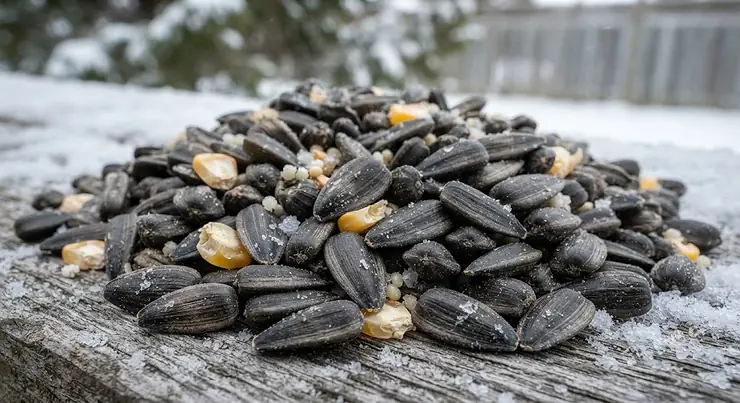
Winter bird seed is the fortified, calorie-dense seed and suet mixture — usually built around black oil sunflower, safflower, peanuts, and rendered fat — that gives backyard birds the fuel they burn just staying warm through a Canadian cold snap. If you’ve stood at your kitchen window watching a chickadee vanish into a blizzard and wondered whether your feeder is actually helping, you’re asking the right question. The honest answer is: it depends almost entirely on what’s in the bag.
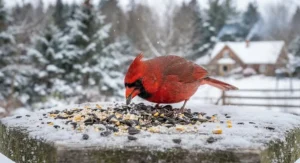
Somewhere around minus-20°C, a black-capped chickadee’s metabolism is working overtime just to keep its tiny engine running, and the difference between a cheap filler mix and a genuinely high-fat blend can mean the difference between a bird that thrives and one that just scrapes by. That’s the whole premise behind winter bird seed as a category — it isn’t the same product as your July finch mix, and treating it that way is one of the most common (and quietly costly) mistakes backyard birders make.
This guide digs into seven real products sold on amazon.ca, breaks down what their fat, protein, and shell ratios actually mean for birds surviving a Canadian winter, and walks through the setup, maintenance, and troubleshooting most product listings never bother to mention. We’ll compare budget staples against premium no-mess blends, look at where suet earns its keep, and flag the mistakes that quietly waste your money every February. If you’ve ever typed “what to feed birds in winter canada” into a search bar at 11 p.m. while snow piled up outside, you’re in the right place — let’s get into it.
Quick Comparison Table
| Product | Type | Price Range (CAD) | Best For |
|---|---|---|---|
| Schoen Farms Black Oil Sunflower Seeds | Straight sunflower seed | Under C$25 | Budget-conscious, do-it-yourself mixers |
| Armstrong All Season Blend | General mix | C$20-C$30 range | Attracting the widest variety of birds |
| Armstrong Ultra Blend | No-corn premium mix | C$25-C$35 range | Songbird specialists, fewer pigeons/doves |
| Schoen Farms Cardinal Blend | Cardinal/jay-focused mix | Around C$25 | Cardinal and grosbeak enthusiasts |
| Schoen Farms Sunflower Kernels & Chips | Hulled, no-mess seed | C$30-C$40 range | Patios, balconies, allergy-prone lawns |
| C&S High Energy Suet Treat (8-pack) | Suet cake | Under C$20 | Woodpeckers, nuthatches, extreme cold |
| Schoen Farms Safflower Seeds | Squirrel-resistant seed | C$25-C$35 range | Squirrel-heavy yards, cardinal fans |
Looking at the table above, the pattern that jumps out is that price doesn’t track neatly with winter performance — Schoen Farms Black Oil Sunflower Seeds deliver excellent fat content for one of the lowest per-kilogram costs on this list, while Schoen Farms Sunflower Kernels & Chips costs more precisely because the processing that removes the shell also removes the waste under your feeder. If squirrels are raiding your feeder nightly, Schoen Farms Safflower Seeds is the one line item here that solves a problem the others can’t touch, since most squirrels find safflower unpalatable.
💬 Just one click — help others make better buying decisions too!😊
Top 7 Winter Bird Seed Picks: Expert Analysis
Coverage here spans true budget staples through premium no-mess blends and a dedicated suet option, because a well-stocked winter feeding station in Canada usually needs more than one product working together.
1. Schoen Farms Black Oil Sunflower Seeds — the do-it-yourself high-fat foundation
Schoen Farms Black Oil Sunflower Seeds is about as close as bird seed gets to a single-ingredient supplement, and that simplicity is exactly the point. The thin shell cracks easily for small-billed birds like chickadees and finches, while the kernel inside carries a notably higher fat content than striped sunflower or mixed-grain blends, which matters enormously once temperatures drop. Grown and packaged in Canada, this is the seed most experienced backyard birders default to when they want a base they can then mix with safflower, millet, or suet crumbles depending on which species show up. Based on the spec comparison across this list, black oil sunflower consistently punches above its price point for calories-per-dollar, which is exactly what a high energy bird seed for cold weather needs to deliver. Reviewers consistently note that the seed arrives clean, with minimal empty hulls or plant debris, and that a wide range of species — chickadees, nuthatches, blue jays, cardinals — show up within days of filling a new feeder. A recurring theme in aggregated feedback is that birds seem to prefer it over cheaper mixed blends loaded with filler grains like milo or cracked corn.
Pros:
- ✅ High fat content relative to price, ideal for cold weather
- ✅ Thin shell suits small and large birds alike
- ✅ Canadian-grown with minimal filler or debris
Cons:
- ❌ Shells accumulate under the feeder over time
- ❌ Doesn’t discriminate against squirrels or larger nuisance birds
At the time of research, bags in this line run under C$25 depending on size, and for sheer nutritional value per dollar, Schoen Farms Black Oil Sunflower Seeds is hard to beat as a winter feeding cornerstone.
2. Armstrong All Season Blend — the classic budget-friendly crowd-pleaser
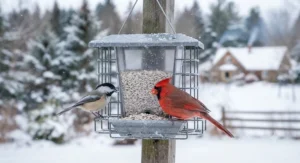
Armstrong All Season Blend is the seed mix most Canadians have probably already scooped out of a pail at their local hardware store, and it earns its popularity through sheer breadth of appeal. Built from cut corn, red milo, white millet, and black oil sunflower seed, the blend is engineered to draw ground feeders like juncos and mourning doves alongside jays and chickadees working the hanging feeders above them. What most buyers overlook about this model is that the corn and milo components aren’t filler in the pejorative sense — they’re specifically there for larger, ground-foraging species that sunflower-only blends leave out entirely. Reviewers frequently mention that pigeons and house sparrows also show up in numbers, which is a fair trade-off if your goal is maximum activity rather than a curated songbird guest list. Aggregated customer sentiment skews positive on value, with repeat buyers noting they stock up specifically before winter because the large pail format keeps well in a garage or shed.
Pros:
- ✅ Attracts the widest species range on this list
- ✅ Large pail and bulk formats reduce cost per kilogram
- ✅ Proven, decades-long track record with Canadian birders
Cons:
- ❌ Corn and milo content is less appealing to picky songbirds
- ❌ Tends to draw more pigeons and sparrows than premium mixes
Priced in the C$20-C$30 range for mid-size bags, with larger pails climbing higher, Armstrong All Season Blend remains the default entry point for anyone feeding birds in snow for the first time this season.
3. Armstrong Ultra Blend — no-corn premium mix for pickier songbirds
Armstrong Ultra Blend exists specifically to fix the one complaint levelled at the All Season line: too much corn, too many pigeons. Swapping in more white millet, sunflower, and peanut content while dropping corn and milo entirely, this blend is Armstrong’s answer for birders whose feeders back onto a wooded lot or ravine where finches, chickadees, and nuthatches dominate. Here’s what to weigh — a no-corn formula typically costs more per kilogram because the ingredients it leans on (sunflower, peanut pieces) are pricier commodities than field corn, but the trade-off shows up directly in which species actually stick around. Aggregated reviews describe noticeably less waste on the ground and fewer visits from house sparrows compared to standard blends, though a handful of buyers note that without the ground-scattering appeal of corn, doves and juncos are less frequent visitors.
Pros:
- ✅ No-corn formula reduces pigeon and sparrow traffic
- ✅ Higher proportion of high-fat sunflower and peanut pieces
- ✅ Less waste accumulation directly under the feeder
Cons:
- ❌ Premium ingredients push the price above general blends
- ❌ Fewer ground-feeding species drawn in without corn/milo
At roughly C$25-C$35 for a comparable bag size, Armstrong Ultra Blend is the mid-range step up for anyone who’s outgrown the general-purpose mix.
4. Schoen Farms Cardinal Blend — built for cardinals, jays and grosbeaks
Schoen Farms Cardinal Blend takes a more targeted approach, combining black oil and striped sunflower seed with safflower, sunflower kernels, and wheat specifically to appeal to larger-billed songbirds. On paper this means a seed mix that skews toward birds strong enough to crack open bigger shells — cardinals, evening grosbeaks, blue jays — rather than the smaller finches and sparrows a general blend attracts equally. The inclusion of safflower alongside sunflower is a deliberate hedge: safflower tends to be less attractive to squirrels and blackbirds, so this blend does double duty as a mild deterrent while still delivering the fat content cardinals need through short winter days. Reviewers describe strong, repeat cardinal visits within the first week, and several mention this as the blend that finally got a resident cardinal pair to treat their yard as a regular winter stop rather than an occasional detour.
Pros:
- ✅ Purpose-built for cardinals, jays and grosbeaks
- ✅ Safflower content mildly deters squirrels and blackbirds
- ✅ Sourced and packaged by a Canadian family-run farm
Cons:
- ❌ Less appealing to small finches than sunflower-only mixes
- ❌ Premium targeted formula costs more than general blends
Bags typically land around C$25 at the time of research, making Schoen Farms Cardinal Blend a smart add-on for anyone specifically chasing cardinal sightings this winter.
5. Schoen Farms Sunflower Kernels & Chips — the no-mess, no-waste option
Schoen Farms Sunflower Kernels & Chips solves a completely different problem than the seeds above it on this list: mess. Because the sunflower has already been hulled, there’s no shell for birds to crack and discard, which means no pile of husks accumulating on your deck, balcony, or lawn over the winter. What most buyers overlook about hulled sunflower is that it’s also more efficient by weight — birds get pure kernel rather than paying an energy cost to shell it themselves, which matters on the coldest days when every calorie counts. This is the blend condo and apartment-dwelling birders reach for, since balconies can’t accommodate the debris a shell-on mix leaves behind, and it’s equally popular with anyone managing lawn allergies or a fussy homeowners’ association. The trade-off, unsurprisingly, is cost: processing sunflower into kernels and chips adds a meaningful premium over whole seed.
Pros:
- ✅ Zero shell waste — ideal for patios and balconies
- ✅ Higher calorie delivery per gram than shell-on seed
- ✅ Appeals to nearly every backyard species, no exceptions
Cons:
- ❌ Noticeably pricier per kilogram than whole sunflower seed
- ❌ Spoils faster in damp conditions without a covered feeder
At C$30-C$40 for a comparable bag, this is the premium tier of the category — reviewers who’ve made the switch consistently say the lack of cleanup justifies the extra cost.
6. C&S High Energy Suet Treat — the fat-and-protein powerhouse
C&S High Energy Suet Treat shifts the conversation from seed entirely to rendered fat, and it’s arguably the single most important product on this list for genuine cold weather bird survival. Made from rendered beef suet blended with corn, millet, and additional protein sources depending on the variant, this is calorie-dense in a way no seed mix can match — pure fat delivers roughly twice the energy per gram that carbohydrate-based seed does, which is precisely why woodpeckers, nuthatches, and chickadees seek it out aggressively once temperatures drop. The spec sheet won’t tell you this, but user reports suggest the “no-melt” formulation genuinely does hold its shape through a Canadian winter, since the product only softens above roughly 38°C — a threshold most of the country simply doesn’t hit between November and March. Reviewers describe suet as the fastest way to draw woodpeckers specifically, alongside repeat visits from chickadees and nuthatches who treat it as a supplement to seed rather than a replacement.
Pros:
- ✅ Nearly double the energy density of seed by weight
- ✅ Stays firm through genuinely cold Canadian temperatures
- ✅ Individually wrapped cakes simplify storage and rotation
Cons:
- ❌ Requires a dedicated wire suet cage, not a standard feeder
- ❌ Can attract raccoons or other nocturnal wildlife if unsecured
An 8-pack typically runs under C$20 at the time of research, and given how far a single cake stretches in cold weather, this is the highest-value entry on the list for pure high-fat winter feed.
7. Schoen Farms Safflower Seeds — the squirrel-resistant specialty seed
Schoen Farms Safflower Seeds rounds out this list as the specialty pick for a very specific, very common Canadian backyard problem: squirrels cleaning out a feeder overnight. Safflower’s thick shell and bitter taste make it far less appealing to squirrels, blackbirds, and starlings than sunflower, while cardinals, chickadees, and doves take to it without hesitation. Based on the spec comparison with the sunflower-based products above, safflower carries a somewhat lower fat content than black oil sunflower, so it’s best used as part of a rotation or mixed feeding station rather than the sole winter food source. Reviewers who switched primarily to manage squirrel problems report a dramatic drop-off in squirrel visits within days, alongside steady cardinal and dove traffic that didn’t seem to mind the switch at all.
Pros:
- ✅ Genuinely effective, low-effort squirrel deterrent
- ✅ Cardinals and doves readily accept it
- ✅ Canadian-grown with consistent quality control
Cons:
- ❌ Somewhat lower fat content than black oil sunflower
- ❌ Some smaller finches show less initial interest
At C$25-C$35 depending on bag size, Schoen Farms Safflower Seeds earns its place as the problem-solving specialty seed on this list rather than an everyday staple.
Top 7 Products at a Glance
| # | Product | Category | Price Range (CAD) | Best For |
|---|---|---|---|---|
| 1 | Schoen Farms Black Oil Sunflower Seeds | Straight seed | Under C$25 | Value-focused, high-fat base |
| 2 | Armstrong All Season Blend | General mix | C$20-C$30 | Widest species variety |
| 3 | Armstrong Ultra Blend | Premium mix | C$25-C$35 | Songbirds, less pigeon traffic |
| 4 | Schoen Farms Cardinal Blend | Targeted mix | Around C$25 | Cardinals, jays, grosbeaks |
| 5 | Schoen Farms Sunflower Kernels & Chips | No-mess seed | C$30-C$40 | Balconies, patios, allergies |
| 6 | C&S High Energy Suet Treat | Suet | Under C$20 | Woodpeckers, extreme cold |
| 7 | Schoen Farms Safflower Seeds | Specialty seed | C$25-C$35 | Squirrel-heavy yards |
Read across this table and a clear strategy emerges: no single bag covers every scenario, so the best-performing winter feeding stations typically combine a sunflower-based staple like Schoen Farms Black Oil Sunflower Seeds with a suet option like C&S High Energy Suet Treat for the coldest stretches. If squirrels or mess are your specific pain point, layering in Schoen Farms Safflower Seeds or Schoen Farms Sunflower Kernels & Chips respectively solves those problems without abandoning the nutritional base the rest of your visitors depend on.
✨ Ready to build your winter feeding station? Check current prices and availability on the picks above before the next cold snap hits.
Setting Up & Maintaining Your Winter Feeding Station
Getting winter bird seed into a feeder is the easy part; keeping that feeder functional through freezing rain, drifting snow, and the occasional -30°C week is where most backyard setups quietly fail. Start by mounting or hanging feeders at least four metres from windows to reduce collision risk, a spacing guideline echoed in the Canadian Wildlife Federation’s winter feeding recommendations, and place them near — but not directly under — evergreen cover so birds have a fast escape route from hawks and other predators.
Feeding birds in snow comes with its own maintenance rhythm. After every significant snowfall, brush accumulated snow off feeder roofs and platforms before it melts, refreezes, and seals the seed port shut — a problem tube feeders are especially prone to in freeze-thaw cycles common across southern Ontario and the Maritimes. Check seed for clumping or mold every few days; damp, compacted seed at the bottom of a feeder is both wasted food and a potential health hazard. In the first 30 days of a new feeding station, expect a slow build — it commonly takes one to two weeks for local birds to discover a new feeder, and patience here matters more than switching seed types prematurely.
A rotating maintenance schedule works well: fill feeders every two to three days rather than topping up daily, which lets you actually monitor consumption rates and species activity. Clean feeders with a mild bleach solution (roughly one part bleach to nine parts water) monthly through winter, since cold weather slows mold growth but doesn’t stop it entirely. Store bulk seed in a sealed, rodent-proof container in a cool, dry space — a garage works, but avoid concrete floors, since moisture wicks upward into paper or cloth bags over time.
Real Backyards, Real Birds: Three Winter Feeding Scenarios
The apartment balcony birder. If you’re working with a small balcony in an urban high-rise and want to avoid mess your building manager will notice, Schoen Farms Sunflower Kernels & Chips in a compact tube feeder is the clear fit — no shells to sweep, no husks blowing onto a neighbour’s patio below. Budget for roughly C$30-C$40 per bag, refilled every week or two depending on local bird traffic.
The rural acreage with a squirrel problem. For a larger property backing onto woods, where squirrels have already cleaned out two feeders this season, pairing Schoen Farms Safflower Seeds in one feeder with Schoen Farms Black Oil Sunflower Seeds in another spread out the traffic, letting squirrel-resistant safflower protect at least one food source while the higher-fat sunflower keeps chickadees and nuthatches fed nearby.
The cardinal-obsessed suburban yard. If your goal is specifically drawing cardinals and jays through a snowy Prairie or Ontario winter, Schoen Farms Cardinal Blend paired with a caged suet feeder stocked with C&S High Energy Suet Treat creates a two-pronged setup — sunflower and safflower for daytime cardinal visits, suet for nuthatches and woodpeckers working the same yard.
Common Winter Feeder Problems, Solved
Problem: Seed disappears overnight with no birds seen. This is almost always squirrels or raccoons. Solution: switch the affected feeder to Schoen Farms Safflower Seeds, or add a baffle below the feeder pole.
Problem: Feeder port freezes shut after freezing rain. Solution: switch to a hopper or platform-style feeder for the coldest weeks, since narrow tube ports are the most prone to ice sealing.
Problem: Only house sparrows and pigeons show up. Solution: swap a corn-heavy general mix for Armstrong Ultra Blend, which drops the corn and milo those species specifically favour.
Problem: Seed goes moldy before birds finish it. Solution: reduce fill quantity and increase fill frequency — a smaller, fresher offering every two to three days beats a large stale one that sits for a week.
Problem: No woodpeckers or nuthatches despite good seed variety. Solution: this is a suet gap, not a seed gap — add C&S High Energy Suet Treat in a dedicated wire cage, since these species specifically seek fat over seed in winter.
How to Choose Winter Bird Seed
Choosing the right winter bird seed comes down to matching fat content, shell type, and target species to your specific yard conditions:
- Start with fat content, not price. Black oil sunflower and suet both deliver more usable energy per gram than corn- or milo-heavy fillers, which matters most in genuinely cold weather.
- Identify your target species first. Cardinals and grosbeaks need larger-shelled seed like Schoen Farms Cardinal Blend; finches and chickadees do better with sunflower hearts or straight black oil sunflower.
- Account for mess tolerance. Balconies, patios, and shared yards benefit from hulled options like Schoen Farms Sunflower Kernels & Chips, even at a higher price point.
- Factor in squirrel pressure. If squirrels are a recurring problem, safflower is a proven, low-effort fix worth the modest cost premium.
- Add suet for the coldest stretches. No seed alone matches the calorie density of suet during extended cold snaps — treat it as a supplement, not a substitute.
- Buy in a format you’ll actually store properly. Bulk pails save money but require dry, rodent-proof storage; smaller bags cost more per kilogram but reduce spoilage risk for casual feeders.
- Reassess by region. What works in coastal British Columbia’s milder, wetter winters differs from what performs through a Prairie deep freeze — adjust suet-to-seed ratio accordingly.
Common Mistakes When Buying Winter Bird Seed
The single most common mistake is buying the cheapest bulk mix available and assuming volume compensates for nutritional quality — it doesn’t, since low-cost fillers like cracked corn and milo simply get kicked to the ground by most songbirds, wasting a large share of every bag. A close second is ignoring shell type entirely: buying a shell-on mix for a shared condo balcony creates a mess problem that a slightly pricier hulled option like Schoen Farms Sunflower Kernels & Chips would have avoided outright.
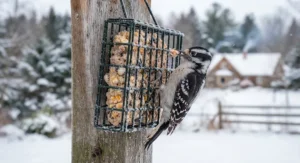
Another frequent misstep is skipping suet altogether because it “seems complicated,” when in practice a basic wire cage and a product like C&S High Energy Suet Treat requires no more effort than a standard seed feeder. Buyers also commonly underestimate storage needs, leaving seed in its original paper packaging in a damp shed, which invites mold and pest issues well before the bag is empty. Finally, many people switch seed types too quickly when a feeder is slow to attract visitors, when the real issue is simply time — new feeders typically take one to two weeks to be discovered, regardless of seed quality.
Winter Bird Seed vs. All-Season Blends
| Factor | Winter Bird Seed (High-Fat) | All-Season Blend |
|---|---|---|
| Primary ingredients | Black oil sunflower, safflower, suet | Corn, milo, mixed grains, some sunflower |
| Fat/calorie density | High | Moderate |
| Best season | November through March | Spring through fall |
| Typical price (CAD) | C$20-C$40 range | C$15-C$30 range |
| Best For | Cold-weather survival, targeted species | Year-round general feeding |
The core difference isn’t marketing — it’s composition. All-season blends like Armstrong All Season Blend are formulated for broad appeal across every season, which means a meaningful share of the mix is lower-fat filler grain that ground-feeding birds enjoy but that does little for a chickadee’s winter energy budget. Genuine winter bird seed shifts that ratio toward sunflower, safflower, and fat, which costs slightly more per bag but delivers noticeably more usable energy per feeding — a trade-off that matters far more in January than it does in June.
What to Expect: Real-World Winter Feeder Performance
On paper, fat and protein percentages are abstract numbers; in practice, they translate directly into how often birds visit and how long they stay. A feeder stocked with straight black oil sunflower or suet during a genuine cold snap tends to see near-constant activity from chickadees and nuthatches, since these species famously cache food and return repeatedly rather than gorging in one visit. A classic wildlife-management study tracking feeder-dependent black-capped chickadees in Wisconsin found that birds obtained roughly a fifth of their daily energy needs from winter feeders, which underscores that feeders supplement — rather than fully replace — natural foraging even in harsh conditions. You can read more in this peer-reviewed feeder-use study.
Expect slower activity during the mildest days of a Canadian winter, when insects and cached natural food are still somewhat accessible, and a sharp uptick in feeder traffic during and immediately after a cold front or snowstorm, when natural food sources are buried or frozen. Black-capped chickadees are widely regarded as Canada’s most common feeder species, and they typically visit winter feeding stations in loose flocks of roughly a dozen adults spread across a winter territory that can span about eight hectares, according to this Nature Alberta overview of wintering chickadee flocks, which explains why a single well-stocked feeder can seem to draw the same small crowd reliably all season.
Long-Term Cost & Maintenance
Total cost of ownership for a winter feeding station depends less on the sticker price of any single bag and more on how efficiently birds actually consume what you put out. A cheaper general mix that gets half-scattered onto the ground by picky songbirds can end up costing more per useful calorie delivered than a pricier, purpose-built blend that birds consume almost entirely.
| Product | Price Range (CAD) | Waste Level | Value Verdict |
|---|---|---|---|
| Schoen Farms Black Oil Sunflower Seeds | Under C$25 | Low-moderate (shells) | Best overall value |
| Armstrong All Season Blend | C$20-C$30 | Moderate (grain rejection) | Good for variety, less efficient |
| Schoen Farms Sunflower Kernels & Chips | C$30-C$40 | Very low (no shell) | Best for consistent daily use |
| C&S High Energy Suet Treat | Under C$20 | Very low | Best cold-weather ROI |
Looking at the table above, the products with the lowest apparent waste — hulled sunflower and suet — consistently deliver the strongest long-term value even at a higher upfront price, because virtually none of what you buy ends up discarded on the ground. Buyers feeding through a full Canadian winter, roughly November through March, should budget for a bag or suet pack replacement every two to four weeks depending on feeder count and local bird density, and stocking up during fall sales rather than mid-blizzard tends to be both cheaper and considerably less stressful.
Safety, Regulations & Responsible Winter Feeding in Canada
Feeding wild birds is broadly welcomed across Canada, but a few practical and regulatory considerations apply. Most municipalities don’t restrict backyard bird feeding directly, though some do have bylaws targeting feeders that inadvertently attract bears, raccoons, or deer — a real concern in parts of British Columbia and rural Ontario, where wildlife officials specifically discourage leaving feeders out once bears are active, and recommend securing suet and seed in wildlife-resistant containers overnight in shoulder-season regions. If you live in bear country, check with your provincial wildlife agency about seasonal feeder guidance before setting up suet, since suet’s fat content is exactly what attracts unwanted visitors.
Health and safety around feeders themselves matters too: regularly cleaning feeders reduces the risk of salmonella and other pathogens spreading among birds congregating at a shared food source, a concern flagged repeatedly by wildlife organizations working with backyard feeders. The Canadian Wildlife Federation’s own guidance recommends placing feeders at least four metres from windows and adding stickers or reflectors to cut down on collisions, and it specifically flags suet as a genuinely high-energy food for chickadees, nuthatches, woodpeckers and other insect-eating birds that rely on animal fat to stay warm through winter — you can review the full CWF winter bird-feeding guidance for more detail. Following these basic practices keeps your winter feeding station both effective and responsible.
Frequently Asked Questions
❓ What is the best winter bird seed for Canada?
❓ What to feed birds in winter canada when squirrels are a problem?
❓ Is suet necessary for cold weather bird survival?
❓ How often should I refill a winter bird feeder?
❓ Does feeding birds in snow actually help them survive?
Conclusion
Winter bird seed isn’t a single product so much as a small toolkit — a high-fat sunflower base, a targeted mix for the species you actually want to see, suet for the coldest stretches, and maybe safflower if squirrels have been a headache. Across the seven products covered here, Schoen Farms Black Oil Sunflower Seeds stands out as the most efficient everyday staple, C&S High Energy Suet Treat earns its keep the moment temperatures really drop, and specialty options like Schoen Farms Safflower Seeds and Schoen Farms Sunflower Kernels & Chips solve specific, common backyard problems rather than trying to be everything at once.
The real takeaway is that matching seed to season, species, and setup matters more than chasing the single “best” bag on the shelf. A little planning now — before the next deep freeze rolls through — pays off in a noticeably busier, healthier backyard right through to spring.
Recommended for You
- Black Oil Sunflower Seeds Canada Bulk: 7 Top Picks for 2026
- Safflower Seed Canada Squirrel Proof: 7 Top Picks for 2026
- Nyjer Seed for Finches: 7 Top Picks That Actually Work (2026)
Disclaimer: This article contains affiliate links. As an Amazon Associate, I earn from qualifying purchases. If you purchase products through these links, we may earn a small commission at no additional cost to you.
✨ Found this helpful? Share it with your friends! 💬🤗
