
In This Article
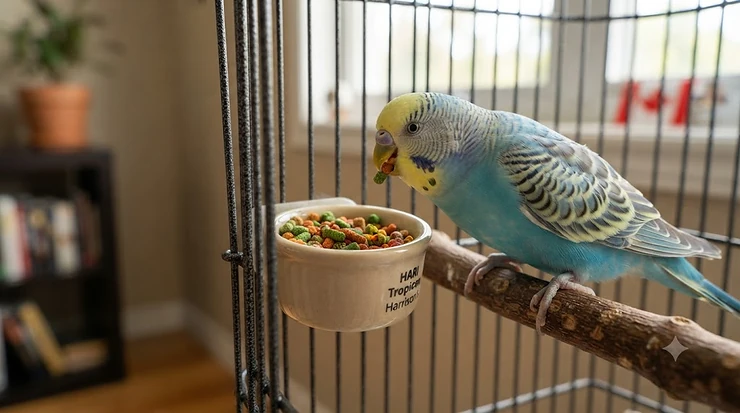
Open any parrot forum and you’ll find the same argument on a loop: seeds versus pellets, cheap versus “worth it,” dyed rainbow chunks versus something a little more, well, dignified. Somewhere in that noise sits a quieter question that actually matters — is the bag in your cart doing anything real for your bird, or is “organic” just a word printed in green letters to make you feel better at checkout? Organic bird pellets are formulated diets made primarily from certified organic grains, seeds, and produce, grown and processed without synthetic pesticides, artificial preservatives, or genetically modified ingredients, and independently verified by an accredited certifying body. That’s the textbook version. The practical version is messier, and that’s what this guide is for.
We’re going to walk through seven real, currently available pellet products, compare them honestly, and dig into what separates a genuinely organic diet from clever marketing. You’ll get specific brands, specific price ranges in Canadian dollars, and specific reasoning for who should buy what — not vague “great for your bird!” filler. Whether you’re converting a stubborn cockatiel off sunflower seeds or shopping for a macaw who treats every new food like a personal insult, there’s a practical answer here. And because Canada’s organic rules for pet food work a little differently than most owners assume, we’ll clear that up too, so you’re buying based on facts instead of a label’s best guess at your trust.
Quick Comparison Table: Organic Bird Pellets at a Glance
Before the deep dive, here’s the scorecard. Every product below is USDA Organic Certified (more on why that matters for Canadian buyers in a moment), non-GMO, and free of artificial colours or flavours.
| Product | Best For | Bird Size | Price Range (CAD) | Rating Signal |
|---|---|---|---|---|
| TOP’s Parrot Food Mini Pellets | Budget entry for small birds | Budgies, cockatiels, lovebirds | C$20–C$25 (1 lb) | 4.6/5 avg. across major retailers |
| TOP’s Parrot Food Bird Pellets for Small Hookbills | Mid-size hookbills on a budget | Conures, quakers, parrotlets | C$45–C$55 (4 lb) | 4.6/5 avg. |
| TOP’s Large Parrot Pellets (All Size Hookbills) | Big birds, cold-pressed nutrition | Macaws, greys, cockatoos | C$45–C$55 (4 lb) | 4.5/5 avg. |
| Harrison’s Organic Premium Pellets (HOPP) | No-fuss complete diet, no supplements | Small–medium birds | C$25–C$32 (1 lb) | 4.7/5 avg. |
| Harrison’s High Potency Fine | Conversion, breeding, molting | Small–medium birds | C$28–C$35 (1 lb) | 4.6/5 avg. |
| Harrison’s Adult Lifetime Coarse | Long-term maintenance | Medium–large parrots | C$28–C$35 (1 lb) | 4.6/5 avg. |
| Harrison’s High Potency Coarse | High-nutrition conversion for big birds | Medium–large parrots | C$30–C$38 (1 lb) | 4.5/5 avg. |
A quick note before you skim past this table: price-per-pound looks similar across brands, but the feeding math isn’t. TOP’s pellets skip corn, soy, and peanuts entirely, which some owners treat as non-negotiable; Harrison’s maintenance formulas reintroduce toasted soybeans and peanut kernels as protein sources, which is a legitimate nutritional choice but not one every owner wants. Neither approach is objectively “better” — it depends on what your vet has flagged for your species and what your bird will actually eat, which is the real currency here. According to the Canadian Food Inspection Agency’s organic products guidance, any product using the word “organic” in trade must meet the Canadian Organic Standards or an equivalent foreign standard — a detail that changes how you should read every bag on this list, which we’ll unpack in the regulations section below.
💬 Just one click — help others make better buying decisions too!😊
Best Organic Parrot Pellets: Top 7 Picks Reviewed for 2026
This is where we get specific. Each of these seven products is real, currently sold, and represents a genuine style of organic bird pellets — not filler entries to hit a number. We’ve grouped them from budget-friendly small-bird options through to premium formulas for large parrots, so scroll to the size and life stage that matches your flock.
1. TOP’s Parrot Food Mini Pellets — smallest pellet size for tiny beaks
If you’ve ever watched a budgie try to gum its way through a pellet meant for a macaw, you already understand why pellet size is its own category of importance, not an afterthought. TOP’s Parrot Food Mini Pellets measure just 3/32 of an inch across, small enough for budgies, cockatiels, lovebirds, and parrotlets to manage without turning dinner into a demolition project. The formula is cold-pressed rather than baked, a process the company says preserves more of the natural enzyme activity that high-heat extrusion can destroy, and it’s built on organic alfalfa, hulled millet, barley, rice, and quinoa rather than the corn-heavy base common in cheaper mixes.
On paper, this means a nutrient-dense small-bird diet without the soy, corn, peanut, or wheat allergens that show up in a lot of budget pellets — useful if your bird has ever had a mystery skin or digestive reaction you couldn’t quite pin down. Reviewers consistently report that finicky budgies and lovebirds take to the small size faster than to standard pellets, though a recurring theme in aggregated feedback is that the natural, undyed appearance takes some owners by surprise; birds accustomed to bright seed mixes sometimes need a slower introduction. This is a genuinely organic-first product built for the smallest companion birds in your home, not a scaled-down version of a formula designed for something bigger.
Pros:
- ✅ Smallest pellet size on this list, ideal for budgies and lovebirds
- ✅ Free of corn, soy, peanuts, and wheat
- ✅ Naturally preserved with rosemary and citrus peel, no synthetic additives
Cons:
- ❌ Undyed, muted appearance can slow acceptance versus colourful seed mixes
- ❌ Smaller package sizes mean a higher cost per pound at the 1 lb tier
At around C$20–C$25 for a 1 lb bag at the time of research, TOP’s Parrot Food Mini Pellets sit at the accessible end of certified organic — a smart first bag if you’re testing whether your small bird will even eat pellets before committing to a bulk size.
2. TOP’s Parrot Food Bird Pellets for Small Hookbills — best value for mid-size hookbills
Move up a size class and you land on TOP’s Parrot Food Bird Pellets for Small Hookbills, sized at 5/32 of an inch and built specifically for conures, quakers, parrotlets, and parakeets — birds too big for the mini pellet and too small for the large-parrot formula. What most buyers overlook about pellet sizing is that it’s not just about fitting the beak; undersized pellets get bolted down without proper mechanical breakdown, and oversized ones get dropped and wasted, so this middle tier solves a real, specific problem rather than existing as a marketing tier.
The ingredient panel mirrors the rest of the TOP’s lineup — organic sunflower seed, sesame, buckwheat, dandelion leaf powder, kelp, and rose hips — with no corn, soy, or peanut filler. Based on the spec comparison with competing hookbill pellets in this price bracket, the absence of synthetic preservatives like BHA, BHT, and ethoxyquin is the standout differentiator; those preservatives extend shelf life cheaply but have been linked in some animal studies to liver stress with long-term exposure, which is exactly the kind of ingredient organic buyers are trying to avoid in the first place. Aggregated review sentiment across major retailers points to strong acceptance among conures specifically, with several owners noting a smoother transition than they’d had with previous pellet brands.
Pros:
- ✅ Purpose-sized for conures, quakers, and parrotlets
- ✅ No BHA, BHT, or ethoxyquin synthetic preservatives
- ✅ Available in bulk sizes up to 25 lb for multi-bird households
Cons:
- ❌ Cold-pressed texture is firmer than some extruded competitors
- ❌ Limited flavour variety compared to mainstream non-organic brands
Expect this one in the C$45–C$55 range for a 4 lb bag, with the 25 lb bulk option offering meaningfully better cost-per-pound if you’re feeding more than one bird.
3. TOP’s Large Parrot Pellets (All Size Hookbills) — best cold-pressed option for big beaks
Macaws, African greys, Amazons, and cockatoos need a pellet that can survive contact with a beak strong enough to crack a Brazil nut, and TOP’s Large Parrot Pellets are sized accordingly at the top of the company’s range. The guaranteed analysis lists a minimum 13.6% crude protein, a maximum 8% crude fiber, and a minimum 5% crude fat — figures that sit comfortably within the ranges veterinary nutrition references recommend for adult maintenance in most large psittacine species, though protein needs do shift upward during molt or breeding.
Here’s what the spec sheet won’t tell you outright, but the formulation implies: because this pellet skips synthetic vitamin fortification tricks common in baked (extruded) pellets and relies on cold-pressing to retain nutrients from whole organic ingredients, the vitamin content can vary slightly batch to batch compared to a heavily fortified extruded diet. That’s a trade-off, not a flaw — you’re choosing whole-food-derived nutrition over engineered consistency, and reviewers who’ve made that switch tend to comment on stool consistency and feather quality improving over several weeks, though individual results always vary by bird and by what else is in the diet. This is a good match for owners who already supplement with fresh vegetables and want a pellet base that isn’t fighting that effort with heavy processing.
Pros:
- ✅ Sized specifically for macaws, greys, cockatoos, and Amazons
- ✅ Cold-pressed to help retain natural enzyme activity
- ✅ Free from soy, corn, peanut, and wheat allergens
Cons:
- ❌ Batch-to-batch nutrient consistency can vary slightly versus extruded diets
- ❌ Firmer texture may need a longer transition period for older birds
At C$45–C$55 for a 4 lb bag, or C$180–C$220 for the 25 lb bulk size at the time of research, this is a reasonable mid-range entry point for large-parrot organic feeding.
4. Harrison’s Organic Premium Pellets (HOPP) — best no-supplement complete diet
Harrison’s Organic Premium Pellets, often shortened to HOPP by long-time users, are built around a specific promise: complete nutrition with zero need for additional vitamin or mineral supplementation. The guaranteed analysis — 15% protein, 4.6% fat, 5.5% fiber, 12% moisture — is formulated by avian veterinarians rather than general pet-food nutritionists, and the ingredient list excludes soy, corn, and peanuts, which puts it philosophically closer to the TOP’s lineup than to some of Harrison’s own maintenance formulas.
Reviewers consistently note two things about HOPP: first, that the shape and texture seem to appeal to picky eaters who’ve rejected other organic pellets, and second, that the price reflects a premium tier — this isn’t the budget shelf. What most buyers overlook is that “no supplementation needed” is a genuine formulation claim, not just marketing language; over-supplementing a bird already on a complete pelleted diet is a real risk, since excess fat-soluble vitamins accumulate in the body and can reach toxic levels over time. Choosing a complete diet like HOPP and then skipping the vitamin drops you might have used with a seed mix isn’t cutting corners — it’s following the label as intended.
Pros:
- ✅ Formulated to require no additional vitamin or mineral supplementation
- ✅ Free of soy, corn, and peanut fillers
- ✅ Strong acceptance among traditionally picky eaters, per aggregated reviews
Cons:
- ❌ Premium price point compared to TOP’s equivalent sizes
- ❌ Smaller bag sizes mean more frequent reordering for larger flocks
Budget C$25–C$32 for a 1 lb bag at the time of research; larger multi-pound bags bring the per-ounce cost down noticeably.
5. Harrison’s High Potency Fine — best for conversion, breeding, and molting
Some life stages ask more of a diet than daily maintenance can deliver, and that’s the gap Harrison’s High Potency Fine is built to fill. With 18.5% crude protein and 12% crude fat — noticeably richer than the maintenance-tier Harrison’s formulas — this is designed for birds converting from seed to pellets, breeding pairs, molting birds rebuilding feather protein, or chicks being weaned onto solid food.
Here’s what the spec sheet won’t tell you but veterinary nutrition literature backs up: molting alone significantly increases a bird’s protein requirement, since feathers are made almost entirely of protein and can represent roughly a quarter of a bird’s total body protein content during a heavy molt. Feeding a maintenance-level pellet through that period isn’t wrong, exactly, but it’s leaving nutritional headroom on the table when a bird needs it most. Aggregated review sentiment flags this formula as particularly effective during dietary conversion — several owners report success getting stubborn seed-only birds to accept pellets when High Potency Fine was mixed gradually into an existing diet over one to two weeks, a timeline that matches general avian conversion guidance.
Pros:
- ✅ Higher protein and fat suited to breeding, molting, or conversion
- ✅ Certified organic, human-grade ingredients
- ✅ Frequently cited in reviews as effective for stubborn seed-to-pellet transitions
Cons:
- ❌ Too rich for long-term use in sedentary adult birds outside these life stages
- ❌ Requires monitoring to know when to transition to a maintenance formula
Pricing sits around C$28–C$35 for a 1 lb bag, positioning it as a targeted, temporary-use product rather than an everyday staple for most birds.
6. Harrison’s Adult Lifetime Coarse — best long-term maintenance for large parrots
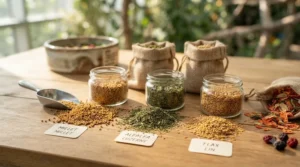
Once a bird has spent roughly six months on a High Potency formula, Harrison’s Adult Lifetime Coarse is the maintenance diet most avian professionals point to next for medium to large parrots — pionus, Amazons, cockatoos, and macaws among them. The guaranteed analysis (minimum 15% protein, 5.5% fat, maximum 6.5% fiber) is deliberately less intense than the High Potency line, matched to a non-breeding, non-molting adult’s actual energy needs rather than a growth or recovery phase.
Here’s the honest wrinkle worth flagging: unlike TOP’s, this formula’s ingredient list includes whole corn, toasted soybeans, and peanut kernels alongside the organic grains and legumes. That’s not a defect — corn, soy, and peanuts are common, well-studied protein and energy sources in organic agriculture — but it does mean birds with known soy or peanut sensitivities, or owners philosophically committed to avoiding those three ingredients specifically, should look at the TOP’s or HOPP lines instead. What most buyers overlook is that “certified organic” and “free of common allergens” are two separate promises; this product delivers fully on the first without making the second claim at all.
Pros:
- ✅ Vet-developed maintenance formula for medium-large parrots
- ✅ Certified organic, non-GMO whole grains and legumes
- ✅ Coarse texture suited to strong-beaked species that prefer chewing
Cons:
- ❌ Contains corn, soy, and peanut — not allergen-free like the TOP’s lineup
- ❌ Coarse grind means some visible ingredient variation batch to batch
Expect around C$28–C$35 for a 1 lb bag, with bulk 25 lb bags in the C$350–C$420 range at the time of research for households feeding multiple large parrots.
7. Harrison’s High Potency Coarse — best high-nutrition conversion formula for big birds
Rounding out the list, Harrison’s High Potency Coarse is the large-bird counterpart to the High Potency Fine formula above — a richer, nutrient-dense diet aimed at medium to large parrots that are converting from another diet, breeding, or recovering from illness. The coarse grind matches the mechanical needs of species like macaws and cockatoos, whose beaks are built to work through tougher textures rather than fine crumbles.
Based on the spec comparison with Harrison’s own Adult Lifetime Coarse, the jump in protein and fat here is deliberate and temporary by design, not a permanent upgrade — this is a formula meant to be stepped down once a bird stabilizes. What most buyers overlook is that switching a healthy, non-breeding adult onto a High Potency formula indefinitely can push protein intake higher than that bird actually needs, and excess dietary protein has been associated with renal strain in birds with existing kidney vulnerability. Reviewers who’ve used this specifically for post-illness recovery under veterinary guidance report positive outcomes, which lines up with its intended, targeted use case rather than everyday feeding.
Pros:
- ✅ High-nutrition formula suited to breeding, conversion, or recovery
- ✅ Coarse texture appropriate for large, strong-beaked parrots
- ✅ Certified organic and non-GMO verified
Cons:
- ❌ Not intended for indefinite daily feeding in healthy adult birds
- ❌ Contains corn, soy, and peanut like its Adult Lifetime counterpart
Pricing runs roughly C$30–C$38 for a 1 lb bag at the time of research — a targeted purchase best paired with guidance from your avian vet on when to transition off it.
✨ Don’t Miss These Exclusive Deals!
🔍 Whichever size and life stage matches your bird, click through on any highlighted product above to check current pricing and availability before you commit to a bag size. Getting the right formula the first time saves your bird a rough transition — and saves you a half-eaten 25 lb bag.
Practical Usage Guide: Converting Your Bird to Organic Pellets
Buying the right bag is step one. Getting your bird to actually eat it is the part nobody puts on the label. Start slow: mix a small amount of the new organic pellet into your bird’s existing food, gradually increasing the ratio over seven to fourteen days rather than swapping the bowl overnight, which almost always triggers a hunger strike in a stubborn eater. Weigh your bird weekly during the transition — a genuine reluctance to eat shows up as weight loss before it shows up as obvious behaviour, and that’s your signal to slow down, not push harder.
Common first-30-days mistakes are predictable once you’ve seen them a few times. Owners often remove seeds entirely on day one, which can backfire with birds that simply refuse to eat anything unfamiliar; a slower taper works better than cold turkey for most species. Storage matters more with organic pellets specifically, since these formulas skip the synthetic preservatives that extend shelf life in conventional bags — keep the bag sealed, stored in a cool, dry spot away from direct sunlight, and use within eight to ten weeks of opening for best nutrient retention. Freezing unopened portions in an airtight container extends usable life by several months if you’ve bought in bulk. Finally, resist the urge to sprinkle in seed treats as a “just in case” backup during conversion; it undercuts the entire point of the transition and teaches your bird that holding out gets rewarded.
Real-World Scenarios: Which Organic Pellet Fits Your Flock
The apartment-dwelling budgie owner. Two budgies, a modest budget, and a shared kitchen counter that can’t handle a 25 lb bag taking up permanent residence. This household is the textbook case for TOP’s Parrot Food Mini Pellets — small bag sizes, a price point that doesn’t demand a bulk commitment, and a pellet sized correctly from the first purchase.
The multi-bird conure household. Three conures, moderate activity, and a genuine interest in long-term cost control. TOP’s Parrot Food Bird Pellets for Small Hookbills in the 25 lb bulk size makes financial sense here, especially paired with the practical usage guide above to manage a smooth, staggered conversion across three individual birds with three individual opinions about change.
The breeding pair recovering from a rough molt. A pair of Amazons mid-molt, feather quality visibly dull, energy lower than usual. This is precisely the scenario Harrison’s High Potency Fine or Harrison’s High Potency Coarse was formulated for — a temporary, protein-rich bridge rather than a forever diet, ideally used alongside a conversation with an avian vet about when to step back down to a maintenance formula like Harrison’s Adult Lifetime Coarse.
Problem → Solution: Fixing the Five Most Common Pellet Complaints
Problem: my bird won’t touch the new pellets. Solution: slow the transition timeline, and try warming the pellets slightly or offering them alongside a favourite fresh vegetable to build positive association — birds are more food-neophobic than most owners expect, and rushing this step is the single biggest cause of failed conversions.
Problem: the bag feels expensive compared to grocery-store seed mix. Solution: calculate cost per feeding day rather than cost per bag. A 25 lb bag of TOP’s Small Hookbills Pellets lasts substantially longer per bird than the same weight in loose seed, since pellets minimize the selective eating and waste that seed mixes invite.
Problem: pellets go stale or smell off before the bag is finished. Solution: this is a storage issue, not a product flaw — reseal tightly after every use, keep the bag away from humidity, and consider portioning larger bulk bags into smaller airtight containers with the surplus frozen.
Problem: my vet mentioned my bird’s protein intake seems too high. Solution: check whether you’ve left a bird on a High Potency formula past its intended window; stepping down to a maintenance formula like Harrison’s Adult Lifetime Coarse or Harrison’s Organic Premium Pellets typically resolves this.
Problem: I can’t tell if a bag labelled “organic” is actually certified. Solution: look for the certifying body’s name printed on the packaging — genuine certified organic products name their certifier explicitly, which is exactly what the next section digs into.
How to Choose Organic Bird Pellets
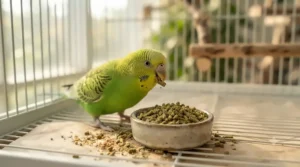
- Confirm real certification, not just the word “organic.” Look for a named certifying body on the packaging — USDA Organic and Canada’s own Canadian Organic Standards both require this, and its absence is a red flag.
- Match pellet size to your bird’s species, not just its weight. A pellet sized for a cockatiel and one sized for a macaw differ meaningfully, and using the wrong size increases waste and choking risk.
- Check the allergen profile against your bird’s history. If your bird has had reactions to soy, corn, or peanuts, formulas like the TOP’s lineup that exclude all three are worth prioritizing.
- Match the formula to life stage, not just species. Breeding, molting, and conversion periods call for higher-protein formulas; healthy stable adults generally do better long-term on maintenance-tier diets.
- Look at the preservation method. Naturally preserved, cold-pressed products avoid BHA, BHT, and ethoxyquin, but typically need more careful storage and a shorter use-by window than synthetically preserved competitors.
- Read aggregated review sentiment, not just star averages. A 4.6-star rating built on hundreds of reviews mentioning “picky eater finally converted” tells you more than the number alone.
- Compare cost per feeding day, not cost per bag. Bulk organic pellets often beat conventional seed mixes on real cost once you account for reduced waste.
Non-GMO Parrot Food vs Conventional Pellets
The gap between non-GMO parrot food and standard commercial pellets isn’t just a label — it traces back to how the base grains are grown and sourced. Conventional pellet manufacturers frequently rely on genetically modified corn and soy because both crops are cheap, high-yield, and widely available; non-GMO parrot food, by contrast, sources grains bred through conventional selection rather than genetic modification, which is a distinct regulatory category from organic certification even though the two frequently overlap in practice. For a full technical breakdown of how genetic modification works and how it differs from selective breeding, Wikipedia’s overview of genetically modified food is a solid, neutral starting point.
Here’s the analytical distinction that gets lost in marketing copy: a product can be non-GMO without being organic, and — much less commonly — could theoretically be organic without an explicit non-GMO claim, though in practice organic certification standards already prohibit GMO ingredients, so the two labels tend to travel together on genuinely certified products. What most buyers overlook is that “non-GMO” alone says nothing about pesticide use, synthetic fertilizer, or preservative content; it’s a narrower claim than “certified organic,” which folds non-GMO status in alongside broader agricultural and processing standards. If a bag only says “non-GMO” without an organic certification mark, you’re getting one piece of the picture, not the whole one — worth knowing before you pay a premium expecting the full organic standard.
Certified Organic Pet Food: What the Label Actually Means
This is where Canadian buyers hit a genuinely useful, and genuinely underreported, regulatory wrinkle. Certified organic pet food sold in Canada operates under different oversight than certified organic food for human consumption. According to the Canadian Food Inspection Agency, pet food is explicitly excluded from the scope of the Canada Organic Regime — meaning products like bird pellets cannot bear the Canada Organic Logo, even when they’re certified organic under a foreign standard like USDA Organic. That’s not a flaw in the products on this list; every one of them carries genuine USDA Organic certification, which is a rigorous, third-party-verified standard in its own right. It simply means Canadian shoppers should look for the certifying body’s name directly (USDA Organic, in the case of every product reviewed here) rather than expecting a Canadian organic logo that these product categories aren’t eligible to display.
It’s also worth understanding that pet food broadly receives lighter regulatory oversight in Canada than human food or livestock feed does. The Pet Food Association of Canada notes that Canadian pet food manufacturers commonly align voluntarily with nutritional standards set by the Association of American Feed Control Officials, since Canada doesn’t mandate its own national nutritional standards for pet food. Practically, this means the organic certification on a bag of bird pellets is doing real, independently verified work — but it’s operating alongside a lighter general regulatory backdrop than many owners assume, which makes checking for that certifying body’s name even more worthwhile than it might first appear.
Chemical-Free Bird Diet: Features That Actually Matter (And Those That Don’t)
“Chemical-free” is one of those phrases that sounds absolute but rarely is — technically, water is a chemical, and so is vitamin A. What owners actually mean, and what matters in practice, is the absence of synthetic pesticide residue, artificial dyes, artificial flavours, and synthetic preservatives like BHA, BHT, and ethoxyquin. Every product on this list delivers on that meaningfully: none contain artificial colouring, and the naturally preserved formulas lean on rosemary, rose hips, and citrus peel instead of synthetic stabilizers.
What doesn’t matter nearly as much as marketing suggests: pellet colour variety. A multicoloured pellet mix looks appealing on a shelf, but psittacine research indicates dyed pellets offer no nutritional advantage over naturally coloured ones, and owners occasionally report birds selectively eating only certain colours, which recreates the exact selective-eating problem pellets are supposed to solve. Similarly, exotic superfood add-ins — think goji berries or maqui powder — sound impressive on packaging but contribute a negligible percentage of a bird’s actual daily nutrition at the trace amounts typically included. The features that genuinely move the needle are certification legitimacy, allergen transparency, and a protein/fat profile matched to your bird’s actual life stage — everything else is closer to packaging than to nutrition.
Natural Parrot Nutrition for Different Life Stages
Natural parrot nutrition isn’t a single fixed target; it shifts meaningfully across a bird’s life. Chicks and juveniles being weaned need easily digestible, calorie-dense formulas — this is the window where a hand-feeding or high-potency conversion diet earns its keep, since growth demands outpace what a maintenance formula was designed to deliver. Breeding adults need a similar boost during egg production and chick-rearing, when calcium and protein demands climb sharply and a maintenance-tier pellet alone can leave real nutritional gaps.
Healthy, non-breeding adults are where most companion birds spend the bulk of their lives, and this is exactly the population maintenance formulas like Harrison’s Adult Lifetime Coarse and Harrison’s Organic Premium Pellets were built around — steady, moderate protein and fat, without the surplus that a growing or breeding bird needs. Senior birds often benefit from continued maintenance-level feeding, though owners should watch for age-related shifts in activity and adjust portion size rather than formula, since most organic pellets don’t require a distinct “senior” reformulation the way some mammal pet foods do. Reviewers consistently note that mismatched life-stage feeding — a healthy adult left on a high-potency formula indefinitely, for instance — shows up subtly, in weight gain or overly rich stool, well before it becomes an obvious problem, which is exactly why matching formula to life stage deserves more attention than it typically gets.
Long-Term Cost & Maintenance
Sticker shock at the register is real, but it’s the wrong lens for comparing organic pellets to cheaper alternatives. Run the numbers over a year instead. A single Amazon parrot eating roughly 60–70 grams of pellets daily consumes somewhere around 24–27 kg annually. At the bulk pricing on TOP’s Large Parrot Pellets (roughly C$180–C$220 for 25 lb, or about 11.3 kg), that annual cost lands in a range that’s genuinely comparable to mid-tier conventional pellets once you account for reduced waste — organic pellets formulated without fillers tend to produce less discarded, uneaten material than seed mixes, where birds routinely reject 20–30% of the mix by selectively eating only preferred pieces.
Maintenance costs beyond the bag itself are modest but real: proper airtight storage containers, a kitchen scale for portion tracking during transitions, and periodic vet check-ins to confirm the formula still matches your bird’s life stage. None of these are optional extras so much as they’re what makes the investment in organic feeding actually pay off — a certified organic pellet stored carelessly and left to go stale delivers a fraction of its intended nutritional value, no matter how good the ingredient list looked on the shelf.
Safety, Regulations & Compliance Guide for Canadian Bird Owners
Beyond organic certification specifically, Canadian bird owners should understand the broader regulatory landscape their pellets sit within. As the CFIA outlines regarding pet food oversight, the agency’s involvement with pet food is largely limited to import and export compliance for animal-origin ingredients, rather than comprehensive domestic safety inspection the way human food receives. In practice, that places more responsibility on choosing manufacturers with a demonstrated track record — both TOP’s and Harrison’s have been producing organic avian formulas for decades, with published guaranteed analyses and traceable, named certifying bodies, which is a meaningfully higher bar than an unfamiliar brand with vague “organic-inspired” language and no certifier named anywhere on the packaging.
Practical safety habits matter just as much as brand selection. Always check the manufacture or best-by date before purchase, since naturally preserved organic pellets have a shorter shelf life than synthetically preserved competitors. Discard any pellets showing mould, unusual odour, or moisture clumping immediately — organic formulations without synthetic preservatives are more vulnerable to spoilage if storage conditions slip. And if you’re travelling with your bird or importing pellets personally rather than through a retailer, be aware that personal pet food imports into Canada carry their own documentation requirements, so buying through an established Canadian-facing retailer rather than shipping bags across the border yourself is generally the simpler path.
Frequently Asked Questions
❓ Are organic bird pellets actually better than regular pellets?
❓ How long does it take to convert a bird to organic bird pellets?
❓ Can I feed non-GMO parrot food alongside fresh vegetables?
❓ Why don't organic bird pellets have bright colours like some seed mixes?
❓ Is certified organic pet food regulated the same way in Canada as in the US?
Conclusion
Organic bird pellets aren’t a magic fix, and no single bag on this list will single-handedly transform a picky eater into an easy one overnight. What they do offer, when genuinely certified, is a verifiable step away from synthetic pesticides, artificial dyes, and preservatives that have no real upside for your bird’s long-term health. The seven products here — from TOP’s Parrot Food Mini Pellets at the small-bird budget end through Harrison’s High Potency Coarse for large parrots in recovery or conversion — represent real, distinct approaches to that same underlying goal, not interchangeable options separated only by packaging.
The choice that actually matters isn’t “organic versus not.” It’s matching pellet size, allergen profile, and life-stage formulation to the specific bird eating it, then storing and feeding that pellet properly so its organic advantages aren’t wasted in a poorly sealed bag on a sunny counter. Do that, and the investment in certified organic nutrition holds up — not as a trend, but as a genuinely defensible choice for your bird’s daily plate.
Recommended for You
- Best Pellets for Budgies in 2026: 7 Vet-Backed Picks Compared
- Best Parrot Pellets 2026: 7 Top Picks Vets Actually Trust
- 7 Best Replacement Bird Bath Bowl Picks for 2026 (Canada Guide)
Disclaimer: This article contains affiliate links. As an Amazon Associate, I earn from qualifying purchases. If you purchase products through these links, we may earn a small commission at no additional cost to you.
✨ Found this helpful? Share it with your friends! 💬🤗
