
In This Article
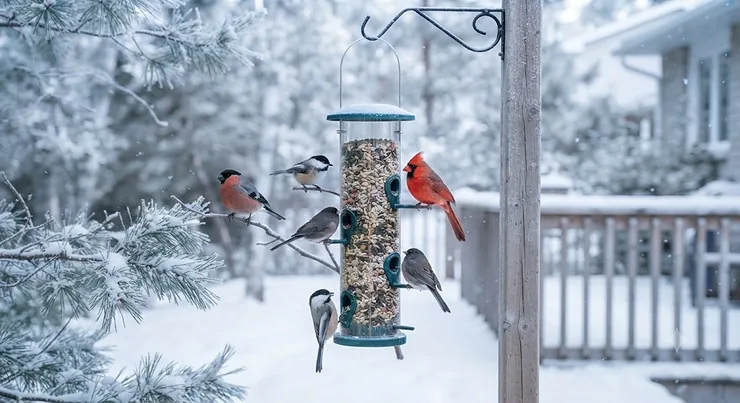
There’s a very specific kind of guilt that comes from mowing your lawn and hitting a crunchy carpet of sunflower shells. You meant to feed the birds. What you actually did was plant a shell graveyard under your feeder, and now your mower sounds like it’s chewing gravel. If that’s you, welcome — you’re exactly why no mess bird seed exists.
The idea is refreshingly simple: strip away the inedible hulls before the seed ever reaches the feeder, so every bit of it is something a bird can actually eat. No shells raining down. No seedlings sprouting in your flower bed next spring. No sweeping the patio every Sunday like it’s a second job. For a country where half the yard is buried in snow for months and the other half is prime patio season, that matters more than most Canadians realize.
This guide breaks down what shell-free bird seed actually is, why it beats a bargain-bin mixed bag, and which real products on the market in 2026 are worth your money. We’ll walk through seven specific blends — budget, mid-range, and premium — with honest analysis of what each one gets right and where it falls short, backed by real spec sheets and aggregated reviewer sentiment rather than marketing fluff. By the end, you’ll know exactly which bag to toss in your cart and why.
What Is No Mess Bird Seed?
No mess bird seed is a wild bird food blend made entirely from hulled, or shelled, ingredients — sunflower hearts, shelled peanuts, and hulled millet — so there are no husks left behind for birds to crack and discard. Because nothing is thrown to the ground, feeding areas stay cleaner and seeds can’t sprout into unwanted seedlings.
Quick Comparison Table
| Product | Best For | Bag Size | Price Range (CAD) |
|---|---|---|---|
| Kaytee Ultimate No Mess | Overall best all-rounder | 9.75 lb | C$30-C$40 |
| Morning Song Clean & Free | Budget-conscious backyard birders | 12 lb | C$25-C$35 |
| Audubon Park Waste Free | Widest variety of songbird visitors | 12 lb | C$25-C$35 |
| Pennington Recipe Selects Sunflower Chips | Small feeders, condos, and porches | 5 lb | C$15-C$22 |
| CountryMax Coarse Hearts | Bulk value without sacrificing quality | 20 lb | C$45-C$60 |
| Valley Farms Whole Sunflower Hearts | Premium, cleanest possible feed | 40 lb | C$75-C$95 |
| Lyric Delite No Waste Mix | Nut-and-seed variety in one bag | 20 lb | C$45-C$60 |
Looking at the spread above, the sweet spot for most Canadian backyards sits in the 12-20 lb range — enough to get through a few weeks of feeding without the seed going stale before you can use it. If you’re just testing whether shell-free feed is worth the switch, the Pennington Recipe Selects Sunflower Chips 5 lb bag is the lowest-commitment entry point, while anyone who already knows they’re hooked should look straight at the bulk bags from CountryMax or Valley Farms, where the per-pound cost drops noticeably.
💬 Found a favourite already? Check current pricing before it flies off the shelf!😊
Top 7 No Mess Bird Seed Blends: Expert Analysis
1. Kaytee Ultimate No Mess — the most trusted all-rounder
Kaytee Ultimate No Mess built its reputation by being the blend that shows up in nearly every “no mess” recommendation list, and the ingredient sheet explains why. The mix leans on hulled sunflower chips and hearts alongside shelled peanuts and canary seed, so there isn’t a single husk anywhere in the bag to litter your patio.
Because there’s no shell to strip away first, smaller-beaked visitors like chickadees and nuthatches get full nutritional value from every bite instead of wasting energy cracking husks — which, based on the spec comparison with hulled-only mixes, is exactly why Kaytee Ultimate No Mess tends to pull in a broader mix of species than straight sunflower-heart bags. Reviewers consistently report that squirrels and larger nuisance birds show up less often too, likely because there’s no cracked-corn filler drawing them in.
Aggregated customer sentiment on this one is largely positive: buyers repeatedly mention noticeably less debris under the feeder within days of switching, though a recurring complaint is that the seed clumps faster than expected in humid weather if it isn’t stored in a sealed container.
Pros:
- ✅ Zero hulls means genuinely clean patios and decks
- ✅ Attracts a wide range of songbirds, not just sunflower fans
- ✅ Won’t sprout into unwanted seedlings below the feeder
Cons:
- ❌ Clumps in humid or damp storage conditions
- ❌ Smaller bag size means more frequent reorders
At around C$30-C$40 for 9.75 lb, this sits mid-pack on price, but the near-zero waste rate makes the effective cost per fed bird competitive with cheaper bags that leave a third of their contents on the ground.
2. Morning Song Clean & Free — best value for everyday feeding
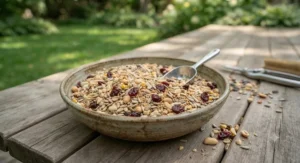
Morning Song Clean & Free takes the same shell-free concept and stretches it across a bigger 12 lb bag, aimed squarely at people who refill feeders weekly and don’t want to keep running back to the store. The blend combines sunflower chips, peanuts, and canary seed — a near-identical formula to premium competitors, just packaged at a friendlier price point.
What most buyers overlook about this one is that the larger bag size actually improves freshness in practice: because you’re buying in bulk less often relative to volume, and the bag reseals reasonably well, the seed doesn’t sit half-used in a garage for months the way smaller bags sometimes do. On paper this means better value AND fresher feed, which is a rare combination in the budget tier.
Reviewers frequently note that this blend performs almost identically to pricier “premium” bags in terms of bird traffic, with the main difference being slightly coarser sunflower chip sizing that a few buyers found less appealing to the very smallest finches.
Pros:
- ✅ Strong value at a 12 lb size
- ✅ Same core ingredients as pricier competitors
- ✅ Reseals well enough to preserve freshness
Cons:
- ❌ Chip sizing runs slightly coarser than premium bags
- ❌ Less consistent availability at some retailers
Priced around C$25-C$35, Morning Song Clean & Free is arguably the best cost-per-pound entry point for anyone who wants premium-style feeding without the premium invoice.
3. Audubon Park Waste Free — best for attracting variety
Audubon Park Waste Free distinguishes itself with a slightly wider ingredient spread — sunflower hearts blended with peanut pieces — engineered specifically to widen the range of species that show up rather than just maximizing sunflower content alone.
Based on the spec comparison with single-ingredient sunflower heart bags, the added peanut content bumps the fat and protein profile, which matters most in shoulder seasons (early spring, late fall) when birds need extra calories to manage temperature swings. Here’s what to weigh: peanut-heavy blends tend to spoil faster in warm, humid weather than pure sunflower hearts, so this is a better fit for cooler regions or feeders that get emptied within a week or two.
Aggregated reviews consistently praise the diversity of visitors — cardinals, finches, and nuthatches all show up reliably — though a subset of buyers in humid coastal climates have reported mold forming faster than with straight sunflower-heart bags.
Pros:
- ✅ Peanut content broadens the range of visiting species
- ✅ Genuinely shell-free with no cleanup underneath
- ✅ Solid nutritional profile for cold-weather feeding
Cons:
- ❌ Spoils faster in humid climates than sunflower-only mixes
- ❌ Needs quicker turnover once opened
At C$25-C$35 for 12 lb, this is a smart pick for anyone specifically trying to diversify their backyard visitor list rather than just maximize any one species.
4. Pennington Recipe Selects Sunflower Chips — best small-batch starter bag
Pennington Recipe Selects Sunflower Chips is the blend to grab if you’re not ready to commit to a 20 lb bag on a hunch. At 5 lb, it’s built for condo balconies, small porch feeders, and anyone who wants to test whether shell-free feed actually changes their cleanup routine before buying in bulk.
The 100% edible sunflower chip base means every gram in the bag is usable by the bird, which — reviewers consistently note — translates into visibly less debris even on a small hopper feeder within the first week. What the spec sheet won’t tell you, but user reports suggest, is that this format is popular specifically because it can be blended with other straight seeds (like mealworms or black oil sunflower) to custom-build a mix, rather than being locked into whatever ratio a big-bag manufacturer chose.
Buyers frequently mention it as their entry point into no-mess feeding, with the main knock being that at this size, the per-pound cost runs noticeably higher than the bulk bags further down this list.
Pros:
- ✅ Low-commitment size for testing shell-free feeding
- ✅ Mixes easily with other seed types to customize
- ✅ Compact enough for balconies and small porches
Cons:
- ❌ Highest per-pound cost of any blend on this list
- ❌ Needs frequent refills for busy feeders
Expect to pay around C$15-C$22 for the 5 lb bag — a reasonable price for a trial run, but not the format to buy once you know you’re sticking with it.
5. CountryMax Coarse Hearts — best bulk value pick
CountryMax Coarse Hearts goes bigger at 20 lb while keeping the formula dead simple: coarse, hulled sunflower hearts and nothing else. No filler grains, no cracked corn, just the part birds actually eat.
Reducing the ingredient list to essentially one item has a practical upside: it’s easier for smaller-beaked birds to consume, since — based on the spec comparison with mixed-ingredient blends — there’s no sorting-and-discarding behaviour where birds pick out the sunflower and leave the filler grains behind (which is exactly how a lot of “mess” happens with cheaper mixed bags in the first place). What most buyers overlook is that single-ingredient bags like this one tend to produce far less waste specifically because there’s nothing left to reject.
Aggregated reviews describe this as one of the cleanest options available for ground-level and platform feeding, with the coarser texture cited as easier for larger species to grab, though a recurring theme in feedback is that moisture management matters more here since there’s no husk providing any natural protective barrier.
Pros:
- ✅ Single-ingredient formula leaves nothing for birds to reject
- ✅ Coarser texture suits larger species and platform feeders
- ✅ Strong value at the 20 lb bulk size
Cons:
- ❌ Needs a dry, moisture-controlled storage spot
- ❌ Less species variety than blended mixes
At roughly C$45-C$60 for 20 lb, the per-pound math beats most smaller bags handily, especially for anyone feeding through a full Canadian winter.
6. Valley Farms Whole Sunflower Hearts — best premium, cleanest option
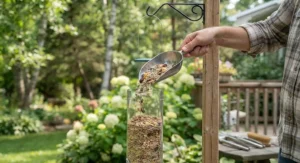
Valley Farms Whole Sunflower Hearts is the bag for people who’ve already tried the mid-tier blends and want the cleanest possible feed money can buy. At 40 lb, it’s a genuine bulk commitment, built around whole (not chipped) sunflower hearts.
The “whole heart” format matters more than it sounds: reviewers consistently note less dust and fine debris compared to chip-based blends, since chipping sunflower seeds during processing generates fine particulate that ends up as dust at the bottom of the bag (and eventually under your feeder). On paper this means a marginally cleaner feeding zone than even other shell-free competitors, which is the whole point of buying at this price tier.
Honest analysis here: this is not the bag for casual, occasional feeders. It’s built for people who feed birds seriously, year-round, and want to buy once rather than reordering monthly — the trade-off being a bigger upfront cost and the need for proper long-term storage to avoid spoilage before you work through the whole bag.
Pros:
- ✅ Whole-heart format minimizes fine dust and debris
- ✅ Best per-pound value for serious, year-round feeders
- ✅ Attracts a strong range of larger and mid-sized songbirds
Cons:
- ❌ Large upfront cost and storage footprint
- ❌ Not practical for casual or occasional feeders
Priced around C$75-C$95 for the 40 lb bag, this is squarely a premium buy — justified only if you’re feeding consistently enough to work through it before it goes stale.
7. Lyric Delite No Waste Mix — best nut-and-seed variety
Lyric Delite No Waste Mix rounds out the list with the most ingredient-diverse blend here: shell-free nuts and seeds combined specifically to draw in buntings, chickadees, and finches in one bag rather than relying on sunflower alone.
Based on the spec comparison with single-ingredient bags, the mixed nut-and-seed approach trades some of the “zero dust” cleanliness of whole hearts for broader species appeal — what most buyers overlook is that variety blends like this one are genuinely better suited to yards that already attract a wide mix of visitors, since a single-ingredient bag can end up favouring whichever species prefers that one seed type.
Aggregated review sentiment describes strong uptake from smaller songbirds specifically, with a recurring theme that the nut pieces disappear from feeders faster than the seed portion — a sign, reviewers suggest, that birds are selectively favouring the higher-fat nut content first.
Pros:
- ✅ Broadest species draw of any blend on this list
- ✅ Genuinely shell-free with minimal ground debris
- ✅ Good fat content for cold-weather feeding
Cons:
- ❌ Birds pick out nut pieces first, leaving seed behind
- ❌ Slightly pricier than single-ingredient bulk bags
At C$45-C$60 for 20 lb, it lands in the same bracket as CountryMax, so the choice between the two really comes down to whether you want maximum species variety (Lyric Delite) or maximum simplicity and dust-free cleanliness (CountryMax).
No Mess vs. Traditional Mixed Bird Seed
| Factor | No Mess Blend | Traditional Mixed Seed |
|---|---|---|
| Ground debris | Minimal to none | Heavy shell buildup |
| Seedling sprouting | Rare (hulls prevent germination) | Common under feeders |
| Waste per bag | Close to 0% | Often 30-40% discarded |
| Best For | Kaytee Ultimate No Mess, Valley Farms | High-volume, low-budget feeding |
The core trade-off here isn’t complicated: traditional mixed seed is cheaper per bag but a meaningful chunk of it — the corn, milo, and hulls a lot of species ignore — ends up on the ground rather than in a bird. Once you account for that wasted percentage, a shell-free blend like Kaytee Ultimate No Mess often works out close to cost-neutral per bird actually fed, while eliminating the sprouting and cleanup headache entirely.
How to Choose No Mess Bird Seed
- Match the ingredient list to your climate. Peanut-heavy blends like Audubon Park Waste Free spoil faster in humid regions, while pure sunflower hearts like CountryMax Coarse Hearts hold up better in damp conditions.
- Buy the bag size that matches your feeding pace. If you’re refilling weekly, a 5 lb starter bag like Pennington Recipe Selects wastes less to spoilage than an oversized bag sitting half-used for months.
- Consider chip versus whole-heart texture. Whole hearts, as in Valley Farms, generate less fine dust than chipped blends, which matters if dust irritation near a porch or window is a concern.
- Check for filler grains you don’t need. Cracked corn and milo in cheaper mixes attract species (and pests) you may not want; single-ingredient bags like CountryMax sidestep that entirely.
- Factor in storage conditions. Shell-free seed has more exposed surface area than whole seed, so it’s more sensitive to moisture — a sealed bin matters more here than with traditional birdseed.
- Weigh variety against simplicity. If drawing the widest possible range of species is the goal, a blend like Lyric Delite No Waste Mix outperforms single-ingredient bags.
- Price per pound, not per bag. Bulk bags like Valley Farms or CountryMax consistently beat small bags on cost-per-pound, but only pay off if you’ll use the full bag before it goes stale.
Common Mistakes When Buying No Mess Bird Seed
Even seasoned birders trip over the same handful of errors here. The first is buying based on bag size alone without checking the ingredient list — a 20 lb bag that’s 40% cracked corn filler isn’t actually a better deal than a smaller, denser shell-free bag, since the filler often just ends up on the ground anyway.
The second common mistake is ignoring storage. Because hulled seed lacks the natural protective shell, it’s more prone to moisture absorption and mold than traditional seed — reviewers across multiple brands mention clumping or spoilage when bags are left in a garage through a humid Canadian summer rather than transferred to a sealed container. Third, many buyers assume “no mess” means zero seed will ever hit the ground; in reality, some scatter is inevitable depending on feeder design and bird behaviour — the honest claim is dramatically less mess, not none. Finally, people sometimes buy a peanut-heavy blend for a squirrel-heavy yard, not realizing the extra fat content can actually draw more squirrel attention rather than less.
Practical Usage Guide: Setting Up a Clean Feeding Station
Getting the most out of shell-free seed starts before the birds even show up. First, pick a feeder style that suits the format — tube feeders work well for finer chips, while hopper or platform feeders handle coarser hearts better and reduce clumping at the ports.
For the first 30 days, fill feeders only about two-thirds full; this keeps seed turning over quickly rather than sitting exposed to humidity at the bottom of the tube. Clean feeders every two weeks with a diluted bleach solution, a practice Birds Canada recommends for scrubbing, soaking, and fully drying feeders before refilling. A common first-month mistake is placing the feeder directly over grass or a garden bed — even shell-free seed leaves occasional bits behind, so a simple tray or seed-catcher underneath saves considerable cleanup regardless of which blend you choose. Finally, store your unused seed in an airtight bin rather than the original bag; shell-free seed’s exposed surface makes it more humidity-sensitive than whole seed, and a sealed container meaningfully extends shelf life.
Real-World Scenarios: Which Blend Fits Your Yard
The condo balcony birder. Limited space, a small hopper feeder, and no interest in storing 40 lb of seed — this reader should start with Pennington Recipe Selects Sunflower Chips, since the 5 lb size matches a modest feeding pace without risking spoilage from an oversized bag sitting half-used.
The suburban family with a big yard and a squirrel problem. Frequent refills, moderate budget, and a desire to keep the lawn free of shells for the kids — Morning Song Clean & Free or CountryMax Coarse Hearts both fit, with the latter’s single-ingredient formula giving squirrels less reason to linger than a peanut-heavy blend would.
The dedicated year-round birder with multiple feeders. High seed turnover, a garage or shed for proper storage, and a goal of maximizing both species variety and cost efficiency — this is exactly the buyer Valley Farms Whole Sunflower Hearts or Lyric Delite No Waste Mix were built for, where the bulk format pays for itself within a season or two.
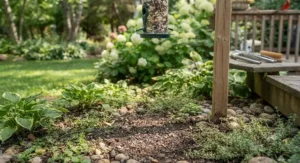
No Mess Bird Seed for Small Yards and Balconies
Feeding birds doesn’t require acreage. For balconies, patios, and small urban yards, a compact feeder paired with a smaller bag like Pennington Recipe Selects keeps things manageable — there’s less seed to store, less risk of it going stale, and less debris in a space where every square metre matters. A shallow tray or seed catcher underneath handles the modest scatter that even the cleanest blends produce, and choosing a blend without cracked corn filler (like CountryMax Coarse Hearts) further reduces the odds of attracting pigeons or rodents in tight urban settings — a point the Canadian Wildlife Federation raises when discussing why regular feeder cleaning matters for keeping backyard birds free of parasites and bacteria.
Long-Term Cost & Maintenance
The sticker price on a bag of shell-free seed is almost always higher, pound for pound, than a bargain mixed bag — but that comparison misses the actual cost per bird fed. Traditional mixes routinely waste 30-40% of their volume as discarded corn, milo, and hulls; once that waste is factored in, a bag like Kaytee Ultimate No Mess or CountryMax Coarse Hearts often comes out roughly cost-equivalent, and sometimes cheaper, on a true cost-per-kilogram-eaten basis.
Maintenance costs matter too. Shell-free seed doesn’t require raking up hulls from the lawn or worrying about sunflower seedlings sprouting through the grass in spring — a genuine time savings that traditional seed can’t match, though it does demand more careful storage to avoid moisture damage, since there’s no natural husk protecting the kernel.
Features That Actually Matter (And Those That Don’t)
Marketing copy on birdseed bags loves buzzwords, so it’s worth separating what actually affects your feeding experience from what doesn’t. Ingredient purity matters enormously — a bag that’s genuinely 100% hulled sunflower and peanut, like Valley Farms, will out-clean a bag padded with filler grains every time, regardless of what the front label claims. Bag size matters relative to your feeding pace, not in absolute terms — bigger isn’t automatically better if the seed goes stale before you use it.
What doesn’t matter nearly as much: fancy packaging claims about “attracting the most colourful birds,” since species attraction depends far more on ingredient composition and regional bird populations than on marketing language. Similarly, claims of “premium” or “gourmet” on a label are meaningless without checking the actual ingredient list against a simpler, cheaper competitor — several of the blends on this list share nearly identical core ingredients despite very different price points.
Safety, Regulations, and Responsible Feeding in Canada
Feeding wild birds in Canada isn’t heavily regulated, but responsible practice matters for the birds’ health. As Audubon explains, feeders and bird baths need regular cleaning or the birds visiting them risk getting sick, and diseases like trichomonosis — first identified in Atlantic Canada in 2007 and frequently seen in American Goldfinch and Purple Finch populations — have been linked to feeder-related transmission. Beyond disease prevention, some provincial and municipal wildlife authorities recommend seasonal feeding pauses; the BC SPCA advises limiting bird feeders mainly to the winter months, when natural food sources are scarcest and birds benefit most from supplemental feeding.
Shell-free seed actually supports safer feeding in one specific way: because it can’t sprout, there’s no risk of seedlings creating a secondary food source that draws in unwanted rodents later in the season. That said, no-mess seed still requires the same two-week cleaning cadence as any other feed — the “no mess” label refers to hulls and debris, not to bacteria or mold, which can still build up on any feeder regardless of what’s inside it.
Frequently Asked Questions
❓ Does no mess bird seed actually attract fewer birds than mixed seed?
❓ Can squirrels still get into no mess bird seed?
❓ How long does shell-free bird seed last once opened?
❓ Is no mess bird seed worth the higher price per bag?
❓ What's the difference between sunflower hearts and sunflower chips?
Conclusion
If there’s one thing every option on this list has in common, it’s that clean feeding and generous feeding aren’t actually in conflict — you just need a blend where every gram in the bag is something a bird will eat. Budget-conscious birders do well with Morning Song Clean & Free or a small Pennington Recipe Selects bag to start; dedicated year-round feeders get the best long-run value from bulk bags like Valley Farms Whole Sunflower Hearts or CountryMax Coarse Hearts; and anyone chasing the widest possible mix of backyard visitors should look to Audubon Park Waste Free or Lyric Delite No Waste Mix.
Whichever bag ends up in your cart, the underlying math stays the same: less shell means less sweeping, less sprouting, and — once you account for wasted filler in cheaper mixes — often surprisingly comparable cost. Your patio, your lawn mower, and the birds all come out ahead.
✨ Don’t Miss These Exclusive Deals!
🔍 Take your backyard birding to the next level with these carefully selected no mess blends. Click on any highlighted product to check current pricing and availability. These picks will help you create a genuinely cleaner feeding station your whole family — feathered visitors included — will love!
Recommended for You
- Vegetables Safe for Parrots: 7 Top Picks; Feeding Guide (2026)
- Safe Fruits for Parrots List: 7 Vet-Backed Picks for 2026
- Winter Bird Seed 2026: 7 Top Picks Canadian Birds Love
Disclaimer: This article contains affiliate links. As an Amazon Associate, I earn from qualifying purchases. If you purchase products through these links, we may earn a small commission at no additional cost to you.
✨ Found this helpful? Share it with your friends! 💬🤗
