
In This Article
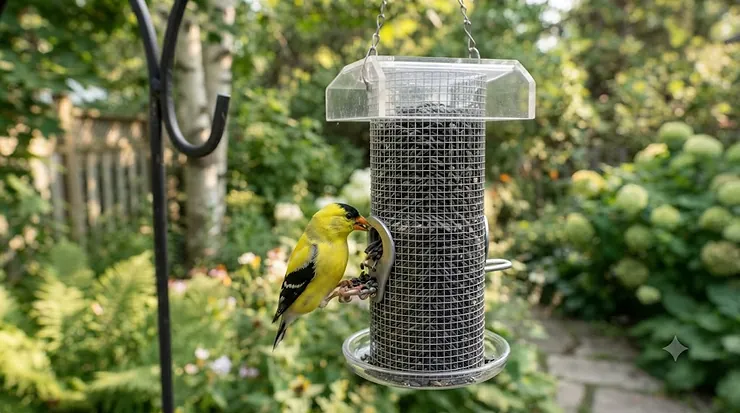
You filled the feeder on Saturday. By Wednesday it’s still full, except for a ring of husks on the patio stones and one very smug squirrel. Sound familiar? The problem usually isn’t your yard, your location, or bad luck — it’s the seed. Regular birdseed mixes are built for cardinals, jays, and doves, and finches mostly ignore them.
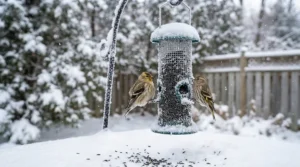
Nyjer seed for finches is a tiny, oil-rich seed harvested from the African plant Guizotia abyssinica, imported and heat-sterilized before it’s sold as birdseed, and prized for pulling in American Goldfinches, Pine Siskins, and Common Redpolls. It’s often called “thistle” seed, though it isn’t botanically related to the thistle weeds growing along Canadian roadsides at all — a mix-up that trips up a lot of first-time buyers, so we’ll untangle it below. That naming quirk matters more than it sounds like it should, since it’s also the reason nyjer seed is treated so carefully at the border, which we’ll get into later.
This guide is built for a Canadian backyard, which means Canadian winters, Canadian squirrels, and Canadian price tags in CAD. We’ve dug into real specs, genuine aggregated reviewer sentiment, and Canada’s own seed-import rules to put together a resource that goes well beyond “buy this bag.” You’ll get seven real products across every budget, a breakdown of nyjer versus sunflower seed, goldfinch-specific feeding tips, a rundown of thistle sock feeders versus mesh tubes, and a practical setup guide so your first month of feeding doesn’t end in spilled seed and disappointed finches.
Quick Comparison: 7 Nyjer Seed & Feeder Picks at a Glance
| Product | Type | Best For | Price Range (CAD) |
|---|---|---|---|
| Wagner’s Nyjer Seed (5 lb) | Seed | Budget-conscious first-timers | Under C$25 |
| Kaytee Nyjer Wild Bird Food (8 lb) | Seed | Regular feeders wanting bulk value | C$30-C$40 |
| Woodlink Audubon NATUBE9 | Tube feeder | Cheapest multi-bird tube feeder | Under C$25 |
| Kingsyard Metal Mesh Finch Feeder | Mesh feeder | All-around durability and capacity | C$25-C$35 |
| Squirrel Buster Nyjer | Squirrel-proof feeder | Yards with heavy squirrel pressure | C$55-C$70 |
| Droll Yankees Yankee Whipper | Squirrel-proof feeder | Large-capacity premium setups | C$70-C$90 |
| Finch Sock Feeder 6-Pack | Thistle sock feeder | Cheapest way to test multiple spots | Under C$15 |
Looking at the spread above, there’s no single “best” pick — it depends on what’s actually eating your seed budget. If squirrels are the problem, the Squirrel Buster Nyjer and Droll Yankees Yankee Whipper justify their higher price tags through design alone, not just brand name. If you’re simply testing whether nyjer seed works in your yard at all, the Finch Sock Feeder 6-Pack paired with Wagner’s Nyjer Seed gets you started for well under C$40 total. Buyers who already know finches visit their yard, meanwhile, get the best long-term value from the Kingsyard Metal Mesh Finch Feeder, since its capacity and cleanability reduce the maintenance headaches that make people abandon feeding altogether.
💬 Just one click — help others make better buying decisions too!😊
Top 7 Nyjer Seed & Finch Feeder Picks: Expert Analysis
1. Wagner’s Nyjer Seed (5 lb) — purest budget-friendly finch seed
Wagner’s Nyjer Seed skips the fillers entirely, which turns out to matter more than the price tag suggests. This is a single-ingredient bag: no millet, no cracked corn, no sunflower chips riding along for the sake of volume. Wagner’s packs roughly 150,000 seeds per pound into this bag, and because there’s nothing else mixed in, none of it gets kicked out of the feeder port and wasted on the ground the way blended seed does. That’s the real math behind “expensive-looking seed that’s actually cheaper per feeding” — a pure nyjer bag lasts longer than its sticker price implies, because every gram in the bag is something a finch will actually eat.
Based on the ingredient list and pricing, this is the right starting point for anyone testing whether finches even visit their yard before committing to a bigger bag or a premium feeder. Reviewers consistently report strong goldfinch and pine siskin traffic once the seed is fresh, though a recurring theme in aggregated feedback is that finches can be slow to discover a brand-new batch — some buyers reported a lag of one to two weeks before serious activity picked up, which lines up with how cautious finches are about unfamiliar feeders in general, not just this seed specifically.
Pros:
- ✅ Single-ingredient nyjer means zero waste from picked-over fillers
- ✅ Small 5 lb bag keeps upfront cost low for first-time feeders
- ✅ Straightforward format works in any small-port nyjer feeder
Cons:
- ❌ Reviewers note freshness can vary noticeably between batches
- ❌ Smaller bag empties fast once a flock commits to your yard
Priced under C$25 at the time of research, Wagner’s Nyjer Seed earns its keep as a low-risk way to find out if nyjer seed for finches will work in your specific yard before you spend more.
2. Kaytee Nyjer Wild Bird Food (8 lb) — best bulk value for regulars
Once you know finches are visiting, Kaytee Nyjer Wild Bird Food is the natural upgrade, mostly because of simple arithmetic: an 8 lb bag costs more upfront but works out to noticeably less per feeding session than repeatedly buying 5 lb bags. Kaytee markets this specifically toward goldfinches, purple finches, pine siskins, and redpolls, and the pure nyjer composition means the same low-waste logic from the Wagner’s bag applies here at a larger scale.
What the bag size doesn’t tell you outright is how it changes your maintenance rhythm — fewer store runs, less frequent bag-opening (which matters for freshness, since nyjer oxidizes and dries out once exposed to air), and a buffer against the “empty feeder on a Saturday morning” problem that kills momentum for new backyard birders. Aggregated reviewer sentiment leans heavily positive on reliability, with the most common praise being consistent finch return visits across a full season rather than one-off spikes.
Pros:
- ✅ Lower cost-per-feeding than smaller bags over a full season
- ✅ Trusted, established brand with consistent seed quality
- ✅ Attracts a wide range of finch species, not just goldfinches
Cons:
- ❌ Bag lacks a proper resealable closure for long-term storage
- ❌ Larger upfront cost is a bigger commitment for casual feeders
In the C$30-C$40 range at the time of research, this is the pick for anyone past the “will this even work” stage and ready to feed consistently through a season.
3. Woodlink Audubon NATUBE9 — most affordable multi-port tube
The Woodlink Audubon NATUBE9 is a 15-inch clear polycarbonate tube with eight small feeding ports, and its main selling point is arithmetic again: eight ports means eight finches can feed simultaneously instead of queuing for one or two spots. For a budget plastic tube, that’s a meaningful upgrade over single-port novelty feeders, and the clear tube lets you check seed levels at a glance instead of guessing or shaking the feeder.
Who should buy this one? Honestly, it’s the practical entry point for anyone who wants “real feeder” functionality without spending squirrel-proof money. Based on the construction, the trade-off is durability — this is a feeder built to a price point, and reviewers note the plastic can discolor or become brittle after a few seasons of UV exposure, which is a fair trade if you’re not ready to invest in a metal feeder yet.
Pros:
- ✅ Eight feeding ports let multiple finches feed at once
- ✅ Clear tube makes seed-level checks quick and easy
- ✅ Lowest price point among true multi-port tube feeders
Cons:
- ❌ Plastic construction discolors and weakens under prolonged UV
- ❌ No squirrel deterrent — larger birds can still muscle in
At under C$25 at the time of research, this is a smart first “real” feeder before graduating to metal.
4. Kingsyard Metal Mesh Finch Feeder — best all-around mesh design
Where port-style tubes limit finches to fixed feeding stations, the Kingsyard Metal Mesh Finch Feeder replaces that with a full mesh surface, so birds can cling and feed anywhere on the tube rather than waiting for one of eight specific spots to open up. Paired with a 2.5 lb capacity, a rustproof removable tray, and a weatherproof dome, this feeder splits the difference nicely between the budget tube above and the premium squirrel-proof models below.
What most buyers overlook about mesh feeders is that they double as a passive squirrel deterrent even without a spring-loaded mechanism — the mesh openings are sized for nyjer only, so larger seed-hungry visitors get less purchase to cling and feed. Reviewers consistently highlight the removable tray for catching spillage and simplifying cleanup, which matters more than it sounds like it should, since a dirty, damp feeder is a common source of mold and bird illness.
Pros:
- ✅ Mesh surface fits far more finches than fixed-port designs
- ✅ Weatherproof dome and rustproof tray extend usable seasons
- ✅ Removable tray makes cleaning genuinely quick
Cons:
- ❌ Fine mesh can trap husks and needs occasional deep cleaning
- ❌ Metal coating can chip and begin rusting after years of use
In the C$25-C$35 range at the time of research, this is our pick for buyers who want durability and capacity without paying for a full squirrel-proof mechanism.
5. Squirrel Buster Nyjer — best squirrel-proof performance
If squirrels have already destroyed a cheaper feeder, the Squirrel Buster Nyjer is built specifically for you. Its weight-activated shroud closes off the eight feeding ports the moment something heavier than a finch — a squirrel, a grackle, a determined blue jay — puts weight on the perches. The seed tube also uses a patented ventilation system, which sounds like a marketing line until you understand what it’s solving: nyjer’s high oil content means it can go stale or clump in humid, poorly ventilated tubes, and this design keeps airflow moving through the seed column.
Based on the spec sheet and reviewer sentiment together, this feeder earns its premium price through function rather than brand prestige. The tool-free disassembly is a genuinely useful detail reviewers call out repeatedly, since nyjer feeders need regular cleaning far more than most people expect. The trade-off is capacity — 2.4 lb is on the smaller side, meaning a busy flock will still empty it faster than the Yankee Whipper below.
Pros:
- ✅ Weight-activated shroud genuinely blocks squirrels and larger birds
- ✅ Ventilated tube helps keep oily nyjer seed fresher longer
- ✅ Tool-free disassembly makes routine cleaning far less of a chore
Cons:
- ❌ Premium price compared to standard mesh or tube feeders
- ❌ 2.4 lb capacity means more frequent refills for large flocks
Priced in the C$55-C$70 range at the time of research, this is the pick for anyone who’s already lost a battle with backyard squirrels.
6. Droll Yankees Yankee Whipper — best large-capacity premium pick
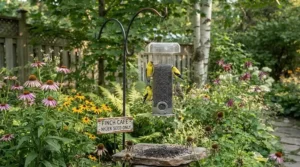
The Droll Yankees Yankee Whipper takes a different approach to squirrel-proofing: collapsible, weight-activated perches instead of a shroud, paired with a much larger 5 lb seed capacity than the Squirrel Buster above. Droll Yankees has built feeders in the United States since 1969, and that history shows up in the details — a UV-stabilized polycarbonate tube that resists yellowing, powder-coated metal hardware, and a lifetime warranty specifically against squirrel damage.
What the spec sheet won’t tell you outright is how much the larger capacity changes the ownership experience day to day. Doubling the seed capacity compared to the Squirrel Buster Nyjer means roughly half as many refill trips across a season, which adds up in convenience even before you factor in the seed cost. Reviewer feedback is consistently positive on long-term durability, though a fair number note the collapsible perches need a short calibration period to find the right sensitivity for local bird weight versus squirrel weight.
Pros:
- ✅ 5 lb capacity roughly halves refill frequency versus smaller feeders
- ✅ Lifetime warranty against squirrel damage backs a real design
- ✅ UV-stabilized tube resists the yellowing cheaper plastics show
Cons:
- ❌ Highest price point of any feeder on this list
- ❌ Perch sensitivity needs initial adjustment to calibrate properly
At C$70-C$90 at the time of research, this is the long-term investment pick for a yard that goes through a lot of seed.
7. Finch Sock Feeder 6-Pack — best budget thistle sock option
The Finch Sock Feeder 6-Pack takes the mesh-tube logic from the Kingsyard feeder and strips it down to its cheapest, simplest form: a soft mesh sock, roughly 4 by 16 inches, that holds about a pound of nyjer and lets finches cling anywhere on its surface. There’s no metal, no dome, no tray — just fabric mesh and a drawstring closure, sold in multi-packs so you can hang several around the yard at once.
Who should buy this one? Anyone testing multiple feeding locations at once, anyone wanting a temporary or seasonal setup, or anyone who simply wants the cheapest possible entry point into nyjer feeding. Based on the design, the honest trade-off is longevity: reviewers consistently note that mesh socks hold up fine against weather for a season but are vulnerable to squirrels chewing straight through the fabric, something a metal mesh or shrouded feeder simply doesn’t allow. Washing and refilling the sock resets it between uses, which extends its practical life if squirrels aren’t an issue in your yard.
Pros:
- ✅ Lowest cost per feeding station of anything on this list
- ✅ Mesh surface lets multiple finches cling and feed at once
- ✅ Washable and reusable across a feeding season
Cons:
- ❌ Vulnerable to squirrels chewing through the mesh fabric
- ❌ Shorter usable lifespan than metal or hard-plastic feeders
Under C$15 for a multi-pack at the time of research, this is the easiest way to test whether a new spot in your yard draws finches at all.
Full Spec Comparison: Capacity, Construction & Best Use
| Product | Capacity | Construction | Best For |
|---|---|---|---|
| Wagner’s Nyjer Seed (5 lb) | 5 lb | Pure seed | Testing your yard first |
| Kaytee Nyjer Wild Bird Food (8 lb) | 8 lb | Pure seed | Regular seasonal feeding |
| Woodlink Audubon NATUBE9 | ~1.5 lb | Polycarbonate tube | Budget multi-bird feeding |
| Kingsyard Metal Mesh Finch Feeder | 2.5 lb | Metal mesh | Balanced durability & value |
| Squirrel Buster Nyjer | 2.4 lb | Weight-activated metal | Heavy squirrel pressure |
| Droll Yankees Yankee Whipper | 5 lb | Polycarbonate + metal | High-volume premium feeding |
| Finch Sock Feeder 6-Pack | ~1 lb each | Mesh fabric sock | Cheapest multi-spot testing |
Read together, this table makes the budget-to-premium logic clearer: capacity and construction quality climb together, and the jump from the Woodlink Audubon NATUBE9 to the Kingsyard Metal Mesh Finch Feeder is really about material longevity, while the jump from Kingsyard to the Squirrel Buster Nyjer or Droll Yankees Yankee Whipper is specifically about squirrel defense. If squirrels aren’t a problem in your yard, there’s little reason to pay for that defense — the mesh and tube options deliver the same finch-feeding function for less.
Setting Up Your Nyjer Feeder for Success (Practical Usage Guide)
Getting finches to actually show up takes more than hanging a feeder and waiting. Start by placing your feeder 5 to 10 feet off the ground and within sight of a tree or shrub — finches want a quick escape route, and a feeder floating in open lawn with no nearby cover tends to sit ignored for weeks. Hang it away from windows or angle it so reflections don’t cause collisions, and keep it clear of your birdbath’s splash zone, since wet seed spoils faster and can harbor parasites.
Expect a slow start. Finches are cautious about new feeders and new seed, and it’s common for a fresh setup to go quiet for one to two weeks before regular visits begin — this isn’t a sign anything’s wrong, it’s just how finches operate. Once activity picks up, commit to a cleaning schedule: empty and wash the feeder every two to three weeks with warm soapy water, and more often in humid weather, since damp, clumped nyjer is where mold and bacteria take hold. The single most common first-month mistake is topping up old seed instead of fully emptying and replacing it — stale nyjer loses its oil sheen, turns dull brown, and finches will simply stop eating it, even though the feeder still looks “full” to you.
✨ Ready to build a finch-friendly feeding station? Grab a feeder above and pair it with fresh seed to get started this weekend.
Real-World Scenarios: Which Setup Fits Your Yard
Picture three different Canadian backyards. First, a condo balcony in Toronto with no ground space and strict weight limits on hanging hardware — here, the Finch Sock Feeder 6-Pack paired with Wagner’s Nyjer Seed makes sense, since a lightweight sock clips onto a railing bracket without the bulk or cost of a metal feeder, and low volume means the smaller bag won’t go stale before it’s used.
Second, a rural acreage in Alberta with mature spruce trees, an established finch population, and squirrels treating every feeder as a personal buffet. This yard justifies the Squirrel Buster Nyjer or Droll Yankees Yankee Whipper outright — the squirrel-proofing pays for itself within a season or two in seed savings alone, and the larger capacity of the Whipper suits a yard that goes through seed quickly across a Prairie winter.
Third, a suburban yard in Ontario with a few established goldfinches but no serious pest pressure — the sweet spot here is the Kingsyard Metal Mesh Finch Feeder paired with the bulk-value Kaytee Nyjer Wild Bird Food, giving enough capacity and durability for consistent year-round feeding without paying for squirrel-defense mechanisms the yard doesn’t actually need.
How to Choose Nyjer Seed for Finches
Picking the right combination of seed and feeder comes down to a handful of decisions, roughly in this order:
- Confirm finches actually visit your area. Check whether American Goldfinches, Pine Siskins, or Common Redpolls are common in your region before investing heavily — Birds Canada’s Project FeederWatch, a joint program with the Cornell Lab of Ornithology, is a solid free resource for confirming which species to expect locally.
- Match seed purity to your budget. Pure nyjer, like the Wagner’s or Kaytee bags above, costs more per bag but wastes less than mixed seed, since finches ignore fillers anyway.
- Choose feeder type based on squirrel pressure. If squirrels are a non-issue, mesh or tube feeders save money; if they’re a problem, spend on a shrouded or spring-perch design instead of replacing a cheap feeder repeatedly.
- Size capacity to your refill tolerance. Smaller capacities cost less upfront but mean more frequent trips to refill; larger capacities suit yards with active flocks.
- Factor in cleaning effort. Mesh and tray-based feeders are easier to disassemble and wash than sealed tube designs — and cleaning frequency matters more with oily nyjer than with drier seed mixes.
- Buy only what you’ll use in a month or two. Nyjer dries out and loses appeal once exposed to air, so a giant bulk bag isn’t automatically the better deal if it sits half-used for months.
Nyjer Seed vs Sunflower Seed for Birds
Nyjer and black-oil sunflower are the two seeds most backyard birders reach for, but they solve different problems. Sunflower seed is the generalist — cardinals, chickadees, jays, and finches will all eat it, which makes it the better choice if you want a busy, varied feeder. Nyjer seed for finches is the specialist — it’s less appealing to larger birds and squirrels, which naturally filters your visitor list down to the species you actually want.
| Factor | Nyjer Seed | Sunflower Seed |
|---|---|---|
| Attracts | Finches, siskins, redpolls | Nearly all feeder birds |
| Squirrel appeal | Low | High |
| Mess | Very low (no shells) | Higher (shell debris) |
| Feeder type needed | Small-port or mesh only | Standard hopper or tray |
| Cost per feeding | Higher per pound | Lower per pound |
The table makes the trade-off obvious: sunflower seed is cheaper and more versatile, but that versatility is exactly what makes it less selective. Reviewers and backyard birders alike frequently report running both feeders side by side — sunflower for general traffic, nyjer for a dedicated finch draw — since the two seeds rarely compete for the same visitors. If your goal is specifically goldfinches without a mob of blue jays and squirrels crowding them out, nyjer’s higher per-pound cost buys you exactly that kind of exclusivity.
Common Mistakes When Buying Nyjer Seed for Finches
The most common error is buying seed before the feeder, or buying a feeder with ports too large for nyjer — regular hopper feeders let nyjer spill straight through or onto the ground, wasting most of the bag before a single finch gets a bite. A close second is buying seed in bulk before confirming finches actually visit your yard, which risks a large bag going stale before it’s ever fully used.
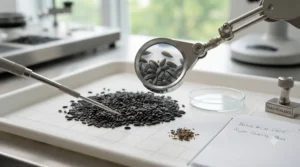
Another frequent misstep is judging seed by appearance alone. Fresh nyjer should be shiny and black; dull, brownish seed has already lost the oil content that makes it appealing, and finches will avoid it even if the bag looks “full.” Finally, many first-time buyers give up too early, pulling a feeder down after a quiet first week when patience — not a product swap — was the actual fix needed.
Thistle Seed Feeder Types: Tube, Sock, and Mesh Explained
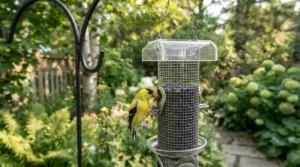
“Best thistle seed feeder” doesn’t have one universal answer, because tube, sock, and mesh designs solve different problems. Tube feeders, like the Woodlink Audubon NATUBE9, use small fixed ports and work well for controlled, low-mess feeding, though they limit how many birds can feed at once. Mesh feeders, like the Kingsyard model, ditch fixed ports entirely, letting finches cling anywhere on the surface — genuinely useful when a flock arrives all at once rather than trickling in one or two birds at a time.
Thistle sock feeders take the mesh idea to its simplest, cheapest form: soft fabric instead of metal, disposable-feeling but genuinely washable and reusable. What most buyers overlook is that sock feeders excel specifically at multi-location testing — because they’re inexpensive and easy to hang, you can place several around your yard to find where finches actually prefer to feed before committing to a pricier permanent feeder in that spot.
| Feeder Type | Ports/Surface | Squirrel Resistance | Best For |
|---|---|---|---|
| Tube (port-style) | Fixed, 4-8 ports | Low-moderate | Controlled, low-mess feeding |
| Mesh (metal) | Open surface | Moderate (passive) | Multiple birds feeding at once |
| Thistle sock | Open fabric surface | Low | Cheap multi-location testing |
| Weight-activated | Fixed ports + shroud/perch | High | Yards with heavy squirrel pressure |
Comparing these side by side, the honest takeaway is that no single design wins outright — a mesh feeder and a thistle sock both maximize simultaneous feeding, but only a weight-activated design actually solves a squirrel problem rather than just tolerating it.
Goldfinch Feeding Tips for Year-Round Success
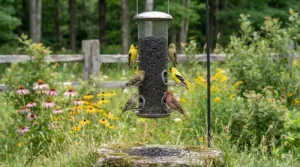
American Goldfinches are the headline species most nyjer feeders are built for, and a few habits make a noticeable difference in how often they visit. Feed consistently through the fall molt and into winter, since goldfinches don’t fully migrate the way many other songbirds do and will keep visiting a reliable feeder through cold months. Position feeders where morning sun hits first — goldfinches are early, active feeders, and a shaded feeder often gets checked later in the day, after the flock has already fed elsewhere.
Placing feeders near trees or shrubs gives goldfinches a quick escape route from predators, and keeping the feeding station clean helps prevent the spread of illness between visiting birds. If your yard also hosts Pine Siskins or Common Redpolls in winter, don’t be surprised by sudden, unpredictable spikes in visitors — these species move in irregular “irruption” patterns some winters, showing up in large numbers one year and barely at all the next, which has nothing to do with your feeder setup and everything to do with regional food availability further north.
👀 Want more finches at your feeder this season? Check current pricing on the picks above and get set up before molt season hits.
Nyjer Seed Regulations in Canada: Why Your Bag Says “Heat-Treated”
Ever notice that bags of nyjer seed mention heat treatment or irradiation on the label? That’s not a marketing gimmick — it’s a federal requirement. Because nyjer is imported, largely from parts of Asia and Africa, and Guizotia abyssinica isn’t native to Canada, there’s a real concern about imported seed accidentally introducing invasive plants if any of it were to germinate here. According to reporting from the Manitoba Co-operator, imported nyjer must be irradiated — a form of heat sterilization that eliminates the seed’s ability to germinate — before it can be sold in Canada, and this requirement sits under the country’s broader framework for regulating seed imports.
The Canadian Food Inspection Agency oversees this through the Weed Seeds Order under the Seeds Act, which restricts species that could establish as harmful weeds if introduced through imported seed products. For everyday buyers, this is genuinely reassuring: any legitimately sold bag of nyjer seed in Canada has already been through this sterilization step, so there’s no real risk of accidentally growing an invasive plant in your garden bed from spilled feeder seed. It’s a good reminder to buy from established brands and retailers rather than unlabelled bulk sources, since compliance with these rules is part of what you’re actually paying for.
Frequently Asked Questions
❓ Is nyjer seed the same as thistle seed?
❓ Why won't finches eat the nyjer seed I bought?
❓ How often should I refill a nyjer feeder?
❓ Will nyjer seed attract squirrels?
❓ Can I mix nyjer seed with sunflower seed in one feeder?
Conclusion: Picking the Right Nyjer Seed for Finches
There’s no single “best” answer here, and that’s genuinely fine — a condo balcony, a squirrel-heavy acreage, and a settled suburban yard all call for different combinations from this list. Start small if you’re unsure finches visit your area at all: a Finch Sock Feeder 6-Pack and a bag of Wagner’s Nyjer Seed cost less than a single tank of gas and will tell you everything you need to know within a couple of weeks. If squirrels are already a known problem, skip the budget feeders entirely and go straight to the Squirrel Buster Nyjer or Droll Yankees Yankee Whipper — cheaper feeders just mean paying twice.
Whatever you choose, remember that nyjer seed for finches rewards patience more than any other backyard birding seed. Give a new setup two full weeks before judging it, keep the seed fresh, and keep the feeder clean, and the goldfinches will find you.
✨ Don’t Miss These Exclusive Deals!
🔍 Take your backyard birding to the next level with the feeders and seed picks above. Click through to check current pricing and availability, and give your local finches a reason to stick around all season.
Recommended for You
- Best Parrot Seed Mix 2026: 7 Top Picks
- How to Sprout Bird Seed in 2026: 7 Top Picks for Parrots
- Single Ingredient Bird Seed: 7 Best Pure Picks for 2026
Disclaimer: This article contains affiliate links. As an Amazon Associate, I earn from qualifying purchases. If you purchase products through these links, we may earn a small commission at no additional cost to you.
✨ Found this helpful? Share it with your friends! 💬🤗
