
In This Article
Somewhere between the seed cup and the compost bin, most parrot owners hit the same wall: their bird picks through a dry seed mix like a fussy diner sending back the bread basket, eating the sunflower and leaving everything green, fibrous, or remotely healthy untouched. Learning how to sprout bird seed is the fix nobody tells you about at the pet store. Soak it, rinse it, wait a couple of days, and that same “boring” seed mix turns into a live, crunchy, nutrient-dense food that most parrots genuinely fight over.
Here’s the short version: sprouting is simply soaking dry seeds until they germinate, releasing enzymes that convert stored starches and fats into more digestible sugars, amino acids, and vitamins. It’s less “recipe” and more “biology you get to watch happen in a jar.” For Canadian bird owners dealing with dry indoor heating for half the year, sprouts are also a sneaky way to add moisture and freshness to a diet that otherwise leans heavily on shelf-stable pellets and seed.
This guide walks through exactly how to sprout bird seed safely, why sprouted seed matters nutritionally, and which real, currently available mixes and kits are worth your money — from budget bags to premium Canadian-stocked blends. We’ll also get honest about the one thing most sprouting articles gloss over: Health Canada’s warnings about sprout-related bacteria apply to bird sprouts too, and skipping the safety steps is where most flocks run into trouble.
Quick Comparison Table
Before the deep dive, here’s the fast answer for anyone scanning on their phone between feedings.
| Product | Type | Best For | Price Range (CAD) |
|---|---|---|---|
| Handy Pantry Organic Birdseed Sprouting Mix | Loose seed mix | Best all-around budget mix | Under C$25 |
| Higgins Sunburst Soak n’ Sprout with Quinoa | Single-serve pouches | Best convenience, small birds | C$10-C$20 |
| Handy Pantry Complete Sprouting Kit with Mason Jar | Starter kit | Best for total beginners | C$20-C$30 |
| Versele-Laga Prestige Loro Parque Amazon Parrot Mix | Premium soak-friendly mix | Best for large parrots | C$30-C$45 |
| Wide Mouth Sprouting Lid Kit with Stainless Mesh & Tray | Reusable multi-jar system | Best long-term kit investment | C$25-C$40 |
Looking at the table, the pattern that jumps out is that price doesn’t track neatly with quality here — the Handy Pantry Organic Birdseed Sprouting Mix undercuts several “premium” products while still using certified organic seed, which tells you a lot about where the real markup happens in this category. If you’re outfitting a multi-bird household, the reusable Wide Mouth Sprouting Lid Kit typically pays for itself within a couple of months compared to buying pre-packaged pouches. Owners of larger parrot species should lean toward the Versele-Laga Prestige Loro Parque Amazon Parrot Mix, since its seed sizing and formulation are built around bigger beaks and higher energy needs.
💬 Just one click — help others make better buying decisions too!😊
Top 7 Sprouting Seed Mixes & Kits for Parrots: Expert Analysis
Every product below is a real, currently available item — no invented brands, no fictional model numbers. Prices are shown as ranges because Amazon.ca pricing fluctuates constantly; always check current pricing at the time of purchase.
1. Handy Pantry Organic Birdseed Sprouting Mix — best all-round budget sprouting blend
This is the mix most sprouting guides quietly recommend as a default, and for good reason. The blend combines millet, unhulled sunflower, unhulled buckwheat, wheat, red and blue lentils, adzuki beans, mung beans, Canadian-grown brown flax, alfalfa, radish, quinoa, and sesame — which is a genuinely wide nutritional spread for one bag. That range matters in practice: lentils and mung beans bring plant protein and iron, flax contributes omega-3 fatty acids that seed-only diets are notoriously short on, and the smaller seeds like alfalfa and radish sprout fast, giving you visible results within 24-48 hours to build owner confidence.
Based on the ingredient list, this mix suits almost any parrot species from budgies up to amazons, though owners of larger birds may want to supplement it with extra sunflower or safflower for calorie density. Reviewers consistently note high, even germination rates across batches, with relatively few “dud” seeds that never sprout — a common complaint with cheaper, non-organic blends where seed viability is inconsistent.
Pros:
- ✅ Wide variety supports balanced nutrition in one bag
- ✅ Certified organic, so no pesticide residue concerns
- ✅ High, consistent germination rate reported by users
Cons:
- ❌ No pre-measured single servings, more prep work
- ❌ Larger bags require proper dry storage to stay fresh
In the under-C$25 range, this is hard to beat on cost-per-sprout, and it’s the mix worth starting with if you’ve never sprouted seed before.
2. Higgins Sunburst Soak n’ Sprout with Quinoa — best grab-and-go convenience option
Where the Handy Pantry blend rewards planning, this one rewards busy mornings. Each pouch is a single pre-measured serving built around safflower, buckwheat, quinoa, mung beans, canola, white millet, wheat, sunflower oil seed, and clover varieties — a formula Higgins markets specifically for canaries, finches, parakeets, and cockatiels rather than large parrots. What most buyers overlook about this format is that the portioning does more than add convenience; it also prevents the over-soaking and seed waste that happens when someone eyeballs a scoop from a big bag and gets the water ratio wrong.
The soak-and-rinse cycle here runs on the shorter side, with visible sprouts often appearing within roughly 48 to 72 hours under normal room temperature. Aggregated customer feedback frequently mentions that small birds show noticeably more enthusiasm for this blend than for dry seed alone, though a handful of reviewers note the pouches sell out or go temporarily unavailable, so it’s worth stocking up when you find it in.
Pros:
- ✅ Pre-portioned pouches remove guesswork for beginners
- ✅ Formulated specifically with small birds in mind
- ✅ Quinoa inclusion boosts complete-protein content
Cons:
- ❌ Not ideally sized or formulated for large parrots
- ❌ Availability can be inconsistent between restocks
At roughly C$10-C$20 depending on pack size, it’s a premium-per-gram product, but for owners who value simplicity over bulk savings, that trade-off is easy to justify.
3. Todd’s Seeds Broccoli & Friends Sprouting Mix — best bulk value for larger flocks
If you’re sprouting daily for more than one or two birds, per-gram cost starts to matter, and this is where Todd’s Seeds earns its spot. The Broccoli & Friends blend is a non-GMO mix designed to fill multiple jars per bag rather than being formatted around a single feeding — a structural difference from the smaller retail bags aimed at casual users. Broccoli sprouts specifically bring sulforaphane and other compounds associated with antioxidant activity, an ingredient rarely found in mainstream parrot sprouting mixes.
On paper, this means the mix leans slightly more toward the “health food” end of sprouting than toward calorie density, so pairing it with a fattier mix like sunflower-heavy blends for larger species is a reasonable strategy rather than relying on it alone. Reviewers who buy in bulk tend to highlight the cost savings over pre-packaged options as the standout benefit, alongside generally reliable germination when seeds are stored properly and kept dry between uses.
Pros:
- ✅ Fills significantly more jars per dollar spent
- ✅ Broccoli content adds antioxidant-rich variety
- ✅ Non-GMO sourcing with lab-tested batches
Cons:
- ❌ Lower fat content than sunflower-forward blends
- ❌ Bulk bag size isn’t practical for single small birds
4. Versele-Laga Prestige Loro Parque Amazon Parrot Mix — best for large parrot species
Large parrots — amazons, pionus, macaws, big aratingas — have different metabolic needs than a budgie, and this mix is formulated specifically around that reality rather than being a scaled-up small-bird blend. It’s built as an enriched seed mixture with added nutritional elements aimed at South American parrot species, and while it’s sold primarily as a feeding mix rather than a dedicated sprouting product, the seed and legume components soak and germinate reasonably well using the same soak-rinse-drain method covered later in this guide.
Here’s what the spec sheet won’t spell out clearly: bigger parrots burn through calories at a rate that makes a purely “healthy, low-fat” sprouting mix a poor primary diet, so a formulation with more substantial seed content is often the more realistic choice for these species, provided it’s balanced with vegetables and pellets. Reviewers who keep larger parrot species tend to report good acceptance, particularly when the mix is offered both dry and lightly sprouted to add variety.
Pros:
- ✅ Formulated specifically for large parrot species
- ✅ Enriched with additional nutritional elements
- ✅ Well-established European brand with wide availability
Cons:
- ❌ Pricier per kilogram than basic sprouting blends
- ❌ Less “pure sprouting mix” than dedicated germination bags
Expect to pay in the C$30-C$45 range depending on bag size, which puts it at the premium end, but for African grey, amazon, or macaw owners specifically, the species-appropriate formulation is worth the premium.
5. Handy Pantry Complete Sprouting Kit with Mason Jar & Strainer Lid — best starter kit for beginners
For anyone who’s never sprouted anything before, the biggest barrier usually isn’t the seed — it’s not knowing what equipment you actually need. This kit removes that friction entirely: it bundles a BPA-free, dishwasher-safe strainer lid sized for standard wide-mouth mason jars, the jar itself, and a starter packet of organic sprouting seed, along with printed instructions.
Based on the design, the strainer lid is the real value here, since it’s reusable indefinitely once you’re buying replacement seed separately, and it fits widely available mason jars rather than a proprietary container you’re stuck sourcing from one company. Reviewers commonly mention that the lid holds up well over repeated dishwasher cycles, and that the included instructions are clear enough for a first-timer to get usable sprouts without additional research — useful, since a failed first batch is often what makes new owners give up on sprouting altogether.
Pros:
- ✅ Complete beginner setup in a single purchase
- ✅ Reusable BPA-free lid fits standard mason jars
- ✅ Clear printed instructions reduce first-attempt failure
Cons:
- ❌ Included seed packet won’t last as long as a full bag
- ❌ Single-jar system limits batch size for larger flocks
At roughly C$20-C$30, this is the pick for someone who wants to test whether sprouting is worth the ongoing effort before committing to bulk seed and a multi-jar system.
6. Wide Mouth Mason Jar Screen Lid Sprouting Kit with Stainless Steel Mesh & Drain Tray — best long-term reusable system
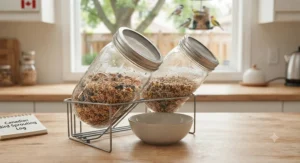
Once sprouting becomes a routine rather than an experiment, plastic strainer lids start to show their limits — mesh can warp, plastic can stain, and a single jar means starting a new batch only after the last one’s finished. This kit swaps in 316 stainless steel mesh and pairs it with a dedicated drain tray, letting excess rinse water drip away without soaking your counter, a small design detail that matters more than it sounds once you’re rinsing twice a day for weeks on end.
What most buyers overlook about stainless mesh specifically is that it resists the odour retention and microscopic scratching that plastic mesh develops over time — scratches that can harbour bacteria in exactly the kind of warm, damp environment sprouting requires. That’s a meaningful upgrade from a food-safety standpoint, not just a durability one. Owner feedback tends to focus on how much easier the drain tray makes daily maintenance, particularly for people running two or three jars in rotation to keep a continuous supply going.
Pros:
- ✅ Stainless steel mesh resists scratching and staining
- ✅ Drain tray simplifies twice-daily rinsing routine
- ✅ Durable enough for years of repeated use
Cons:
- ❌ Higher upfront cost than basic plastic lid kits
- ❌ Jar sold separately in some listings, check before buying
In the C$25-C$40 range, this is the kit worth graduating to once you know sprouting is a permanent part of your bird-care routine rather than a one-off experiment.
7. Avian Organics “Sprout It Out” Organic Sprout Mix — best Canadian-stocked mid-range mix
Rounding out the list is a mix sold directly through a Canadian avian supply retailer rather than a cross-border US brand, which matters more than it might seem for shipping times and border-related delays on perishable-adjacent products like seed. The “Sprout It Out” blend sits in the mid-range price bracket and is positioned specifically for pet bird sprouting rather than general human sprout-salad use, which shows in the seed selection favouring bird-appropriate ratios of legumes to grains.
On paper, buying from a Canadian-based avian specialty retailer also means better access to species-specific customer support if you have questions about ratios for a particular bird, something that’s harder to get from a general marketplace listing. Reviewers who’ve compared it against imported alternatives tend to highlight freshness and faster local shipping as the deciding factors, rather than dramatic differences in the seed blend itself.
Pros:
- ✅ Sourced and shipped through a Canadian avian retailer
- ✅ Formulated specifically for pet bird sprouting
- ✅ Access to specialty customer support for bird-specific questions
Cons:
- ❌ Smaller company means less bulk-discount pricing
- ❌ Less brand-recognition than major international sprouting brands
✨ Don’t Miss These Exclusive Deals!
🔍 Take your sprouting setup to the next level with these carefully selected mixes and kits. Click on any highlighted product to check current pricing and availability on amazon.ca. A little prep today means a fresher, more vibrant diet for your flock tomorrow!
Practical Sprouting Guide: Setup, Soaking & Maintenance
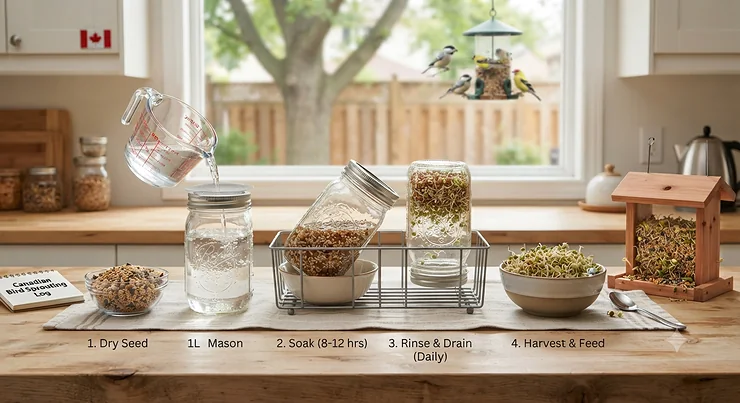
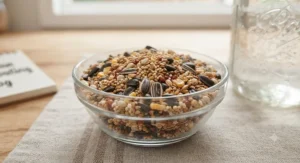
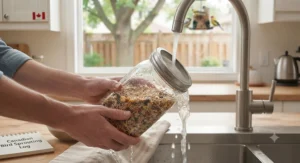
Here’s the process that actually works, stripped of unnecessary steps. Start with roughly two tablespoons of seed per small bird, rinsed thoroughly under cool running water in a fine mesh strainer to remove dust and debris before anything else happens. Submerge the rinsed seed in clean, room-temperature water — enough that the seeds can float freely — and let it soak for 8 to 12 hours, typically overnight.
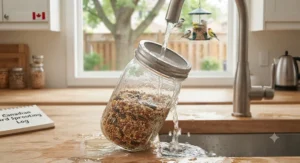
After soaking, drain completely and rinse again, then transfer the seed to your sprouting jar or tray at an angle that lets excess water escape rather than pool. Rinse and drain two to three times daily from this point forward; this is non-negotiable, since stagnant moisture is exactly what allows bacteria to multiply. Most mixes show visible tails within 24 to 72 hours depending on seed size and room temperature, with smaller seeds like alfalfa and radish sprouting noticeably faster than lentils or wheat berries.
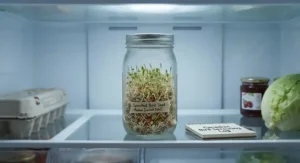
Common first-30-days mistakes include over-soaking (which drowns seeds and encourages mould rather than germination), under-rinsing (which leaves a sour smell and slimy texture), and skipping refrigeration once sprouts are ready. Once sprouted, refrigerate promptly and use within about 2 to 3 days for birds specifically — shorter than the general 7-day guidance sometimes listed for human sprout consumption, since pet bird bowls sit at room temperature for hours during feeding, accelerating spoilage. A simple maintenance schedule — soak Sunday and Wednesday nights, rinse every morning and evening — keeps a rotating supply going without daily decision fatigue.
Real-World Scenarios: Which Setup Fits Your Flock
Picture three different households, because the “right” sprouting setup genuinely depends on who’s eating the results. First: a single budgie or cockatiel owner in a Toronto apartment, feeding one small bird with limited counter space. For this situation, the Handy Pantry Complete Sprouting Kit with Mason Jar makes the most sense — one jar, minimal daily volume, and a lid that stores neatly in a cupboard between batches.
Second: a household with two or three medium birds — conures, cockatiels, or a small conure and a cockatiel sharing space — where daily volume is higher but not overwhelming. Here, the Handy Pantry Organic Birdseed Sprouting Mix paired with the Wide Mouth Mason Jar Screen Lid Sprouting Kit hits the sweet spot: enough seed variety to avoid feeding the same thing every day, with a reusable system built for regular rotation rather than occasional use.
Third: a multi-bird household or small aviary with large parrots in the mix — amazons, macaws, or African greys alongside smaller species. This calls for a two-track approach: the Versele-Laga Prestige Loro Parque Amazon Parrot Mix for the big birds’ higher-calorie needs, sprouted in bulk using the stainless mesh system, alongside a lighter blend like Todd’s Seeds Broccoli & Friends Sprouting Mix for smaller companions who don’t need the extra fat content. Matching the mix to the metabolism, not just the species name on the bag, is the detail that separates a flock that thrives on sprouts from one that just tolerates them.
What Is Sprouted Bird Seed?
Sprouted bird seed is dry seed that has been soaked in water and allowed to germinate for one to three days until a small root or shoot emerges, converting stored starches into simpler sugars and unlocking additional vitamins, minerals, and enzymes in the process. It’s essentially the same seed your bird already eats, just biologically “switched on” before it reaches the bowl.
The distinction matters because dry seed, while shelf-stable and calorie-dense, is nutritionally closer to what wild parrots eat only as a last resort during dry seasons. In the wild, birds actively seek out seeding, sprouting plants when available, because that’s when nutrient density peaks — a pattern seed-only captive diets don’t replicate.
Germinated Seed Nutrients: What Actually Changes Inside the Seed
The nutrient shift during germination isn’t marketing hype — it’s a measurable biochemical process. As seeds sprout, stored starches and proteins break down into more bioavailable forms: complex carbohydrates convert to simpler sugars, and proteins begin breaking into free amino acids that are easier for a bird’s digestive system to absorb directly. Research on legume sprouting has documented substantial increases in flavonoid and phenolic compound content compared to unsprouted seed, alongside measurable gains in protein digestibility during the germination window.
Vitamin content shifts too. Studies on mung bean sprouting specifically have tracked increases in vitamin C and antioxidant activity as germination progresses, a pattern generally consistent across legume and grain sprouting more broadly. In practical terms for your bird, this means a sprouted lentil or mung bean isn’t just “the same food, wetter” — it’s measurably higher in several nutrients than the dry version sitting next to it in the same bag, based on findings from peer-reviewed research on sprouted seed antioxidant activity.
How to Choose the Right Sprouting Seed Mix
Picking a mix isn’t complicated once you know what to check, and running through these steps takes about five minutes before you buy.
- Check species appropriateness first. A blend built for canaries and finches won’t have the calorie density a macaw needs, and vice versa — match the mix to your bird’s actual size and metabolism.
- Prioritize organic or untreated seed. Pesticide residue is more concerning on sprouted seed than dry, since sprouting seeds sit in warm, moist conditions that can also concentrate surface contaminants.
- Look for ingredient variety over a single-seed bag. A mix of legumes, grains, and smaller seeds gives more complete amino acid coverage than any single seed type alone.
- Verify germination rate through reviews. Reviewers consistently flag mixes with poor or inconsistent sprouting — a sign of old or improperly stored stock.
- Match packaging to your usage rate. Bulk bags save money for larger flocks but risk spoilage or pest issues if a single small bird can’t use them up fast enough.
- Factor in your equipment. A loose seed mix needs a jar or tray on hand; if you don’t already have one, budget for a starter kit alongside the seed itself.
- Confirm current availability and pricing before buying. Always check current price at checkout, since ranges shift and stock on specialty items can be inconsistent.
Sprouted Seed for Parrots: The Real Benefits
The core benefit of sprouted seed for parrots comes down to nutrient density and digestibility working together rather than separately. Beyond the vitamin and mineral increases covered above, sprouted seed also carries meaningfully more moisture than its dry counterpart, which matters for birds on seed-heavy diets that otherwise get most of their hydration from a water dish alone rather than from food.
There’s a behavioural benefit too, and it’s easy to underestimate. Foraging and food manipulation are core instinctual behaviours for parrots, and sprouts — with their slightly different texture, smell, and moisture profile compared to dry seed — encourage more engaged, exploratory feeding rather than the fast, low-effort consumption that dry seed often produces. Reviewers and avian-focused sources consistently note higher acceptance and enthusiasm for sprouted offerings, particularly in birds that have grown selective or bored with a static dry-seed rotation. That said, sprouts work best as a component of a varied diet — alongside pellets, vegetables, and appropriate fruit — rather than a wholesale replacement for a bird’s existing nutritional foundation, and any major diet shift is worth discussing with an avian veterinarian first.
Sprouting Kit for Birds: Jar, Tray, or Ready-Made?
Three main equipment categories cover almost everyone: mason jar lid systems, multi-tray stacking sprouters, and pre-packaged single-use pouches that need no equipment at all. Jar lid kits, like the Handy Pantry Complete Sprouting Kit, are the cheapest entry point and work well for single or dual-bird households, since one jar produces a manageable daily batch without excess.
Tray-based systems scale better for larger seed volumes and multiple simultaneous crops, though they take up more counter space — a real consideration in smaller Canadian apartments and condos where kitchen counter real estate is already tight. Pre-packaged pouches, like the Higgins Sunburst Soak n’ Sprout line, skip equipment entirely by using the original packaging as the sprouting vessel, trading a bit of extra cost per serving for genuine convenience. The honest answer to “which kit for birds is best” is: match it to your daily volume and your patience for maintenance, not to whichever option looks most impressive in photos.
Sprouting Seed Mix Canada: Sourcing, Storage & Climate Notes
Sourcing sprouting seed in Canada comes with a couple of wrinkles that don’t apply everywhere. Cross-border shipping on US-based brands can add delivery time, and seed is a product where freshness genuinely affects germination rates — older stock sprouts less reliably regardless of brand. That’s part of why a Canadian-stocked option like Avian Organics “Sprout It Out” has a real practical edge for buyers who want faster turnaround and fresher stock, separate from any difference in the seed formulation itself.
Storage matters more in Canada’s climate extremes than people expect. Dry, overheated indoor air during winter months can desiccate seed stored in anything less than an airtight container, while humid summer stretches in much of the country can encourage premature mould in improperly sealed bags. Store unsprouted seed mix in a cool, dry, airtight container away from direct sunlight, and buy in quantities you’ll realistically use within a few months rather than stockpiling a year’s supply on the promise of savings.
Raw Food Diet for Parrots: Where Sprouts Fit In
Sprouted seed sits at an interesting middle point in the raw food diet for parrots conversation — it’s raw and minimally processed, but it’s not the same category as raw meat or eggs, where bacterial risk carries different stakes. Many avian nutrition resources position sprouts as a foundational raw component alongside fresh vegetables, limited fruit, and sprouted legumes, built around the idea that captive parrots benefit from foods closer to what wild foraging would provide rather than a diet built entirely around shelf-stable dry seed and pellets.
That said, “raw” doesn’t mean “unsupervised.” Sprouted seed still needs the same careful soak-rinse-drain hygiene covered throughout this guide, and it should be introduced gradually rather than as a sudden wholesale diet swap, which can cause digestive upset in birds accustomed to a narrower diet. Framing sprouts as one well-researched raw component within a broader, balanced feeding plan — rather than a stand-alone cure-all — is the more accurate way to think about where they fit.
Common Mistakes When Sprouting Bird Seed
Even experienced owners fall into a handful of predictable traps. Over-soaking is the most common: leaving seed submerged for 24+ hours rather than the recommended 8-12 hours drowns the seed’s oxygen supply and invites mould rather than germination. Under-rinsing is a close second — skipping a rinse cycle “just this once” lets bacteria multiply in stagnant residual moisture, which shows up as a sour smell or slimy film.
A third common error is sprouting old or improperly stored seed and blaming the brand for poor germination, when the real culprit is seed that sat in a hot car or damp cupboard for months before use. Fourth, many owners skip refrigeration once sprouts are ready, leaving them at room temperature “for later” — exactly the warm, humid environment that encourages bacterial growth fastest. Finally, offering sprouts that smell off, look slimy, or show discoloration out of a reluctance to “waste” the batch is a mistake worth correcting immediately; when in doubt, the safest move is always to discard and start fresh.
Sprouted Seed vs Dry Seed: What the Difference Really Means
| Factor | Sprouted Seed | Dry Seed |
|---|---|---|
| Vitamin & antioxidant content | Higher, increases during germination | Lower, static over shelf life |
| Digestibility | Easier, starches broken down | Harder, more energy to digest |
| Moisture content | High, supports hydration | Very low |
| Shelf life once ready | 2-3 days refrigerated | Months, if stored dry |
| Preparation effort | Daily soak/rinse routine required | None, ready to serve |
The table makes the trade-off clear: sprouted seed wins decisively on nutrition and digestibility, while dry seed wins just as decisively on convenience and shelf stability. Most well-fed parrots end up on some blend of both — dry seed as a stable base and sprouts as a regular, rotating supplement — rather than an all-or-nothing choice between the two. For owners weighing effort against benefit, even sprouting two or three times a week captures much of the nutritional upside without turning bird care into a full-time job.
Safety, Salmonella Risk & Canadian Food Safety Rules
This is the section most sprouting guides skim past, and it shouldn’t be skimmed. The Canadian Food Inspection Agency has specifically flagged sprout seeds as a priority category for bacterial pathogen surveillance, because the warm, humid conditions that make seeds germinate are the exact same conditions that let Salmonella and E. coli multiply if hygiene lapses. This applies to human sprout consumption directly, and the same underlying biology applies to bird sprouting setups.
Practical precautions carry over directly: always start with clean equipment, rinse thoroughly at every stage, never let sprouts sit at room temperature longer than necessary, and discard immediately at the first sign of sour smell, sliminess, or discoloration. Some sprouting guides recommend a few drops of food-grade grapefruit seed extract in rinse water as an added antibacterial step, which is worth considering for households sprouting daily. As CBC reported following Health Canada’s sprout safety policy update, contamination risk climbs specifically when rinse frequency drops or equipment isn’t properly cleaned between batches — which is precisely why the twice-daily rinse schedule in this guide isn’t optional, it’s the actual line between a healthy treat and a health risk for your bird.
Long-Term Cost & Maintenance
Running the numbers honestly: a single-jar kit paired with a bulk seed bag typically works out to a lower cost-per-serving than pre-packaged pouches within two to three months of regular use, assuming daily or near-daily sprouting for one to two birds. The kit itself is a one-time cost in the C$20-C$40 range depending on the system, while ongoing seed purchases in the C$20-C$25 range per bag can stretch for weeks depending on flock size.
Maintenance costs are mostly time rather than money — a few minutes twice daily for rinsing, plus periodic deep-cleaning of jars, lids, or trays to prevent residue buildup that can harbour bacteria over repeated use cycles. Stainless steel components, as covered in the mesh-and-tray kit review above, tend to hold up longer than plastic equivalents and resist the odour retention that eventually makes plastic lids worth replacing every year or two. Factoring in both seed cost and equipment lifespan, most households find sprouting cheaper than commercial fresh-food or freeze-dried treat alternatives over a full year, even accounting for the occasional discarded batch from over-soaking or missed rinses.
FAQ
❓ Can I sprout regular parrot seed mix or does it need to be labelled for sprouting?
❓ How long does it take to sprout bird seed?
❓ Is sprouted seed safe for baby or young parrots?
❓ How often should I sprout seed for my parrot?
❓ Can sprouted seed replace pellets in a parrot's diet?
Conclusion
Learning how to sprout bird seed isn’t complicated once the soak-rinse-drain rhythm becomes routine, but the payoff — measurably higher vitamin content, better digestibility, and a bird that’s genuinely excited about mealtime again — is worth the few minutes of daily upkeep. Whether you start with a simple mason jar kit and a bag of Handy Pantry Organic Birdseed Sprouting Mix, or go straight to a stainless mesh system paired with a species-specific blend like the Versele-Laga Prestige Loro Parque Amazon Parrot Mix, the fundamentals stay the same: clean equipment, consistent rinsing, and a healthy respect for the same bacterial risks Health Canada flags for human sprout consumption.
Start small, watch how your bird responds, and adjust the mix and schedule from there. A parrot that’s picking through sprouted seed with genuine enthusiasm is doing exactly what its wild ancestors evolved to do — and that’s a pretty good sign you’re getting the basics right.
✨ Don’t Miss These Exclusive Deals!
🔍 Take your parrot’s diet to the next level with these carefully selected sprouting mixes and kits. Click on any highlighted item to check current pricing and availability on amazon.ca. A little daily effort now means a healthier, more engaged flock for years to come!
Recommended for You
- Single Ingredient Bird Seed: 7 Best Pure Picks for 2026
- Best Wild Bird Seed Canada 2026: 7 Top Picks
- How to Switch Bird From Seed to Pellets: 7 Proven Picks (2026)
Disclaimer: This article contains affiliate links. As an Amazon Associate, I earn from qualifying purchases. If you purchase products through these links, we may earn a small commission at no additional cost to you.
✨ Found this helpful? Share it with your friends! 💬🤗
