
In This Article
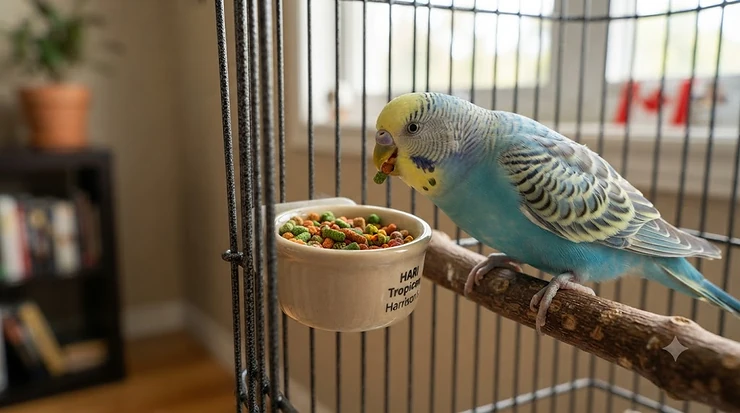
If you’ve ever watched a budgie pick through a seed dish like a toddler sorting broccoli off a plate, you already know the problem: birds are not nutritionists. Left to their own devices, a budgie will cherry-pick the fattiest, sweetest seeds and leave the rest, which is a bit like a kid surviving on the marshmallows from a bowl of cereal. That’s exactly why finding the best pellets for budgies matters so much — a properly formulated pellet is a complete, balanced diet in every bite, not a buffet your bird can cheat on. Pellets are compressed blends of grains, vegetables, vitamins, and minerals engineered so a budgie can’t dodge the boring-but-essential nutrients the way it would with a loose seed mix.
This guide breaks down seven real, currently available pellet brands sold to Canadian bird owners, from budget-friendly bags to premium organic formulas. We’ll also dig into a cockatiel pellet food guide for households with more than one type of small parrot, compare small parrot pellet brands side by side, map out a realistic budgie daily diet, sketch a workable cockatiel feeding schedule, and walk through small parrot nutrition needs that most pet store staff never mention. According to veterinary nutrition guidance from the University of Guelph’s Ontario Veterinary College, pellets should represent approximately 60-80% of a budgie’s diet, with the rest coming from fresh vegetables, limited fruit, and the occasional seed treat. Get that ratio right and you’re most of the way to a longer, healthier life for your bird.
Quick Comparison Table
| Product | Type | Price Range (CAD) | Best For |
|---|---|---|---|
| Kaytee Forti-Diet Pro Health Pellets | Fortified pellet | Under C$15 | Budget-conscious first-time owners |
| ZuPreem Natural Small Bird | Natural pellet, no dyes | C$15-C$25 | Everyday balanced feeding |
| Hagen Tropican Lifetime Granules | Canadian-made granule | C$15-C$30 | Owners who want a Canadian-made bag |
| Versele-Laga Nutribird A21 | Extruded hand-rearing/maintenance pellet | C$20-C$35 | Breeders and molting birds |
| Lafeber Premium Daily Diet Pellets | Pellet with seed inclusions | C$15-C$25 | Picky eaters transitioning from seed |
| RoudyBush Daily Maintenance Crumbles | Veterinarian-formulated crumble | C$20-C$35 | Health-conscious multi-bird homes |
| Harrison’s Adult Lifetime Fine | Certified organic pellet | C$25-C$45 | Owners prioritizing organic, human-grade sourcing |
Looking at the spread above, the gap between the cheapest and priciest options isn’t really about quality tiers the way it is with, say, dog kibble — it’s more about ingredient philosophy. Kaytee Forti-Diet Pro Health Pellets and ZuPreem Natural Small Bird both meet baseline AAFCO-style fortification standards, while Harrison’s Adult Lifetime Fine and Versele-Laga Nutribird A21 charge a premium for organic or extruded, additive-light formulations. If your budgie is a fussy eater who’s never touched a pellet, price shouldn’t be your first filter — palatability should, which is why Lafeber Premium Daily Diet Pellets earns its spot on this list despite sitting in the middle of the pack price-wise.
💬 Just one click — help others make better buying decisions too!😊
Top 7 Pellets for Budgies: Expert Analysis
1. Kaytee Forti-Diet Pro Health Pellets — most affordable entry point
The standout here is simple: this is usually the cheapest fortified pellet on Canadian shelves, which makes it a realistic gateway food rather than an aspirational one. Kaytee’s Forti-Diet Pro Health line is built around a probiotic-fortified base with added vitamins, minerals, and omega fatty acids aimed at digestive and immune support, and the pellet size is scaled specifically for small hookbills like budgies and lovebirds. Based on the formulation, this isn’t a “premium” pellet in the organic, human-grade sense — it leans on conventional grain sources rather than boutique ingredients — but it clears the basic fortification bar that a plain seed mix never will. It’s the pellet most likely to sit next to a starter cage kit at a big-box pet store, which is exactly the audience it’s built for: new budgie owners who need something better than seed today, not a philosophy about avian nutrition. Reviewers consistently report decent acceptance rates when the pellet is mixed gradually into an existing seed bowl, though a recurring complaint in user reviews is that some batches include noticeably more dust and fine particles than competitors, which can mean more waste at the bottom of the dish.
Pros:
- ✅ Lowest price point among fortified pellets
- ✅ Widely stocked in Canadian pet retail chains
- ✅ Probiotic and vitamin fortification beyond plain seed
Cons:
- ❌ Contains more corn and filler grains than boutique brands
- ❌ Some bags run dusty with more waste
Price sits well under C$15 for a standard bag at the time of research, and for the money, it’s a fair value verdict as a transition food rather than a lifelong staple.
2. ZuPreem Natural Small Bird — clean formula without dyes
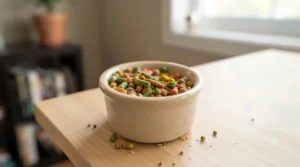
What stands out about ZuPreem Natural Small Bird is what’s missing from the ingredient panel: no artificial colours, which separates it from ZuPreem’s own FruitBlend line. The guaranteed analysis lists a minimum of 14% crude protein, 4% crude fat, and a maximum of 5% crude fiber, numbers that translate to a lean, energy-appropriate diet for a bird that weighs about as much as a few paperclips. In practice, that protein level is enough to support feather growth and daily activity without pushing a sedentary indoor budgie toward the fatty liver issues that plague seed-only diets. This pellet is a strong pick for owners who want a “no-nonsense” daily staple without paying an organic premium — it’s marketed as needing to make up at least 80% of a small bird’s daily diet to deliver complete nutrition, which is a slightly higher target than the general 60-80% guideline, so pair it with modest amounts of fresh veg rather than heavy fruit. Aggregated reviewer sentiment tends to praise the small, uniform pellet size for budgie beaks specifically, while a recurring gripe is that the naturally muted colour (no dyes means a duller, more oat-like appearance) makes some birds slower to try it compared to the brightly coloured FruitBlend pellets.
Pros:
- ✅ No artificial dyes or fruit flavoring additives
- ✅ Protein and fat levels suited to a budgie’s small size
- ✅ Pellet size matched to budgie beak proportions
Cons:
- ❌ Duller appearance can slow initial acceptance
- ❌ Contains corn and soy as primary base ingredients
Expect to pay in the C$15-C$25 range depending on bag size, and for a mainstream everyday pellet, that’s solid value — you’re paying for formulation consistency, not marketing flash.
3. Hagen Tropican Lifetime Granules — best for a Canadian-made bag
The standout feature is right there in the name: Hagen Tropican Lifetime Granules are formulated and manufactured by Hagen, a Canadian company, and the brand’s own avicultural research arm has published over 30 years of formulation experience refining this line specifically for companion birds. The 4mm granule size is aimed at small to mid-size parrots, and Tropican leans on a granulated (rather than extruded pellet) texture that some birds find easier to transition to because it more closely resembles the shape and mouthfeel of seed. What most buyers overlook about this brand is that it isn’t just a pellet — Hagen’s own conversion guidance recommends the same slow-transition approach used across the industry, and notes that once a bird is eating pellets consistently, only a small, roughly 5% amount of seed should be added back in as enrichment rather than a dietary staple. Hagen’s own avicultural research institute publishes detailed pellet-conversion guidance for owners struggling with stubborn eaters. For Canadian owners who like supporting a domestic manufacturer (and appreciate not paying cross-border shipping premiums that hit some U.S. brands), this is a genuinely differentiated pick, not just a patriotic one. Aggregated review sentiment is generally positive on acceptance rates, though some owners note the granules can be slightly larger than expected for very young or petite budgies.
Pros:
- ✅ Manufactured in Canada, easier and cheaper to source domestically
- ✅ Granule texture aids transition from seed
- ✅ Backed by a long-running avicultural research program
Cons:
- ❌ Granule size can run large for petite or juvenile budgies
- ❌ Less widely available in independent U.S.-focused retailers
Bags typically land in the C$15-C$30 range depending on size, and for owners prioritizing Canadian manufacturing, the value case is about more than nutrition — it’s about supply chain and freshness too.
4. Versele-Laga Nutribird A21 — best for breeders and molting birds
This one earns its standout tag for a specific reason: Nutribird A21 is an extruded formula originally developed for hand-rearing and higher-demand life stages, which makes it a strong option for budgies going through a heavy molt or breeding condition, when protein and calorie needs spike. Extrusion (cooking pellets under heat and pressure) tends to improve digestibility compared to cold-pressed pellets, and on paper this means more of the nutrient content is actually bioavailable rather than passing through undigested. Here’s what to weigh: this formula is calorie-denser than a maintenance pellet like ZuPreem Natural, so it’s not the right daily staple for a sedentary, non-breeding pet budgie that isn’t molting — feeding it year-round risks the same kind of overconditioning problem you’re trying to avoid by ditching seed in the first place. It shines as a targeted, seasonal tool rather than a forever food. Reviewer sentiment among breeders and aviary hobbyists tends to be strongly favourable on chick growth and feather quality, though pet-only owners sometimes report it’s simply more than their single budgie needs.
Pros:
- ✅ Higher protein and calorie density for molt or breeding
- ✅ Extruded texture supports better digestibility
- ✅ Long track record among European aviculturists
Cons:
- ❌ Too calorie-dense for a sedentary, non-breeding pet bird
- ❌ Pricier than standard maintenance pellets
Expect a C$20-C$35 range, and the value verdict depends entirely on your situation: excellent for a breeding pair or a hard-molting bird, overkill for a single couch-companion budgie.
5. Lafeber Premium Daily Diet Pellets — best for picky, seed-addicted budgies
The short version: Lafeber built its whole brand around the observation that little birds get “hooked” on seeds easily, and its pellet lines are engineered with that psychology in mind rather than pretending the problem doesn’t exist. Premium Daily Diet Pellets incorporate a texture and flavour profile designed to bridge the gap for birds who’ve spent months or years on a straight seed diet and flatly refuse anything that doesn’t look or taste familiar. Based on the formulation approach, this isn’t the leanest or most boutique pellet on this list, but that’s arguably the point — a perfectly balanced pellet a budgie won’t eat provides zero nutrition, so palatability is a legitimate design goal, not a marketing gimmick. Lafeber also blends in Omega 3 and 6 fatty acids and chelated minerals across its bird food lines, which support skin and feather condition in a way plain grain-based pellets sometimes fall short on. Aggregated customer sentiment consistently flags this as one of the easier pellets to transition stubborn seed-eaters onto, while a recurring complaint is that it costs more per gram than a straightforward Kaytee or ZuPreem bag for what is still, nutritionally, a mid-tier formulation.
Pros:
- ✅ Designed specifically to ease seed-to-pellet transitions
- ✅ Omega fatty acid and chelated mineral inclusion
- ✅ Strong reputation among avian veterinarians for palatability
Cons:
- ❌ Higher cost per gram than comparable maintenance pellets
- ❌ Not the leanest option for overweight birds
Price generally falls in the C$15-C$25 range, and for a bird that’s refused every other pellet you’ve tried, that premium is often worth paying just to get pellets into the bowl at all.
6. RoudyBush Daily Maintenance Crumbles — best for health-conscious multi-bird homes
RoudyBush stands out because it was formulated by an avian nutritionist specifically as a maintenance diet, not adapted from a general pet-food line, and the crumble texture (rather than a hard round pellet) tends to appeal across a wider range of small and medium species — useful if your household mixes budgies with cockatiels, lovebirds, or conures. What most buyers overlook is that “Daily Maintenance” is a deliberately narrow name: RoudyBush also makes higher-fat and higher-protein formulas for breeding and growth, so grabbing the wrong variant off the shelf can undercut the whole point of buying a nutritionist-designed food. For a mixed flock of budgies and cockatiels eating out of the same feeding station, the crumble format cuts down on the sorting-and-discarding behaviour you sometimes see with uniform round pellets, since birds are less able to cherry-pick a “preferred” piece. Reviewer sentiment frequently highlights improved droppings consistency and feather quality after a full transition period, while a common complaint is that the crumble format produces more fine dust in the bottom of the bag than a solid pellet would.
Pros:
- ✅ Formulated by a credentialed avian nutritionist
- ✅ Crumble texture works well across multiple small species
- ✅ Strong reputation for consistent digestive outcomes
Cons:
- ❌ Multiple similarly named formulas risk buying the wrong one
- ❌ More dust/fines than solid round pellets
At C$20-C$35 depending on size, it sits mid-to-premium, and for multi-species households the value case is strong: one bag instead of juggling separate diets for every bird.
7. Harrison’s Adult Lifetime Fine — best certified organic option
The standout feature is right there on the label: Harrison’s is the only non-corn-based certified organic complete diet bird food in this category, avoiding the corn-heavy base that most competitors, including several others on this list, lean on. Based on the spec comparison, that matters less for macronutrient ratios (protein and fat land in a similar range to other premium pellets) and more for ingredient sourcing and pesticide exposure — an organic certification means third-party verification of growing and processing standards, not just a marketing claim. Harrison’s also cold-formulates rather than extrudes at high heat, which the brand argues preserves more natural nutrient content and reduces the need for synthetic vitamin loading, though independent, budgie-specific comparative studies on this point are limited, so treat that as the manufacturer’s reasoning rather than settled science. This is the pellet for owners who already buy organic for themselves and want the same standard for their bird, or who have a budgie with sensitivities to corn, soy, or peanut derivatives common in cheaper formulas. Reviewer sentiment is generally strong on acceptance and stool quality, with a consistent complaint being the price tag relative to bag size compared to conventional pellets.
Pros:
- ✅ Certified organic, non-corn-based formulation
- ✅ Free of soy and peanut derivatives some birds react to
- ✅ Cold-formulated processing philosophy
Cons:
- ❌ Most expensive option on this list per gram
- ❌ Less widely stocked in mainstream Canadian pet chains
Expect to pay in the C$25-C$45 range, and for owners specifically avoiding corn/soy allergens or chasing organic certification, that premium buys something the cheaper bags on this list simply can’t offer.
Top 7 Pellets Compared: Specs & Value
| Product | Approx. Crude Protein | Texture | Price Range (CAD) | Best For | |—|—|—|—| | Kaytee Forti-Diet Pro Health Pellets | ~13-14% | Hard round pellet | Under C$15 | New owners, budget | | ZuPreem Natural Small Bird | 14% min | Hard round pellet | C$15-C$25 | Everyday staple, no dyes | | Hagen Tropican Lifetime Granules | ~14-15% | Granule | C$15-C$30 | Canadian-made preference | | Versele-Laga Nutribird A21 | ~20%+ | Extruded pellet | C$20-C$35 | Breeding/molting birds | | Lafeber Premium Daily Diet Pellets | ~14% | Pellet w/ inclusions | C$15-C$25 | Picky, seed-addicted birds | | RoudyBush Daily Maintenance Crumbles | ~14% | Crumble | C$20-C$35 | Multi-species households | | Harrison’s Adult Lifetime Fine | ~14-15% | Cold-formulated pellet | C$25-C$45 | Organic/allergen-sensitive |
The protein numbers cluster tightly around 14% for maintenance formulas, which tells you something important: for a healthy, non-breeding pet budgie, chasing a “higher protein” pellet mostly just adds unnecessary calories rather than unique benefit. Where these products actually diverge is texture, sourcing philosophy, and life-stage targeting — Versele-Laga Nutribird A21‘s higher protein content is a feature for breeders and a liability for a couch-potato pet bird. If you’re comparing on price alone, note that Kaytee Forti-Diet Pro Health Pellets and Hagen Tropican Lifetime Granules occupy similar price bands but solve different problems: one is about cost, the other about domestic sourcing.
✨ Ready to stock up? Cross-reference this table against your budgie’s age, activity level, and any known sensitivities before you commit to a bag size.
Practical Usage Guide: Switching Your Budgie to Pellets
Converting a seed-loyal budgie to pellets is less like flipping a switch and more like slowly renovating a house while someone’s still living in it. Start by mixing a small amount of pellets — maybe 10-15% by volume — directly into the existing seed dish rather than offering pellets in a separate bowl, since a suspicious budgie will often just ignore an unfamiliar dish entirely. Over two to three weeks, gradually increase the pellet ratio while decreasing seed, watching closely for actual consumption rather than just presence in the bowl (birds are notorious for looking like they’re eating when they’re mostly just relocating food). A common first-30-days mistake is removing seed entirely too fast, which can trigger a hunger strike in stubborn individuals; budgies won’t self-starve to prove a point, but they will lose concerning amounts of weight over a few days if a transition is rushed, so weigh your bird on a gram scale weekly during conversion. Maintenance-wise, store pellets in a cool, dry, airtight container — Health Canada-style food safety logic applies here too, since warm, humid pantries accelerate rancidity in the oils these formulas contain. Refresh the bowl daily even if it looks full, since birds will pick through and leave behind dust and fines that offer little nutritional value.
Real-World Scenarios: Matching Pellets to Your Situation
The apartment-dwelling first-timer: A single budgie in a studio apartment, moderate activity, no breeding plans. Kaytee Forti-Diet Pro Health Pellets or ZuPreem Natural Small Bird cover the basics without demanding a specialty retailer trip, and the lower price cushions the inevitable waste that happens during a first conversion attempt.
The multi-bird household with a cockatiel and two budgies: Different species, same feeding station, and nobody wants to prep three separate bowls every morning. RoudyBush Daily Maintenance Crumbles or Hagen Tropican Lifetime Granules both scale reasonably across small-to-medium hookbills, simplifying the routine without sacrificing species-appropriate nutrition.
The breeder or owner of a heavily molting bird: Feather regrowth and egg production both spike protein and calorie needs well above baseline maintenance. Versele-Laga Nutribird A21‘s denser formulation matches that temporary higher demand, ideally swapped back to a maintenance pellet once the molt or breeding cycle wraps up.
How to Choose the Best Pellets for Budgies
- Check the pellet size first. A pellet sized for African greys will simply sit untouched in a budgie’s bowl — look for “small bird,” “parakeet,” or “budgie” specifically on the label.
- Read the ingredient order, not just the marketing. Corn or soy listed first isn’t automatically bad, but if you’re managing a known sensitivity, this is where you’ll catch it.
- Match protein level to life stage. Around 14% crude protein suits a sedentary, non-breeding adult; higher-protein extruded formulas belong in molt, breeding, or growth phases only.
- Weigh texture preference realistically. A granule or crumble often transitions seed-addicted birds faster than a hard round pellet, based on aggregated owner reports.
- Factor in your retail access. A brilliant pellet that’s perpetually out of stock or requires cross-border shipping isn’t a realistic daily staple.
- Budget for waste during conversion. Expect to discard more food than usual in the first month; buy the smaller bag size until you know your bird will actually eat the pellet long-term.
- Confirm freshness at purchase. Check the manufacture or best-by date; pellets lose potency in stored bags the same way any fortified food does.

Cockatiel Pellet Food Guide: What Changes for a Bigger Cousin
Cockatiels and budgies are both grassland parrots from Australia, which means their nutritional baseline is similar, but a cockatiel’s larger body size shifts the practical details. Most of the products on this list — ZuPreem Natural, RoudyBush, Hagen Tropican, and Harrison’s — are sold in a medium-bird pellet size that’s appropriately scaled up from the budgie version, so you’re often looking at the same brand and formula philosophy, just a different SKU. The core ratio guidance holds steady across both species: pellets should anchor 60-80% of the daily intake, with fresh vegetables and limited fruit filling the rest. Where cockatiels differ most is portion size and, anecdotally, a slightly slower willingness to transition off seed compared to budgies, so the gradual mixing method described above may need to stretch closer to four weeks rather than two to three for a stubborn cockatiel.
Small Parrot Pellet Brands Compared: Beyond This List
While the seven products above cover the bulk of what’s realistically available to Canadian owners, it’s worth knowing the wider landscape. TOP’s Parrot Food occupies a similar niche to Harrison’s — the only non-corn-based USDA Certified organic complete diet in its category — and is worth a look if Harrison’s specific formulation doesn’t suit your bird. Volkman and Higgins tend to lean more toward fortified seed blends with pellet inclusions rather than pure pellet diets, making them more of a stepping-stone product than a long-term staple. When comparing brands broadly, the honest takeaway is that formulation quality has converged significantly over the past decade — the meaningful differences now sit in texture, sourcing philosophy, and allergen profile rather than dramatic nutritional gaps.
Common Mistakes When Buying Budgie Pellets
Buying based on colour is probably the single most common misstep — a rainbow of bright dyed pellets looks appealing to a human shopper, but added colours like Yellow 5, Red 40, and Blue 1 found in some fruit-flavoured pellet lines offer zero nutritional benefit and exist purely for owner appeal, not bird health. A second frequent error is buying a bag sized for a flock when you own one bird; pellets do go stale, and a giant discount bag that sits open for six months loses potency well before it’s finished. Third, owners sometimes assume “pellet” and “seed mix with some pellets in it” are interchangeable, when they’re nutritionally quite different products — a bag that’s mostly seed with a scattering of pellet pieces still lets a selective eater dodge balanced nutrition entirely. Finally, skipping the gradual transition and swapping bowls cold-turkey is a mistake that can genuinely endanger a stubborn bird, since a bored or stressed budgie sometimes chooses not eating over eating something unfamiliar.
Features That Actually Matter (And Those That Don’t)
Fortification with vitamins and chelated minerals actually matters, since it’s the entire reason pellets outperform plain seed in the first place. Pellet uniformity in size matters too, since a consistent small size reduces selective eating. What matters far less than marketing suggests: fruit flavouring and bright colouring, which appeal to the human buyer more than the bird’s actual nutritional outcome, and vague “gourmet” or “premium” labeling that isn’t backed by a guaranteed analysis panel worth reading. Organic certification matters if you’re specifically avoiding synthetic pesticide residue or corn/soy allergens, but it isn’t a proxy for “higher protein” or “more complete” — several conventional pellets on this list match Harrison’s protein content within a percentage point.
Budgie Daily Diet: Building a Balanced Bowl
A realistic budgie daily diet leans heavily on the pellet as the anchor, sitting at roughly 60-80% of intake by volume, supplemented with a small rotating selection of dark leafy greens and orange vegetables such as shredded carrot or steamed broccoli. Fruits and vegetables should account for 20-25% of the daily diet at most, and pale, watery vegetables like iceberg lettuce contribute little beyond hydration, so they shouldn’t be relied on as the “vegetable” portion of the day. Fresh food should be offered in a separate dish from pellets and removed within a couple of hours to prevent spoilage, particularly in a warm room. Seed, if offered at all once a bird is fully converted, functions best as an occasional enrichment treat rather than a daily staple — a small pinch of millet spray once or twice a week satisfies the foraging instinct without undoing the nutritional benefit of the pellet-based diet.
Cockatiel Feeding Schedule: A Simple Daily Rhythm
For a cockatiel eating a pellet-based diet, a workable daily rhythm looks like: fresh pellets and clean water available first thing in the morning (birds tend to eat most actively at dawn and dusk), a small dish of fresh vegetables offered mid-morning and removed by early afternoon, and any seed-based treat reserved for a short training or bonding session rather than left in the cage ad-lib. Weekly, rotate vegetable varieties to broaden nutrient intake and prevent a picky bird from fixating on a single “safe” food. Monthly, weigh your bird on a gram scale to catch subtle weight trends before they become a veterinary problem — cockatiels, like budgies, are prey animals that instinctively mask illness until it’s advanced.
Small Parrot Nutrition Needs: The Bigger Picture
Both budgies and cockatiels are granivorous grassland species in the wild — the budgerigar’s native range spans the arid interior of Australia — meaning their evolved digestive systems are tuned for a lean, seasonal diet rather than the calorie-dense, always-available bowl most pet birds live with. That mismatch is precisely why seeds are high in stored energy, which is great if you’re a wild bird flying many miles every day, but not for pet birds who mostly hop between two perches. Calcium and vitamin D3 deserve special mention: indoor birds without direct (unfiltered) sunlight exposure can struggle to metabolize dietary calcium properly, which is one reason fortified pellets specifically add vitamin D directly into the formula rather than relying on incidental sun exposure alone.
Long-Term Cost & Maintenance
Running the numbers, a mid-range pellet like ZuPreem Natural Small Bird or Lafeber Premium Daily Diet Pellets, fed at roughly one to three tablespoons daily for a single budgie, typically stretches a standard bag well over a month, putting the realistic monthly cost somewhere in the low-to-mid single digits in CAD. The premium tier, represented here by Harrison’s Adult Lifetime Fine, costs meaningfully more per gram but doesn’t require a larger daily portion, so the total cost-of-ownership gap is smaller than the sticker price suggests over a year of feeding. The bigger long-term cost consideration isn’t really the food at all — it’s avoided veterinary bills. A budgie maintained on a proper pellet-anchored diet is statistically less likely to develop the fatty liver disease, vitamin A deficiency, and obesity-related complications that plague seed-only birds, and a single avian vet visit for a diet-related illness can easily exceed a year’s worth of premium pellets.
Safety, Sourcing & Regulations Guide
Canada doesn’t have a budgie-specific feed regulation the way livestock feed is regulated, but general pet food labeling and ingredient safety oversight still applies to what reaches store shelves, and reputable brands voluntarily publish guaranteed analysis panels the way you’d expect on any responsibly marketed pet food. When sourcing pellets, buy from retailers with visible turnover rather than a dusty shelf corner, since rancidity in the fats used for fortification is a real risk in slow-moving stock. It’s also worth noting that pet birds occasionally escape — CBC News reported a noticeable surge in escaped budgies in B.C., tied partly to inconsistent wing trimming and open windows during warm weather — a reminder that nutrition is only one piece of responsible budgie ownership alongside secure housing and routine care.
Buyer’s Decision Framework
If your budgie is brand new to pellets and price-sensitive, choose Kaytee Forti-Diet Pro Health Pellets because it minimizes financial risk while you learn your bird’s preferences. If your budgie is stubbornly seed-addicted and previous pellet attempts have failed, choose Lafeber Premium Daily Diet Pellets because its palatability-first formulation is specifically built for exactly that problem. If you’re managing a multi-species small-bird household, choose RoudyBush Daily Maintenance Crumbles or Hagen Tropican Lifetime Granules because both scale sensibly across budgies, cockatiels, and lovebirds sharing a feeding routine. If you’re avoiding corn, soy, or peanut derivatives, choose Harrison’s Adult Lifetime Fine because it’s the only fully organic, non-corn-based option on this list. If your bird is actively molting or breeding, choose Versele-Laga Nutribird A21 temporarily, then transition back to a maintenance formula once that phase ends.
✨ Not sure which path fits your flock? Re-read the scenario closest to your situation above and start there — you can always adjust as you learn your bird’s preferences.
FAQ
❓ What is the best pellet for a budgie that refuses to eat pellets?
❓ How many pellets should a budgie eat per day?
❓ Are colored pellets bad for budgies?
❓ Can budgies and cockatiels eat the same pellets?
❓ How long does it take to convert a budgie from seed to pellets?
Conclusion
Choosing the best pellets for budgies really comes down to matching a genuinely well-formulated product to your specific bird’s life stage, palate, and your household’s practical realities — there’s no single “best” bag, only the best bag for the budgie actually eating out of it. Budget-friendly options like Kaytee Forti-Diet Pro Health Pellets and ZuPreem Natural Small Bird cover the fundamentals well for most healthy adult pet birds, while Harrison’s Adult Lifetime Fine and Versele-Laga Nutribird A21 solve more specific problems around allergen sensitivity and elevated life-stage demands. Whichever bag you choose, remember that the pellet itself is only one half of the equation — a gradual, patient transition and a genuine 20-25% allotment of fresh vegetables round out a diet that actually delivers on what these formulas promise. Your budgie can’t read a nutrition label, but a thoughtfully chosen pellet does that reading for them, every single day.
✨ Don’t Miss These Exclusive Deals!
🔍 Take your budgie’s diet to the next level with these carefully selected pellets. Click on any highlighted product above to check current pricing and availability. A properly fortified pellet is one of the simplest upgrades you can make for a longer, healthier life with your feathered friend!
Recommended for You
- Best Parrot Pellets 2026: 7 Top Picks Vets Actually Trust
- 7 Best Replacement Bird Bath Bowl Picks for 2026 (Canada Guide)
- Bird Bath Heater Canada 2026: 7 Safe Picks That Actually Work
Disclaimer: This article contains affiliate links. As an Amazon Associate, I earn from qualifying purchases. If you purchase products through these links, we may earn a small commission at no additional cost to you.
✨ Found this helpful? Share it with your friends! 💬🤗
