
In This Article
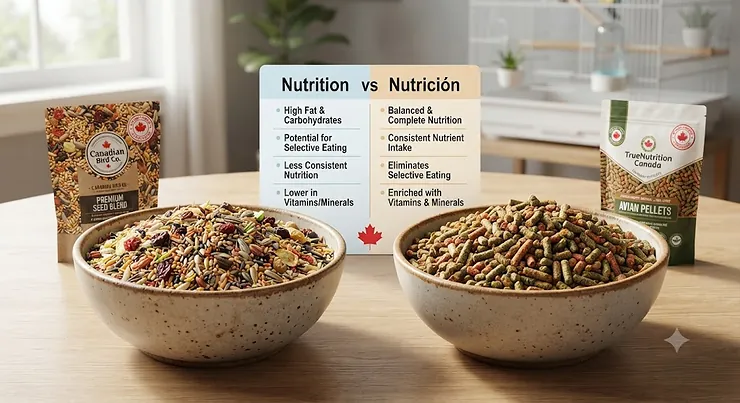
Small bird pellets vs seed mix is the choice between a formulated, uniform food and a loose blend of seeds. Pellets pack vitamins, minerals and protein into every identical bite, so nothing can be picked out. A seed mix lets the bird decide what to eat, and most budgies, finches and canaries pick the fattiest seeds first.
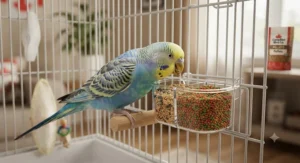
Walk down any pet-shop aisle and the seed bags look wholesome. There are glossy photos, happy budgies and words like “premium” and “fortified.” Then there are the vets. Avian veterinarians writing in the MSD Veterinary Manual describe vitamin A deficiency as common but often overlooked in pet birds. They put birds fed mostly seeds and nuts at the highest risk. Seed mixes still dominate shelves because of habit, palatability and price, not because they are the best nutrition.
This guide sorts through it for Canadian owners. You’ll get seven real small-bird pellets to consider, a practical budgie pellet conversion plan and an honest look at mixed feeding. You’ll also learn how to read a “complete diet” claim on a Canadian label. Sizes are in metric, prices are in approximate CAD ranges, and every recommendation comes from spec analysis and published veterinary guidance, not invented test drives.
One caveat before we start. Avian vets don’t agree on every detail for budgies specifically. Most published guidance favours a mostly pelleted diet with fresh vegetables, but at least one avian practice’s public handout advises against pellets for budgies and cockatiels. Let that be your cue to book a chat with an avian vet before changing anything.
Quick Comparison: Small Bird Pellets vs Seed Mix Options at a Glance
Here are the seven pellets in this guide. Prices are ballpark CAD ranges based on typical market positioning, not live listings, so check current pricing and availability on Amazon.ca before you buy.
| Product | Pellet Style | Bag Size (approx.) | Price Range (CAD) | Best For |
|---|---|---|---|---|
| ZuPreem Natural Small Bird Food | Plain multigrain nuggets | 1 kg (2.25 lb) | C$20-C$35 | First-time conversion |
| ZuPreem FruitBlend Small Bird Food | Fruit-flavoured, coloured shapes | 907 g (2 lb) | C$20-C$35 | Picky, seed-loyal birds |
| Roudybush Daily Maintenance Mini | Small crumble/pellet | 227 g to 1.25 kg | C$10-C$45 | Testing acceptance cheaply |
| Harrison’s Organic Premium Pellets (HOPP) | Certified organic | 454 g (1 lb) and up | C$25-C$40 | Owners prioritizing organic |
| Lafeber Premium Daily Diet for Parakeets | Budgie-specific pellet | 2.3 kg (5 lb) | C$45-C$70 | Bulk feeding, multiple budgies |
| TOP’s Mini Parrot Pellets | Organic mini pellet | 454 g (1 lb) | C$15-C$30 | Budget-conscious organic buyers |
| Mazuri Mini Bird Food | Zoo-style mini pellet | 907 g (2 lb) | C$20-C$35 | Finches and very small species |
The table shows that price per bag is a poor guide to price per month. Lafeber Premium Daily Diet for Parakeets looks expensive until you notice it is roughly five times the bag size of Harrison’s Organic Premium Pellets (HOPP). Buyers who want the cheapest test run should look at Roudybush Daily Maintenance Mini, which has a small trial-size listing. Buyers who want a flavour hook for a stubborn seed-eater should start with ZuPreem FruitBlend Small Bird Food.
💬 Just one click — help others make better buying decisions too!😊
Top 7 Small Bird Pellets Worth Buying in Canada: Expert Analysis
Every pick below is a real product that appeared in my research. I also checked whether each is offered in a size suited to budgies, finches, canaries or parrotlets. I couldn’t verify a reliable, current sample of Amazon.ca customer reviews for these exact listings. So I don’t characterize what buyers say, and the review lines point you toward what to check instead.
1. ZuPreem Natural Small Bird Food — best all-round starter pellet
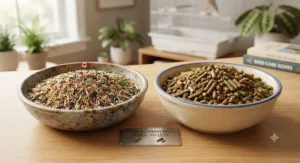
This is the most straightforward pellet in the group. The brand positions the small size for parakeets, budgies, parrotlets, canaries, finches and doves, which makes it handy for households with mixed small species. At the time of research, an Amazon.ca listing showed the 1 kg (2.25 lb) bag as in stock and shipped from Amazon.ca. Newer listings sometimes say “True Harvest” on the front, so don’t be confused by the renaming.
The formula is a multigrain nugget, fortified with vitamins, minerals and amino acids, with no artificial colours or flavours. In practice, the plain look means fewer surprises for a nervous bird. Fortification only helps if pellets make up most of the intake, and VCA’s budgie guidance puts that threshold at roughly 75-80% of the diet.
Based on the spec comparison, this is the low-drama choice for a first conversion. It’s easy to find, sized correctly and priced sensibly. It’s less enticing than fruit-flavoured pellets for a bird that treats anything beige with suspicion.
Review sentiment: I couldn’t verify representative Amazon.ca reviews for this listing. Check recent reviews specifically for freshness, dust and acceptance by picky birds.
Pros:
- ✅ Sized for budgies through finches
- ✅ No artificial colours or flavours
- ✅ Widely stocked with Amazon.ca fulfilment
Cons:
- ❌ Plain look may bore picky eaters
- ❌ “Natural” and “True Harvest” naming confuses shoppers
Price and value: expect roughly C$20-C$35 for the 1 kg bag, which is strong value for a complete-diet staple.
2. ZuPreem FruitBlend Small Bird Food — best hook for picky seed-eaters
Where the natural formula plays it straight, this one plays dress-up. The brand describes fruit colours, shapes and natural fruit flavours in a pellet sized for parakeets, budgies and parrotlets. That novelty is the whole point. A bird that ignores beige nuggets will sometimes investigate a coloured one.
The 907 g (2 lb) size is a sensible trial bag. A bird that rejects it costs you a modest sum rather than a bulk-bag regret. What the label won’t tell you is that flavour and colour are tools for acceptance, not nutrition. A fortified pellet is only as good as the fraction your bird actually eats.
Pair it with the conversion approach in this guide. Try a few fruit-scented pellets on the millet or in a shallow dish, then move toward the plainer formula once the bird eats pellets reliably. Owners who find the sweetish profile a concern can treat FruitBlend as a bridge, not a forever food.
Review sentiment: I couldn’t verify a reliable sample of Amazon.ca reviews for this exact bag. Look for reports of acceptance among converted birds and any mention of pellet dust or crumbling.
Pros:
- ✅ Colours and shapes encourage first bites
- ✅ Convenient 907 g trial size
- ✅ Same brand family as the plainer natural pellet
Cons:
- ❌ Fruit flavouring can mask real conversion progress
- ❌ Amazon.ca availability varies by seller
Price and value: roughly C$20-C$35 is the sensible range. It’s excellent value if it works and a poor one if your bird ignores it, so buy small first.
3. Roudybush Daily Maintenance Mini — best low-risk trial size
Roudybush is a long-running avian-vet favourite. It’s built around a corn, wheat and soy base, with sizes from tiny to larger for bigger beaks. The reason it earns a slot here is packaging flexibility. Amazon listings I found range from a roughly 227 g (8 oz) bag to 1.25 kg (44 oz) and beyond, so you can run a small acceptance test before committing.
That matters because conversion failures are usually about acceptance, not quality. Finding out that your budgie hates a 227 g bag costs far less than discovering it with a 2.3 kg one. The mini crumble also suits very small beaks that struggle with chunkier nuggets.
Who should pick this? Owners whose vet has recommended Roudybush, and anyone who wants a cheap, respected experiment. Those wanting a fruit-flavoured lure should look at ZuPreem FruitBlend Small Bird Food instead.
Review sentiment: I couldn’t verify current Amazon.ca review data for this listing. Read recent reviews for crumb-to-dust ratio, since crumbles produce more powder than rigid pellets.
Pros:
- ✅ Trial-size bags available
- ✅ Mini size suits tiny beaks
- ✅ Long track record in avian practice
Cons:
- ❌ Crumbly texture can create dust
- ❌ Less visually appealing to picky birds
Price and value: the small bag sits near C$10-C$15 and larger sizes reach the C$40s, which makes it the best-value experiment in the guide.
4. Harrison’s Organic Premium Pellets (HOPP) — best certified organic, vet-developed pick
Harrison’s is the name avian vets bring up most often in the premium tier. This certified organic, non-GMO formula is aimed at small to medium birds, and the brand says no added supplements are needed. That last point deserves respect. Extra vitamin drops on top of an already balanced diet are unnecessary and can cause problems of their own.
The 454 g (1 lb) size makes it feel expensive per gram, and it is. Whether that premium is worth paying depends on your priorities. If organic sourcing and vet-developed formulation matter to you, this is the clear pick. If your goal is simply to get a stubborn budgie off seeds, a cheaper pellet may do the same job for a fraction of the cost.
The brand also markets a higher-potency fine formula for conversion, breeding and special needs in canaries, finches and budgies, according to the listings I found. Ask your vet whether that version suits your situation.
Review sentiment: I couldn’t verify a reliable sample of Amazon.ca reviews for the HOPP listing. Check for mentions of pellet size relative to your species.
Pros:
- ✅ Certified organic and non-GMO
- ✅ Vet-developed with no supplements needed
- ✅ Multiple bag sizes available
Cons:
- ❌ Highest cost per gram in the guide
- ❌ Pellet size may be large for the tiniest finches
Price and value: budget around C$25-C$40 for the 454 g bag. It’s good value for buyers who prize organic sourcing, and only average for everyone else.
5. Lafeber Premium Daily Diet for Parakeets — best budgie-specific bulk bag
Lafeber positions this as a budgie-specific daily pellet made with non-GMO, human-grade ingredients and formulated with avian veterinarians. The 2.3 kg (5 lb) bag is the reason it belongs on this list. For a household with two or three budgies, bulk pricing is where the savings live.
Lafeber’s own seed-to-pellet conversion guide advises a health check first and daily weighing throughout the change. It also says to call a vet if a bird loses more than 10% of its starting body weight. That is exactly the kind of guardrail an owner should have, and it applies to any pellet you choose.
Here is what the spec sheet won’t tell you. A bulk bag only makes sense if you can use it before the best-before date. Buying 2.3 kg for a single budgie is false economy, because pellets that sit open for months lose freshness. Buy this size for flocks, not solo birds.
Review sentiment: I couldn’t verify representative Amazon.ca reviews for this listing. Read the most recent ones for freshness and bag-seal complaints.
Pros:
- ✅ Budgie-specific formulation
- ✅ Bulk size lowers cost per feeding
- ✅ Backed by extensive conversion guidance
Cons:
- ❌ Too large for single-bird homes
- ❌ Higher upfront cost
Price and value: expect roughly C$45-C$70. It’s a strong value for multi-budgie households and a poor one for solo owners.
6. TOP’s Mini Parrot Pellets — best budget organic option
TOP’s offers a 454 g (1 lb) mini pellet carrying USDA Organic certification and a non-GMO claim. That certification is an American label, so treat it as a manufacturer credential, not a Canadian regulatory guarantee. Even so, it puts organic sourcing within reach for buyers who can’t justify the premium for Harrison’s Organic Premium Pellets (HOPP).
The mini size suits budgies, parrotlets and small lovebirds. The 454 g bag runs out quickly, roughly six weeks for a single budgie under the feeding assumptions used later in this guide. It’s better as a trial or a supplement to a larger staple than as your only bulk source.
The honest take is that organic status doesn’t automatically mean better nutrition for your bird. It means the ingredients were farmed to a certain standard. What matters for health is the balance of nutrients and whether the bird eats mostly pellets. Choose this one if organic matters to you and you want to spend less than Harrison’s asks.
Review sentiment: I couldn’t verify current Amazon.ca reviews for this specific listing. Look for comments on pellet hardness, since some birds struggle with dense pellets.
Pros:
- ✅ Organic certification at a lower price
- ✅ Mini size suits budgies and parrotlets
- ✅ Non-GMO claim on the label
Cons:
- ❌ Small bag empties quickly
- ❌ American organic label, not Canada Organic
Price and value: budget around C$15-C$30. It’s a solid value for organic buyers, provided you don’t need a bulk bag.
7. Mazuri Mini Bird Food — best for finches and very small species
Mazuri is best known for zoo-grade exotic animal nutrition, and this mini formula is sold as a nutritionally complete food for the smallest pet birds. The 907 g (2 lb) bag suits finch keepers, and that’s the real reason to consider it. Finches and other tiny species can struggle with pellets sized for budgies.
Finches are also a slightly different conversion challenge. They dehull seeds meticulously and can be more conservative about new textures. Owners often need patience, and a small pellet that resembles broken seed helps. Working from the spec comparison, the mini size is this product’s whole argument.
If you keep budgies only, the products above are easier to find and better documented for conversion. If your aviary has finches, canaries or a mixed small-bird flock, Mazuri Mini Bird Food deserves a serious look.
Review sentiment: I couldn’t verify a reliable sample of Amazon.ca reviews for this listing. Check reviews for reports from finch or canary keepers specifically.
Pros:
- ✅ Mini size suits finches and canaries
- ✅ Nutritionally complete formulation
- ✅ Respected exotic-animal nutrition brand
Cons:
- ❌ Less budgie-specific guidance available
- ❌ Plain appearance may not tempt picky birds
Price and value: expect roughly C$20-C$35, which is fair value, especially for finch keepers who have few alternatives.
Budgie Pellet Conversion: A Step-by-Step Guide That Respects Your Bird’s Weight
Budgie pellet conversion fails most often when owners rush. The bird refuses, the owner panics and the whole thing collapses. Small birds have small reserves, so a sensible plan starts with safety, not speed.
- Book a vet check first. A bird that is underweight or unwell shouldn’t start a diet change. Lafeber’s seed-to-pellet conversion guide recommends a health evaluation before you begin.
- Weigh daily. A gram scale is cheap. Record the weight at the same time each morning, and call your vet if weight falls more than 10% from the starting figure.
- Measure the seeds. UC Davis’s veterinary school suggests measuring the seed you put in the bowl each morning and what remains at day’s end. That gives you a true baseline of intake.
- Introduce pellets gradually. Sprinkle crushed or whole pellets over a favourite food, such as white millet, so the bird meets them on the way to something familiar. Some vets advise mixing a small amount of mashed fruit into the pellets so each beakful tastes of something known.
- Shift the ratio over weeks. Slowly reduce the seed while pellets increase. Your vet may set a different schedule, and that schedule should win over anything in a blog post.
- Watch the droppings and the appetite. Droppings often change in volume and colour on pellets. That alone isn’t alarming, but a bird that stops eating is.
- Know your emergency exit. Small birds like budgies can starve with a full bowl if they don’t recognize it as food. One avian clinic’s guidance says to return to the original diet immediately if the bird isn’t eating.
The pace isn’t the point. Weight stability is. A conversion that takes three months and keeps your budgie steady beats one that takes ten days and ends in a vet emergency.
Real-World Scenarios: Matching Pellets to Your Flock and Budget
Small bird pellets vs seed mix isn’t one decision for everyone. Here are three common situations and how the products above fit.
If you’re a first-time budgie owner with one bird, a compact space and a modest budget, start with Roudybush Daily Maintenance Mini in a trial size to test acceptance. If the bird shows interest, move to ZuPreem Natural Small Bird Food for the staple, since the 1 kg bag lasts about three months at typical intake. Feed fresh vegetables daily and keep seeds as a small, measured extra. Plan to check weight daily during the transition.
If you keep three or four budgies in a shared cage, the arithmetic changes. Lafeber Premium Daily Diet for Parakeets in the 2.3 kg bag is the cost-efficient choice, and flock behaviour helps too. Birds tend to copy each other, and one avian clinic’s conversion notes suggest housing a seed-eater alongside a pellet-eater if they get along. Watch for bullying at the food dish.
If you keep finches or canaries, the small size is decisive. Mazuri Mini Bird Food suits the smallest beaks best. Finches may take longer to convert, so budget extra time and never remove their existing food until the new one is eaten.
✨ Don’t Miss These Exclusive Deals!
🔍 Take your bird’s diet to the next level with these carefully selected pellets. Click on any highlighted item to check current pricing and availability. These picks will help you build a healthier, longer-lived flock!
Problem to Solution: Fixing the Four Most Common Conversion Headaches
Problem 1: “My bird ignores the pellets completely.” Try the fruit-flavoured ZuPreem FruitBlend Small Bird Food as a bridge, or sprinkle crushed pellets over millet so the bird must dig through them. Patience matters. Budgies are naturally wary of new foods, and small daily exposures work better than big changes.
Problem 2: “Weight is dropping.” Stop and call your vet. Weight loss beyond 10% of the starting figure is a red flag. Go back to the previous diet while you get advice.
Problem 3: “The pellets are all over the floor.” Some birds fling food while they sort through it. A deeper, narrower bowl and a smaller portion can help. It can also be a sign the bird is hunting for seeds, which brings us to selective feeding.
Problem 4: “Droppings look different.” Changes in colour and volume after a diet switch are common and usually harmless. Persistent diarrhoea, or a bird that seems fluffed and lethargic, needs a vet.
How to Choose Between Small Bird Pellets vs Seed Mix
Use this checklist when you’re standing at the shelf or scrolling Amazon.ca.
- Match the pellet size to the species. Budgies handle small pellets; finches and canaries often need mini. A pellet too large simply gets ignored.
- Prioritize a complete-diet formulation. Look for labelling that presents the food as a full daily diet, not a treat or supplement.
- Read the ingredient list, not the front of the bag. Whole grains and named ingredients beat vague fillers.
- Decide whether flavour and colour matter. They help acceptance, but plain pellets are easier to trust for the long term.
- Start small. Buy a trial size, and only commit to a bulk bag once your bird eats the food reliably.
- Check freshness. Look at the best-before date and choose a bag size you can finish in a few months.
- Talk to your vet. Your bird’s age, weight and health history change the answer.
Seed-Only Diet Risks Small Birds Face (and Owners Miss)
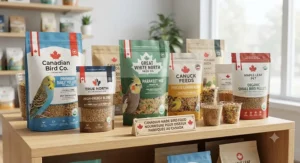
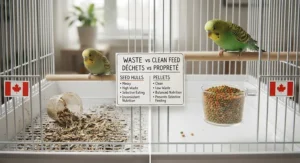
The trouble with a seed-only diet is that it looks fine right up until it isn’t. Veterinary sources describe pet birds on exclusive seed diets as prone to obesity and chronic malnutrition. As one avian specialist at the University of Illinois puts it, commercial seeds are high in fat, low in fibre and low in calcium. They also lack key vitamins such as vitamin A.
For budgies specifically, the MSD Veterinary Manual notes that goitre, or thyroid enlargement, occurs in budgerigars on all-seed diets deficient in iodine. It’s less common now because of fortified and pelleted diets, but it shows how a deficiency can hide in a bowl that looks full. Calcium matters most for laying hens, and low-fibre, high-fat intake sets the stage for weight gain in a bird that already gets far less flying time than a wild one.
Even the “treats” can undermine you. VCA’s budgie guidance says honey sticks are simply seeds glued together with sugar and honey, and that millet sprays should be limited to small quantities once or twice a month. Molt, song and conditioning mixes are just more seeds in different packaging.
None of this means seeds are evil. Seeds are a natural food, and wild budgies eat them constantly. The issue is that captive birds eat dry, stored seed with far less variety and far less exercise. A dry seed mix in a cage is a different thing from grass seed in the Australian outback.
Vitamin Deficiency: The Silent Problem Behind Many Small Bird Illnesses
Vitamin deficiency, especially vitamin A, is the quiet villain of the seed-bowl story. It’s common, easy to overlook and preventable.
According to the MSD Veterinary Manual, signs of vitamin A deficiency include nasal discharge, sneezing, swelling around the eyes, conjunctivitis, poor feather quality and loss of appetite. White plaques may develop in and around the mouth, eyes and sinuses. In chronic cases, recurring infections that won’t clear up may have vitamin A deficiency as the underlying cause.
Prevention is dietary. A mostly pelleted diet is the foundation, and fresh vegetables rich in beta-carotene help. Suitable choices include carrots, sweet potato, orange peppers and dark leafy greens, all recommended by veterinary sources for their vitamin A content.
Please don’t self-diagnose or self-treat. The manual says supplements should be guided by a vet. Two mistakes are worth avoiding. Powdered supplements sprinkled on seeds are largely wasted, because birds remove the hulls and take the powder with them. Vitamins added to drinking water can change the taste, reduce water intake or break down quickly.
The plain takeaway: birds eating mainly a complete pellet usually don’t need extra vitamins unless a vet recommends them. That is one of the strongest arguments for pellets in the small bird pellets vs seed mix debate.
Selective Feeding Behaviour: Why Your Bird Eats the Bad Stuff First
Selective feeding behaviour is the reason mixed bowls disappoint. Birds pick what tastes best. UC Davis’s veterinary school compares it to offering a child broccoli and French fries, and says you can guess which one gets eaten. Their guidance for a bird diet conversion is to buy only 100% pelleted diets, because mixtures let the bird fill up on nutritionally poor seed.
The MSD Veterinary Manual agrees. Owners often mix complete pellets with seeds and nuts and hope the bird chooses the healthier option, but birds typically pick out the tastier items and ignore the pellets. The University of Illinois veterinary team says the same about blends of pellets, seeds, dried fruit and vegetables. Birds pull out their favourites and leave the healthy items behind.
There’s a second trap in seed-based “fortified” foods. Some seed products carry a vitamin coating on the outside of unhulled seed. When the bird removes the hull, the coating goes with it, leaving the nutrition in the bin.
What does this mean in practice? If you keep a seed mix in the cage, watch what remains at the end of the day. The leftover pile tells you what your bird doesn’t want. Usually it’s the boring, nutritious stuff.
Mixed Pellet and Seed Feeding: Does the Middle Path Actually Work?
Mixed pellet and seed feeding is the compromise many owners land on, and the science is more nuanced than “never” or “always.” The MSD Veterinary Manual warns that all-seed diets, and even mixed diets of half seeds and half pellets that aren’t portion-controlled, can be deficient in vitamin A. VCA’s budgie guidance says a bird eating 75-80% of its diet as pellets generally doesn’t need supplemental vitamins.
The key phrase is portion-controlled. Mixed feeding works when the pellets are the meal and seeds are the garnish, not when both sit in the same bowl at the same volume. One convenient example is the ZuPreem True Harvest + Sensible Seed Small Bird Bundle, which pairs a pellet diet with a separate seed enrichment mix, so the two are handled as distinct items.
| Approach | Nutrient Reliability | Selective Feeding Risk | Best For |
|---|---|---|---|
| Seed mix only | Low, gaps in vitamin A and calcium | Very high | Nobody long-term |
| Pellets only (plus vegetables) | High | Low | Most pet budgies and finches |
| Mixed feeding, controlled portions | Moderate to high | Moderate | Owners who want foraging enrichment |
| Mixed feeding, one shared bowl | Unreliable | High | Not recommended |
The table shows that the strongest results come from pellets as the base with tightly limited seeds. Uncontrolled mixing looks like a compromise but behaves like a seed-only diet. If you want the foraging fun of seeds, use them as a measured reward, and let ZuPreem Natural Small Bird Food or Lafeber Premium Daily Diet for Parakeets do the nutritional heavy lifting.
Features That Actually Matter (And Those That Don’t)
What matters:
- Pellet size and hardness. A pellet your bird can’t handle is a pellet your bird won’t eat.
- A complete-diet claim from a reputable brand. It should be backed by veterinary formulation, not just marketing.
- Freshness. Pellets lose quality after opening, so bag size should match your flock.
- Ingredient transparency. Named grains and vegetables are a better sign than vague terms.
What matters less:
- Fruit pictures on the bag. They’re for you, not the bird.
- “Natural” as a stand-alone word. It has no reliable nutritional meaning.
- Organic status, unless it matters to you. It speaks to farming, not to nutrient balance.
- Bright colours. They may encourage a first bite, but don’t confuse them with nutrition.
The common thread is that the best feature is one your bird will actually eat. Every other spec is secondary.
Long-Term Cost and Maintenance: Doing the Arithmetic
Pellets look pricier than seed, but the real cost of a budgie’s food is small. The following arithmetic is a rough estimate, not a measured figure. It assumes a budgie eats about 10 g of food a day and ignores waste, which will vary.
| Product | Bag Size | Approx. Price Range (CAD) | Approx. Months per Budgie | Value Verdict |
|---|---|---|---|---|
| ZuPreem Natural Small Bird Food | 1 kg | C$20-C$35 | About 3 | Strong staple value |
| ZuPreem FruitBlend Small Bird Food | 907 g | C$20-C$35 | About 3 | Good if it works |
| Roudybush Daily Maintenance Mini | 1.25 kg | C$30-C$45 | About 4 | Solid value |
| Harrison’s Organic Premium Pellets (HOPP) | 454 g | C$25-C$40 | About 1.5 | Premium price |
| Lafeber Premium Daily Diet for Parakeets | 2.3 kg | C$45-C$70 | About 7 | Best for flocks |
| TOP’s Mini Parrot Pellets | 454 g | C$15-C$30 | About 1.5 | Budget organic |
| Mazuri Mini Bird Food | 907 g | C$20-C$35 | About 3 | Fair for finches |
The pattern is clear. Most small-bird pellets work out to a handful of dollars a month per bird, so the cost of switching is modest next to a single avian vet visit. Buy sizes you can finish while the food is fresh, and don’t be seduced by a bulk bag that will sit half-used.
Maintenance is simple. Store pellets sealed in a cool, dry place. Change the dish daily and wash it. Fresh vegetables should come out of the cage within a few hours so they don’t spoil. Keep a running note of weight and appetite, because small changes are your earliest warning.
Common Mistakes When Buying Small Bird Pellets
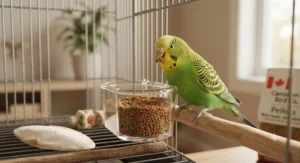
- Switching cold turkey. Sudden diet changes can lead to refusal and dangerous weight loss.
- Buying the biggest bag first. A trial size protects your wallet if your bird refuses.
- Trusting “fortified” on a seed bag. Vitamin coatings on unhulled seed are often discarded with the hull.
- Adding vitamin drops to water. They can change taste and reduce drinking.
- Skipping the vet. Your bird’s health history should guide the plan.
Each of these mistakes shares a root cause: treating a diet change as a shopping decision instead of a health decision.
Canadian Labels and Regulations: What “Complete Diet” Does and Doesn’t Prove
Canada doesn’t set a national nutrient standard for pet food. Many manufacturers voluntarily follow American benchmarks such as those from the Association of American Feed Control Officials to support “complete and balanced” claims, though those benchmarks are aimed mainly at dogs and cats. For bird pellets, that means a complete-diet claim is largely the manufacturer’s assertion.
What Canadian law does require is truthfulness. The Competition Bureau’s guide to labelling and advertising pet foods says claims about nutritional adequacy must be accurate and verifiable. It also lists the basic label information, including common name, net weight, ingredients, feeding instructions and a guaranteed analysis. The guide is written with dogs and cats in mind, but its principle is a good yardstick for any pet food.
In practice, read the guaranteed analysis and ingredient list, and check that the feeding instructions make sense for a bird of your size. Many pellet brands are made in the United States, so expect bilingual stickers or packaging. Ultimately your avian vet is a better judge of adequacy than any front-of-bag slogan.
FAQ: Small Bird Pellets vs Seed Mix
❓ How long does budgie pellet conversion take?
❓ Are coloured pellets safe for budgies?
❓ Do budgies on pellets still need seeds?
❓ Where can I buy small bird pellets in Canada?
❓ Are organic small bird pellets worth the extra cost?
Conclusion
The small bird pellets vs seed mix debate isn’t really a debate among the veterinary sources I found. Seed-only diets are consistently linked with vitamin A deficiency, obesity and other preventable problems. Mixed bowls invite selective feeding, so a pellet-based diet with fresh vegetables comes out as the safer foundation. The caveat is that vets differ on details for budgies, so a chat with an avian vet should come before any change.
Your practical path is simple. Start with a trial size, such as Roudybush Daily Maintenance Mini or ZuPreem FruitBlend Small Bird Food. Move to a staple like ZuPreem Natural Small Bird Food or Lafeber Premium Daily Diet for Parakeets once your bird accepts pellets. Finch keepers should look at Mazuri Mini Bird Food, and organic-minded owners can choose between Harrison’s Organic Premium Pellets (HOPP) and TOP’s Mini Parrot Pellets. Weigh daily, measure the leftovers and never let a bird go hungry beside a full bowl.
Do it slowly, watch the scale and keep the vet in the loop. Your bird can’t read a nutrition label, so you’ll have to do it for them.
✨ Ready to upgrade your bird’s bowl? 🐦
Check current pricing and availability on your favourite pellet above, and take the first step toward a healthier, longer-lived companion!
Recommended for You
- Bulk Small Bird Food Value Pack: 7 Best Picks For 2026
- 7 Best Small Bird Food Picks For Canadian Flocks In 2026
- 7 Best Natural Parrot Food Picks For Canadian Birds
Disclaimer: This article contains affiliate links. As an Amazon Associate, I earn from qualifying purchases. If you purchase products through these links, we may earn a small commission at no additional cost to you.
✨ Found this helpful? Share it with your friends! 💬🤗
