
In This Article
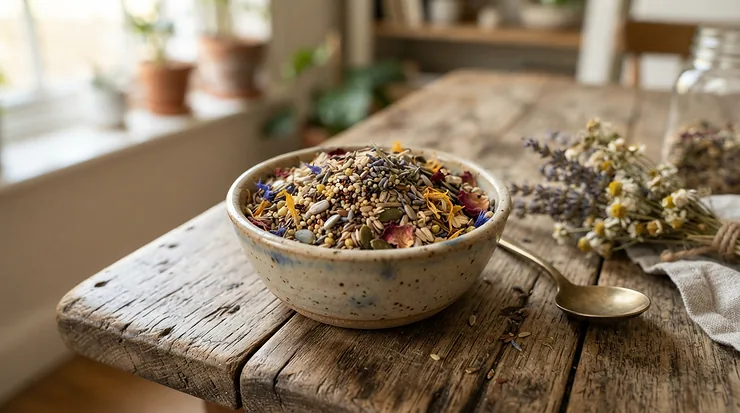
The best small bird food for feather health is a nutritionally complete, species-sized diet, usually a quality pellet or a fortified seed-and-pellet blend. It supplies protein, omega-3 and omega-6 fats, vitamin A, zinc and biotin in balanced amounts, and it is served alongside fresh vegetables, never as seed alone.
Feathers are built almost entirely from protein. A bird can’t fake a good moult. Every barb and barbule has to be assembled from whatever the bowl delivered, and when the bowl is mostly millet and sunflower, the plumage tells on you: dull, ragged, stress-barred, slow to regrow. Veterinary reference texts note that many pet bird illnesses trace back to nutrition, and that seed-heavy diets are especially prone to vitamin A and calcium shortfalls.
So this guide ranks the best small bird food for feather health for budgies, canaries, finches and other small beaks. It covers omega-rich small bird food, the biotin supplement small birds debate, the feather colour diet small birds actually need, and the diet side of feather plucking prevention. I compared real labels, guaranteed analyses and aggregated reviewer sentiment. I haven’t hand-tested any of these products, and I’ll say so wherever the evidence is thin.
Winter matters here in Canada. Short days, dry furnace air and drafty window sills all stress small birds. A diet that supports a strong moult is your cheapest insurance.
Quick Comparison: Best Small Bird Food for Feather Health at a Glance
| Product | Format | Standout Label Fact | Approx. Price Range (CAD) | Best For |
|---|---|---|---|---|
| Harrison’s High Potency Super Fine | Organic pellet | Omega-3 min 0.5%, omega-6 min 3.7% | C$20-C$35 / 454 g | Moult, breeding, cold homes |
| Roudybush Daily Maintenance Mini | Soft steam pellet | Biotin on the ingredient list | C$25-C$40 / 1.25 kg | Seed-to-pellet converts |
| Kaytee Forti-Diet Pro Health Feather Parakeet | Seed + pellet mix | Omega-3 min 0.6%, flax seed | C$15-C$25 / 1.8 kg | Budget upgrade from plain seed |
| ZuPreem Sensible Seed | Seed + pellet mix | Only 10% sunflower seed | C$15-C$25 / 907 g | Stubborn seed lovers |
| Lafeber Classic Nutri-Berries | Foraging berry | Biotin, egg and vitamin coating | C$30-C$50 / 1.8 kg | Bored or plucking-prone birds |
| Versele-Laga Prestige Budgies | Plain seed mix | 3% linseed, no additives | C$10-C$20 / 1 kg | Seed base to supplement |
| Kaytee Forti-Diet Egg-Cite Parakeet | Seed mix with egg | Dried whole egg for protein | C$20-C$30 / 2.3 kg | Seasonal moult boost |
Price ranges are rough estimates at the time of research. Check current price and pack sizes on amazon.ca.
Read the table by format first, brand second. The pellet-first options (Harrison’s High Potency Super Fine, Roudybush Daily Maintenance Mini) give the most consistent nutrition because a bird can’t pick out its favourite bits. The seed-and-pellet blends (Kaytee Forti-Diet Pro Health Feather Parakeet, ZuPreem Sensible Seed) are friendlier to fussy eaters but only as good as what actually gets eaten. Versele-Laga Prestige Budgies is the budget base layer and needs a partner.
💬 Just one click — help others make better buying decisions too!😊
Top 7 Best Small Bird Food for Feather Health: Expert Analysis
1. Harrison’s High Potency Super Fine — best for omega-balanced organic nutrition
This is the nutrition-nerd’s pick: an organic, non-GMO pellet that publishes its omega numbers instead of waving at “with flax.”
The guaranteed analysis lists crude protein at 18.5% minimum, crude fat at 12% minimum, omega-6 at 3.7% minimum and omega-3 at 0.5% minimum. In practice, that protein level gives a moulting bird the raw material for keratin, and the fat gives energy for the metabolic cost of growing feathers. It’s also why the maker positions this formula for breeding, moulting and cold-climate birds rather than a sedentary adult.
On paper, it suits owners who want measurable omega-rich small bird food and are willing to manage the switch from seed. The tiny pellet size is built for canaries and finches, and the label suggests roughly 1-1¾ g daily for those, about 1½-3 g for budgies. Retail listings say to use an opened bag within about eight weeks, so buy small.
Reviewer sentiment on retail pages keeps landing on the organic ingredients and on picky birds accepting the pellets. A few owners describe an avian vet steering them here after seed-related malnutrition. Those are anecdotes, not trial data.
Pros:
- ✅ Published omega-3 and omega-6 minimums
- ✅ Organic, non-GMO ingredients
- ✅ Tiny size suits finches and canaries
Cons:
- ❌ High fat is not ideal for sedentary adults
- ❌ Slow conversion for seed loyalists
Expect roughly C$20-C$35 for a 454 g bag. At about 1½-3 g a day for a budgie, a bag stretches several months, so the daily cost is surprisingly low. Strong value if your bird accepts it.
2. Roudybush Daily Maintenance Mini — gentlest route off a seed-only diet
If Harrison’s High Potency Super Fine is the performance formula, this is the dependable daily driver. The pellets are steam-pelleted and softer than most, which matters when you’re coaxing a stubborn bird to try something new.
The base is ground corn, wheat, soy meal and soy oil, with a vitamin and mineral package that includes biotin, zinc and vitamin A. One retailer puts the fat at roughly 7%, with about 21% of calories from fat. That’s lower than Harrison’s, so there’s more room for fresh vegetables without pushing the daily calorie total up. The mini size is listed for birds from about 7.5 cm (3 in) tall, covering budgies, canaries, cockatiels and lovebirds.
I couldn’t confirm a guaranteed omega-3 figure on the listings I saw, so don’t pick this as your omega-rich small bird food. Pick it for dependable maintenance and acceptance.
Reviewers frequently describe the softness and palatability, and say birds pick the pellets first once converted. A recurring complaint is crumbling into dust for very small beaks, so match the pellet size to your bird.
Pros:
- ✅ Soft pellets suit hesitant converts
- ✅ Lower fat leaves room for fresh food
- ✅ Biotin and zinc in the vitamin package
Cons:
- ❌ No confirmed omega-3 guarantee
- ❌ Pellets can crumble for tiny beaks
Plan on about C$25-C$40 for a 1.25 kg (44 oz) bag. Good value for a staple, and the larger bags drop the per-gram cost.
3. Kaytee Forti-Diet Pro Health Feather Parakeet — best budget seed blend with flax and probiotics
Here’s the compromise pick: still a seed-and-pellet mix, but engineered to be a lot more than millet.
The label lists crude protein at 14% minimum, crude fat at 4.5% minimum, fibre at 8% maximum and omega-3 at 0.6% minimum. That omega-3 floor is slightly above Harrison’s at a fraction of the cost per kilogram, and it comes from flax seed. The blend also adds prebiotics, probiotics, psyllium, blueberry, cranberry and spinach, which is unusual at this price.
The catch is behavioural, not nutritional. In any mixed bag, a budgie can eat the tastiest bits and leave the rest. The feeding guide suggests 1-3 tablespoons (about 12-36 g) daily for a parakeet, a wide range, so watch what’s left in the dish. The formula also contains peanuts, so store it dry and airtight (more in the safety section).
I couldn’t verify a large, reliable sample of Canadian customer reviews for this specific formula, so I won’t summarize sentiment I can’t see.
Pros:
- ✅ Labelled omega-3 minimum from flax seed
- ✅ Prebiotics and probiotics included
- ✅ Wallet-friendly for the feature set
Cons:
- ❌ Selective eating can undo the benefits
- ❌ Contains peanuts that need dry storage
Expect about C$15-C$25 for a 1.8 kg (4 lb) bag. Excellent value as a step up from plain seed.
4. ZuPreem Sensible Seed — gateway blend for committed seed fans
Some birds treat pellets like a personal insult. ZuPreem Sensible Seed is the diplomat: a seed mix with only 10% sunflower and FruitBlend-flavoured pellets cut to the same size as the seeds.
The mix includes canary grass seed, white proso millet, white milo and ground corn. Fewer sunflower seeds means less fat-heavy cherry-picking, and the right-sized pieces reduce the sorting game. The manufacturer says it can make up to 30% of the daily diet, with 1-2 tablespoons per canary or finch. In other words, it’s meant as an enrichment blend, not a standalone feather diet.
My take is practical. Use it as a bridge, with a complete pellet like Roudybush Daily Maintenance Mini or Harrison’s High Potency Super Fine forming the base. It does that job well, and its flavoured pellets teach birds that “pellet” and “tasty” can coexist.
I couldn’t verify a meaningful Canadian review sample for this one either.
Pros:
- ✅ Only 10% sunflower seed
- ✅ Seed-sized pellets reduce sorting
- ✅ Good bridge to a pellet-first diet
Cons:
- ❌ Label caps it at about 30% of the diet
- ❌ Fruit flavouring adds sweetness, not nutrition
Roughly C$15-C$25 for a 907 g (2 lb) bag. Fair value as a transition tool.
5. Lafeber Classic Nutri-Berries — foraging-first berries with biotin in the mix
Feather plucking prevention isn’t only a nutrition story, and these berries are the one product here that tackles boredom. Hulled millet, cracked corn, safflower and peanuts are rolled into berry-shaped nuggets, so a bird has to work to eat.
The ingredient list includes whole egg, biotin and a vitamin-mineral coating. The parakeet guaranteed analysis shows protein at 12.5% minimum, fat at 6% minimum and fibre at 5% maximum. Foraging adds interest and eating time, which can matter for a restless bird in a small cage.
Honest trade-off: the ingredient panel includes maltodextrin and corn syrup. Use the berries as a foraging component alongside a primary pellet, not as the entire diet. Lafeber positions them for maintenance or conversion, and I’d lean toward the conversion-helper role.
I couldn’t verify enough reviews to characterize sentiment accurately.
Pros:
- ✅ Encourages natural foraging behaviour
- ✅ Biotin and whole egg on the label
- ✅ Handy conversion treat
Cons:
- ❌ Contains corn syrup and maltodextrin
- ❌ Not complete enough to stand alone
Estimate around C$30-C$50 for a 1.8 kg (4 lb) bag. Moderate value, best used as a partner food.
6. Versele-Laga Prestige Budgies — plain seed done right
Some budgies will never convert, and for them a clean, varied seed base is the realistic starting point. This mix lists silver millet (38%), yellow millet (30%), red millet (12%), canary seed (8%), husked oats (8%), linseed (3%) and niger seed (1%), with no additives.
The variety helps, and the 3% linseed (flax) is a small plant source of omega-3. Still, it’s overwhelmingly millet, which is starchy and low in vitamin A and calcium. Plain seed on its own is the very pattern vets warn about, so think of this as a base layer that needs egg food, greens and ideally a pellet partner.
Reviewers on retail pages say their budgies like it. One owner reports a vet visit that found their budgie very healthy on this mix plus egg food and daily greens, while noting their bird flatly refused pellets. That’s one bird’s story, not proof. The takeaway is the supplementation, not the seed.
Pros:
- ✅ Varied millet, canary seed and oats
- ✅ No additives listed
- ✅ Inexpensive base for seed loyalists
Cons:
- ❌ Not nutritionally complete without partners
- ❌ Starch-heavy, low in vitamin A and calcium
Around C$10-C$20 for a 1 kg bag. Cheap and cheerful, but only good value if you add the missing pieces.
7. Kaytee Forti-Diet Egg-Cite Parakeet — moult-season booster with dried whole egg
Feathers are overwhelmingly protein, so the moult is the single most demanding stretch of a small bird’s year. Kaytee Forti-Diet Egg-Cite Parakeet adds dried whole egg to a seed-based blend, with flax seed, prebiotics and probiotics, and the maker specifically recommends it during breeding and moulting.
The base is canary grass seed, white millet, wheat, oat groats and red millet. The protein bump from egg is the point, and it lines up with why Versele-Laga Prestige Budgies owners often add egg food in moult.
As with other mixes, selective eating can blunt the benefit. Because it’s richer, I’d treat it as a seasonal tool: rotate it in for the weeks of active feather regrowth rather than feeding it year-round to a sedentary bird.
I couldn’t verify a trustworthy review sample for this formula.
Pros:
- ✅ Dried whole egg adds protein
- ✅ Flax seed provides omega-3
- ✅ Designed for breeding and moulting
Cons:
- ❌ Richer than a sedentary bird needs
- ❌ Selective eating can reduce benefits
Roughly C$20-C$30 for a 2.3 kg (5 lb) bag. Good seasonal value.
| Product | Format | Key Label Numbers | Price Range (CAD) | Best For |
|---|---|---|---|---|
| Harrison’s High Potency Super Fine | Organic pellet | 18.5% protein, 12% fat | C$20-C$35 / 454 g | Omega balance, moult |
| Roudybush Daily Maintenance Mini | Soft pellet | ~7% fat, biotin listed | C$25-C$40 / 1.25 kg | Easy conversion |
| Kaytee Forti-Diet Pro Health Feather Parakeet | Seed + pellet | 14% protein, 0.6% omega-3 | C$15-C$25 / 1.8 kg | Budget upgrade |
| ZuPreem Sensible Seed | Seed + pellet | 10% sunflower | C$15-C$25 / 907 g | Seed-loyal birds |
| Lafeber Classic Nutri-Berries | Foraging berry | 12.5% protein | C$30-C$50 / 1.8 kg | Foraging, boredom |
| Versele-Laga Prestige Budgies | Seed mix | 3% linseed | C$10-C$20 / 1 kg | Seed base layer |
| Kaytee Forti-Diet Egg-Cite Parakeet | Seed + egg | Dried whole egg | C$20-C$30 / 2.3 kg | Moult-season protein |
Looking at the numbers together, Harrison’s High Potency Super Fine is the clear choice if you want the most defensible nutrition, while Kaytee Forti-Diet Pro Health Feather Parakeet wins on price for a labelled omega-3 floor. Roudybush Daily Maintenance Mini is the easiest first pellet, and Versele-Laga Prestige Budgies only makes sense as a base layer. Budget buyers should note that Lafeber Classic Nutri-Berries costs more per gram, so use them sparingly as enrichment.
How to Choose the Best Small Bird Food for Feather Health
Choosing the best small bird food for feather health comes down to a handful of decisions, in this order:
- Start with completeness. A formulated pellet or fortified blend should be the foundation. Seed alone leaves gaps in vitamin A and calcium.
- Match the size to the beak. A “tiny” pellet suits finches and canaries, while “mini” suits budgies. Oversized pellets get ignored or crushed to dust.
- Read the guaranteed analysis. Look for protein in the mid-teens or higher during moult, and look for a stated omega-3 minimum rather than a vague “with flax.”
- Check the preservatives. Mixed tocopherols and citric acid are common natural options. Artificial preservatives are a personal call.
- Think about fat and activity. A sedentary cage bird doesn’t need a high-fat breeding formula all year.
- Plan the conversion. The best food is the one your bird actually eats, so pick a transition path (see the practical guide below).
- Consult an avian vet. Especially if feathers look damaged, because diet is one of several possible causes.
Omega-Rich Small Bird Food: What the Fats Actually Do
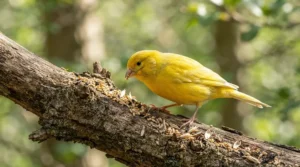
The appeal of omega-rich small bird food is simple: omega-3 and omega-6 fatty acids are structural components of skin, and healthy skin grows healthy feathers. Seed-heavy diets tend to skew toward omega-6 (sunflower, safflower, corn), so adding omega-3 sources like flax, chia or hemp rebalances the ratio.
Look at the labels. Harrison’s High Potency Super Fine lists omega-3 at 0.5% minimum against 3.7% omega-6. Kaytee Forti-Diet Pro Health Feather Parakeet lists 0.6% omega-3 from flax. Kaytee Forti-Diet Egg-Cite Parakeet and Versele-Laga Prestige Budgies also include flax or linseed. Harrison’s suggests omega-3-rich extras (organic chia, flax, hemp) make up no more than about 10% of the diet, which is a useful ceiling because these seeds are calorie-dense.
I’ll be honest about the evidence. I didn’t find controlled trials proving that omega-3 alone transforms feather quality in budgies or finches. The reasoning is physiologically sensible and widely repeated, but the packaging is more confident than the published data I could find. Treat omega-3 as part of a balanced package, not a miracle ingredient.
Biotin Supplement Small Birds: Helpful or Hype?
Biotin supports keratin quality, and sulphur-containing amino acids like methionine and cysteine supply the building blocks. That’s the logic behind moult supplements, and it’s why a biotin supplement for small birds is so popular.
Here’s the practical catch: a complete diet already contains biotin. Roudybush Daily Maintenance Mini and Lafeber Classic Nutri-Berries list it on the ingredient panel. Supplements make the most sense when a bird is eating mostly seed, recovering from illness or going through a stressful moult. Even then, concentrations vary wildly. A retailer listing for Nekton-Bio shows 200,000 µg/kg of biotin plus amino acids. Quiko Biotin M lists 15,000,000 mcg/kg, about 75 times more concentrated, with scoop sizes to match. Versele-Laga Muta-Vit lists its own concentration and a thrice-weekly schedule during the moult.
That’s why you should never swap scoops between products. Follow the label for the specific product and ask an avian vet before starting, because a supplement can’t fix a bad base diet.
Feather Colour Diet Small Birds: Canaries, Finches and Budgies
A feather colour diet for small birds works differently depending on species. Many canary and finch colours come from carotenoid pigments eaten in food and deposited in growing feathers. Red-factor canaries are the star example: they can convert yellow dietary carotenoids into red ketocarotenoids.
A Monash University study fed moulting yellow and red-factor canaries seed diets with different carotenoid supplements. Red birds grew orange or red feathers on every diet, and the supplements had little measurable effect on feather hue in that trial. So the genetics do much of the heavy lifting.
Still, breeders use colour foods. One canthaxanthin-fortified canary seed lists 50 mg/kg and says supplementation only affects feathers while they’re growing, so any change appears at the next moult. It only helps red-factor birds.
For budgies, colour is a different story. Their pigments aren’t mostly dietary carotenoids, so no colour food will turn a blue budgie green. Aim for general feather quality instead, and make sure lighting is right: birds see into the UV spectrum, and many feather patterns are only visible that way.
Feather Plucking Prevention: Diet Is One Piece of the Puzzle
Let’s be blunt: no bird food on its own guarantees feather plucking prevention. The Royal Veterinary College’s feather destructive behaviour factsheet describes it as a very common condition with many causes, often several at once. It also notes that many affected birds have an underlying health problem and are on seed-based diets that can be detrimental.
The same factsheet recommends moving birds to a complete, pelleted diet supplemented with vegetables and fruit, encouraging foraging, providing proper UV light, offering baths, and keeping birds away from overheated non-stick pan fumes. It’s a good mental checklist.
Diet helps in three ways. A balanced diet reduces the malnutrition angle. Foraging foods like Lafeber Classic Nutri-Berries add enrichment. And a calmer routine reduces stress. One practical tip from veterinary guidance: avoid scolding a bird for plucking.
If feathers are being pulled, broken or chewed, see an avian vet first. This guide is general information, not a diagnosis.
Practical Guide: A 30-Day Switch Plan That Actually Works
Birds are creatures of habit, so a slow, monitored plan works best.
Week 1: Mix about 25% new food (try Roudybush Daily Maintenance Mini) into the usual diet. Scatter some on a piece of paper to spark curiosity.
Week 2: Move to about half and half. Keep fresh vegetables in the dish.
Week 3: Go to roughly 75% new food. Watch droppings: small, very dark ones suggest your bird isn’t eating enough.
Week 4: Aim for mostly pellet or fortified food, with a small seed portion as a treat.
Weigh your bird on a gram scale every day during the switch. Small birds can’t afford to go hungry, so ask your vet what weight drop should trigger a call. Don’t try the fast-until-they-eat approach without veterinary guidance.
Store food airtight and cool. Buy bags you can finish within a couple of months, since some makers advise using opened bags within about eight weeks.
Real-World Scenarios: Which Food Fits Which Flock
These are hypothetical profiles built from label data, not testimonials.
The apartment budgie owner on a budget. One seed-loyal budgie in a small flat. Start with Versele-Laga Prestige Budgies for familiarity, transition toward Kaytee Forti-Diet Pro Health Feather Parakeet, then introduce Roudybush Daily Maintenance Mini gradually. Add greens daily.
The colour-conscious canary keeper. A red-factor canary heading into late-summer moult. Base the diet on Harrison’s High Potency Super Fine, rotate in Kaytee Forti-Diet Egg-Cite Parakeet during regrowth, and use a colour supplement only for growing feathers. For background on dietary carotenoids during moult, a Thompson Rivers University thesis examines how diet and habitat conditions relate to feather carotenoids in a wild songbird.
The finch pair with a plucking history. Rule out medical causes with a vet, then use tiny-format Harrison’s High Potency Super Fine with a ZuPreem Sensible Seed side dish and Lafeber Classic Nutri-Berries for foraging.
Pellets vs Seed Mixes: A Written Comparison
| Feature | Pellet-first (Harrison’s High Potency Super Fine) | Fortified blend (Kaytee Forti-Diet Pro Health Feather Parakeet) | Plain seed (Versele-Laga Prestige Budgies) |
|---|---|---|---|
| Nutritional completeness | High | Moderate | Low |
| Selective eating risk | Low | Moderate | High |
| Conversion effort | High | Low | None |
| Cost per kilogram | Highest | Mid | Lowest |
| Best For | Long-term feather health | Budget upgrade | Seed-loyal birds, with partners |
The pattern is clear: the less a bird can pick and choose, the more reliable the nutrition. Harrison’s High Potency Super Fine wins on completeness but demands patience, while Versele-Laga Prestige Budgies is easy to feed and easy to get wrong. For most Canadian households, the sweet spot is a fortified blend like Kaytee Forti-Diet Pro Health Feather Parakeet as a stepping stone to a pellet-first diet.
Features That Actually Matter (And Those That Don’t)
Matter: a complete formulation, the right size for the beak, stated protein and omega-3 minimums, and sensible preservatives.
Don’t matter as much: “natural” claims with no specifics, bright colours, fruit flavouring, and vitamin dust on seed. Many small birds husk seed and discard the hull, taking the coating with it, which is a reason many vets prefer pellets.
Treat marketing claims like ZuPreem Sensible Seed‘s FruitBlend flavour as a palatability trick, not a nutrition upgrade, and check whether the product lists actual numbers.
Safety First: Storage, Peanuts and Kitchen Fumes
Veterinary references flag aflatoxin-related liver disease linked to improperly stored seed and pet-grade peanuts. That’s relevant to Kaytee Forti-Diet Pro Health Feather Parakeet and Lafeber Classic Nutri-Berries, which contain peanuts. Keep bags sealed, dry and cool, and toss anything damp, clumped or musty.
Fumes matter too. The RVC factsheet warns that overheated non-stick pans can be fatal to birds. Keep birds out of the kitchen when cooking, and ventilate. Check any new food or treat against a reputable list of avian-toxic foods, and when in doubt, ask your vet.
Long-Term Cost and Maintenance
Cost per day is often smaller than expected. At roughly C$20-C$35 per 454 g and 1½-3 g daily, Harrison’s High Potency Super Fine works out to about C$0.10-C$0.25 a day for a budgie. That’s an estimate, so run your own numbers. Mixes like Kaytee Forti-Diet Pro Health Feather Parakeet cost less per kilogram but see more waste.
| Product | Package | Approx. Price Range (CAD) | Value Verdict |
|---|---|---|---|
| Harrison’s High Potency Super Fine | 454 g | C$20-C$35 | Strong if accepted |
| Roudybush Daily Maintenance Mini | 1.25 kg | C$25-C$40 | Solid staple |
| Kaytee Forti-Diet Pro Health Feather Parakeet | 1.8 kg | C$15-C$25 | Best budget upgrade |
| ZuPreem Sensible Seed | 907 g | C$15-C$25 | Fair bridge food |
| Lafeber Classic Nutri-Berries | 1.8 kg | C$30-C$50 | Enrichment only |
| Versele-Laga Prestige Budgies | 1 kg | C$10-C$20 | Cheap base layer |
| Kaytee Forti-Diet Egg-Cite Parakeet | 2.3 kg | C$20-C$30 | Seasonal booster |
Prices may vary. Check current price on amazon.ca.
The value ranking depends on waste and acceptance, not sticker price. A cheap bag that gets half-eaten costs more than a pricier food finished to the last pellet. Buy smaller bags of anything new until your bird approves it, and compare against vet bills, which dwarf any food savings.
FAQ
❓ Is pelleted bird food better than seed for budgies?
❓ How long until feathers look better after changing food?
❓ Can I give my budgie biotin every day?
❓ Is Harrison's bird food worth the price in Canada?
❓ Does colour food change my canary's feathers?
Conclusion
Feather health is a long game played in moult-sized chunks. The best small bird food for feather health is the one that delivers complete, balanced nutrition and that your bird really eats. For most owners, that means a pellet-first plan built on Harrison’s High Potency Super Fine or Roudybush Daily Maintenance Mini, with Kaytee Forti-Diet Pro Health Feather Parakeet or ZuPreem Sensible Seed as bridges, Kaytee Forti-Diet Egg-Cite Parakeet for the moult, and Lafeber Classic Nutri-Berries for foraging fun. Keep Versele-Laga Prestige Budgies for the seed-loyal, with partners at its side.
Remember the limits. Omega-rich small bird food and a biotin supplement for small birds support the process but don’t replace a vet when feathers are being damaged. A thoughtful feather colour diet for small birds works only during growth, and feather plucking prevention needs light, enrichment and calm as much as food.
✨ Ready to give your flock a stronger, brighter moult?
🪶 Check current prices and availability on amazon.ca, start small, switch slowly, and watch the next feather generation tell the story! 🐦
Recommended for You
- Best Parrotlet Food: 7 Proven Picks For Canadians In 2026
- Best Lovebird Food: 7 Proven Picks For Canadian Birds In 2026
- Best Cockatiel Food: 7 Proven Picks For Canadian Owners 2026
Disclaimer: This article contains affiliate links. As an Amazon Associate, I earn from qualifying purchases. If you purchase products through these links, we may earn a small commission at no additional cost to you.
✨ Found this helpful? Share it with your friends! 💬🤗
