
In This Article
Finch food under $15 CAD is a seed-based or seed-and-pellet blend made for finches and canaries and priced below C$15 per bag on retailers like Amazon.ca. The best options combine millet, canary grass seed and nyjer with added vitamins, so your birds eat well and your wallet survives the month.
Here’s the catch with cheap bird food: the sticker price tells you almost nothing. A C$9 bag that your finches half-ignore costs more than a C$14 bag they clean out. A bag that goes stale in week three is a donation to the compost bin. And a “complete nutrition” claim on the front can mean very little. As VCA Canada’s feeding guidance points out, no regulatory body certifies avian nutrition products, and an all-seed diet isn’t nutritionally complete.
So this guide skips the glossy promises and does the arithmetic. We compare seven real products, translate label numbers into daily costs, and break down seed cup refills, cost per bag, and feeding small flocks. We also look at how to read finch food deals on Amazon.ca without getting fooled by a bargain that isn’t one.
One honest note before we start. Prices below are ranges based on Canadian and US retail research at the time of writing. Amazon.ca listings move constantly, so check the current price before you commit. Where a rating or review pool couldn’t be verified, we say so instead of guessing.
Quick Comparison: Finch Food Under $15 CAD at a Glance
| Product | Format | Size | Approx. Price Range (CAD) | Best For |
|---|---|---|---|---|
| Kaytee Forti-Diet Pro Health Canary & Finch Food | Seed + extruded bits, probiotics | 2 lb (907 g) | C$12–C$15 | Owners wanting a fortified daily mix |
| Kaytee Forti-Diet Canary & Finch Daily Food | Fortified seed mix | 2 lb (907 g) | C$9–C$13 | Tightest budgets |
| Vitakraft Menu Canary & Finch Food | Seeds, fruit, veg, pellets | 2.5 lb (1.13 kg) | C$11–C$15 | Variety and foraging fans |
| Hagen Finch Seed (Staple VME) | Pure seed blend | Varies (often 3 lb) | C$10–C$15 | Canadian-made, plain-seed purists |
| Higgins Vita Seed Canary | Seed + extruded morsels, DHA | 0.91 kg (2 lb) | C$12–C$15 | Ingredient-label readers |
| ZuPreem Smart Selects Canary & Finch Food | Seed + pellet hybrid | 2 lb (907 g) | C$10–C$14 | Easing toward pellets |
| Kaytee Nyjer Wild Bird Food Seed | Single-seed nyjer | 3 lb (1.36 kg) | C$10–C$16 | Treats and outdoor feeders |
The two Kaytee Forti-Diet bags are the safest starting points under the C$15 ceiling. The Kaytee Forti-Diet Canary & Finch Daily Food wins on pure price, while the Kaytee Forti-Diet Pro Health Canary & Finch Food adds gut-health ingredients for a modest premium. If you care about ingredient purity more than the last dollar, Higgins Vita Seed Canary is worth the stretch. Be careful with the Kaytee Nyjer Wild Bird Food Seed: it’s a wild-bird product, not a complete pet diet, and it can drift past the C$15 line.
💬 Just one click — help others make better buying decisions too!😊
Top 7 Finch Food Under $15 CAD: Expert Analysis
Each pick below gets the same treatment: what the specs mean in practice, who it suits, what reviewers and labels reveal, and whether the value holds up. Every product here is a real, widely sold item, and none of these write-ups copy a product listing.
1. Kaytee Forti-Diet Pro Health Canary & Finch Food — probiotics in a budget-sized bag
The headline feature is the “Nourish+Protect” formula, which adds prebiotics, probiotics and psyllium fibre to a seed-based mix. That’s unusual at this price. The label lists minimums of 16% protein and 10% fat, with fibre capped at 9% and moisture at 12%. In practice, 10% fat is a sensible middle: enough energy for daily life, not the rich profile you’d want for breeding conditioning.
Kaytee’s feeding guide suggests about two tablespoons (roughly 24 g) daily for a canary and one to three tablespoons (about 12–36 g) for finches. It also recommends using the bag within 30 to 45 days. That matters, because a 2 lb bag fed to one bird can outlast its freshness window.
On reviews, the broader Forti-Diet line draws large review pools at US retailers. We couldn’t verify an amazon.ca-specific rating for this newer formula, so read the current page before buying. One pattern applies to any mixed blend: birds can pick favourite pieces and leave the rest, which is why the label says to discard uneaten food.
Pros:
- ✅ Prebiotics and probiotics rarely found at this price
- ✅ Clear, usable feeding guidance on the label
- ✅ Flax adds omega-3 fats to the mix
Cons:
- ❌ Short recommended use-by window after opening
- ❌ Ingredient panels vary by retailer, so check for colourants
Price range: roughly C$12–C$15, so it sits right on the line. Verdict: good value if gut-health ingredients matter to you.
2. Kaytee Forti-Diet Canary & Finch Daily Food — the cheapest fortified daily mix
This is the budget workhorse. Listings show a seed base of canary grass seed, yellow millet, niger, canola, oat groats, flax, red and white millet and hulled sunflower, plus added vitamins and minerals. Those are the small, soft-shelled seeds finches handle easily. The sunflower is hulled, so you aren’t paying for shells your birds will flick across the room.
Based on the ingredient comparison, this mix delivers roughly the same seed foundation as its pricier Pro Health sibling. What it drops is the digestive-support layer. For a healthy adult bird already eating some greens, that’s a fair trade. Be aware that some US retail panels list added colourants (FD&C dyes). If you prefer dye-free, read the label on the version you’re buying.
Reviewers of this product family tend to mention that birds accept the blend readily, though we couldn’t verify a robust amazon.ca review count. That’s a reason to start with one bag rather than a bulk order.
Pros:
- ✅ Lowest cost per bag in this roundup
- ✅ Soft hulled sunflower reduces husk waste
- ✅ Familiar, widely stocked brand
Cons:
- ❌ No probiotic or digestive additives
- ❌ Some versions list artificial colours
Price range: about C$9–C$13. Verdict: the strongest cheap finch seed pick for tight budgets.
3. Vitakraft Menu Canary & Finch Food — variety for birds that get bored
Vitakraft Menu Canary & Finch Food is a “foraging blend” of seeds, nuts, grains, vegetables, fruit and pellets, with natural probiotics and omega-3 and omega-6 fatty acids. Variety is the point. A bird that has to sort through different textures stays occupied, which is real enrichment in a small cage.
The 2.5 lb (about 1.13 kg) bag also gives you more food per dollar than the 2 lb competitors. At the same price, you get roughly 25% more product. Based on the spec comparison, that’s the strongest cost-per-gram argument among the mixed blends.
The trade-off is selective eating. Mixes with fruit and veg pieces invite birds to hoover up favourites first. Many keepers report this behaviour with variety blends generally, so plan to top up carefully rather than refilling over leftovers. Check the amazon.ca page for current review counts, as we couldn’t verify them.
Pros:
- ✅ More grams per dollar in a 2.5 lb bag
- ✅ Mixed textures encourage natural foraging
- ✅ Omega-3 and omega-6 for feather condition
Cons:
- ❌ Selective eating can mean more leftover waste
- ❌ Fruit pieces may not suit every finch
Price range: around C$11–C$15. Verdict: excellent value for birds that enjoy sorting through their food.
4. Hagen Finch Seed (Staple VME) — plain, Canadian-made, no gimmicks
If you’d rather skip the extras, Hagen Finch Seed is a straightforward seed blend: golden, Siberian, red and white millet, canary grass seed, canola, millet kernel and niger, with canola oil preserved with tocopherols, calcium carbonate, orange oil and added vitamins and minerals. Specialty Canadian retailers describe it as made in Canada.
That simplicity has a practical side. Plain seed is easy to portion, easy to store and easy to blend with fresh greens. Hagen’s own guidance recommends refilling the seed cup daily and alternating with treat seeds and greens. It reads like the advice of a company that expects you to build the rest of the diet yourself.
Availability on Amazon.ca can vary by seller and bag size, so confirm the size you’re buying and the unit price. We couldn’t verify an amazon.ca review pool for this specific listing.
Pros:
- ✅ Simple, recognizable seed ingredients
- ✅ Canadian-made per specialty-retailer listings
- ✅ Easy to supplement with greens or pellets
Cons:
- ❌ Seed-only, so nutrition depends on your extras
- ❌ Bag sizes and sellers vary on Amazon.ca
Price range: roughly C$10–C$15 depending on bag. Verdict: a dependable base for keepers who already supplement.
5. Higgins Vita Seed Canary — the label-reader’s pick
Higgins Vita Seed Canary comes in a 0.91 kg bag and publishes tight numbers: at least 16.5% protein, at least 12% fat, no more than 6% fibre, and at least 0.40% omega-3. Higgins says it contains protected probiotics and DHA and avoids artificial preservatives, flavours and colours, using colour from seeds, spices and vegetables instead.
What that means for you is a cleaner ingredient story than most mixes at this price. The 12% minimum fat is a touch richer than Kaytee’s 10%, so it’s a good fit for active birds and cold Canadian winters, but watch portions with less active ones.
One caveat for finch owners: this listing is labelled for canaries. Canaries and small finches eat similar small seeds, but the dedicated Higgins Vita Seed Finch formula usually comes in larger bags that exceed the C$15 ceiling. Retail review pools for this canary listing are small, so treat early impressions with caution.
Pros:
- ✅ Published protein, fat and omega-3 numbers
- ✅ No artificial preservatives, flavours or colours
- ✅ Probiotics and DHA included
Cons:
- ❌ Canary-labelled, not finch-specific
- ❌ Smaller review pool than mass-market rivals
Price range: about C$12–C$15. Verdict: worth a stretch if you read labels.
6. ZuPreem Smart Selects Canary & Finch Food — a nudge toward pellets
ZuPreem Smart Selects Canary & Finch Food blends seeds with pellets in a 2 lb bag. The idea is a gentler path toward a formulated diet. VCA Canada notes that pellets are the ideal base diet for most birds and that birds eating 75–80% pellets generally don’t need supplements. A seed-and-pellet hybrid is a low-pressure first step.
Be realistic about tiny finches, though. Many small birds ignore pellets at first, so a hybrid works best when you transition gradually. Kaytee’s guidance of mixing old and new over seven to ten days is a sound model for any switch.
At US retail, this product has been spotted at a low per-ounce price, which suggests it can undercut other blends. We couldn’t verify an amazon.ca review count, so check before ordering.
Pros:
- ✅ Pellet component supports a more complete diet
- ✅ Often priced below other mixed blends
- ✅ Good stepping stone away from all-seed feeding
Cons:
- ❌ Tiny finches may leave the pellets behind
- ❌ Needs a gradual transition
Price range: roughly C$10–C$14. Verdict: smart value for keepers working toward better nutrition.
7. Kaytee Nyjer Wild Bird Food Seed — the nyjer treat jar
Kaytee Nyjer Wild Bird Food Seed is the odd one out. It’s a single-seed wild-bird product, in the 3 lb size, and not a complete pet diet. Nyjer is rich: roughly 40% oil according to the Wild Bird Feeding Institute, and Audubon’s explainer on nyjer notes that the seed is imported, which explains its premium price.
Use it as an occasional treat or for outdoor sock feeders, not as the foundation of a cage diet. Because nyjer’s oils degrade, buy small quantities and store them somewhere cool and dry. Seed that has dried out becomes unappealing to birds.
This product appears among the best sellers in Amazon’s finch-feeder category, so demand is real. Check the current price carefully, since it can sit at or just above C$15.
Pros:
- ✅ High-fat energy for cold weather feeding
- ✅ Heat-sterilized, so it won’t sprout
- ✅ Works in sock or mesh feeders
Cons:
- ❌ Not a complete diet for pet birds
- ❌ Loses freshness quickly once opened
Price range: about C$10–C$16. Verdict: a useful extra, not a staple.
| Product | Format | Standout Extras | Verify on the Label | Best For |
|---|---|---|---|---|
| Kaytee Forti-Diet Pro Health Canary & Finch Food | Seed + extruded | Probiotics, flax | Colourants | Fortified daily feeding |
| Kaytee Forti-Diet Canary & Finch Daily Food | Seed mix | Hulled sunflower | Colourants | Lowest cost |
| Vitakraft Menu Canary & Finch Food | Foraging blend | Fruit, veg, pellets | Bag size | Enrichment |
| Hagen Finch Seed (Staple VME) | Seed only | Added vitamins | Bag size and seller | Plain-seed feeders |
| Higgins Vita Seed Canary | Seed + extruded | DHA, probiotics | Canary labelling | Label readers |
| ZuPreem Smart Selects Canary & Finch Food | Seed + pellet | Pellet transition | Pellet acceptance | Transitioning birds |
| Kaytee Nyjer Wild Bird Food Seed | Single seed | ~40% oil | Wild-bird use only | Treats, outdoor feeders |
Reading across the table, the extras are the real differentiators, not the base seed. Kaytee Forti-Diet Pro Health Canary & Finch Food and Higgins Vita Seed Canary compete on digestive and nutritional additives, while Hagen Finch Seed competes on simplicity. If you’re deciding between a mixed blend and plain seed, the Vitakraft Menu Canary & Finch Food sits in the middle with variety but no heavy fortification.
How to Choose Finch Food Under $15 CAD
A good choice comes down to five decisions, made in order. Skipping straight to price is how people end up with cheap bags their birds refuse.
- Decide the base diet first. Seed alone isn’t complete, so choose whether the bag is your staple or a supplement to pellets and greens.
- Match the seed size to the bird. Finches need small seeds like millet, canary grass seed and nyjer. Large sunflower or sizeable pellets suit bigger birds.
- Read the guaranteed analysis. Compare protein, fat and fibre. A 16% protein, 10–12% fat profile suits most adult birds.
- Check the use-by guidance. Kaytee’s 30–45 day window means buying more than you can use in six weeks is a false economy.
- Divide the price by grams. The bag price is marketing, and the price per 100 g is the truth.
- Look for transparency. Published nutrient figures and clear ingredient panels beat vague “premium” claims.
- Start small. Buy a single bag before committing to bulk, and transition gradually over seven to ten days.
Notice that none of these steps says “choose the cheapest.” The cheapest bag only wins if your birds actually eat it and stay healthy.
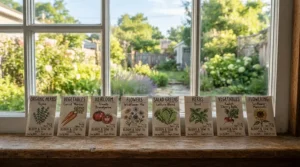
Cheap Finch Seed vs Premium Blends: Where the Money Actually Goes
Cheap finch seed isn’t a trap, but it has limits. At the bottom end, you’re typically buying millet-heavy seed with some fortification. At the premium end, you’re paying for probiotics, DHA, cleaner colour sources and tighter nutrient numbers.
The central question is whether those extras change outcomes for a healthy adult bird. Based on the spec comparison, the base seeds across these products overlap heavily: millet, canary grass seed, niger and canola turn up almost everywhere. The meaningful differences come down to three things:
- Digestive additives, such as probiotics and prebiotics.
- Fat and protein levels.
- Whether artificial colours are present.
So the smart play with cheap finch seed is simple. Buy a basic bag, then spend your savings on fresh greens and clean water rather than a pricier blend. A cheap bag plus good habits usually beats an expensive bag fed carelessly.
Premium blends earn their place with breeding birds, older birds, or any bird with a history of digestive trouble. For everyone else, the Kaytee Forti-Diet Canary & Finch Daily Food or Hagen Finch Seed gets you most of the way there.
| Feature | Cheap Seed Blend | Fortified Mix | Seed-and-Pellet Hybrid | Best For |
|---|---|---|---|---|
| Typical price | Lowest | Moderate | Low to moderate | Budget priority |
| Digestive additives | None or minimal | Probiotics common | Varies | Sensitive birds |
| Waste risk | Low | Moderate (picky eating) | Moderate (pellets ignored) | Waste-conscious keepers |
| Nutrition completeness | Needs supplements | Closer to complete | Closest to complete | Long-term health |
The table shows that cost and completeness pull in opposite directions, and the hybrid is the best compromise if your birds accept pellets. A bare seed bag looks cheapest but quietly shifts the nutrition job onto you. If you’re willing to add greens and rotate extras, plain seed stays perfectly workable.
Affordable Canary Seed: Can Finches Share It?
Affordable canary seed is the most common workaround for finch keepers on a budget. Canary and finch diets overlap heavily. Both rely on small seeds, and many manufacturers sell combined canary-and-finch formulas. Hagen’s finch seed, for example, lists canary grass seed among its ingredients, and Higgins markets its canary formula with similar small-seed components.
So yes, finches can usually eat a canary blend. The catch is that formulas differ in the details. Canaries are slightly larger birds with different feeding behaviour, and a blend tuned for them may carry more of certain seeds. If a listing says “canary” only, it’s reasonable to buy it for finches of similar size, but watch whether your birds eat it evenly or pick out favourites.
The practical way to stay affordable is to favour products labelled for both, like the Kaytee Forti-Diet Pro Health Canary & Finch Food, the Vitakraft Menu Canary & Finch Food and the ZuPreem Smart Selects Canary & Finch Food. Those spare you the guesswork. Where you’re considering a canary-only bag such as Higgins Vita Seed Canary, compare its ingredients against a finch formula before assuming they’re interchangeable.
One more value tip: plain canary seed (Phalaris canariensis) sold on its own is a staple ingredient. Specialty retailers sell it recleaned as a standalone seed. Used as part of a varied mix, it can stretch a budget without sacrificing the seeds finches actually want.
Finch Food Deals on Amazon.ca: How to Shop Smart
Finch food deals Amazon.ca shoppers spot can be genuinely good or deeply misleading. Bird food discounts come in several forms, and not all of them save you money.
Read the unit price, not the headline. A multi-pack that looks cheaper may simply contain more bird food. Always divide by weight. A C$14 bag that holds 907 g is a very different deal from a C$14 bag holding 1.13 kg.
Watch for Subscribe & Save. Amazon’s recurring-delivery discount can lower the cost on staple items. It only makes sense if you’ll use the seed within its freshness window. For a single bird, a monthly delivery may stack up faster than you can feed it.
Be wary of old-stock deep discounts. Seed degrades. A bargain on a bag with a short shelf life is no bargain once the contents turn dull and dusty. Check dates and packaging where you can.
Compare against local pet stores. Chains like PetSmart.ca list some of these same products at prices near the C$14 mark, so a quick comparison keeps you honest. Remember also that no price you see should be assumed to get better because of the way you reach a listing. Prices change constantly, so always check the current price on the page.
Done properly, finch food deals on Amazon.ca are about timing and unit price. Watch two or three listings for a couple of weeks, note the typical range, and buy when the number dips into the low end of that range.
Cost Per Bag vs Cost Per Day: The Maths That Actually Matters
Cost per bag is the number everyone sees. The number that matters is cost per day, and it’s easy to calculate.
Start with the bag. A 2 lb bag holds about 907 g. At an example price of C$14, that’s roughly C$1.54 per 100 g. Now apply Kaytee’s label guidance of 12–36 g per day for a finch:
- At 36 g per day, a 2 lb bag lasts about 25 days, or roughly C$0.56 per day.
- At 12 g per day, it lasts about 75 days, or roughly C$0.19 per day.
Real consumption varies with bird size, activity, season and waste, so treat the label as a ceiling and weigh your actual usage over a couple of weeks. Then compare bag sizes at example price points:
| Bag Size | If the Bag Costs C$10 | If It Costs C$12 | If It Costs C$15 | Best For |
|---|---|---|---|---|
| 2 lb (907 g) | C$1.10 per 100 g | C$1.32 per 100 g | C$1.65 per 100 g | Single birds |
| 2.5 lb (1.13 kg) | C$0.88 per 100 g | C$1.06 per 100 g | C$1.32 per 100 g | Pairs |
| 3 lb (1.36 kg) | C$0.73 per 100 g | C$0.88 per 100 g | C$1.10 per 100 g | Small flocks |
The pattern is obvious: bigger bags lower the unit cost. But the 30–45 day freshness guidance on products like Kaytee Forti-Diet Pro Health Canary & Finch Food puts a ceiling on how much bulk makes sense. A larger bag only saves money if your flock finishes it in time, which is why the 3 lb size suits a small flock but rarely a single bird.
Seed Cup Refills: A Daily and Weekly Routine That Saves Money
Seed cup refills are where good intentions leak money. The habit that wastes the most food is topping up over old husks, because birds eat the fresh seed on top and the cup looks full while the bottom is just empty shells.
Hagen advises that the seed cup and water cup be cleaned daily and unsoiled food replenished as needed. Kaytee’s guidance says to discard any uneaten food and clean the dish before each feeding. Both point to the same routine:
Daily:
- Blow or tip off the husks.
- Discard soiled or damp seed.
- Refill with fresh seed to a modest level.
- Replace the water.
Weekly:
- Wash and fully dry the seed cup.
- Check the bag for clumping, mustiness or odd smells.
- Weigh how much you used and adjust the portion.
Monthly:
- Inspect the bag’s age against the freshness guidance.
- Decide whether the next bag should be smaller or larger.
Following this routine, seed cup refills take two minutes and cut waste because you see exactly what’s being eaten. Once you know your flock’s real daily intake, you can buy the right bag size and stop paying for seed that expires uneaten.

Feeding Small Flocks on a Budget: Three Scenarios
Feeding small flocks changes the arithmetic, because portion creep multiplies across every bird. Here are three realistic profiles, using the label ranges as an upper bound.
Scenario 1: One finch, tight budget. One bird at the low end of Kaytee’s range (12 g per day) uses about 84 g per week. A 2 lb bag of Kaytee Forti-Diet Canary & Finch Daily Food would last more than ten weeks, but the freshness window is shorter. Here, the smart move is the smallest affordable bag, even at a higher unit price.
Scenario 2: A pair of finches. At 24 g per day each, you’re using 48 g daily. A 2.5 lb bag of Vitakraft Menu Canary & Finch Food (about 1.13 kg) lasts roughly 23 days. That sits comfortably within a typical freshness window and lowers the cost per 100 g.
Scenario 3: Four to six finches. Now the bigger bag makes sense. Look at 3 lb options like Hagen Finch Seed, since a larger flock burns through seed quickly. Spread consumption across several cups so shy birds still get access.
For feeding small flocks, two rules apply. First, offer more than one feeding station so dominant birds can’t block the cup. Second, track usage per week rather than guessing. A cheap bag that runs out unexpectedly forces a panic purchase at whatever the local price happens to be.
Features That Actually Matter (And Those That Don’t)
Pet bird packaging is loud. Here’s how to separate signal from noise at this price point.
Features worth paying attention to:
- A published guaranteed analysis (protein, fat, fibre, moisture).
- A short, recognizable ingredient list.
- Clear feeding amounts and a use-by recommendation.
- Probiotic or prebiotic ingredients if your bird has digestive issues.
Features that matter less than they claim:
- “Complete nutrition” language. As VCA Canada notes, no regulatory body certifies avian nutrition products, so this phrase can be misleading.
- Brightly coloured pieces. Colour appeals to buyers, not birds.
- “Gourmet” labels. They rarely correspond to measurable differences.
- Fruit and veg bits that birds pick out and drop.
There’s also a quiet spec to avoid obsessing over: the seed origin story. Some Canadian-made claims, like those for Hagen Finch Seed, are worth noting if you care about supporting domestic production, but nutritional outcomes depend on the full recipe. Even the word “niger” in a listing can cause confusion. Wikipedia’s entry on the plant behind nyjer notes the seed is often sold as “thistle seed”, though it’s unrelated to true thistle.
Common Mistakes When Buying Finch Food Under $15 CAD
Even careful shoppers repeat the same errors. Here are the main ones, with commentary.
Mistake 1: Buying the biggest bag. The unit price drops, but stale seed is a waste. Match the size to the 30–45 day window.
Mistake 2: Ignoring the label’s analysis. Two bags at the same price can differ meaningfully in fat and protein. Compare them.
Mistake 3: Switching foods overnight. Kaytee recommends blending old and new food over seven to ten days. A sudden switch can upset digestion, and some birds simply refuse the new food.
Mistake 4: Treating wild-bird seed as a pet diet. The Kaytee Nyjer Wild Bird Food Seed is formulated for feeders outdoors, not as a cage staple.
Mistake 5: Chasing the lowest per-bag price. A bargain bag with a short shelf life or low acceptance isn’t a bargain.
Mistake 6: Skipping fresh water and greens. Food is only part of the picture. The cheapest improvement to any seed diet is fresh water and appropriate greens.
Mistake 7: Refilling over husks. As the seed cup refills section explains, a full-looking cup can be nearly empty.
Fix these seven and you’ll beat most buyers who spend twice as much.
Safety, Regulations and Avian Flu: What Canadian Bird Owners Should Know
A few Canadian-specific points deserve attention before you shop.
Imported nyjer is sterilized. Nyjer is imported from places like Africa and India and heat-sterilized so it won’t germinate, which is why a seed bag from the shelf won’t seed your garden with weeds.
Avian influenza is a real concern. Canada has been dealing with H5N1 avian influenza since 2021. Per CBC reporting on CFIA guidance, the Canadian Food Inspection Agency says backyard feeders should be cleaned periodically, and owners of small flocks or pet birds with outdoor access should remove feeders from areas open to their birds to prevent contact with wild animals.
For pet finches kept indoors, the risk is lower, but the principle is sensible: keep your birds away from wild birds, and wash your hands before and after handling them. If you also feed wild birds outdoors, keep that activity and your indoor flock’s supplies separate.
Talk to an avian vet. This guide is general information, not veterinary advice. If a bird is losing weight, changing droppings or eating oddly, a vet visit beats any bag of seed.
Frequently Asked Questions
❓ Can I buy decent finch food under $15 CAD on Amazon.ca?
❓ How long does a 2 lb bag of finch seed last?
❓ Is canary seed safe for finches?
❓ Do cheaper finch mixes lack nutrition?
❓ How often should I refresh the seed cup?
Conclusion: Spend Smart, Not Small
Finch food under $15 CAD is a genuinely workable budget, provided you shop by unit price, freshness window and label analysis instead of the cheapest number on the page. The Kaytee Forti-Diet Canary & Finch Daily Food is the lowest-cost fortified choice. The Kaytee Forti-Diet Pro Health Canary & Finch Food adds digestive support, and the Vitakraft Menu Canary & Finch Food delivers more grams per dollar and plenty of variety. Hagen Finch Seed is the plain, Canadian-made option, and Higgins Vita Seed Canary suits the label reader. The ZuPreem Smart Selects Canary & Finch Food is a gentle step toward pellets, and the Kaytee Nyjer Wild Bird Food Seed is a treat, not a staple.
Remember the habits that save the real money: smaller bags for single birds, daily seed cup refills done properly, tracking weekly usage, and watching finch food deals on Amazon.ca for a dip into the low end of the usual range. Seed alone isn’t enough, so add fresh greens, clean water and, over time, pellets.
Recommended for You
- Natural Small Bird Seed Mix Review: 7 Honest Picks (2026)
- Best Small Bird Food For Breeding Hens: 7 Proven Picks 2026
- Best Small Bird Food For Feather Health: 7 Smart Picks 2026
Disclaimer: This article contains affiliate links. As an Amazon Associate, I earn from qualifying purchases. If you purchase products through these links, we may earn a small commission at no additional cost to you.
✨ Found this helpful? Share it with your friends! 💬🤗
