
In This Article
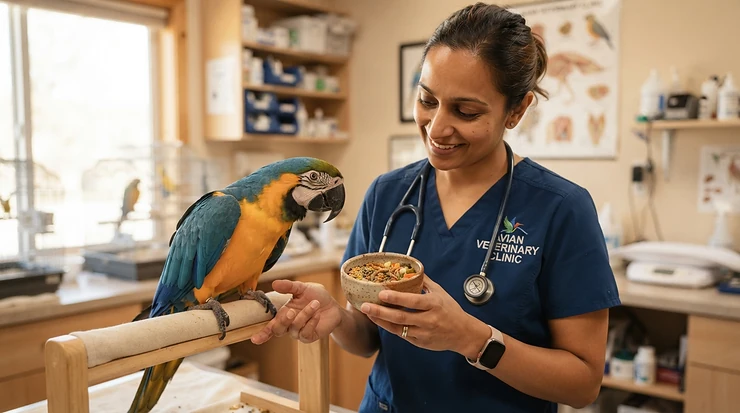
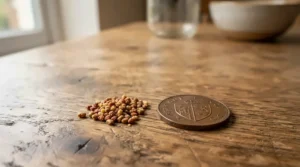
A Pacific parrotlet weighs roughly 25 to 35 grams. That is about the heft of a loonie and a half, wrapped in a feisty personality and a bill built like a tiny nutcracker. According to the Pacific parrotlet entry on Wikipedia, these birds are among the smallest parrots in the world, and they are known for being feisty and curious despite their size. That combination creates a feeding puzzle. The bird is small enough to choke on the wrong pellet and bold enough to refuse anything it doesn’t trust.
So what is the best parrotlet food? It’s whichever nutritionally complete formula is sized for a tiny beak, accepted by your particular bird, and portioned so a 30-gram body doesn’t turn into a 40-gram one. I researched real product specs, avian-vet feeding guidance and aggregated owner reviews to narrow the field to seven options. Every pick is a real product you can look up on Amazon.ca, though stock and sellers change, so check each listing.
You’ll also get a plain-English look at parrotlet pellet size, why a tiny bird’s metabolism rate changes the rules, how portion control cups keep things honest, and which parrotlet food brands Amazon.ca shoppers should look at first. I haven’t hand-fed any of these products to a bird, so I won’t pretend otherwise. What you get instead is analysis grounded in specs, vet guidance and what real reviewers keep repeating.
Quick Comparison: The Best Parrotlet Food at a Glance
| Product | Form | Pellet / Piece Size | Price Range (CAD, approx.) | Best For |
|---|---|---|---|---|
| Harrison’s High Potency Super Fine | Organic pellet | Smallest nugget, roughly seed-sized | C$20–C$35 per 454 g | Weaning and seed-to-pellet converts |
| Roudybush Daily Maintenance Crumbles | Soft crumble | Crumble, listed for parrotlets | C$15–C$30 per 1 kg-ish bag | Picky eaters and first-time pellet birds |
| TOP’s Mini Pellets | Cold-pressed organic | About 3/32″ (2.4 mm) | C$20–C$40 | Ingredient-label perfectionists |
| Volkman Avian Science Parrotlet | Seed blend | Small seeds, safflower-forward | C$25–C$40 per 1.8 kg | Birds that refuse pellets entirely |
| Lafeber Nutri-Berries | Pressed seed-pellet “berry” | Bite-sized berry | C$15–C$30 | Foraging fun and treat-based feeding |
| Mazuri Mini Bird Diet | Complete pellet | Mini, built for small birds | C$15–C$25 per 907 g | Budget-conscious pellet feeders |
| ZuPreem Natural Bird Food (Small) | Pellet | Smallest size in the line | C$15–C$30 | Dye-free mid-range maintenance |
Looking at the table, Harrison’s High Potency Super Fine is the cleanest match for parrotlet pellet size, while Roudybush Daily Maintenance Crumbles wins on palatability for fussy converts. Volkman Avian Science Parrotlet sits alone as the seed option, which makes it a different animal from the pellet picks. Price ranges are approximate, and Amazon.ca listings shift by seller, so check the current price before you commit.
💬 Just one click — help others make better buying decisions too!😊
Top 7 Best Parrotlet Food Picks: Expert Analysis
Each pick below follows the same logic: what the spec means in practice, who the product suits, and what reviewers consistently say. Prices are ranges only, and ratings are described as aggregated sentiment rather than quoted numbers.
1. Harrison’s High Potency Super Fine — smallest nugget for weaning birds
This is the one that names parrotlets outright. Retailer listings describe the super-fine size as the smallest nugget in the Harrison’s line, and the guidance on Canadian retailer pages lists budgie and parrotlet servings at roughly 1 to 2 teaspoons.
The High Potency formula is aimed at young, weaning, molting or recovering birds and is typically used for around six months before many owners move to Adult Lifetime. In practice, that makes it a strong first rung for seed addicts. The fat and nutrient density is higher, so it’s tempting for birds used to seeds. One owner review on a retailer page says the standard Fine size was too large for their parrotlet, and they fixed it by staying with the brand but dropping to the smaller cut.
Reviewers broadly describe it as a high-quality organic food that fussy birds eventually accept, though acceptance isn’t universal. Another reviewer noted that mixing it with familiar foods and rationing seed time helped.
Pros:
- ✅ Smallest pellet cut suits tiny beaks
- ✅ Certified organic with no artificial preservatives
- ✅ Strong choice for seed-to-pellet conversion
Cons:
- ❌ Some reviewers report picky birds ignoring it
- ❌ Listing mix-ups between Fine and Super Fine reported
Price range: around C$20–C$35 for a 454 g bag, so check current price. Value verdict: the best entry point if your bird is mid-conversion.
2. Roudybush Daily Maintenance Crumbles — soft, forgiving texture for hesitant eaters
Roudybush’s own sizing guide lists “Mini & Crumble” for birds three inches and taller, and parrotlets appear by name in that list. The crumble format is the softest, most breakable option here, which matters for birds that distrust hard pellets.
Roudybush pellets are also described by retailers as softer and often more palatable for converting birds. On paper, the key advantage is that a soft crumble gives a parrotlet something it can shear with that wide, short beak without wrestling. One reviewer reports their parrotlet took to the crumbles right away after refusing Harrison’s.
Reviewers on other Roudybush sizes mention one drawback: pellets break into fine powder when bitten. For a parrotlet, that powder ends up in the dish, so serve small amounts and tip out dust daily.
Pros:
- ✅ Listed for parrotlets in the maker’s size guide
- ✅ Soft texture helps hesitant converters
- ✅ Widely available through Canadian retailers
Cons:
- ❌ Crumbles to dust when bitten
- ❌ Some owners find it visually dull for picky birds
Price range: around C$15–C$30 depending on bag size. Value verdict: an excellent maintenance staple once you know your bird will eat it.
3. TOP’s Mini Pellets — cold-pressed, organic and short on shortcuts
TOP’s Mini is listed at about 3/32 inch (roughly 2.4 mm), cold-pressed and USDA Organic. That millimetre figure matters. At 2.4 mm, a pellet is small enough for a parrotlet to grip and crack, though one reviewer of the line notes that small birds may still need pellets broken in half.
The appeal is the ingredient panel. Reviewers praise the absence of artificial additives and describe it as a “health food” option in the pellet world. The trade-off is palatability, because birds raised on junk-food mixes can reject it. One parrotlet owner on a Roudybush page said TOP’s wasn’t fortified enough for their needs, which is a reminder to read the nutrient panel and consult an avian vet.
Pros:
- ✅ Compact 3/32″ pellet suits tiny beaks
- ✅ Organic, cold-pressed, no artificial additives
- ✅ Strong ingredient-quality reputation
Cons:
- ❌ Crumbles easily in reviewer reports
- ❌ Picky birds often reject the plain taste
Price range: around C$20–C$40. Value verdict: great if you’re label-obsessed and patient.
4. Volkman Avian Science Parrotlet — the seed blend built for the species
This is a 4-pound (about 1.8 kg), safflower-forward seed blend designed for parrotlets and small hookbills. It’s the only seed product here, and it’s a different philosophy.
Seed-based diets are not what most avian vets prefer. The VCA feeding guidance recommends pellets as roughly 60 to 70 per cent of daily intake. Even so, owners rave about this blend. One reviewer says their parrotlet has eaten it for ten years, while others complain about price and about pieces that were too large for their bird.
The listing also claims that pellets may be harmful for colour-mutation Pacific parrotlets. I’d treat that as a manufacturer position rather than settled science, and the vet guidance I found favours pellets. Raise it with an avian vet before changing anything.
Pros:
- ✅ Parrotlet-specific blend with small pieces
- ✅ Long-term loyal owners report healthy birds
- ✅ Accepted by birds that refuse pellets
Cons:
- ❌ Seed-heavy diets raise obesity risk
- ❌ Price creep and oversized pieces reported
Price range: around C$25–C$40. Value verdict: acceptable as a supplement or a stepping stone, not as the sole menu.
5. Lafeber Nutri-Berries — foraging-friendly bites for small parrots
Pressed seeds, grains and fruit bound into a ball: that’s the Nutri-Berries concept. A Canadian veterinary clinic care sheet lists Lafeber Nutri-Berries alongside Mazuri and Harrison’s for parrotlets, so the vet endorsement is real, if brief.
The key is choosing the small-bird version, because the standard berry is designed for bigger beaks. Reviewers of Lafeber’s related Pellet-Berries line mention crumbling and some birds refusing them. The practical interpretation is that these work best as part of the day, such as foraging toys and training rewards, not as a bowl-filler.
Pros:
- ✅ Encourages natural foraging behaviour
- ✅ Handy as a training treat
- ✅ Listed by a vet clinic for parrotlets
Cons:
- ❌ Crumbly, with waste in some reviews
- ❌ Not every bird accepts the texture
Price range: around C$15–C$30. Value verdict: good supporting cast, weak lead role.
6. Mazuri Mini Bird Diet — budget-friendly pellet for small beaks
Mazuri describes this 2-lb (about 907 g) product as a complete diet for parakeets, finches, canaries and other small pet birds. A parrotlet is considerably more compact than a cockatiel, so a “mini” product is an intuitive fit. The same Canadian clinic care sheet names Mazuri among its pellet recommendations.
I couldn’t verify a meaningful pool of parrotlet-specific reviews, so treat it as a logical but less proven match. Sizing and acceptance should be tested with a small bag first.
Pros:
- ✅ Mini sizing designed for small species
- ✅ Typically cheaper per gram than organic options
- ✅ Complete formulation reduces supplement needs
Cons:
- ❌ Few verifiable parrotlet-specific reviews
- ❌ Less transparent about organic sourcing
Price range: around C$15–C$25. Value verdict: a sensible budget trial.
7. ZuPreem Natural Bird Food (Small) — dye-free daily maintenance
ZuPreem’s Natural line is the colourless cousin of the rainbow-pellet FruitBlend. Reviewers who dislike artificial colour tend to prefer it, and one reviewer’s Roudybush blend description mentions mixing it in during transition. Vet recommendation lists include “ZuPreem Naturals” among respected pellet brands.
Pick the smallest size offered. One reviewer on a Harrison’s page mentions an “x-small” ZuPreem as part of a transition mix, which suggests that sizing options exist.
Pros:
- ✅ Listed among vet-recommended pellet brands
- ✅ Dye-free alternative to FruitBlend
- ✅ Easy to blend during transitions
Cons:
- ❌ Pellets may still be large for the tiniest beaks
- ❌ Palatability varies bird to bird
Price range: around C$15–C$30. Value verdict: solid middle ground.
What Is the Best Parrotlet Food?
The best parrotlet food is a nutritionally complete, small-format diet, usually a pellet or crumble sized for a 25 to 35 gram bird, that makes up the majority of daily intake and is topped up with fresh vegetables and limited seeds. It should avoid dyes and excess sugar, and your bird must actually eat it.
Vet guidance backs this. A Canadian avian vet at Vet et Nous advises that pellets can make up 60 to 80 per cent of the basic diet, with seeds kept to no more than 20 per cent, and fresh vegetables rounding things out. The Yarmouth Vet Center care sheet for parrotlets lands at 60 to 70 per cent pellets and 20 to 25 per cent vegetables.
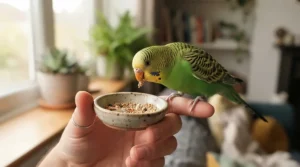
How to Choose the Best Parrotlet Food: 7 Steps
- Check the pellet or piece size first. If your bird can’t grip it, nothing else matters. Aim for crumble or mini cuts.
- Read the first five ingredients. Whole grains and named vegetables beat sugar or dye.
- Skip artificial colour and sugar. A vet-authored guide from Vet et Nous recommends pellets without added colouring or additives.
- Match formula to life stage. High-potency formulas suit weaning, molting or recovering birds. Maintenance formulas suit healthy adults.
- Think about palatability. A nutritionally perfect pellet is useless if it’s refused.
- Verify freshness. Check expiry dates and smell the food. Pellets can turn rancid.
- Buy a small bag first. Test acceptance before committing to a 10-pound sack.
Parrotlet Pellet Size and Tiny Beak Feeding: What Actually Fits
Parrotlet pellet size isn’t a marketing detail. It’s the difference between a bird eating and a bird rejecting. Parrotlets have short, wide, powerful beaks, and tiny beak feeding works best when the food can be pinched and cracked, not hunted.
Harrison’s super-fine sits at the seed-sized end, according to retailer descriptions. TOP’s Mini is listed at 3/32 inch, while Roudybush’s crumble is the softest. A vet-authored care note suggests small birds may sometimes prefer larger pellets they can hold, so a bird that rejects tiny granules may do better with a slightly chunkier pellet it can pin with a foot.
A practical test: offer two sizes side by side for a day and watch what disappears. Birds tell the truth with their appetite.
Metabolism Rate: Why Small Birds Eat Like Tiny Furnaces
Small birds run hot. According to Best Friends Animal Society, small species such as budgies and cockatiels can handle a mix of high-quality seed and pellets because of their high metabolism rate and energy expenditure. Parrotlets sit at the smaller end of that spectrum.
What does that mean at feeding time? A parrotlet burns through reserves fast, so food should always be available, and it should be nutrient-dense in small volumes. At the same time, that same energy density makes weight gain easy when fatty seeds dominate the bowl. The YVC care sheet warns that over-reliance on seeds leads to obesity and nutrient deficiencies.
The sensible approach is steady, measured feeding. Weigh your bird weekly, a practice WebMD also recommends for Pacific parrotlets to prevent obesity. A gram or two matters on a 30-gram frame, so a gradual change in the scale tells you more than eyeballing a plump chest.
Small-Portion Parrotlet Diet: Building a Bowl That Works
A small-portion parrotlet diet is about proportion, not scarcity. Think in thirds of the day: pellets as the foundation, vegetables as the colour, seeds as the seasoning.
A sample structure based on the vet guidance above looks like this:
- 60 to 70 per cent: pellets or crumbles
- 20 to 25 per cent: finely chopped vegetables such as leafy greens, carrot, broccoli or squash
- Small remainder: seeds, limited fruit and training treats
The Harrison’s listing suggests a budgie or parrotlet serving of roughly 1 to 2 teaspoons, which is a useful reference point for a small-portion parrotlet diet. Confirm the actual feeding guide on your bag and adjust with your avian vet.
Because the portions are so small, waste is the enemy. Offer fresh food daily, remove spoiled vegetables within hours, and keep pellet dishes dry.
Parrotlet Food Brands Amazon.ca: What to Know Before You Click
Searching for parrotlet food brands Amazon.ca will throw up a mix of mainstream names and third-party resellers. A few things to keep in mind.
First, confirm the size variant. Several Harrison’s listings have drawn reviewer complaints about size selections mismatching the product shown. Second, check the seller. Freshness matters for pellets, and a reputable seller with fast turnover is safer than an unknown reseller with year-old stock. Third, compare per-gram cost across bag sizes, because larger bags only save money if your bird eats them before the food goes stale.
Several Canadian pet retailers also stock the same brands, so comparing is easy. Amazon.ca availability fluctuates, and I couldn’t confirm live stock for every item, so check each listing yourself.
Pellets vs Seeds for Parrotlets: A Straight Comparison
| Factor | Pellets | Seed Blends |
|---|---|---|
| Nutritional completeness | High, designed as a complete diet | Low unless supplemented |
| Obesity risk | Lower | Higher |
| Acceptance | Needs conversion | Instantly accepted |
| Mess and waste | Dust from crumbling | Husks everywhere |
| Best For | Harrison’s High Potency Super Fine, Roudybush Daily Maintenance Crumbles | Volkman Avian Science Parrotlet (as a supplement) |
The table makes the case plainly: pellets win on nutrition, seeds win on convenience and acceptance. The sensible compromise is a pellet-dominant diet with seeds used for foraging and rewards, which fits what VCA calls an excellent food source at roughly 60 to 70 per cent of daily intake.
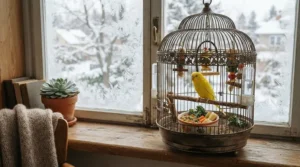
Portion Control Cups: A Practical Daily Feeding Guide
Portion control cups turn a vague idea into a routine. A set of tiny measuring spoons costs a few dollars, and they’re the most valuable accessory in a small-bird kitchen.
Step-by-step setup:
- Buy a measuring spoon set that includes a half-teaspoon.
- Measure the daily pellet portion each morning, starting from the label guidance. The Harrison’s reference of 1 to 2 teaspoons is a sensible starting range.
- Weigh your bird weekly on a gram scale at the same time of day.
- If weight creeps up, trim treats first, not pellets.
- Tip out the leftovers each evening and note how much remained.
Common mistakes in the first 30 days: topping up the bowl endlessly, ignoring the weekly weigh-in, and offering seeds the moment the pellets are refused. Leftovers are information. If your bird consistently leaves half the portion, scale down. If the bowl is licked clean by noon, step up slightly and talk to your avian vet.
Switching to Pellets: A Gentle Conversion Plan
Parrotlets raised on seed often don’t recognize pellets as food. VCA advises weaning slowly over two to six weeks, keeping pellets constantly available, and never withdrawing seeds before confirming the bird is eating the new food. Their transition method starts with 90 per cent current food and 10 per cent pellets, then shifts 10 per cent at a time.
A second approach from a parrotlet owner on a forum: keep pellets out all day and offer the old seed for two 15-minute windows. Their bird was eating pellets within a couple of days. That’s an anecdote, not a protocol, so check the plan with your vet.
Warning signs to watch for: small, very dark droppings indicate your bird may not be eating. If that happens, stop the experiment and call your avian vet.
Real-World Scenarios: Matching the Food to the Owner
Scenario 1: The seed-addicted rescue. A first-time owner adopts a two-year-old parrotlet fed only seed. The sensible path is Harrison’s High Potency Super Fine or Roudybush Daily Maintenance Crumbles for conversion, with seed limited to short daily windows. Budget: roughly C$20–C$35 per bag, replaced every month or two.
Scenario 2: The apartment dweller on a budget. A student with a tight budget wants something safe without fuss. Mazuri Mini Bird Diet or ZuPreem Natural Bird Food (Small) offers an affordable starting point, with fresh vegetables doing the heavy lifting.
Scenario 3: The ingredient purist. An owner who reads labels like contracts will gravitate to TOP’s Mini Pellets, accepting the crumble and slower acceptance in exchange for a cleaner recipe.
Scenario 4: The enrichment enthusiast. For daily foraging, Lafeber Nutri-Berries make useful training rewards alongside a pellet base.
Common Mistakes When Buying the Best Parrotlet Food
Buying by bird size alone. “Small bird” labels often mean cockatiel-sized. A parrotlet needs the smallest cut in the line.
Trusting colour as a nutrition signal. Rainbow pellets look fun, but one reviewer on a TOP’s listing dismissed rainbow ZuPreem pellets as “trash”. Whatever your view, check the ingredient list for dyes.
Stocking up too early. Pellets can go rancid, and a 10-pound bag is a gamble if your bird hasn’t accepted the food.
Skipping vet input. The most-cited advice across vet sources is to build the diet plan with an avian veterinarian, because abrupt changes can make a bird stop eating.
Ignoring the scale. A weekly weight takes thirty seconds and catches problems before they show.
Long-Term Cost & Maintenance: The Real Price of Feeding a Parrotlet
A parrotlet eats very little, so the bag price looks bigger than the actual monthly cost. Parrotlets can live 15 to 20 years with proper care, according to the YVC care sheet, so cost per month is a better yardstick than bag price.
| Product | Likely Bag Duration* | Cost Profile | Best For |
|---|---|---|---|
| Harrison’s High Potency Super Fine | Several weeks per 454 g | Premium | Conversion phase |
| Roudybush Daily Maintenance Crumbles | Months per large bag | Mid-range | Everyday maintenance |
| Mazuri Mini Bird Diet | Months per 907 g | Budget | Cost-conscious owners |
| Volkman Avian Science Parrotlet | Months per 1.8 kg | Mid to high | Seed supplement |
*Estimates depend on portion size, waste and bird count.
The analysis is simple. Premium organic formulas cost more per gram, but the portions are tiny, so the annual difference is modest. The real savings come from avoiding waste: store food in a cool, dry place, check freshness regularly, and measure portions with your cups.
FAQ
❓ How much pellet food does a parrotlet need per day?
❓ Can parrotlets eat only seeds?
❓ What size pellet is right for a parrotlet?
❓ Is Harrison's High Potency or Adult Lifetime better for parrotlets?
❓ Where can I find parrotlet food in Canada?
Conclusion
Picking the best parrotlet food comes down to three questions. Can your bird physically eat it? Will your bird actually eat it? And can you portion it so a 30-gram body stays at 30 grams? For most owners, Harrison’s High Potency Super Fine and Roudybush Daily Maintenance Crumbles are the strongest starting points, TOP’s Mini Pellets reward the label-readers, and Mazuri Mini Bird Diet or ZuPreem Natural Bird Food (Small) cover budget and middle ground. Lafeber Nutri-Berries and Volkman Avian Science Parrotlet work best as supporting players.
Buy a small bag, set up your portion control cups, weigh weekly and involve your avian vet. Tiny beaks forgive nothing and reward consistency.
✨ Ready to upgrade the menu?
🔍 Tap any highlighted product above to check current pricing and availability on Amazon.ca. Your parrotlet will thank you with a loud, bossy chirp. 🦜
Recommended for You
- Best Lovebird Food: 7 Proven Picks For Canadian Birds In 2026
- Best Cockatiel Food: 7 Proven Picks For Canadian Owners 2026
- Best Budgie Food: 7 Essential Picks For Canada (2026)
Disclaimer: This article contains affiliate links. As an Amazon Associate, I earn from qualifying purchases. If you purchase products through these links, we may earn a small commission at no additional cost to you.
✨ Found this helpful? Share it with your friends! 💬🤗
