
In This Article
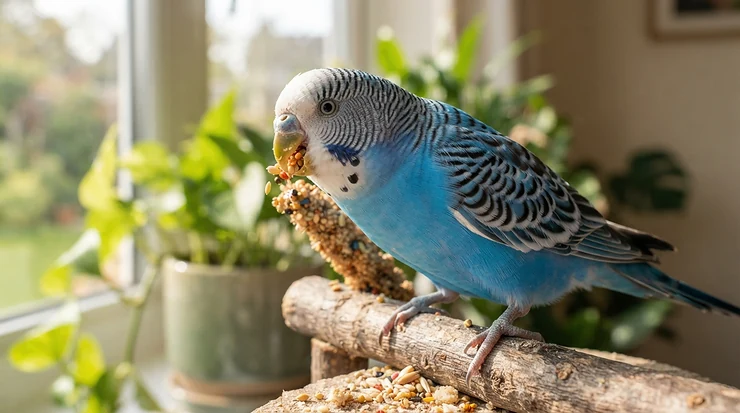
The best budgie food is a balanced combination, not a single bag: mostly formulated pellets, a daily helping of fresh vegetables, and seed kept to a small supporting role. A seed-only bowl is the classic trap. The winning routine is a quality pellet, a modest budgie seed mix, and millet treats as rewards.
Wild budgies are small, long-tailed, seed-eating parrots that roam Australian grasslands for fresh grass seed. Your indoor budgie commutes between a perch and a bowl. Same species, very different workout. That gap is why a bowl of plain seed, however lovingly poured, tends to leave pet budgies short on vitamins and minerals.
Here’s how this guide works. I built it from published ingredient lists, guaranteed analyses, avian-veterinary feeding guidance and aggregated buyer feedback. It is not based on hands-on testing, because I haven’t fed these products to a flock of my own. Where I couldn’t verify real reviews for a product, I say so. Stock, pack sizes and listings on Amazon.ca shift often, so treat every price range below as a starting point and check the current listing.
Inside you’ll find seven real products: four pellets, two seed mixes and a millet treat. You’ll also find honest guidance on the budgie diet for feather colour, cage cup feeders, and what budgie chirping behaviour tells you about mealtime. Short on time? Start with the table.
Best Budgie Food at a Glance: Quick Comparison Table
| Product | Type | Standout Trait | Price Range (CAD) | Best For |
|---|---|---|---|---|
| Lafeber Premium Daily Diet Parakeet Pellets | Pellet | Molasses-flavoured, egg-enriched | C$15-C$25 | Seed-addicted budgies starting pellets |
| Harrison’s High Potency Super Fine | Organic pellet | Richer protein and fat | C$25-C$35 | Moulting, weaning or recovering birds |
| ZuPreem FruitBlend Small Bird Food | Pellet | Fruit-shaped, small pellets | C$16-C$25 | Budget-conscious pellet beginners |
| Hagen Tropican Lifetime Granules | Granule | Canadian-made, low dust | C$15-C$30 | Owners hating pellet dust and mess |
| Versele-Laga Prestige Premium Budgies | Seed mix | Seeds plus built-in pellets | C$12-C$20 | Transitioning from straight seed |
| Hagen Budgie Seed | Seed mix | Simple, dust-free, fortified | C$12-C$18 | Supporting seed alongside pellets |
| Kaytee Spray Millet | Treat | Natural millet sprays | C$8-C$18 | Training rewards and bonding |
Looking at the comparison above, ZuPreem FruitBlend Small Bird Food and Hagen Budgie Seed are the budget anchors, while Harrison’s High Potency Super Fine earns its premium only if your bird needs the extra protein and fat. Versele-Laga Prestige Premium Budgies is the odd one out: it’s a seed mix with a nutritional safety net rather than a true pellet. Whichever you choose, Kaytee Spray Millet belongs in the “occasional reward” column, never the staple one.
💬 Just one click — help others make better buying decisions too!😊
Top 7 Best Budgie Food Picks: Expert Analysis
Every pick below pairs real label data with what it means in practice. Prices are ranges, and review commentary reflects aggregated sentiment from the pages I could verify.
1. Lafeber Premium Daily Diet Parakeet Pellets — best all-round pellet for fussy eaters
Molasses flavouring is the quiet hero here. It’s what makes these pellets appealing to budgies that treat anything non-seed with deep suspicion.
The parakeet formula guarantees at least 15% protein and 5% fat, with fibre capped at 3% and calcium at 0.8%. In practice, that protein level supports feather growth through the moult without turning the bowl into a high-fat dessert. The formula also includes whole egg and balanced omega fatty acids, and it is free of artificial colours and dyes. That keeps droppings easier to read as a health check.
Based on the spec comparison, this is the safest first pellet for a budgie that has only known seed. The 1.25 lb (about 556 g) tub is a low-risk trial purchase. The 5 lb (2.27 kg) size suits committed households, though freshness matters more than bulk.
Reviewer feedback is directional rather than overwhelming. One buyer on a European retailer page reported that about half of the pellets were wasted for their bird, a reminder that acceptance is bird-specific. I couldn’t verify a large pool of Amazon.ca reviews for this exact product.
Pros:
- ✅ Molasses flavour eases the seed-to-pellet switch
- ✅ Whole egg and balanced omega fatty acids
- ✅ No artificial colours or dyes
Cons:
- ❌ Some birds reportedly waste a lot of it
- ❌ Molasses may not suit every palate
Expect roughly C$15-C$25 for the small tub. Value verdict: the best “try this first” pellet in the lineup.
2. Harrison’s High Potency Super Fine — best premium organic pellet for moulting birds
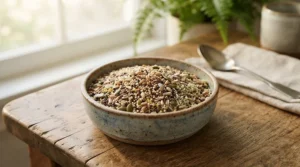
Harrison’s makes certified organic, non-GMO-verified diets created with avian veterinarians and nutritionists, and the Super Fine size is built for budgies and lovebirds.
The High Potency line is the richer formula. The listing I checked for High Potency Fine shows a minimum of 20% protein and 12% fat, noticeably above Lafeber‘s 15% and 5%. That makes it useful during moulting, weaning or recovery. It is also why many owners later move to an Adult Lifetime formula, so check the bag’s directions.
Feeding is small-scale: roughly 1-2 teaspoons daily for a budgie. There are no artificial preservatives, so use an opened bag within about six to eight weeks and store it cool, or in the fridge or freezer.
Reviewers describe a split verdict. Some say their budgie improved after the switch, and one credits it with helping through a serious illness. Others describe a bird that simply refuses it. One listing complaint notes that a “Super Fine” selection arrived as the larger Fine size, so verify the size on arrival.
Pros:
- ✅ Certified organic, vet-formulated recipe
- ✅ Higher protein and fat for moulting
- ✅ Tiny pellet suited to budgie beaks
Cons:
- ❌ Premium pricing per gram
- ❌ Short shelf life once opened
Budget around C$25-C$35 for a 454 g bag. Value verdict: worth it for a bird with special needs, overkill as a default.
3. ZuPreem FruitBlend Small Bird Food — best budget-friendly pellet starter
Colourful fruit-shaped pellets are a clever bit of bird psychology. They look like a toy, which helps with suspicious beaks.
The small pellet size is designed for budgies, parakeets and parrotlets. Retail listings cite a minimum of about 14% protein and 4% fat, with 21 vitamins and minerals, and one Canadian listing suggests 1-3 tablespoons daily for budgies. That’s gentler on fat than Harrison’s High Potency Super Fine, so it fits healthy adult maintenance better than recovery.
Here’s what to weigh: the bright colours add visual variety, but they make droppings slightly harder to interpret, and I’d read the ingredient panel before buying. Pack sizes of 14 oz and 2 lb (907 g) make it easy to trial without commitment.
Aggregated feedback is thin. One retailer review calls it excellent value, while a Harrison’s reviewer mentions dropping ZuPreem during a switch. That suggests some owners treat it as a gateway pellet.
Pros:
- ✅ Small pellets sized for budgies
- ✅ Fruit-shaped variety encourages curiosity
- ✅ Widely stocked with flexible bag sizes
Cons:
- ❌ Bright colours complicate droppings checks
- ❌ Limited verified review depth
Expect around C$16-C$25 for 907 g. Value verdict: the sensible entry point if your wallet is tight.
4. Hagen Tropican Lifetime Granules — best Canadian-made, low-dust option
Extruded granules are the selling point. They break cleanly instead of crumbling into powder, which means less dust on your cage tray.
Hagen states that Tropican is made in Canada and goes through three-stage testing. The lifetime formula has lower protein and calcium than the high-performance variety, which suits companion birds that aren’t moulting or stressed. A retailer notes a smaller granule version for cockatiels, budgies and lovebirds; the 4 mm size is intended for larger parrots, so check the size before ordering.
Expert take: it’s a strong choice if pellet dust bothers you or your household. Add extra protein support during a moult. It works well mixed with another pellet while you learn your bird’s preference.
Reviewers comment that the granules smell faintly like bubble gum but don’t taste that way. Others note it mixes well with other pellets and is accepted by birds leaving a seed diet. Treat that as anecdotal.
Pros:
- ✅ Made in Canada with documented testing
- ✅ Granules break cleanly with less powder
- ✅ Mixes easily with other pellets
Cons:
- ❌ Wrong size easy to order by mistake
- ❌ Fragrance puts some owners off
Budget about C$15-C$30 depending on size. Value verdict: a sensible Canadian-made all-rounder.
5. Versele-Laga Prestige Premium Budgies — best seed mix with a nutritional safety net
This is a seed mix with a clever trick: extruded pellets (labelled V.A.M. pellets) are baked in alongside the grain.
The listing I reviewed shows canary seed 37%, yellow millet 19%, white millet 13%, V.A.M. pellets 8%, Japanese millet 7%, peeled oats 6%, plus oyster shell and added vitamins and amino acids. Practically, the pellet fraction gives a budgie some added nutrition without banning the seeds it recognises. The honest caveat is selective feeding: budgies often pick out favourite seeds and leave the pellets.
Based on the spec comparison, this works as a transition tool or a small supporting portion next to a full pellet like Lafeber Premium Daily Diet Parakeet Pellets. It should not be the only thing in the bowl.
Verified reviews I found were for the sister Versele-Laga Prestige Budgies mix, not this Premium version. Owners praised its acceptance, while one disliked the unattractive filler seeds. Treat that as indirect evidence.
Pros:
- ✅ Familiar seeds plus enriched pellets
- ✅ Includes oyster shell and added vitamins
- ✅ Good bridge for stubborn seed eaters
Cons:
- ❌ Budgies may ignore the pellet portion
- ❌ Reviews found were for a sister product
Plan on roughly C$12-C$20 for a standard bag. Value verdict: the better of the two budgie seed mix options if you want built-in nutrition.
6. Hagen Budgie Seed — best simple, dust-free everyday seed
Air-cleaned and polished seed is the point. It’s meant to give you a dust-free bowl rather than a cloud of husk.
The recipe is plain by design: white millet, canary grass seed, oat groats and red millet, with canola oil, calcium carbonate, orange oil and a vitamin and mineral premix. Hagen says it can serve as a main diet for extended periods. Avian-veterinary guidance from sources like VCA Canada points the other way: seeds should be a small part of the diet and never the whole thing.
My analytical take: use this as the “seed side” of a pellet-first routine, measured in small spoonfuls. For a richer, more varied option, Living World Premium Mix Budgie Food adds hemp, flax and dried papaya. Seed to Sky Premium Budgie Mix is a Canadian-sourced alternative, with a retailer claiming 98% of ingredients come from Western Canadian producers.
I couldn’t verify real customer reviews for Hagen Budgie Seed itself, so I won’t summarise any.
Pros:
- ✅ Cleaned and polished for low dust
- ✅ Simple, recognisable ingredients
- ✅ Fortified with vitamins and calcium
Cons:
- ❌ Not complete nutrition on its own
- ❌ No verified reviews found
Expect C$12-C$18. Value verdict: a decent supporting player, never the star.
7. Kaytee Spray Millet — best natural treat for training and bonding
Millet on the stem turns a snack into a foraging puzzle. Your budgie has to work for every seed.
The listing shows a guaranteed analysis of about 7.5% protein, 3% fat and 12% fibre, and the label advises hanging a spray near a perch rather than leaving it on the cage floor. Replace it weekly, and keep it from becoming the whole diet. That last point matters, because millet is so tasty that budgies will happily fill up on it.
Here’s the practical reading. A spray is a bonding tool: offer pieces by hand during training, then retire it. Treat it as a reward, never a meal. Living World Spray Millet is a comparable alternative, described as a low-fat carbohydrate source.
Reviewers on retailer pages say their parakeets and cockatiels love it, and one describes a cockatiel standing on a spray to nibble. That’s enthusiasm, not nutrition data.
Pros:
- ✅ Natural, no artificial colours or flavours
- ✅ Encourages foraging and enrichment
- ✅ Great for finger training
Cons:
- ❌ Easy to overfeed
- ❌ Not a balanced food on its own
Budget about C$8-C$18 for a multi-spray pack. Value verdict: inexpensive and highly effective when rationed.
How to Choose the Best Budgie Food: 6 Steps
- Start with pellets. Guidance from VCA Canada places pellets at roughly 60-80% of the diet, with fruit and vegetables at 20-25% at most, and seed kept small.
- Match the formula to the life stage. Maintenance bird? A lifetime formula is fine. Moulting or recovering? Consider a richer one like Harrison’s High Potency Super Fine.
- Check the size. Budgie-sized granules or pellets matter. A parrot-sized product wastes money.
- Read the ingredient panel. Look for named grains and seeds, and ask your vet about any artificial colourants.
- Doubt “complete” claims. VCA notes that no regulatory body certifies avian dietary products, so a “complete nutrition” label is marketing, not proof.
- Buy small first. Acceptance is individual. A 556 g tub tells you more than a 2 kg gamble.
Always talk to an avian vet before major diet changes, especially for an older or unwell bird.

Budgie Seed Mix vs Pellets: Which Wins?
| Factor | Budgie Seed Mix | Pellets |
|---|---|---|
| Nutrition balance | Incomplete alone | Designed to be more complete |
| Palatability | Excellent, instantly loved | Needs a gradual introduction |
| Waste | Husks and discards | Varies by bird and brand |
| Best For | Treat portions, transitions | Daily staple |
A budgie seed mix like Versele-Laga Prestige Premium Budgies wins on appeal, while pellets like Lafeber Premium Daily Diet Parakeet Pellets win on completeness. The practical answer for most households is both. Run pellets as the base and use a measured seed portion as a bridge, then shrink it over time.
Seeds are also deceptive. Many birds hull them, so a dish that looks full may be mostly husks. A veterinary clinic’s article notes that leftover seed at the end of the day can mean you offered too much, so measure rather than top up.
Budgie Pellet Brands Amazon.ca: How to Shop Smart
Searching for budgie pellet brands Amazon.ca lists is easy. Shopping well takes a few checks.
- Confirm the listing size and pellet or granule size before clicking, since mismatches happen.
- Check “sold by” and “ships from,” then inspect the best-before date when it arrives.
- Reject dented, torn or damp packaging. Pellets are only as good as their storage.
- Read recent reviews for bag-size and freshness complaints, not just star ratings.
- Start with the smallest pack, and don’t stockpile until your budgie accepts the food.
Prices and availability change constantly, so check the current listing. Nothing about buying through any link changes the price you pay.
✨ Don’t Miss These Budgie Essentials!
🔍 Take your budgie’s mealtime to the next level with these carefully selected products. Click on any highlighted item to check current pricing and availability. These picks will help you build a bowl your feathered flock will love!
Budgie Diet for Feather Colour: What Food Can and Can’t Do
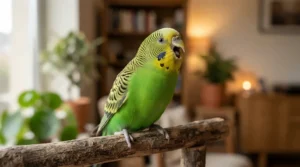
Let’s be clear about the limits: a budgie diet for feather colour won’t change your bird’s genetic colour. Blue and white are structural, created by how light reflects off the feather rather than by pigment, while greens combine pigment and structure.
What food can do is support feather quality. Feathers are mostly protein, so moulting birds need good protein and fats to build strong, properly formed ones. A diet low in those nutrients can produce frayed or poorly formed feathers. Omega-3 sources like flax, chia and hemp support healthy skin, which helps feathers grow smoothly.
On paper, that favours pellets such as Lafeber Premium Daily Diet Parakeet Pellets for steady protein, and Harrison’s High Potency Super Fine during a heavy moult. Be careful with “colour-enhancing” or “red factor” products, which are mainly aimed at canaries rather than budgies.
Vegetables supply the vitamins and fibre pellets can’t fully replace. Dull, ragged plumage deserves a vet visit, not just a new bag.
Millet Treats: A Small Reward With a Big Reputation
Millet treats are the budgie equivalent of a cookie jar: hard to resist, easy to overdo. One reference guide on budgie millet notes some owners report birds that seem hooked, so rationing matters.
Use Kaytee Spray Millet or Living World Spray Millet in three ways:
- Training reward: offer a few seeds when your budgie steps up.
- Settling-in aid: a spray hung near the perch helps a new bird feel at home.
- Foraging enrichment: make them work for it instead of filling the dish.
Keep sprays off the cage floor, where droppings can contaminate them. If a vet advises cutting back, do it gradually. One owner reported a sudden reduction caused issues before the vet recommended a slower taper. Millet treats are the sweetest tool in your kit when they stay a treat.
Cage Cup Feeders: Setup That Cuts Waste
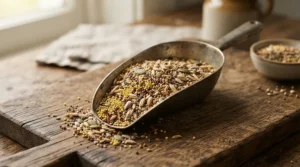
Smart cage cup feeders make the same food go further. Stainless steel is easy to scrub and doesn’t harbour smells, and plenty of stainless cages ship with lock-in-place cups.
Practical setup:
- Use separate cups for pellets, seed and fresh vegetables. Veterinary guidance suggests fruit and vegetables belong in their own dish.
- Position cups low enough to reach but away from perches directly overhead, so droppings don’t fall in.
- Wash and dry cups daily, and discard moist food after about two hours.
- Offer measured portions so you can tell what’s being eaten.
Ceramic cups also work, provided they’re heavy enough not to tip. Whatever you choose, cage cup feeders are the thing standing between your Hagen Budgie Seed and a floor full of husks.
Budgie Chirping Behaviour and What the Food Bowl Tells You
Budgie chirping behaviour is your free health dashboard. The contact call is a warbling “chirrup,” according to Birds in Backyards, which also notes the sharp alarm “zit.” Most chirping, whistling and soft chatter signals a content, engaged bird, while persistent screaming often points to an unmet need.
The red flag is a change. Sudden silence, wheezing or a different voice deserves an avian vet’s attention. Pair that with appetite: a bird that stops chirping and stops eating pellets shouldn’t be left to “see how it goes.”
I can’t promise any food makes a budgie chirp more. What I can say is that a bird with steady nutrition and a calm routine is more likely to show its normal vocal self. Watch both the voice and the bowl together.
How to Switch Your Budgie to Pellets: A 14-Day Plan
Switching diets is the single most useful thing you can do with the best budgie food on your list. It’s also where birds get stubborn. Here’s one sensible schedule, adapted from the two approaches in VCA guidance. Check with your avian vet first.
- Days 1-3: Offer your usual seed in one cup and a small amount of pellets in another. Sprinkle a few pellets over the seed.
- Days 4-7: Reduce the seed cup a little each day and keep the pellets freshly offered each morning. Wild budgies do most of their feeding and drinking in the morning, so that’s when appetite is highest.
- Days 8-14: Keep reducing seed while watching the bird’s appetite and droppings.
- Throughout: Weigh your budgie on a gram scale. The average adult is around 28 g, so a drop means call the vet, not wait it out.
Never starve a bird into compliance. Some budgies refuse pellets and need a slower plan, and your vet can help.
Real-World Feeding Scenarios: Three Canadian Budgie Households
These are hypothetical profiles built on the product data above, not case studies of real owners.
The student in a Toronto apartment (tight budget): Choose ZuPreem FruitBlend Small Bird Food as the daily staple, a small portion of Hagen Budgie Seed as a bridge, and a single spray of Kaytee Spray Millet weekly for training. Add chopped vegetables daily.
The Calgary owner with a seed-addicted bird: Start with Lafeber Premium Daily Diet Parakeet Pellets mixed with Versele-Laga Prestige Premium Budgies, then shrink the seed share. Winter’s dry indoor air also means fresh water is non-negotiable.
The family with a heavy-moulting bird: Consider Harrison’s High Potency Super Fine for the moult, then discuss moving to a lifetime formula with your vet. If pellet dust bothers allergy-prone household members, Hagen Tropican Lifetime Granules is worth a look.
Common Mistakes When Buying Budgie Food
- Trusting “complete nutrition” labels. As VCA notes, no regulator certifies avian diets.
- Buying the biggest bag first. Acceptance is unpredictable, and freshness fades.
- Ignoring pellet size. A parrot formula isn’t a budgie formula.
- Topping up the seed dish. Husks hide emptiness. Measure instead.
- Using millet as a meal. Kaytee Spray Millet is a reward, not a staple.
- Skipping the vet. Diet changes for a sick or senior bird need professional guidance.
- Feeding toxic extras. Avocado is toxic to birds, and fruit pits and apple seeds should be removed.
Long-Term Cost & Storage for the Best Budgie Food
The sticker price misleads. A pricier pellet your bird eats entirely can cost less per useful meal than a cheap bag that ends up on the floor.
| Category | Typical Outlay (CAD) | Cost Driver | Value Verdict |
|---|---|---|---|
| Premium pellet (Harrison’s High Potency Super Fine) | C$25-C$35 per bag | Organic certification | Best for special needs |
| Mainstream pellets (Lafeber Premium Daily Diet Parakeet Pellets, ZuPreem FruitBlend Small Bird Food) | C$15-C$25 | Pack size | Strong everyday value |
| Seed mixes (Hagen Budgie Seed) | C$12-C$18 | Waste from husks | Cheap, but only as support |
| Treats (Kaytee Spray Millet) | C$8-C$18 | Overfeeding | Low cost if rationed |
The table shows that mainstream pellets are the sweet spot. Premium organic pays off when your bird has a specific need, while seed is cheap only if you accept the nutritional trade-off.
Storage matters in a Canadian winter. Keep bags sealed, cool and dry, and don’t let a delivery sit on a freezing porch. Harrison’s advises using an opened bag within roughly six to eight weeks, and fridge or freezer storage helps.
FAQ
❓ Are budgie pellet brands Amazon.ca lists good for beginners?
❓ How much should I budget for the best budgie food each month?
❓ Is a budgie seed mix cheaper than pellets?
❓ How many millet treats can my budgie have each week?
❓ Should I buy budgie food in bulk?
Conclusion
The best budgie food isn’t one miracle bag. It’s a routine: a quality pellet as the base, fresh vegetables daily, a measured budgie seed mix as a bridge, and millet treats as a reward.
If you want my analytical shortlist, begin with Lafeber Premium Daily Diet Parakeet Pellets for a fussy eater. Choose ZuPreem FruitBlend Small Bird Food when budget is tight, and Hagen Tropican Lifetime Granules for a Canadian-made, low-dust option. Reach for Harrison’s High Potency Super Fine only when moulting or recovery calls for it. Keep Versele-Laga Prestige Premium Budgies or Hagen Budgie Seed as the supporting seed, and Kaytee Spray Millet for rewards.
Get the cage cup feeders right, watch the chirping and the bowl together, and phone your avian vet before big changes.
✨ Ready to upgrade your budgie’s bowl?
🔍 Click any highlighted product above to check current pricing and availability on Amazon.ca. Your little flock-mate will thank you with a chirp! 🐦
Recommended for You
- Small Bird Pellets vs Seed Mix: 7 Best Picks For 2026 (Avoid Risks)
- Bulk Small Bird Food Value Pack: 7 Best Picks For 2026
- 7 Best Small Bird Food Picks For Canadian Flocks In 2026
Disclaimer: This article contains affiliate links. As an Amazon Associate, I earn from qualifying purchases. If you purchase products through these links, we may earn a small commission at no additional cost to you.
✨ Found this helpful? Share it with your friends! 💬🤗
