
In This Article
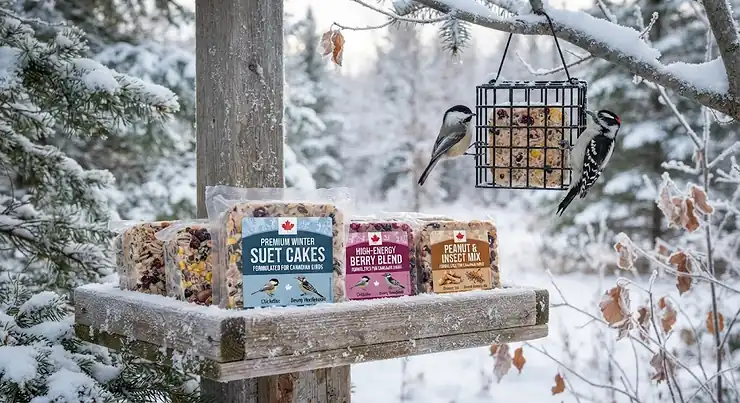
Somewhere around late October, every Canadian backyard turns into a waiting room. The feeder’s up, the seed’s fresh, and yet the birds seem to be somewhere else entirely — until you hang a suet cake, and suddenly your maple tree looks like rush hour at a downpour bus shelter. That’s the strange magic of suet: a dense, greasy little brick that chickadees, nuthatches, and woodpeckers treat like a five-course meal.
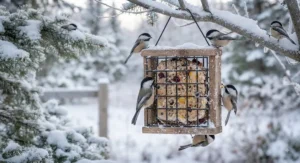
Suet, in its purest form, is rendered animal fat — historically beef kidney fat — pressed into a solid block and offered to birds as a concentrated source of calories. You can read more about the raw ingredient itself on Wikipedia’s suet entry, though what you’ll actually buy at a garden centre or on Amazon.ca bears only a passing resemblance to that original butcher’s-counter product. Modern best suet cakes are engineered blends: rendered fat mixed with seed, peanuts, dried fruit, or insects, then pressed into cakes designed to survive a Canadian winter — and, for the “no melt” versions, a Canadian summer too.
This guide breaks down seven real suet cakes sold in Canada, from bargain multi-packs to gourmet variety boxes, and tells you honestly which ones are worth the shelf space in your garage freezer. We’ll cover no melt suet performance, high-energy suet feeder pairings, rendered fat bird food ingredients, and exactly what draws woodpeckers to your yard instead of your neighbour’s. No fabricated five-star anecdotes here — just real products, real specs, and the kind of analysis that actually helps you pick.
Quick Comparison Table
Before the deep dive, here’s the fast version for anyone standing in the bird-food aisle with a phone in hand.
| Product | Type | Best For | Price Range (CAD) |
|---|---|---|---|
| C&S High Energy Delight No Melt Suet Dough | No-melt dough, 8-pack | Budget everyday feeding | Under C$25 |
| Pine Tree Farms Never Melt Hot Pepper Suet Cake | No-melt, squirrel-deterrent | Keeping squirrels off the cage | C$25-C$35 |
| Heath Outdoor Products All Season High Energy Suet Cake | Bulk case, high-fat | Large yards, heavy traffic | C$30-C$45 |
| Blue Seal Nuts & Berry Suet Cakes | No-mess cake, 12-pack | Tidy feeding stations | C$25-C$35 |
| Kaytee Suet & Seed High Energy Suet / Gourmet Seed Cake | High-energy or no-suet seed cake | Trusted brand, feeder-station fit | C$15-C$25 |
This snapshot alone tells you something useful: price doesn’t track neatly with quality here. Based on the spec comparison, the cheapest option (C&S High Energy Delight No Melt Suet Dough) and one of the priciest bulk cases (Heath Outdoor Products) both use similar rendered-fat bases — the real differences show up in mess level, melt resistance, and which birds each blend is formulated to attract. We’ll unpack all of that below, including the two products that didn’t make this shortlist but earn full write-ups further down.
💬 Just one click — help other Canadian golfers make a smarter bag choice too!😊
Top 7 Best Suet Cakes for Backyard Birds: Expert Analysis
1. C&S High Energy Delight No Melt Suet Dough — best budget everyday option
The eight-pack format is the first thing that stands out here — it’s built for people who go through suet fast and don’t want to reorder every three weeks. Each cake runs roughly 11.75 ounces, formulated as a dough-style suet rather than a hard-pressed block, which changes how it behaves in the cage.
The dough texture matters more than it sounds like it should. Rendered beef fat blended into a semi-soft dough resists crumbling in cold weather far better than the older hard-block style, meaning less waste on the ground and fewer opportunistic squirrels cleaning up scraps below the feeder. Based on the ingredient list — rendered suet, corn, and mixed seed — this is a general-purpose formula rather than a species-targeted one, which is exactly the point: it’s designed to pull in the widest possible mix of woodpeckers, nuthatches, and chickadees without specialty add-ins driving up the cost.
Reviewers consistently report that this line holds up in freeze-thaw cycles typical of a Canadian shoulder season better than bargain no-name suet, though a handful note the dough can still soften on unusually mild days. That’s a reasonable trade-off for the price point.
Pros:
- ✅ Eight-pack keeps cost per cake genuinely low
- ✅ Dough format resists crumbling in cold snaps
- ✅ Broad appeal across common backyard species
Cons:
- ❌ Less melt-resistant than dedicated summer formulas
- ❌ No squirrel-deterrent ingredients included
Priced in the under-C$25 range for the full eight-pack, this is the suet cake to stock up on if you’re feeding multiple stations or just don’t want suet math eating into your winter budget.
2. Pine Tree Farms Never Melt Hot Pepper Suet Cake — best for squirrel-proofing your cage
This one solves a very specific, very common problem: squirrels treating your suet cage like an all-you-can-eat buffet. The formula is built around capsaicin, the compound in hot peppers, which mammals taste sharply and birds essentially don’t register at all.
That’s not marketing fluff — it’s basic avian sensory biology, and it’s the same principle behind hot-pepper birdseed. What most buyers overlook about this mechanism is that it doesn’t repel squirrels through pain avoidance after one bad bite; capsaicin-treated suet tends to be avoided on the first sniff, which means less wasted product and fewer squirrels camping under your feeder pole. The “never melt” formulation is aimed squarely at extending the feeding season into warmer months, using a higher-melting-point fat blend than standard suet.
Aggregated customer feedback on this product line is generally positive on the squirrel-deterrent claim specifically, with less consistent agreement on how well it performs in direct summer sun — some buyers in warmer regions still report softening on very hot days, which lines up with the reality that “no melt” is a relative claim, not an absolute one.
Pros:
- ✅ Capsaicin genuinely deters squirrels, not birds
- ✅ Formulated for extended-season, warmer-weather use
- ✅ 12-pack of 12 oz cakes covers a full season
Cons:
- ❌ Some softening still reported in peak summer heat
- ❌ Premium ingredient means a higher per-cake cost
At roughly C$25-C$35 for a dozen cakes, it lands in the mid-range — a fair price if squirrel raids have been your actual pain point rather than a hypothetical one.
3. Heath Outdoor Products All Season High Energy Suet Cake — best for large yards and heavy traffic
Sold in bulk cases of 10 or 18, this is the pick for anyone feeding a busy multi-feeder yard rather than a single hanging cage on the back porch. Heath has been in the wild bird supply business for decades, and this particular line is formulated as a genuinely high-fat, high-calorie blend rather than a filler-heavy budget mix.
Here’s what the “high energy” label means in practice: a higher percentage of rendered fat relative to seed and grain fillers translates directly into more usable calories per gram for the bird, which matters most during extended cold snaps when chickadees and nuthatches need to replenish fat reserves overnight just to survive to morning. On paper, this makes it one of the more nutritionally dense options on this list, not just one of the biggest packages.
The trade-off, honestly, is presentation — this isn’t a boutique gourmet cake with dried cranberries and mealworms visible on top. It’s a workhorse product, and the aggregated review sentiment reflects that: buyers praise the value and how quickly birds take to it, with occasional complaints about crumbling in the coldest weather, a known characteristic of hard-pressed (rather than dough-style) suet cakes.
Pros:
- ✅ High fat-to-filler ratio for genuine cold-weather calories
- ✅ Bulk case pricing beats per-cake cost of smaller packs
- ✅ Long-running, well-established manufacturer
Cons:
- ❌ Hard-block texture can crumble in extreme cold
- ❌ Less visually “premium” than boutique blends
Case pricing typically falls in the C$30-C$45 range depending on pack size, which works out to some of the lowest per-cake costs on this list — a real consideration if you’re running three or four feeders at once.
4. Blue Seal Nuts & Berry Suet Cakes — best for a tidy, no-mess feeding station
Blue Seal’s no-mess formulation is worth calling out specifically because “no mess” is one of those claims that’s easy to overstate and genuinely useful when it’s true. This cake is pressed with nuts and berries visible throughout, at 11 ounces per cake in a 12-pack.
The mess factor comes down to binder quality — how well the fat holds the seed and fruit pieces together as birds peck at the cake. Based on the ingredient balance here (a strong nut-and-berry ratio rather than a filler-heavy grain base), less loose material ends up scattered on your patio or deck, which is exactly the pain point this product is solving for people who feed suet close to a seating area rather than out at the back fence.
What reviewers consistently note is strong uptake from woodpeckers and blue jays specifically, likely tied to the nut content — both species show a documented preference for nut-forward suet over plain seed cakes. That’s a meaningful data point if attracting larger, more dramatic birds is part of why you’re feeding suet in the first place.
Pros:
- ✅ Nut-and-berry mix minimizes ground scatter
- ✅ Strong draw for woodpeckers and jays
- ✅ 12-pack keeps you stocked through a full season
Cons:
- ❌ Pricier per-cake than plain rendered-fat formulas
- ❌ Berry pieces can attract more starlings in some yards
Expect to pay in the C$25-C$35 range for the full pack — reasonable for a cleaner-feeding, nut-forward formula, especially if your feeder hangs somewhere you actually have to sweep underneath.
5. Wildlife Sciences Suet Cake Jumbo Mixed 20-Pack — best bulk variety pack
Twenty cakes split evenly between peanut and berry flavours, each around 10.5 to 11 ounces — this is the “stop thinking about suet for six months” option. It’s aimed at serious backyard birders and anyone managing multiple stations who wants variety without ordering three separate products.
The mixed-flavour approach is smarter than it sounds. Different species genuinely do gravitate toward different suet profiles: peanut-forward cakes tend to pull in jays, woodpeckers, and titmice, while berry-forward blends draw a slightly different mix including robins and mockingbirds in regions where they overwinter. Reviewers consistently describe the melt-resistant formula as holding up reasonably well through shoulder-season temperature swings, though — as with most “melt resistant” (rather than absolute “no melt”) products — direct, sustained summer sun is still its limiting condition.
For anyone doing cost-per-cake math, this is where bulk buying genuinely pays off compared to smaller packs of comparable quality, assuming you have freezer space to store the surplus, which most suet manufacturers recommend for cakes you won’t use within a few weeks.
Pros:
- ✅ Two flavour profiles attract a broader species mix
- ✅ Bulk 20-pack drives down cost per cake significantly
- ✅ Melt-resistant formula suited to shoulder seasons
Cons:
- ❌ Requires freezer space to store the full order
- ❌ Not marketed as a true year-round summer formula
Bulk pricing generally lands in the C$35-C$45 range for the full 20-pack — among the better per-unit values on this list if you have the storage to back it up.
6. ST. Albans Bay Suet Plus Variety Pack — best premium variety experience
This is the small-batch option on the list — a small-business brand offering an 11-ounce four-flavour variety pack, positioned as a step up from mass-market suet in both ingredient sourcing and flavour variety within a single order.
What most buyers overlook about variety packs like this one is that they double as a low-risk way to figure out what your specific yard’s birds actually prefer, without committing to a full case of a single flavour you’re not sure will land. Based on the format — four distinct recipes in one order — this product functions almost like a taste-test kit for your feeder, letting you observe which cake empties first and reorder accordingly.
Because it’s a smaller operation than the major suet manufacturers on this list, review volume is naturally lower, so treat the aggregated sentiment with appropriate caution: what’s available skews positive on ingredient quality and freshness, but the sample size is smaller than for a big-box brand like Kaytee or Heath, and that’s worth being upfront about rather than overstating the evidence.
Pros:
- ✅ Four flavours in one order for real preference testing
- ✅ Small-business sourcing often means fresher stock turnover
- ✅ Good starter pack for a new suet feeder setup
Cons:
- ❌ Smaller review pool than major national brands
- ❌ Higher price per ounce than bulk-case competitors
Typically priced in the C$20-C$30 range for the variety pack, it’s a reasonable premium to pay for genuinely useful preference data about your own backyard.
7. Kaytee Suet & Seed High Energy Suet / Gourmet Seed Cake — best for feeder-station compatibility
Kaytee has been in the wild bird business for well over a century, and its suet line reflects that institutional experience — the cakes are dimensioned specifically to slot into Kaytee’s own feeder stations without the shimming or trimming some off-brand cakes require in a standard cage.
The brand actually offers two relevant products worth knowing about: a traditional rendered-beef-tallow high energy suet, and a Gourmet Seed Cake that swaps out the suet entirely for a seed-and-nut-based pressed cake — useful in provinces or seasons where you want the calorie density of a cake format without any rendered fat at all. Based on the spec sheet, the traditional suet runs around 30% crude fat, a solid mid-range figure that supports genuine winter energy needs without the extreme richness of some boutique blends.
Aggregated reviews across Kaytee’s suet and seed-cake lines skew favourable on consistency — buyers report the cakes hold their shape well and fit standard cages reliably, which sounds like a small thing until you’ve wrestled a warped off-brand cake into a cage that’s half a centimetre too narrow.
Pros:
- ✅ Sized to fit Kaytee and most standard cages precisely
- ✅ Seed-cake option available for a suet-free alternative
- ✅ Backed by over 150 years of brand experience
Cons:
- ❌ Standard suet formula is less melt-resistant than dedicated no-melt lines
- ❌ Seed cake version costs more per gram than plain suet
Pricing generally sits in the C$15-C$25 range depending on which variant and pack size you choose — one of the more accessible entry points on this list for a first-time suet buyer.
Setting Up Your Suet Station: A Practical Usage Guide
Buying the right cake is half the job. The other half is where and how you hang it, and this is where a lot of first-time suet feeders lose birds they should be attracting.
Start with placement: hang your suet feeder near — but not directly against — cover like a shrub or evergreen, giving birds an escape route from predators while they feed. The Canadian Wildlife Federation specifically recommends hanging suet from a dead branch or a dedicated pole rather than directly against a living tree trunk, since ongoing contact with suet residue can invite insects and fungal issues that damage healthy bark over time.
For your first 30 days with a new station, expect a slow start — birds need time to discover a new food source, sometimes two to three weeks in a yard that hasn’t offered suet before. Don’t panic and switch flavours every few days; consistency helps birds build the habit of checking your yard. A common rookie mistake is over-filling multiple feeders at once, which spreads activity too thin for you to actually observe; start with one station and expand once you see regular visitors.
Maintenance matters more with suet than with dry seed. Rotate cakes out before they show visible mould, wipe down the cage every few weeks with a mild vinegar-water solution, and store backup cakes in the freezer — most manufacturers, including several featured above, note this extends shelf life significantly without affecting how birds respond to the thawed product.
✨ Ready to build your first suet station? Grab a starter cake and a cage feeder before the next cold snap rolls in!
Real-World Scenarios: Matching a Suet Cake to Your Yard
Not every yard needs the same suet strategy, so here are three realistic profiles to help you place yourself.
The condo balcony birder. Limited space, no trees, but a railing-mount feeder and a lot of patience. This person should lean toward smaller-format, budget-friendly options like C&S High Energy Delight No Melt Suet Dough, since a compact space means less traffic and slower cake turnover — no point in a jumbo 20-pack sitting in a bar-fridge freezer.
The rural acreage with a squirrel problem. Big yard, mature trees, and squirrels that have clearly declared war on every feeder installed since 2019. This is the textbook case for Pine Tree Farms Never Melt Hot Pepper Suet Cake — the capsaicin formula solves the specific, named problem rather than just offering more suet for squirrels to steal.
The multi-feeder enthusiast running three or four stations. Frequent feeding, high traffic, and a genuine interest in variety and species diversity. Here, either the Wildlife Sciences Suet Cake Jumbo Mixed 20-Pack or the Heath Outdoor Products All Season High Energy Suet Cake case makes the most economic sense, with the ST. Albans Bay Suet Plus Variety Pack thrown into the rotation periodically to keep things interesting for both the birds and the birder.
Problem → Solution: Fixing Common Suet Feeding Headaches
Even good suet runs into predictable snags. Here’s how to solve the five most common ones.
Problem: Squirrels are emptying the cage overnight. Solution: switch to a capsaicin-formulated cake like Pine Tree Farms Never Melt Hot Pepper Suet Cake, and consider a cage feeder with a smaller mesh opening that limits how much a squirrel can bite off in one visit.
Problem: The suet melted into a greasy puddle in July. Solution: this is a formulation issue, not a placement one — swap to a genuinely no-melt or all-season blend like C&S High Energy Delight No Melt Suet Dough or Wildlife Sciences Suet Cake Jumbo Mixed, and move the feeder into partial shade regardless.
Problem: Birds aren’t touching the new cake at all. Solution: give it two to three weeks before assuming failure — but if it’s genuinely being ignored, check whether the flavour matches local preferences; a plain suet cake in a peanut-loving neighbourhood may simply be less appealing than a Blue Seal Nuts & Berry Suet Cakes swap.
Problem: Starlings are dominating the feeder and chasing off smaller birds. Solution: switch to a caged feeder with an outer wire mesh that lets small clinging birds like chickadees and nuthatches through while excluding larger starlings, and pair it with a berry-light formula since starlings show a documented preference for high-fruit blends.
Problem: Suet is going mouldy faster than expected. Solution: this usually means high humidity exposure — relocate to a spot with better airflow, buy smaller pack formats you’ll use up faster, and freeze backups rather than storing them at room temperature.
How to Choose the Best Suet Cakes for Your Backyard
Picking the right suet cake comes down to seven practical criteria, roughly in order of importance:
- Melt resistance for your local climate. If your region sees hot, humid summers, prioritize genuinely “no melt” or “all season” formulas over standard suet, which is engineered around winter temperatures.
- Target species. Nut-and-berry blends draw woodpeckers and jays; plain rendered-fat cakes draw a broader, more general mix including chickadees and nuthatches.
- Mess tolerance. If your feeder hangs over a patio or walkway, a no-mess dough or pressed-nut formula saves cleanup time compared to loose, crumbly blocks.
- Squirrel pressure. A known squirrel problem is reason enough to pay the premium for a capsaicin-based cake rather than fighting the same battle with plain suet.
- Pack size versus feeding frequency. Match the pack size to how many stations you run and how quickly cakes actually disappear — bulk cases only save money if you use the product before it degrades.
- Fat content and caloric density. Higher fat percentages matter most during extended cold snaps, when birds need dense calories to survive overnight temperature drops.
- Price per cake, not price per pack. A 20-pack that looks expensive upfront often beats a cheap 4-pack on true cost per feeding.
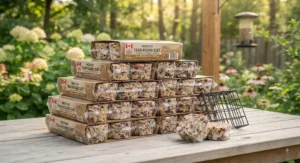
No Melt Suet Review Canada: What Actually Holds Up
“No melt” is one of the most misused phrases in the suet aisle, so it’s worth being precise about what it actually means and which of the products above genuinely deliver on it in Canadian conditions.
Standard suet is formulated around a fat blend that solidifies at typical winter temperatures but softens noticeably once daytime highs climb past roughly 27°C — a real issue across most of southern Canada from June through August. True no-melt formulas swap in a higher-melting-point fat combination, sometimes blended with additional binders, to raise that softening threshold significantly.
Among the products reviewed here, C&S High Energy Delight No Melt Suet Dough and Wildlife Sciences Suet Cake Jumbo Mixed both carry genuine melt-resistant formulations backed by their dough or pressed-cake construction, and reviewers consistently note far less summer sag compared to plain suet blocks. Pine Tree Farms Never Melt Hot Pepper Suet Cake performs well by most accounts but, as noted earlier, isn’t fully immune to peak summer heat — a fair reflection of the honest limits of “no melt” claims industry-wide rather than a flaw unique to this product. What the spec sheet won’t tell you, but aggregated user reports suggest, is that placement in partial shade adds more real-world melt resistance than the formula alone, regardless of brand.
Suet Block for Backyard Birds vs. Traditional Loose Seed
It’s worth stepping back and asking why you’d offer a suet block for backyard birds at all instead of just topping up a seed feeder, since the two aren’t interchangeable.
| Factor | Suet Cakes | Loose Seed |
|---|---|---|
| Caloric density | Very high (fat-based) | Moderate (carbohydrate-based) |
| Species attracted | Woodpeckers, nuthatches, chickadees | Finches, sparrows, cardinals |
| Mess level | Low to moderate | Higher (hulls, scatter) |
| Weather sensitivity | Can melt in heat | Minimal weather sensitivity |
| Best For | Insect-eating, clinging birds | Seed-eating, perching birds |
Looking at the comparison above, suet and seed aren’t really competing products — they’re complementary. Suet delivers the concentrated fat that insect-eating species like woodpeckers and nuthatches need, especially in winter, while seed feeders serve the granivorous species that make up the rest of a typical backyard’s visitor list. Running both simultaneously, rather than picking one, is genuinely the most effective way to maximize the diversity of birds in your yard.
💬 One quick share helps other backyard birders find the right setup too!
High-Energy Suet Feeder: Pairing the Right Cage With Your Cake
A high-energy suet feeder is only as good as the cake inside it, but the reverse is equally true — the wrong cage can undercut even a great cake. Standard wire cages accommodate most block-format cakes, including Heath Outdoor Products All Season High Energy Suet Cake and Blue Seal Nuts & Berry Suet Cakes, but dough-style products like C&S High Energy Delight No Melt Suet Dough sometimes need a slightly finer mesh to prevent the softer texture from pushing through gaps.
Tail-prop feeders — cages with a small wire brace below the main compartment — specifically favour woodpeckers, giving them a stable perch to brace against while pecking, mimicking how they’d feed on a tree trunk in the wild. If attracting woodpeckers is a priority (see the dedicated section below), pairing a nut-forward cake with a tail-prop cage measurably outperforms a plain cage-and-block combination, based on how these species naturally forage.
Double-sided cages, which hold two cakes at once, are worth the modest extra cost if you’re running a high-traffic yard — they roughly double feeding capacity without doubling the number of poles or brackets you need to install.
Rendered Fat Bird Food: What’s Actually in Your Suet Cake
Understanding what “rendered fat bird food” actually means helps explain why suet works the way it does — and why not all suet cakes are nutritionally equal.
Rendering is the process of slowly melting raw animal fat to purify it, removing connective tissue and moisture so what remains is a stable, long-shelf-life fat base. That rendered fat is then blended with everything from seed and cracked corn to dried fruit, mealworms, and peanut pieces before being pressed into cake form. The Canadian Wildlife Federation notes that suet is particularly valuable to insect-eating birds — species like chickadees, nuthatches, and woodpeckers that rely on animal fat as a natural part of their diet even outside of the suet-feeding context.
Fat content varies meaningfully across the products covered here, generally landing somewhere between roughly 25% and 35% crude fat depending on the brand and formula. Higher fat percentages translate to more usable energy per bite, which matters most during a Canadian cold snap when a chickadee can burn through a significant share of its body fat reserves in a single overnight low. Filler-heavy suet — cakes bulked up with cheap grain rather than a strong fat-to-seed ratio — technically qualifies as suet but delivers meaningfully less caloric value per cake, which is worth checking on the label rather than assuming all suet cakes are nutritionally interchangeable.
Attracting Woodpeckers: Suet Choices That Work
If woodpeckers are the whole reason you’re reading this article, a few specific choices make a measurable difference.
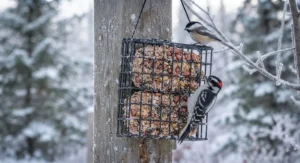
Nut-forward and peanut-forward formulas consistently outperform plain suet for woodpecker attraction — both Blue Seal Nuts & Berry Suet Cakes and the peanut side of Wildlife Sciences Suet Cake Jumbo Mixed lean into this preference directly. Woodpeckers are also more likely to use a feeder positioned vertically against a pole or tree trunk rather than one hanging loosely and swinging in the wind, since their foraging behaviour is built around bracing against a stable vertical surface.
Placement height matters too: mounting a suet feeder roughly 1.5 to 2 metres off the ground, within sight of larger trees, tends to draw more woodpecker attention than a feeder tucked low near shrubs, which favours ground-feeding and smaller perching species instead. Downy and hairy woodpeckers — the two species most Canadian backyards realistically attract — show up reliably once a nut-based suet source is established and maintained consistently over several weeks, so patience in the first month pays off disproportionately here.
Safety, Regulations, and Wildlife Attractant Rules in Canada
Suet feeding is broadly legal and encouraged across Canada, but a few regional realities are worth knowing before you commit to a permanent station.
In bear country — much of British Columbia, parts of Ontario cottage regions, and elsewhere — provincial guidance is direct: bird feeders, including suet, are considered a wildlife attractant and should generally be limited to winter months when bears are hibernating, with feeders taken down or secured during active bear season. If you live in a rural or semi-rural property near forested land, this isn’t optional advice — it’s genuinely how human-bear conflicts start.
Municipal rules vary too. In dense urban centres, feeding songbirds on your own property is typically permitted provided the feeder is kept clean and doesn’t become a broader wildlife attractant — Toronto’s animal bylaw, for example, explicitly allows backyard songbird feeding under those conditions while still prohibiting feeding that draws in raccoons, skunks, or other wildlife. Beyond regional rules, general hygiene matters everywhere: clean cages and feeders regularly to reduce disease transmission risk between birds, a genuine concern during periods of avian illness outbreaks, and avoid letting fallen suet crumbs accumulate on the ground where they can attract rodents.
✨ Don’t Miss These Exclusive Deals!
🔍 Give your backyard the upgrade it deserves with a suet cake that actually matches your climate and your birds. Click through to check current pricing and availability before the cold weather sends demand — and prices — climbing.
Long-Term Cost & Value Analysis
Suet feeding is a recurring cost, not a one-time purchase, so it’s worth running the numbers honestly rather than just eyeballing the sticker price.
| Product | Pack Size | Approx. Cost Per Cake | Best For |
|---|---|---|---|
| C&S High Energy Delight No Melt Suet Dough | 8 cakes | Lowest on this list | Budget, frequent feeders |
| Heath Outdoor Products All Season High Energy Suet Cake | 10-18 cakes | Low, bulk pricing | Multi-station yards |
| Wildlife Sciences Suet Cake Jumbo Mixed | 20 cakes | Low-moderate | Year-round bulk buyers |
| ST. Albans Bay Suet Plus Variety Pack | 4 cakes | Highest per cake | Occasional, curated feeding |
Looking at true cost per cake rather than pack price, bulk formats like the 20-pack from Wildlife Sciences and case options from Heath Outdoor Products win decisively for anyone feeding suet through an entire season, while smaller variety packs like ST. Albans Bay Suet Plus cost more per unit but deliver something bulk buying can’t: the ability to test multiple flavours before committing to a full case of one you’re not sure your local birds will actually eat. Total cost of ownership also depends on feeder longevity — a cheap cage that rusts out in a single winter erases any savings from buying suet in bulk, so factor feeder quality into the same budget conversation.
Frequently Asked Questions
❓ Can you leave suet out in summer in Canada?
❓ How often should I replace a suet cake?
❓ Do suet cakes attract rats or mice?
❓ What's the difference between suet and a seed cake?
❓ Is homemade suet cheaper than store-bought suet cakes?
Conclusion
There’s no single best suet cake for every yard — that’s the honest takeaway after comparing seven real products head to head. If squirrels are your daily frustration, Pine Tree Farms Never Melt Hot Pepper Suet Cake solves a specific, named problem. If you’re running multiple feeders through a full Canadian winter, the bulk value of Heath Outdoor Products All Season High Energy Suet Cake or Wildlife Sciences Suet Cake Jumbo Mixed is hard to argue with on cost per cake alone. And if you’re just getting started and want a reliable, well-fitted entry point, Kaytee Suet & Seed High Energy Suet remains a sensible first purchase backed by over a century of brand experience.
What matters more than any single pick is matching the formula to your actual conditions — your climate’s melt risk, your local squirrel pressure, and the species you’re genuinely hoping to see outside your window. Get that match right, and a C$20 suet cake buys you a season of genuinely great backyard birdwatching.
Recommended for You
- Parrot Training Treats: 7 Top Picks Canadian Owners Trust (2026)
- Best Nutriberries for Parrots 2026: 7 Vet-Backed Picks Ranked
- Millet Spray for Budgies: 7 Best Treats Ranked for 2026
Disclaimer: This article contains affiliate links. As an Amazon Associate, I earn from qualifying purchases. If you purchase products through these links, we may earn a small commission at no additional cost to you.
✨ Found this helpful? Share it with your friends! 💬🤗
