
In This Article
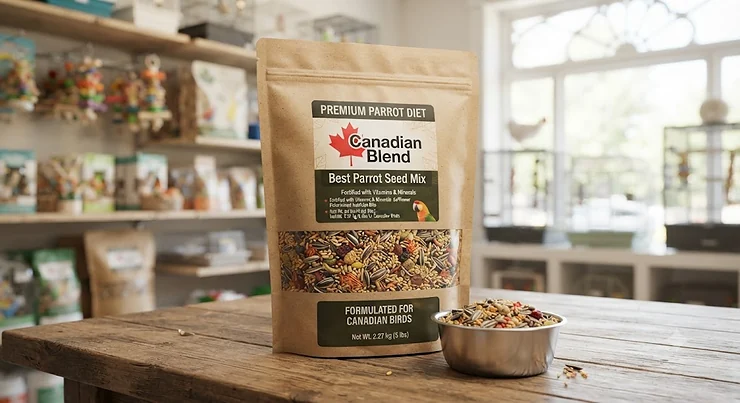
Stand in the bird aisle of any Canadian pet store and you’ll see a wall of bags all screaming the same promise: happy bird, healthy bird, “gourmet” bird. Picking the best parrot seed mix shouldn’t feel like defusing a bomb, but with sunflower-heavy fillers hiding behind fruity marketing, it kind of does. What is a parrot seed mix, exactly? It’s a blended combination of seeds, grains, and often dried fruit, nuts, or pellets designed to feed pet parrots, budgies, and other hookbills — ideally fortified with vitamins and minerals to offset what seeds alone can’t provide.
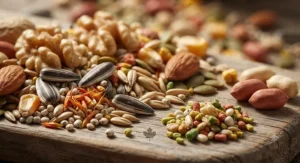
Here’s the thing avian vets keep repeating and marketing copy keeps burying: veterinary references note that all-seed diets, and even mixed diets of roughly half seeds and half pellets when portions aren’t carefully controlled, tend to fall short on vitamin A. That single fact should reshape how you shop. A seed mix isn’t automatically bad — it’s a tool, and like any tool, it works only when you pick the right one and use it correctly.
This guide breaks down seven real, purchasable products spanning budget bags to premium blends, plus a dedicated look at budgie-specific options, so whether you’re feeding a cockatiel, an African grey, or a fleet of budgies in a shared aviary, you’ll walk away with an actual shortlist instead of a headache. We’ll compare pricing in Canadian dollars, dig into what’s genuinely in the bag, and translate the aggregated review chatter from real bird owners into decisions you can act on today.
Quick Comparison Table
Before the deep dive, here’s the fast version for anyone who just wants the gist before their coffee gets cold.
| Product | Best For | Price Range (CAD) |
|---|---|---|
| Kaytee Fiesta Parrot Food | Fussy eaters wanting variety | C$20–C$30 (4.5 lb) |
| Higgins Vita Seed Natural Blend | Owners avoiding artificial additives | C$25–C$40 (5 lb) |
| Volkman Avian Science Super Parrot | Large hookbills, African greys | C$25–C$35 (4 lb) |
| Hagen Tropimix Enrichment Formula | Owners who hate seed-hull mess | C$20–C$32 (2–4 lb) |
| Volkman Avian Science Super Parakeet | Budgies and small parakeets | C$10–C$18 (4 lb) |
| ZuPreem Sensible Seed | Transitioning toward pellets | C$12–C$20 (2 lb) |
| Wild Harvest Advanced Nutrition Mix | Budget-conscious multi-bird homes | C$10–C$16 (4–4.5 lb) |
Looking at the spread above, the price gap between the budgie-focused bags and the large-hookbill blends isn’t just about bag size — it reflects the cost of nuts, dried fruit, and fortification packed into premium formulas. If you’re feeding a single budgie, Volkman Avian Science Super Parakeet or the Wild Harvest Advanced Nutrition Mix deliver solid value, while owners of larger parrots will find the extra cost of Volkman Avian Science Super Parrot or Higgins Vita Seed Natural Blend justified by ingredient density and variety.
💬 Just one click — help others make better buying decisions too!😊
Top 7 Best Parrot Seed Mixes: Expert Analysis
Coverage below spans budget, mid-range, and premium options, plus a dedicated budgie pick, so there’s a genuine fit whatever your flock looks like.
1. Kaytee Fiesta Parrot Food — colourful variety that fights feeding boredom
Kaytee built Fiesta around the idea that mealtime should double as enrichment, and the ingredient list backs that up. The blend mixes sunflower seeds, safflower, oat groats, whole peanuts, almonds, dried papaya, dried bananas, and green split peas, and it’s formulated with prebiotics and probiotics plus omega-3-rich flaxseed. In practice, that variety of shapes and textures matters because parrots are famously prone to picking favourites and ignoring the rest — a rainbow of pieces means fewer wasted scoops. Based on the ingredient panel, this is a solid middle-ground pick for owners of conures, Amazons, and African greys who want more engagement than a plain seed bag offers without jumping to a premium price tag.
Reviewers consistently note that birds take to Fiesta quickly thanks to the fruit and nut pieces, though a recurring theme in aggregated feedback is that some birds will happily eat around the peanuts and papaya while leaving plainer grains behind — a sorting habit that undercuts the “balanced” part of any seed mix if left unmanaged.
Pros:
- ✅ Wide variety of textures keeps foraging instinct engaged
- ✅ Formulated with probiotics and omega-3 flaxseed for skin and coat
- ✅ Widely available across Canadian pet retailers
Cons:
- ❌ Selective birds can pick out favourites, skewing nutrition
- ❌ Contains added colour and sugar not found in more natural blends
At around C$20 to C$30 for a 4.5-pound bag, Fiesta sits comfortably in the mid-range and delivers reasonable value for owners prioritizing engagement over a stripped-down ingredient list.
2. Higgins Vita Seed Natural Blend — clean-label pick with no artificial extras
Higgins takes a different route: Vita Seed leans on sunflower seeds, safflower, oats, red milo, buckwheat, and flaked peas and beans, then folds in real dried fruit like papaya, pineapple, cranberries, and blueberries, plus probiotic cultures and DHA omega-3s from algae meal. What most buyers overlook about “natural” labeling is that it’s not just a marketing checkbox here — the formula genuinely skips the artificial colours and flavours that show up in several competing bags, which matters if you’re trying to avoid unnecessary additives without switching your bird’s whole routine overnight.
Based on the ingredient density, this blend is a strong fit for owners who want a seed-based diet that still leans toward whole foods, and for birds recovering from a poor diet who need a gentler nutritional step up before a full pellet conversion. Aggregated customer sentiment is largely positive, with many long-time Higgins users describing birds that stay interested in the mix over years rather than months, though a subset of reviewers mention noticing more seed hull debris than expected in certain batches.
Pros:
- ✅ No artificial colours, flavours, or preservatives
- ✅ Probiotics and algae-based DHA support digestion and feathers
- ✅ Real dried fruit pieces rather than flavoured fillers
Cons:
- ❌ Some batches reported with more shell debris than expected
- ❌ Pricier per pound than basic seed-only blends
Expect to pay roughly C$25 to C$40 for a 5-pound bag, which is a fair value trade if clean ingredients are your priority.
3. Volkman Avian Science Super Parrot — nut-forward blend built for big beaks
This one is unapologetically rich: safflower, corn, sunflower seed, wheat, in-shell peanuts, pumpkin seed, buckwheat, and a mix of dried fruit and nuts, guaranteed at roughly 14.5% crude protein. The in-shell peanuts and pumpkin seed aren’t filler — they’re there because larger hookbills like African greys, Amazons, and macaws need the working jaw exercise that cracking shells provides, alongside a denser calorie load than a budgie would ever need. Here’s what the spec sheet won’t spell out for you: a mix this rich is meant to be a base diet, not the whole diet, and the label itself notes it isn’t nutritionally complete on its own.
Reviewer sentiment aggregated from long-time Volkman customers frequently praises the freshness and low dust content compared to bagged mixes bought off a general pet-store shelf, since Volkman ships many orders relatively close to production. On the flip side, some owners caring for smaller species mention their birds struggle with the larger peanut and pumpkin pieces.
Pros:
- ✅ Large variety of nuts and treats for bigger species
- ✅ Reviewers report fresher stock and less dust than competitors
- ✅ Encourages natural foraging and shell-cracking behaviour
Cons:
- ❌ Not appropriate for small parrots or budgies
- ❌ Contains added colours and sugar per the ingredient panel
Pricing typically lands around C$25 to C$35 for a 4-pound bag, reasonable for a nut-heavy premium formula aimed at larger birds.
4. Hagen Tropimix Enrichment Formula — Canadian-made, no messy hulls
Hagen’s Hari division formulates Tropimix with exotic grains, legumes, dried fruit, nuts, and extruded Tropican granules, and the whole thing is 100% edible with no shells or husks to sweep off the floor. Here’s a detail that actually changes your daily routine: because there’s nothing to hull, the entire bowl gets eaten or gets replaced, which means the food you pour in each morning is roughly the food your bird actually consumes — a rare case where “no mess” is also a nutritional advantage, not just a tidiness one.
Made in Canada, this formula is fortified with vitamins, minerals, and amino acids and marketed free of artificial colourings and preservatives. Based on the design, it’s particularly well suited to owners transitioning a bird off a traditional seed-and-hull diet toward something closer to a formulated one, since the peanut-flavoured Tropican granules ease birds into pellet-like textures gradually. Reviewers who’ve fed Tropimix long term describe it as a reliable staple, though a few note that very picky birds initially sort out and ignore the granules in favour of the fruit pieces.
Pros:
- ✅ 100% edible formula with zero shell or husk waste
- ✅ Proudly made in Canada with quality-control testing
- ✅ Eases the transition from seed to pellet-style textures
Cons:
- ❌ Picky birds may initially avoid the granule component
- ❌ Smaller bag sizes mean a higher cost per pound than bulk seed
Expect to pay roughly C$20 to C$32 depending on bag size, a fair range for a Canadian-formulated, low-waste option.
5. Volkman Avian Science Super Parakeet — the budgie-focused standout
For anyone specifically hunting a budgie seed mix review before buying, this is the one to put at the top of the shortlist. Volkman’s parakeet formula centres on millet, canary grass seed, oat groats, flax seed, canola seed, and shelled sunflower seed, with oyster shell and dehydrated spinach flakes folded in for calcium and greens. The oyster shell inclusion matters more than it sounds: budgies fed all-seed diets are classically prone to iodine and calcium shortfalls, and a mix that bakes in a mineral source is doing real preventative work rather than leaving it entirely to supplements.
Based on the formulation, this is a genuinely balanced seed blend for budgies and small parakeets rather than a scaled-down parrot mix repackaged with a smaller bag. Aggregated reviews from budgie owners are consistently positive, with many describing it as a dependable, no-junk mix their flock returns to bag after bag; a smaller number mention the mix has become harder to source consistently through some retailers.
Pros:
- ✅ Includes oyster shell and greens for calcium and minerals
- ✅ Sized correctly for budgies rather than scaled-down parrot mix
- ✅ Long track record with breeders and multi-bird households
Cons:
- ❌ Availability can be inconsistent at some retailers
- ❌ Contains added colour per the ingredient panel
At around C$10 to C$18 for a 4-pound bag, this is one of the better value-per-nutrient picks in this entire roundup.
6. ZuPreem Sensible Seed — the sensible seed-and-pellet hybrid
ZuPreem took a hybrid approach with Sensible Seed, deliberately capping sunflower seed content at around 10% of the mix and padding out the rest with safflower, milo, ground corn, buckwheat, pumpkin seed, and FruitBlend flavour-smart pellets. That 10% sunflower cap is the whole story here: sunflower seeds are the single biggest driver of the fat overload that leads to obesity and fatty liver in seed-fed birds, so deliberately limiting them while still keeping seed variety is a genuinely thoughtful piece of product design, not just a marketing line.
The brand explicitly recommends feeding Sensible Seed as up to 30% of a bird’s total diet rather than the whole bowl, which is refreshingly honest positioning compared to bags that imply they’re a complete standalone food. What most buyers overlook is that this makes it less a “seed mix” in the traditional sense and more a supplemental topper meant to sit alongside a pelleted base diet. Reviewers who use it this way — as a rotation or enrichment addition rather than a sole food — report high satisfaction, while a handful of owners feeding it as a primary diet note it isn’t meant to function that way.
Pros:
- ✅ Sunflower seed capped near 10% to limit excess fat
- ✅ Blended with pellets for more complete nutrition per scoop
- ✅ Clearly positioned as supplemental, avoiding misleading claims
Cons:
- ❌ Not intended as a bird’s sole or primary diet
- ❌ Smaller bag sizes push the cost per pound higher
Pricing runs roughly C$12 to C$20 for a 2-pound bag — pricier per pound, but you’re paying for restraint on the fat-heavy seeds, not just marketing.
7. Wild Harvest Advanced Nutrition Mix — the budget-conscious multi-bird option
Wild Harvest keeps things straightforward: millet, oat groats, cracked corn, flax seed, sunflower seeds, and canary grass seed, fortified with omega-3 fatty acids and a standard vitamin-mineral pack. On paper, this is a no-frills, mid-tier daily blend rather than a gourmet one, and that’s exactly its appeal for households feeding several birds where premium nut-and-fruit mixes would get expensive fast.
For a budget-conscious buyer with a mixed flock of budgies, cockatiels, or a lone conure, this fills the daily-staple role reasonably well, provided it’s paired with fresh vegetables to plug the vitamin A gap that plain grain-forward mixes tend to leave. Reviewers frequently mention birds taking to it immediately and generating noticeably less waste on the cage floor than pricier competitors, which suggests the seed sizing and grain ratio are genuinely well suited to smaller species despite the lower price point.
Pros:
- ✅ Budget-friendly for multi-bird households
- ✅ Reviewers report less floor waste than costlier blends
- ✅ Omega-3 fortification supports feather and skin health
Cons:
- ❌ Less variety and no dried fruit compared to premium mixes
- ❌ Still needs fresh produce added to offset vitamin A gaps
At roughly C$10 to C$16 for a 4 to 4.5-pound bag, it’s among the most affordable fortified options in this lineup.
Practical Usage Guide: Getting Caged Bird Diet Variety Right
Buying the right bag is only step one. How you store, rotate, and serve seed mix determines whether your bird actually benefits from caged bird diet variety or just develops a picky palate. Start by keeping bags sealed in an airtight container in a cool, dry cupboard — seed mixes with dried fruit and nuts are more prone to rancidity and pantry moth infestation than plain grains, especially in humid Canadian summers. Discard and replace the bowl’s contents daily rather than topping up on old food; parrots often eat around the outer layer of a full dish, leaving hulls and picked-over pieces at the bottom that look full but offer little nutrition.
A common early mistake is dumping the entire day’s portion in one shot. Instead, split feeding into a morning and late-afternoon serving so freshness stays higher and foraging opportunities stay spread through the day. In the first 30 days with a new mix, watch what gets left in the dish — that pattern tells you which components your bird is skipping, which is useful intel for supplementing with fresh vegetables. Rotate between two or three reputable mixes every few weeks rather than sticking to one bag forever; it keeps the diet genuinely varied and reduces the risk that your bird locks onto a single seed type as “the only food.”
Real-World Scenarios: Matching a Mix to Your Bird
Consider three fairly typical Canadian households. First, a Toronto condo owner with a single budgie kept as a low-maintenance companion, feeding lightly and shopping mostly by price — for that setup, Wild Harvest Advanced Nutrition Mix or Volkman Avian Science Super Parakeet both fit the budget and the bird’s small size without requiring specialty ordering.
Second, picture a family in suburban Calgary with a rescued African grey that came from a poor seed-only background and needs a gentler nutritional upgrade before a full pellet transition — Higgins Vita Seed Natural Blend or ZuPreem Sensible Seed used alongside daily vegetables makes sense here, since both are formulated to ease that shift rather than shock the bird with an abrupt diet change.
Third, imagine a breeder or multi-bird household in rural Ontario managing conures, an Amazon, and a cockatoo, where cost-per-bird and shell mess both matter across several cages daily — Hagen Tropimix Enrichment Formula solves the mess problem directly, while Volkman Avian Science Super Parrot covers the larger hookbills’ need for shell-cracking enrichment on the days variety matters more than tidiness.
Problem → Solution: Common Seed Mix Feeding Mistakes
Problem: your bird only eats the sunflower seeds and ignores everything else. Solution: switch to a mix with a lower sunflower ratio, like ZuPreem Sensible Seed, and physically remove sunflower seeds from the dish for a week to force exploration of other ingredients.
Problem: seed hulls and debris pile up in the cage. Solution: a hull-free formula like Hagen Tropimix Enrichment Formula eliminates the mess entirely since every piece is edible.
Problem: you suspect a vitamin A gap after months on seed alone. Solution: pair any of these mixes with daily servings of carrots, sweet potato, or dark leafy greens, and consider a slow transition toward a pelleted base diet with seed as a topper rather than the main course.
Problem: your budgie’s mix seems to be “just millet.” Solution: upgrade to a purpose-built budgie formula like Volkman Avian Science Super Parakeet, which folds in oyster shell and greens rather than relying on plain grain alone.
Problem: seed goes stale or attracts pantry moths before the bag is finished. Solution: buy smaller bags more frequently rather than bulk sizes, and store in a sealed container away from heat and humidity.
✨ Don’t Miss These Exclusive Deals!
🔍 Take your parrot’s feeding routine to the next level with these carefully selected seed mixes. Click on any highlighted product to check current pricing and availability. A well-chosen blend helps create the vibrant, healthy flock your family will love!
How to Choose the Best Parrot Seed Mix
Shopping for a seed mix gets a lot easier with a checklist in hand. Here’s what actually matters, in order:
- Match the mix to your bird’s size. A budgie doesn’t need in-shell peanuts, and an Amazon won’t get enough calories from a canary-sized blend.
- Check the sunflower and safflower ratio. Lower ratios, like in ZuPreem Sensible Seed, reduce the risk of fat overload.
- Look for fortification. Vitamin and mineral coating, oyster shell, or added omega-3s help offset what raw seed lacks on its own.
- Consider mess tolerance. Hull-free formulas like Hagen Tropimix Enrichment Formula save cleanup time daily.
- Read the “complete diet” language carefully. Several labels, including Volkman’s, explicitly state the mix isn’t a complete diet alone.
- Factor in freshness and turnover. Buy a bag size your flock will finish within a few weeks.
- Plan for produce on the side. No seed mix, however fortified, replaces daily fresh vegetables.
Budgie Seed Mix Review: What Small Parakeets Actually Need
Budgies get treated like miniature parrots far too often, and that’s exactly where a lot of feeding mistakes start. A proper budgie seed mix review has to account for their much smaller body size, faster metabolism, and — bluntly — their long history of being fed straight millet and little else by well-meaning owners. That habit is directly tied to documented nutritional problems: veterinary sources describe seed-only diets as a common driver of calcium-to-phosphorus imbalance and amino acid shortfalls in birds, and iodine deficiency shows up disproportionately in budgerigars kept on all-seed diets.
Among the options here, Volkman Avian Science Super Parakeet stands out specifically because it bakes oyster shell and spinach flakes into the mix rather than leaving mineral supplementation entirely up to the owner. Wild Harvest Advanced Nutrition Mix is the more budget-friendly runner-up, solid as a daily staple provided you’re consistent about adding fresh greens. For budgie owners weighing a balanced seed blend against going straight to pellets, a sensible middle path is using a fortified seed mix as roughly 70% of the diet with fresh vegetables and the occasional pellet mixed in to ease familiarity — a gradual approach avian professionals generally favour over an abrupt cold-turkey switch. Reading up on the species itself helps too; budgerigars are native to the arid interior of Australia, where their natural diet draws on a much wider range of grasses and seeding plants than a single feed bin ever could, as detailed on Wikipedia’s budgerigar page.
Cage Bird Seed Mix Comparison: Ratings at a Glance
For a genuinely useful cage bird seed mix comparison, specs matter more than packaging claims. Here’s how the seven stack up side by side.
| Product | Bird Size | Sunflower Ratio | Fortified? | Price Range (CAD) | Best For |
|---|---|---|---|---|---|
| Kaytee Fiesta Parrot Food | Medium–Large | Moderate–High | Yes | C$20–C$30 | Variety-seeking owners |
| Higgins Vita Seed Natural Blend | Medium–Large | Moderate | Yes | C$25–C$40 | Clean-label preference |
| Volkman Avian Science Super Parrot | Large | High | Partial | C$25–C$35 | African greys, macaws |
| Hagen Tropimix Enrichment Formula | Small–Medium | Low (hull-free) | Yes | C$20–C$32 | Low-mess households |
| Volkman Avian Science Super Parakeet | Small (budgies) | Moderate | Yes | C$10–C$18 | Budgie owners |
| ZuPreem Sensible Seed | Medium | Low (capped ~10%) | Yes | C$12–C$20 | Pellet-transitioning birds |
| Wild Harvest Advanced Nutrition Mix | Small–Medium | Moderate | Yes | C$10–C$16 | Multi-bird budgets |
Reading across the rows, the clearest pattern is that lower sunflower ratios correlate almost directly with a “transitional” or “sensible” marketing angle — ZuPreem Sensible Seed and Hagen Tropimix Enrichment Formula both deliberately dial back the highest-fat seed while keeping fortification intact. Meanwhile, Volkman Avian Science Super Parrot trades a leaner fat profile for the working-jaw enrichment that large hookbills specifically need, which is a fair trade-off for that audience but a poor one for a budgie owner shopping by price alone.
Balanced Seed Blend vs Traditional All-Seed Diets
The phrase “balanced seed blend” gets used loosely, so it’s worth pinning down what actually separates one from an old-school, unfortified seed bag. A traditional all-seed diet is essentially just what it sounds like: sunflower, millet, and maybe a few grains with nothing added to correct their natural gaps. Companion parrots have historically been fed seed-based diets simply because birds find them palatable, but veterinary nutrition resources are consistent that these mixes tend to run high in fat while falling short on essential vitamins, minerals, and amino acids. That’s not opinion — it’s the standard clinical framing avian veterinarians use, and it’s echoed by faculty resources at institutions like the Ontario Veterinary College at the University of Guelph, Canada’s oldest veterinary school and a longtime hub for exotic-animal nutrition expertise.
A genuinely balanced seed blend, by contrast, layers in vitamin and mineral fortification, sometimes oyster shell for calcium, and a deliberately lower ratio of fat-heavy seeds like sunflower and safflower. Every product reviewed above falls somewhere on that fortified spectrum, though “fortified” isn’t a synonym for “complete” — several manufacturers, including Volkman, explicitly print that their mixes aren’t a standalone diet. The real-world upshot: choosing a fortified blend over a plain, unlabelled bulk seed mix from a generic bin is a meaningful upgrade, but it doesn’t replace daily fresh produce, and it shouldn’t be marketed or treated as though it does.
Fortified Bird Seed: Why Vitamin and Mineral Coatings Matter
Fortified bird seed refers to mixes where manufacturers add a vitamin-and-mineral premix, either coated onto the seed surface or blended in as a separate pelleted component. The reasoning is straightforward once you see the numbers: hypovitaminosis A in companion birds is largely traced back to how little beta-carotene naturally occurs in seeds, especially sunflower seeds, millet, and peanuts, and matching that gap through diet alone would require an impractical volume of vegetables layered on top of seed. Fortification doesn’t fully solve the problem, but it narrows it.
Here’s the catch buyers rarely think about: coated vitamins on the seed’s outer surface can degrade with light, heat, and humidity exposure over time, which is exactly why freshness and proper storage matter as much as the ingredient list itself. A fortified bag left open on a sunny windowsill for two months isn’t delivering the nutrition printed on the label anymore. Among the seven mixes reviewed, Hagen Tropimix Enrichment Formula and ZuPreem Sensible Seed both use pelleted components rather than surface coating for at least part of their fortification, which tends to hold nutrient stability better over the life of the bag than a pure seed-coating approach.
Common Mistakes When Buying Parrot Seed Mix
The single biggest mistake is buying by bag size and price alone without checking whether the formula matches your bird’s actual species — a budgie doesn’t need a large-hookbill mix, and feeding one to them just wastes money on pieces they’ll never eat. A close second is assuming “natural” or “no artificial colours” automatically means nutritionally complete; those labels describe the additive profile, not whether the mix covers your bird’s full vitamin and mineral needs. Owners also frequently overbuy bulk sizes to save per-pound cost, then watch a chunk of the bag go stale or attract pests before it’s finished — a smaller bag replaced more often is usually the better economics once spoilage is factored in. Finally, many buyers treat any seed mix, however premium, as a complete standalone diet, when even a roughly fifty-fifty mix of seeds and pellets can still fall short on vitamin A if portions aren’t managed carefully — fresh produce isn’t optional garnish, it’s a core part of making any seed-based diet actually work.
Long-Term Cost & Maintenance: Value Analysis
| Product | Approx. Cost per lb (CAD) | Bag Frequency (single bird) | Value Verdict |
|---|---|---|---|
| Kaytee Fiesta Parrot Food | ~C$5 | Every 6–8 weeks | Solid mid-tier value |
| Higgins Vita Seed Natural Blend | ~C$6–7 | Every 6–8 weeks | Good value for clean label |
| Volkman Avian Science Super Parrot | ~C$7–8 | Every 5–7 weeks | Fair for large-bird enrichment |
| Hagen Tropimix Enrichment Formula | ~C$8–10 | Every 5–6 weeks | Higher cost, zero waste offsets it |
| Volkman Avian Science Super Parakeet | ~C$3–4 | Every 10–12 weeks | Excellent budgie value |
| ZuPreem Sensible Seed | ~C$7–9 | Supplemental, lasts longer | Good as a topper, not sole food |
| Wild Harvest Advanced Nutrition Mix | ~C$3 | Every 8–10 weeks | Best raw budget pick |
Looking at true cost per bird per month rather than sticker price alone shifts the picture: Volkman Avian Science Super Parakeet and Wild Harvest Advanced Nutrition Mix are the clear budget winners for small birds, while Hagen Tropimix Enrichment Formula‘s higher per-pound price is partly offset by zero shell waste, meaning less of what you buy ends up swept into the trash. Total cost of ownership for any seed mix should also account for the vegetables you’ll be buying alongside it — a genuinely complete feeding plan almost always costs more than the bag price suggests.
Safety, Regulations & Compliance in Canada
Unlike food for humans, pet food sold in Canada doesn’t fall under one single, comprehensive nutritional standard. Canada doesn’t mandate a single national nutritional standard for pet food, though many manufacturers voluntarily align their formulas with guidelines set by the Association of American Feed Control Officials to back up any nutritional-adequacy claims they make. In practice, that means labelling and marketing claims are what’s regulated, while actual nutrient completeness is more of an industry norm than a legal requirement.
Imported bird food does face oversight, though: the Canadian Food Inspection Agency’s animal product import policies govern how pet food, including bird seed blends containing animal-derived ingredients, crosses the border, primarily to prevent the spread of animal disease. For everyday buyers, the practical takeaway is simple: check that a bag lists a manufacturer and lot code, look for CSA-adjacent transparency around sourcing where a brand offers it, and don’t assume “vet-formulated” language on packaging has been independently verified — it usually reflects the manufacturer’s own internal nutrition team rather than third-party certification.
Features That Actually Matter (And Those That Don’t)
Vitamin and mineral fortification actually matters — it’s the single biggest lever separating a modern mix from a decades-old plain seed bag. A lower sunflower and safflower ratio actually matters, since fat overload from these two seeds specifically drives the obesity and hepatic lipidosis risk documented across avian veterinary literature. Hull-free, 100%-edible formulation actually matters if mess and food waste are a real concern in your household.
What doesn’t matter nearly as much as marketing suggests: added artificial colouring contributes nothing nutritionally and exists purely for shelf appeal to human shoppers, not birds, who largely can’t distinguish dye-based colour differences the way we do. “Gourmet” or “fiesta”-style branding language is a texture-and-variety play, not a nutritional certification. And bag size alone tells you nothing about quality — a 25-pound bag of a mediocre formula is still a mediocre formula, just in bulk.
Frequently Asked Questions
❓ What is the best parrot seed mix for a beginner?
❓ How much seed mix should I feed my parrot daily?
❓ Is a seed-only diet bad for parrots?
❓ What's the difference between a parrot seed mix and a budgie seed mix?
❓ Can I mix two different seed brands together?
Conclusion
Choosing the best parrot seed mix in 2026 really comes down to matching the formula to your bird’s actual size and needs rather than chasing the flashiest bag on the shelf. For large hookbills craving enrichment, Volkman Avian Science Super Parrot delivers real shell-cracking variety. For budgie households, Volkman Avian Science Super Parakeet earns its spot through smart calcium and mineral inclusion at a genuinely fair price. If mess-free feeding is the priority, Hagen Tropimix Enrichment Formula‘s Canadian-made, hull-free design solves that outright, and if you’re easing a bird toward a pellet-based future, ZuPreem Sensible Seed‘s deliberately restrained sunflower ratio makes that transition gentler.
None of these seven mixes should be the entire story, though. Fresh vegetables, a genuine understanding of your species’ specific needs, and periodic check-ins with an avian vet round out what any bag of seed, however well fortified, can’t fully deliver on its own. Treat the mix as the foundation, not the whole house, and your flock’s feathers, energy, and longevity will show it.
✨ Ready to upgrade your bird’s bowl? Compare prices on today’s top-rated seed mixes and give your flock the variety they’ve been missing! 🦜
Recommended for You
- How to Sprout Bird Seed in 2026: 7 Top Picks for Parrots
- Single Ingredient Bird Seed: 7 Best Pure Picks for 2026
- Best Wild Bird Seed Canada 2026: 7 Top Picks
Disclaimer: This article contains affiliate links. As an Amazon Associate, I earn from qualifying purchases. If you purchase products through these links, we may earn a small commission at no additional cost to you.
✨ Found this helpful? Share it with your friends! 💬🤗
