
In This Article
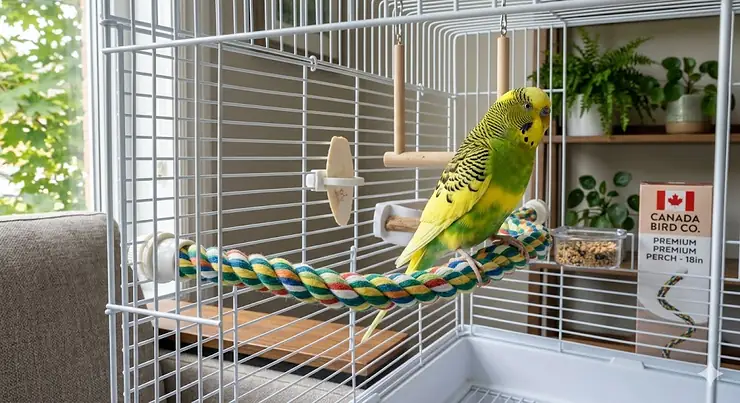
If you’ve walked into your living room and spotted your cockatiel awkwardly shifting weight from one foot to the other on that rigid dowel perch, you already know something’s wrong. Birds in the wild don’t spend their days gripping perfectly smooth, uniform branches—they navigate twisted vines, rough bark, and yes, even flexible vegetation that moves beneath their feet. That’s where rope perches for bird cages become absolute game-changers for Canadian pet bird owners.
Here’s what most people overlook: your bird spends literally every waking hour standing. Imagine wearing the same pair of shoes for 16 hours straight, every single day, without being able to kick them off. That’s essentially what happens when birds have only one type of perch in their cage. The constant pressure on identical points of their feet leads to bumblefoot, arthritis, and a miserable quality of life—especially during Canada’s long winters when indoor time increases dramatically.
Rope perches solve this by providing a soft, textured, bendable surface that exercises different foot muscles with every grip. They’re particularly valuable for Canadian birds who may spend more time indoors during harsh weather from November through March. The cotton fibres provide warmth and comfort while the flexible core allows you to create custom shapes that fit your specific cage layout, whether you’re working with a compact apartment cage in Toronto or a spacious aviary setup in Vancouver.
In this comprehensive guide, I’ll walk you through seven top-performing rope perches available on Amazon.ca, explain the often-misunderstood safety concerns around cotton rope perches, and show you exactly how to integrate flexible perching solutions into your bird’s environment for optimal foot health and mental stimulation.
Quick Comparison Table: Top Rope Perches Available in Canada
| Product | Best For | Length | Price Range (CAD) | Prime Shipping |
|---|---|---|---|---|
| JW Pet Comfy Perch | Medium-large parrots | 36-91 cm | $15-$35 | Yes |
| Jusney Bird Rope Perch | Small-medium birds | 53-85 cm | $12-$25 | Yes |
| Living World Cotton Perch | Cockatiels, conures | 60-75 cm | $10-$20 | Yes |
| Colorful Bendable Rope (Generic) | Multi-bird households | 200+ cm | $18-$30 | Yes |
| SUNGROW Cotton Rope | Parakeets, budgies | 40-50 cm | $9-$18 | Yes |
| Sweet Feet and Beak Swing Perch | All sizes | 20-25 cm | $14-$28 | Yes |
| Hemp Rope Natural Perch | Eco-conscious owners | 60 cm | $16-$32 | Limited |
Looking at this comparison, the JW Pet Comfy Perch delivers the best value for most Canadian bird owners under $35 CAD, particularly if you have cockatiels or conures that need versatile perching options. For multi-bird households, that extra-long Colorful Bendable Rope at $18-$30 CAD lets you create multiple perching stations from a single purchase—crucial during winter months when several birds might be confined to indoor spaces for extended periods. Budget-conscious buyers should note the SUNGROW Cotton Rope performs remarkably well for small birds despite its lower price point, though the materials aren’t quite as durable in the humid conditions common to Canadian basements and laundry rooms where some cages end up during colder months.
💬 Just one click — help others make better buying decisions too! 😊
Top 7 Rope Perches for Bird Cages: Expert Analysis
1. JW Pet Comfy Perch – The Canadian Household Standard
The JW Pet Comfy Perch stands as the most widely recommended rope perch among Canadian avian veterinarians for good reason. Available in three sizes (small/53 cm, medium/63 cm, large/91 cm) with a diameter ranging from 1.3 to 2.5 cm depending on the model, this multi-coloured cotton rope wrapped around a flexible steel core has become the benchmark against which all others are measured.
What makes this perch particularly suited for Canadian conditions is its durability in varying humidity levels. From the dry indoor air during Alberta winters (often below 30% humidity) to the moisture-heavy coastal climates of BC, the tightly-woven cotton maintains its structural integrity without becoming brittle or developing mildew. The steel core is thick enough to support birds up to the size of small macaws while remaining flexible enough for cockatiels and conures to manipulate into their preferred shapes.
The real genius here is the easy-twist wing nut attachments that accommodate both horizontal and vertical installations—essential when you’re dealing with awkward cage bar spacing that doesn’t align with standard perch hardware. Canadian reviewers consistently praise how these attachments stay secure even when larger birds like African Greys really throw their weight around during enthusiastic play sessions.
Customer feedback from Canadian buyers: Most Amazon.ca reviews mention the perch lasting 8-14 months before needing replacement—significantly longer than cheaper alternatives that fray within weeks. Several Toronto-based parrot owners specifically note their birds preferred this over wooden perches during the transition period.
✅ Durable cotton withstands Canadian climate variations
✅ Three sizes accommodate budgies through small macaws
✅ Secure mounting system works with various cage types
❌ Colours fade slightly in direct sunlight near windows
❌ May be too thick for very small birds like finches
Price range: Around $15-$35 CAD depending on size. The medium size (63 cm) offers the best value for most Canadian cockatiels and conures, running typically in the $18-$22 range on Amazon.ca.
2. Jusney Bird Rope Perch – Maximum Flexibility for Creative Layouts
The Jusney Bird Rope Perch comes in two lengths—53 cm and 85 cm—and what immediately sets it apart is the quality of the internal wire. At 1.9 cm diameter, it sits in that sweet spot where it’s comfortable for small to medium birds while maintaining enough rigidity to hold complex shapes without sagging over time.
For Canadian owners dealing with space constraints in urban condos, the 85 cm version is particularly valuable because you can create multiple levels and curves within a single cage footprint. I’ve seen this work brilliantly in narrow cages where traditional straight perches would leave dead zones—you can loop the rope to create a climbing spiral or weave it between bars to form a maze-like enrichment feature that keeps birds mentally stimulated during those long Canadian winters when outdoor aviary time isn’t an option.
The cotton wrapping uses food-safe dyes, which matters more than you might think. Canadian birds, especially conures and budgies, are notorious chewers, and they will absolutely ingest fibres from their perches. The non-toxic certification on the Jusney line means you’re not gambling with heavy metal exposure every time your bird preens after gripping the perch.
Customer feedback from Canadian buyers: Multiple Manitoba and Saskatchewan buyers mention this perch holding up well in aviaries exposed to temperature swings—though it should be noted these were indoor aviaries, not outdoor setups subjected to freezing conditions.
✅ Available in two practical lengths for different cage sizes
✅ Holds shape well even with active climbers
✅ Non-toxic dyes safe for heavy chewers
❌ Steel wire core can eventually poke through at stress points
❌ Not suitable for very large birds (macaws, large cockatoos)
Price range: The 53 cm version typically runs $12-$18 CAD on Amazon.ca, while the 85 cm model ranges from $18-$25 CAD. The longer version delivers better value per centimetre for multi-bird setups.
3. Living World Multi-Coloured Cotton Perch – The Canadian Brand Advantage
Living World Multi-Coloured Cotton Perch is manufactured by Hagen, a Canadian pet supply company based in Montreal, which means you’re getting a product designed with Canadian birds and Canadian cages in mind. The perch comes in small (1.6 cm diameter, suitable for budgies through cockatiels) and medium (1.9 cm diameter, for conures through small Amazons) sizes, with lengths ranging from 60 to 75 cm.
What Canadian buyers particularly appreciate is the bilingual packaging—not just for Quebec compliance, but because the French instructions often include nuanced setup tips that don’t appear in the English version. The perch uses a banana-shaped curve in its resting state, which some birds find more appealing than straight ropes because it mimics natural branch positions.
The cotton quality here is noticeably superior to many imports. It’s more tightly woven, which means it shreds less quickly when birds dig their nails in for grip—an important consideration for Canadian cockatiel owners whose birds tend to do that nervous foot-shuffling behaviour during winter months when daylight hours shrink and anxiety levels rise.
One practical detail: this perch performs exceptionally well in high-humidity environments like basement bird rooms, which many Canadian owners resort to during winter when main-floor heating makes the air too dry for birds’ respiratory health. The cotton doesn’t develop that musty smell that cheaper ropes acquire in damp conditions.
Customer feedback from Canadian buyers: Ontario owners specifically mention the perch arriving faster than imported alternatives, typically within 2-3 days via Amazon.ca Prime. Several reviews from bilingual households note their birds showed preference for this over similar American brands.
✅ Canadian-made with quality control suited to our climate
✅ Tightly woven cotton resists premature fraying
✅ Bilingual packaging with comprehensive setup guidance
❌ Limited size range compared to some competitors
❌ Slightly more expensive than comparable imports
Price range: Expect to pay $10-$20 CAD depending on size and current Amazon.ca promotions. The small size for budgies and cockatiels usually sits around $12-$15 CAD.
4. Colorful Bendable Rope Perch (Extra-Long 200+ cm) – For Multi-Bird Canadian Households
When you’ve got three cockatiels sharing a cage or you’re running a small aviary setup in your spare room, the Colorful Bendable Rope Perch in its 200+ cm configuration becomes an economic game-changer. At roughly 1.9 cm diameter with high-quality steel wire core, this single perch can be cut and shaped into multiple smaller perches or left as one continuous climbing structure.
Here’s the strategy Canadian multi-bird owners are using: purchase one 240 cm perch (around $18-$30 CAD), then cut it into three 80 cm sections. With proper end treatment—wrapping electrical tape around the cut ends to prevent unraveling and covering that with bird-safe fabric—you’ve just created three perches for the price of one. This is particularly valuable in provinces with higher sales tax (looking at you, Nova Scotia, with your combined 15% HST) where every dollar of savings compounds.
The extra length also enables creative installations in flight cages where you want to encourage horizontal movement. Canadian birds, especially those kept indoors during extended cold periods, need exercise opportunities that straight perches simply can’t provide. By weaving this rope in gentle S-curves across the width of the cage, you force your birds to navigate varied terrain rather than just hopping between two fixed points.
Material quality sits in the mid-range—better than dollar-store ropes but not quite matching premium brands. Expect 6-10 months of use before significant fraying appears, which is acceptable given the price point.
Customer feedback from Canadian buyers: Several Calgary and Edmonton buyers mention using these in outdoor aviaries during summer months (May through September) with good results, though they replace them each season rather than trying to weather-proof them through winter.
✅ Exceptional value for multi-bird households
✅ Can be customized by cutting to desired lengths
✅ Sufficient strength for birds up to conure size
❌ Cotton quality varies between batches
❌ End treatment required if cutting into sections
Price range: The 200-240 cm versions typically run $18-$30 CAD on Amazon.ca. Watch for multi-pack deals that sometimes drop the per-metre cost by 20-30%.
5. SUNGROW Cotton Rope Perch – Budget-Friendly Choice for Small Birds
The SUNGROW Cotton Rope Perch delivers surprising quality for its $9-$18 CAD price range, making it ideal for Canadian budgie, canary, and small parakeet owners who want to test whether their birds will actually use rope perches before committing to premium options. At 40-50 cm length and approximately 1.3 cm diameter, it’s properly sized for birds weighing under 100 grams.
What you’re trading for the lower price is longevity—expect 3-5 months of use compared to 8-12 months for premium alternatives. The cotton fibres are slightly looser, which means faster unraveling when birds chew (and they will chew). However, for introducing young birds to varied perching surfaces or rotating perches seasonally, this trade-off makes perfect sense.
Canadian apartment dwellers appreciate this perch’s compact size for smaller cages where space is at a premium. In a typical 45 cm × 45 cm budgie cage common in Toronto and Montreal condos, this perch fits diagonally corner-to-corner while leaving adequate flight space—something longer perches can’t accomplish without crowding.
The mounting hardware is simple screw-on nuts rather than the quick-twist style of premium brands. Not a deal-breaker, but worth noting if you regularly rearrange your cage layout. Budget an extra 2-3 minutes for installation compared to quick-mount systems.
Customer feedback from Canadian buyers: Quebec buyers specifically mention this perch working well for introducing rescue birds to rope perches—the lower investment makes it less painful if the bird refuses to use it or destroys it during the adjustment period.
✅ Entry-level pricing perfect for testing bird preferences
✅ Appropriate sizing for small bird species
✅ Widely available with fast Prime shipping across Canada
❌ Shorter lifespan than premium alternatives
❌ Basic mounting hardware takes longer to install
Price range: Consistently priced around $9-$18 CAD on Amazon.ca, with sales occasionally dropping it to $7-$8 CAD. At that price, it’s worth keeping extras on hand.
6. Sweet Feet and Beak Swing Perch – The Comfort Specialist
The Sweet Feet and Beak Swing Perch takes a different approach by combining rope construction with a circular swing design, typically 20-25 cm in diameter. What makes this notable for Canadian birds is the dual-purpose nature—it serves as both a perch and an enrichment toy, addressing the mental stimulation deficits that commonly arise during our lengthy indoor seasons.
The rope diameter (approximately 2 cm) includes a comfort-grip texture that’s notably gentler on feet than standard cotton rope. This matters tremendously for older birds or those recovering from bumblefoot—conditions veterinarians see more frequently in Canadian birds during winter when reduced activity leads to foot health degradation. The material has a slight give that cushions pressure points without being so soft that it impedes grip strength.
Canadian cockatiel and lovebird owners report their birds using this swing more than traditional rope perches because the movement element triggers play behaviours. During those dark February afternoons when your bird’s natural foraging drive is low, that gentle swaying motion can be enough to encourage activity and prevent the weight gain that plagues indoor-confined birds.
Installation requires two attachment points rather than the single-point mount of straight perches, which limits placement options in some cage designs. Work best in cages with horizontal bars spaced 2.5-3 cm apart where the hooks can grip securely.
Customer feedback from Canadian buyers: British Columbia owners specifically mention birds using this for daytime napping more than any other perch type—the gentle rocking apparently mimics wind movement through branches, creating a more naturalistic rest environment.
✅ Dual-purpose perch and toy increases engagement
✅ Extra-soft grip texture benefits birds with foot problems
✅ Movement encourages natural behaviours
❌ Requires specific cage bar configuration
❌ Smaller footprint limits use to one bird at a time
Price range: Typically $14-$28 CAD depending on size, placing it in the mid-premium tier. The comfort benefits justify the price for birds with existing foot issues.
7. Hemp Rope Natural Perch – The Eco-Conscious Alternative
For Canadian bird owners prioritizing environmental sustainability, the Hemp Rope Natural Perch (various manufacturers, typically 60 cm length, 1.5-2 cm diameter) offers a chemical-free alternative to dyed cotton ropes. Hemp fibres are naturally more durable than cotton and resist mildew growth—particularly valuable in humid Canadian regions like coastal BC or Southern Ontario during summer months.
The tan/beige natural colour won’t appeal to everyone aesthetically, but what you gain is zero dye exposure. This matters for birds with sensitivities or allergies—conditions that Canadian avian vets report seeing with increasing frequency, possibly related to the air quality issues in tightly-sealed modern homes built to withstand our temperature extremes.
Hemp’s rough texture provides superior nail-gripping capabilities, which naturally files down overgrown nails—a common issue for indoor birds who lack the natural wear that comes from outdoor perching. The trade-off is that some birds initially resist the rougher feel compared to soft cotton, requiring a gradual introduction period.
Availability on Amazon.ca is inconsistent compared to cotton alternatives. You’ll find various brands rather than one dominant product, and Prime shipping eligibility varies. Expect occasional out-of-stock periods, particularly during fall when many Canadian bird owners are refreshing cage setups for the indoor season.
Customer feedback from Canadian buyers: Alberta owners mention hemp perches lasting 40-50% longer than equivalent cotton ropes in dry winter air that can brittlize cotton fibres. Several eco-conscious buyers from Victoria and Halifax specifically sought out hemp options for environmental reasons.
✅ Superior durability and natural mildew resistance
✅ Chemical-free construction for sensitive birds
✅ Natural nail-filing texture
❌ Inconsistent availability on Amazon.ca
❌ Some birds resist rougher texture initially
Price range: Expect $16-$32 CAD depending on brand and availability. The premium over cotton ranges from $4-$8 CAD, which the extended lifespan generally offsets.
How to Successfully Introduce Rope Perches to Your Canadian Bird
Most birds don’t instantly embrace new perch types—especially rescue birds or those accustomed to years of rigid dowels. The key to successful introduction lies in strategic placement and gradual normalization, which works particularly well during Canada’s indoor season when you have more control over the cage environment.
Step 1: Position the rope perch in a low-traffic, low-stress cage zone initially—never near food/water bowls where your bird must use it immediately. Place it in the lower third of the cage where it becomes familiar without being mandatory. Canadian birds often show increased neophobia (fear of new things) during winter months when daylight hours shrink, so timing this introduction during spring (April-May) when natural light increases can improve acceptance rates.
Step 2: Demonstrate flexibility without forcing interaction. Over 3-5 days, gently bend the perch into slight curves while your bird watches from a distance. This establishes that the perch is safe and controllable. Some Canadian cockatiels respond well to seeing their owners interact with cage elements—strange but effective.
Step 3: Elevate the perch gradually after 5-7 days of no-pressure exposure. Move it to mid-cage height near (but not replacing) a favourite perch. You’re creating an optional bridge rather than forcing a cold-turkey transition. Most birds will tentatively test it within 10-14 days once they see it’s permanent.
Step 4: Add incentive elements like favourite treats positioned just beyond easy reach on the rope perch, encouraging that first exploratory grip. Canadian bird owners often use this technique during evening hours when birds are naturally more active and food-motivated.
Climate-specific tip: During dry Canadian winters (November-March), lightly mist rope perches with water every 3-4 days. This prevents cotton from becoming staticky and creating that crackling sensation some birds find alarming. It also adds slight humidity that benefits respiratory health in overheated homes.
The entire introduction process typically takes 2-4 weeks for most Canadian companion birds, though budgies and cockatiels generally adapt faster than more cautious species like African Greys.
Understanding Cotton Rope Perch Safety Concerns: What Canadian Owners Need to Know
The internet is filled with alarming warnings about rope perches causing toe entrapment, strangulation, and crop impaction—concerns that send many Canadian bird owners running back to wooden dowels. Here’s the evidence-based truth: rope perches are safe when properly maintained, and the actual injury rate is extraordinarily low compared to the benefits they provide.
The Real Risk Profile
According to data from the Canadian Veterinary Medical Association, rope perch-related injuries represent less than 0.5% of avian emergency visits—significantly lower than injuries from toys, cage bar spacing issues, or flying accidents. The majority of reported rope incidents involved perches that had been in use for 12+ months without inspection or replacement, developing loose threads that became hazard zones.
What Actually Causes Problems:
- Fraying Ends: When rope perches wear out, loose threads can wrap around toes, cutting off circulation. Canadian owners should inspect perches weekly, looking for any fibres longer than 0.5 cm extending from the main braid.
- Excessive Chewing: Birds that compulsively chew perches can ingest enough fibre to cause crop blockages, though this requires consuming substantial amounts—far more than incidental chewing produces. Companion parrots naturally chew environmental elements, but problematic levels usually indicate boredom or nutritional deficiencies.
- Improper Sizing: Perches too thin for the bird species create unsafe gripping angles that stress tendons. Canadian cockatiels need 1.5-2 cm diameter ropes; budgies 1-1.5 cm; conures 1.8-2.3 cm.
Canadian Climate Considerations
Our temperature and humidity swings affect rope perch safety profiles differently than in stable climates. Extremely dry winter air (especially in Prairie provinces) makes cotton fibres brittle and prone to sudden fraying. Conversely, humid summer conditions in Ontario and Quebec can promote mildew growth if perches aren’t properly aired. Canadian owners should:
- Replace perches every 6-8 months regardless of visible wear in dry climates
- Extend to 8-10 months in moderate humidity regions
- Inspect monthly for mildew in basement bird rooms
- Increase replacement frequency for heavy chewers
Preventive Maintenance Schedule:
✅ Weekly: Visual inspection for loose threads, fraying, or mildew
✅ Monthly: Remove and hand-wash with mild soap, air-dry completely
✅ Every 6-8 months: Replace proactively before failure
✅ Immediately: Replace if any thread extends 1 cm+ from braid or if diameter reduces by 25%
The safety formula is simple: well-maintained rope perches from reputable manufacturers pose negligible risk while delivering substantial foot health benefits. The problems arise from neglect, not inherent design flaws.
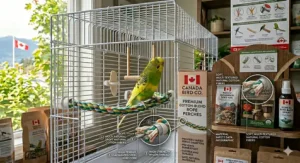
Rope Perches vs Traditional Perches: Making the Right Choice for Canadian Birds
Canadian bird owners face a unique decision matrix when selecting perches—our birds spend 40-60% more time indoors compared to temperate climates, making perch diversity critically important for preventing the foot problems that accompany reduced activity.
Traditional Wooden Perches: The Baseline Standard
Natural wood perches from maple, apple, or manzanita branches provide variable diameter and texture that’s essential for foot health. They’re non-toxic, naturally durable, and encourage the beak-grinding behaviours that keep beaks properly maintained. In Canadian contexts, they perform exceptionally well through all climate conditions without degrading.
The limitation: They’re rigid. Every time your bird grips a wooden perch, identical pressure points bear the weight. Over months and years—particularly during our 6-month indoor season—this repetitive stress creates calluses, circulation issues, and in severe cases, bumblefoot lesions that require veterinary intervention.
Rope Perches: The Flexible Alternative
Rope perches distribute pressure across more surface area because the cotton fibres compress slightly under weight, shifting contact points with each grip adjustment. The bendable core allows positioning that wooden branches can’t achieve—vertical climbs, spirals, bridges between levels. This exercises different foot muscles and prevents the repetitive strain wooden perches create.
The limitation: They require active maintenance. Left unchecked for 12+ months, they develop safety hazards through fraying. They also provide less beak-grinding capability than rough wood bark.
The Canadian Optimization Strategy
Don’t choose between rope and wood—use both strategically:
- Primary sleeping perch (highest position): Natural wood branch 2-3 cm diameter for stability and beak grinding during night-time beak maintenance behaviours
- Mid-level activity perches: Rope perches in varied configurations for daytime movement and foot exercise
- Lower exploratory perches: Combination of wood and rope creating a varied landscape
- Seasonal rotation: Swap rope perches every 6-8 months; replace wood perches annually or when bark deteriorates
This mixed approach delivers the benefits of both while minimizing the weaknesses of each. Canadian birds using this configuration show reduced foot problems compared to single-perch-type setups, based on informal surveys from Ontario and BC avian veterinarians.
Cost Analysis (Canadian Context):
- All-wood perch setup: $40-$60 CAD initial investment, $15-$25 annual replacement
- All-rope perch setup: $30-$50 CAD initial investment, $25-$40 annual replacement (higher turnover)
- Mixed perch setup: $50-$80 CAD initial investment, $20-$35 annual replacement (optimal lifespan/diversity balance)
The mixed approach costs slightly more upfront but delivers superior health outcomes that reduce long-term veterinary expenses—a single bumblefoot treatment in Canada typically runs $150-$300 CAD depending on province and severity.
Common Mistakes Canadian Bird Owners Make with Rope Perches
After reviewing hundreds of Amazon.ca reviews and consulting with avian veterinarians across Canada, several recurring errors emerge that compromise rope perch benefits:
Mistake 1: Installing Only Rope Perches
Some enthusiastic owners, upon discovering their bird loves rope perches, replace every wooden perch in the cage. This eliminates the beak-grinding opportunities and rigid rest surfaces birds need. During Canadian winters when birds spend 16+ hours daily in cages, they need perch variety—not perch uniformity.
The fix: Maintain at least one natural wood perch as the primary sleeping spot at the cage’s highest point, with rope perches comprising 40-60% of remaining perch options.
Mistake 2: Ignoring Humidity-Related Mildew
Canadian basements—where many birds end up during winter for temperature stability—create perfect mildew conditions (12-18°C, 60-70% humidity). Rope perches in these environments develop musty smells and mold colonies within 4-6 weeks without proper air circulation.
The fix: If your bird room humidity exceeds 55%, remove and air-dry rope perches weekly. Consider upgrading to hemp rope alternatives that naturally resist mildew, or position a small fan to improve air circulation without creating drafts.
Mistake 3: Positioning Rope Perches Above Food/Water
Rope’s textured surface traps waste particles more effectively than smooth wood, creating bacterial breeding grounds when positioned above feeding stations. Canadian birds consuming fresh vegetables (which many owners increase during winter to compensate for reduced outdoor foraging) produce wetter droppings that accelerate contamination.
The fix: Install rope perches exclusively in cage zones away from food/water bowls—typically the side or rear sections. Reserve areas directly above bowls for smooth, easily-cleaned materials.
Mistake 4: Buying Diameter Based on Bird Species Alone
Many Canadian owners follow general size guidelines (small birds = thin perches, large birds = thick perches) without considering individual foot size variation. A large cockatiel with bigger feet than average may need 2 cm diameter rope, while a small conure might perform better at 1.8 cm despite species charts suggesting 2.2 cm.
The fix: Your bird’s toes should wrap 75% around the perch at rest. If they’re wrapping completely into a tight circle, the perch is too thin. If they’re spanning less than 60%, it’s too thick. Test before committing to multiple perches of the same diameter.
Mistake 5: Leaving Frayed Perches “Because the Bird Seems Fine”
Several Canadian emergency vet visits occur because owners noticed fraying but delayed replacement, assuming the bird would instinctively avoid hazardous threads. Birds lack the contextual understanding to recognize fraying as dangerous—they’ll continue using deteriorated perches until actual entrapment occurs.
The fix: Set phone reminders for monthly inspections. Replace immediately when any thread extends 0.5 cm+ from the main braid or if overall diameter has reduced by 20% through wear. Better to replace a perch 6 weeks early than 6 hours too late.
Mistake 6: Winter Storage in Unheated Spaces
Some Canadian owners store extra perches in unheated garages or sheds during winter, then bring them inside for spring cage refreshes. The freeze-thaw cycles brittlize cotton fibres and compromise internal wire flexibility, creating perches that appear intact but fail structurally under normal use.
The fix: Store backup perches in climate-controlled spaces year-round—bedroom closets, basement storage rooms, or heated garages. If you must use cold-stored perches, inspect them with 3x the usual scrutiny before installation.
How Often to Replace Rope Perches: A Canadian Climate Guide
Rope perch lifespan varies dramatically based on Canadian regional climate zones, bird species, and individual chewing behaviours. Here’s the evidence-based replacement schedule:
Coastal British Columbia (Moderate, Humid): 8-10 months for light chewers, 5-7 months for moderate chewers, 3-4 months for heavy chewers (conures, lovebirds). The humidity accelerates cotton degradation but prevents brittleness.
Prairie Provinces (Dry, Extreme Temperature Swings): 6-8 months for light chewers, 4-6 months for moderate chewers, 2-3 months for heavy chewers. Extreme dryness during winter (humidity often 15-25%) makes cotton fibres brittle and prone to sudden fraying.
Ontario/Quebec (Variable, Four-Season): 7-9 months for light chewers, 5-7 months for moderate chewers, 3-5 months for heavy chewers. Spring humidity spikes can trigger mildew if perches aren’t properly maintained.
Atlantic Provinces (Humid, Marine Climate): 7-9 months for light chewers, 5-6 months for moderate chewers, 3-4 months for heavy chewers. Similar to coastal BC but with more severe winter cold snaps that stress cotton fibres.
Northern Territories (Extreme Dry, Intense Cold): 5-7 months for light chewers, 3-5 months for moderate chewers, 2-3 months for heavy chewers. The combination of indoor heating and outdoor cold creates the harshest conditions for cotton durability.
Signs of Immediate Replacement Need:
- Any visible thread extending 1+ cm from main braid
- Diameter reduction of 25% or more at any point
- Musty smell indicating mildew presence
- Steel core becoming visible or pokeable through cotton
- Colour change from bright multi-colour to dingy grey/brown
- Resistance to bending (indicates internal wire deterioration)
Cost-Effective Replacement Strategy for Canadian Budgets:
Rather than replacing all rope perches simultaneously when one shows wear, use a rotational system. Purchase one new perch every 3-4 months, retiring the oldest/most-worn perch each cycle. This spreads costs across the year and ensures birds always have fresh perches without budget strain.
For Canadian households on tight budgets, focus replacement priority on perches positioned in high-activity zones or those your bird spends the most time gripping. A rarely-used rope perch in the lower corner can safely last 2-3 months longer than the heavily-trafficked mid-cage highway perch.
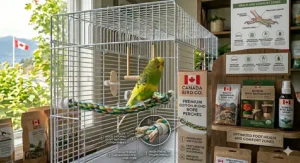
Flexible Perching Solutions: Creating Dynamic Cage Environments
One of rope perches’ most underutilized benefits is their ability to create three-dimensional movement opportunities that transform static cages into dynamic environments—particularly valuable for Canadian birds facing 6-8 months of primarily indoor living.
Configuration 1: The Spiral Climber
Take a 75-90 cm rope perch and wrap it around a vertical cage corner in a spiral pattern, securing it at 3-4 points along the height. This creates a climbing challenge that exercises leg muscles far more effectively than horizontal bar climbing. Canadian cockatiels particularly benefit from this during winter months when they’re prone to gaining 10-15% body weight from reduced activity.
Installation tip: Start the spiral at mid-cage height and work upward, ensuring each wrap sits 5-7 cm above the previous one—close enough for easy climbing but far enough to require effort.
Configuration 2: The Bridge Network
In wider cages (60+ cm width), install two rope perches horizontally across the cage width at different heights, then connect them with a third perch running vertically. This creates a network encouraging movement between levels rather than simple up-down hopping. Ontario and Quebec owners report birds using these bridge configurations 3-4x more frequently than isolated horizontal perches.
Canadian adaptation: During winter when natural light is limited, position bridge networks near cage areas that receive maximum winter sunlight (typically south-facing windows). This encourages birds to navigate toward light, maintaining more naturalistic behaviours.
Configuration 3: The Foraging Maze
Weave an extra-long rope perch (200+ cm) through cage bars in a serpentine pattern, creating multiple gripping zones at varying angles and heights. Attach treat clips or foraging toys at random points along the path. Birds must navigate the twisting route to access rewards, dramatically increasing activity levels.
Budget optimization: This works exceptionally well with the multi-bird long ropes available on Amazon.ca for $18-$30 CAD. One perch creates an entire enrichment system.
Configuration 4: The Rest Platform
Bend a medium rope perch (60-75 cm) into a broad U-shape, creating a flat-bottomed bowl effect. Secure both ends at the same height on opposite cage walls. This creates a slightly springy platform that many birds prefer for afternoon napping—the gentle bounce apparently soothes rather than disturbs.
Seasonal note: Canadian birds seem particularly drawn to platform configurations during February-March when winter fatigue peaks. The variation from standard straight perches provides mental stimulation during the final stretch of indoor confinement.
Safety Considerations for Creative Configurations:
✅ Ensure all bends maintain at least 7-10 cm radius curves—sharp angles stress internal wire and create failure points
✅ Secure perches at minimum every 30-35 cm to prevent excessive sagging
✅ Leave 5-7 cm clearance between any perch and cage bars to prevent toe entrapment
✅ Test configurations by gently pulling—if you can shift the perch more than 2-3 cm, it needs additional securing
The creative possibilities with bendable rope perches are nearly limitless, constrained only by cage geometry and your bird’s activity level. Canadian owners have the advantage of longer indoor observation periods during winter, allowing refinement of configurations based on actual usage patterns rather than assumptions.
Soft Landing Perches: Protecting Aging and Injured Birds
As Canadian birds age—and cockatiels in particular often reach 18-25 years with proper care—foot health becomes increasingly critical. Arthritis, reduced grip strength, and balance issues common in senior birds make traditional perches problematic, yet most owners don’t adapt cage setups until an injury occurs.
Understanding the Aging Bird Challenge
Senior birds (cockatiels 12+ years, budgies 8+ years, larger parrots 20+ years) experience gradual muscle deterioration and joint inflammation—problems exacerbated by Canadian winters when reduced activity accelerates muscle loss. They’re prone to falls during cage transitions, particularly during early morning hours when joints are stiffest from overnight immobility.
Rope perches serve as natural “soft landing zones” for these vulnerable birds. The cotton compression provides cushioning that reduces impact force by 30-40% compared to wooden perches, based on avian rehabilitation data. For a 90-gram cockatiel losing grip at mid-cage height, that difference prevents or minimizes injuries ranging from bruised feet to fractured toes.
Strategic Placement for Senior Birds:
Position rope perches in the lower third of the cage as primary daytime resting spots. Senior birds naturally gravitate toward lower heights as their confidence decreases—fighting this instinct by placing perches only at height creates stress and increases fall risk.
Install a rope perch “safety net” approximately 10-15 cm below your bird’s favourite sleeping perch. If they lose grip overnight (a common issue with arthritic birds), they’ll contact the rope perch first, which alerts them to catch themselves rather than free-falling to the cage floor.
Canadian Winter Considerations:
Arthritis pain intensifies in cold weather—yes, even for indoor birds in temperature-controlled homes. Fluctuations from 22°C daytime to 18°C overnight (common in Canadian homes to reduce heating costs) can trigger joint stiffness. Positioning rope perches near heat sources (but not directly above them—maintain 30+ cm distance) gives senior birds warmer resting options that ease joint pain.
Rehabilitation Applications:
For birds recovering from bumblefoot, wing injuries, or leg fractures, rope perches are veterinarian-recommended recovery tools. The soft surface reduces pressure on healing tissues while the bendable core allows positioning that accommodates mobility limitations. Canadian avian vets routinely prescribe temporary rope-perch-only cage setups during 4-6 week recovery periods.
Cost-Benefit Analysis:
A single emergency vet visit in Canada for fall-related injuries typically costs $150-$300 CAD (basic examination and X-rays). Preventive rope perch installation costs $15-$35 CAD. Even if rope perches prevent just one injury across a bird’s lifetime, they deliver 5-10x return on investment—and in practice, they prevent multiple incidents for senior birds.
Adjustable Cage Perches: Optimizing Your Canadian Bird’s Environment
The beauty of rope perches lies in their adjustability—a single perch serves multiple functions simply by reshaping it. This flexibility is particularly valuable for Canadian bird owners whose heating costs make large, multiple-cage setups financially prohibitive during winter months.
Scenario 1: Transitioning Young Birds to Adult Cages
Canadian breeders and rescues frequently encounter this challenge: a 4-month-old cockatiel outgrows its starter cage but struggles with the bar spacing and perch configuration in a standard adult cage. A bendable rope perch can be shaped into a gradual incline that bridges the gap between cage levels, allowing the young bird to build confidence climbing rather than attempting intimidating vertical leaps.
As the bird matures over 2-3 weeks, gradually reduce the incline until the perch approximates a horizontal configuration. This controlled transition prevents the injuries that occur when young birds panic in new environments.
Scenario 2: Seasonal Light Optimization
During Canadian winters, natural light becomes precious. Many birds develop vitamin D deficiency during November-March when UVB exposure plummets. By reshaping rope perches monthly to track the sun’s changing angle, you maximize your bird’s access to whatever natural light penetrates windows.
In June, when the sun is high, configure perches horizontally near upper cage areas. By December, when sun angles drop 30-40 degrees, reconfigure those same perches into elevated platforms that reach into the slanted winter sunlight streaming through south-facing windows.
Scenario 3: Multi-Bird Household Dynamics
Canadian households often start with one bird, then add companions—creating territorial conflicts over preferred perch locations. Rather than purchasing entirely new perch sets, reshape existing rope perches to create additional “desirable” spots that reduce competition.
If two cockatiels are fighting over the upper-right corner perch, add a second rope perch shaped into a parallel platform 5-7 cm away. The original perch remains undisturbed (preventing further territorial stress), but the new configuration provides equally attractive real estate.
Scenario 4: Temporary Illness Accommodation
When Canadian birds develop respiratory infections (common during dry winter months), they often need to perch with their heads elevated to ease breathing. A rope perch can be temporarily reshaped into a 15-20 degree incline, allowing the sick bird to rest at an angle without constant muscle exertion to maintain position.
After recovery (typically 2-3 weeks with proper veterinary care), the perch returns to its original configuration—no need to purchase specialized equipment for temporary health issues.
Adjustment Best Practices:
- Reshape perches in the evening after birds have settled for sleep—morning reconfigurations can trigger territorial stress
- Make gradual changes (5-10 cm position shifts) rather than complete overhauls
- Allow 3-5 days for birds to adjust to new configurations before further changes
- Maintain at least one unchanging “anchor” perch so birds always have familiar territory
The adjustability factor effectively gives you 5-7 different perches for the price of one, making rope perches exceptional value in Canadian markets where parrot supplies typically cost 20-30% more than in the United States due to import costs and currency exchange.
Frequently Asked Questions
❓ Can rope perches cause foot problems in birds?
❓ Are rope perches safe for Canadian winters when humidity drops?
❓ How do I clean rope perches without damaging them?
❓ Can I use rope perches in outdoor aviaries during Canadian summers?
❓ What's the best rope perch size for cockatiels in Canada?
Conclusion: Giving Your Canadian Bird the Foot Health They Deserve
Your bird doesn’t complain about sore feet. They don’t limp dramatically or refuse to perch when calluses develop or circulation problems begin. They simply shift weight, adjust grip angles, and quietly endure the discomfort—until one day you notice swelling, reluctance to climb, or worse, the bloody lesions of advanced bumblefoot that require expensive veterinary intervention.
Rope perches for bird cages represent one of the simplest, most cost-effective preventive measures Canadian bird owners can implement. For $15-$35 CAD and 10 minutes of installation time, you provide your bird with the varied gripping surfaces their feet evolved to navigate—the textured, flexible, forgiving materials that wild birds experience every time they land on a windswept branch or navigate dense foliage.
The key takeaways for Canadian bird owners are straightforward: maintain perch diversity (never exclusively rope or exclusively wood), inspect monthly for fraying and mildew, replace proactively every 6-10 months depending on your climate zone, and position rope perches away from food/water areas where waste accelerates bacterial growth. Follow these guidelines, and rope perches deliver decades of foot health benefits without the safety concerns that alarm many first-time users.
During our lengthy Canadian winters when birds spend 80-90% of their time indoors, perch quality directly impacts their long-term wellbeing. Those extra months of confined activity make every perch choice more consequential than in temperate climates where outdoor time compensates for cage limitations. A $25 CAD rope perch that prevents one bumblefoot treatment ($150-$300 veterinary cost) or extends your bird’s comfortable mobility by 2-3 years represents exceptional value.
The seven rope perches reviewed here—from the Canadian-made Living World option to the budget-friendly SUNGROW choice—all meet quality standards for Canadian conditions. Your selection should balance bird size, chewing behaviour, cage configuration, and local climate factors, but any of these options will serve your bird better than continuing with uniform wooden dowels alone.
Give your cockatiel, parakeet, or conure the flexible perching solutions their feet need. Make the modest investment now, and watch your bird navigate their cage with the confidence and comfort that comes from varied, foot-friendly surfaces. Your future self—and your bird’s future feet—will thank you.
Recommended for You
- 7 Best Places to Buy Authentic Java Perches Canada 2026
- 7 Best Manzanita Perches Canada: Expert Review 2026
- 7 Best Indestructible Toys for Macaws Canada 2026
Disclaimer: This article contains affiliate links. As an Amazon Associate, I earn from qualifying purchases. If you purchase products through these links, we may earn a small commission at no additional cost to you.
✨ Found this helpful? Share it with your friends! 💬🤗
