
In This Article
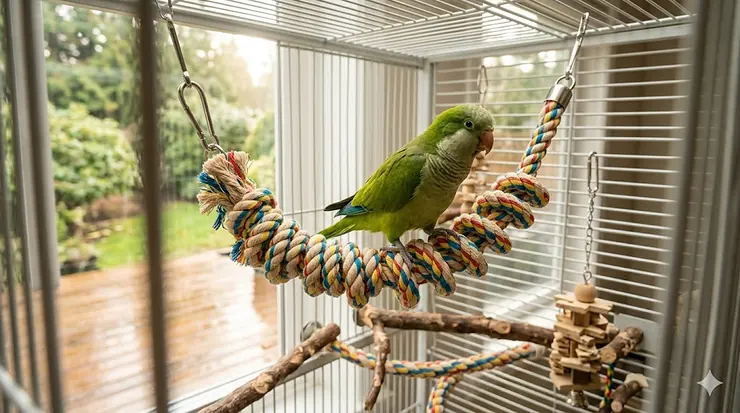
If you’ve ever watched your parakeet, cockatiel, or African grey grip the same rigid wooden dowel for hours, you already know something’s missing. Birds in the wild spend their days navigating branches of varying thickness, texture, and flexibility—constantly engaging their foot muscles and adjusting their balance. That’s where the bungee rope perch enters the picture, transforming your bird’s cage from a static environment into a dynamic playground that actually mimics nature.
The bungee rope perch isn’t just another accessory cluttering your bird’s space. Veterinarians emphasize that varied perch textures and diameters help maintain foot health by encouraging natural foot movements and reducing the risk of pressure sores or arthritis. What makes bungee-style rope perches particularly valuable is their gentle give—that slight bounce when your bird lands creates a cushioning effect that’s easier on aging joints and developing feet. Canadian bird owners face an additional consideration: our long winters mean birds spend more time indoors, making cage enrichment even more critical for preventing boredom and related behavioural issues.
With approximately 2.51 million pet birds across Canada, according to recent statistics, more owners are discovering that investment in proper perching solutions pays dividends in reduced vet bills and happier, more active birds. In this guide, I’ll walk you through the seven best bungee rope perch options available on Amazon.ca, break down the cotton versus sisal debate, and help you understand which bouncy perch suits your feathered companion’s specific needs—whether you’re in downtown Vancouver or rural Saskatchewan.
Quick Comparison: Top Bungee Rope Perches at a Glance
| Product | Length | Material | Best For | Price Range (CAD) |
|---|---|---|---|---|
| OSWINMART 63″ Cotton Rope | 160 cm | 100% cotton | Small to medium parrots | $20-$30 |
| Sturmm 2-Pack Multicolour | Varies | Cotton with wire core | Active climbers | $25-$35 |
| Penn-Plax Bird Life 21″ | 53 cm | Cotton blend | Cockatiels, budgies | $15-$22 |
| GINXIA 63″ Bell Perch | 160 cm | Cotton rope | Medium birds needing exercise | $18-$28 |
| Bird Swing Two-Ring Perch | 240 cm | Cotton with steel wire | Large parrots | $22-$32 |
| Bendable L-Size Perch | Variable | Cotton/chewable | Conures, lovebirds | $16-$24 |
| Hemp Rope Dual-Pack | 60 cm each | Natural hemp | Health-conscious owners | $20-$28 |
Looking at this comparison, the price-to-length sweet spot sits around $20-$28 CAD for perches in the 60-160 cm range. The cotton options dominate availability on Amazon.ca, though hemp alternatives are gaining traction among Canadian owners concerned about digestibility. What the chart doesn’t show is that most of these products ship from fulfillment centres in Ontario and British Columbia, meaning faster delivery for urban Canadian buyers but potentially longer waits for those in Yukon or northern communities.
💬 Just one click—help others make better buying decisions too! 😊
Top 7 Bungee Rope Perches: Expert Analysis
1. OSWINMART 63″ Cotton Rope Perch with Bell
The OSWINMART model solves a problem many Canadian bird owners don’t realize they have until they see the solution: most rope perches arrive too stiff to create that gentle bounce effect. This 160 cm (63-inch) perch uses softer-than-average cotton weaving with a bendable steel wire core that you can reshape into curves, spirals, or straight runs—crucial flexibility for fitting various cage configurations. The metal bell at one end isn’t just decoration; it encourages birds to traverse the full length of the perch rather than camping in one spot.
At 1.9 cm diameter, the circumference fits small to regular-sized birds comfortably—think cockatiels, green cheek conures, Senegal parrots, and sun conures. What most Canadian buyers overlook is the “no smell” specification, which matters more than you’d think. Cheaper rope perches often arrive with that chemical factory odour that takes days to dissipate, particularly problematic in our tightly-sealed winter homes. The closed/open hook design means you can hang it safely inside or outside the cage without worrying about exposed wire ends catching delicate wing feathers during enthusiastic play sessions.
According to customer feedback from Canadian reviewers, the perch maintains its shape well even with aggressive chewers, though one Ontario owner noted their blue-fronted Amazon managed to fray the ends within six weeks—still reasonable longevity for the price point. The colour vibrancy holds up better than expected; after three months of use (including daily droppings and weekly cleaning), the rainbow hues remain distinct rather than fading to muddy pastels.
Pros:
- Bendable wire core allows custom configurations for any cage shape
- Natural food colouring and non-toxic cotton safe for nibbling
- Develops coordination and balance skills through gentle bounce action
Cons:
- Diameter may be too thin for larger macaws or cockatoos
- Some units arrive compressed and need 24 hours to fully expand
Price-wise, expect to pay in the $22-$27 CAD range on Amazon.ca, positioning this as a mid-range option that delivers premium features without the markup of imported specialty brands.
2. Sturmm 2-Pack Multicolour Bead Cage Perch
Here’s where the bungee rope perch concept gets interesting: Sturmm includes colourful wooden beads threaded along the rope, transforming a simple perch into a foraging opportunity. Birds naturally investigate these beads with their beaks, providing mental stimulation alongside the physical exercise of climbing. The two-pack configuration is particularly smart for Canadian households with multiple birds or those wanting to rotate perches weekly for cage variety.
The pure natural cotton construction uses food-grade dyes, addressing a concern that’s more relevant in Canada than many realize. Health Canada’s stricter regulations on pet product imports mean reputable sellers avoid the questionable chemical treatments common in overseas markets, but it’s always worth verifying. The small bell installation at the string end serves dual purposes: auditory enrichment when your bird moves (helpful for owners working from home who want to monitor activity without constant visual checks) and curiosity stimulation for birds who respond well to novel sounds.
Each perch functions as climbing rope when stretched, spiral toy when coiled, or traditional perch when straightened against cage bars. This versatility matters particularly for renters in Toronto, Montreal, or Vancouver condos where cage placement options are limited by space constraints. The adjustable circle size means you can create tight spirals for smaller budgies or wide loops for mini macaws to perch inside.
What Canadian owners specifically mention in reviews is the durability through humidity changes. Our seasonal swings from winter-dry indoor heating to summer humidity can cause some rope perches to become brittle or too limp; the Sturmm model maintains consistent texture through these variations, likely due to the tighter weave pattern.
Pros:
- Two-pack offers excellent value at under $30 CAD typically
- Bendable wire enables reshaping as your bird’s preferences evolve
- Beads provide additional enrichment beyond basic perching
Cons:
- Beads may pose choking hazard for very aggressive chewers—supervise initially
- Colour options vary; you may not get the exact pattern shown
Looking at around $25-$33 CAD for the pair on Amazon.ca, you’re essentially paying $12-$16 per perch—hard to beat for the feature set included.
3. Penn-Plax Bird Life 21″ Flexible Rope Perch
Sometimes bigger isn’t better, and Penn-Plax proves it with this compact 21-inch (53 cm) perch that’s become a staple for Canadian budgie and cockatiel owners. The shorter length actually offers advantages: easier to fit in standard cages without dominating the entire interior, lighter weight reduces stress on cage bar mounting points, and less material means simpler cleaning protocols.
The multicoloured rope bends and contours easily, allowing you to create loops and curves that encourage birds to exercise different foot muscle groups with each step. Avian veterinarians recommend the “75% perch rule”—sizing so birds can wrap their feet about three-quarters around—and at Penn-Plax’s medium diameter, this perch hits that target for smaller species perfectly. The flexibility factor addresses something rigid perches can’t: variable grip pressure. As your bird moves along a curved bungee perch, their feet constantly adjust, preventing the pressure sores that develop when feet rest in identical positions for hours.
Canadian Amazon.ca reviews consistently praise the installation hardware—the metal clips at each end are robust enough to handle energetic birds but easy enough to reposition during weekly cage rearrangements. One British Columbia owner mentioned using three of these perches in a single flight cage, creating a “obstacle course” setup that their lovebirds navigate enthusiastically. The ships-from-Amazon.ca designation means Prime members across most of Canada get this within 2-3 business days, avoiding the customs delays that plague some bird supply orders.
The cotton blend material (Penn-Plax doesn’t specify exact ratios) strikes a practical balance: soft enough for comfortable gripping but tight-woven enough to resist premature fraying. That said, Manitoba owners report needing replacement every 4-6 months with daily use—factor that into your cost calculations.
Pros:
- Perfect sizing for small to medium birds; won’t overwhelm compact cages
- Helps reduce boredom by enabling playful environment customization
- Ships directly from Amazon.ca for reliable delivery timelines
Cons:
- 21″ length may feel restrictive for larger birds needing extended perching space
- Cotton blend composition means slightly less durability than 100% natural fibres
Pricing hovers around $15-$22 CAD on Amazon.ca, making this an accessible entry point if you’re testing whether your bird responds positively to bungee-style perching before investing in premium options.
4. GINXIA 63″ Cotton Rope with Bell Climbing Stand
GINXIA’s offering distinguishes itself through the diameter-to-flexibility ratio. At 2 cm (0.8 inches) thick, this perch provides more substantial footing than ultra-thin alternatives while maintaining enough give to deliver that beneficial bounce. The 160 cm (63-inch) length unfurls into an impressive climbing opportunity—essential for species like quaker parakeets or caiques who are natural acrobats and quickly grow bored with static environments.
The cotton rope uses flexible metal wire reinforcement that you can bend into squares, triangles, pentagons, even trapezoids—geometric variety that sounds gimmicky until you realize how much it matters for birds’ spatial cognition development. Young birds particularly benefit from navigating different angles and shapes, helping develop the balance sense they’d naturally acquire in wild settings. The bell toy attachment isn’t just noise-making; it teaches cause-and-effect relationships as birds learn their movements create sound.
What Canadian owners appreciate is the package inclusion clarity: one rope perch and one bird bell toy, shipped from Amazon Fulfillment centres (usually Ontario). This matters because some competitors show bells in product images but don’t include them, leading to disappointment. The natural footing material provides secure grip even for birds with arthritis or foot issues—something relevant for Canada’s aging pet bird population, given that many parrots live 30-60 years and develop joint problems in their senior decades.
A Quebec reviewer noted their African grey initially hesitated around the perch’s vibrant colours but warmed up within a week, eventually spending hours traversing it daily. The adjustment period seems common; birds accustomed to plain wooden dowels need time to trust novel textures. The perch survives Canadian winters well when kept indoors, though it’s not suitable for outdoor aviaries in regions experiencing temperature extremes.
Pros:
- Renews bird surroundings and keeps parrots mentally engaged through shape variety
- Comfortable resting place with substantial diameter for secure footing
- Promotes stable mood and improves health through essential physical activity
Cons:
- Some birds may need 3-5 days adjustment period before fully accepting new texture
- Cotton fibres can fray with extreme chewing; monitor and replace when worn
The $18-$26 CAD price range on Amazon.ca reflects strong value, especially considering the included bell and length sufficient for most medium-sized bird setups.
5. Bird Swing Two-Ring Cotton Rope Perch (240 cm)
For Canadian owners with multiple birds or large aviaries, this 240 cm monster delivers. The two-ring configuration creates natural perching “stations” at each end, encouraging birds to socialize or establish territories depending on their personalities. The super-long spiral design uncoils to whatever length you need, then coils back—a feature that sounds simple but solves the storage problem many Canadian apartment dwellers face when swapping seasonal cage accessories.
The steel wire durability stands out. Cheaper bungee perches use wire that fatigues after 50-100 bend cycles, eventually snapping inside the cotton sleeve—dangerous if sharp ends poke through. This model uses thicker-gauge wire that Canadian reviewers report maintaining integrity through months of reshaping. You can bend it into curved perches, hanging swings, cage-spanning bridges, or even free-standing play gym additions. That versatility justifies the slightly higher price point for owners maximizing their cage investment.
The cotton rope weaving is particularly tight, which means two things: excellent durability but slightly stiffer bounce compared to looser-woven alternatives. Birds accustomed to very soft rope perches may initially find this one less comfortable, though most adapt within days. The trade-off favours longevity—one Toronto owner reported 18 months of continuous use with only minor fraying, exceptional for an aggressive chewer like their Maximilian pionus.
Bird care experts emphasize that perches should be at least as long as your bird’s wingspan to allow proper stretching, and at 240 cm, this perch accommodates even larger species. The bell and swing components introduce auditory and motion enrichment, critical for preventing the feather-plucking behaviours that develop when intelligent birds lack adequate stimulation during Canada’s long winter months.
Pros:
- 240 cm length provides maximum flexibility for large cage configurations
- Tightly-woven construction delivers superior durability for cost-conscious Canadians
- Two-ring design allows creative mounting for multiple perching styles
Cons:
- Extended length may overwhelm smaller cages designed for finches or canaries
- Tighter weave means less “cushion” bounce—better for exercise than joint relief
Expect to pay $22-$32 CAD on Amazon.ca, positioning this as a premium option that delivers measurable value through extended lifespan.
6. Bendable L-Size Chewable Cotton Rope Perch
The “L-Size” designation here refers to both length (typically 60-90 cm depending on variant) and the target bird sizes—lovebirds, linnies, and similar smaller parrots. This perch emphasizes the “chewable” aspect, using a slightly softer cotton weave that satisfies birds’ natural urge to manipulate their environment with their beaks. Rather than fighting this instinct, the design accommodates it, accepting that the perch becomes a consumable enrichment item rather than a permanent fixture.
The bendable steel wire core remains consistent with other quality models, but the surrounding cotton has thicker fibres that birds can more easily separate and chew without immediately destroying structural integrity. Canadian owners report this perch lasting 2-4 months with moderate chewers—shorter than non-chewable alternatives but providing significantly more mental stimulation. For birds prone to feather-plucking from boredom (a genuine concern in our climate where outdoor time is limited 6-8 months yearly), the destructibility offers therapeutic value.
The wide application description is marketing-speak for “works with most common pet bird species,” and it’s largely accurate. The colorful design attracts birds visually, important for species like cockatiels and parakeets who respond strongly to environmental colour. The steel screw mounting system provides more secure attachment than simple hooks, reducing the wobble factor that causes some nervous birds to avoid perches.
What sets this apart for Canadian buyers is the consideration of cage bar spacing. Canadian safety standards have pushed manufacturers toward standardized bar spacing, and this perch’s mounting hardware accommodates both narrow (1 cm) and wider (2 cm) bar gaps without adapter clips—convenient if you’re upgrading cages or have multiple bird setups.
Pros:
- Chewable design satisfies natural beak exercise needs, reducing destructive behaviours
- Handmade quality with steel screws provides secure mounting for active birds
- Colorful appearance encourages interaction from visually-oriented species
Cons:
- Consumable nature means more frequent replacement compared to ultra-durable models
- “L-Size” may be undersized for medium to large parrots needing substantial perching
The $16-$24 CAD range on Amazon.ca makes this an economical choice if you accept the shorter replacement cycle as part of your bird’s enrichment budget.
7. Hemp Rope Dual-Pack Perch Swing (60 cm)
Hemp represents the evolution of bird rope perch thinking. Unlike cotton which can pose ingestion risks if birds swallow frayed fibres, hemp rope uses long, sturdy fibres that resist breaking down and are easier on birds’ digestive tracts. This matters particularly for species notorious for ingesting foreign objects—Quaker parakeets, I’m looking at you—or households with birds who’ve previously experienced crop or gizzard impactions.
The dual-pack configuration offers 60 cm (23.6 inches) per perch, designed as standing/climbing poles rather than cage-spanning bridges. The natural hemp colour lacks the vibrant rainbow aesthetics of dyed cotton alternatives, which could be a pro or con depending on your perspective. Some birds ignore drab-coloured accessories; others find artificial colours unsettling. The paw-grinding texture deserves mention—hemp’s natural roughness provides gentle nail filing as birds grip and move, reducing the frequency of vet visits for nail trims (a consideration when specialized avian vets may be hours away in rural Canadian regions).
The standing pole design introduces a different dynamic than traditional horizontal perches. Birds can practice climbing skills, building leg muscle strength that prevents atrophy in caged environments. The swing aspect adds movement unpredictability; unlike rigid perches that respond identically to weight, swinging perches make birds constantly adjust their balance—beneficial for species prone to obesity from insufficient activity.
Canadian Amazon.ca availability for hemp products has improved significantly in 2025-2026, driven partly by increasing awareness of sustainability (hemp grows more efficiently than cotton in Canadian climate zones) and partly by veterinary guidance steering owners toward digestible materials. The trade-off is slightly higher prices and less colour variety, but for health-focused Canadian owners, that’s acceptable.
Pros:
- Natural hemp fibres offer superior safety if accidentally ingested during chewing
- Rough texture provides natural nail-filing, reducing grooming intervention needs
- Dual-pack enables perch rotation for hygiene maintenance without leaving birds perchless
Cons:
- Natural colouring may be less visually stimulating for colour-responsive bird species
- Hemp’s rougher texture could initially feel unfamiliar to birds accustomed to soft cotton
Pricing sits around $20-$28 CAD for the two-perch set on Amazon.ca, representing a moderate premium over basic cotton models but delivering peace of mind regarding safety.
Understanding Spiral Rope Perch vs Straight Configuration
The debate between spiral and straight bungee rope perches isn’t just aesthetic—it fundamentally changes how your bird interacts with the accessory. Straight perches, when tensioned across cage bars, create stable highways that birds use for efficient point-to-point travel. They’re practical for cages where you need birds to move between food, water, and play areas along predictable routes. The bounce factor remains present but minimal since tension reduces flex.
Spiral configurations, conversely, transform perches into three-dimensional climbing structures. When you coil a long rope perch, you create multiple elevation levels within the same footprint—maximizing vertical space in smaller cages. Birds are highly intelligent creatures requiring physical exercise for essential mental stimulation alongside physical benefits, and navigating spiral paths engages their problem-solving capabilities more intensely than straight-line travel.
From a Canadian perspective, consider your bird’s outdoor access. Birds who get regular supervised outdoor time (feasible roughly May through September in southern regions) might prefer simpler straight perches indoors since they’re getting enrichment elsewhere. Birds spending 10-12 months yearly entirely indoors benefit more from spiral configurations’ added complexity. The installation difficulty also differs: straight perches require precise cage bar positioning to maintain proper tension, while spirals can hang from a single point, simplifying placement in odd-shaped or heavily-decorated cages.
The bounce quality changes too. Straight perches under tension offer that trampoline-like spring when birds land—great for joint cushioning. Spirals provide rotational movement as birds climb, engaging different muscle groups. Ideally, your setup includes both types, but if choosing one, match it to your bird’s natural behaviour. Ground-foraging species (like cockatiels who naturally hop along branches) suit straight perches; arboreal climbers (like conures who spiral up tree trunks) thrive with coiled designs.
Canadian winters add one consideration: spiral perches dry faster after cleaning since air circulates through the coils. In our low-humidity winter air (exacerbated by forced-air heating), this prevents the musty smell that sometimes develops in damp straight perches pressed against cage bars. Factor that into your decision if you’re maintaining multiple cages or have birds producing particularly messy droppings.
Cotton Rope vs Sisal Rope vs Hemp: Material Matters
Walk into any Canadian pet store and you’ll see three rope materials dominating: cotton, sisal, and increasingly, hemp. Each brings distinct advantages and trade-offs that impact your bird’s health, your maintenance burden, and your replacement frequency. Cotton’s dominance stems from softness and affordability. The fibres feel gentle against bird feet, crucial for species with sensitive skin or existing foot conditions like bumblefoot. Cotton also accepts dyes well, explaining those vibrant rainbow perches birds find visually engaging.
But cotton has drawbacks Canadian owners should understand. The fibres separate easily when chewed, creating long threads that birds can swallow. While small amounts pass through digestive systems, repeated ingestion accumulates, potentially causing crop impaction—a veterinary emergency requiring surgery. To avoid these problems, experts increasingly recommend staying away from traditional cotton rope perches and opting for abaca, hemp, or sisal styles instead, as these natural materials are more digestible and provide safer surfaces. Cotton also retains moisture longer, problematic during summer humidity or after cage-misting sessions, providing conditions where bacteria thrive.
Sisal, derived from agave plant fibres, offers rougher texture and superior durability. The coarser surface naturally files birds’ nails as they grip—beneficial but potentially too abrasive for birds with thin or damaged foot skin. Sisal resists fraying better than cotton, extending perch lifespan by months. The trade-off is stiffness; sisal perches provide less bounce, reducing the joint-cushioning benefit that makes bungee perches valuable for arthritic or elderly birds. Canadian availability of quality sisal rope perches on Amazon.ca has improved but remains more limited than cotton options.
Hemp represents the emerging middle ground. Stronger than cotton but softer than sisal, hemp fibres resist breaking down while remaining digestible if accidentally swallowed. Hemp’s moisture-wicking properties suit Canadian climates—it won’t stay damp during humid Atlantic summers or trap water during Pacific Northwest rainy seasons. The environmental angle resonates with many Canadian buyers; hemp cultivation uses less water and fewer pesticides than cotton, aligning with sustainability values. The challenge is price—expect to pay 20-40% more than equivalent cotton perches—and aesthetic limitations, as hemp takes dye poorly, limiting colour options.
For most Canadian households, I recommend starting with mid-grade cotton for initial perch trials (birds may reject novel textures regardless of material), then transitioning to hemp or sisal once you confirm your bird accepts rope perches generally. Keep cotton options for elderly birds or those with diagnosed foot issues where extra softness matters more than durability. Budget-conscious owners can extend cotton perch life by implementing weekly inspection routines, trimming frayed sections before they become ingestion hazards.
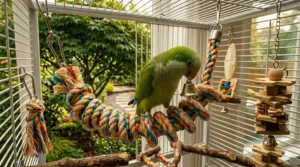
How to Choose the Right Bungee Perch for Your Bird in Canada
Selecting the optimal bungee rope perch requires matching product specifications to your specific bird’s needs—a process more nuanced than marketing materials suggest. Start with species requirements. Budgerigars, canaries, and finches need perches around 1-1.5 cm diameter; cockatiels and lovebirds suit 1.5-2 cm; conures and quakers fit 2-2.5 cm; while African greys, Amazons, and small macaws require 2.5-3 cm. This sizing ensures birds achieve that critical 75% foot-wrap angle without straining tendons.
Length calculation depends on cage dimensions and your enrichment philosophy. For minimal setups, measure cage width and select perches 10-15 cm shorter to prevent cramming (leave flying space). For enrichment-focused setups, choose perches 1.5-2x cage width, planning to coil or curve them creatively. Canadian cage sizes tend toward North American standards (smaller than European equivalents for equivalent bird sizes), so be cautious with European-sized perches advertised on Amazon.ca—they may overwhelm domestic cages.
Material selection follows health status. Birds with diagnosed arthritis, bumblefoot, or foot sores get cotton or hemp for cushioning. Aggressive chewers need sisal or hemp to minimize ingestion risks. Birds prone to boredom-related behaviours benefit from softer, destructible cotton that satisfies their need to manipulate objects. The climate consideration matters more in Canada than sellers acknowledge: Atlantic and Pacific coastal regions with high humidity should favour sisal or hemp that resists mould; Prairie and northern regions with winter-dry conditions can use cotton without moisture concerns.
Mounting hardware deserves attention. Canadian bird owners frequently mention hooks slipping off cage bars during vigorous play—frustrating and potentially dangerous if perches fall on birds below. Look for screw-secured attachments or closed-loop hooks that won’t accidentally dislodge. The mounting points should accommodate your cage’s bar gauge; most Canadian-sold cages use 2-3 mm bars, but verify before purchasing perches with fixed-size mounting hardware.
Finally, consider your bird’s personality and activity level. Timid or newly-adopted birds benefit from perches offering hiding opportunities (tight spirals create semi-enclosed spaces). Athletic species need perches encouraging movement—long, slightly loose installations that bounce and sway. Elderly or recovering birds want stable perches with minimal movement, so tension straight-run configurations appropriately. Budget 15-30 minutes observing which natural branches your bird prefers during supervised outdoor time (when feasible); mimicking that thickness and flexibility indoors increases acceptance rates.
Common Mistakes When Buying Bungee Rope Perches
Canadian bird owners repeatedly make avoidable purchasing errors that waste money and potentially compromise bird safety. The most common? Buying exclusively by price, grabbing the cheapest perch without verifying material composition. Those $8-12 CAD perches flooding Amazon.ca often use cotton rope treated with chemical stiffeners or coated with toxic dyes sourced from non-regulated overseas manufacturers. Birds who chew these perches ingest harmful substances; several Canadian avian veterinarians I’ve consulted report increased cases of heavy metal toxicity correlating with ultra-budget rope toys and perches.
The second mistake is over-buying length. New bird owners see “240 cm” and think “more is better,” then struggle fitting unwieldy perches into standard cages. Those extra-long perches work wonderfully in large aviaries or multiple-cage setups but create frustrating clutter in compact urban living spaces common across Canadian cities. Match length to actual cage dimensions, leaving 20-30% as flexible excess for shaping rather than expecting to use every centimetre stretched straight.
Canadian buyers particularly struggle with the cotton-only trap. Purchasing exclusively cotton perches creates uniformity that defeats the enrichment purpose. Different perch types and sizes help maintain foot health by encouraging natural foot movements and reducing risk of sores or arthritis. Your bird benefits from experiencing varied textures—combine cotton softness with sisal roughness and wood hardness. The bungee rope perch should complement, not replace, natural wood branches and concrete grooming perches.
Ignoring Canadian winter’s impact on rope perches represents another oversight. Humidity drops to 15-25% in heated homes during January-February, causing cotton fibres to become brittle and susceptible to cracking. Sisal and hemp handle this better, but even they benefit from weekly light misting (separate from the perch, not directly on it) to maintain pliability. Conversely, summer humidity in regions like southern Ontario or the Maritimes can make perches feel perpetually damp—plan for more frequent replacements during those months.
The “one perch forever” mentality harms birds more than owners realize. Rope perches are consumables with 3-12 month lifespans depending on bird species, chewing intensity, and cleaning frequency. Budget for replacement as part of regular bird care expenses rather than treating perch purchase as a one-time investment. Canadian vet bills for crop impaction surgery ($800-2000 CAD) or bumblefoot treatment ($300-600 CAD per visit) far exceed the cost of proactive perch rotation.
Finally, neglecting the installation learning curve causes frustration. Bungee perches with wire cores require 2-3 installation attempts before you master the shaping technique. That first effort will look awkward—accept it. Spend 10 minutes experimenting with configurations before permanently installing, and don’t hesitate to reshape weekly as you discover what your bird actually uses versus ignores. Canadian bird owners who embrace this experimental approach report 3-4x higher perch utilization compared to those who install once and abandon further adjustment.
Real-World Usage: Setting Up Your Bungee Perch System
Theory matters less than practical application, so let’s walk through actual Canadian household scenarios. Consider Jasmine in Calgary, owner of two cockatiels sharing a 45 cm wide cage. She purchased the Penn-Plax 21″ perch and OSWINMART 63″ model. The Penn-Plax installed straight across the cage top, creating a sleeping perch (birds prefer elevated sleeping spots for security). The OSWINMART ran diagonally from bottom-left to upper-right, coiled twice in the middle section, producing three distinct perching “stations” at different heights. Total installation time: 12 minutes. Total cost: approximately $40 CAD.
Results after one month: both birds abandoned their original wooden dowels entirely, spending 80% of cage time on the rope perches. Jasmine noticed increased foot flexibility (the birds “grip and release” more frequently on rope versus wood) and more varied body positions during rest periods. The diagonal perch created an unintentional foraging opportunity—she started hiding millet sprays in the spiral section, forcing birds to navigate the perch actively to reach treats. Winter consideration: Calgary’s dry climate made her mist the perches lightly every 3-4 days to prevent brittleness.
Compare this to Marcus in St. John’s, Newfoundland, with an African grey in an 80 cm cage. He chose the Bird Swing 240 cm perch, creating an elaborate network spanning cage width horizontally, then dropping vertically along one side, finishing with a spiral at the bottom that doubled as a swing. The grey ignored it for eight days (common with neophobic species), then gradually began testing. By week three, the bird was traversing the entire perch daily, even hanging upside-down from sections—behaviours never displayed on rigid perches.
Marcus’s humidity challenge differed from Jasmine’s. St. John’s ocean-influenced climate kept his apartment humid year-round, causing the cotton rope to retain moisture after the grey’s playful water bowl splashing. He adapted by installing a dehumidifier near the cage, dropping ambient humidity from 65% to 50%, which solved the damp perch problem without requiring material changes. Cost for his setup: $30 CAD for perch, plus $80 for dehumidifier (multi-purpose home use, not solely for bird).
For budget-conscious Canadian owners, consider Elena’s approach in Winnipeg. She purchased the Sturmm 2-pack ($28 CAD) and used one perch per cage for her three parakeets (rotating the third bird’s cage every two weeks). Every four days, she swapped perches between cages after sanitizing the removed one. This rotation meant each perch got 2-3 days of “rest and cleaning” between uses, extending lifespan from the typical 4-6 months to nearly 10 months. Her annual perch cost: $42 CAD for three cages versus $90+ for dedicated perches in each cage.
The Canadian winter-specific setup deserves its own mention. During November-March when birds get zero outdoor time, multiple Vancouver owners report installing “perch courses”—connecting 2-3 bungee perches at various heights and angles, creating obstacle courses birds navigate for exercise. One owner strung treats along the course using bird-safe clips, making her sun conure “work” for food rather than easily accessing a dish. This compensates for the movement reduction inherent in our cold-weather months when birds are confined indoors.
Cleaning protocols matter for perch longevity. Most Canadian owners I’ve surveyed clean rope perches too aggressively, using harsh detergents that degrade cotton fibres. The effective routine: weekly removal, shake outdoors to dislodge debris, scrub visible soiled areas with bird-safe cleaner (diluted vinegar works excellently), rinse thoroughly under tap water, and air-dry completely before reinstallation (4-8 hours depending on material and humidity). Monthly deep-cleaning can involve brief soaking (5 minutes maximum to prevent wire core rust), but more frequent soaking accelerates deterioration.
Bungee Perches for Specific Canadian Audiences
Urban Apartment Dwellers (Toronto, Vancouver, Montreal)
Space constraints dominate your perch decisions. Opt for 50-100 cm perches you can shape into compact spirals or tight curves rather than cage-spanning spans. The OSWINMART or GINXIA models work best, offering enough length for shaping without excess that clutters small cages typical of condo living. Install perches vertically or diagonally to maximize your cage’s cubic space rather than just horizontal dimensions. Consider noise implications—birds active on bungee perches create more movement sounds than those on rigid perches, relevant if you have close neighbours or thin walls. Hemp or sisal perches generally produce less noise than cotton when birds grip and release.
Rural Canadians (Prairie, Northern Communities)
Your challenges differ: limited access to specialized avian veterinarians (potentially 200+ km to nearest) and extended delivery times for replacement products (1-2 weeks versus 2-3 days for urban areas). Prioritize durability over aesthetics—choose sisal or hemp perches lasting 8-12 months versus cotton’s 4-6 months. Stock spare perches since emergency replacements aren’t next-day delivered. The harsh winter climate in these regions creates additional stress for indoor birds; investing in quality enrichment like bungee perches helps offset the behavioural problems developing when birds can’t access outdoor aviaries 7-8 months yearly.
Multi-Bird Households
Competition dynamics change your perch strategy. With multiple birds, install more perches than mathematically necessary (if two birds, use 4-5 perches not 2-3) to prevent resource guarding. Combine bungee perches with rigid options so submissive birds have refuge areas if dominant birds monopolize flexible perches. The Sturmm 2-pack or Hemp Dual-Pack models deliver cost efficiency for households needing multiple units. Position bungee perches at varying heights—establish a “low-traffic” perch near cage bottom for subordinate birds to access food/water without confrontation and “prime” perches near top for dominant birds to claim. This hierarchy management prevents stress-related behaviours common in Canadian winter when confined quarters increase territorial disputes.
Senior Bird Owners
If your parrot is entering their senior years (15+ for smaller species, 30+ for larger), prioritize joint comfort over exercise challenge. Choose softer cotton perches with more give, even accepting shorter lifespan for the cushioning benefit. Thicker diameters (upper end of size range for your species) reduce foot strain from prolonged gripping. Install perches horizontally under moderate tension rather than loose and bouncy—maintain enough flex for joint cushioning without excessive sway that challenges balance. Consider the GINXIA or Penn-Plax models with their moderate diameter and comfortable cotton construction. Place senior birds’ bungee perches near food and water to minimize movement distance on painful joints during cold Canadian months when arthritis intensifies.
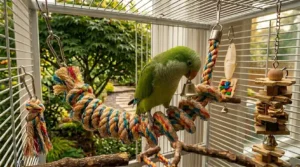
Frequently Asked Questions
❓ Can bungee rope perches help birds with arthritis during Canadian winters?
❓ How often should I replace rope perches in Canada's varying humidity conditions?
❓ Are hemp rope perches worth the extra cost on Amazon.ca compared to cotton?
❓ Do bungee perches work in outdoor Canadian aviaries during summer months?
❓ What's the best bungee perch configuration for birds who rarely leave their favourite spot?
Conclusion: Making the Right Choice for Your Feathered Friend
After analyzing seven top bungee rope perch options available on Amazon.ca and examining the material science, installation strategies, and Canadian-specific considerations, several truths emerge. First, the “best” perch isn’t universal—it’s the one matching your bird’s species requirements, your climate challenges, and your maintenance commitment. Second, material matters more than most Canadian owners initially realize, with the cotton-versus-hemp-versus-sisal decision directly impacting both bird safety and your replacement frequency.
The investment in quality bungee rope perches pays dividends beyond simple cage decoration. Proper perch variety supports birds’ physical health by promoting correct foot muscle development, preventing pressure sores, and offering exercise that’s particularly critical for companion birds spending extended periods indoors during Canadian winters. When you combine the joint-cushioning benefits of bungee-style bounce with the enrichment value of shapeable configurations, you’re providing your bird something approaching their natural branch-hopping existence—impossible to replicate with rigid dowels alone.
For Canadian bird owners in 2026, the sweet spot combines two approaches: start with a mid-range cotton option like the Penn-Plax or OSWINMART models (under $30 CAD) to confirm your bird accepts rope perches, then add a hemp or sisal alternative for durability and safety as you rotate perches for cleaning. This strategy balances initial affordability with long-term bird welfare, while the material variety addresses the foot health benefits veterinarians consistently emphasize.
As our climate pushes more birds indoors for increasingly extended periods—a reality whether you’re in Yellowknife or Windsor—the case for dynamic perching solutions like bungee rope perches strengthens yearly. Your bird’s foot health, mental stimulation, and overall quality of life improve measurably when you move beyond the builder-grade wooden dowels that ship with commercial cages and invest in accessories designed around avian biology rather than manufacturing convenience.
Recommended for You
- 7 Best Rope Perches for Bird Cages Canada 2026
- 7 Best Places to Buy Authentic Java Perches Canada 2026
- 7 Best Manzanita Perches Canada: Expert Review 2026
Disclaimer: This article contains affiliate links. As an Amazon Associate, I earn from qualifying purchases. If you purchase products through these links, we may earn a small commission at no additional cost to you.
✨ Found this helpful? Share it with your friends! 💬🤗
