
In This Article
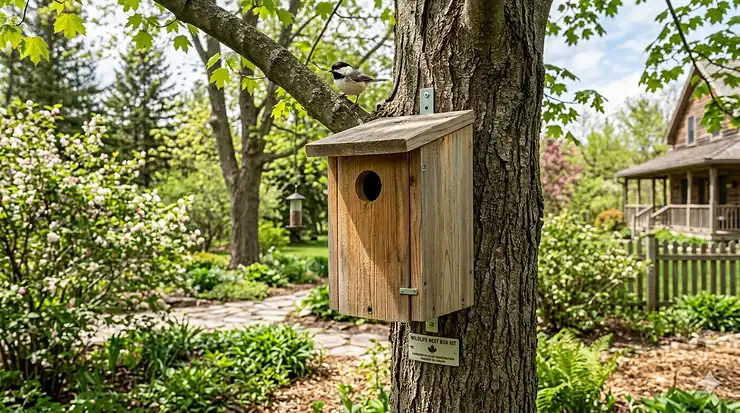
Picture this: a Black-capped Chickadee peeks out from a cedar box on your fence, its distinctive black cap gleaming in the morning sun. For thousands of Canadian homeowners, installing a wildlife nest box kit has transformed quiet backyards into thriving bird sanctuaries. But here’s what most people don’t realize—not all nest boxes work equally well for our native cavity-nesting species.
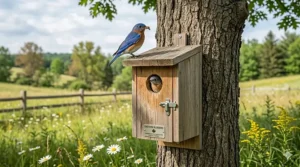
According to the Canadian Wildlife Federation, approximately 50 species of cavity-dwelling birds call Canada home, and many are struggling to find suitable nesting sites as development removes dead trees from the landscape. A wildlife nest box kit provides an artificial cavity that mimics natural tree hollows, offering critical habitat for species like chickadees, nuthatches, wrens, bluebirds, and Tree Swallows.
The right wildlife nest box kit can make the difference between attracting a breeding pair of songbirds or watching them pass by your property. With Canadian winters that can drop below -40°C and summers reaching 35°C, durability matters immensely. Cedar wood has emerged as the gold standard for all-season nest box designs, naturally resisting rot and insulating against temperature extremes without requiring chemical treatments.
Whether you’re setting up your first songbird nest box in Ontario or expanding a bird trail across the Prairies, this guide covers everything you need to know about choosing, installing, and maintaining nest boxes that Canadian birds actually use.
Quick Comparison Table
| Product Name | Material | Entrance Hole | Target Species | Price Range (CAD) | Rating |
|---|---|---|---|---|---|
| WHITEHORSE Cedar Bluebird House | FSC Western Cedar | 1.5″ | Bluebirds, Chickadees, Wrens | $45-$65 | 4.8/5 |
| Woodlink Cedar Chickadee House | Inland Red Cedar | 1.125″ | Chickadees, Nuthatches, Wrens | $30-$45 | 4.6/5 |
| Backyard Bird Centre Chickadee Kit | Recycled Western Red Cedar | 1.125″ | Chickadees, Wrens | $25-$35 | 4.7/5 |
| Cedar Alpha Composite Bluebird House | Cedar/Composite | 1.5″ | Multiple Species | $40-$55 | 4.5/5 |
| Spring Melody Composite Nest Box | Composite Material | 1.5″ | Bluebirds, Sparrows, Chickadees | $35-$50 | 4.4/5 |
| Nature’s Way Cedar Wren House | Natural Pine/Cedar | 1.125″ | Wrens, Chickadees | $20-$30 | 4.3/5 |
| Wildlife World Urban Nest Box | Clayplas+ Composite | 32mm (1.26″) | Tits, Sparrows, Nuthatches | $50-$70 | 4.6/5 |
💬 Just one click – help others make better buying decisions too! 😊
✨ Don’t Miss These Exclusive Deals!
🔍 Take your backyard birding to the next level with these carefully selected products available in Canada. Click on any highlighted item to check current pricing and availability on Amazon.ca. These nest boxes will help you create authentic wildlife habitat your feathered neighbours will love!
Top 7 Wildlife Nest Box Kit Options: Expert Analysis
1. WHITEHORSE Premium Cedar Bluebird House
The WHITEHORSE Premium Cedar Bluebird House stands as Canada’s premier choice for serious bird conservationists. Manufactured from 100% FSC-certified western cedar wood with 19mm (¾”) thick walls, this nest box provides exceptional insulation through harsh Canadian winters and scorching summer heat.
Key Specifications:
- Entrance hole: 1.5″ diameter with stainless steel guard
- Wall thickness: 19mm (¾”) solid cedar
- Dimensions: Meets North American Bluebird Society specifications
- Pre-drilled mounting holes with weatherproof hardware
Canadian customers consistently praise the robust construction and thoughtful design elements like dado joints that prevent drafts and recessed doors that keep nests dry during spring rain. The 1″ wooden predator guard adds an extra layer of protection against squirrels and raccoons—a critical consideration in suburban Canadian environments.
✅ Pros:
- Premium FSC-certified Canadian cedar
- Engineered for extreme Canadian climate
- Lifetime durability with no maintenance required
❌ Cons:
- Higher initial investment ($45-$65 CAD)
- May be oversized for smaller yards
Price Range: $45-$65 CAD depending on model variations
Canadian Availability: Ships free across Canada via company website and select retailers
Customer Feedback: “I’ve had three WHITEHORSE boxes in my Manitoba yard for two years now. Every single one has been occupied by bluebirds or Tree Swallows each season. Worth every penny.” – Sandra M., Winnipeg

2. Woodlink Cedar Chickadee/Wren House
The Woodlink Cedar Chickadee House represents exceptional value for Canadian birders seeking North American-made quality. Constructed from kiln-dried, reforested inland red cedar with chromate screws, this nest box specifically targets Black-capped Chickadees—Canada’s beloved national treasure that doesn’t migrate south.
Key Specifications:
- Entrance hole: 1.125″ (perfect for chickadees and wrens)
- Easy-open side panel for fall cleaning
- Green painted roof with etched front design
- Pre-drilled mounting with included hardware
The 1⅛” entrance hole follows ornithological research showing this size effectively excludes House Sparrows (an invasive species in Canada) while welcoming native chickadees, nuthatches, and wrens. The hinged side panel makes autumn cleaning effortless—a task Environment and Climate Change Canada recommends for maintaining healthy nest box programs.
✅ Pros:
- Scientifically-designed entrance excludes invasive species
- Made in USA with sustainable forestry practices
- Excellent ventilation and drainage system
❌ Cons:
- Painted roof may need touch-ups after 3-4 years
- Slightly smaller cavity depth than premium models
Price Range: $30-$45 CAD
Canadian Availability: Available through Amazon.ca and specialty bird stores
Customer Feedback: “Had a pair of chickadees raise two broods in this box last summer near Calgary. The easy-clean door is genius!” – Robert T., Alberta
3. Backyard Bird Centre Chickadee Kit (Build-It-Yourself)
For families wanting an educational DIY experience, the Backyard Bird Centre Chickadee Kit delivers authentic Canadian craftsmanship. Manufactured by a British Columbia supplier using recycled western red cedar or spruce, this kit has been a bestseller for 22 years at their physical store in BC.
Key Specifications:
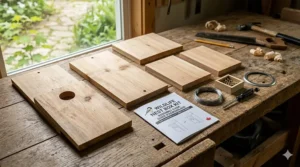
- Pre-drilled nail holes (just add a hammer!)
- Recycled western red cedar construction
- 1.125″ entrance hole positioned 5″ above floor
- Finished dimensions: 5.25″ W × 5.25″ L × 10″ H
The pre-drilled holes make assembly accessible even for children under supervision, creating a memorable conservation project. Ventilation openings in the roof and drainage holes in the floor follow best practices established by cavity nesting box research. The front panel opens for observation and mandatory fall cleaning.
✅ Pros:
- Hands-on learning experience for all ages
- Made in Canada from recycled materials
- Affordable entry point for conservation
❌ Cons:
- Requires assembly (15-20 minutes)
- Lacks predator guard (sold separately)
Price Range: $25-$35 CAD
Canadian Availability: Ships within Canada via Backyard Bird Centre
Customer Feedback: “Built this with my eight-year-old grandson. He checks it every morning and we had wrens nest successfully!” – Margaret D., Victoria
4. Cedar Alpha Composite Bluebird House
The Cedar Alpha Composite Bluebird House combines traditional aesthetics with modern material science. This innovative design uses untreated premium cedar paired with composite materials for enhanced weather resistance, making it ideal for Canada’s demanding climate zones from coastal BC to Atlantic provinces.
Key Specifications:
- Hybrid cedar/composite construction
- 1.5″ entrance with landing perch
- Galvanized rust-free screws
- Easy-open front door mechanism
The composite elements resist warping and splitting better than all-wood construction while maintaining natural appearance. Canadian buyers appreciate the 10-year weatherability rating—crucial when nest boxes must withstand freeze-thaw cycles, UV exposure, and heavy precipitation. The rustic patriot-style finish appeals to homeowners wanting decorative elements alongside functionality.
✅ Pros:
- Extended 10-year weather protection
- No assembly required (arrives ready to mount)
- Suitable for multiple North American species
❌ Cons:
- Composite materials less eco-friendly than pure cedar
- Heavier than traditional wooden boxes
Price Range: $40-$55 CAD
Canadian Availability: Amazon.ca with Prime shipping options
Customer Feedback: “Mounted this in New Brunswick two seasons ago. Zero maintenance and I’ve had both bluebirds and chickadees successfully nest.” – Thomas K., Fredericton
5. Spring Melody Composite Nest Box
The Spring Melody Composite Nest Box brings vibrant colour and serious functionality to Canadian backyards. Constructed entirely from composite material designed to withstand five years of outdoor exposure, this songbird nest box features charming country cottage aesthetics with a spring flower theme.
Key Specifications:
- Dimensions: 8.3″ H × 6.7″ W × 6.7″ D
- Composite material (5-year weather warranty)
- 1.5″ entrance hole
- Multiple mounting options (hanging/pole/post)
The open-door design facilitates bird watching and easy fall cleaning. Composite construction eliminates wood rot concerns while providing adequate insulation. Canadian customers in urban settings appreciate the decorative appeal that complements garden décor while serving conservation purposes. The manufacturer’s five-year warranty demonstrates confidence in material durability.
✅ Pros:
- Attractive garden décor doubles as habitat
- Zero wood rot or pest issues
- Clear viewing door for observation
❌ Cons:
- Composite may not regulate temperature as well as cedar
- Shorter warranty period than premium cedar options
Price Range: $35-$50 CAD
Canadian Availability: Amazon.ca marketplace sellers
Customer Feedback: “The cottage design looks beautiful on my Toronto patio. Sparrows and chickadees both investigated it this spring.” – Jennifer L., Ontario
6. Nature’s Way Cedar Wren House
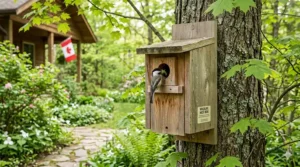
For budget-conscious Canadian birders, the Nature’s Way Cedar Wren House provides solid basic functionality without premium pricing. Made from natural pine with cedar elements, this traditional-style nest box focuses on essentials that matter to cavity-nesting birds: proper entrance size, ventilation, and drainage.
Key Specifications:
- Natural wood construction (pine/cedar blend)
- 1.125″ entrance hole optimized for wrens
- Traditional slanted roof design
- Unscrew-bottom cleaning access
The smaller footprint suits compact urban yards common in Canadian cities. While lacking advanced features like predator guards or composite materials, this nest box delivers core functionality at an accessible price point. The natural wood finish requires no treatment but will weather to grey over time—a natural process that doesn’t affect bird usage.
✅ Pros:
- Budget-friendly entry option ($20-$30 CAD)
- Lightweight for easy mounting anywhere
- Proven traditional design
❌ Cons:
- Shorter lifespan than cedar-only construction
- Basic features without modern enhancements
Price Range: $20-$30 CAD
Canadian Availability: Widely available through Amazon.ca and hardware stores
Customer Feedback: “Mounted three of these in my Edmonton yard for under $75 total. Two have active nests already!” – David P., Alberta
7. Wildlife World Urban Nest Box
The Wildlife World Urban Nest Box represents cutting-edge nest box technology with its innovative Clayplas+ construction—70% clay and 30% recycled plastics. This UK-designed box (popular in Canada) includes a 10-year materials guarantee and exceptional environmental credentials.
Key Specifications:
- Dual keyhole hanging points (square or diamond orientation)
- Interior: FSC natural timber (removable)
- 32mm (1.26″) stainless steel hole protector
- Sliding rear panel for maintenance
The composite outer shell provides unmatched durability against Canadian weather while the removable FSC timber interior offers warmth and breathability birds prefer. The stainless steel entrance protector prevents squirrels from enlarging the hole—a common problem in urban Canadian environments. Canadian customers value the European design perspective adapted to North American species.
✅ Pros:
- Exceptional 10-year guarantee
- Eco-friendly recycled materials
- Premium stainless steel protection
❌ Cons:
- Imported product (longer shipping times)
- Higher price point ($50-$70 CAD)
Price Range: $50-$70 CAD
Canadian Availability: Specialized imports through select Canadian retailers
Customer Feedback: “This nest box is built like a tank. After two harsh Montreal winters, it looks brand new.” – Pierre L., Quebec
Understanding Cavity Nesting Box Native Birds in Canada
Canada’s cavity-nesting bird community forms a complex ecological network that scientists call a “nest web”—similar to food webs but centered around nest site availability. Understanding these relationships helps Canadian property owners make informed decisions about which wildlife nest box kit designs will benefit local bird populations most effectively.
Primary vs Secondary Cavity Nesters
The cavity-nesting guild divides into two distinct groups. Primary cavity nesters like woodpeckers, nuthatches, and chickadees excavate their own cavities using powerful beaks or finding sufficiently soft decayed wood. These species function as “cavity producers” in the ecosystem. According to research from the Canadian Wildlife Federation, woodpeckers can take between 10-16 days to excavate a single cavity, often creating multiple cavities for both nesting and winter roosting.
Secondary cavity nesters cannot create their own cavities and must locate abandoned woodpecker holes, natural decay cavities, or artificial structures like nest boxes. This group includes some of Canada’s most beloved songbirds: Eastern and Mountain Bluebirds, Tree Swallows, House Wrens, Purple Martins, and various owl species. Environment and Climate Change Canada notes that competition for limited cavity resources can be intense, sometimes resulting in nest usurpation and even physical conflicts between species.
Canadian Species That Use Nest Boxes
Different cavity-nesting species have evolved specific requirements based on body size, nesting behaviour, and predator avoidance strategies. Here are the primary Canadian species that readily accept artificial nest boxes:
Small Cavity Nesters (1⅛” entrance):
- Black-capped Chickadee (Canada’s most widespread cavity nester)
- Red-breasted Nuthatch
- White-breasted Nuthatch
- House Wren (aggressive nest competitor)
- Carolina Wren (southern Canada only)
Medium Cavity Nesters (1½” entrance):
- Eastern Bluebird (conservation success story)
- Mountain Bluebird (western provinces)
- Tree Swallow (highly beneficial insect control)
- Violet-green Swallow (BC and western mountains)
Large Cavity Nesters (2½”+ entrance):
- Northern Flicker
- American Kestrel
- Screech Owls
- Wood Ducks (require specialized boxes near water)
The entrance hole diameter serves as a critical selection mechanism. Research published in “Cavity-Nesting Birds of North American Forests” demonstrates that properly sized holes effectively exclude larger invasive species like European Starlings while allowing target native birds to enter safely. This selective access reduces competition and increases nesting success for native Canadian songbirds.
The Pileated Woodpecker’s Special Role
Under Canada’s Migratory Birds Regulations 2022, Pileated Woodpecker nesting cavities receive special year-round protection—even when unoccupied. Environment and Climate Change Canada recognizes this species as a “keystone” cavity producer whose large excavations benefit numerous secondary cavity nesters unable to create their own sites. Studies show 4 out of 5 Pileated Woodpecker cavities eventually house other migratory bird species, making their conservation efforts ripple through entire bird communities.
Essential Features of Durable Nest Box Cedar Wood Construction
When Canadians invest in a wildlife nest box kit, material choice directly impacts both longevity and bird occupancy rates. Cedar wood has emerged as the undisputed champion for all-season nest box designs, but not all cedar is created equal. Understanding why cedar excels—and which cedar types perform best—helps buyers make informed decisions.
Why Cedar Outperforms Other Materials
Western red cedar (Thuja plicata) and eastern red cedar (Juniperus virginiana) possess unique properties that make them ideal for cavity nesting boxes exposed to Canadian climate extremes. The wood contains natural oils and compounds that resist fungal decay, insect damage, and moisture absorption without requiring chemical treatments that could harm nesting birds.
At the University of British Columbia, forestry researchers have documented cedar’s exceptional insulation properties. The wood’s cellular structure traps air, creating natural thermal regulation that keeps nest boxes cooler during summer heat waves and warmer during spring cold snaps—critical for nestling survival when parent birds leave to forage. This temperature stability becomes especially important in Canadian regions experiencing rapid weather fluctuations.
Cedar’s dimensional stability prevents the warping and splitting common in pine or spruce construction. When nest box panels warp, gaps form that allow rain penetration, drafts, and predator access. Canadian nest box monitors report cedar boxes maintain tight seals for 15-20 years compared to 5-7 years for untreated pine boxes exposed to similar conditions.
FSC Certification and Sustainable Sourcing
Conscientious Canadian buyers increasingly seek FSC (Forest Stewardship Council) certified cedar, ensuring wood comes from responsibly managed forests that balance economic needs with environmental protection. FSC certification verifies that cedar harvesting maintains wildlife habitat, protects water quality, and supports Indigenous peoples’ rights—values that resonate with bird conservation goals.
Products like the WHITEHORSE Cedar Bluebird House specifically highlight their FSC certification, demonstrating commitment to forest sustainability. This certification matters because cavity-nesting birds depend on mature forest ecosystems. Purchasing FSC cedar creates economic incentives for maintaining the very forest habitats that wild bird populations require for survival.
Optimal Cedar Thickness for Canadian Climates
Wall thickness dramatically affects nest box performance across Canada’s diverse climate zones. The Canadian Wildlife Federation recommends minimum ¾” (19mm) wall thickness for boxes intended for year-round installation or extreme climate regions. This thickness provides adequate insulation while maintaining structural integrity through freeze-thaw cycles.
Premium nest boxes like WHITEHORSE achieve this ¾” standard, while budget options often use ½” cedar that saves cost but sacrifices temperature regulation. In Yukon or northern territories, thicker walls can mean the difference between successful fledging and egg abandonment during late spring cold snaps. Conversely, thin-walled boxes in southern Ontario or coastal BC may overheat on sunny days, causing heat stress for nestlings.
The dado joint construction—where panels interlock rather than just butt together—creates additional thermal barriers while preventing warping. This traditional joinery technique appears in higher-quality cedar nest boxes and contributes to multi-decade lifespan. Canadian craftsmanship traditions in British Columbia have produced some of the finest examples, like those from the Backyard Bird Centre supplier.
Comparing Benefits vs Traditional Bird Housing Alternatives
| Feature | Wildlife Nest Box Kit | Natural Tree Cavity | Store-Bought Decorative Birdhouse | Purple Martin Apartment |
|---|---|---|---|---|
| Cavity-Nester Suitability | Excellent (designed for specific species) | Excellent (natural preference) | Poor (wrong dimensions/materials) | Excellent (colonial nester specific) |
| Predator Protection | Good (with guards added) | Variable (depends on tree health) | Poor (decorative focuses on aesthetics) | Good (height/design deters many predators) |
| Maintenance Requirements | Easy (annual cleaning via access panel) | Impossible (natural cavity sealed) | Difficult (often no access) | Moderate (multiple compartments) |
| Longevity | 10-20 years (cedar construction) | Decades to centuries | 2-5 years (cheap materials) | 15-30 years (quality metal/wood) |
| Cost | $25-$70 CAD | Free (if available) | $15-$40 CAD | $150-$400 CAD |
| Species Specificity | High (entrance size selective) | Moderate (size depends on excavator) | Low (generic design) | Very High (Purple Martins only) |
Canadian Songbird Habitat: Creating Comprehensive Bird-Friendly Spaces
Installing a wildlife nest box kit represents just one component of effective Canadian songbird habitat creation. Research from Birds Canada and the Canadian Wildlife Federation demonstrates that successful breeding territories require four essential elements: suitable nesting sites, abundant food sources, clean water, and protective cover. Creating layered habitat maximizes the number of species your property can support throughout the year.
Native Plant Integration
The connection between native plants and songbird breeding success cannot be overstated. Dr. Douglas Tallamy’s research (adapted to Canadian contexts by university ecologists) reveals that landscapes dominated by non-native ornamentals support dramatically fewer caterpillars and insects—the protein sources nestling songbirds require for survival. A breeding pair of chickadees needs thousands of caterpillars to successfully raise a single brood, and these insects feed almost exclusively on native plant species they co-evolved with over millennia.
Canadian gardeners should prioritize native trees like White Oak, Sugar Maple, Trembling Aspen, White Spruce, and Douglas Fir depending on regional conditions. These “keystone plants” support exceptionally high insect diversity. At the shrub layer, species like Serviceberry, Red-osier Dogwood, Elderberry, and native currants provide both insect habitat and berry crops. Ground layer options include Wild Strawberry, Canada Anemone, and native ferns.
Achieving 70% native plant species diversity with 35-40% shrub cover density creates vertical layering that explains over half the variation in songbird species richness according to landscape ecology studies. This complexity offers nesting sites at multiple heights while supporting the insect biomass that feeding territories require. Even small urban yards can implement layered plantings that dramatically increase habitat value.
Eliminating Chemical Pesticides
The bird conservation community has reached scientific consensus: pesticides and herbicides represent major threats to songbird populations. Neonicotinoid insecticides—widely used in Canadian agriculture and horticulture—prove lethal to birds at doses equivalent to just one treated seed. These systemic pesticides persist in plant tissues, contaminating the very caterpillars parent birds feed to nestlings.
Research shows landscapes have become 48 times more toxic to pollinators and insect populations over the past generation. When insect biomass collapses, cavity-nesting songbirds cannot find adequate food within their breeding territories. Studies comparing pesticide-free gardens to those using glyphosate herbicides found 25% fewer House Sparrows in chemically-treated areas—even when nest boxes were abundant.
Canadian property owners creating songbird habitat must commit to chemical-free pest management. Integrated Pest Management (IPM) strategies, mechanical weed removal, and tolerance for some “imperfection” in ornamental plantings become necessary conservation practices. The trade-off yields dividends: properties supporting healthy insect populations attract more songbirds, which provide natural pest control through their voracious appetites.
Water Features for Year-Round Use
While nest boxes address breeding season shelter, water availability affects songbird presence throughout the year. Birds require water for drinking, bathing, and feather maintenance regardless of season. In Canadian climates, providing unfrozen water during winter months becomes especially critical when natural sources lock up under ice.
Effective bird baths maintain 1-2 inch water depth with textured surfaces providing secure footing. Moving water—even simple drippers or small fountains—attracts significantly more species than still basins. The sound and sparkle of moving water serves as an acoustic beacon that birds detect from considerable distances. Canadian winters demand heated bird baths that prevent freezing, transforming properties into essential survival habitat when temperatures plunge.
Regular water changes every 2-3 days prevent disease transmission between visiting birds. Positioning water features near protective shrubs (but with clear sight lines for predator detection) creates comfortable bathing conditions. Songbirds demonstrate remarkable site fidelity to reliable water sources, often returning daily throughout the year—increasing the likelihood they’ll investigate nearby nest boxes when breeding season arrives.
Price Range & Value Analysis
| Price Tier | Typical Features | Expected Lifespan | Best For | Canadian Examples |
|---|---|---|---|---|
| Budget ($20-$35 CAD) | Pine/basic cedar, simple design, minimal features | 3-7 years | First-time birders, multiple box installations, educational projects | Nature’s Way houses, DIY kits |
| Mid-Range ($35-$55 CAD) | Quality cedar or composite, predator guards, proper drainage/ventilation | 8-15 years | Serious hobbyists, established bird trails, proven designs | Woodlink, Cedar Alpha, Spring Melody |
| Premium ($55-$70+ CAD) | FSC cedar, engineered features, warranties, scientific design | 15-25+ years | Conservation programs, extreme climates, long-term investment | WHITEHORSE, Wildlife World |
All-Season Nest Box Designs: Adapting to Canadian Climate Extremes
Canada’s vast geography encompasses dramatic climate variation, from temperate coastal rainforests to subarctic tundra. Wildlife nest box kits must function effectively through temperature swings exceeding 70°C annually in some regions. Understanding how seasonal factors affect nest box performance helps Canadian birders maximize occupancy rates and breeding success across all four seasons.
Spring: Peak Nesting Season Considerations
Most Canadian cavity-nesting songbirds initiate nesting between late April and early June, with timing varying by latitude and species. Black-capped Chickadees, being year-round residents, may begin nest building as early as late March in southern regions. Eastern Bluebirds return from migration in March-April and immediately begin searching for suitable cavities, making early spring installation optimal.
Spring weather volatility presents challenges. Late snowstorms and temperature plunges endanger eggs and young nestlings when parent birds cannot forage effectively. Nest boxes with adequate insulation (¾” cedar walls) buffer against these temperature extremes. Proper drainage becomes critical during spring melt and rain; floors with multiple ⅛” holes prevent water accumulation that could chill nestlings or promote fungal growth.
Ventilation holes near the roofline allow hot air escape during unexpected warm spells while preventing rain entry. The positioning of these vents—typically angled upward—demonstrates quality design. Canadian spring conditions also bring aggressive House Sparrows (an invasive species) competing for nest sites. Boxes with 1⅛” entrance holes effectively exclude sparrows while welcoming chickadees and wrens, reducing interspecific conflict.
Summer: Heat Management and Second Broods
Canadian summers, particularly in Prairie provinces and southern Ontario, can deliver sustained heat waves with temperatures exceeding 35°C. Dark-coloured nest boxes positioned in full sun experience even higher internal temperatures—potentially fatal for nestlings. Cedar’s thermal properties help, but strategic placement matters enormously.
Many species including Tree Swallows and Eastern Bluebirds attempt second broods in July. These late-season nests face heightened predation risks as parent birds must make more frequent feeding trips when temperatures soar. Nest boxes with extended roof overhangs (minimum 4″ front extension) provide crucial shade during midday heat. Some experienced Canadian monitors paint box roofs white or light grey to reflect solar radiation, reducing internal temperatures by 5-8°C.
Adequate ventilation becomes paramount in summer. Quality nest boxes incorporate small vent holes just below the roofline on side panels—allowing hot air escape while preventing rain entry. These vents should remain small enough (¼” diameter) to prevent invasive wasps from establishing nests inside boxes meant for birds.
Fall: Critical Cleaning and Maintenance Window
Environment and Climate Change Canada guidelines emphasize post-breeding season cleaning as essential nest box stewardship. Once nesting concludes (typically September-October for most species), boxes should be opened, old nesting material removed, and interiors inspected for parasites or damage. This cleaning prevents parasite loads from building up over successive breeding seasons.
The Canadian Wildlife Federation recommends wearing gloves during cleaning due to potential mites, fleas, or other ectoparasites common in old nests. A stiff brush and diluted bleach solution (10:1 water to bleach ratio) effectively sanitizes interior surfaces. Boxes should dry completely before resealing. Entrance holes should be checked for enlargement by squirrels or other predators, with damaged areas repaired using wood filler or metal guards.
Fall inspections also reveal which boxes proved most successful, informing future placement decisions. Empty boxes might indicate poor locations, inappropriate entrance sizes, or insufficient habitat quality. Successful boxes that fledged young deserve priority for maintenance and retention in future seasons.
Winter: Roosting Habitat for Resident Species
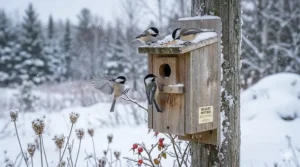
While primarily designed for breeding, nest boxes provide critical winter roosting sites for non-migratory species. Black-capped Chickadees, Red-breasted Nuthatches, and White-breasted Nuthatches routinely overnight in nest boxes during harsh Canadian winters. Group roosting sometimes occurs, with up to a dozen chickadees huddling together for warmth during extreme cold snaps.
Winter roosting differs from summer nesting. Birds enter boxes at dusk and depart at dawn, avoiding the extended occupancy of breeding season. Cedar’s insulation proves especially valuable during -30°C nights common across much of Canada. Boxes positioned on east or south-facing exposures receive morning solar gain that moderates interior temperatures before birds emerge.
Leaving nest boxes accessible through winter maximizes their conservation value. Some manufacturers market specialized “roosting boxes” with entrance holes near the bottom (allowing warm air to accumulate at the top), but standard nest boxes serve adequately for most cavity-roosting species. Avoiding disturbance during winter months allows birds to establish reliable overnight refuges they return to repeatedly.
How to Choose Wildlife Nest Box Kit for Your Canadian Property
Step 1: Identify Your Target Bird Species
Begin by researching which cavity-nesting species occur in your specific region of Canada. Range maps from Birds Canada or the Cornell Lab of Ornithology reveal which species breed locally. Your property’s habitat type—urban, suburban, rural farmland, or forest edge—influences which species you can realistically attract. Focus on 2-3 target species rather than attempting to accommodate everyone.
Step 2: Select Appropriate Entrance Hole Sizes
Match entrance hole diameter to your target species. Chickadees, nuthatches, and wrens require 1⅛” holes. Bluebirds and Tree Swallows need 1½” openings. Larger species like Northern Flickers demand 2½” entrances. Never install boxes with overly large holes—predators can reach in and occupancy rates plummet. Specialized metal entrance plates allow diameter adjustments between seasons if needed.
Step 3: Evaluate Construction Quality and Materials
Inspect potential purchases for solid cedar construction (minimum ½” thickness, preferably ¾”). Check for proper ventilation holes near the roofline and drainage holes in the floor. Ensure the box includes an access panel for annual cleaning—boxes without cleaning access prove nearly impossible to maintain properly. Avoid painted interiors or aromatic cedar oils that might deter birds.
Step 4: Consider Regional Climate Demands
Canada’s climate varies dramatically by region. Coastal British Columbia properties need rot resistance more than extreme insulation. Prairie locations require boxes that handle temperature extremes and high winds. Northern Canada demands maximum insulation and predator protection. Match your nest box construction to local conditions—thick cedar for temperature extremes, extended roof overhangs for heavy precipitation zones.
Step 5: Plan Installation Locations Before Purchase
Optimal placement varies by species. Bluebirds prefer open areas with scattered trees. Chickadees favour forest edges near established tree cover. Tree Swallows nest successfully near ponds or wetlands where aerial insect concentrations occur. Measure your available locations considering mounting height (typically 1.5-3 metres for most species), predator access, and sunlight exposure before selecting box styles.
Step 6: Budget for Complete Setup
Calculate total costs including the nest box itself, mounting hardware (poles, brackets, baffles), predator guards, and any tools needed for installation. Quality installations often cost 50-100% more than the box alone. Consider whether DIY assembly kits or pre-assembled units better match your skills and time availability. Remember that investing in one premium cedar box often proves more cost-effective than replacing cheap pine boxes every few years.
Step 7: Verify Canadian Compliance and Shipping
Confirm products ship to your Canadian province without excessive fees or delays. Check that design specifications follow recommendations from Canadian organizations like the Canadian Wildlife Federation rather than exclusively American standards (which sometimes differ). Verify pricing displays in Canadian dollars and includes applicable taxes to avoid checkout surprises.
Installation and Maintenance Best Practices
Proper installation and ongoing maintenance determine whether your wildlife nest box kit successfully attracts and protects Canadian songbirds. Even premium cedar boxes fail when installed incorrectly, while well-maintained budget boxes can serve effectively for years.
Mounting Height and Orientation
Most cavity-nesting songbirds prefer nest boxes mounted 1.5-3 metres (5-10 feet) above ground level. This height balances accessibility for monitoring and maintenance against elevation that discourages some predators. Chickadees accept boxes as low as 1.2 metres while bluebirds favour 1.5-2 metres. Tree Swallows show flexibility regarding height but avoid dense shade.
Face entrance holes away from prevailing winds—typically east or southeast in most Canadian regions. This orientation protects the entrance from driving rain during spring storms while receiving gentle morning sun that helps dry moisture. Avoid positioning boxes to receive intense afternoon sun during summer, which can create dangerous overheating even in well-ventilated cedar boxes.
Predator Protection Strategies
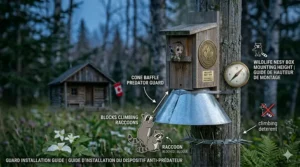
Canadian predators including raccoons, squirrels, cats, and occasionally black bears threaten nest box inhabitants. Metal pole mounting provides superior protection compared to tree mounting—predators climb trees easily but struggle with smooth metal poles. Installing predator baffles (conical metal guards) below boxes on poles dramatically reduces predation rates.
Entrance hole predator guards prevent squirrels and raccoons from enlarging openings or reaching inside to destroy eggs and nestlings. These metal plates cost $5-15 CAD and install easily on existing boxes. The investment proves worthwhile in suburban and urban Canadian settings where predator densities run high. Maintaining a 1″ depth between the entrance hole and interior cavity floor prevents raccoons from reaching contents—some boxes require adding wood chips to achieve this spacing.
Cleaning Schedule and Techniques
The Canadian Wildlife Federation recommends cleaning nest boxes annually after the breeding season concludes—typically September or October for most species. Remove all nesting material, scrape stuck debris from corners, and inspect for wasp nests or mice establishing winter residence. A weak bleach solution (10:1 water to bleach) effectively sanitizes while evaporating quickly.
Wear gloves when handling old nests as they may harbour mites, fleas, or bird lice. These parasites pose minimal health risk to humans but merit basic precautions. Allow boxes to air dry completely before closing them for winter. Some monitors leave boxes open through winter for chickadee roosting, while others prefer sealing them until spring to prevent mice from nesting inside.
Frequently Asked Questions
❓ What entrance hole size attracts chickadees in Canada?
❓ How much does a quality wildlife nest box cost in Canada?
❓ When should I install nest boxes in Canada?
❓ Do I need permission to install nest boxes on public land in Canada?
❓ Which Canadian songbirds use nest boxes year-round?
Conclusion
Creating thriving habitat for Canadian cavity-nesting songbirds requires more than simply hanging a box on a tree. The wildlife nest box kit you choose, combined with thoughtful placement, proper maintenance, and supporting habitat elements, determines whether birds successfully raise young in your backyard or pass by to find better territories.
Cedar construction remains the gold standard for Canadian conditions, offering unmatched durability, insulation, and natural weather resistance across all provinces. Products like the WHITEHORSE Premium Cedar Bluebird House represent investments that serve birds for decades, while budget options like the Backyard Bird Centre Chickadee Kit provide accessible entry points for families and conservation groups establishing multiple boxes.
Remember that nest boxes address only one component of bird habitat needs. Integrating native plants, eliminating pesticides, providing clean water, and maintaining protective cover creates comprehensive songbird sanctuaries that support breeding success. The Canadian Wildlife Federation estimates that approximately 50 species of cavity-dwelling birds inhabit Canada—each facing habitat challenges as development removes natural nesting sites.
Your decision to install quality nest boxes directly contributes to bird conservation at the landscape scale. As Environment and Climate Change Canada emphasizes, artificial cavities have enabled population recoveries for species like Eastern Bluebirds that faced serious decline. Every successfully fledged chickadee, nuthatch, or Tree Swallow represents a small victory in maintaining Canada’s remarkable songbird diversity.
Start with one or two quality boxes positioned thoughtfully on your property. Monitor them through the breeding season, noting which species investigate or nest successfully. Learn from each year’s results, adjusting placement and entrance sizes to maximize occupancy. Join provincial nest box monitoring programs to contribute your observations to scientific databases tracking songbird population trends.
The morning song of a Black-capped Chickadee, the flash of an Eastern Bluebird’s azure wings, the aerial acrobatics of Tree Swallows catching insects—these simple pleasures enrich Canadian lives while supporting species that control agricultural pests and indicate ecosystem health. Your commitment to providing quality nesting habitat makes these moments possible for your family and community to enjoy for generations to come.
Recommended for You
- 7 Key Differences Between Nesting Box & Roosting Box 2026 Canada
- 7 Best Roosting Box for Canadian Winter 2026
- When to Put Up Purple Martin House: 7 Perfect Timing Tips (2026)
Disclaimer: This article contains affiliate links to Amazon.ca. If you purchase products through these links, we may earn a small commission at no additional cost to you.
✨ Found this helpful? Share it with your friends! 💬🤗
