
In This Article
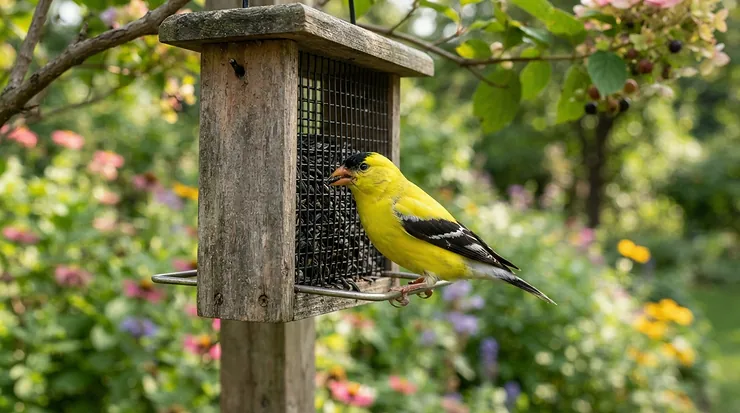
Thistle seed for finches is the tiny, oil-rich black seed (sold as nyjer) that fills feeders with goldfinches, redpolls, siskins and house finches. It’s sterilized so it won’t sprout, it needs a fine-meshed or small-port feeder, and it goes stale faster than almost any other backyard seed. That’s the whole definition in 50 words. Everything else is detail, and the detail is where most people go wrong.
It’s late October, which makes this the right moment to sort out your setup. Goldfinches are swapping their summer yellow for winter olive-brown, and northern redpolls and pine siskins are about to start drifting south. A fresh, well-stocked finch feeder is one of the few things that keeps small, fast-metabolism birds fed through a Canadian cold snap.
Here’s the catch. Thistle seed for finches is a perishable product dressed up as a pantry staple. People buy a giant bag in September, hang a sock feeder, and wonder in January why the birds have gone elsewhere. The seed didn’t fail them. The seed aged.
This guide walks through seven real nyjer products, then gets practical about the things the packaging never mentions: whether a nyjer seed bulk bag is a bargain or a trap, nyjer seed freshness tips you can use this week, what goldfinch preference really means at the feeder, how seed rancidity creeps in, and why feeder mesh size matters more than the logo on the tube. Product details come from manufacturer listings and published reviews. Pack sizes and availability vary, so confirm what’s offered on Amazon.ca before you order.
For background on the birds themselves, the Cornell Lab’s American Goldfinch profile notes that goldfinches take primarily sunflower and nyjer at feeders, and often flock with pine siskins and common redpolls. That mixed-flock habit is why one good finch feeder can punch above its weight.
Quick Comparison: Thistle Seed for Finches at a Glance
Before the deep dive, here’s the short version. Pack sizes are shown in kilograms first. Price ranges are ballpark figures in Canadian dollars, so check current price on Amazon.ca.
| Product | Pack Size | Seed Type | Price Range (CAD) | Best For |
|---|---|---|---|---|
| Wagner’s 62050 Nyjer Seed | 4.5 kg (10 lb) | Straight nyjer | C$35–C$55 | Wagner’s 62050 Nyjer Seed: steady all-round feeding |
| Armstrong Nyjer Bird Seed | 3.6 kg (8 lb) | Straight nyjer | C$30–C$50 | Armstrong Nyjer Bird Seed: buyers who prefer a Canadian mill |
| Kaytee Nyjer Seed | 3.6 kg (8 lb) | Straight nyjer | C$30–C$50 | Kaytee Nyjer Seed: low-debris, easy first purchase |
| Happy Wings Thistle Seed | 4.5 kg (10 lb) | Straight nyjer | C$40–C$60 | Happy Wings Thistle Seed: “extra clean” shoppers |
| Kaytee No Mess Finch Seed and Nyjer Blend | 3.6 kg (8 lb) | Nyjer + sunflower chips | C$25–C$40 | Kaytee No Mess Finch Seed and Nyjer Blend: mixed finch flocks |
| Wagner’s 62053 Nyjer Seed | 9.1 kg (20 lb) | Straight nyjer | C$65–C$100 | Wagner’s 62053 Nyjer Seed: multi-feeder households |
| Armstrong Favourite Finch Blend | 7 kg (15.4 lb) | Nyjer, millet, canola, chips | C$35–C$55 | Armstrong Favourite Finch Blend: budget variety |
Read the table as a decision aid, not a scoreboard. The straight-nyjer options (the first four and the Wagner’s 62053 Nyjer Seed) suit dedicated finch feeders, while the two blends trade pure nyjer for variety and a lower per-kilo cost. If you only have one finch feeder and a modest flock, the 3.6 to 4.5 kg bags are the sweet spot; the 9.1 kg bag only makes sense if you can burn through it before the oils turn.
💬 Just one click — help others make better buying decisions too!😊
Top 7 Thistle Seed for Finches: Expert Analysis
1. Wagner’s 62050 Nyjer Seed — the dependable all-rounder
The Wagner’s 62050 Nyjer Seed is the benchmark here: a 4.5 kg (10 lb) bag of straight nyjer marketed as extra clean. The retailer listing cites about 150,000 seeds per pound, which works out to roughly 330,000 seeds per kilogram. That sounds like trivia until you realize it tells you how fast a feeder drains. A feeder that holds half a kilogram is holding well over 150,000 seeds, so a busy flock empties it quicker than you’d think.
The bag is described as resealable with a press-lock closure. That matters more than it sounds, because every time you open a bag of nyjer you’re letting in humidity, and humidity is what starts the spoilage clock. Based on the spec sheet alone, this is a good fit for someone running one or two finch feeders who wants a predictable, mainstream product without experimenting.
Reviewer sentiment, as best I could verify, is positive on bird response and consistency. One reviewer on a retailer listing reported a bag that leaked at a seam and was replaced, which is a packaging issue rather than a seed issue. Treat that as a reminder to inspect any bag on arrival, not as a verdict on the brand. I couldn’t verify a large pool of Amazon.ca-specific reviews, so I’m not going to pretend otherwise.
Pros:
- ✅ Straight nyjer, no filler to sort through
- ✅ Resealable bag helps slow moisture ingress
- ✅ Widely stocked, so refills are easy
Cons:
- ❌ Packaging seams can fail in transit
- ❌ Price per kilo isn’t the lowest here
Expect a mid-range price, roughly C$35–C$55, which is fair value for a 4.5 kg bag you can realistically finish within two to three months. Check current price before you buy.

2. Armstrong Nyjer Bird Seed — Canadian-milled and sized for tube feeders
The Armstrong Nyjer Bird Seed comes from one of Canada’s best-known birdseed names, and the Amazon listing I found is an 8 lb (3.6 kg) bag aimed at American goldfinches, house finches, purple finches and chickadees. Canadian retailers describe the product line as 100% genuine nyjer, sterilized so it won’t germinate in a flower bed, and grown as an oil crop in places like Ethiopia, India, Myanmar and Nepal.
Why does origin matter to you? Because imported nyjer has to be heat-treated before it can legally enter Canada, a point we’ll unpack in the regulations section. A mill that sits inside the Canadian supply chain is, on paper, working within that framework every day. Armstrong Milling is also reported to hold Safe Quality Food certification, which is a private-sector standard for food-safety management.
My honest read: this is the pick for buyers who want a local-feeling brand and a Canadian paper trail. It’s designed for small-port tube feeders and sock feeders, and the maker states it doesn’t appeal to squirrels or chipmunks. That last claim is plausible, since nyjer is so small that mammals rarely bother.
Verified review sentiment is thin on Amazon.ca specifically. Canadian retailer reviews I came across were short and positive (“great little bird food” territory), which is encouraging but not conclusive.
Pros:
- ✅ Canadian brand with a documented quality program
- ✅ Sterilized seed, so spills won’t sprout
- ✅ Sensible 3.6 kg size for one feeder
Cons:
- ❌ Limited verifiable Amazon.ca review depth
- ❌ Smaller bag means more frequent reorders
Budget roughly C$30–C$50. It’s good value if freshness is your priority, because a smaller bag is easier to finish before the oils fade.
3. Kaytee Nyjer Seed — hull-free and low on debris
The Kaytee Nyjer Seed is marketed as having no hulls and being 100% edible, which in plain English means you’re paying for seed, not for chaff. In a product review from a gear-testing site, testers found very little debris in the Kaytee nyjer. They also flagged the downsides: it costs more than some alternatives, and the tiny seeds are easy to spill when you pour.
That spill warning is practical gold. Pour through a funnel, or fill your feeder over a tray, and you’ll save more seed than any coupon would. The same review notes the seed is heat-sterilized so it won’t sprout, citing the Cornell Lab as the source for that practice.
This one suits first-time finch feeders. It’s a recognizable brand, it’s widely available in 3.6 kg and other sizes, and the low-debris claim means less dust clogging your mesh. If you’ve been burned by a dusty bag before, this is a reasonable reset.
Reviewer sentiment trends positive on cleanliness, with the recurring caveat about price and spillage. As always, “popular” isn’t the same as “fresh on arrival,” so check the seed when the box opens: it should be jet black and free-flowing, not clumped.
Pros:
- ✅ Hull-free seed with minimal debris
- ✅ Heat-sterilized, so no sprouting
- ✅ Easy-to-find brand and sizes
Cons:
- ❌ Pricier per kilo than some rivals
- ❌ Tiny seed spills easily when filling
Expect roughly C$30–C$50. Fair value if low debris is worth a small premium to you.
4. Happy Wings Thistle Seed — the “extra clean, no grow” option
The Happy Wings Thistle Seed pitches itself as 100% natural, extra clean and “no grow,” with oil-rich, high-energy seed in a single-grain format. The listing mentions USDA and BRC-GS approval for the product line. I’d treat those as manufacturer claims worth a glance at the label rather than gospel, but they do signal that the brand is courting buyers who care about cleaning standards.
What sets this brand apart is bundling. Review roundups note that the 5 lb version ships with three reusable mesh sock feeders, making it effectively a starter kit. The 10 lb bag I’m featuring here is the same seed in a larger format that lowers the per-kilo cost, though it’s heavy to lift.
Who’s it for? Beginners who don’t own a finch feeder yet, and anyone who wants a larger bag without jumping to the 9 kg tier. Because mesh socks are inexpensive and easy to swap, you can rotate a clean, dry sock in whenever the old one gets damp, which is exactly the habit that prevents mould.
Verified reviews were limited in what I could access, so I’ll say plainly: this is a spec-and-listing-based assessment, and you should skim current Amazon.ca reviews for packaging and freshness comments before you commit.
Pros:
- ✅ “Extra clean” positioning reduces dust worries
- ✅ Smaller bundles include reusable mesh socks
- ✅ Larger bag lowers cost per kilo
Cons:
- ❌ 10 lb bag is heavy to lift and store
- ❌ Quality claims need label-checking
Plan on roughly C$40–C$60. It’s good value if you’ll actually use the socks and finish the bag in a season.
5. Kaytee No Mess Finch Seed and Nyjer Blend — a blend designed to cut cleanup
The Kaytee No Mess Finch Seed and Nyjer Blend is not straight nyjer. It’s a shell-free mix of nyjer and sunflower chips, and the packaging names goldfinches, chickadees and juncos as likely visitors. Because there are no shells, nothing piles up under the feeder, which cuts down on both mess and the damp hull layer that can harbour mould.
Here’s the analysis most listings skip: a blend changes who shows up. Sunflower chips draw chickadees and nuthatches that nyjer alone would ignore, and they’re bigger than nyjer, so they need larger ports or mesh. You wouldn’t use this in a tiny-port nyjer tube; you’d use a mesh feeder or a hopper. That means this product isn’t a drop-in swap for the straight-nyjer options.
For a mixed backyard where you want variety without running four feeders, it’s an efficient solution. The trade-off is that your goldfinches are sharing seed with other species, so in a busy flock you may go through it faster than you’d expect.
Review sentiment I could verify is general, with shoppers valuing the low-mess claim. I couldn’t confirm a large Amazon.ca review base, so I’d weigh this on the logic of the blend rather than hype.
Pros:
- ✅ Shell-free, so very little mess below
- ✅ Draws chickadees as well as finches
- ✅ Lower cost per kilo than straight nyjer
Cons:
- ❌ Needs bigger ports or mesh than nyjer-only tubes
- ❌ Less pure for goldfinch-only feeding
Budget roughly C$25–C$40. It’s strong value for a general finch station.
6. Wagner’s 62053 Nyjer Seed — the 9.1 kg bag for multi-feeder households
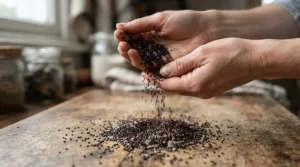
If you want a real nyjer seed bulk bag, the Wagner’s 62053 Nyjer Seed is the sort of thing the phrase describes: a 20 lb (about 9.1 kg) sack of the same straight nyjer as its 10 lb sibling. Bulk pricing is attractive on a per-kilo basis, and it spares you repeated trips or shipments.
But this is where I’d pump the brakes. Nyjer’s oils are its selling point and its weakness. Buying 9 kg only makes sense if you run several feeders, feed through a long winter, or share with a neighbour. If you’re topping up a single half-kilogram sock, a 9 kg sack is a slow-motion science experiment in seed rancidity.
The reasoning is simple: a 9 kg bag opened in October and finished in March has had five months to meet humidity, warmth and air. A smart approach is to decant a month’s worth into a small airtight container and keep the main bag sealed in a cool, dry place.
Reviewer sentiment follows the same brand line as the 10 lb version. Bird response is well regarded, and the main warning is about handling and bag integrity. Lifting 9 kg of fine seed also deserves care, since a split seam makes a spectacular mess.
Pros:
- ✅ Lowest cost per kilo among straight-nyjer picks
- ✅ Fewer orders through the season
- ✅ Same seed as the 10 lb size
Cons:
- ❌ Heavy and awkward to store
- ❌ High risk of staleness if used slowly
Plan on roughly C$65–C$100. It’s excellent value only if you use it quickly; otherwise the smaller bag wins.
7. Armstrong Favourite Finch Blend — the lesser-known, budget-friendly alternative
The Armstrong Favourite Finch Blend is a 15.4 lb (7 kg) mix of white millet, canola, nyjer and sunflower kernel chips, aimed at American goldfinches, house finches and other songbirds. It’s less famous than the straight-nyjer bags above, but it fills a genuine niche: a lower-cost way to feed a broad range of small birds without buying multiple bags.
The honest analysis is this. Nyjer is the expensive ingredient, and in a blend it’s diluted by cheaper seeds like millet and canola. That keeps the cost down, but it also means goldfinch-specific feeding is less targeted. If your priority is pure goldfinch preference, a straight-nyjer product is the better tool. If your priority is “lots of little birds for less money,” a blend like this is a smart play.
Because it contains mixed seed sizes, it works best in mesh or hopper-style feeders. A tiny-port tube would clog or be picky about what flows through. It also pairs well with a separate nyjer-only feeder so the goldfinches get their favourite while the rest of the crowd gets the cheaper filler.
Review sentiment I could verify is limited, so I’m presenting this as a use-case analysis rather than a review roundup.
Pros:
- ✅ Feeds a wider mix of small birds
- ✅ Lower cost per kilo than pure nyjer
- ✅ Large bag reduces reorders
Cons:
- ❌ Less targeted for goldfinches specifically
- ❌ Not suited to tiny-port nyjer tubes
Budget roughly C$35–C$55. Good value for variety, weaker value if you only want nyjer.
Top 7 Compared Side by Side
| Product | Category | Standout Spec | Feeder Match | Best For |
|---|---|---|---|---|
| Wagner’s 62050 Nyjer Seed | Mid-range | Resealable bag | Mesh, sock, small-port tube | Wagner’s 62050 Nyjer Seed: dependable everyday use |
| Armstrong Nyjer Bird Seed | Mid-range | Canadian brand, sterilized | Small-port tube, sock | Armstrong Nyjer Bird Seed: local-brand loyalists |
| Kaytee Nyjer Seed | Mid-range | Hull-free, low debris | Mesh, sock, tube | Kaytee Nyjer Seed: first-time buyers |
| Happy Wings Thistle Seed | Premium | “Extra clean,” socks in smaller bundles | Sock, mesh | Happy Wings Thistle Seed: starter setups |
| Kaytee No Mess Finch Seed and Nyjer Blend | Budget | Shell-free blend | Mesh, hopper | Kaytee No Mess Finch Seed and Nyjer Blend: mixed flocks |
| Wagner’s 62053 Nyjer Seed | Bulk | 9.1 kg sack | Multiple feeders | Wagner’s 62053 Nyjer Seed: big feeding stations |
| Armstrong Favourite Finch Blend | Budget | Millet, canola, chips mix | Mesh, hopper | Armstrong Favourite Finch Blend: variety on a budget |
Looking at the comparison above, the Wagner’s 62050 Nyjer Seed and Kaytee Nyjer Seed cover the middle ground, while the Armstrong Nyjer Bird Seed is the pick if you want a Canadian mill behind your bag. If you’re after the lowest cost per kilo, the Wagner’s 62053 Nyjer Seed and the two blends win on paper, but only if you manage freshness carefully. Premium buyers who value extra-clean positioning should look at the Happy Wings Thistle Seed, mindful that some of its selling points are manufacturer claims.
How to Choose Thistle Seed for Finches
Picking the right bag is less about brand loyalty and more about matching seed to your feeder, your flock and your calendar. Work through these steps in order.
- Decide straight nyjer or a blend. Straight nyjer targets goldfinches, siskins and redpolls. A blend widens your guest list but dilutes the nyjer. Choose based on whether you want specialists or a crowd.
- Match the bag to your feeder. Tiny ports and fine mesh need pure nyjer; larger mesh or hoppers can handle blends with chips.
- Size the bag to your pace. Estimate how much your feeder empties per week, then buy no more than about two months’ worth.
- Check for sterilization. Look for wording that says the seed is heat-treated or won’t germinate, so spills don’t sprout.
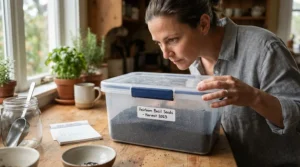
- Inspect on arrival. Fresh nyjer is black, free-flowing and doesn’t smell off. Clumps, dampness or a musty odour mean return it.
- Plan storage before you buy. You need an airtight container and a cool, dry spot ready, not an afterthought.
- Compare cost per kilo, then adjust for waste. A cheap bag that spoils is more expensive than a pricier bag you finish.
Notice how steps three and six quietly outrank brand name. Most “bad batch” stories trace back to timing and storage, not the manufacturer.
Goldfinch Preference: What They Actually Want at the Feeder
Goldfinch preference is a more nuanced thing than “they love nyjer.” The Cornell Lab’s profile says goldfinches are most attracted to sunflower seed and nyjer at feeders, and that almost any feeder type, from hopper to hanging, can draw them. That’s good news: you aren’t locked into a single feeder style, though nyjer specifically needs fine-meshed hardware.
What does goldfinch preference look like in practice? Three patterns come up repeatedly in feeder-advice sources. First, goldfinches are acrobats. They’ll cling to mesh at any angle, even upside down, which is why mesh feeders work so well. Second, they appear to be fussy about freshness. One feeder-advice source claims goldfinches can detect rancid oils immediately, and another notes finches may pass up old nyjer even when the feeder is clean and well placed. I’d treat the “immediately” part as colourful rather than proven, but the underlying advice is consistent across sources.
Third, preference is seasonal and local. Birdwatchers on one Cornell community forum reported goldfinches using nyjer mainly in winter and ignoring it other times of year, while happily eating sunflower all year. That’s anecdotal, so don’t build a rule on it, but it’s a useful nudge: if your goldfinches ignore a feeder in July, don’t assume the seed is bad before checking what else is available in the neighbourhood.
The practical takeaway is to keep thistle seed for finches fresh, keep the feeder reachable and clingable, and consider a second feeder with sunflower chips if you want to cover both of their favourite foods. For a deeper look at feeder basics, Birds Canada’s guide to choosing the right feeder and seed is a solid Canadian reference, and it notes that Project FeederWatch is a joint program of Birds Canada and the Cornell Lab.
Nyjer Seed Bulk Bag: Bargain or Trap?
A nyjer seed bulk bag looks like a smart money move. The per-kilo price drops, the delivery frequency drops, and you feel like a person who has their life together. Then February arrives and the bottom third of the bag smells like crayons.
Here’s how to think about it. The value of a bulk bag equals the savings per kilo minus the cost of the seed you throw out. If you spoil even a quarter of a bag, the discount can vanish.
When a nyjer seed bulk bag makes sense:
- You run three or more finch feeders and refill weekly.
- You live where winters bring large redpoll or siskin flocks, and the seed will genuinely disappear.
- You can keep the bag sealed and store a month’s worth in a small airtight container.
- You share the bag with a neighbour or birding friend.
When it doesn’t:
- You have one sock feeder and a handful of visitors.
- You store seed in a garage that swings from damp to hot.
- You’re trying nyjer for the first time and don’t yet know your flock’s appetite.
A middle path is the 3.6 to 4.5 kg range, which is why the Wagner’s 62050 Nyjer Seed, Kaytee Nyjer Seed and Armstrong Nyjer Bird Seed fit most households. Consider the Wagner’s 62053 Nyjer Seed only after you’ve measured how fast you actually go through seed over a month. A good rule is to buy no more than two months’ supply of any straight-nyjer product, then reassess.
One more bulk-buying wrinkle: some bulk nyjer listings across the web draw complaints about dusty, stale seed or torn packaging. That’s a pattern worth respecting. Open the bag within a day of delivery, check the seed, and photograph any damage if you need to request a return.
Seed Rancidity: How to Spot It and Stop It
Seed rancidity is the quiet villain of the finch feeder. Nyjer is rich in oil, which is why finches adore it, and that same oil oxidizes when it meets heat, humidity and sunlight. Feeder-advice sources describe the effect plainly: oils go bad quickly, and exposure to warmth, damp or direct light speeds it up.
How to spot it:
- Look. Fresh nyjer is jet black. Seed that looks dull, greyish or clumped has probably seen moisture.
- Smell. Fresh seed has a mild, nutty scent. A sharp, paint-like or musty odour is a warning.
- Touch. It should pour freely. If it sticks together or feels damp, discard it.
- Watch the birds. If a full feeder sits untouched for weeks, stale seed is a prime suspect.
How to stop it:
- Buy smaller bags more often.
- Store seed in an airtight container in a cool, dry, dark place.
- Never refill a damp feeder, because wet seed breeds mould.
- Replace uneaten seed in the feeder every three to four weeks, sooner after rain or snow.
- Keep feeders out of harsh afternoon sun, and consider a rain guard or roof.
A caution about the “three to four weeks” figure: it comes from retailer and wild-bird-store advice rather than a lab study, so treat it as a sensible rule of thumb. In a damp coastal spring or a heat wave, shorten it.
Seed rancidity is also why I’m lukewarm on the hoarding approach. The seed you finish quickly is, almost by definition, the seed that’s good. If you keep a cheap digital reminder on your phone for the “swap the seed” date, you’ll waste less and see more birds.
Nyjer Seed Freshness Tips: A Practical 30-Day Plan
This section is pure transformation: the guide the product page doesn’t give you. Use it as a calendar for your first month with a new bag.
Day 0: Unbox and inspect. Open the bag on a tray. The seed should be black and loose. Check the seams. Note the date on the bag and write it on a piece of masking tape.
Day 1: Decant. Pour roughly one month’s worth into an airtight plastic or galvanized container. Reseal the main bag and store it somewhere cool, dry and out of reach of pets. A basement shelf beats a sunny garage.
Day 2: Prep the feeder. Wash it with hot, soapy water and a brush, rinse well, and let it dry completely. A damp feeder plus fresh seed equals mould. Birds Canada recommends cleaning seed feeders about once every two weeks, and more often in warm or damp weather.
Day 3: Fill lightly. Don’t fill to the brim. Fill a third to half until birds find it. Starting small keeps seed fresher and wastes less if the feeder takes time to catch on.
Day 7: Check and top up. Peek at the seed. If it’s clumped or damp, replace it now.
Day 14: Clean again. Scrub, rinse, dry, refill. Rake or sweep up fallen hulls and seed underneath, which also reduces rodent interest.
Day 21–28: Replace uneaten seed. If seed has been sitting for three to four weeks, tip it out and refill with fresh. It feels wasteful; it isn’t.
Common mistakes in the first 30 days:
- Topping up old seed with new seed, which hides the stale layer.
- Hanging the feeder in full sun all afternoon.
- Ignoring a rainy week. Wet nyjer should go.
- Buying a second bag before finishing the first.
These nyjer seed freshness tips cost nothing, and they do more for your feeder traffic than upgrading to a fancier brand ever will.
Feeder Mesh Size: Matching Seed to Hardware
Feeder mesh size is the unsung hero of the thistle seed for finches story. Get it wrong and you either waste seed or starve your own feeder.
Nyjer seed is tiny, so feeders need fine mesh or narrow ports to hold it in. A review roundup of nyjer feeders suggests narrow slits or fine mesh of roughly 1/8 inch (about 3 mm) are ideal for keeping seed inside while still letting beaks reach it. Go much larger and seed spills, which is a fast way to turn your wallet into ground cover.
But there’s a flip side. User comments on one mini nyjer feeder describe a mesh grid that was too tight for goldfinches to extract seed, even when birds visited. In other words, too fine is as bad as too coarse. If birds land and leave without eating, suspect the feeder, not the seed.
Practical guidance:
- Straight nyjer: use dedicated nyjer mesh feeders, sock feeders or tubes with small ports.
- Blends with sunflower chips: use larger mesh or a hopper, since chips are bigger than nyjer.
- Wet climates: choose feeders with drainage and a roof, since moisture is nyjer’s main enemy.
- Cleaning: prefer feeders whose mesh panels or bases come apart, because nyjer hulls clog fixed ports.
Metal mesh clings well for goldfinches and keeps the seed column ventilated, while socks are cheap and replaceable but can trap water at the base if they lack drainage. Nature Canada notes that small feeders are best because they empty quickly, which keeps seed from getting wet or spoiled, and that good feeders should be covered and easy to clean. Their guide to keeping birds safe at your feeder covers the hygiene side in more detail.
If you’re pairing a feeder with the Happy Wings Thistle Seed starter bundle, the included socks cover the cheapest entry route. For anyone using the Kaytee No Mess Finch Seed and Nyjer Blend or the Armstrong Favourite Finch Blend, step up to a larger-mesh feeder so chips don’t jam.
Real-World Scenarios: Three Canadian Backyards
Specs are abstract. Here are three imagined households and the thinking that matches each to a product.
Scenario 1: The balcony birder in Toronto. A condo, one sock feeder, a handful of goldfinches. Space is tight and consistency matters more than volume. The Armstrong Nyjer Bird Seed in the 3.6 kg size or the Kaytee Nyjer Seed fits: small bag, easy to store, and finished well before the oils turn. Budget: around C$30–C$50 per bag.
Scenario 2: The suburban family in Calgary. A backyard with two feeders, kids who love watching birds, and a garage that gets cold in winter. The Wagner’s 62050 Nyjer Seed covers the straight-nyjer feeder, while the Kaytee No Mess Finch Seed and Nyjer Blend goes in a mesh feeder for chickadees and juncos. Cold storage actually helps seed keep, but check for condensation when you bring a container in from the cold.
Scenario 3: The rural property near Halifax. Several feeders, long winters and a big winter flock of siskins and redpolls. This is the one household where the Wagner’s 62053 Nyjer Seed earns its keep, provided the owner decants monthly portions and stores the main sack in a dry, rodent-proof container. Pair it with the Armstrong Favourite Finch Blend for the non-goldfinch crowd and the budget holds up.
The point of these profiles isn’t prescription. It’s that frequency of use, storage conditions and feeder type should drive your purchase, with brand a distant fourth.
Thistle Seed vs Sunflower Chips and Mixed Blends
Straight nyjer isn’t the only way to feed finches, so let’s compare the options honestly.
| Feeding Option | Strength | Weakness | Best For |
|---|---|---|---|
| Straight nyjer (e.g., Wagner’s 62050 Nyjer Seed) | Targets goldfinches, siskins, redpolls | Costly, perishable, needs fine feeders | Dedicated finch feeding |
| Sunflower chips | Draws many species, easy to feed | Larger seed, less goldfinch-specific | Mixed backyards |
| Nyjer and chip blend (e.g., Kaytee No Mess Finch Seed and Nyjer Blend) | Variety with little mess | Diluted nyjer | Mid-size flocks |
| Budget blend (e.g., Armstrong Favourite Finch Blend) | Lowest cost per kilo | Less targeted, filler seed | Cost-conscious feeders |
The table shows a clear pattern: the more specialized the seed, the more attention it demands. Straight nyjer gives you the most goldfinch-focused result, but you pay for it in cost and freshness management. Blends smooth out the cost and widen the guest list, at the price of a less targeted product. For most households, running one nyjer feeder and one blend feeder offers the best of both worlds.
Nyjer also has a quieter advantage: it’s a poor match for most larger birds and mammals, which tends to leave the feeder to finches. The Armstrong Nyjer Bird Seed maker states it isn’t desired by nuisance birds, squirrels or chipmunks, and that matches the general logic of tiny seed and tiny ports.
Long-Term Cost and Maintenance
The sticker price of a bag is the least interesting number. What matters is cost per useful kilo, meaning the seed that actually gets eaten.
Imagine two scenarios. In the first, you buy a 9.1 kg bag at a lower per-kilo rate, but you spoil 25% of it. In the second, you buy 4.5 kg bags twice and waste almost nothing. Run the numbers with the ballpark ranges above and the smaller bag often wins, or at least ties, once waste is counted.
Maintenance costs are small but real:
- A seed container: a one-time cost, usually under C$30, that pays for itself by preventing a single spoiled bag.
- Feeder cleaning supplies: a brush and dish soap. Practically free.
- Replacement socks or mesh: socks wear out, so budget for a few per season.
- Time: about ten minutes every two weeks per feeder.
Think of freshness as an ongoing small payment that protects a bigger purchase. The cheapest feeder setup is the one that keeps birds coming back, because empty feeders cost you nothing and also give you nothing.
Safety and Regulations: What Canadian Buyers Should Know
Thistle seed for finches isn’t a regulated headache for the average backyard birder, but a little background helps you read labels with confidence.
Most Canadian birdseed manufacturers source domestically, but those that import have to comply with Canadian Food Inspection Agency regulations, and imported birdseed must be free of regulated weed seeds, pests, soil and plant debris. Nyjer is typically grown overseas, often in Southeast Asia and parts of Africa, and trade coverage reports that imported nyjer must be irradiated, a form of heat sterilization, to prevent germination. In plain terms, that’s why spilled nyjer shouldn’t sprout in your flower bed. You can read more in this report on how Canadian birdseed makers manage weed risk.
Provincial and municipal rules about feeding wildlife can differ, and some areas restrict feeding in ways that go beyond birds, so check your local bylaws if you live near bears or in a wildlife corridor. On hygiene, the general consensus from Canadian conservation groups is to clean feeders regularly, keep them covered, and avoid overcrowding. Wash your hands after handling feeders or seed.
A last practical note: the packaging claims on any bag, from “extra clean” to “no grow,” are manufacturer statements. If provenance and sterilization matter to you, read the label and contact the maker rather than relying on a third-party summary.
FAQ: Thistle Seed for Finches
❓ Does thistle seed for finches grow weeds in my garden?
❓ How often should I replace nyjer in my feeder?
❓ Why won't finches eat from my new nyjer feeder?
❓ Is a bigger bag of nyjer always cheaper?
❓ Can I mix nyjer with sunflower chips in one feeder?
Conclusion
Choosing thistle seed for finches comes down to a few honest questions. How many feeders do you run? How fast does your flock empty them? Where will you store the bag? Answer those, and the product decision mostly makes itself.
For most Canadian households, a 3.6 to 4.5 kg straight-nyjer bag like the Wagner’s 62050 Nyjer Seed, Kaytee Nyjer Seed or Armstrong Nyjer Bird Seed is the right-sized choice. The Happy Wings Thistle Seed suits beginners who want a clean-seed pitch and an easy sock-feeder start. If you want variety on a budget, the Kaytee No Mess Finch Seed and Nyjer Blend and Armstrong Favourite Finch Blend do the job, as long as your feeder suits them. And the Wagner’s 62053 Nyjer Seed belongs only in households that will truly empty it.
Whatever you pick, the habits matter more than the label: inspect on arrival, store airtight and cool, clean feeders every couple of weeks, and swap uneaten seed after three to four weeks. Seed rancidity is a slow thief, and fresh seed is the cheapest way to keep your feeder busy. Winter is coming, and a lively finch feeder is a very good way to meet it.
Recommended for You
- Finch Food Under $15 CAD: 7 Best Cheap Picks For 2026
- Finch Food Under $15 CAD: 7 Best Budget Picks In 2026
- Natural Small Bird Seed Mix Review: 7 Honest Picks (2026)
Disclaimer: This article contains affiliate links. As an Amazon Associate, I earn from qualifying purchases. If you purchase products through these links, we may earn a small commission at no additional cost to you.
✨ Found this helpful? Share it with your friends! 💬🤗
