
In This Article
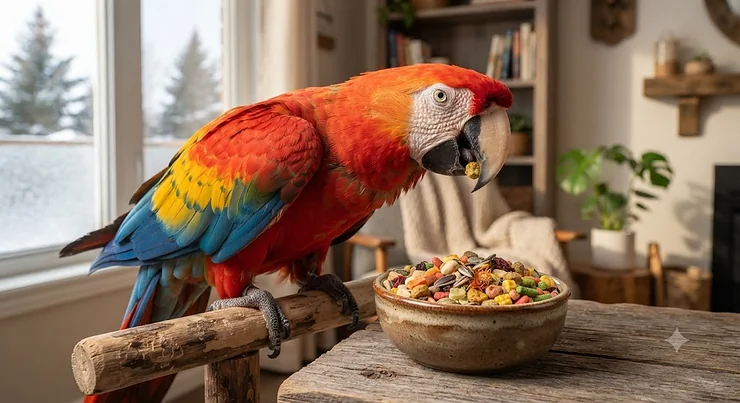
A parrot losing its shine isn’t always dramatic — no feathers scattered across the cage floor, no obvious bald patch, just a bird that used to look like a hand-polished gem now looking a little dusty, a little flat, like a photograph left too long in a sunny window. That quiet dulling is usually the first sign that parrot food for feather health matters more than most owners realize, because feathers are almost entirely built from protein, and a bird’s body will always prioritize organs and immune function over plumage the moment the diet comes up short. Parrot food for feather health is any diet formulated with the specific amino acids, fatty acids, and micronutrients — particularly omega-3s, biotin, vitamin A, and zinc — that a bird’s body converts directly into keratin, the structural protein behind feathers, beaks, and claws.
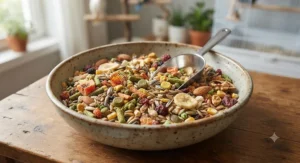
Feathers themselves are a genuine marvel of biological engineering — each one is a precisely branched structure of keratin barbs and barbules refined over millions of years of evolution, and rebuilding that structure from scratch during a molt is one of the most metabolically expensive things a bird’s body does all year. Skimp on raw materials during that window and the new feathers show it — stress bars running across the shaft, brittle tips that fray, dull colour where there should be gloss, or feathers that never quite lie flat again no matter how much preening goes into them.
This guide breaks down seven real, currently available options for parrot food for feather health, weighing omega-3 fortification, flaxseed sourcing, and the ingredient philosophy behind each one, alongside dedicated sections on the molting cycle, feather plucking diet solutions, skin dryness, and what avian dermatology actually says about diet’s role in plumage trouble. Every price below is a range in Canadian dollars, since exact Amazon pricing shifts constantly — always check current pricing before you buy.
Quick Comparison Table: Parrot Food for Feather Health at a Glance
| Product | Format | Omega-3 Source | Best For |
|---|---|---|---|
| Goldenfeast Safflower Gold | Seed, nut & fruit blend | Flaxseed + flaxseed oil | Budget-friendly enrichment feeding |
| Kaytee Forti-Diet Pro Health Nourish+Protect | Seed & pellet blend | Ground flaxseed | Everyday feeding with probiotic support |
| Higgins Vita Seed Parrot Food | Seed & fruit blend | Flaxseed, guaranteed DHA | Seed-loyal birds needing an omega backup |
| Hagen Tropican Alternative Formula | Extruded granule | Flaxseed | Senior, sensitive, or less-active birds |
| Lafeber Premium Daily Diet Parrot Pellets | Pellet | Balanced omega blend | Species-tuned everyday nutrition |
| TOP’s Parrot Pellets | Organic pellet | Whole-food antioxidants, no added flax | Additive-wary, whole-food households |
| Harrison’s High Potency Coarse | Organic pellet | Chia-derived omega-3 | Vet-directed molting or feather rehab |
Reading across this table, the real dividing line isn’t pellet versus seed — it’s which formulas actually name a fatty-acid source on the guaranteed analysis versus which ones lean on vague “supports healthy feathers” language without backing it up on the label. Three of these seven — the Goldenfeast Safflower Gold, the Higgins Vita Seed Parrot Food, and the Kaytee Forti-Diet Pro Health Nourish+Protect — put a specific omega-3 percentage on the bag, which matters if you’re buying for feather health rather than general maintenance. If you’re specifically hunting for parrot food with flaxseed rather than a generic “premium” label, these three are where to start comparing. The TOP’s Parrot Pellets is the interesting outlier here: no added flax at all, betting instead on a dense antioxidant and herb profile to support skin and feather condition from a different angle entirely.
💬 Just one click — help others make better buying decisions too!😊
Top 7 Parrot Foods for Feather Health: Expert Analysis
Every product below is a real, currently available option, chosen to cover the actual range Canadian parrot owners shop in — from a budget seed blend under C$25 to a vet-developed organic pellet that avian clinics recommend for genuine feather rehabilitation. Prices reflect research at the time of writing and may vary — always check current pricing before buying.
1. Goldenfeast Safflower Gold — best budget flaxseed-fortified seed blend
The standout here is right on the guaranteed analysis panel: a minimum of 0.50% omega-3 and 1.50% omega-6 fatty acids, sourced from both whole flaxseed and added flaxseed oil rather than relying on incidental fat content from sunflower and nuts alone. Crude protein sits around 13% with crude fat near 9%, a moderate profile built around safflower, millet, oats, wheat, red milo, corn, and canary seed, rounded out with almonds, cashews, pistachios, and a mix of sun-dried fruit. Based on the ingredient panel, this formula reads more like a fortified foraging mix than a nutritionally complete diet on its own — the fatty-acid fortification is genuine, but the seed-forward base means it works best layered alongside a pelleted staple rather than fed as the sole diet. Reviewer sentiment for the Goldenfeast line consistently praises palatability and bird enthusiasm at feeding time, with a recurring theme that natural, non-dyed colouring makes it an easier sell to owners nervous about artificial additives, though independently verified review volume for this specific SKU is thinner than for the bigger pellet brands on this list — worth knowing if you’re basing a purchase heavily on aggregated feedback. Like most pet food brands with a long history, Goldenfeast’s parent company has had at least one voluntary recall in the past, so a quick check of current recall status before buying is a reasonable habit regardless of brand loyalty.
Pros:
- ✅ Guaranteed 0.50% omega-3 from real flaxseed and flaxseed oil
- ✅ No artificial dyes, colouring comes from natural ingredients
- ✅ Strong palatability even for pellet-resistant birds
Cons:
- ❌ Seed-forward base isn’t nutritionally complete alone
- ❌ Thinner independent review volume than major pellet brands
In the C$20-C$30 range for a 3 lb (1.36 kg) bag at the time of research, the Goldenfeast Safflower Gold is a reasonable entry point for owners wanting a verified omega source without pellet-only feeding.
2. Kaytee Forti-Diet Pro Health Nourish+Protect — best everyday pick with probiotic backup
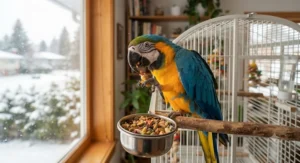
Kaytee built this formula around a specific claim it’s willing to put a number on: a guaranteed minimum of 0.3% omega-3 fatty acids sourced from ground flaxseed, alongside sunflower seed, safflower seed, oat groats, corn, peanuts, millet, and pumpkin seed. Crude protein runs at 15% with crude fat around 13%, and the formula adds a guaranteed minimum of 100,000 CFU per gram of beneficial bacteria, which in practice matters more for feather health than it sounds — a bird that’s absorbing nutrients efficiently gets more out of the same bowl of flaxseed than one dealing with gut dysbiosis. What most buyers overlook about probiotic-fortified feeds like this one is that absorption, not just intake, drives visible feather condition, and a diet can look perfect on paper while still underperforming if a bird’s digestive health is compromised. Aggregated reviewer sentiment consistently describes strong acceptance among birds transitioning from plain seed mixes, with a common complaint being that, like most seed-inclusive blends, selective feeding remains possible since the bird can still pick around less-favoured pieces. For an owner wanting a documented omega-3 source without paying premium-pellet prices, this lands squarely as a sensible daily staple.
Pros:
- ✅ Guaranteed 0.3% omega-3 from ground flaxseed on the label
- ✅ Probiotic fortification supports nutrient absorption
- ✅ Widely available and reasonably priced for daily feeding
Cons:
- ❌ Seed-inclusive format still allows selective feeding
- ❌ Corn and peanut content isn’t ideal for allergy-sensitive birds
Expect to pay in the C$45-C$60 range for an 8 lb (3.6 kg) bag, making the Kaytee Forti-Diet Pro Health Nourish+Protect one of the better value-per-kilogram picks with a verified fatty-acid claim.
3. Higgins Vita Seed Parrot Food — best DHA-guaranteed seed blend
This is the only formula on this list that puts a specific DHA guarantee on the bag, not just a general omega-3 figure, at a minimum of 0.03% DHA alongside 0.4% total omega-3s from added flaxseed. The base blend runs through sunflower seed, safflower, buckwheat, corn, oats, red milo, and wheat, layered with nuts, legumes, and dried fruit including papaya, pineapple, and mixed berries, giving it crude protein around 15% and crude fat near 16%. Based on the omega breakdown specifically, DHA matters here because it’s the fatty acid most directly linked in avian nutrition literature to skin barrier function and feather lipid quality, rather than just general anti-inflammatory support the way plain omega-3 claims often gesture at. Reviewer sentiment across the Higgins Vita Seed line consistently highlights strong bird interest and minimal food waste, though a recurring theme in aggregated feedback is that the higher fat content isn’t ideal for a sedentary companion bird already carrying extra weight. For an owner specifically chasing documented DHA rather than a vague “feather support” claim, this is one of the more transparent labels on the market.
Pros:
- ✅ Guaranteed DHA content, not just general omega-3
- ✅ Probiotic-fortified for digestive and immune support
- ✅ Strong palatability across most seed-preferring species
Cons:
- ❌ Higher fat profile suits active birds more than sedentary ones
- ❌ Still a seed-forward blend, not a complete standalone diet
Priced around C$25-C$35 for a 5 lb (2.27 kg) bag at the time of research, the Higgins Vita Seed Parrot Food earns its spot through label transparency most competitors don’t match.
4. Hagen Tropican Alternative Formula — best Canadian-made pick for sensitive or senior birds
Manufactured by the Hagen Avicultural Research Institute in Montreal, this formula is built around alternative protein sources — pea protein, quinoa, and wheat germ — rather than the corn and soy base common to budget pellets, aimed specifically at less-active, senior, or protein-sensitive adult parrots. Crude protein sits at 22% with crude fat at 11%, and the fatty-acid panel lists a minimum of 0.03% omega-3 and 0.25% omega-6, sourced from added flaxseed alongside antioxidant ingredients including cranberry, green tea, and marigold extract that HARI specifically markets for feather luster and growth support. What most buyers overlook about senior or “alternative” formulas is that they’re not automatically lower-value — this one leans on genuinely different protein sources rather than simply cutting fat, which matters for an older bird whose kidneys are doing more work processing standard animal or soy protein than a younger bird’s would. Aggregated review sentiment for the Tropican line points to solid acceptance among birds already eating pellets, with a common note that the granule format runs slightly smaller than some competitors, an easy adjustment but worth knowing before the first bag arrives. For Canadian owners who want a domestically produced formula with a specific feather-support angle rather than an imported generalist pellet, this is a natural fit.
Pros:
- ✅ Manufactured in Canada with a documented omega and antioxidant panel
- ✅ Alternative protein sources suit senior or sensitive birds
- ✅ Marigold, cranberry, and green tea extracts target feather luster
Cons:
- ❌ Granule size runs smaller than some comparable pellets
- ❌ Lower omega-3 percentage than the dedicated seed-blend options
In the C$25-C$35 range for a 1.8 kg (4 lb) bag at the time of research, the Hagen Tropican Alternative Formula is a strong domestic option for owners prioritizing Canadian manufacturing alongside feather-focused ingredients.
5. Lafeber Premium Daily Diet Parrot Pellets — best species-tuned everyday pellet
Lafeber built this pellet specifically for large-beaked companion species — African greys, Amazons, cockatoos, and similar birds — rather than marketing one generic formula across every parrot size on the shelf. Crude protein runs around 13.1% with crude fat near 4.6%, a notably leaner profile than most seed-inclusive options on this list, reflecting the reality that most companion parrots spend more time perched than flying hard laps around a room. What most buyers overlook about this formula is that Lafeber markets its fatty-acid ratio explicitly for “stronger immune system, stronger bones, and healthier feathers,” language that lines up with what avian nutrition sources say about the calcium-and-keratin relationship most parrots depend on for feather quality, even though the omega percentage itself isn’t broken out as prominently as on the seed-blend competitors here. Aggregated reviewer sentiment points to strong acceptance even among birds transitioning from seed, with a common note that the pellet size may need crumbling for smaller-beaked species. If your avian vet has recommended a nutritionally complete daily pellet without pushing toward premium organic pricing, this is usually the next logical stop.
Pros:
- ✅ Formulated specifically for large-beaked companion species
- ✅ Balanced omega ratio marketed directly for feather and bone health
- ✅ Non-GMO ingredients with no artificial dyes
Cons:
- ❌ Omega-3 percentage isn’t broken out as clearly as seed-blend rivals
- ❌ Some birds need an adjustment period to the crumble-style pellet
Expect to pay in the C$55-C$75 range for a 1.8 kg (4 lb) bag, making the Lafeber Premium Daily Diet Parrot Pellets a solid everyday base rather than a targeted feather-rehab formula.
6. TOP’s Parrot Pellets — best antioxidant-rich organic pick without added flax
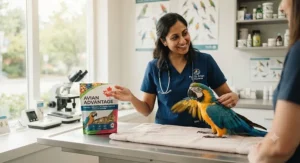
The standout here is an ingredient list that reads almost like an herbalist’s pantry: organic alfalfa, hulled millet, barley, rice, sunflower seed, sesame seed, quinoa, pumpkin, and buckwheat, layered with dandelion leaf, carrot, and spinach powders, purple dulse, kelp, rosehips, citrus peel, rosemary, cayenne, and nettle leaf. Crude protein sits at a minimum of 12% with crude fat at a lean 3.5%, a notably lower-fat profile than every other product on this list, and — worth being upfront about — this formula doesn’t list flaxseed or a specific omega-3 guarantee anywhere on the panel. Based on the ingredient philosophy, TOP’s is betting on a different mechanism entirely: a dense concentration of antioxidants and micronutrients from real dried herbs and vegetables to support skin and feather condition indirectly, rather than a targeted fatty-acid fortification the way the seed blends on this list do. Reviewer sentiment consistently describes strong long-term coat and energy improvements after switching from processed feeds, with a common theme being that the unusual smell and texture take some birds two to three weeks to accept. For an owner who wants an additive-free, whole-food philosophy and is comfortable supplementing omega-3s separately through fresh flax or fish oil, this is a genuinely different — and honestly reasoned — approach worth considering.
Pros:
- ✅ Dense antioxidant and micronutrient profile from real herbs and vegetables
- ✅ No artificial dyes, added sugar, or synthetic preservatives
- ✅ Lower fat suits sedentary, weight-conscious birds
Cons:
- ❌ No flaxseed or guaranteed omega-3 figure on the label
- ❌ Unusual smell and texture slow acceptance for some birds
At roughly C$34.00 CAD for a 1.8 kg (4 lb) bag at the time of research, the TOP’s Parrot Pellets suits owners prioritizing whole-food philosophy over a specific fatty-acid number.
7. Harrison’s High Potency Coarse — best vet-developed formula for molting or feather rehab
Harrison’s markets this specific formula for conversion, weaning, breeding, molting, and other special-needs feeding — language that shows up directly in its product listing rather than being implied — and the ingredient panel backs it up with certified organic chia, a genuine omega-3 source, alongside hulled barley, sunflower kernels, toasted soybeans, peas, and lentils. Crude protein runs around 18% with crude fat near 13.5%, both meaningfully higher than most maintenance pellets on this list, which in practice means the formula is built for the elevated energy and protein demands of active feather regrowth rather than a mostly-perched bird just maintaining condition. Based on the ingredient panel, the deliberately coarse pellet texture also encourages a bird to grind its own food rather than swallow uniform pellets whole, mirroring natural foraging behaviour in a way smooth, pre-crushed pellets don’t. Reviewers consistently describe genuine feather and energy improvements after switching from seed-heavy diets during a molt, with a recurring theme in aggregated feedback being that the coarse texture and organic smell take some picky eaters two to three weeks to fully accept. For owners working with an avian vet on active feather rehabilitation rather than routine maintenance, this is frequently the formula that conversation lands on.
Pros:
- ✅ Explicitly marketed and formulated for molting and feather rehab
- ✅ Certified organic chia provides a genuine omega-3 source
- ✅ Higher protein supports the energy demands of active regrowth
Cons:
- ❌ Higher fat isn’t ideal for a sedentary bird outside a molt
- ❌ Premium organic pricing sits at the top of this list’s ladder
In the C$140-C$175 range for a 2.27 kg (5 lb) bag at the time of research, the Harrison’s High Potency Coarse costs the most on this list but earns it during the specific window — molting — when feather-focused nutrition matters most.
Top 7 Feather-Health Foods: Detailed Spec & Value Comparison
| Product | Format | Protein / Fat (approx.) | Price Range (CAD) | Best For |
|---|---|---|---|---|
| Goldenfeast Safflower Gold | Seed, nut & fruit blend | 13% / 9% | C$20-C$30 | Budget omega verification |
| Kaytee Forti-Diet Pro Health Nourish+Protect | Seed & pellet blend | 15% / 13% | C$45-C$60 | Everyday feeding with probiotics |
| Higgins Vita Seed Parrot Food | Seed & fruit blend | 15% / 16% | C$25-C$35 | Guaranteed DHA content |
| Hagen Tropican Alternative Formula | Extruded granule | 22% / 11% | C$25-C$35 | Canadian-made, senior or sensitive birds |
| Lafeber Premium Daily Diet Parrot Pellets | Pellet | 13.1% / 4.6% | C$55-C$75 | Species-tuned daily nutrition |
| TOP’s Parrot Pellets | Organic pellet | 12% / 3.5% | C$34 | Antioxidant-rich, additive-free |
| Harrison’s High Potency Coarse | Organic pellet | 18% / 13.5% | C$140-C$175 | Vet-directed molting or feather rehab |
Looking at protein and fat side by side, the two ends of this table tell most of the story: the TOP’s Parrot Pellets sits at the leanest, lowest-protein end, betting on antioxidant density over fatty-acid fortification, while the Harrison’s High Potency Coarse and Hagen Tropican Alternative Formula run richest in protein, reflecting formulas built for active regrowth and alternative amino acid sourcing respectively. For a typical companion parrot with no documented feather problem, the middle of this table — the Kaytee Forti-Diet Pro Health Nourish+Protect or Higgins Vita Seed Parrot Food — offers a defensible everyday balance of verified omega-3 and moderate protein, with the premium or Canadian-made options reserved for a specific molting window or a vet-flagged sensitivity.
Feeding for Feather Health Day-to-Day: A Practical Usage Guide
Switching to a feather-focused diet isn’t as simple as swapping the bowl contents overnight, especially for a bird that’s spent years attached to a seed-heavy mix it genuinely enjoys. The safest transition mixes a small percentage of the new food into the existing diet for the first week, gradually increasing that ratio over two to four weeks while watching droppings and body weight for signs the bird is actually eating the new formula rather than just picking around it. Weighing your bird weekly during any transition, rather than eyeballing condition, catches a bird that’s quietly not eating enough long before it becomes an emergency.
Once established, most companion parrots do well on roughly 70-80% formulated diet by volume, supplemented with fresh vegetables, a controlled amount of fruit, and occasional flaxseed or a few drops of fish oil mixed into soft food for an extra omega boost beyond what any single bag provides. Refresh water and any perishable fresh food daily, since bacterial growth in a warm cage environment happens faster than most owners expect, particularly through humid Canadian summers. A common first-30-days mistake is over-relying on one or two “safe” foods a bird will reliably eat, which narrows nutritional intake right when feather-building variety matters most — rotating fresh produce weekly, even in small amounts, keeps a transitioning bird’s diet broader without risking a full refusal strike. Bathing or misting two to three times weekly also supports feather condition alongside diet, since dry, brittle feathers respond to both nutrition and adequate humidity working together rather than either alone.
Real-World Scenarios: Three Parrots, Three Feather Situations
Picture three realistic households working through this exact decision. The first has a young, otherwise healthy conure heading into its first full molt, with no documented health issues — for that bird, the Kaytee Forti-Diet Pro Health Nourish+Protect or Higgins Vita Seed Parrot Food covers the elevated protein and omega demand of routine molting without overcomplicating a straightforward situation.
The second household has an older Amazon with a vet-flagged pattern of dry, flaky skin and dull feather colour despite an otherwise reasonable diet — here, the Harrison’s High Potency Coarse or the Hagen Tropican Alternative Formula, paired with a vet-guided supplement plan, becomes the priority, since reversing an established deficiency takes more concentrated nutrition than a passive diet swap alone provides. The third is a budget-conscious household with a healthy, food-motivated cockatiel and no documented feather concerns — the Goldenfeast Safflower Gold or TOP’s Parrot Pellets covers daily needs affordably, with fresh vegetables and the occasional flax supplement filling any remaining gap. None of these owners are choosing wrong — the right parrot food for feather health is the one matched to that specific bird’s history, budget, and current condition, not a universal answer.
Feather Plucking Diet Solutions: A Problem-to-Solution Guide
Feather plucking diet solutions start with ruling out nutrition as the driver before assuming a behavioural or medical cause, since diet is one of the few contributing factors an owner can address immediately without a vet visit. A diet heavy in sunflower seed and low in everything else is one of the most consistently cited nutritional contributors to plucking, since it creates simultaneous vitamin A and calcium shortfalls that manifest as skin irritation and nerve sensitivity, both of which can trigger excessive preening long before more dramatic symptoms appear. The fix here is gradual: layering in a formulated pellet or fortified seed blend from this list, alongside vitamin-A-rich vegetables like carrot, sweet potato, and dark leafy greens, addresses the nutritional half of the equation over several weeks rather than overnight.
A second common driver is inadequate omega-3 intake specifically, since these fatty acids support the skin barrier that sits beneath every feather follicle — a bird chronically short on omega-3s can develop skin dry enough to make normal preening uncomfortable, which escalates into compulsive plucking in susceptible individuals. Adding a documented omega-3 source like the Kaytee Forti-Diet Pro Health Nourish+Protect or Higgins Vita Seed Parrot Food, rather than hoping a vague “feather support” label delivers, is a more defensible first step. A third factor worth ruling out is environmental: low humidity, inadequate bathing opportunity, and boredom all compound a nutritional shortfall rather than replacing it, meaning a bird can be eating a genuinely improved diet and still pluck if the cage environment isn’t addressed alongside it. If plucking continues for more than two to three weeks after a genuine dietary and environmental correction, that’s the point to involve an avian vet rather than continuing to experiment with food alone, since medical causes like Psittacine Beak and Feather Disease or skin infections need to be ruled out directly.
✨ Ready to start the switch? Check current prices on the omega-fortified picks above before your parrot’s next bag runs out! 🦜
How to Choose Parrot Food for Feather Health
- Check for a named omega-3 source on the ingredient panel — parrot food with flaxseed, chia, or fish oil listed explicitly beats a vague “supports healthy feathers” claim with nothing backing it up.
- Compare the guaranteed omega-3 percentage, not just presence — the Higgins Vita Seed Parrot Food and Goldenfeast Safflower Gold publish specific minimums, which lets you actually compare formulas rather than guessing.
- Match protein and fat to your bird’s current life stage — a molting or feather-rehab bird benefits from the elevated protein in formulas like the Harrison’s High Potency Coarse, while a healthy maintenance bird does better on leaner options.
- Decide your pellet-to-seed ratio upfront — a pelleted or fortified base with occasional seed enrichment, rather than the reverse, gives more consistent nutrient delivery per bite.
- Read aggregated review sentiment for transition difficulty — a nutritionally ideal formula a bird won’t eat provides zero real-world feather benefit, so palatability matters as much as the spec sheet.
- Verify ingredient transparency — no artificial dyes, added sugar, or vague “natural flavour” catch-alls is a reasonable baseline across every parrot food for feather health option on this list.
- Budget for a gradual transition and ongoing supplementation — a single bag rarely fixes an established feather problem alone; pairing food with fresh produce and, where appropriate, vet-guided supplements gets better results.
Omega-3 Parrot Food and Flaxseed: Why Fatty Acid Source Matters
Omega-3 parrot food isn’t a marketing category so much as a genuine nutritional distinction, because not every fat a bird eats behaves the same way once it’s absorbed. Sunflower seed and peanuts, the dominant fats in most cheap seed mixes, run heavy in omega-6 fatty acids relative to omega-3s, and research summarized through university extension and veterinary nutrition programs — including the companion animal nutrition guidance from the University of Guelph’s Ontario Veterinary College — consistently points to an imbalanced omega-6-to-omega-3 ratio as a contributor to low-grade inflammation that shows up in skin and coat condition across species, birds included.
Parrot food with flaxseed addresses this directly, since flaxseed is one of the richest plant sources of alpha-linolenic acid, a precursor omega-3 that a bird’s body can partially convert toward the same anti-inflammatory pathways that fish oil delivers more directly. The Higgins Vita Seed Parrot Food takes this a step further with a guaranteed DHA figure rather than just total omega-3s, which matters because DHA is the specific fatty acid most tied to cell membrane and skin barrier function in avian nutrition literature, while ALA from flax requires conversion efficiency that varies bird to bird. Chia, used in the Harrison’s High Potency Coarse, offers a comparable plant-based omega-3 profile to flax with a slightly different fibre and antioxidant package attached. The practical takeaway: a formula naming flaxseed, chia, or fish oil specifically, with a percentage attached, is doing more verifiable work for feather and skin health than one relying on incidental fat content from nuts and sunflower seed alone.
The Molting Cycle: Feeding Your Parrot Through Feather Regrowth
The molting cycle is the single biggest nutritional demand spike most companion parrots face in an average year, and understanding its timing changes how you should be feeding well before the first dropped feather shows up. Most companion parrots molt gradually and continuously through the year rather than all at once, though many species show a noticeable seasonal peak, commonly aligned with longer daylight hours, when feather loss and regrowth accelerate visibly. During that peak window, a bird can be diverting a genuinely significant share of its daily protein and fatty-acid intake into building new feather structure, which is exactly why a diet that’s merely adequate the rest of the year can suddenly look insufficient once regrowth kicks into high gear.
Practically, this means bumping toward the higher-protein end of this list — the Harrison’s High Potency Coarse or the Hagen Tropican Alternative Formula — during an active molt, then easing back toward a leaner maintenance formula like the Lafeber Premium Daily Diet Parrot Pellets once new feathers have fully hardened off. Watching for stress bars — faint horizontal lines across a new feather’s shaft that mark a day of nutritional or physical stress during formation — gives a direct, visible readout of whether the molting cycle’s demands are actually being met, and a bird showing several stress bars across consecutive molts is telling you something a bag’s label can’t. Fresh water, stable humidity, and minimizing major stressors during this window all compound with diet, since a bird under physical or environmental strain redirects resources away from feather quality even on an otherwise excellent diet.
Skin Dryness and Avian Dermatology: When Diet Isn’t the Whole Story
Skin dryness in parrots often gets blamed entirely on diet, and while nutrition is a genuine factor, treating every flaky patch or dull feather as a feeding problem alone misses cases that need a different kind of attention. Chronically low humidity — a real issue in Canadian homes running forced-air heat through long winters — dries out skin and feathers regardless of what’s in the food bowl, which is why bathing frequency and room humidity deserve equal billing alongside any dietary change. That said, insufficient omega-3 intake genuinely does show up as dry, flaky skin in birds the same way it does in mammals, since these fatty acids are structural components of the skin’s lipid barrier, not just an abstract “wellness” nutrient.
This is where avian dermatology as a field draws an important line: veterinary guidance on skin and feather disorders in pet birds consistently separates nutritional causes from infectious, parasitic, hormonal, and behavioural ones, because they can look nearly identical to an untrained eye but require completely different fixes. A bird with genuinely dry skin from an omega-3 shortfall typically improves within several weeks of a fortified diet change; a bird with a bacterial or fungal skin infection, mite infestation, or an underlying hormonal imbalance will not, no matter how good the new bag of food is. The practical rule an avian vet would apply: try a documented dietary correction first for mild, generalized dryness without other symptoms, but escalate to a proper avian dermatology workup if skin changes are localized, worsening, accompanied by redness or odour, or unresponsive to a genuine four-to-six-week dietary trial.
Features That Actually Matter for Feather Health (And Those That Don’t)
A named, quantified omega-3 source is the feature that actually matters most on this list — it’s the difference between the Higgins Vita Seed Parrot Food‘s guaranteed 0.4% figure and a bag that simply prints “feather support” on the front with nothing on the guaranteed analysis to back it up. Probiotic fortification is the second genuinely useful feature, since nutrient absorption determines how much of that omega-3 actually reaches the bloodstream rather than passing straight through, which is part of why the Kaytee Forti-Diet Pro Health Nourish+Protect earns real credit for pairing the two.
On the other side, product naming is where marketing regularly outruns substance — a seed treat branded around feathers or plumage doesn’t automatically contain flaxseed, fish oil, or any documented fatty-acid fortification, and reading the actual ingredient panel rather than the front-of-bag branding is the only reliable way to tell the difference. Bright, dyed pellet colours are another feature that reads as premium but adds nothing nutritionally — none of the seven products featured in this guide rely on artificial dye for their feather-support claims, and that’s not a coincidence. Fruity flavouring, similarly, drives palatability more than plumage, and a bird enthusiastically eating a dessert-flavoured pellet isn’t necessarily getting more omega-3 than one eating a plainer, better-formulated option.
Common Mistakes When Buying Parrot Food for Feather Health
The single biggest mistake is buying based on front-of-bag feather or plumage imagery rather than checking the guaranteed analysis for an actual omega-3 percentage — a bird pictured with glossy feathers on the packaging tells you nothing about whether flaxseed, chia, or fish oil is genuinely in the formula. A close second is expecting a diet change alone to resolve an established feather or skin problem within days; genuine nutritional deficiencies took weeks or months to develop and typically take a comparable amount of time to correct, so judging a new food after one week is judging it before it’s had a fair chance to work.
Ignoring the transition period is another frequent misstep — switching a bird’s entire diet overnight, then panicking when it refuses to eat, is one of the more common and avoidable feeding mistakes new owners make, and it can trigger a hunger strike that undermines the whole point of upgrading the diet. Finally, some owners treat feather plucking or dullness as purely a food problem when it’s genuinely multi-causal, skipping the vet visit that would rule out mites, hormonal imbalance, or infection in favour of endlessly cycling through different bags of parrot food for feather health that were never going to fix a non-nutritional issue in the first place.
Safety, Regulations & Canadian Standards
Pet bird food sold in Canada falls under the Canadian Food Inspection Agency’s oversight for animal feed, and Canada’s feed labelling and registration guidance sets baseline requirements around ingredient labelling and safety that reputable brands, including every product featured in this guide, are expected to meet before reaching store shelves or amazon.ca listings. That regulatory floor covers accurate labelling and basic safety, not optimal formulation for a specific bird’s feather condition — which is exactly why the omega-3 verification and species-matching discussed throughout this guide still matter on top of basic compliance.
Practically, this means checking for CFIA-compliant labelling and a reputable manufacturer is a reasonable baseline safety check, while the deeper feather-health questions — guaranteed omega-3 percentage, protein-to-fat ratio for life stage, and ingredient transparency — are where the real decision-making happens. It’s also worth building a habit of checking a brand’s current recall history before buying, regardless of reputation; pet food recalls happen across every price tier and manufacturer size, and a five-minute check costs far less than a bird’s health.

Frequently Asked Questions
❓ What is the best parrot food for feather health?
❓ Can omega-3 parrot food actually stop feather plucking?
❓ How much flaxseed does a parrot need for feather health?
❓ Why does my parrot's skin get dry during the molting cycle?
❓ When should I see a vet for feather or skin problems instead of changing food?
Conclusion
There’s no single correct answer to which parrot food for feather health you should buy — there’s only the right answer for your specific bird, and that depends on current feather condition, life stage, and whatever an avian vet has flagged in past checkups. Budget-conscious households can reasonably build a diet around the Goldenfeast Safflower Gold or TOP’s Parrot Pellets, while a bird actively molting or showing documented feather or skin trouble often benefits more from the concentrated nutrition in the Harrison’s High Potency Coarse or Hagen Tropican Alternative Formula.
What matters more than any single product choice is the underlying framework this guide has walked through: choose omega-3 parrot food with a named, quantified fatty-acid source rather than front-of-bag feather imagery, treat molting as a temporary window that calls for a temporary protein bump, rule out environmental and medical causes of skin dryness before blaming food alone, and remember that feather quality is a slow, cumulative signal rather than something one bag of pellets fixes overnight. Pair whichever food you land on with regular bathing, stable humidity, and a genuine transition period, and you’re addressing feather health from every angle diet alone can’t cover.
✨ Don’t Miss These Exclusive Deals! 🔍
Check current prices and availability on any of these seven picks before your parrot’s next feather cycle catches you unprepared.
Recommended for You
- 7 Best Amazon Parrot Food Picks For Weight Management (2026)
- 7 Best Conure Pellet Diet Picks for 2026 (Vet-Backed Guide)
- Macaw Pellet Size Guide: 7 Trusted Picks for 2026
Disclaimer: This article contains affiliate links. As an Amazon Associate, I earn from qualifying purchases. If you purchase products through these links, we may earn a small commission at no additional cost to you.
✨ Found this helpful? Share it with your friends! 💬🤗
