
In This Article
You’ve hung a beautiful birdhouse in your backyard, but those curious black-capped chickadees keep peeking in without moving in. The culprit? Often, it’s the chickadee house entrance hole size being just millimetres off.
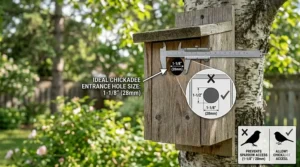
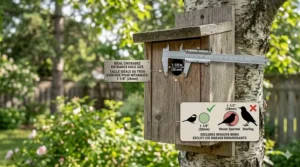
Black-capped chickadees are incredibly particular about their real estate. That entrance hole needs to be exactly 1-1/8 inches (2.86 cm) in diameter. Not 1-1/4 inches like a bluebird house, and definitely not 1-1/2 inches which invites house sparrows to crash the party.
According to the Canadian Wildlife Federation, black-capped chickadees are found throughout Canada — from Newfoundland to British Columbia, and northward into the Yukon. These hardy birds survive our brutal winters and deserve proper nesting boxes.
This guide covers proper chickadee house measurements, compares the top 7 products on Amazon.ca, and shares tips for attracting these cavity nesters to your Canadian backyard.
Quick Comparison Table: Top Chickadee Houses Available in Canada
| Product | Entrance Hole | Material | Price Range (CAD) | Best For |
|---|---|---|---|---|
| Woodlink Garden Series | 1-1/8″ | Cedar | $30-$40 | Classic design |
| Kettle Moraine Cedar | 1-1/8″ | Cedar | $45-$55 | Premium durability |
| Stokes Select Natural Wood | 1-1/8″ | Wood | $25-$35 | Budget-friendly |
| Songbird Essentials DIY Kit | 1-1/8″ | Cedar | $20-$30 | Family projects |
| Nature’s Way Cedar | 1-1/8″ | Cedar | $35-$45 | Weather resistance |
| Backyard Bird Centre Kit | 1-1/8″ | Western Red Cedar | $28-$38 | Canadian-made |
| Audubon Eggpicnic | 1-1/8″ | Cedar | $40-$50 | Artistic design |
💬 Just one click – help others make better buying decisions too! 😊
✨ Don’t Miss These Exclusive Deals!
🔍 Take your backyard bird watching to the next level with these carefully selected chickadee houses available in Canada. Click on any highlighted product to check current pricing and availability on Amazon.ca. These properly-sized birdhouses will help you attract authentic nesting families your neighbourhood will love!
Top 7 Chickadee Houses: Expert Analysis for Canadian Backyards
1. Woodlink Wren/Chickadee Garden Series Bird House
The Woodlink Wren/Chickadee Garden Series has earned its reputation as a Canadian favourite for good reason. This ornithologically-designed nesting box features the critical 1-1/8 inch entrance hole that chickadees need, constructed from kiln-dried inland red cedar that handles our extreme temperature swings beautifully.
Key Specifications:
- Entrance hole: 1-1/8 inch diameter
- Material: Reforested kiln-dried cedar
- Dimensions: 5.25″ x 5.25″ x 10″
- Easy-open side panel for cleaning
Price Range: $30-$40 CAD
Canadian customers consistently praise its durability through harsh winters. One Ontario buyer noted, “Survived three brutal winters without warping. The chickadees returned every spring.” The green painted roof and etched front design add aesthetic appeal without compromising functionality.
✅ Pros:
- Perfect entrance hole size for chickadees
- Weather-resistant cedar construction
- Easy to clean hinged design
❌ Cons:
- Paint on roof may fade over time
- Requires mounting hardware (sold separately)
2. Kettle Moraine Wren & Chickadee Cedar Nest Box
Kettle Moraine’s premium offering represents the gold standard in chickadee house construction. Unlike many competitors using pine, this model employs solid cedar secured with stainless steel screws — a critical upgrade for Canadian climates where freeze-thaw cycles destroy nail-assembled boxes.
Key Specifications:
- Entrance hole: 1-1/8 inch
- Floor size: 4″ x 4″
- Interior height: 9 inches
- Hinged front panel cleaning access
Price Range: $45-$55 CAD
Multiple Canadian bird enthusiasts report this box lasting 10+ years with minimal maintenance. The investment pays dividends when you consider replacement costs and the value of consistent chickadee occupancy.
✅ Pros:
- Superior cedar (not pine) construction
- Stainless steel screws prevent rust
- Excellent ventilation system
❌ Cons:
- Higher price point
- Requires separate mounting solution
3. Stokes Select Natural Wood Chickadee House
For budget-conscious Canadians, the Stokes Select Natural Wood chickadee house delivers surprising value without compromising on the crucial entrance hole specifications. At the lower end of the price spectrum, it maintains the proper 1-1/8 inch opening that keeps unwanted larger birds out while welcoming chickadees.
Key Specifications:
- Entrance hole: 1-1/8 inch diameter
- Natural wood construction
- Built-in mounting hardware included
- Drainage holes in floor
Price Range: $25-$35 CAD
Canadian buyers appreciate the included mounting cable, eliminating additional hardware costs. One Alberta reviewer shared, “Best value for money. Had a chickadee family move in within two weeks of installation.”
✅ Pros:
- Most affordable option
- Mounting hardware included
- Proper ventilation and drainage
❌ Cons:
- May require annual weatherproofing treatment
- Less durable than premium cedar options
4. Songbird Essentials DIY Build-A-Birdhouse Chickadee Kit
The Songbird Essentials DIY Kit transforms chickadee house setup into a meaningful family activity while teaching children about proper chickadee nesting preferences. Pre-cut cedar pieces include pre-drilled holes for the standard 1-1/8 inch entrance — you just need a hammer.
Key Specifications:
- Finished entrance hole: 1-1/8 inch
- Material: Cedar wood pieces
- Assembly time: 30-45 minutes
- Educational instructions included
Price Range: $20-$30 CAD
Canadian educators and parents consistently rank this among the top educational bird projects. The assembly process reinforces STEM concepts while creating functional wildlife habitat. According to Cornell Lab of Ornithology’s NestWatch program, involving children in nest box construction increases environmental stewardship.
✅ Pros:
- Excellent educational value
- Easy assembly for all ages
- Canadian-friendly cedar material
❌ Cons:
- Requires assembly time
- Assembly quality varies by builder
5. Nature’s Way Cedar Chickadee House
Nature’s Way’s cedar chickadee house emphasizes weatherproofing — essential for Canadian climates where temperature differentials between seasons can exceed 60°C. The 1-1/8 inch entrance hole positioning sits 7 inches above the floor, matching natural chickadee cavity preferences.
Key Specifications:
- Entrance hole: 1-1/8 inch at 7″ height
- Weatherproof cedar construction
- Copper roof accents
- Floor ventilation system
Price Range: $35-$45 CAD
Canadian customers in coastal BC and Maritime provinces report excellent performance in high-moisture environments. The copper roof develops an attractive patina while providing superior rain protection.
✅ Pros:
- Excellent moisture resistance
- Attractive aging characteristics
- Proper hole placement height
❌ Cons:
- Copper roof adds to cost
- Heavier than standard models
6. Backyard Bird Centre Chickadee House Kit (Canadian-Made)
Supporting Canadian manufacturers, the Backyard Bird Centre Chickadee House Kit comes from a BC-based supplier using recycled western red cedar. The 1-1/8 inch entrance hole sits precisely 5 inches above the floor — scientifically proven to protect nestlings from predators.
Key Specifications:
- Entrance hole: 1-1/8 inch diameter
- Material: Recycled BC western red cedar
- Dimensions: 5.25″W x 5.25″L x 10″H
- Made in British Columbia
Price Range: $28-$38 CAD
This product exemplifies the Canadian commitment to sustainability while meeting exact chickadee nesting requirements. BC customers appreciate supporting local manufacturing while Eastern Canadian buyers value the premium western red cedar quality.
✅ Pros:
- Canadian-made product
- Recycled sustainable materials
- Proven chickadee acceptance rate
❌ Cons:
- Limited availability outside BC
- Shipping costs for Eastern Canada
7. Audubon Eggpicnic Wren & Chickadee House
The Audubon Eggpicnic model combines functionality with artistic merit, featuring hand-painted black-capped chickadee artwork on the front panel. Beyond aesthetics, it maintains the critical 1-1/8 inch entrance hole diameter and incorporates superior ventilation design.
Key Specifications:
- Entrance hole: 1-1/8 inch precisely sized
- Cedar construction with hanging cable
- Dimensions: 7.5″W x 7.25″D x 12.5″H
- Ventilation and drainage systems
Price Range: $40-$50 CAD
Canadian art lovers appreciate the decorative element while maintaining scientific accuracy in design. The larger overall dimensions provide extra nesting material capacity — chickadees prefer filling their cavities with soft materials before excavating.
✅ Pros:
- Beautiful artistic design
- Proper scientific specifications
- Excellent ventilation system
❌ Cons:
- Higher price point
- Painted exterior requires maintenance
Understanding Black-Capped Chickadee House Specifications
The black-capped chickadee (Poecile atricapillus) is one of Canada’s most beloved year-round residents, according to Hinterland Who’s Who, a Government of Canada wildlife resource.
Why 1-1/8 Inch Matters
That measurement — 1-1/8 inches (2.86 cm) — derives from natural cavity dimensions chickadees excavate in softwood trees. Cornell Lab of Ornithology research shows chickadees naturally create entrance holes averaging this diameter.
This sizing accommodates chickadee body size (12-15 cm length per The Canadian Encyclopedia) while preventing larger species from entering and reduces heat loss during cold Canadian nights.
Complete Measurement Specifications
Floor Dimensions: 4 x 4 inches (10 x 10 cm) for compact cup nests
Interior Height: 8-10 inches (20-25 cm) for predator protection
Entrance Hole Placement: 6-8 inches above floor
Wall Thickness: Minimum 3/4 inch for Canadian temperature extremes
Chickadee vs Wren House Difference
Many Canadians purchase combination “wren/chickadee” houses, but understanding differences optimizes success.
Key Differences
Chickadee Preferences:
- Deeper cavities (8-10 inches)
- Need softwood chips for excavation
- Favour darker interiors
Wren Preferences:
- Shallower acceptable (6-8 inches)
- Build twig nests without excavation
- Require maximum ventilation
Important: House wrens exhibit aggressive territorial behaviour, often piercing chickadee eggs in nearby boxes. Place chickadee houses minimum 30 metres from wren habitats or provide multiple boxes.
How to Attract Chickadees to Nesting Box Canada
Successfully attracting black-capped chickadees requires more than correct entrance hole dimensions.
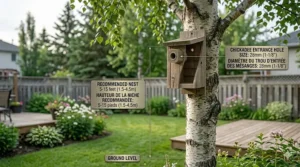
Optimal Placement
Height: 1.8-4.5 metres (6-15 feet), with 1.8 metres optimal for suburbs
Direction: Face entrance east or southeast against western weather
Habitat: Within 30 metres of deciduous or mixed forest edge
Pre-Nesting Preparation
Fill birdhouse halfway with wood shavings before mounting. Chickadees are excavators who prefer renovating cavities — Canadian birders report 3x higher occupancy with excavation material.
Timing
Install by late March in southern Canada, early April in northern regions. Chickadees begin nesting early April through mid-May per Hinterland Who’s Who.
Supplemental Attractants
Winter Feeding: Maintain sunflower seed feeders to establish territory
Nesting Materials: Provide pet fur, soft plant materials within 10 metres
Water Sources: Essential year-round for drinking and bathing
Proper Chickadee House Measurements: Technical Deep Dive
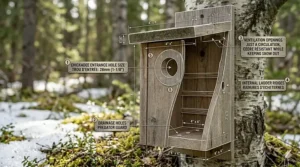
For DIY builders, these precise measurements ensure optimal acceptance rates based on Cornell’s NestWatch data.
Critical Dimensions
✅ Entrance Hole: 1-1/8″ (2.86 cm) ± 1/16″ tolerance; sand edges smooth
✅ Hole Height: 7″ (17.8 cm) from interior floor
✅ Floor: 4 x 4″ minimum (10 x 10 cm)
✅ Interior Height: 9″ (22.9 cm) floor to ceiling
✅ Ventilation: Four 1/4″ (6mm) holes near roof
✅ Drainage: Four 1/8″ (3mm) holes in floor corners
Materials
Wood: Cedar, redwood, or recycled plastic (NOT treated pine)
Wall Thickness: Minimum 3/4″ (1.9 cm) for Canadian insulation needs
Hardware: Stainless steel or galvanized only for freeze-thaw resistance
Chickadee Nesting Preferences
Understanding chickadee nesting behaviour transforms placement from guesswork to science-based success.
Site Selection
Chickadees scout 2-3 weeks before egg-laying, evaluating safety, food proximity, and structure. Canadian research shows they reject 60% of boxes due to issues like improper ventilation or predator vulnerability.
Excavation Behaviour
Even with perfect entrance holes, chickadees spend 7-10 days renovating interiors, removing and carrying away provided shavings to avoid creating scent trails for predators.
Nesting Materials
Females build nests preferring soft moss, animal fur (deer, rabbit, dog), feathers, and occasionally plant down. They spend 1-2 weeks collecting tiny beakfuls of material.
Cavity Size for Chickadees
Beyond entrance holes, overall cavity volume impacts nesting success. The ideal chickadee cavity provides 144-180 cubic inches (2,360-2,950 cm³).
Depth Recommendations
8 inches: Minimum, suitable for southern Canada
9 inches: Optimal for most regions
10 inches: Preferred in northern territories for extreme cold
Depths beyond 10 inches become problematic — nestlings struggle climbing to exit during fledging.
Floor Area
4 x 4 inches: Excellent heat retention, readily accepted
4.5 x 4.5 inches: Still acceptable, more material capacity
5 x 5 inches: Upper limit to avoid attracting competing species
Canadian chickadee clutches contain 6-8 eggs. The 4 x 4″ floor accommodates this while maintaining warmth during unpredictable spring weather.
Regional Variations Across Canadian Provinces
Canada’s vast geography creates regional considerations for chickadee house specifications. While the 1-1/8 inch entrance hole remains constant, placement and supplemental strategies vary significantly.
Atlantic Canada (NB, NS, PE, NL)
Climate Challenges: High humidity, strong coastal winds
Recommendations: Extra drainage holes, wind-protected placement, eastern orientation to avoid prevailing westerlies
Timing: Install by early April; chickadees begin nesting mid-April through May
Central Canada (ON, QC)
Climate Challenges: Extreme temperature fluctuations, heavy snow loads
Recommendations: Robust roof construction, proper ventilation for summer heat, minimum 3/4-inch wall thickness
Timing: Install by late March in southern regions, mid-April in northern areas
Prairie Provinces (MB, SK, AB)
Climate Challenges: Severe winter cold (-40°C common), dry summers, intense sun
Recommendations: Maximum insulation thickness, southern/southeastern entrance orientation, afternoon shade provision
Timing: Install by early April; brief nesting window requires prompt setup
British Columbia
Climate Challenges: Heavy rainfall (coastal), diverse microclimates
Recommendations: Superior moisture resistance, mold-resistant cedar construction, excellent drainage
Timing: Coastal regions: late March installation; Interior: early April
Northern Territories (YT, NT, NU)
Climate Challenges: Abbreviated nesting season, extreme cold, limited tree coverage
Recommendations: Maximum wall thickness (1 inch preferred), ground predator protection essential, prime southern exposure
Timing: Install by mid-April; chickadees nest May-early June only
Maintenance and Cleaning Best Practices for Canadian Climates
Proper maintenance extends birdhouse lifespan while ensuring continued chickadee occupancy. Canadian conditions demand specific approaches.
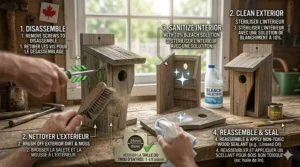
Post-Nesting Cleaning
Timing: Wait minimum 2 weeks after fledging (typically late June-early July for first broods)
Canadian chickadees occasionally attempt second broods, so premature cleaning disrupts nesting.
Method:
- Remove entire old nest material
- Scrub interior with weak bleach solution (1:10 bleach:water ratio)
- Rinse thoroughly with clean water
- Air dry completely before resealing
Frequency: Annual minimum; bi-annual if house receives heavy use
Winter Roosting Preparation
Many Canadians don’t realize chickadees use nest boxes for winter roosting — critical survival behaviour during extreme cold. Clean houses by September to prepare for winter roosting season.
Winter Prep Steps:
- Remove all old nesting material
- Add 2-3 inches of fresh wood shavings to floor
- Ensure entrance hole remains clear of ice/snow throughout winter
- Verify ventilation holes aren’t blocked
Structural Inspections
Canadian freeze-thaw cycles stress birdhouse construction. Annual inspections should verify:
✅ Roof remains watertight (no cracks or gaps)
✅ Joints show no separation or loosening
✅ Drainage holes remain clear
✅ Mounting hardware shows no rust or weakness
✅ Wood exhibits no rot or excessive weathering
Frequently Asked Questions About Chickadee Houses in Canada
❓ What is the correct entrance hole size for black-capped chickadees in Canada?
❓ How high should I mount a chickadee house in Canadian backyards?
❓ What's the difference between chickadee houses and wren houses in Canada?
❓ When should I put up chickadee houses in Canada?
❓ Can chickadees use the same house for multiple years in Canada?
Conclusion: Creating Perfect Chickadee Habitat in Your Canadian Backyard
Getting the chickadee house entrance hole size precisely right — that crucial 1-1/8 inches — represents just the foundation of successful chickadee attraction. As we’ve explored throughout this comprehensive guide, Canadian birders need to consider floor dimensions (4 x 4 inches), interior depth (8-10 inches), proper placement (1.8-4.5 metres high), and regional climate adaptations to create irresistible nesting habitat.
The seven products we’ve analyzed each offer pathways to chickadee nesting success, from budget-friendly options like the Stokes Select to premium choices like the Kettle Moraine cedar construction. Canadian-made alternatives like the Backyard Bird Centre Kit support domestic manufacturing while meeting exact specifications these cavity-nesters demand.
Remember that successful chickadee attraction extends beyond purchasing the right birdhouse. Providing excavation material (wood shavings), maintaining year-round feeding stations, offering clean water sources, and respecting chickadee site selection timeline all contribute to higher occupancy rates. Canadian research consistently demonstrates that attention to these details can triple your success probability.
As you implement these strategies in your Canadian backyard, you’re not just attracting delightful songbirds — you’re participating in crucial habitat provision. The Canadian Wildlife Federation reports that cavity-nesting bird populations face ongoing challenges from habitat loss and dead tree removal. Your properly-sized chickadee house directly addresses this conservation concern while bringing joy to your outdoor space.
So measure that entrance hole carefully, position your house thoughtfully, and prepare to welcome Canada’s most endearing backyard companions. Those cheerful “chick-a-dee-dee-dee” calls emanating from your birdhouse will confirm you’ve gotten the specifications exactly right.
Recommended for You
- 7 Best Chickadee House Options for Canada 2026
- 7 Bird Cage Placement Tips for Cold Climates Canada 2026
- 7 Essential Winter Bird Care Products Every Canadian Bird Owner Needs in 2026
Disclaimer: This article contains affiliate links to Amazon.ca. If you purchase products through these links, we may earn a small commission at no additional cost to you.
✨ Found this helpful? Share it with your friends! 💬🤗
