
In This Article
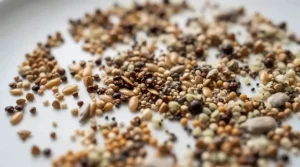
Canary seed mix vs pellets is the biggest feeding decision a canary owner makes. A seed mix is a blend of grass seeds, millet and oilseeds that your bird cracks and hulls. Pellets are formulated nuggets that pack a balanced recipe into every bite. One is familiar and tasty. The other is engineered.
Here’s the backstory. The domestic canary descends from a small wild finch of the Canary Islands, Azores and Madeira. Wild canaries do eat seeds, but they also eat insects, berries and green plant material as the seasons change. A bowl of the same three seeds every day is a pale cover version of that menu.
That’s why canary seed mix vs pellets keeps coming up at the vet’s office, and why the answer is messier than “pellets good, seeds bad.” Avian vets broadly favour a pellet-based diet. They disagree on exact ratios, and canaries are notoriously stubborn about change.
This guide is spec analysis, published veterinary guidance and aggregated retail-review sentiment. It isn’t hands-on product testing. You’ll get seven real foods, the risks of a seed-only diet, a conversion plan and a realistic mixed-feeding approach. Prices are Canadian ranges, so check current listings on amazon.ca.
Quick Comparison: Canary Seed Mix vs Pellets at a Glance
| Feeding Approach | What It Is | Main Strength | Main Weakness | Best For |
|---|---|---|---|---|
| Plain seed mix | Canary grass seed, millet, oilseeds | Familiar, cheap, easy to find | Fatty, imbalanced, easy to pick through | Short-term use with vet-guided supplements, e.g. Hagen Original Blend Canary Seed |
| Vitamin-fortified seed mix | Seed blend with added vitamins and minerals | Better label numbers than plain seed | Coating can be lost when hulled; selective eating still a risk | Birds not ready for pellets, e.g. Higgins Vita Seed Canary |
| Hybrid seed plus extruded | Seed with formulated pieces | Stepping stone for fussy eaters | Birds can still pick favourites | Early conversion, e.g. Kaytee Forti-Diet Pro Health Canary & Finch |
| Pellet-based diet | Uniform formulated nuggets | Same nutrition in every bite | Unfamiliar to seed-raised adults | Long-term health, e.g. Lafeber Premium Daily Diet Canary Pellets |
The table shows the trade-off. Seed wins on familiarity and pellets win on consistency. The hybrid sits in the middle and works only if your canary actually eats the formulated pieces. If your bird has been on seed for years, the middle rows are your realistic first step, not your destination.
💬 Just one click — help others make better buying decisions too!😊
Top 7 Foods for the Canary Seed Mix vs Pellets Decision: Expert Analysis
Availability and pack sizes shift constantly, so confirm what’s listed on amazon.ca before you commit. Prices below are ranges, not quotes.
1. Lafeber Premium Daily Diet Canary Pellets — whole-egg protein in canary-sized granules
Lafeber builds this recipe on ground non-GMO corn and soybean meal, with whole egg for protein and balanced omega-3 and omega-6 fats. In practice, egg is among the most digestible proteins around. The omega balance targets skin, feathers and immune function, which are the first things to look dull on a poor diet.
The pieces are small enough for a canary’s bill, and the company positions them as either a full meal or a major part of the diet. That flexibility suits mixed feeding canaries, because you can start with a spoonful and build up. Lafeber also sells a finch version and a tropical-fruit pellet.
Review evidence is thin. Lafeber’s own canary page shows only a couple of reviews. One owner says a canary eats it readily on a vet’s recommendation, and another mixes it into hard-boiled egg for breeding birds. That is anecdote, not a trend.
Pros:
- ✅ Whole egg adds highly digestible protein
- ✅ Sized for small beaks
- ✅ Naturally preserved with no artificial dyes
Cons:
- ❌ Seed-raised adults may not recognize it as food
- ❌ Very small pool of verifiable reviews
Expect roughly the C$15 to C$25 range depending on tub size. For a pellet you’d feed daily, that’s fair value.
2. Harrison’s High Potency Super Fine — organic, conversion-friendly nuggets
Harrison’s lists this formula at a minimum of 18.5% crude protein, 12% crude fat and 6% maximum fibre. Omega-6 sits at 3.7% minimum and omega-3 at 0.5%. Those numbers sit above a typical maintenance pellet, which is why vets often reach for it when transitioning birds off high-fat seed. The brand lists it as a year-round diet for canaries and finches, with about a teaspoon (roughly 5 mL) daily.
It’s certified organic and non-GMO verified, built around ground organic grains, seeds and legumes. For picky birds, a stronger-tasting, richer pellet can be the difference between curiosity and rejection.
Retail reviews are anecdotal but telling. One buyer credits Harrison’s with two finches reaching 16 years. A canary owner describes a bird refusing another pellet but eating a Harrison’s sample. A reviewer also warns that picking the 5 lb Super Fine option once delivered the larger Fine size, so verify what arrives.
Pros:
- ✅ Certified organic ingredient list
- ✅ Rich enough to entice seed-raised birds
- ✅ Tiny canary and finch feeding guidance on the label
Cons:
- ❌ Priciest per gram in this round-up
- ❌ Richer recipe needs weight monitoring
Plan on about C$22 to C$35 per 1 lb bag. It’s premium, but a small bag goes a long way for one bird.
3. Roudybush Daily Maintenance Mini — softer pellets for nervous converts
Roudybush Daily Maintenance carries about 7% fat, with roughly 21% of calories from fat. That’s modest next to seed. The steam-pelleted food has no added sugars or colours. The Mini pellet is about 3/32 inch (roughly 2.4 mm) across, and the maker lists canaries among suited birds, with Nibles offered for the tiniest beaks.
A Canadian retailer notes that Roudybush pellets are softer and often more palatable for converting birds. Softness matters because many seed eaters judge food by crunch and by resemblance to what they already know.
Buyer sentiment is mixed, which is useful. One Canadian-retailer reviewer found the Mini the right size for a bird that likes a crunch. Another buyer saw a cockatiel and parakeet do better after the pellets were mixed in gradually. A few buyers say their birds simply refused it, and one reports pellets crumbling to powder.
Pros:
- ✅ Softer texture helps hesitant eaters
- ✅ Low added-sugar, colour-free formula
- ✅ Multiple pellet sizes available
Cons:
- ❌ Some buyers report dust and crumbling
- ❌ Not canary-specific, so sizing takes care
Smaller bags run in the mid-to-high C$10s to about C$25, and larger sizes lower the per-gram cost.
4. Kaytee Forti-Diet Pro Health Canary & Finch — seed-and-extruded bridge
Retail listings describe this as a seed and extruded blend, which makes it the closest thing here to a training-wheels diet. Kaytee says an avian nutrition expert developed it, and it’s fortified. Canadian chain Pet Valu stocks the Forti-Diet canary line, so it’s easy to find locally.
The hybrid approach asks your bird to stand at the same bowl and meet formulated pieces next to seed. In theory, familiarity lowers the barrier. In practice, a determined seed-picker will still excavate the favourites, so watch what gets left behind.
At one major retailer, star ratings sit in the mid-4s out of 5 across more than a thousand reviews. I couldn’t verify what those reviews say about nutrition, so treat that as a popularity signal rather than proof.
Pros:
- ✅ Familiar seed format with formulated pieces
- ✅ Widely stocked in Canada
- ✅ Budget-friendly entry point
Cons:
- ❌ Selective eaters can skip the extruded bits
- ❌ Still seed-heavy compared with true pellets
Typically C$10 to C$20 for a 2 lb (about 900 g) bag. It’s good value as a transition tool, less so as a permanent plan.
5. Higgins Vita Seed Canary — vitamin-boosted seed for non-converters
Higgins describes Vita Seed as a natural seed blend with added vitamins, minerals and trace nutrients, free of artificial preservatives, flavours and chemical colours. That makes it a step up from a bargain mix, and a sensible option for birds your vet agrees aren’t ready for pellets.
The catch is physical. Vitamin coatings sit on the seed surface, and canaries hull seed before swallowing. Lafeber argues the benefit largely disappears once the husk is removed, and that’s manufacturer marketing, but the logic is hard to dismiss. Add the fact that canaries pick favourites, and fortified seed is better than plain seed without being a complete solution.
Review pools are small. Retail pages show a few reviews around 4.6 out of 5, so quality signals are thin.
Pros:
- ✅ Added vitamins and minerals on the label
- ✅ No artificial colours or preservatives
- ✅ Familiar for seed-raised canaries
Cons:
- ❌ Coating can be lost once seed is hulled
- ❌ Selective eating undermines the fortification
A Canadian specialty retailer lists it around the mid-C$20s, so expect roughly C$20 to C$30 depending on bag size.
6. Hagen Original Blend Canary Seed — Canadian-brand baseline mix
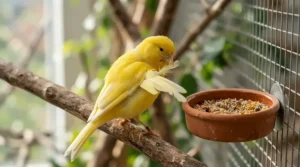
Montreal-based Hagen’s Original Blend combines canary grass seed, canola, white millet, millet kernel and niger, plus added vitamins and minerals. The guaranteed analysis lists minimum 16% protein, 10% fat, 3,400 IU/lb vitamin A and 225 IU/lb vitamin D3. The seed is air-cleaned and polished, which means less dust at the bowl.
The label contains an honest hint. It suggests a balanced vitamin supplement may help prevent deficiencies if your bird becomes selective about which seeds it eats. That’s the manufacturer acknowledging the central weakness of any mix. A 3 lb (1.36 kg) bag is easy to find in Canada.
I couldn’t find an independent review set, so there’s no sentiment to report. Judge it on its label.
Pros:
- ✅ Clear guaranteed analysis on the label
- ✅ Low-dust, air-cleaned seed
- ✅ Canadian brand with local availability
Cons:
- ❌ Seed mix invites picking favourites
- ❌ Not a complete diet on its own
Roughly C$12 to C$18 for 3 lb. It’s the budget baseline, best used with a pellet alongside.
7. Vitakraft Menu Premium Canary & Finch Food — fortified daily mix at budget prices
Vitakraft markets this as a vitamin-fortified daily food for small birds. Public label detail is limited, so check the guaranteed analysis on the pack you actually receive. It’s one more fortified-seed option for owners who want an alternative to Kaytee or Higgins.
Retail ratings run high, around 4.7 out of 5, but from a small number of reviews at one major retailer. That’s too few to call a trend. As with every seed-based product here, the vitamin story depends on your canary eating the whole mix rather than a few favourites.
Use it the way you’d use any fortified mix: as a bridge, or as the “seed portion” of a plan where pellets do the heavy lifting.
Pros:
- ✅ Budget-friendly fortified mix
- ✅ Daily-food positioning for small birds
- ✅ Easy swap if a bird tires of other brands
Cons:
- ❌ Limited public label detail
- ❌ Small review pool
Typically C$12 to C$22 depending on size.
Side-by-Side: How the Seven Stack Up
| Product | Type | Standout | Price Range (CAD) | Best For |
|---|---|---|---|---|
| Lafeber Premium Daily Diet Canary Pellets | Pellet | Whole-egg protein | C$15–C$25 | Daily base diet |
| Harrison’s High Potency Super Fine | Organic pellet | Rich, enticing nuggets | C$22–C$35 | Hard-to-convert birds |
| Roudybush Daily Maintenance Mini | Pellet | Softer texture | C$12–C$25 | Nervous converts |
| Kaytee Forti-Diet Pro Health Canary & Finch | Seed plus extruded | Bridge format | C$10–C$20 | Early transition |
| Higgins Vita Seed Canary | Fortified seed | Vitamin-boosted | C$20–C$30 | Not-yet converters |
| Hagen Original Blend Canary Seed | Seed mix | Clear label data | C$12–C$18 | Budget seed portion |
| Vitakraft Menu Premium Canary & Finch Food | Fortified seed | Budget daily mix | C$12–C$22 | Rotation and variety |
Looking at the table, the Lafeber Premium Daily Diet Canary Pellets is the cleanest daily-diet pick, while the Harrison’s High Potency Super Fine earns its premium only if your bird is a stubborn seed devotee. The three seed-based options cluster at the cheaper end. Choose among them by label detail and brand availability, not marketing language.
✨ Ready to Upgrade the Bowl?
🔍 Pick one pellet and one seed mix from the list above, check current pricing on amazon.ca, and start the gradual switch this week. A small first bag is plenty to test your canary’s reaction!
Canary Seed Mix vs Pellets: The Real Nutritional Difference
Seed is high in fat and carbohydrate and imbalanced in many other nutrients. VCA Canada’s canary-feeding guidance puts it plainly: an all-seed diet isn’t nutritionally complete. Pellets are formulated so each bite contains the same balance, and VCA suggests pellets should ideally make up roughly 75 to 80% of the diet.
Why not just feed a better seed mix? Because mixing isn’t eating. A mix may contain two to five seed types, and your canary treats the bowl like a buffet where only dessert gets taken. Millet is a notorious favourite, and millet alone is not a complete food.
Pellets flip the incentive. When every piece contains the whole recipe, a picky bird can’t skip the boring nutrients. That’s the logic behind the vet consensus, even when the numbers differ.
| Factor | Traditional Breeder Diet | Pellet-Based Diet |
|---|---|---|
| Base food | Seed mix | Formulated pellets |
| Add-ons needed | Egg food, greens, cuttlebone, vitamins | Fresh produce for enrichment |
| Consistency | Varies bowl to bowl | Same in every bite |
| Effort | High | Lower once converted |
| Best For | Experienced breeders | Most pet owners |
Breeders have long compensated for seed’s gaps with boiled egg, greens, cuttlebone and vitamin powders. It works, but it demands skill and consistency. For most pet owners, pellets simplify the same goal. That doesn’t make the breeder method wrong, just labour-intensive.
Seed-Only Canary Diet Risks: What Actually Goes Wrong
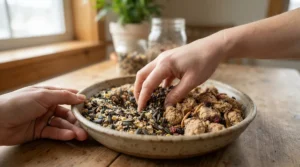
Seed-only canary diet risks start with obesity. VCA notes canaries eating large amounts of seed are vulnerable to weight gain and other nutritional problems. Fat piles up quietly under feathers, so you might not spot it without handling or weighing your bird.
Then come the deficiencies. A University of Illinois veterinary article lists hypovitaminosis A, low calcium, reproductive disease, atherosclerosis and obesity among diet-linked conditions common in avian practice. None of these announce themselves early. A dull coat or a rough moult might be the first visible hint.
Seed-only feeding also shortens margins. A bird that’s already under stress from a cold snap, a moult or a health scare has fewer nutritional reserves to draw on. VCA says poor nutrition can shorten a canary’s life.
None of this means seed is poison. It means seed can’t be the whole plan. If you’re feeding a seed-only diet today, the fix isn’t panic. It’s a vet visit and a slow, monitored shift.
Selective Eating: Why Your Canary Cherry-Picks the Fatty Bits
Selective eating is the engine behind most seed-diet problems. VCA says canaries tend to eat just one or two favourites from a mix, and millet is often preferred. Humans do the same with a bag of mixed nuts, which explains why the fortified label can lie by omission.
The mathematics is unforgiving. If a mix contains five seeds and your canary eats two, it’s only getting two-fifths of the formula, and probably the fattiest two. The vitamins coated on the rest end up in the discard pile.
Practical countermeasures help. Offer measured amounts, not a bottomless bowl. Use a separate dish for any pellets, so the seed doesn’t contaminate them. Watch what’s left each evening.
A canary eats only about a teaspoon of seed a day, so overflowing bowls are mostly an invitation to pick through and waste. If your bird rejects whole categories of food, mention it to your avian vet. Persistent refusal can be a sign something else is going on.
Vitamin Gaps: What a Seed Diet Leaves Out
Vitamin gaps are the quiet cost of a seed-heavy diet. The Merck Veterinary Manual’s passerine nutrition chapter notes that typical canary mixes combine canary seed, rapeseed, niger, hemp, linseed and oats, and that most commercial seed mixtures fall short on multiple vitamins and amino acids.
Vitamin A is the headline gap. Veterinary resources point out that seeds contain mostly precursors rather than preformed vitamin A, and conversion varies. Deficiency affects the linings of the respiratory and digestive tracts, which can leave a bird more prone to infection. Calcium is the other big one, because seeds provide little of it relative to phosphorus.
Supplements can paper over the cracks temporarily. VCA says powdered supplements can be given while a bird is still on seed, but only under the guidance of a veterinarian experienced with birds. It also notes that birds eating about 75 to 80% of their diet as pellets generally don’t need supplements.
If you’re staying on a seed-heavy plan for now, a cuttlebone or mineral block helps with calcium. Kaytee notes this is unnecessary once a bird eats mainly pellets.
How to Choose Between Canary Seed Mix vs Pellets (Step by Step)
Here’s a decision path that respects both your canary’s habits and its health:
- Start with your vet’s baseline. VCA Canada’s canary feeding guide recommends discussing diet with an avian vet before changing anything major.
- Check your bird’s age and history. Hand-raised babies convert easily. Mature seed-raised adults can be hard.
- Read the guaranteed analysis. Compare protein, fat and fibre, and look for added vitamin A and D3 as with Hagen Original Blend Canary Seed.
- Prioritise formulation over marketing. No regulator certifies avian “complete” claims, so rely on ingredient lists and your vet.
- Match pellet size to beak size. Check the manufacturer’s size chart, as with Roudybush Daily Maintenance Mini.
- Pick a bridge product if your bird is resistant. A hybrid like Kaytee Forti-Diet Pro Health Canary & Finch can ease the first weeks.
- Plan for fresh food. VCA suggests fruit and vegetables at roughly 20 to 25% of the daily diet, with no butter, salt or oil on cooked items.
Follow these in order and the canary seed mix vs pellets decision becomes less about ideology and more about your particular bird.
Canary Pellet Conversion: A Step-by-Step Plan
Canary pellet conversion is a marathon, not a sprint. VCA warns it can be stressful for both of you and says to weigh your bird daily so you can catch weight loss early. A small kitchen gram scale and a perch work well.
Step 1: Get a baseline. Weigh your canary at the same time each day for a week. Note droppings, which should have a normal fecal portion.
Step 2: Choose a method. Mixing pellets 50:50 with seed for at least two weeks is common practice among avian vets in a published Q&A. Other experienced canary keepers report that blending pellets into seed doesn’t work well for canaries and prefer a separate dish of pellets, plus a moist crumbly food the bird already accepts.
Step 3: Offer pellets separately and consistently. Fresh dish daily, same spot, no seed contamination.
Step 4: Reduce seed gradually. Cut portions, don’t remove them, until pellets are being eaten.
Step 5: Watch the scale. If weight drops, stop reducing seed and call your vet.
Be patient. One vet in that Q&A says full conversion can take up to a year. A UC Davis handout adds a critical caution: make sure the bird doesn’t starve itself during the process.
Mixed Feeding Canaries: Ratios That Actually Work
Mixed feeding canaries is where most households end up, and it’s not a failure. Plenty of owners keep a pellet base with a small seed ration. A veterinarian quoted by PetMD suggested up to 10% seed, 60 to 70% pellets and 20 to 30% fresh food.
Others lean differently. A Texas A&M clinician says pellets should make up roughly 70 to 85%. An Australian exotics practice suggests 30 to 50% pellets for canaries, which shows how much professional opinion varies. VCA’s ideal is about 75 to 80%.
The takeaway: your canary’s ideal split depends on its health, history and tolerance. Use these as ranges to discuss, not targets to chase alone.
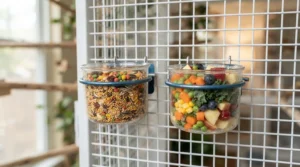
A simple structure works for many households. Offer pellets daily in one dish, a small measured seed portion in another, and fresh greens or cooked vegetables as enrichment. Seed becomes the reward, not the foundation.
Products that fit this approach include Lafeber Premium Daily Diet Canary Pellets as the base and Higgins Vita Seed Canary as the measured seed portion.
Real-World Scenarios: Matching Foods to Canary Owners
Scenario 1: A rescue canary, seed-raised for years. Budget moderate, tolerance for failed attempts high. Start with a vet check, then try Harrison’s High Potency Super Fine in a separate dish alongside a reduced seed portion. Expect weeks of stalemate, with daily weigh-ins.
Scenario 2: A new owner with a young, hand-raised canary. Budget modest. Hand-raised babies are generally the easiest to start on pellets, so begin with Lafeber Premium Daily Diet Canary Pellets and keep seed as an occasional treat.
Scenario 3: A budget-conscious owner in a condo who wants to improve gradually. Keep Hagen Original Blend Canary Seed as the base for now, add a small pellet dish, and move toward Roudybush Daily Maintenance Mini if the bird shows curiosity. Schedule an avian vet check-up as soon as money allows.
Each scenario shares a theme: the right food is the one your bird eats, paired with a plan your vet can monitor.
Problem → Solution Guide for Common Conversion Headaches
Problem: My canary ignores pellets completely. Birds may not recognize pellets as food at first, according to VCA. Try a separate dish, a softer pellet such as Roudybush Daily Maintenance Mini, or a moist crumbly food as a bridge.
Problem: My canary is losing weight. Stop reducing seed and call your vet. Weight loss is the main danger of conversion.
Problem: Pellets turn to dust in the dish. Some buyers report crumbling with certain brands. Offer smaller portions, empty the powder, and consider a different pellet.
Problem: My canary only eats the millet. Remove it as a daily item. Offer it as a treat, since millet is a known favourite and nutritionally incomplete.
Problem: I can’t tell if the seed mix is actually fortified. Read the guaranteed analysis and look for vitamin A and D3 levels, like those on the Hagen Original Blend Canary Seed label.
When a fix doesn’t work after a reasonable try, don’t escalate alone. That’s what avian vets are for.
Avian Vet Advice: What to Ask and When
Avian vet advice is the missing ingredient in most owner-driven diet changes. A Texas A&M veterinarian recommends consulting an avian veterinarian before switching a seed eater to pellets, and notes the conversion may require creativity. Their article on pet bird nutrition is a useful companion read.
Before your appointment, jot down what your canary eats now, how much it eats, weight trends, droppings and moult timing. Ask these questions:
- What pellet share is right for my bird’s age and health?
- Is a vitamin or mineral supplement needed during the transition?
- How often should I weigh and recheck?
- Which pellet brand suits my bird?
Avian-experienced vets exist across Canada, though availability varies by province, so book early if you’re in a smaller centre. If you can’t reach one quickly, a general vet with exotic experience can still help.
Long-Term Cost & Maintenance: Is a Pellet Diet Worth It?
| Option | Typical Price Band (CAD) | Pack Size | Value Note |
|---|---|---|---|
| Hagen Original Blend Canary Seed | C$12–C$18 | 3 lb | Cheapest upfront, needs supplements |
| Kaytee Forti-Diet Pro Health Canary & Finch | C$10–C$20 | 2 lb | Good bridge value |
| Lafeber Premium Daily Diet Canary Pellets | C$15–C$25 | Varies | Fair daily-base value |
| Harrison’s High Potency Super Fine | C$22–C$35 | 1 lb | Premium, low volume |
A single canary eats roughly a teaspoon of seed a day, so even a 1 lb bag lasts a long time. The real cost isn’t the bag. It’s vet visits for preventable problems. Preventing obesity, vitamin A deficiency and calcium problems may cost less than treating them later.
Maintenance matters too. Store food sealed, cool and dry, and check best-before dates, especially if you buy larger bags. Wash dishes daily and discard wet food that’s been sitting out.
Over a canary’s lifespan of 10 to 15 years with proper care, a few extra dollars a month on better nutrition is a small bet on long-term health.
Common Mistakes When Choosing Canary Seed Mix vs Pellets
Trusting “complete” on the bag. VCA points out that no regulatory body certifies avian nutrition products, so marketing claims aren’t guarantees.
Switching cold turkey. An abrupt change can leave a bird refusing food. Gradual, monitored shifts are safer.
Skipping the scale. Without daily weights, weight loss during conversion goes unnoticed.
Buying the wrong pellet size. Large pieces frustrate small beaks. Check manufacturer size charts.
Feeding grit. VCA says canaries don’t need grit because they hull seed before swallowing.
Treating fresh food as the main diet. VCA describes fresh produce as enrichment, not a complete nutrient source.
Giving up after one try. A reported conversion window of up to a year means a failed first attempt is normal, not final.
FAQ
❓ How long does canary pellet conversion usually take?
❓ Can canaries live on pellets alone?
❓ Do canaries on pellets need cuttlebone?
❓ Is a vitamin-fortified seed mix enough?
❓ What should I do if my canary refuses pellets?
Conclusion
Canary seed mix vs pellets isn’t a moral contest. It’s a nutrition question with a fairly clear direction: formulated pellets as the base, fresh food for enrichment, and seed as a smaller supporting act. The tricky part is getting a creature of habit to agree.
If your bird is young or adaptable, start with Lafeber Premium Daily Diet Canary Pellets. If it’s stubborn, Harrison’s High Potency Super Fine or the softer Roudybush Daily Maintenance Mini may open the door. If you need a stepping stone, Kaytee Forti-Diet Pro Health Canary & Finch is the gentlest bridge here. Keep Hagen Original Blend Canary Seed, Higgins Vita Seed Canary or Vitakraft Menu Premium Canary & Finch Food as measured seed portions while you work up to pellets.
Whatever you pick, weigh daily during the switch, work with an avian vet, and treat setbacks as part of the process. Your canary’s song depends on what goes into that tiny beak.
✨ Ready to build a healthier bowl?
🐤 Check current prices and availability on amazon.ca, pick one pellet, and begin your gradual transition today. Your canary will thank you in song!
Recommended for You
- Bulk Finch And Canary Food Value Pack: 7 Best Picks (2026)
- Thistle Seed For Finches: 7 Best Picks For Canada (2026)
- Finch Food Under $15 CAD: 7 Best Cheap Picks For 2026
Disclaimer: This article contains affiliate links. As an Amazon Associate, I earn from qualifying purchases. If you purchase products through these links, we may earn a small commission at no additional cost to you.
✨ Found this helpful? Share it with your friends! 💬🤗
