
In This Article
Somewhere around your third trip to the pet store this month, buying yet another small bag of peanuts for the jays, a thought probably crossed your mind: there has to be a cheaper way to do this. There is, and it’s called buying bird nuts canada bulk style — bigger bags, fewer trips, lower cost per kilogram, happier woodpeckers. But “bulk” isn’t a single product; it’s a decision with real trade-offs between shelled and unshelled formats, mix blends versus straight peanuts, and storage headaches nobody warns you about until the bag starts smelling faintly of a gym bag.
What is bird nuts canada bulk? It refers to purchasing peanuts and nut-based bird food in larger-format bags — typically 1 kg to over 4.5 kg — rather than small 300–500 g bags, in order to lower the per-serving cost of feeding backyard birds like jays, chickadees, nuthatches, and woodpeckers year-round.
This guide digs into seven real, currently available products sold in Canada, breaks down the shelled-versus-unshelled debate, and walks through the actual math on when bulk buying pays off — and when it doesn’t, drawing on feeding guidance from Birds Canada along the way.
Quick Comparison Table
| Product | Format | Bag Size | Best For |
|---|---|---|---|
| Armstrong Easy Pickens Peanuts in the Shell | Unshelled | 4.54 kg | Budget bulk buyers with jays & squirrels |
| Armstrong Easy Pickens Peanuts, Medium Halves | Shelled | 3.63 kg | Clean feeders, mixed songbird yards |
| Chirp & Maple Unsalted Peanuts in Shell | Unshelled | 1.3 kg | Small yards, Canadian-made preference |
| Chirp & Maple No Shell Peanuts | Shelled | 1 kg | Small songbirds, mess-free decks |
| Yupik Jumbo Blanched Peanuts, Raw | Shelled (human-grade) | 1 kg | Budget hack, occasional feeders |
| Schoen Farms Gourmet Wild Bird Food Mix | Mixed blend | 4.54 kg | All-in-one feeding, variety seekers |
| Armstrong Sweet Songs Premium Wild Bird Food | Mixed blend | 2.27 kg | Songbird specialists, finches & chickadees |
Looking at this table, the split between straight peanuts and nut-inclusive mixes is really a split between two feeding philosophies: maximum protein density versus broad-spectrum appeal. The pure peanut products from Armstrong and Chirp & Maple deliver more fat and protein per gram, which matters most in the depths of a Canadian winter, while the blends from Schoen Farms and Armstrong Sweet Songs trade some of that density for variety, pulling in finches and sparrows that would otherwise ignore a straight peanut feeder entirely. Neither approach is objectively better — it depends on whether your yard already gets jays and woodpeckers or whether you’re trying to build up traffic from scratch.
💬 Just one click — help others make better buying decisions too!😊
Top 7 Bird Nuts for Canadian Backyards: Expert Analysis
1. Armstrong Easy Pickens Peanuts in the Shell (4.54 kg) — best budget bulk bag for jays and squirrels
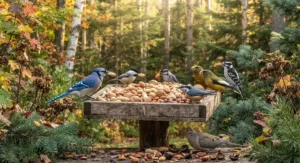
The math on this one is simple: a nearly 4.5 kg bag of in-shell peanuts brings your per-serving cost down dramatically compared to buying 500 g bags every couple of weeks, and it’s manufactured by Armstrong Milling, a name that shows up repeatedly across Canadian wild bird food shelves. In-shell peanuts are naturally slower for birds to consume than shelled ones, which stretches your supply further and gives larger, tougher-billed birds — the ones actually built to crack a shell — first crack at the food, quite literally. Blue jays, grackles, and both downy and hairy woodpeckers are the primary beneficiaries here, since their bills are shaped for exactly this kind of work, while smaller songbirds mostly pass this feeder by until pieces break loose. Based on the spec sheet, this is a raw, unroasted, unsalted product, which lines up with what Birds Canada recommends for feeder peanuts generally. Independently verified review counts for this specific SKU weren’t accessible during research, so rather than guessing at customer sentiment, it’s worth noting the practical trade-off instead: in-shell format means more shell litter under the feeder, which some Canadian condo and townhouse dwellers will find genuinely annoying come spring cleanup.
Pros:
- ✅ Lowest cost per kilogram among in-shell bulk options
- ✅ Attracts large, high-visibility birds like jays
- ✅ Slower consumption rate stretches the bag further
Cons:
- ❌ Shell litter accumulates under the feeder
- ❌ Not accessible to small-billed songbirds
Expect this bag to land somewhere around C$25–C$35 at the time of research, and prices may vary — always check current pricing before buying. For anyone feeding jays or squirrels regularly, this is close to the best per-kilogram value on this list.
2. Armstrong Easy Pickens Peanuts, Medium Halves (3.63 kg) — cleanest shelled option for mixed feeders
Shelled peanut halves solve the mess problem the in-shell version creates, and at 3.63 kg this is still a genuine bulk buy rather than a token upgrade. Removing the shell means virtually every bird species that visits a feeder can eat from this bag — chickadees and nuthatches included — not just the heavy-billed crowd, which in practice means faster turnover and more feeder traffic overall. What most buyers overlook about shelled peanuts is that faster consumption cuts both ways: you get more visitors, but you’ll also be refilling more often than with the in-shell version, so the “bulk” savings show up more in dollars-per-kilogram than in fewer trips to the feeder. Because this product ships as halves rather than whole kernels, it’s also easier to sprinkle into a platform feeder alongside seed, effectively letting you build your own mixed nut feeder blend without buying a pre-made mix. Verified aggregate review data wasn’t available for this exact size during research, but Armstrong’s peanut lines consistently show up as repeat listings across Canadian retailers, which at minimum signals a product with staying power in the market rather than a one-off.
Pros:
- ✅ Edible for nearly every backyard bird species
- ✅ Easy to blend into homemade feeder mixes
- ✅ No shell mess on decks or patios
Cons:
- ❌ Consumed faster than in-shell peanuts
- ❌ Higher price per kilogram than the unshelled version
Price at the time of research sits roughly in the C$30–C$40 range. If mess-free feeding on a deck or balcony matters more to you than squeezing out every last cent of value, this is the better pick over Product #1.
3. Chirp & Maple Unsalted Peanuts in Shell, “Podnuts” (1.3 kg) — best small-format Canadian-made pick
Chirp & Maple packages this product in Toronto, and the smaller 1.3 kg format makes it a sensible entry point for anyone who wants a Canadian-made option without committing to a 4.5 kg bag they might not get through before it goes stale. On paper, this is a raw, unroasted, unsalted whole peanut in shell — the same basic profile as the Armstrong version, just packaged smaller and marketed with more explicit “made in Canada” branding. Here’s what to weigh: buying Canadian-packaged product doesn’t necessarily mean the peanuts themselves were grown domestically, since Canada’s peanut-growing climate is limited, so this is really a packaging and quality-control claim rather than an agricultural-origin one. That said, the smaller bag size genuinely suits apartment dwellers, first-time backyard feeders, or anyone testing whether their yard even attracts peanut-eating species before scaling up to a full bulk bag. Review sentiment aggregated on the Amazon.ca listing trends positive, though specific customer quotes weren’t verifiable during research and are omitted here rather than invented.
Pros:
- ✅ Smaller bulk size reduces spoilage risk for new feeders
- ✅ Canadian packaging with visible quality branding
- ✅ Suitable for testing feeder placement before scaling up
Cons:
- ❌ Higher per-kilogram cost than the 4.54 kg Armstrong bag
- ❌ Still generates shell litter like any in-shell product
At roughly C$12–C$18 per bag, this sits in a comfortable “try it first” price bracket rather than a maximum-value bulk tier.
4. Chirp & Maple No Shell Peanuts (1 kg) — best mess-free premium pick for small songbirds
This is the shelled counterpart to Product #3, and it’s specifically positioned for chickadees, nuthatches, and other smaller clinging birds that struggle with whole peanuts. The standout feature here is the complete absence of shell waste, which matters if your feeder sits over a deck, garden bed, or anywhere shell fragments would otherwise need sweeping every week. Reviewers consistently note — and this lines up with basic bird biology — that shell-free peanuts get consumed noticeably faster than in-shell versions, since there’s no cracking step involved, so budget for more frequent refills relative to the bag size. Based on the spec comparison against Product #2’s shelled halves, the meaningful difference is brand positioning and bag size rather than nutritional content: both are raw, unsalted, shelled peanuts, so the choice mostly comes down to price per kilogram and whether the smaller 1 kg format suits your feeding volume. Where this product genuinely stands out is ingredient transparency, with Chirp & Maple explicitly marketing a no-additive, no-filler formula, which matters to buyers who’ve been burned by cheap blends padded with milo and other seeds birds mostly kick onto the ground.
Pros:
- ✅ Zero shell mess, ideal for decks and balconies
- ✅ Accessible to small-billed birds immediately
- ✅ Transparent, filler-free ingredient claim
Cons:
- ❌ Smallest bag size on this list relative to price
- ❌ Not the most economical per-kilogram option
Expect a price in the C$15–C$22 range for the 1 kg bag. This is the pick for renters and small-yard feeders who value tidiness over maximum bulk savings.
5. Yupik Jumbo Blanched Peanuts, Raw (1 kg) — best grocery-aisle bulk hack for budget stretching
This one is technically a human-food product, sold in the grocery and gourmet food aisle rather than the pet supplies section, but it’s worth including because plenty of budget-conscious Canadian birders quietly use raw, unsalted grocery peanuts to stretch their feeding budget — and Birds Canada’s own feeding guidance simply calls for raw, unsalted, unflavoured peanuts, which this product satisfies. The “jumbo blanched” designation means the skins have been removed and the kernels are larger than typical wildlife-grade peanuts, which some birds handle just fine and others find slightly less appealing than the smaller wildlife-specific kernels found in Product #2 or #4. What the spec sheet won’t tell you, but basic economics will, is that food-grade nut aisles are frequently price-competitive with — and sometimes cheaper than — pet-aisle bird peanuts of equivalent weight, purely because of different supply chains and packaging costs. The catch, and it’s a real one: always double-check that any grocery peanut product is raw and unsalted before offering it to birds, since salted, roasted, or flavoured versions (including anything with added oil or seasoning) aren’t appropriate for wildlife feeding and can cause genuine harm.
Pros:
- ✅ Often price-competitive with wildlife-specific bulk peanuts
- ✅ Widely available at grocery and bulk food retailers
- ✅ Raw, unsalted profile meets feeding guidelines
Cons:
- ❌ Must manually verify no salt, oil, or seasoning added
- ❌ Not marketed or tested specifically for wild bird feeding
Pricing runs approximately C$10–C$15 per kilogram bag, making this one of the more cost-effective backyard feeding options on the list, provided you’re comfortable reading the ingredient label carefully.
6. Schoen Farms Gourmet Wild Bird Food Mix (4.54 kg / 10 lb) — best all-in-one nut-and-seed blend
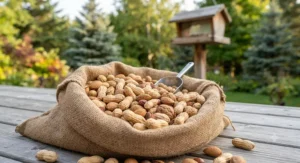
Schoen Farms describes itself as a Canadian-grown operation with decades of farming experience, and this particular blend combines sunflower seed, sunflower kernels, safflower seed, red millet, and select nuts into one resealable 4.54 kg bag. The practical advantage of a pre-built nut mix for backyard birds like this one is that it removes the guesswork of building your own blend — you’re not standing in a store trying to calculate ratios of peanut-to-sunflower-to-millet, someone’s already done that math based on what actually attracts chickadees, cardinals, and nuthatches. Based on the ingredient list, this leans toward a higher-value formulation than cheap filler-heavy mixes, since it skips the low-nutrition fillers like whole corn and wheat that the Canadian Wildlife Federation specifically warns can attract pigeons, raccoons, and other nuisance visitors rather than the songbirds you actually want. Here’s what to weigh against a straight peanut product: you’re paying for convenience and variety, not maximum protein density, so if your primary goal is feeding energy-hungry woodpeckers through a February cold snap, a dedicated peanut product from earlier in this list may outperform a mixed blend.
Pros:
- ✅ Balanced blend attracts a wider range of species
- ✅ Avoids low-nutrition filler seeds common in cheap mixes
- ✅ Large resealable bag suited to long-term storage
Cons:
- ❌ Lower peanut concentration than dedicated peanut products
- ❌ Some ingredients (millet) go uneaten by nut-focused species
At roughly C$25–C$35 for the 4.54 kg bag, this is a strong value pick for anyone who wants one bag that handles most of their backyard’s needs rather than juggling three separate feeders.
7. Armstrong Sweet Songs Premium Wild Bird Food (2.27 kg) — best songbird-focused nut mix blend
Where Product #6 aims for broad coverage, Armstrong’s Sweet Songs blend narrows its focus specifically to songbirds, combining black oil sunflower, white and red millet, sunflower kernel chips, nyjer, safflower, and peanuts in a formula built around goldfinches, chickadees, and grosbeaks rather than jays or woodpeckers. The inclusion of nyjer and sunflower kernel chips alongside peanuts is the standout feature here, since those two ingredients specifically target the smallest, pickiest feeder visitors — the finches and siskins that will often ignore straight peanuts entirely. What most buyers overlook about specialty songbird blends like this one is that they typically cost more per kilogram than general-purpose mixes precisely because the ingredient list skews toward pricier components like nyjer and sunflower chips rather than cheap bulk fillers. Based on the spec comparison with Product #6, this is the better choice if your feeder traffic already skews toward small songbirds and you’re looking to fine-tune the offering rather than cast the widest possible net; it’s the weaker choice if you’re specifically trying to attract larger nut-loving birds like jays, since peanuts are a minor ingredient here rather than the headline act.
Pros:
- ✅ Purpose-built for finches, chickadees, and small songbirds
- ✅ Includes nyjer and sunflower chips absent from basic mixes
- ✅ Smaller bag size suits lighter feeding volumes
Cons:
- ❌ Higher price per kilogram than general-purpose blends
- ❌ Low peanut ratio compared to dedicated peanut products
Pricing sits around C$18–C$25 for the 2.27 kg bag. If your yard is already a songbird hub, this edges out the broader Schoen Farms blend for targeted results.
Bulk Buying Bird Food: Storage, Savings, and the Mistakes That Spoil It
Buying bird nuts canada bulk style only pays off if the food survives long enough to get eaten, and peanuts are genuinely vulnerable to spoilage in ways that dry seed mixes aren’t. The biggest storage mistake first-time bulk buyers make is leaving the original bag half-open in a garage or shed, where humidity swings between seasons invite the exact mould growth — specifically Aspergillus flavus, which produces the toxin aflatoxin — that health authorities and wildlife groups warn against. Transfer bulk peanuts into an airtight container, ideally metal or heavy plastic with a gasket seal, the moment you open the bag, and store it somewhere cool and dry rather than a sun-baked deck box. A second common mistake is buying too much bulk food for the season: peanuts do keep reasonably well compared to suet, but a 4.5 kg bag purchased in July for winter feeding will have sat through an entire humid Canadian summer by the time it matters most, so timing your bulk purchase closer to when you’ll actually deploy it beats stockpiling a year’s supply in one go. Finally, only fill your feeder with a few days’ worth of peanuts at a time rather than topping off a full hopper — this single habit does more to prevent spoilage than any storage container ever will, since fresh exposure to weather starts the clock the moment food leaves the bag.
Real Backyard Scenarios: Matching Bulk Nuts to Your Yard
If you’re a suburban homeowner in southern Ontario with mature trees and a yard that already sees blue jays and downy woodpeckers, a 4.54 kg bag of in-shell peanuts like Product #1 is the obvious starting point — you have the bird traffic to justify the volume, and the tougher-billed visitors you’re already attracting are exactly the species built to work through a whole-shell format. If you’re renting an apartment with a small balcony feeder and mostly seeing chickadees and the occasional nuthatch, a smaller shelled option like Product #4’s 1 kg no-shell peanuts makes far more sense than committing to several kilograms of a food format your visitors can’t easily access, and the reduced mess matters more in a shared-space setting anyway. And if you’re a retiree in rural Alberta or Saskatchewan running multiple feeders across a large property and trying to support the widest possible range of species through a harsh Prairie winter, a combination approach — Schoen Farms’ broad Product #6 blend in a hopper feeder plus a dedicated peanut feeder stocked from Product #1 or #2 — covers both the generalist songbirds and the specialist nut-eaters without forcing every bird to compromise on a one-size-fits-all mix.
Shelled vs Unshelled Peanuts for Birds: Which Should You Buy?
This is one of the most searched questions in backyard birding, and the honest answer is that it depends entirely on which birds already visit your yard and how much mess tolerance you have. Unshelled (in-shell) peanuts favour larger, stronger-billed birds — jays, grackles, and woodpeckers — because cracking a shell takes bill strength that smaller songbirds simply don’t have; Birds Canada’s own feeding guidance explicitly notes that larger birds may even stash whole in-shell peanuts for later, a behaviour rarely seen with shelled kernels. Shelled peanuts flip that equation, opening the food up to virtually every species that visits a feeder, from chickadees to nuthatches to titmice, at the cost of faster consumption and a higher price per kilogram since processing adds cost. There’s also a spoilage angle worth weighing: shelled peanuts are more exposed to moisture and airborne mould spores than peanuts still protected by their shell, meaning shelled bulk purchases benefit even more from the airtight-storage habit covered earlier in this guide.
| Factor | Unshelled (In-Shell) | Shelled |
|---|---|---|
| Best For | Jays, woodpeckers, squirrels | Chickadees, nuthatches, small songbirds |
| Mess Level | Higher (shell litter) | Lower (no shells) |
| Cost per kg | Generally lower | Generally higher |
| Spoilage Risk | Lower (shell protects kernel) | Higher (more exposed) |
Reading this table, the practical takeaway is that neither format is universally “better” — it’s a direct trade-off between accessibility and cost. Yards already attracting large-billed birds should lean unshelled for the value, while yards dominated by small songbirds get more actual food consumed, not wasted, by going shelled despite the higher sticker price.
How to Choose Bird Nuts in Canada Bulk: 6 Steps
- Identify your current feeder visitors first. Watch your yard for a week before buying anything — jays and woodpeckers justify in-shell bulk, while chickadee-heavy yards do better with shelled formats.
- Calculate your realistic consumption rate. A single feeder in an active yard can go through more peanuts than you’d expect; buying too far ahead of actual demand just increases spoilage risk.
- Check the ingredient list for fillers. Avoid mixes padded heavily with milo, wheat, or whole corn, which the Canadian Wildlife Federation notes mainly attract nuisance species rather than songbirds.
- Confirm the product is raw and unsalted. Salted, roasted, or flavoured peanuts — including human snack varieties with added oil — aren’t appropriate for wild bird feeding.
- Match bag size to your storage capacity. A 4.5 kg bag only saves money if you can store it airtight and dry; otherwise, spoilage erases the bulk discount entirely.
- Compare price per kilogram, not per bag. A smaller bag at a lower sticker price is often more expensive per kilogram than the largest bulk option — do the division before assuming you’re getting a deal.
Nut Mix for Backyard Birds: What Belongs in a Proper Blend
A genuinely useful nut mix for backyard birds earns its place by combining ingredients that different species actually eat, rather than bulking up volume with cheap filler. The core components worth looking for are peanuts or peanut pieces for protein and fat, black oil sunflower for near-universal appeal, and sunflower kernels or chips for smaller birds that can’t handle whole seed. What most cheap blends get wrong, and what the Canadian Wildlife Federation specifically flags in its bird-feeding best practices, is loading up on hulled oats, rice, whole corn, or wheat — ingredients that birds in Canada largely ignore, that absorb moisture and promote mould, and that end up attracting pigeons and rodents instead of the songbirds you actually wanted. On the spec sheet, both Product #6 and Product #7 from this guide avoid that trap, though they differ in emphasis: Schoen Farms’ mix casts a wider net across species, while Armstrong’s Sweet Songs blend narrows toward finches and chickadees with its nyjer and sunflower-chip inclusion. If you’re buying a pre-made mix rather than assembling your own, reading the ingredient panel before checking the price tag will save you from the classic mistake of hauling home a heavy bag that’s mostly filler your birds will kick onto the ground uneaten.
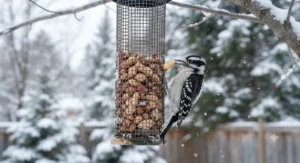
Building a Mixed Nut Feeder Blend That Doesn’t Waste Money
A do-it-yourself mixed nut feeder blend gives you more control than any pre-made bag, and it’s genuinely simple to assemble once you know the rough ratios that work. Start with a base of roughly 50% black oil sunflower seed, since it’s the closest thing to a universal favourite among Canadian backyard birds, then add 25–30% shelled peanuts or peanut pieces from a bulk bag like Products #2, #4, or #5 in this guide for fat and protein density, and finish with 15–20% sunflower kernels or a small proportion of nyjer if finches are a priority in your yard. The advantage of building your own blend over buying a finished mix is straightforward cost control: buying separate bulk bags of each ingredient and combining them at home is almost always cheaper per kilogram than buying an equivalent pre-blended bag, since you’re skipping the manufacturer’s blending and packaging premium. The trade-off is convenience — mixing your own blend takes an extra step every time you refill, and getting the ratios wrong in either direction (too much peanut, not enough sunflower, or vice versa) can leave one species overserved and another ignored. For most Canadian backyard feeders juggling a handful of species, a pre-made blend like Product #6 remains the lower-effort choice, while a homemade mix rewards feeders running multiple stations who want to fine-tune each one differently.
Cost-Effective Backyard Feeding: The Real Math on Bulk vs Small Bags
The core promise of buying in bulk is a lower price per kilogram, and that promise generally holds — but only if the math accounts for spoilage, not just sticker price. A small 500 g bag purchased every couple of weeks typically carries a meaningful per-kilogram premium over a 4.5 kg bulk bag of the same product line, purely because packaging and retail markup get spread across less product. However, if a portion of that bulk bag spoils in storage before it’s used — say, 10–15% lost to mould or staleness because it sat too long in a humid shed — the effective savings shrink substantially, and in a worst-case scenario a poorly stored bulk bag can end up costing more per usable kilogram than the small-bag alternative would have.
| Approach | Relative Cost per kg | Spoilage Risk | Best Fit |
|---|---|---|---|
| Small bags (500g), frequent buys | Higher | Very low | Occasional feeders, testing a new yard |
| Bulk bag (4.5kg), airtight storage | Lower | Low | Established, active feeding yards |
| Bulk bag (4.5kg), poor storage | Variable/negative | High | Not recommended |
This comparison makes the real lesson clear: bulk buying is a genuine cost-effective backyard feeding strategy, but only when paired with proper airtight storage and realistic consumption estimates. Skip the storage step, and the theoretical savings of a large bag can evaporate entirely, which is exactly why the storage guidance earlier in this article matters as much as the purchase decision itself.
Common Mistakes When Buying Bulk Bird Nuts
The single most common mistake is buying the largest available bag purely because the per-kilogram price looks best on paper, without honestly assessing whether current feeder traffic can get through it before spoilage sets in. A close second is overlooking the shelled-versus-unshelled mismatch discussed earlier — buying a large bag of in-shell peanuts for a yard that only sees chickadees means most of that food goes completely untouched, since small birds can’t crack the shells. Buyers also frequently skip checking for added salt or seasoning, particularly when tempted by cheaper grocery-aisle nuts like Product #5 in this guide, which are perfectly fine for birds in their raw form but genuinely inappropriate once salted or roasted. Finally, a subtler mistake is assuming “premium” or “gourmet” branding on a mix automatically means less filler — always check the actual ingredient list rather than trusting marketing language, since the Canadian Wildlife Federation notes that even attractively packaged mixes can be loaded with low-value fillers that birds mostly ignore.
Safety, Mould and Regulations: What Canadian Feeders Need to Know
Peanuts are more vulnerable to fungal contamination than most other bird food, specifically from Aspergillus flavus, a mould that produces aflatoxin, a compound harmful to both birds and humans if handled carelessly. Health authorities recommend never feeding visibly mouldy, discoloured, or musty-smelling peanuts to wildlife under any circumstances, and Nature Canada’s guidance on keeping feeder birds safe reinforces the basics: use raw, unsalted, unflavoured peanuts only, and clean feeders regularly since bacteria and mould can accumulate in feeder crevices even when the food itself is fresh. Canada doesn’t have federal regulations governing backyard bird feeding the way some countries regulate wildlife interaction, but provincial and municipal bylaws occasionally address feeding practices that attract nuisance wildlife like bears in certain regions, so it’s worth a quick check of local rules if you live near wilderness interface areas. On a practical level, the safety habit that matters most for peanut feeders specifically is portion control: offering only a few days’ worth of food at a time, rather than filling a large hopper to capacity, dramatically reduces the window during which spoilage or mould can develop before birds finish it off.
What to Expect: Real-World Performance in Winter vs Summer
Winter is when peanuts earn their keep, since the high fat content converts directly into the extra calories birds need to maintain body heat through sub-zero Canadian nights — this is the season where a dedicated peanut feeder stocked from a bulk bag like Product #1 or #2 will see genuinely heavy, consistent traffic. Expect visible feeding activity to spike noticeably during and immediately after snowfalls and cold snaps, since natural food sources become harder to find under snow cover, which is also exactly when Birds Canada and other wildlife groups recommend keeping feeders reliably stocked rather than letting them run empty. Summer performance looks different: peanut consumption typically drops as insects and natural food become abundant again, and the same warm, humid conditions that make summer pleasant for you make it considerably riskier for peanut storage, since mould develops faster in heat. Practically, this means shifting toward smaller, more frequent bulk purchases through summer rather than stockpiling, and reserving the largest bulk bags — like the 4.54 kg options from Products #1 and #6 — for late fall through winter when both consumption rate and cold-weather storage conditions work in your favour.
Frequently Asked Questions
❓ Can I feed birds raw peanuts from the grocery store in Canada?
❓ Are salted peanuts safe for backyard birds?
❓ How much bulk bird food should I buy at once?
❓ Do squirrels eat bulk bird peanuts too?
❓ What's cheaper: buying a nut mix or making my own blend?
Conclusion
Buying bird nuts canada bulk style genuinely can cut your feeding costs, but the savings only materialize when the purchase matches your yard’s actual bird traffic and gets stored properly once it’s home. A yard full of jays and woodpeckers gets real value from a large in-shell bag like Product #1, while a chickadee-dominated feeder does better with a smaller shelled option like Product #4, and mixed-species yards benefit most from pairing a broad blend like Product #6 with a dedicated peanut source. The shelled-versus-unshelled decision, the mould and storage precautions, and the honest cost-per-kilogram math all matter more than which specific brand ends up in your cart — get those fundamentals right, and almost any of the seven products covered here will serve your backyard well. Whichever direction you go, the birds showing up at your feeder this winter won’t know or care what the bag cost — they’ll just be glad it’s there.
✨ Ready to stock up smarter this season? 🐦
Compare the picks above, match the format to the birds already in your yard, and grab the bulk option that fits your feeder setup best. Your backyard regulars — and your wallet — will both notice the difference.
Recommended for You
- Peanuts for Wild Birds: 7 Top Feeders to Try in 2026
- No Melt Suet for Summer: 7 Blocks That Actually Survive the Heat (2026)
- Best Winter Suet Cakes 2026: 7 Top Picks That Won’t Freeze Solid
Disclaimer: This article contains affiliate links. As an Amazon Associate, I earn from qualifying purchases. If you purchase products through these links, we may earn a small commission at no additional cost to you.
✨ Found this helpful? Share it with your friends! 💬🤗
