
In This Article
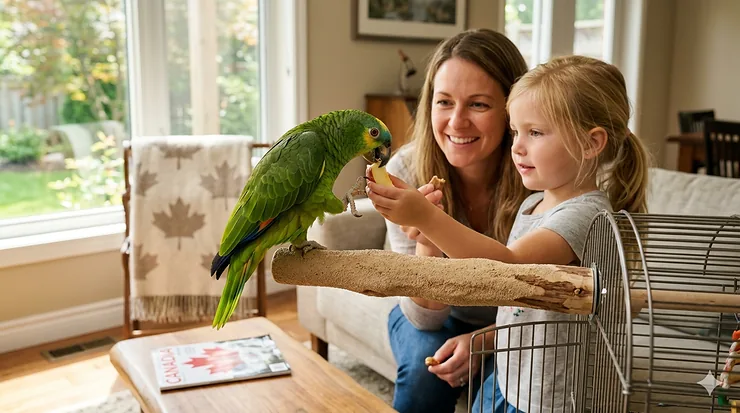
If you’ve ever winced watching your budgie struggle to perch properly or felt those razor-sharp talons dig into your shoulder, you already understand the problem. Overgrown bird nails aren’t just uncomfortable for you—they’re a genuine health hazard for your feathered companion. In Canadian homes where our birds spend most of their time indoors (especially during those long, frigid winters), natural nail wear happens far less frequently than it would in the wild.
Here’s what most new bird owners don’t realize: wild birds encounter dozens of different perching surfaces daily—rough tree bark, smooth branches, textured stones. This variety naturally files down their nails through natural grooming behavior. Your pet cockatiel sitting on smooth dowel perches all day? Those nails are growing unchecked. The consequence isn’t just scratches on your arms. According to VCA Canada Animal Hospitals, overgrown nails can snag on cage bars, toys, or fabric, leading to painful torn nails or even broken toes. That’s where grooming perches for nail trimming become essential equipment, not optional accessories.
I’ve seen countless Canadian bird owners struggle with manual nail trims—the stress it causes both human and bird, the risk of cutting the quick, the inevitable squirming and occasional bleeding. A quality grooming perch solves this problem passively. Your bird maintains healthy nails simply by going about their daily routine. No wrestling matches required.
Quick Comparison: Top Grooming Perches Available on Amazon.ca
| Product | Best For | Size Range | Price Range (CAD) | Key Feature |
|---|---|---|---|---|
| Living World Pedi-Perch | Multi-grip comfort | Mini to X-Large | $15-$30 | Wavy surface prevents foot fatigue |
| Penn-Plax Trimmer Plus | Budget-conscious buyers | 5″ to 18″ | $12-$28 | Crushed seashells add calcium |
| Prevue Pacific Perch | Natural foot exercise | X-Small to X-Large | $10-$25 | 100% ground seashell composition |
| YOOSO WING Ceramic Perch | Long-term durability | 7.8″ (20 cm) | $18-$24 | No sand shedding or fading |
| Penn-Plax Bird-Life Cement | Parakeets to large parrots | 5″ to 12″ | $10-$22 | Colour-safe textured surface |
Looking at the comparison above, budget buyers will find excellent value in the Penn-Plax Trimmer Plus line, which delivers effective nail maintenance without premium pricing. However, if foot comfort is your priority—particularly for birds with arthritis or older companions—the Living World Pedi-Perch’s undulating surface justifies the slightly higher investment by promoting circulation and preventing pressure sores. Canadian buyers should note that most of these products qualify for free shipping on Amazon.ca when your order exceeds $35 CAD, and Prime members enjoy complimentary delivery regardless of order size.
💬 Just one click — help others make better buying decisions too! 😊
Top 7 Grooming Perches for Nail Trimming: Expert Analysis
1. Living World Pedi-Perch – The Circulation Champion
Living World Pedi-Perch stands out with its distinctive wavy design that does something most flat cement perches can’t—it promotes active foot circulation while filing nails. This Canadian-designed product features a multi-grip surface with varying thicknesses along its length, typically ranging from 1.25 cm to 2.5 cm (0.5″ to 1″) in diameter depending on size.
What the spec sheet won’t tell you is that this undulating shape prevents the foot fatigue common with single-diameter perches. Birds naturally shift their grip along the wave pattern throughout the day, exercising different muscle groups and preventing pressure points that can lead to bumblefoot—especially critical during Canadian winters when birds are less active. The cement texture contains fine aggregate that works gradually on nails without the harsh abrasiveness that causes foot irritation.
In my experience, this perch works brilliantly for conures, caiques, and similar medium birds. The Medium size suits cockatiels perfectly, while budgie owners should opt for the Mini or Small variants. Installation takes seconds with the included wing nut and bolt system that fits standard wire cages. One caution: don’t make this your bird’s primary roosting perch—rotate it with softer natural wood perches to prevent overexposure. Canadian reviewers consistently praise its durability even in high-humidity environments like coastal British Columbia homes.
Pros:
✅ Multi-diameter design prevents foot fatigue and arthritis
✅ Also conditions beak while bird preens
✅ Available in five sizes from Mini to X-Large
Cons:
❌ Some birds initially avoid the unfamiliar texture
❌ Requires weekly cleaning to prevent bacteria buildup
Price Range: Around $15-$30 CAD depending on size. The longevity makes this a solid investment—most owners report 2-3 years of use before replacement.
2. Penn-Plax Trimmer Plus Cement Perch – The Budget-Friendly Workhorse
For Canadian bird owners watching their budget without sacrificing quality, Penn-Plax Trimmer Plus delivers exceptional value. These lightweight perches combine crushed seashells with cement aggregate, creating a dual-purpose surface that files nails while providing supplemental dietary calcium as birds naturally chew the perch edges.
The standout feature here is variety—Penn-Plax offers sizes from 5 inches (12.7 cm) to 18 inches (45.7 cm), making it suitable for finches up to large macaws. The 12-inch model dominates sales on Amazon.ca for good reason: it fits most standard cages and works perfectly for the most common Canadian pet birds like cockatiels, lovebirds, and small conures. The plastic endcaps ensure secure mounting to wire cages without exposed metal that could rust in humid conditions.
What most buyers overlook about this model is the subtle diameter taper from approximately 1.27 cm to 1.9 cm (0.5″ to 0.75″) along its length. This isn’t random—it encourages birds to move and reposition, mimicking the natural variation they’d experience on tree branches. Canadian pet stores often sell similar perches for $35-$45 CAD; Amazon.ca’s pricing typically runs 30-40% lower.
One legitimate concern from Vancouver and Halifax owners: these perches can soften temporarily when wet during heavy bathing sessions. Allow them to dry completely before returning to the cage, or designate a separate perch near water dishes if your bird is an enthusiastic bather.
Pros:
✅ Excellent CAD value across all size ranges
✅ Crushed seashells provide bonus calcium intake
✅ Wide size selection for any bird species
Cons:
❌ Can temporarily soften when soaked
❌ Random colour selection (no choice available)
Price Range: Approximately $12-$28 CAD depending on length. The best value sits in the 12-14 inch range for most households.
3. Prevue Pet Products Pacific Perch Beach Walk – The Natural Mineral Specialist
Prevue Pet Products Pacific Perch Beach Walk brings something different to Canadian cages: 100% natural ground seashell composition with no cement binders. This matters because some birds develop sensitivities to the synthetic materials in standard cement perches. The Beach Walk line offers pure calcium carbonate from Pacific ocean shells, making it completely digestible if your curious parrot decides to nibble.
The tapered design runs from approximately 2.2 cm at one end to 3.2 cm at the other (roughly 0.875″ to 1.25″ for the Medium size), and this gradual thickness change does something clever—it creates differential wear patterns. The thinner end handles most of the nail filing work, while the thicker section provides a comfortable resting diameter. Canadian owners of nervous birds report this gradual transition helps with acceptance compared to abrupt surface changes.
Installation uses a quick-link attachment rather than traditional wing nuts, which simplifies placement but requires wire spacing of at least 1.25 cm (0.5″). Not ideal for vintage cages with tighter bar spacing. The hard shell coating creates more aggressive nail filing than Living World’s smoother surface—perfect if you’re playing catch-up with severely overgrown nails, but potentially too abrasive for daily use on delicate feet.
Calgary and Edmonton bird owners particularly appreciate how this perch handles the ultra-dry winter air that can make nails brittle. The seashell texture seems to file more gradually than cement alternatives, reducing the splitting and cracking common with low-humidity conditions.
Pros:
✅ Pure seashell composition is 100% bird-safe if ingested
✅ Tapered diameter promotes natural foot exercise
✅ More affordable than Living World across most sizes
Cons:
❌ Quick-link attachment doesn’t fit all cage types
❌ Can wear down faster than cement-based alternatives
Price Range: Generally $10-$25 CAD depending on size. The Medium ($15-$18 CAD) offers the best cost-per-use ratio.
4. YOOSO WING Ceramic Nail File Perch – The Long-Term Investment
YOOSO WING Ceramic Perch represents the premium tier of nail maintenance perches, utilizing fired ceramic rather than pressed cement or seashell composites. What you’re paying extra for is permanence—this perch won’t shed sand particles, won’t fade in colour, and resists the moisture damage that plagues cement perches in humid Canadian coastal regions or during summer humidity spikes.
The ceramic manufacturing process creates a uniformly abrasive surface at the microscopic level, similar to professional nail files used in human salons. This translates to consistent, predictable nail wear without the aggressive grinding of rougher materials. The 7.8-inch (20 cm) length with 2 cm diameter works perfectly for cockatiels, conures, and similarly sized birds—though larger species might find it uncomfortably narrow.
Canadian buyers need to know that despite “ceramic” sounding delicate, these perches are remarkably impact-resistant. I’ve seen them survive drops onto tile floors that would shatter standard pottery. The metal wing nut and integrated bolt system provides rock-solid mounting that doesn’t loosen over time—a common frustration with plastic endcap designs on cheaper perches.
The trade-off is limited size availability. YOOSO currently offers primarily this single 7.8-inch size on Amazon.ca, which excludes finches, canaries, and large parrots from the ideal fit range. If you own a budgie or African Grey, you’ll need to look elsewhere. But for that sweet spot of small-to-medium parrots, the durability and maintenance-free nature justify the premium pricing.
Pros:
✅ Ceramic won’t shed particles or fade over years
✅ Moisture-resistant for humid environments
✅ Consistently effective abrasive surface
Cons:
❌ Limited size selection on Amazon.ca
❌ Higher price point than cement alternatives
Price Range: Around $18-$24 CAD. Factor in 3-5 year lifespan for accurate cost comparison.
5. Penn-Plax Bird-Life Calcium Perch – The Colour-Safe Option
While visually similar to the Trimmer Plus line, Penn-Plax Bird-Life Calcium Perch incorporates bird-safe colouring agents that create vibrant hues without toxic pigments. This might seem like pure aesthetics, but there’s practical psychology involved—bright perches can encourage nervous birds to explore and use grooming surfaces they might otherwise avoid.
Available in sizes from 5 inches to 12 inches (12.7 cm to 30.5 cm), these perches feature slightly smoother aggregate than the Trimmer Plus series, making them gentler on sensitive feet while still providing adequate nail maintenance. The 7-inch model ($10-$15 CAD) hits the sweet spot for parakeets and lovebirds, while the 9-inch option suits cockatiels and small conures perfectly.
What separates this from budget competitors is the consistent diameter along the entire length—typically around 1.9 cm (0.75″). Some trainers prefer this uniformity because it simplifies teaching “step up” commands and provides predictable grip strength requirements. Canadian birds recovering from foot injuries or those with mild arthritis benefit from this consistency compared to tapered designs that require constant grip adjustment.
The mounting hardware deserves mention: Penn-Plax includes both metal washers and a wing nut that actually grips properly, unlike the flimsy plastic hardware shipped with some imports. This matters in Canadian homes where winter heating creates temperature swings that can loosen inferior mounting systems.
Pros:
✅ Non-toxic colour options add visual enrichment
✅ Uniform diameter simplifies perch training
✅ Quality mounting hardware included
Cons:
❌ Colours are randomly assigned (no selection)
❌ Less aggressive filing than rough-textured alternatives
Price Range: Typically $10-$22 CAD depending on length. Best value at the 7-9 inch sizes.
6. Polly’s Pastels Therapeutic Perch – The Veterinarian-Designed Choice
Polly’s Pastels Therapeutic Perch earns its premium positioning through veterinary collaboration in its design phase. This perch addresses a specific problem: birds confined to single-diameter perches develop muscle atrophy and joint problems over time. The Therapeutic line features variable diameters that change multiple times along its length, forcing continuous foot repositioning that exercises the full range of motion in bird feet.
The surface combines cement aggregate with a pastel coating (colours vary—you can’t choose) that’s specifically formulated to be softer than standard grooming perches. This makes it ideal for senior birds, those recovering from foot surgery, or species prone to pressure sores like heavy-bodied pionus parrots. The gentler abrasive action means slower nail filing, but that’s the intention—gradual maintenance rather than aggressive grinding.
Size selection runs from X-Small (6 inches for finches) through Large (12 inches for amazons and eclectus), with the Medium (10 inches, around $20-$24 CAD) being the most versatile Canadian purchase. Toronto and Montreal bird rescue organizations frequently recommend this specific model for rehabilitating birds with neglected foot health.
Installation is straightforward with standard wing nut hardware, though the thicker variable-diameter design requires cage bar spacing of at least 2.5 cm (1″). The perch weighs noticeably more than thin cement alternatives—a positive for larger birds who might destabilize lighter perches but potentially problematic for antique cages with thinner gauge wire.
Pros:
✅ Veterinarian-endorsed variable diameter design
✅ Gentler surface suits sensitive or elderly birds
✅ Excellent for foot rehabilitation and therapy
Cons:
❌ Higher price point than standard options
❌ Slower nail filing requires longer exposure time
Price Range: Around $18-$28 CAD depending on size. Consider this therapeutic equipment rather than basic grooming gear.
7. Sandy Perch Cover (Retrofit Option) – The Existing Perch Upgrade
Not technically a standalone grooming perch, Sandy Perch Covers deserve mention because they transform your bird’s existing wooden perches into nail-filing surfaces. These fabric sleeves feature bonded sand particles on the exterior and slip over dowel perches you already own.
The practical advantage for Canadian buyers is cost-effectiveness—a three-pack typically runs $12-$16 CAD on Amazon.ca, making this the cheapest entry into nail maintenance accessories. They work particularly well for budget-conscious owners or those testing whether their bird will tolerate abrasive surfaces before investing in permanent cement perches.
However, veterinary sources including VCA Canada express significant reservations about sandpaper-style perch covers. The constant abrasion can irritate the soft tissue on foot pads, potentially leading to ulcers or sores—especially if these become your bird’s primary perching surface. Additionally, birds that pick at these covers can ingest sand particles, creating gastrointestinal obstruction risks.
My recommendation: use these strategically as supplemental surfaces near food bowls or favorite toys where your bird spends 15-30 minutes daily, not as main sleeping perches. Replace them every 4-6 weeks as the sand particles wear away, and immediately remove any covers showing fraying or loose threads that could entangle toes.
Pros:
✅ Most affordable nail maintenance option
✅ Works with perches you already own
✅ Easy to replace when worn
Cons:
❌ Can cause foot pad irritation with overuse
❌ Sand ingestion poses health risks
❌ Requires frequent replacement
Price Range: Usually $12-$16 CAD for a three-pack. Factor replacement costs into total ownership expense.
Setting Up Your Grooming Perch for Maximum Effectiveness
Getting a grooming perch into your bird’s cage is step one. Optimizing its placement and use? That’s where most Canadian owners miss opportunities. Based on consultations with avian veterinarians and behaviorists, here’s the strategic approach that actually works.
Placement Strategy
Never install a grooming perch as the highest point in the cage. Birds instinctively sleep at the highest available perch, and spending 10-12 hours nightly on abrasive surfaces creates foot damage rather than healthy maintenance. Instead, position your cement or seashell perch at mid-height near food and water bowls. This ensures your bird stands on it during meal times and drinking—15-20 minutes of exposure, 4-6 times daily.
For multi-perch cages, aim for the grooming perch to capture about 20-30% of your bird’s daily standing time. Pair it with natural wood branches (apple, manzanita, or other non-toxic hardwoods), rope perches for variety, and smooth dowels for comfortable sleeping spots. This diversity mimics wild conditions and prevents the muscle atrophy that develops from repetitive motion.
Climate Considerations for Canadian Homes
Winter heating creates bone-dry indoor air across Canada, particularly in Prairie provinces. Cement perches can draw moisture from your bird’s feet in these conditions, increasing brittleness and cracking. Run a humidifier near the cage to maintain 40-50% relative humidity, or mist your bird daily with room-temperature water to compensate.
Conversely, summer humidity spikes in Ontario and Quebec can soften seashell-based perches. If you notice your Prevue Pacific Perch feeling chalky or crumbly, remove it temporarily and let it dry completely in sunlight before reinstalling.
Monitoring and Adjustment
Check your bird’s nails weekly. You’re looking for smooth, slightly rounded tips without sharp points. If nails remain needle-sharp after 3-4 weeks of daily grooming perch exposure, either increase usage time by relocating the perch to a more frequented spot, or consider switching to a more aggressive texture like the Prevue seashell models.
Conversely, if you notice foot pad redness, scaling, or your bird favoring one foot, you’ve overdone the abrasive exposure. Replace the grooming perch temporarily with soft rope or natural wood until healing occurs, then reintroduce it gradually with better placement strategy.
Real-World Scenarios: Matching Perches to Canadian Bird Owners
The Toronto Condo Cockatiel Owner
Situation: Single cockatiel in a compact 45 cm × 45 cm (18″ × 18″) cage, limited budget, first-time bird owner.
Recommended Solution: Penn-Plax Trimmer Plus 12-inch ($15-$18 CAD) positioned mid-height near the food bowl. This length fits the cage dimensions perfectly without overwhelming the limited space. The budget-friendly pricing won’t strain first-time owner finances while delivering reliable nail maintenance. Pair with one natural apple wood branch for sleeping and a rope perch for variety.
Why This Works: New bird owners need to see results quickly to build confidence. The Trimmer Plus provides visible nail improvement within 2-3 weeks, confirming the perch is doing its job. The crushed seashells add trace minerals to the diet—a helpful bonus for owners still learning proper nutrition.
The Vancouver Island Multi-Bird Household
Situation: Three budgies and two lovebirds sharing a large flight cage, humid coastal climate, experienced owner seeking low-maintenance solutions.
Recommended Solution: Two Living World Pedi-Perch Small units ($15-$20 CAD each) positioned at opposite ends of the cage. The wavy surface accommodates individual preferences while the cement composition resists moisture damage common in coastal British Columbia’s dampness. Add one Prevue Pacific Perch X-Small near the water dish for variety.
Why This Works: Multiple birds = multiple nail filing needs, and different personalities mean some will prefer the gradual waves while others gravitate toward the uniform seashell texture. The humidity-resistant cement construction prevents the deterioration budget perches suffer in wet climates. Placing perches at opposite cage ends reduces territorial disputes over grooming surfaces.
The Calgary Senior Bird Owner
Situation: 15-year-old African Grey with mild arthritis, dedicated owner willing to invest in quality, dry winter climate challenges.
Recommended Solution: Polly’s Pastels Therapeutic Perch Large ($24-$28 CAD) as the primary mid-height perch, plus a YOOSO WING Ceramic Perch near favorite toys. The variable-diameter Therapeutic model exercises arthritic joints without stress while the gentler ceramic option provides supplemental filing without foot pad irritation.
Why This Works: Senior birds with health challenges need therapeutic support, not aggressive filing. The Polly’s design actively combats arthritis progression through gentle exercise, while Calgary’s dry air makes ceramic’s moisture-resistant properties particularly valuable. The investment cost reflects the specialized medical benefit these products deliver.
How to Choose the Right Grooming Perch for Your Canadian Bird
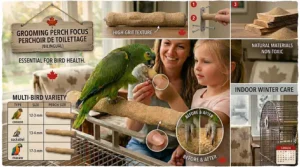
Selecting the optimal grooming perch involves more than grabbing whatever’s cheapest on Amazon.ca. Five critical factors should drive your decision:
1. Bird Species and Size Compatibility
Match perch diameter to your bird’s foot size. A general rule: birds should grip approximately two-thirds around the perch circumference with their toes not quite meeting underneath. Too thin creates instability and excessive pressure; too thick prevents proper grip and reduces filing effectiveness. Budgies and finches need 1.25-1.9 cm (0.5″-0.75″) diameters. Cockatiels and lovebirds work best with 1.9-2.5 cm (0.75″-1″). Conures, caiques, and similar medium birds require 2.5-3.2 cm (1″-1.25″). Large parrots like Amazons and African Greys need 3.2-5 cm (1.25″-2″) options.
2. Surface Texture vs. Foot Sensitivity
Aggressive textures like crushed seashell (Prevue) or coarse cement file nails quickly but risk irritation with prolonged exposure. Gentler surfaces like smooth cement (Living World) or ceramic (YOOSO WING) work slower but suit sensitive feet or birds with existing foot conditions. Canadian birds spending more time indoors during winter may benefit from gentler options since they’re on perches longer than outdoor aviary birds.
3. Climate Adaptability
Cement perches handle temperature extremes better than seashell composites. If you’re in Winnipeg facing -30°C winters or Edmonton dealing with ultra-dry indoor heating, cement-based options like Living World maintain integrity. Coastal humidity in Vancouver or Halifax? Ceramic (YOOSO) or high-quality cement resists moisture damage better than pressed seashell products that can crumble in damp conditions.
4. Maintenance Requirements
All grooming perches need weekly cleaning to prevent bacteria buildup in the porous surfaces. Seashell perches (Prevue) can’t handle harsh scrubbing—they’ll erode prematurely. Ceramic and dense cement options tolerate more aggressive cleaning with bird-safe disinfectants. Consider your willingness to perform regular maintenance when choosing materials.
5. Budget and Longevity Balance
Initial price tells only part of the story. A $12 CAD perch lasting six months costs $24 annually. A $28 CAD ceramic perch lasting four years costs $7 annually. Calculate cost-per-year rather than upfront expense, especially if you own multiple birds requiring several perches. Canadian Prime members should factor in free shipping—often adding $8-$12 CAD value to orders over $35.
Common Mistakes When Using Grooming Perches (And How to Avoid Them)
Mistake #1: Making It the Primary Roost
The most prevalent error I see in Canadian bird groups is owners replacing all soft perches with cement grooming models, thinking more abrasive surface equals better nail care. Wrong. Birds need 8-12 hours of soft perching nightly to prevent pressure sores and foot inflammation. The constant abrasion of sleeping on cement can create calluses, ulcers, and even bumblefoot infections.
Solution: Grooming perches should represent 20-30% of total perching options maximum. Install natural wood branches, rope perches, or smooth dowels at the highest sleeping spots. Position cement or seashell perches at mid-height where birds naturally spend shorter periods throughout the day.
Mistake #2: Ignoring Diameter Variation
Single-diameter perches—whether grooming surfaces or wooden dowels—contribute to foot muscle atrophy and joint stiffness over time. Many Canadian owners buy one 12-inch cement perch and call it done, wondering why their bird develops grip strength problems.
Solution: Invest in at least three different perch diameters across your cage setup. For cockatiels, that might mean a 1.25 cm rope perch, a 1.9 cm cement grooming perch, and a 2.5 cm natural branch. This forces constant muscle engagement and joint flexing that maintains healthy foot function, especially critical during inactive Canadian winters.
Mistake #3: Forgetting Winter Humidity Adjustments
Prairie and northern Canadian homes often drop to 15-25% relative humidity in winter thanks to forced-air heating. This desiccated air pulls moisture from cement perches, which then extract moisture from your bird’s feet during contact. The result? Brittle nails that crack and split rather than filing smoothly, plus dry, flaky foot pads.
Solution: Run a cool-mist humidifier near your bird’s cage during heating season, targeting 40-50% relative humidity. This protects both your bird’s respiratory system and prevents the moisture-wicking effect of grooming perches in dry conditions. Vancouver and coastal region owners face the opposite challenge—excessive summer humidity can soften seashell perches, requiring temporary removal until conditions stabilize.
Mistake #4: Skipping Manual Trim Backups
Some owners view grooming perches as complete nail care solutions that eliminate manual trimming needs. While these perches significantly reduce trim frequency, they can’t account for individual nail growth rates, perch avoidance behavior, or uneven wear patterns.
Solution: Continue monthly nail inspections even with grooming perches installed. Check for sharp points, excessive length, or nails growing at odd angles. Most birds using quality grooming perches need manual trims only 2-3 times yearly instead of monthly, but eliminating checks entirely risks missing problems until they cause injuries. Keep styptic powder and bird nail clippers in your first aid kit even if you rarely use them.
Mistake #5: Buying Size Based on Cage, Not Bird
I regularly see Canadian owners purchasing 18-inch grooming perches for large cages housing small birds, or cramming 5-inch perches into spacious aviaries for parrots. Perch length should match cage width for proper placement, but diameter must fit the bird’s foot size regardless of cage dimensions.
Solution: Prioritize diameter matching your bird species, then select the longest version that fits your cage. A budgie needs 1.25-1.9 cm diameter whether you own a compact cage or a room-sized aviary. For multi-bird households with size variety, install multiple perches of different diameters rather than trying to find one “medium” option that suits nobody perfectly.
Grooming Perches vs. Manual Nail Trimming: The Canadian Perspective
The eternal debate among bird owners—passive nail maintenance through grooming perches or active intervention with clippers? Both have roles in responsible bird care, but understanding their strengths helps Canadian owners make informed decisions.
Grooming Perch Advantages
Stress reduction tops the list. Birds naturally wear their nails through normal activity without the trauma of being restrained and having clipper blades near their toes. For nervous birds or inexperienced owners, this eliminates the risk of accidentally cutting the quick (the blood vessel inside each nail) that causes pain and bleeding. Canadian winter conditions often make our birds more sedentary than ideal—grooming perches compensate by providing passive maintenance even when activity levels drop.
The gradual, consistent filing action also prevents the sharp regrowth points that follow manual trims. Clipped nails grow back with needle-sharp tips that take 3-4 weeks to naturally blunt. Grooming perches maintain rounded nail tips continuously without those painful interim periods when your bird’s grip feels like needles on your hand.
Manual Trimming Advantages
Precision and speed define manual trimming’s strengths. Severely overgrown nails from neglect or medical conditions need aggressive reduction that grooming perches can’t deliver in reasonable timeframes. A skilled groomer can correct problem nails in minutes, whereas passive filing might require months of daily perch exposure to achieve similar results.
Manual trimming also allows targeted correction of individual nails. Birds frequently wear certain nails faster than others depending on their dominant foot and perching preferences. Clippers let you address the long outliers while leaving appropriately-length nails untouched—something indiscriminate perch abrasion can’t replicate.
The Canadian Compromise
Most avian veterinarians practicing in Canada recommend hybrid approaches: install quality grooming perches for routine maintenance, reducing manual trim frequency from monthly to quarterly or even less. Reserve clippers for correcting specific problem nails or addressing rapid overgrowth during seasonal changes when activity drops.
This combination minimizes stress for both bird and owner while ensuring nails stay healthy regardless of individual growth rates or perch usage patterns. Budget-conscious Canadians appreciate that grooming perches reduce or eliminate professional grooming costs ($25-$40 CAD per visit in most cities), paying for themselves within 2-3 sessions.
❓ Frequently Asked Questions
❓ Do grooming perches work in Canadian winter when my bird is less active?
❓ Can I use grooming perches for my budgie or are they only for larger birds?
❓ How long does it take to see results from a grooming perch?
❓ Are grooming perches safe for birds with bumblefoot or foot injuries?
❓ Where can I buy replacement grooming perches in Canada quickly?
Conclusion: Investing in Your Bird’s Long-Term Foot Health
Grooming perches for nail trimming represent one of the smartest investments Canadian bird owners can make—not just for nail maintenance, but for comprehensive foot health that extends your companion’s quality of life. The passive, stress-free maintenance these perches provide eliminates the wrestling matches of manual trims while promoting circulation, preventing arthritis, and conditioning beaks simultaneously.
For budget-conscious Canadians, the Penn-Plax Trimmer Plus line delivers exceptional value without sacrificing effectiveness. If foot comfort and therapeutic benefits matter most—particularly for senior birds or those with existing joint issues—the Living World Pedi-Perch justifies its premium pricing through superior ergonomic design. Owners in humid coastal regions or seeking maximum longevity should seriously consider the YOOSO WING Ceramic Perch, despite higher upfront costs.
Remember that grooming perches work best as part of diversified perching strategies, not solo solutions. Pair your abrasive maintenance perch with soft natural wood branches, rope perches for variety, and smooth dowels for comfortable sleeping. Monitor your bird’s response, adjust placement based on usage patterns, and maintain weekly cleaning routines to prevent bacterial buildup.
The difference between healthy, well-maintained feet and problematic overgrowth often comes down to these simple preventive tools. Given the stress reduction for both you and your bird, plus the elimination of frequent professional grooming costs, quality grooming perches pay for themselves within months while delivering benefits that last years.
✨ Don’t Miss These Exclusive Deals!
🔍 Take your bird’s nail care to the next level with these carefully selected products. Click on any highlighted item to check current pricing and availability on Amazon.ca. These tools will help you create authentic nail health your feathered companion deserves!
Recommended for You
- 7 Best Bungee Rope Perch Options for Birds in Canada 2026
- 7 Best Rope Perches for Bird Cages Canada 2026
- 7 Best Places to Buy Authentic Java Perches Canada 2026
Disclaimer: This article contains affiliate links. As an Amazon Associate, I earn from qualifying purchases. If you purchase products through these links, we may earn a small commission at no additional cost to you.
✨ Found this helpful? Share it with your friends! 💬🤗
