
In This Article
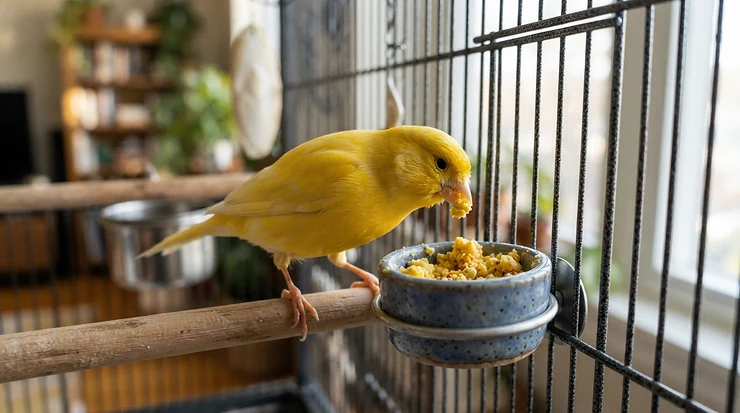
Finch food for breeding season is the protein-, calcium- and vitamin-boosted menu that sits on top of a regular seed diet: egg food, soft rearing food, greens, cuttlebone and, for some species, live insects. It fuels egg formation, feeds demanding nestlings and keeps worn-out parents from running on fumes.
Picture a pair of finches in March. The hen is building a clutch out of her own body. The cock is singing, guarding and hauling nesting material like a tiny contractor on a deadline. Then the eggs hatch, and everything speeds up. Hungry mouths. Constant feeding. A metabolism the size of a thimble running flat out.
Here’s the catch: a bowl of seed doesn’t cover it. Seed is excellent fuel and a mediocre body-builder. Even the zebra finch, the species most breeders cut their teeth on, needs a protein-rich finch diet once the nest is active. Some species, such as Gouldian and society finches, often want insects on top of that.
It’s late October 2026, which makes this a smart moment to plan. Canadian winters are unkind to outdoor aviaries, so plenty of breeders work indoors and aim for a late-winter or early-spring season. That gives you weeks to trial an egg food for breeding finches, get the pair used to it and fine-tune your breeding cage setup before the first egg appears.
Below you’ll find seven real products compared, a feeding timeline, a cage checklist, troubleshooting and Canadian safety notes. Every pick is analysed on its specs and on genuine review themes, with no invented testing and no sales-page fluff. Think of it as a field guide to better nestling nutrition and stronger clutch success.
Quick Comparison: Finch Food for Breeding Season at a Glance
Here’s the lineup in one scannable table. Price ranges are indicative Canadian-dollar estimates at the time of research and can change, so check current price and availability on amazon.ca before you buy.
| Product | Format | Standout trait | Indicative price range | Best For |
|---|---|---|---|---|
| Quiko Classic Egg Food | Dry egg biscuit, 1.1 lb | Consistent whole-egg base | C$12–C$20 | First-time breeders |
| Quiko Exotic Egg Food for Finches | Dry blend with seeds, 1.1 lb | Finch-specific recipe | C$12–C$22 | Small exotic finch pairs |
| Higgins Protein Egg Food | Baked egg and crumb mix | Honey and bread-crumb texture | C$10–C$22 | Budget-minded keepers |
| Vitakraft Egg Food for Birds | Egg plus seed and grain blend | Breeding and moulting support | C$12–C$20 | Mixed-species rooms |
| Raff Delicate Allevamento | Egg and honey paste, 500 g | Soft, regurgitation-friendly texture | C$15–C$28 | Chick-rearing stage |
| Pineta Elisir Superdryfood White | Dry egg paste, 1 kg | High protein and fat, no added colour | C$25–C$40 | Multi-pair setups |
| Harrison’s High Potency | Organic formulated diet, 1 lb | Vet-developed for breeding and weaning | C$25–C$40 | Birds being moved off seed |
Looking at the table, the two Quiko options and Higgins Protein Egg Food are the low-risk entry points under about C$22. Raff Delicate Allevamento is the texture specialist for the chick-feeding phase. Harrison’s High Potency is a different animal entirely: a formulated base diet rather than a topper, so compare it on a different axis from the rest.
💬 Just one click — help others make better buying decisions too!😊
Top 7 Finch Food for Breeding Season Picks: Expert Analysis
A quick honesty note before we start. Several of these products are widely listed on Amazon’s US store, and amazon.ca stock varies by seller and season, so confirm availability on the Canadian listing. The analysis below draws on published specs and genuine reviewer themes, not hands-on testing.
1. Quiko Classic Egg Food — the dependable everyday baseline
Predictability is this food’s superpower: a dried whole-egg formula that looks, smells and behaves the same from one bag to the next. The listing describes real dried whole egg fortified with vitamins A, D3 and E, packed in a 1.1 lb (about 500 g) vacuum-sealed bag.
What does that mean for your birds? Vitamin D3 helps them use the calcium a laying hen burns through, and a vacuum seal means the last scoop in March is as fresh as the first. One buyer’s answer on a retail listing describes the base as an egg biscuit of whole egg, wheat flour and sugar. The same buyer stretches it by blending in mashed boiled egg for a moister mix.
Based on the spec comparison, this is the sensible first purchase for a new breeder who wants a clean baseline before experimenting. Reviewers on retail sites consistently describe birds accepting it readily. I couldn’t verify amazon.ca-specific review counts, so treat that as general sentiment, not a guarantee.
Pros:
- ✅ Real dried whole egg as the core ingredient
- ✅ Vitamins A, D3 and E added
- ✅ Vacuum-sealed bag keeps the contents fresh
Cons:
- ❌ Wheat flour and sugar share the ingredient list
- ❌ Only one pack size, so multi-pair keepers restock often
Expect roughly C$12–C$20, which is fair value for a staple you’ll open daily.

2. Quiko Exotic Egg Food for Finches — a recipe written with small beaks in mind
Where the Classic is a smooth biscuit, this one is built for finches specifically. The ingredient panel reads whole egg, wheat flour, sugar, honey, dehulled soybean meal, white millet and niger seed. It adds vitamins A, D3 and E plus thiamine, riboflavin, biotin, B6, B12 and vitamin C.
Why care? The millet and niger seed give finches familiar textures to pick at, which can help shy or suspicious pairs accept a new food faster. The broader B-vitamin spread matters during feather-heavy stages like the post-breeding moult, when the whole flock is protein-hungry.
Here’s what the spec sheet won’t tell you: this is labelled a supplement, not a complete diet. Treat it as the protein-and-vitamin booster it is, layered over quality seed, greens and cuttlebone. It suits keepers of zebra finches and other small exotics who want one product aimed squarely at them.
I couldn’t find enough verified, amazon.ca-specific review data to summarise sentiment honestly. Check the current reviews on the listing and look for comments from breeders of your species.
Pros:
- ✅ Finch-specific formula with millet and niger seed
- ✅ Broad B-vitamin and vitamin C panel
- ✅ Honey and egg make it highly palatable
Cons:
- ❌ Sugar and soy appear in the recipe
- ❌ Supplement only, not a standalone diet
Roughly C$12–C$22 puts it on par with its Classic sibling, so the choice is about fit.
3. Higgins Protein Egg Food — budget-friendly crumb texture
Higgins builds this around baked whole eggs, whole-grain bread crumbs and pure honey, per the manufacturer’s description of the line. Some listings also mention probiotics and DHA omega-3, so check which version you’re actually buying. It comes in a small 5 oz size and a 1.1 lb size.
The crumb texture is the practical selling point. It dampens easily into a soft mash that parents can pick up and regurgitate, and it’s forgiving if you like to blend in grated carrot or mashed boiled egg. A retail Q&A reply describes it as safe for all birds and in use with canaries and finches.
A word of caution on shopping. Higgins also sells a red-factor version formulated for red canaries, so skip it for finches and pick the standard version. The 5 oz pouch is also tiny for a pair with a full nest, so go for the larger size if you’re serious.
On amazon.ca, verified review data was too thin to summarise responsibly, so I’ll leave the reviewers to speak for themselves on the listing page.
Pros:
- ✅ Bread-crumb texture moistens quickly and evenly
- ✅ Honey-sweetened, so picky birds usually accept it
- ✅ Larger size offers sensible stock for breeders
Cons:
- ❌ Small pouch runs out fast during chick-rearing
- ❌ Formulas differ between versions, so check labels
Around C$10–C$22 depending on size makes this one of the easiest on the wallet.
4. Vitakraft Egg Food for Birds — the seed-and-egg hybrid
This one blurs the line between egg food and a conditioning mix. It’s described as a nutrient-rich egg protein with a fortified seed and grain blend, aimed at breeding and moulting support in a 1.1 lb pack. It’s from the same corporate family as the Quiko range.
The seed-and-grain element means birds get something to forage through, which can encourage reluctant eaters. The trade-off is that parents may pick out the seed and leave the egg behind. If you see that, crumble the food finer or mix it into moistened egg.
It’s marketed broadly for pet birds rather than finches alone, so I’d rank it as a solid all-rounder for a room with mixed small species and not a precision tool for one fussy pair.
Retail listings carry strong Amazon’s Choice-style placement on the US store, but I couldn’t verify amazon.ca review counts. Read the current reviews for notes about acceptance by small finches specifically.
Pros:
- ✅ Combines egg protein with familiar seed and grain
- ✅ Marketed for both breeding and moulting
- ✅ Widely stocked and easy to reorder
Cons:
- ❌ Birds may pick out seed and leave egg
- ❌ Not finch-specific, so the match varies by species
Around C$12–C$20 delivers decent value, especially if you keep several bird types.
5. Raff Delicate Allevamento — soft paste built for feeding young
“Allevamento” is Italian for breeding or raising, and this egg-and-honey paste is sold in a 500 g pack for canaries, parakeets, finches, cockatiels and lovebirds. The key spec is the texture: a soft paste rather than a dry crumb.
That matters because finch parents feed chicks by regurgitating soft food. Soft-food supplements are valued in breeding precisely because they’re easy to bring up for nestlings. A paste skips the moistening step, which is handy on a hectic morning with a full nest.
The flip side is spoilage. Moist foods go off faster than dry ones, particularly in a warm, well-heated room. Offer small portions in a clean shallow dish and remove leftovers within a few hours.
I couldn’t find enough verifiable review detail on amazon.ca to summarise sentiment honestly, so look for comments about palatability and freshness on arrival.
Pros:
- ✅ Ready-to-serve paste texture saves prep time
- ✅ Egg-and-honey recipe suits many species
- ✅ Soft consistency suits regurgitation feeding
Cons:
- ❌ Spoils faster than dry egg foods
- ❌ Smaller 500 g pack for the price
Around C$15–C$28 is a premium for convenience. Worth it for the chick stage, less so for daily year-round use.
6. Pineta Elisir Superdryfood White — bulk protein for busy breeding rooms
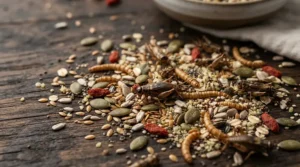
The name tells the story: a dry egg paste described as high in protein and fat, with no added colour, in a 1 kg pack. The “white” version is the plain one, so it won’t tint feathers the way red-factor products can.
The dry format puts you in control. You can moisten exactly as much as you need, which cuts waste and extends shelf life compared with ready-mixed pastes. Bigger bags also make sense when you’re feeding several pairs.
The high fat content is the catch. It’s wonderful fuel for egg-laying and chick-feeding and a poor choice for everyday feeding outside the season. Rich food year-round can push birds into breeding condition at the wrong time and add unwanted weight.
Verified review data on amazon.ca was too thin to summarise fairly, so I’ll flag that gap instead of guessing.
Pros:
- ✅ Dry format lets you control moisture
- ✅ 1 kg size suits several breeding pairs
- ✅ No added colour for non-red-factor birds
Cons:
- ❌ High fat means it’s not an everyday food
- ❌ Higher upfront cost than 500 g alternatives
Roughly C$25–C$40 is the premium end, justified mainly if you’re running multiple pairs.
7. Harrison’s High Potency — the formulated base diet for birds leaving seed behind
This one plays a different game. It’s a certified-organic, non-GMO diet developed by veterinarians, sold in a 1 lb pack for conversion, breeding, weaning or special needs, and listed for canaries, finches, budgies and other small parrots.
It isn’t an egg food. It’s a pelleted base diet, and the value is nutritional completeness. Veterinary guidance from Lafeber notes that seed mixes alone provide little nutrition and recommends a nutritionally balanced pellet or granule, with egg food added during breeding. That’s the niche this product fills.
If your pair has lived on seed for years, expect a patient conversion. Birds can be stubborn about new textures, so introduce it gradually alongside their usual seed and don’t expect overnight acceptance.
Pairing it with a daily egg food from this list covers both bases. I couldn’t verify enough amazon.ca review data to summarise sentiment, so check recent reviews for conversion stories.
Pros:
- ✅ Vet-developed, nutritionally complete formulation
- ✅ Certified organic and non-GMO
- ✅ Designed for breeding and weaning stages
Cons:
- ❌ Conversion from seed takes patience
- ❌ Premium price for a 1 lb pack
Roughly C$25–C$40 is steep per pound, but a small pair’s daily intake is modest. It’s best viewed as a nutrition upgrade, not a topper.
Your Feeding Timeline: From Conditioning to Fledging
Great breeding isn’t one big meal. It’s a sequence, and each stage asks something different of the pair.
- Conditioning (2–3 weeks before pairing). Start offering a small daily portion of egg food alongside seed, fresh greens and a cuttlebone. The point is acceptance: birds that already recognise the food will use it when it matters. A Canadian bird-care guide suggests egg food normally makes up roughly 5–10% of the diet outside breeding. Breeding is when you push beyond that.
- Pairing and egg-laying. Calcium becomes critical. Hens draw heavily on it to form eggs, so keep cuttlebone available and offer egg food daily. For society finches, one classic breeding profile calls for about 16 hours of daily light and a moderate temperature around 24°C (75°F).
- Incubation. Don’t let the egg food lapse. Lafeber’s guidance is to offer it every day while a pair has eggs or chicks.
- Hatching and chick-rearing. Refresh the soft food daily and remove leftovers within a few hours. Add insects or insect-based rearing food if your species needs them.
- Fledging. Keep offering egg food until the youngsters are cracking seed on their own.
- Rest. After two or three clutches, let the pair rest. Resting between clutches protects the hen’s health.
Breeding Cage Setup: Protecting Clutch Success
Nutrition gets the credit, but the cage quietly decides how much of it turns into healthy chicks. A reliable breeding cage setup removes stress, and stress is a sneaky clutch-killer.
Size. One breeding guide recommends at least 60 × 30 × 30 cm per pair. A veteran breeder’s account from Watchbird described cages about 2 feet wide, 1 foot deep and 18 inches high (roughly 61 × 30 × 46 cm) and noted that more space is better.
Environment. The Cold Spring Harbor Protocols zebra finch guidelines suggest keeping birds at typical laboratory temperatures of about 20–25°C. They also describe offering coconut husk or hay cut to roughly 15 cm as nesting material, plus a wide, shallow water dish for bathing.
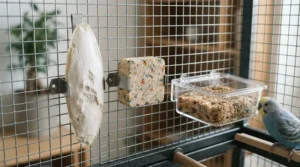
Feeding stations. Dedicate a shallow ceramic dish to egg food, away from perches where droppings fall. Wash it daily. A separate cuttlebone holder keeps calcium within easy reach.
Layout tips.
- One pair per cage during breeding.
- Nest box securely mounted with an easy inspection point.
- Quiet, low-traffic room location.
- Full-spectrum lighting on a consistent timer.
✨ Ready to Stock the Nursery?
🔍 Take your breeding season to the next level with these carefully selected foods. Click any highlighted product name to check current pricing and availability on amazon.ca. A well-fed pair rewards you with stronger chicks and calmer nests!
Problem → Solution: When Chicks Stall, Eggs Fail or Parents Quit
Even a well-planned season hits snags. Here are five common ones, with practical fixes that connect back to the products above.
- Parents ignore the egg food. Introduce it weeks earlier, mixed with a little mashed boiled egg. A seed-flecked option such as Vitakraft Egg Food for Birds can win over suspicious eaters.
- Chicks look thin or stall. Nestling nutrition may need a push. Gouldian and society finches in particular often want live food or insect-based rearing food during chick-rearing, whereas zebra finches usually rear well on egg food alone.
- Soft-shelled or failed eggs. Calcium is the usual suspect. Keep cuttlebone available, offer egg food daily and consider adding finely crushed, washed eggshell. A hen straining on the nest is an emergency, so call an avian vet promptly.
- Food spoiling in the dish. Switch to smaller portions, use a dry base such as Pineta Elisir Superdryfood White that you moisten as needed, and clear leftovers within hours.
- A pair that rebreeds endlessly. Rest them. Lafeber notes that wild finches raise only one or two clutches a year, while captive pairs will breed year-round, which is hard on their health.
How to Choose Finch Food for Breeding Season
Here’s a six-step shortlist you can run in five minutes.
- Match your species. Zebra finches often do well on egg food alone, but Gouldians and society finches may need insects too.
- Check the first ingredients. Look for whole egg near the top, not sugar or filler.
- Pick the right texture. Dry gives control, paste gives convenience, and crumbs sit in between.
- Avoid colour-feeding formulas. Red-factor egg foods, such as Quiko Special Red Egg Food, contain canthaxanthin to tint red canaries and aren’t intended for finches.
- Size the bag to the season. Don’t buy tiny pouches for a full nest or giant bags for one shy pair.
- Plan the base diet. Add a quality seed mix or pellet underneath, with greens and cuttlebone.
Protein-Rich Finch Diet: What Breeders and Science Agree On
A protein-rich finch diet isn’t a luxury at breeding time. It’s the whole engine. As a Watchbird article on finch nutrition explains, a seed diet alone will never supply all the nutrients finches need. The high-protein items, such as insects, hard-boiled eggs and worms, are the essentials, while greens and cuttlebone are valuable extras.
The same article notes that food consumption rises dramatically while finches feed growing young, and gives a striking example: a cordon bleu may eat around half its body weight daily just for maintenance. That’s a startling number, and it explains why a pair can empty an egg-food dish overnight.
In the wild, many finch species become almost entirely insectivorous at the nestling stage, which is why insects keep showing up in breeders’ protocols. Commercial egg foods are essentially a convenient stand-in for that insect protein.
The practical takeaway: you want a reliable egg food, a quality base diet and, for insect-dependent species, a live or insect-based rearing option. The seven products above cover the first two categories well.
Egg Food for Breeding Finches vs Live Food vs Homemade Egg
Which protein route is right? Each has fans, and each has trade-offs.
| Option | Convenience | Protein and calcium | Spoilage risk | Best For |
|---|---|---|---|---|
| Commercial egg food (e.g., Quiko Classic Egg Food) | High | Fortified, consistent | Low if dry | Everyday breeding support |
| Hard-boiled egg with crushed shell | Medium | Good protein, natural calcium | High, needs daily fresh | Hands-on keepers |
| Live or insect-based rearing food | Low to medium | Closest to the natural nestling diet | Varies | Gouldians and society finches |
| Seed only | Very high | Insufficient for breeding | Low | Non-breeding maintenance |
Looking at the comparison, commercial egg food wins on consistency and shelf life, which is why most breeders keep it as their foundation. Homemade boiled egg is excellent as a booster, and Lafeber’s guidance is to offer cooked egg with the shell washed, crushed and cooked in. Live food is the specialist upgrade for insect-dependent species. Seed alone belongs outside breeding season.

Finch Chick-Rearing Food and Nestling Nutrition: What Changes by Stage
Finch chick-rearing food has one non-negotiable trait: it must be easy for parents to pick up and regurgitate. A classic Watchbird profile of society finches notes that a daily soft food is valuable precisely because it supplies vitamins, minerals and protein in a form that’s easy to bring up for nestlings.
Nestling nutrition shifts as the young develop:
- Early days. Parents do all the work, so your job is keeping the soft food fresh and plentiful.
- Growth phase. Demand peaks. Check the dish more than once a day and top up in small amounts.
- Fledging and weaning. Young birds begin cracking seed, but they still lean on parents for a while. Keep egg food available until they’re independent.
Species matters. Zebra finches typically manage on egg food alone, but Gouldians and society finches often want live food during this stage. If chicks seem to stall despite a full dish, that’s the first thing to troubleshoot.
Common Mistakes When Buying Finch Food for Breeding Season
- Grabbing red-factor products by accident. Formulas like Quiko Special Red Egg Food are aimed at colour-feeding canaries. Read labels.
- Buying too small. A 5 oz pouch of Higgins Protein Egg Food vanishes quickly when a pair is feeding a nest.
- Treating a supplement as a diet. Egg foods like Quiko Exotic Egg Food for Finches sit on top of seed and greens. They don’t replace them.
- Feeding rich food year-round. One Canadian bird-care guide warns that extra protein and rich foods can push birds into unwanted breeding condition when you aren’t deliberately breeding.
- Neglecting dish hygiene. The best egg food in the world turns risky when it sits warm for hours.
Long-Term Cost and Value: Is Premium Worth It?
Price per bag misleads. What matters is cost across a whole season, including waste and restocking.
| Product | Pack size | Indicative price range | Value note |
|---|---|---|---|
| Higgins Protein Egg Food | 5 oz or 1.1 lb | C$10–C$22 | Cheapest entry, larger size preferred |
| Quiko Classic Egg Food | 1.1 lb | C$12–C$20 | Strong all-round value |
| Raff Delicate Allevamento | 500 g | C$15–C$28 | Convenience premium |
| Pineta Elisir Superdryfood White | 1 kg | C$25–C$40 | Best for multiple pairs |
| Harrison’s High Potency | 1 lb | C$25–C$40 | Base diet, not a topper |
Looking at these numbers, Quiko Classic Egg Food and Higgins Protein Egg Food offer the lowest barrier to entry. Pineta Elisir Superdryfood White gets cheaper per feeding as pair count rises, because the 1 kg bag and dry format cut waste. Harrison’s High Potency only makes sense if you’re prepared to convert birds to a formulated diet. As always, check current price before you decide.
Canadian Safety and Regulations Guide
Feeding is half the story. Biosecurity is the other half, especially with avian influenza in the headlines.
The Canadian Food Inspection Agency publishes the rules for importing live pet birds from countries other than the US. Birds arriving from most countries must be quarantined for a minimum of 45 days, and CFIA inspectors verify that they’re healthy before release. Pet birds from the US may enter with official USDA certification, though restrictions apply in zones affected by highly pathogenic avian influenza.
For everyday keepers, the practical rules are simple:
- Buy breeding stock from reputable sources and quarantine newcomers before adding them to your room.
- Keep your aviary or breeding room away from wild-bird contact.
- Wash hands and dishes between cages.
- Check CFIA’s avian influenza zone information if you plan to move birds across provincial or international borders.
Rules and zones change, so verify details directly with CFIA and your provincial authority before shipping or importing birds.
FAQ: Finch Food for Breeding Season
❓ What is the best egg food for breeding finches in Canada?
❓ How much egg food should I give my finches during breeding?
❓ Can I use boiled egg instead of commercial egg food?
❓ Do all finches need live food to rear chicks?
❓ How long should finches rest between clutches?
Conclusion: Feed the Season, Not Just the Birds
Breeding season rewards preparation. A pair that has already learned to love its egg food, lives in a calm, correctly sized cage and has a clean dish waiting each morning is a pair that’s set up for clutch success.
If you’re starting out, Quiko Classic Egg Food or Higgins Protein Egg Food are low-risk foundations. For chick-rearing, Raff Delicate Allevamento brings the soft texture parents need. Multi-pair rooms will appreciate the bulk and control of Pineta Elisir Superdryfood White, and if you’re ready to move birds beyond seed altogether, Harrison’s High Potency deserves a serious look. Quiko Exotic Egg Food for Finches and Vitakraft Egg Food for Birds round out the range for finch-specific and mixed-species rooms.
Whatever you choose, remember the formula: a quality base diet, a reliable egg food, calcium on tap and the right protein extras for your species. Start trials now, long before the first egg, and you’ll walk into spring with confidence.
Recommended for You
- Best Finch Food: 7 Smart Picks For Canadian Flocks (2026)
- Best Canary Food: 7 Proven Picks For Canadian Birds (2026)
- Canary Seed Mix Vs Pellets: 7 Best Foods Ranked (2026)
Disclaimer: This article contains affiliate links. As an Amazon Associate, I earn from qualifying purchases. If you purchase products through these links, we may earn a small commission at no additional cost to you.
✨ Found this helpful? Share it with your friends! 💬🤗
