
In This Article
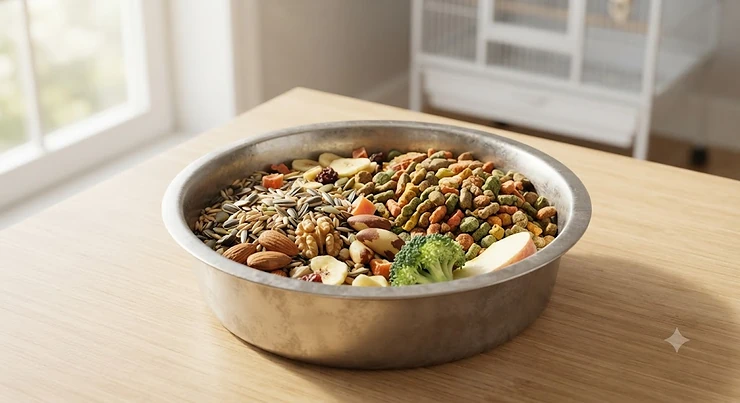
African grey parrot food is any formulated pellet, seed-and-pellet blend, or fresh-food combination designed to meet the specific protein, fat, vitamin, and mineral needs of Psittacus erithacus — a species with an unusually high dietary calcium requirement and a documented sensitivity to nutrient gaps. Get it right and you’re looking at a bird that can outlive a mortgage. Get it wrong, quietly, over years, and you’re looking at brittle bones, dull feathers, or worse.
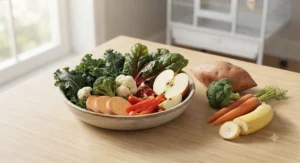
Here’s the thing nobody tells new owners at the pet store: African greys aren’t just “big budgies” with a talent for mimicry. As the grey parrot’s species profile documents, they evolved eating an enormously varied diet of palm fruit, seeds, and the occasional insect across the forests of West and Central Africa, and they’ve carried some quirky physiology into captivity with them — including a parathyroid gland that seems to handle calcium regulation differently than in most other parrots. That single fact shapes almost everything on this list.
This guide breaks down seven real, purchasable formulas available through amazon.ca, walks through the actual science behind african grey diet requirements, and tackles the two questions that keep showing up in avian vet forums: why do so many greys develop hypocalcemia, and why do so many pluck their feathers? We’ll get into all of it — with honest analysis, not guesswork, and price ranges instead of numbers that’ll be stale by the time you read this.
Quick Comparison Table
| Food | Best For | Price Range (CAD) | Standout |
|---|---|---|---|
| Harrison’s Bird Foods Adult Lifetime Coarse | Health-focused, long-term owners | C$30–C$45 (1 lb) | Certified organic, vet-formulated |
| HARI Tropican Lifetime Maintenance Granules | Canadian buyers wanting local sourcing | C$20–C$35 | Developed near Montreal |
| ZuPreem Natural Parrot & Conure Food | Budget-conscious first-time converts | C$15–C$25 | Easiest to find in stores |
| Roudybush Daily Maintenance (Mini) | Consistency-seekers, sensitive stomachs | C$20–C$30 | No peanuts, stable formula |
A quick scan tells you most of what you need: Harrison’s Bird Foods Adult Lifetime Coarse sits at the top of the price ladder because of its organic certification and vet-led formulation, while ZuPreem Natural Parrot & Conure Food wins on pure accessibility — it’s the one you’re most likely to find on a shelf in Mississauga or Moncton without special ordering. If your grey has a sensitive gut or a history of allergy-type reactions to flavour additives, Roudybush Daily Maintenance is worth a closer look, since its formula skips the fruit-oil flavouring some other brands lean on.
💬 Just one click — help others make better buying decisions too!😊
Top 7 African Grey Parrot Food Picks: Expert Analysis
Coverage here spans budget, mid-range, and premium tiers, plus one Canadian-made option and one specialty import — because “best” genuinely depends on your bird’s history, your vet’s advice, and how stubborn your particular grey is about trying new textures.
1. Harrison’s Bird Foods Adult Lifetime Coarse — vet-formulated organic pellets
That “vet-formulated” tag isn’t marketing fluff here — Harrison’s was the first avian diet developed by a practicing avian veterinarian, and it shows in the ingredient philosophy. It’s certified organic and non-GMO, built around whole grains rather than corn-and-soy filler, and pitched as an omega-balanced maintenance diet for skin, feather, and immune health. Based on the formulation approach, the absence of added sugars or synthetic flavour oils means it doesn’t rely on “junk food” appeal to get eaten — which is exactly the point for a species prone to picking favourites and ignoring the rest of the bowl. Reviewers consistently report long-term greys thriving on it, including birds in their late twenties still eating the coarse blend daily; the trade-off, unsurprisingly, is that organic certification and small-batch milling push the price well above supermarket pellets. This is the pick for owners who’ve already decided nutrition quality outranks convenience, and who don’t mind a slower, patience-heavy conversion process for a grey raised on seed.
Pros:
- ✅ Certified organic, non-GMO ingredient sourcing
- ✅ Developed by a practicing avian veterinarian
- ✅ No added sugars, dyes, or artificial flavouring
Cons:
- ❌ Among the priciest pellets in this category
- ❌ Coarse texture can slow conversion for finicky birds
Expect to pay in the C$30–C$45 range for a 1 lb bag depending on retailer promotions; given the organic sourcing and lack of filler, most owners researching the category consider it good long-term value despite the upfront cost.
2. HARI Tropican Lifetime Maintenance Granules — Canadian-made, research-backed formula
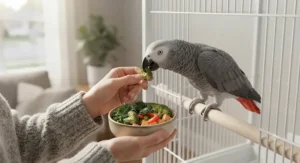
HARI stands for the Hagen Avicultural Research Institute, based near Montreal, and Tropican is the flagship line to come out of decades of captive-bird research there — a genuinely Canadian entry in a category dominated by U.S. brands. The granules are extruded with corn, wheat, rice, sunflower kernel, and flaxseed, plus a vitamin-mineral pack, and flavoured lightly with orange and banana oil to improve palatability during conversion. What most buyers overlook about this formula is that its granule size was specifically engineered to reduce waste compared to oversized pellets — birds spend less time husking and discarding, which matters over a 40-year feeding relationship. Aggregated customer feedback is largely positive, with multiple long-term African grey owners reporting 9-to-19-year usage histories, though a meaningful minority describe the citrus-banana scent as overpowering, and at least one reviewer linked a suspected banana-oil sensitivity to digestive upset in their bird. If your grey has known food sensitivities, that flavouring is worth discussing with your vet before switching.
Pros:
- ✅ Formulated and tested at a dedicated Canadian avian research facility
- ✅ Granule size reduces husking waste versus larger pellets
- ✅ Long multi-year usage track record reported by owners
Cons:
- ❌ Citrus-banana scent is polarizing among sensitive birds
- ❌ Occasional reports of digestive upset tied to flavour oils
Priced roughly C$20–C$35 depending on bag size, it lands solidly mid-range — a reasonable pick if supporting Canadian-developed formulas matters to you.
3. Roudybush Daily Maintenance Pellets (Mini) — consistent, no-frills nutrition
Roudybush was founded by Tom Roudybush after years of avian nutrition research at UC Davis, and the resulting formula reads like it: no peanuts, a rice-based recipe some vets recommend for birds with suspected food sensitivities, and a guaranteed analysis that runs leaner on protein than several competitors — a detail that matters more than it sounds. On paper, lower protein suits non-breeding adult companion birds better than the high-protein formulas built for breeding or growth, since excess protein has been associated with added kidney strain over a bird’s lifetime. Here’s what to weigh: Roudybush skips the flavour-oil approach entirely, so conversion can take longer with a determined seed-eater, but the trade-off is a formula with fewer variables to trigger a sensitivity. Reviewers and industry comparisons consistently describe it as winning on “consistency and price-to-quality ratio” rather than flash, which tracks with an ingredient base of ground corn, wheat, soybean meal, and alfalfa that some owners find less exciting than fruit-forward competitors.
Pros:
- ✅ No peanuts — lower aflatoxin and allergy concern
- ✅ Leaner protein profile suited to non-breeding adults
- ✅ Strong reputation for manufacturing consistency batch to batch
Cons:
- ❌ Plain flavour profile can slow conversion from seed
- ❌ Corn-and-wheat-forward recipe isn’t for everyone
At around C$20–C$30 per bag, it’s priced to compete directly with ZuPreem while targeting a slightly more health-conscious buyer.
4. ZuPreem Natural Parrot & Conure Food — most widely available pick
Founded in 1965, ZuPreem actually predates the avian veterinary specialty as a formal field — it started life as zoo and exotic-animal feed before becoming a staple on pet store shelves across Canada. The Natural line specifically skips artificial dyes, which sets it apart from ZuPreem’s own FruitBlend product using natural-derived fruit flavouring and colour. Based on the spec comparison against pricier competitors, ZuPreem trades some of the ingredient purity found in organic brands for two things owners genuinely value: near-universal shelf availability and a palatability that makes conversion from seed noticeably easier for stubborn birds. The catch reviewers flag most often is sugar content sitting higher than rice- or grain-forward competitors, which is worth knowing if your vet is watching your bird’s weight. It remains, by a wide margin, the pellet most Canadian African grey owners will encounter first, simply because it’s stocked everywhere from big-box pet retailers to independent shops.
Pros:
- ✅ Sold in nearly every Canadian pet retailer and on Amazon.ca
- ✅ Natural line uses no artificial dyes
- ✅ Generally easier palatability for reluctant converts
Cons:
- ❌ Higher sugar content than grain-forward competitors
- ❌ Not certified organic
Expect roughly C$15–C$25, making it one of the more budget-friendly entries — a sensible starting point if you’re not yet sure your grey will accept pellets at all.
5. Lafeber’s Premium Daily Pellets for Parrots — easiest conversion from seed
Lafeber has been in the pelleted-bird-food business since the early 1970s, when the founding veterinarian started milling pellets in the back of his own animal hospital. Fifty-plus years later, the company’s signature move is flavouring pellets with molasses rather than fruit oil — a natural sweetener the company specifically markets as improving acceptance among “seed junkies” resistant to conversion. What most buyers overlook is that this isn’t just a taste gimmick: getting a seed-fixated grey onto any balanced pellet faster meaningfully shortens the window of calcium and vitamin A deficiency risk that comes with prolonged seed-only feeding. Aggregated owner reports describe multi-year successful transitions, including greys converted “over the last few years” after resisting other brands, alongside frequent mentions of Lafeber’s Nutri-Berries treat line being used to round out roughly half a bird’s diet — worth noting since treats shouldn’t functionally replace a complete pellet as the nutritional base.
Pros:
- ✅ Molasses flavouring measurably improves pellet acceptance
- ✅ Long manufacturing track record since the 1970s
- ✅ Companion treat line (Nutri-Berries) supports gradual transition
Cons:
- ❌ Added molasses means more sugar than unflavoured formulas
- ❌ Owners report some greys treat Nutri-Berries as the whole diet
Priced around C$20–C$30, it sits in the same tier as Roudybush while targeting an entirely different problem: getting the food eaten in the first place.
6. TOP’s Organic Parrot Pellets — cleanest ingredient list
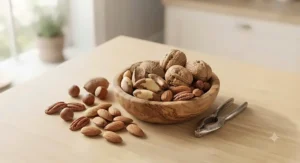
TOP’s built its entire brand identity around what it leaves out: no soy, no corn fillers, and none of the BHA, BHT, or ethoxyquin preservatives found in some older commercial formulas. Preservation instead comes from rosemary, rose hips, and citrus peel — a naturally-preserved approach that’s increasingly common among premium bird foods but still a genuine point of differentiation here. Based on the ingredient philosophy, this formula reads almost identically to Harrison’s in its avoidance of synthetic additives, though TOP’s markets itself more explicitly toward larger-beaked birds — macaws, cockatoos, and African greys among them — with a bigger pellet size built for that jaw strength. The honest trade-off: a naturally preserved product without synthetic stabilizers generally has a shorter realistic shelf life once opened, so buying in bulk to save money can work against freshness if you don’t have more than one bird to feed through a bag quickly.
Pros:
- ✅ No soy, corn, or synthetic preservative fillers
- ✅ Naturally preserved with rosemary, rose hips, and citrus peel
- ✅ Pellet size matched to larger-beaked species like African greys
Cons:
- ❌ Shorter effective shelf life once opened
- ❌ Premium pricing similar to Harrison’s tier
Budget C$25–C$35 for a mid-size bag; treat it as a direct alternative to Harrison’s if your grey prefers a different texture or size.
7. Psittacus High Energy Complete Diet — closest match to wild fat intake
This is the lesser-known entry on the list, and arguably the most scientifically specific one. Psittacus, a Spanish avian nutrition company with over two decades in the field, designed this extruded pellet specifically for species that evolved eating high-fat diets in the wild — African greys and macaws foremost among them — rather than applying a one-size-fits-all parrot formula. On paper this means a fat percentage calibrated closer to what a wild grey would actually extract from palm fruit and oil-rich seeds, versus the leaner formulas built primarily for smaller psittacines. It’s 100% non-GMO by ingredient count and includes a fairly comprehensive mineral pack, including calcium carbonate and dicalcium phosphate, aimed squarely at the calcium sensitivity this species is known for. The honest catch is availability: it’s a specialty import, meaning Canadian buyers may face higher shipping costs or longer restock windows through Amazon.ca marketplace sellers compared to the big domestic brands above.
Pros:
- ✅ Fat content calibrated to species-specific wild diet
- ✅ Comprehensive calcium and mineral inclusion
- ✅ 100% non-GMO ingredient sourcing
Cons:
- ❌ Less consistently stocked through Canadian retailers
- ❌ Import shipping can push effective cost higher
Expect somewhere in the C$30–C$45 range once shipping is factored in — a premium pick worth considering if your avian vet is specifically managing a calcium or fat-intake concern.
Top 7 Products: Specs & Value Snapshot
| Product | Type | Notable Trait | Best For |
|---|---|---|---|
| Harrison’s Bird Foods Adult Lifetime Coarse | Organic pellet | Vet-developed, no sugar | Long-term health focus |
| HARI Tropican Lifetime Maintenance Granules | Granule | Canadian-made | Supporting local brands |
| Roudybush Daily Maintenance (Mini) | Pellet | No peanuts, lean protein | Sensitive stomachs |
| ZuPreem Natural Parrot & Conure Food | Pellet | Widest availability | First-time converters |
| Lafeber’s Premium Daily Pellets | Pellet | Molasses flavouring | Stubborn seed-eaters |
| TOP’s Organic Parrot Pellets | Pellet | No synthetic preservatives | Ingredient purists |
| Psittacus High Energy Complete Diet | Extruded pellet | High-fat formulation | Calcium/fat-focused diets |
Laid out side by side, the real pattern is a trade-off between palatability and purity: ZuPreem Natural Parrot & Conure Food and Lafeber’s Premium Daily Pellets win on getting a reluctant bird to actually eat pellets, while Harrison’s Bird Foods Adult Lifetime Coarse and TOP’s Organic Parrot Pellets win on ingredient philosophy at a real cost premium. Roudybush Daily Maintenance and HARI Tropican sit in the middle ground most vets seem comfortable recommending as a default. None of these differences make a formula “bad” — they just mean the right african grey parrot food depends on your specific bird’s conversion history and any known sensitivities.
Practical Usage Guide: Transitioning to Pellets
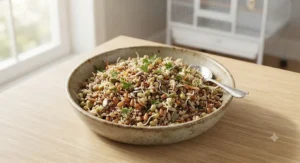
Converting a seed-committed grey to a pellet-based diet is less about the food itself and more about patience. Most avian-diet resources recommend a gradual timed-reduction method: offer seed for a limited window (often around 30 minutes, a few times daily) while keeping formulated pellets available constantly in between. This exploits a grey’s natural food-seeking drive without triggering a hunger strike, which is a real risk with abrupt cold-turkey switches in this species.
In the first 30 days, weigh your bird daily on a gram scale — a stubborn convert can lose dangerous amounts of body mass quietly, and daily tracking catches it early. A common mistake is offering a brand-new pellet loose in the same bowl as familiar seed; birds will simply pick around it. Instead, try mixing a small amount of crushed pellet into a favourite food, or offering pellets in a separate dish placed where the seed bowl normally sits. Optimization tricks that experienced keepers rely on include warming pellets slightly to release aroma, and rotating between two brands from this list if your particular grey seems ambivalent rather than outright refusing.
Real-World Scenarios: Matching Food to Your Grey
The recently adopted rescue, unknown diet history. If you’ve taken in an adult grey with no reliable feeding record, start conservative: Roudybush Daily Maintenance or ZuPreem Natural Parrot & Conure Food, alongside a vet-ordered calcium panel before changing anything. Unknown history means unknown risk, and testing first avoids guessing blind.
The long-time seed-only pet turning ten. This is the classic hypocalcemia-risk profile. A slow, monitored transition toward Harrison’s Bird Foods Adult Lifetime Coarse or Lafeber’s Premium Daily Pellets, paired with vet-guided calcium supplementation during the switch, addresses both the immediate deficiency risk and the long-term diet quality.
The budget-conscious first-time grey owner. If cost is the binding constraint, ZuPreem Natural Parrot & Conure Food delivers a genuinely balanced formulated diet at the lowest entry price on this list, without cutting corners on basic nutritional completeness — reserve the premium organic brands for later once your budget settles.
Problem → Solution: Common Diet-Related Issues
Problem: Bird refuses all pellets outright. Solution: switch to a flavoured formula like Lafeber’s Premium Daily Pellets or ZuPreem Natural Parrot & Conure Food, and use the timed-seed-reduction method above rather than removing seed entirely overnight.
Problem: Suspected calcium deficiency (weakness, unsteady perching). Solution: this is a same-week veterinary visit, not a wait-and-see situation — bloodwork confirms it, and treatment typically pairs oral or injectable calcium with a longer-term switch to a calcium-rich parrot food and reduced seed intake.
Problem: Feather plucking with no obvious injury. Solution: rule out medical causes first (a vet visit, full bloodwork, and a check for underlying infection), since diet is only one of at least three recognized categories of cause alongside psychological and environmental factors — more on this below.
Problem: Digestive upset after switching brands. Solution: reintroduce the previous formula, wait a week, then try a lower-additive option like Roudybush Daily Maintenance or TOP’s Organic Parrot Pellets, which skip the fruit-oil flavourings some sensitive birds react to.
How to Choose African Grey Parrot Food
- Check the calcium-to-phosphorus ratio first. Formulated diets built for African greys should skew toward calcium relative to phosphorus, unlike sunflower-seed-heavy mixes that run the opposite direction.
- Confirm it’s a complete maintenance formula, not a treat blend. Nutri-Berries, seed mixes, and treat sticks are supplements, not staples — check the label for “complete” or “maintenance” diet language.
- Match pellet size to beak strength. Larger granules or pellets, like those from TOP’s or Psittacus, suit an adult grey’s beak better than pellets sized for budgies.
- Weigh organic certification against budget realism. Certified organic (Harrison’s, TOP’s) costs more; it’s a legitimate upgrade, not a requirement for basic health.
- Consider flavouring only if conversion has failed before. Molasses or fruit-oil flavouring (Lafeber’s, ZuPreem, HARI Tropican) helps stubborn converts but isn’t necessary for a bird already eating pellets happily.
- Ask your avian vet about a baseline calcium panel. Before committing to a specific brand’s mineral profile long-term, a blood test tells you whether your bird is starting from a deficit.
- Buy the smallest bag first. Even a highly-rated pellet is worthless if your particular bird won’t eat it — test before committing to a bulk 25 lb bag.
African Grey Diet Requirements & Lifespan
Core nutritional requirements
African grey diet requirements centre on a few non-negotiables: a formulated pellet base making up roughly 60–80% of daily intake, fresh vegetables and low-sugar fruit for micronutrient variety, and deliberately limited high-fat seed and nut treats. Veterinary guidance consistently links a high-seed, low-variety diet to cardiovascular disease, obesity, and multiple vitamin and mineral deficiencies — precisely the profile avian vets see repeatedly in older, seed-raised greys. It’s also worth knowing that this species carries real regulatory weight: Environment and Climate Change Canada’s guidance on African grey parrots confirms the species has been listed under CITES Appendix I since January 2017, reflecting sharp wild population declines — part of why getting captive nutrition right matters so much when there’s no thriving wild population to serve as a fallback for the species as a whole.
How food quality affects a decades-long lifespan
African grey lifespan is where diet quality compounds most dramatically. Captive greys with good nutrition and care commonly reach 40 to 60 years, with documented longevity records showing captive birds living beyond 45 years and anecdotal claims stretching further still. Wild greys, by contrast, average closer to 22-23 years — largely due to predation and habitat pressure rather than nutrition. What that gap tells owners is blunt: a captive grey’s food is doing decades of quiet, cumulative work, and a bird fed a nutritionally complete diet from a young age is simply playing a different long-term game than one raised on seed alone.
Calcium-Rich Parrot Food & the Hypocalcemia Risk
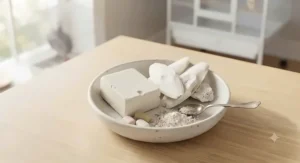
This is arguably the single most important health topic tied to feeding this species, so it earns its own section rather than a passing mention. African grey parrots show a documented, unusually high vulnerability to hypocalcemia compared to other companion psittacines — clinical reports describe otherwise healthy adult birds developing seizures, tremors, and sudden weakness, frequently linked to years on an all-seed or high-sunflower diet low in both calcium and vitamin D3. Leading veterinary hypotheses point to impaired parathyroid gland regulation specific to the species, meaning greys may lack the calcium-mobilizing “reserve” other parrots draw on from bone when blood calcium runs low.
The practical takeaway: calcium-rich parrot food isn’t optional supplementation for this species — it’s baseline care. Formulated diets deliberately balance calcium against phosphorus, unlike seed mixes that run calcium-poor and phosphorus-heavy. Owners should also know that indoor birds rarely get meaningful UV-B exposure, which matters because vitamin D3 (from diet or light) is required for calcium to actually be absorbed, not just present in the bowl. If your grey shows any stumbling, tremors, or falling from the perch, that’s an urgent veterinary matter — bloodwork confirming plasma calcium is the only way to know for certain, and home dietary changes alone won’t resolve an acute deficiency once symptoms appear.
Feather Plucking in African Greys: When Diet Is (and Isn’t) the Cause
Feather plucking shows up disproportionately in this species — a peer-reviewed study of feather damaging behaviour in captive African grey parrots found prevalence rates far higher in pet-kept birds (17.5%) than in parent-raised populations (1.3%), underscoring how much environment and rearing history matter alongside diet. Nutritional deficiency, particularly around calcium and vitamin A, is one of three broadly recognized categories of cause — the other two being psychological (boredom, stress, past trauma) and environmental (low humidity, poor air quality, inadequate bathing opportunities).
Here’s what most owners get wrong: assuming a diet swap alone will fix plucking that’s already underway. Reviewers and avian behaviourists consistently note that roughly half of plucking cases in parrots generally show no discernible medical cause at all, meaning enrichment and environmental changes deserve equal attention to whatever’s in the food bowl. That said, a genuinely balanced, calcium-adequate diet remains a prerequisite for ruling out the nutritional third of the puzzle — you simply can’t diagnose a psychological or environmental cause with confidence while a dietary deficiency is still actively in play.
Features That Actually Matter (And Those That Don’t)
Matters: a genuinely complete guaranteed analysis with calcium, vitamin D3, and vitamin A clearly listed — this is the core nutritional job the food has to do.
Matters less than marketing suggests: artificial fruit colouring. It makes pellets look appealing to humans in a bag on a shelf, not to the bird eating them, and several formulas on this list (ZuPreem Natural, Roudybush) intentionally skip it without any loss of nutritional value.
Matters: organic certification, but mainly for pesticide and GMO avoidance rather than any dramatic nutritional superiority — it’s a legitimate value-add, not a health cure-all.
Doesn’t matter much: exotic-sounding “superfood” add-ins occasionally marketed on niche bird food packaging. If the base formula already delivers a complete, balanced profile, added spirulina or goji berry dustings are a nice-to-have, not a differentiator worth paying a large premium for.
Common Mistakes When Buying African Grey Parrot Food
The most frequent misstep is buying based on packaging appeal rather than checking whether the product is labelled a complete maintenance diet versus a treat or supplement blend — seed mixes marketed with parrot imagery on the front are not equivalent to a formulated pellet, no matter how the bag looks. A close second is buying the largest available bag on a first purchase; if your grey rejects the pellet, you’re stuck storing or discarding several pounds of unused food, and pellets do lose potency over time even when sealed properly. Owners also commonly underestimate conversion timelines, giving up on a new pellet after a few days when a genuine transition can reasonably take several weeks of patient, gradual reduction. Finally, many owners treat treat-line products like Nutri-Berries as a full dietary replacement rather than the supplement they’re designed to be — a mistake that quietly reintroduces the same fat-heavy, nutrient-thin pattern formulated diets are meant to correct.
Long-Term Cost & Maintenance
Running the numbers over a single year, a mid-size African grey eating roughly 1/3 to 1/2 cup of pellets daily will work through a 2–3 lb bag every four to six weeks depending on brand density and any seed or fresh-food supplementation alongside it. At the ZuPreem or Roudybush end of the price range, that puts annual pellet costs somewhere in the low-to-mid hundreds of Canadian dollars; premium organic options like Harrison’s or TOP’s can run meaningfully higher given both per-pound pricing and smaller standard bag sizes. Stretched across a potential 40-to-60-year captive lifespan, though, even the premium tier represents a modest fraction of total lifetime ownership cost once housing, enrichment, and veterinary care are factored in — and the total-cost-of-ownership case for quality food strengthens further when you weigh it against the far higher long-term veterinary cost of treating diet-linked conditions like hypocalcemia or chronic feather damaging behaviour after the fact. For owners who want a deeper dive into companion-animal nutrition science generally, the Ontario Veterinary College’s clinical nutrition program at the University of Guelph is a good example of the kind of Canadian research this field draws on.
✨ Don’t Miss These Exclusive Deals! 🔍
Take your African grey’s nutrition to the next level with these carefully selected products. Click on any highlighted item to check current pricing and availability on Amazon.ca — these formulas can help support the vibrant feathers and steady energy your feathered friend deserves! 🦜
Frequently Asked Questions
❓ What is the best food for an African grey parrot?
❓ How much calcium does an African grey parrot need daily?
❓ Can African grey parrots eat seeds at all?
❓ Why do African grey parrots pluck their feathers?
❓ How long do African grey parrots live in captivity?
Conclusion
There’s no single “best” african grey parrot food that fits every bird — what changes the equation is your grey’s history, your budget, and how much conversion patience you’re working with. If you’re starting from scratch with a health-first mindset, Harrison’s Bird Foods Adult Lifetime Coarse or TOP’s Organic Parrot Pellets set a high nutritional bar. If you’re mid-conversion with a stubborn seed-eater, Lafeber’s Premium Daily Pellets or ZuPreem Natural Parrot & Conure Food solve the more immediate problem of getting pellets eaten at all. And if calcium management is the active concern your vet has flagged, Psittacus High Energy Complete Diet and HARI Tropican Lifetime Maintenance Granules both build their formulas around that specific vulnerability.
What matters more than any single brand choice is consistency: a genuinely balanced diet, monitored over years rather than weeks, is what actually moves the needle on this species’ long-term health outcomes — feather condition, calcium stability, and the kind of decades-long lifespan that makes these birds such a serious commitment in the first place.
Recommended for You
- Parrot Food for Large Parrots: 7 Best Picks for
- Parrot Pellets vs Seed Mix: 7 Best Picks for 2026
- Bulk Parrot Food Value Pack: 7 Best Large Bags for 2026
Disclaimer: This article contains affiliate links. As an Amazon Associate, I earn from qualifying purchases. If you purchase products through these links, we may earn a small commission at no additional cost to you.
✨ Found this helpful? Share it with your friends! 💬🤗
