
In This Article
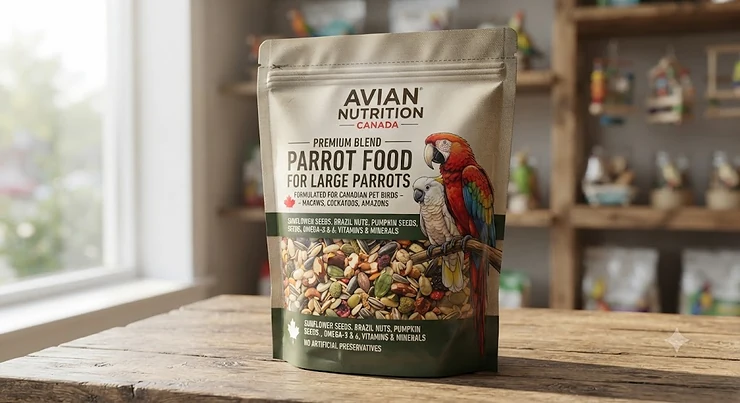
Anyone who has watched a macaw crack a Brazil nut like it’s a sunflower seed knows large parrots don’t eat like other birds. Parrot food for large parrots is any diet — pellet, seed blend, or a mix of both — formulated to meet the higher calorie, fat, and calcium needs of big-bodied, big-beaked species such as macaws, cockatoos, African greys, and Amazons, whose bodies and beaks simply demand more than a standard budgie mix can deliver. Get the formula wrong and you’re not just risking a bored bird picking at its bowl; you’re looking at fatty liver disease, brittle feathers, and a beak that never gets the workout it was built for.
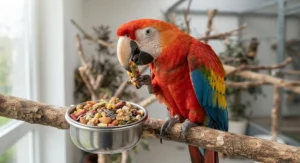
That gap between “food a large parrot will eat” and “food that actually keeps a large parrot healthy” is wider than most new owners expect. A cockatiel-sized pellet rattles around in a hyacinth macaw’s beak like a pebble in a bucket, and a seed mix built for budgies is dangerously low in the calcium and vitamin A a cockatoo needs to avoid deficiency. As attitudes toward exotic pet ownership continue shifting across Canada, more owners are asking harder questions about what’s actually in the bag — and rightly so, since a macaw or cockatoo in your living room can outlive a mortgage.
This guide breaks down seven real, currently available options for parrot food for large parrots, spanning budget pellets to vet-formulated premium blends, plus the pellet-size math, fat-content trade-offs, and cage-setup habits that actually move the needle on a large parrot’s health. Every price below is a range in Canadian dollars, since exact Amazon pricing shifts constantly — always check current pricing before you buy.
Quick Comparison Table: Large Parrot Food at a Glance
| Product | Format | Fat Level | Best For |
|---|---|---|---|
| ZuPreem Natural Large Bird Food | Pellet | Low-moderate | Budget-conscious multi-bird households |
| Hagen Tropican Lifetime Formula Granules | Extruded granule | Moderate | Everyday maintenance, Canadian-made |
| Lafeber Premium Daily Diet Pellets for Macaws and Cockatoos | Pellet | Moderate | Vet-recommended premium feeding |
| Higgins Vita Seed California Blend | Seed blend | High | Active birds, foraging enrichment |
| Volkman Avian Science Super African Grey & Amazon Parrot Food | Seed/grain blend | Moderate-high | Variety-forward feeding |
| Roudybush Daily Maintenance Bird Food | Pellet | Low | Weight management, sedentary birds |
| Pretty Bird Species Specific Amazon & Cockatoo | Pellet | Low-moderate | Cockatoo-specific calorie control |
Scanning this table, the split that matters most isn’t brand recognition — it’s pellet versus seed-forward, and fat level relative to how active your bird actually is. A flighted macaw burning real energy can handle the higher fat in the Higgins Vita Seed California Blend, while a mostly-perched cockatoo does better on something closer to the Roudybush Daily Maintenance Bird Food‘s lean formula. None of these seven is wrong, exactly — they’re built for different bodies and different daily routines.
💬 Just one click — help others make better buying decisions too!😊
Top 7 Parrot Food for Large Parrots: Expert Analysis
I picked these seven to cover the real range large-parrot owners shop in Canada — from a no-frills 9 kg bag under C$100 to a species-specific premium blend formulated with an avian nutritionist’s input. All seven qualify as genuine parrot food for large parrots rather than repackaged small-bird formulas; what separates them is fat content, pellet size, and how much of the bag is seed versus balanced pellet. Prices reflect research at the time of writing and may vary — always check current pricing before buying.
1. ZuPreem Natural Large Bird Food — best budget pick with no fillers
The standout here is what’s missing: no artificial colours, no added sugar, no dye-based “fun shapes” gimmick, just a large chunk pellet sized for macaw and cockatoo beaks. The pellet itself runs noticeably bigger than ZuPreem’s small-bird formulas, which matters more than it sounds — a beak built to crack palm nuts in the wild gets frustrated fast trying to nibble pellets meant for a conure, and frustration at the bowl is a common driver of selective, unbalanced eating. Based on the ingredient list, this sits toward the leaner end of the fat spectrum, which suits a bird that spends more time perched than flying hard laps around a room. Reviewers consistently describe it as a reliable, unremarkable staple — which, in pet food, is often a compliment — though a recurring theme in aggregated feedback is that some birds take a week or two to accept the plain appearance after being raised on flashier, dyed pellets. For owners feeding two or three large birds, the price-per-kilogram math alone makes this one worth a look.
Pros:
- ✅ No artificial colours, flavours, or preservatives
- ✅ Large chunk size suits macaw and cockatoo beaks
- ✅ Budget-friendly for multi-bird or high-volume households
Cons:
- ❌ Plain appearance can be a hard sell for picky eaters
- ❌ Lower fat content isn’t ideal for high-energy macaws
In the C$70-C$95 range for a 9 kg (20 lb) bag at the time of research, the ZuPreem Natural Large Bird Food is a sensible entry point for anyone testing pellets for the first time.
2. Hagen Tropican Lifetime Formula Granules — Canadian-made daily staple
Manufactured by Rolf C. Hagen in Montreal, this is one of the few large-format parrot pellets actually produced in Canada rather than imported, and the 4 mm granule size targets exactly the medium-to-large species this guide is about. What most buyers overlook about granule-style pellets versus flat pucks is texture: the extruded, slightly irregular shape holds together better in a humid cage environment and doesn’t crumble into dust at the bottom of the bowl the way some cheaper pucks do after a few weeks. Based on the spec sheet, protein and fat sit in a balanced maintenance range rather than skewing toward either extreme, which is exactly the kind of “no drama” formula avian vets tend to recommend as a long-term daily base. Aggregated review sentiment points to strong acceptance among birds already eating pellets, with a common complaint being that the granule can run slightly small for the very largest hyacinth or green-wing macaws, who may prefer a coarser cut. For everyday feeding without a specific medical or weight concern, this is a dependable middle-of-the-road choice with the added appeal of domestic manufacturing.
Pros:
- ✅ Manufactured in Canada with consistent quality control
- ✅ Extruded granule holds shape without crumbling in the bowl
- ✅ Balanced maintenance formula suits most large species long-term
Cons:
- ❌ Granule size may run small for the biggest macaws
- ❌ Limited flavour variety compared to fruit-blend competitors
Expect to pay in the C$65-C$85 range for a 9 kg (20 lb) bag, placing it comfortably in the mid-tier for daily maintenance feeding.
3. Lafeber Premium Daily Diet Pellets for Macaws and Cockatoos — best vet-recommended premium pick
This is a species-specific formula, not a generic large-bird pellet with a bigger scoop size — the pellet cut and nutrient profile are built around macaw and cockatoo needs specifically, using non-GMO, human-grade ingredient sourcing that Lafeber markets heavily and that avian veterinarians frequently reference when recommending a pelleted base diet. What that specificity means in practice: the calcium-to-phosphorus ratio and fat content are tuned for birds with genuinely higher metabolic and bone-density demands than a mid-sized parrot, rather than a one-size-fits-all approach. Here’s what the ingredient panel won’t tell you outright, but avian nutrition literature consistently notes — large psittacines transitioning from seed-heavy diets often show improved feather quality and more consistent droppings within a few months on a nutritionally complete pellet like this one. Reviewers commonly cite strong acceptance even among previously seed-dependent birds, crediting the slightly fruitier natural flavouring, while some owners note the premium price is a real consideration for households feeding multiple large birds daily. If your avian vet has flagged nutritional gaps in your bird’s current diet, this is the kind of formula that conversation usually leads to.
Pros:
- ✅ Formulated specifically for large-beaked species by avian nutritionists
- ✅ Non-GMO, human-grade ingredient sourcing
- ✅ Widely recommended by avian veterinarians in practice
Cons:
- ❌ Premium price relative to standard maintenance pellets
- ❌ Some birds resist the switch from softer, fruitier diets
In the C$140-C$180 range for an 11 kg (25 lb) bag, the Lafeber Premium Daily Diet Pellets for Macaws and Cockatoos sits at the top of this list’s price ladder but earns it with species-specific formulation.
4. Higgins Vita Seed California Blend — best high-fat option for active birds
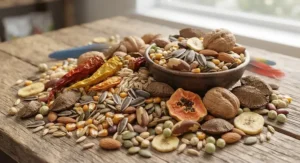
Where the pellets above lean lean and neutral, this seed-forward blend goes the other direction, mixing safflower, sunflower, and other oil-rich seeds with dried fruit and vegetable pieces for a genuinely high-fat parrot food built around foraging behaviour rather than nutritional minimalism. The higher fat content isn’t a flaw here so much as a design choice: a large parrot cracking its own shells is doing real physical work, and that natural hulling behaviour is exactly the kind of species-typical enrichment a bowl of uniform pellets can’t replicate. Based on the ingredient mix, this diet works best layered alongside — not instead of — a pelleted base, since seed blends alone tend to run short on calcium and certain amino acids that a formulated pellet covers reliably. Aggregated reviewer feedback consistently highlights strong palatability, unsurprising given seeds are what most parrots evolved eating, though a recurring complaint is selective feeding: birds picking out the sunflower seeds and leaving the rest, which undercuts the blend’s intended nutritional balance if it’s the only food offered. For an active, flighted macaw or a cockatoo that needs mental stimulation at mealtime, this is a smart supplemental choice rather than a full replacement diet.
Pros:
- ✅ Seed variety encourages natural foraging behaviour
- ✅ Higher fat content suits active, high-energy large parrots
- ✅ Includes dried fruit and vegetable pieces for enrichment
Cons:
- ❌ Selective eaters can pick out favourites and skip the rest
- ❌ Higher fat content risks weight gain in sedentary birds
Priced around C$90-C$120 for an 11 kg (25 lb) bag, it’s a reasonable mid-tier investment when used as part of a mixed feeding plan rather than a standalone diet.
5. Volkman Avian Science Super African Grey & Amazon Parrot Food — best variety-forward seed blend
Decades in the aviculture business have kept Volkman’s seed-and-grain blends a familiar name on specialty store shelves, and this particular formula targets exactly the mid-to-large species — African greys, Amazons, and by extension many cockatoos — that need more nutritional density than a standard parakeet mix provides. The blend combines multiple seed types with grains and dried produce rather than leaning on one or two dominant ingredients, which in practice means less of the “pick out the favourites, ignore the rest” problem that plagues simpler seed mixes. What most buyers overlook about grain-inclusive blends like this is that the added grain content offers a different amino acid profile than pure seed, partially closing — though not eliminating — the nutritional gaps that make seed-only diets risky long-term. Reviewers frequently describe strong bird interest and enthusiasm at feeding time, with a common caveat that piece size varies enough within the bag that some birds still manage to selectively feed rather than eating the full mix. Pairing this with a pelleted staple, rather than feeding it alone, is the approach most avian nutrition guidance would support.
Pros:
- ✅ Blend targets species prone to seed-only diet deficiencies
- ✅ Mix of seed, grain, and dried produce adds variety
- ✅ Recognizable, established brand with decades in aviculture
Cons:
- ❌ Still seed-forward, so nutrient gaps need pellet supplementation
- ❌ Inconsistent piece size can lead to selective feeding
At roughly C$75-C$100 for a 9 kg (20 lb) bag, it’s a solid variety add-in for owners already feeding a pelleted base.
6. Roudybush Daily Maintenance Bird Food — best for weight-conscious owners
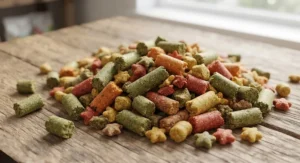
Avian veterinarians reach for this brand often enough that it’s become something of a default recommendation for birds carrying extra weight, and the reasoning is straightforward: the “Daily Maintenance” formula deliberately runs leaner in fat than most competitors, without artificial dyes, added sugar, or the fruity flavouring that makes some pellets closer to treats than staples. The Large pellet size cuts down on the wasted energy of a bird hunting for the “right” piece in a mixed-size bag, and the uniform, no-frills texture actually supports the kind of steady, repetitive chewing that helps keep a beak in shape. Based on its formulation goals, this is squarely a maintenance diet rather than a growth or breeding formula — it’s not trying to maximize calories, it’s trying to hold a healthy adult bird steady, which is exactly the brief for a mostly-perched companion cockatoo or macaw that isn’t burning huge amounts of energy daily. Aggregated feedback consistently praises the lack of dye and sugar, with the most common complaint being that the plain, uniform appearance makes it a harder sell for a bird that’s already used to something flashier. It’s primarily distributed through specialty avian retailers rather than big-box shelves, which is worth knowing before you go looking for it.
Pros:
- ✅ Lower fat formula favoured by avian vets for weight control
- ✅ No dyes, sugar, or artificial preservatives
- ✅ Firm pellet texture supports natural chewing behaviour
Cons:
- ❌ Plain, uniform colour and shape lacks visual appeal
- ❌ Primarily sold through specialty retailers, less convenient shipping
In the C$110-C$140 range for an 11 kg (25 lb) bag, the Roudybush Daily Maintenance Bird Food is a targeted pick for owners managing a bird’s weight rather than a general-purpose staple.
7. Pretty Bird Species Specific Amazon & Cockatoo — best cockatoo-specific formula
Rather than a generic “large bird” label, this formula narrows its target to Amazons and cockatoos specifically, with extra calcium worked into the recipe and a medium pellet size calibrated to fit that beak and jaw range rather than stretching to also cover giant macaws. That specificity is the whole pitch, and it’s a reasonable one: cockatoos in particular are prone to calcium-related issues and to weight gain from overly rich diets, so a formula that dials back fat while boosting calcium addresses two of the more common nutritional pitfalls for the species at once. On paper, this means less guesswork for an owner who’s specifically shopping for food for cockatoos rather than trying to find one bag that works for every large parrot in the house. Reviewer sentiment aggregated from specialty retailers points to good acceptance among cockatoos already on pelleted diets, with a recurring note that the pellet size runs a bit small for owners also feeding a hyacinth or great green macaw alongside their cockatoo. If your household is specifically Amazon-and-cockatoo, rather than mixed-species with macaws, this is one of the more purpose-built options on the market.
Pros:
- ✅ Formulated specifically with cockatoo calorie needs in mind
- ✅ Added calcium supports bone and eggshell health
- ✅ Medium pellet size matches cockatoo beak and jaw strength
Cons:
- ❌ Less suited to giant macaws needing bigger pellet cuts
- ❌ Limited flavour compared to fruit-forward competitors
Typically found in the C$85-C$110 range for a 9 kg (20 lb) bag, it’s a fair price for a formula this targeted.
Top 7 Parrot Foods: Detailed Spec & Value Comparison
| Product | Format | Protein / Fat (approx.) | Price Range (CAD) | Best For |
|---|---|---|---|---|
| ZuPreem Natural Large Bird Food | Large pellet | ~12% / ~5% | C$70-C$95 | Budget multi-bird households |
| Hagen Tropican Lifetime Formula Granules | 4 mm granule | ~14% / ~5% | C$65-C$85 | Everyday maintenance |
| Lafeber Premium Daily Diet Pellets for Macaws and Cockatoos | Species-cut pellet | ~14% / ~5% | C$140-C$180 | Vet-recommended premium diet |
| Higgins Vita Seed California Blend | Seed blend | ~14% / ~12-15% | C$90-C$120 | Active, flighted large parrots |
| Volkman Avian Science Super African Grey & Amazon Parrot Food | Seed/grain blend | ~13% / ~10-13% | C$75-C$100 | Variety alongside a pellet base |
| Roudybush Daily Maintenance Bird Food | Large pellet | ~12% / ~4-6% | C$110-C$140 | Weight-conscious owners |
| Pretty Bird Species Specific Amazon & Cockatoo | Medium pellet | ~14% / ~5% | C$85-C$110 | Cockatoo-specific feeding |
Reading this table side by side, the fat column tells the real story: the two seed-forward blends run two to three times the fat of the leanest pellets, which isn’t automatically bad but does mean they belong in a mixed feeding plan rather than as a bird’s entire diet. If you’re managing a bird’s weight or feeding a species already prone to obesity, like many cockatoos, the leaner end of this table — Roudybush Daily Maintenance Bird Food or Pretty Bird Species Specific Amazon & Cockatoo — is the more defensible daily base, with a seed blend used sparingly as enrichment rather than a staple.
Large Parrot Pellet Size Explained
Large parrot pellet size isn’t a cosmetic detail — it’s a functional spec that affects how much a bird actually eats, how much it wastes, and how much natural chewing behaviour a diet supports. Manufacturers typically cut pellets in tiers roughly matched to beak size: small (finches, budgies), medium (conures, cockatiels, small cockatoos), and large (macaws, larger cockatoos, Amazons), with some brands like Hagen’s Tropican line sizing granules in millimetres — 4 mm sits toward the upper end for medium-to-large species, while true macaw-cut pellets from brands like Lafeber run noticeably chunkier.
Feed a pellet that’s too small and a macaw will often crush it reflexively rather than actually eating it deliberately, leading to more waste at the bottom of the cage and less of the beak-conditioning benefit a properly sized pellet provides. Go too large for a smaller-beaked species within the “large parrot” category, like a smaller Amazon, and you risk the bird avoiding the bowl altogether rather than working through pieces it finds awkward to manage. The practical fix is straightforward: match pellet size to species rather than body weight alone, since beak strength and jaw mechanics vary more between species than raw size might suggest, and when in doubt, a slightly larger cut is generally safer than one that gets crushed and wasted.
High-Fat Parrot Food: When More Calories Make Sense
High-fat parrot food gets an unfairly bad reputation, largely because obesity and fatty liver disease in companion birds are real, well-documented problems — but fat itself isn’t the villain; mismatched fat-to-activity level is. A flighted macaw covering real distance daily burns through calories at a rate a sedentary companion bird simply doesn’t, and for that active bird, a higher-fat seed blend like the one covered above isn’t excess, it’s appropriate fuel.
The mismatch happens when an owner keeps feeding a rich, seed-heavy diet to a bird that’s mostly perched, wings clipped, and getting minimal daily exercise — that’s the scenario avian vets flag repeatedly as a driver of obesity and hepatic lipidosis in pet parrots. On paper, the fix isn’t necessarily switching foods entirely; it’s recalibrating portion size and the pellet-to-seed ratio to match the individual bird’s actual energy output, then reassessing body condition every few months rather than feeding on autopilot. What most owners overlook is that a bird’s fat needs can shift seasonally and with age, so a diet that was appropriately high-fat during an active, younger phase may need dialing back later — a conversation worth having with an avian vet rather than guessing from a bag label alone.
Best Food for Cockatoos: What Makes Their Needs Different
Cockatoos occupy an odd middle ground in large-parrot nutrition: they’re big-bodied and strong-beaked like macaws, but metabolically they’re more prone to obesity and fatty liver than most macaw species, which makes food for cockatoos a genuinely distinct shopping category rather than an afterthought within “large parrot food.” The documented nutritional requirements for large cockatoo species compiled by avian nutrition researchers consistently point to lower fat tolerance and a genuine need for calcium and vitamin A that seed-only diets rarely provide in adequate amounts.
In practice, this means the leanest options on this list — the Roudybush Daily Maintenance Bird Food and Pretty Bird Species Specific Amazon & Cockatoo — are generally better long-term staples for a cockatoo than the higher-fat seed blends that work well for a more active macaw. Cockatoos are also notoriously food-motivated and prone to begging behaviour that trains owners into over-treating, so portion discipline matters as much as formula choice. Reviewers who own cockatoos consistently report better weight stability on a dedicated, lower-fat pellet compared with free-feeding a rich seed mix, which tracks with what avian nutrition literature would predict for the species.
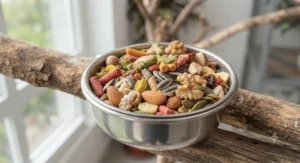
Beak Strength and Diet: The Overlooked Connection
Beak strength doesn’t come from genetics alone — it’s built and maintained through use, and diet plays a bigger role in that than most new owners expect. A beak that never has to work for its food, constantly fed pre-shelled or overly soft pieces, doesn’t develop or maintain the same grip strength and wear pattern as one regularly cracking whole seeds, nuts, or firm pellets.
This is one of the strongest arguments for keeping some whole, shell-on foraging elements in a large parrot’s diet even if a pelleted formula makes up the nutritional base — the physical act of hulling a sunflower seed or working through a firm pellet like those from Roudybush or Lafeber is functionally beak exercise, not just eating. Reviewers and avian behaviourists alike note that beaks kept in regular use through diet and foraging toys tend to show better overgrowth control than beaks fed a diet of soft, pre-processed pieces exclusively. What the spec sheet won’t tell you is that beak overgrowth requiring veterinary trims is sometimes less a genetic issue and more a diet-and-enrichment issue — a bird with nothing firm to chew is a bird whose beak keeps growing with nothing wearing it back down.
Calorie Density: Why It Matters More Than Bag Weight
Calorie density — how many calories pack into a given weight of food — matters more for large parrot health than the size of the bag you’re buying, because two 11 kg bags of “parrot food” can deliver meaningfully different daily calorie loads depending on fat content and ingredient mix. A seed-heavy blend running 12-15% fat delivers considerably more calories per gram than a lean maintenance pellet sitting at 4-5% fat, which means the same scoop size can represent very different portions of a bird’s daily energy needs.
Resources like the Ontario Veterinary College’s pet nutrition service emphasize that portion control, not just ingredient quality, is central to managing weight in companion animals — a principle that applies directly to birds, where owners often eyeball a scoop rather than actually weighing food relative to body condition. Interpreting the price and fat data from the comparison table above, the leanest options represent better calorie-per-dollar value for a sedentary bird’s actual needs, while the higher-fat blends only pay off nutritionally if the bird’s activity level genuinely burns through that extra energy.
| Tier | Typical Price Range (CAD, large bag) | What You’re Paying For |
|---|---|---|
| Budget | C$65-C$95 | Functional nutrition, basic pellet sizing, no fillers |
| Mid-range | C$85-C$120 | Species-targeted formulas, seed-and-pellet variety |
| Premium | C$110-C$180 | Vet-formulated precision, human-grade sourcing, weight-specific tuning |
Looking at this breakdown, the jump from budget to mid-range mostly buys targeting — a formula built for a specific species or activity level rather than a generic large-bird label. The jump to premium buys formulation precision and sourcing transparency, which matters most for birds with a documented health concern an avian vet is actively managing.
Large-Parrot Cage Setups: Feeding Stations That Actually Work
Large-parrot cage setups can undermine even the best food choice if bowls, perches, and foraging opportunities aren’t arranged with the bird’s actual behaviour in mind. Placing a food bowl directly beneath a favourite high perch is a classic mistake — droppings contaminate the food constantly, and a bird that associates that spot with mess often eats less from it than it should.
A better approach places food and water bowls on opposite sides of the cage, away from the highest perches, with at least one bowl positioned to encourage a short climb or flight rather than being immediately accessible from the resting perch — that small effort mirrors natural foraging behaviour better than food handed over passively. For multi-bird households, separate feeding stations per bird prevent food guarding and let you actually track who’s eating what, which matters enormously when troubleshooting a weight or appetite issue. Rotating foraging toys that hide pellets or seed pieces around the cage, rather than relying solely on an open bowl, keeps the beak-and-diet connection discussed earlier working in the bird’s favour, turning mealtime into the kind of mental and physical engagement large parrots need to stay behaviourally healthy, not just physically fed.
How to Choose Food for Large Parrots
- Identify your bird’s species and typical activity level — a flighted macaw and a mostly-perched cockatoo have genuinely different fat and calorie needs, even within the “large parrot” category.
- Check the pellet or granule size against your bird’s beak — undersized pellets get crushed and wasted; oversized pellets for smaller large-parrot species get avoided at the bowl.
- Decide your pellet-to-seed ratio upfront — a pelleted base with seed blends used as enrichment, rather than the reverse, is the approach most avian nutrition guidance supports.
- Review the fat percentage against body condition — lean formulas suit sedentary or overweight birds; higher-fat blends suit genuinely active ones.
- Look for species-specific formulas if you own cockatoos — their obesity and calcium needs differ enough from macaws to justify a dedicated food for cockatoos rather than a generic large-bird bag.
- Confirm ingredient transparency — no artificial dyes, added sugar, or vague “natural flavour” catch-alls is a reasonable baseline across every price tier on this list.
- Budget for a gradual transition period — birds switching from seed to pellets, or between pellet brands, often take two to four weeks to fully accept a new diet, so buy a smaller bag first if you’re unsure.
Real-World Feeding Scenarios: Macaw, Cockatoo, and African Grey Owners
Picture three realistic households. The first owns a flighted green-wing macaw that gets an hour of supervised out-of-cage flight daily — for that bird, a mixed diet built around the Lafeber Premium Daily Diet Pellets for Macaws and Cockatoos as a base with the Higgins Vita Seed California Blend offered a few times weekly for enrichment matches both the calorie demand and the species-specific nutrient profile a macaw needs.
The second household has a companion umbrella cockatoo that spends most of the day on a play stand rather than flying — here, calorie density becomes the priority, making the Roudybush Daily Maintenance Bird Food or Pretty Bird Species Specific Amazon & Cockatoo the more sensible daily staple, with foraging toys standing in for the enrichment a richer seed blend would otherwise provide. The third is a mixed household with an African grey and an Amazon sharing space — the Volkman Avian Science Super African Grey & Amazon Parrot Food was formulated with exactly this pairing in mind, though pairing it with the Hagen Tropican Lifetime Formula Granules as a nutritionally complete base covers the gaps a seed blend alone would leave. None of these owners are wrong for choosing differently — the right parrot food for large parrots is the one matched to that specific bird’s life, not a universal answer.
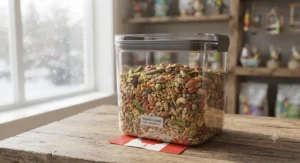
Common Large-Parrot Feeding Problems (And How to Fix Them)
Selective eating — a bird picking favourite pieces and ignoring the rest — is one of the most common complaints across seed blends, and the fix isn’t forcing the issue but gradually reducing the preferred ingredient’s proportion in a homemade mix, or switching toward a uniform pellet where selective feeding simply isn’t possible. Refusal to eat a new pellet entirely, especially in birds transitioned late in life from seed-only diets, usually responds better to a slow mix-in approach over several weeks than an abrupt cold-turkey switch, since abrupt changes can genuinely trigger a hunger strike in stubborn individuals.
Weight gain despite a “healthy” diet often traces back to portion size rather than food choice — a scoop that looks modest can still represent excess calories if it’s a high-fat blend fed to a sedentary bird, so weighing food rather than eyeballing it resolves more cases than switching brands does. Beak overgrowth requiring frequent vet trims, discussed earlier, frequently improves once firm, whole foods and foraging toys are reintroduced alongside a soft pelleted diet, giving the beak actual resistance to work against. Finally, calcium deficiency symptoms in cockatoos specifically — soft or thin eggshells in breeding birds, or general lethargy — often point back to an underlying seed-heavy diet lacking the calcium a dedicated food for cockatoos formula is built to supply.
Common Mistakes When Buying Food for Large Parrots
The single biggest mistake is buying by bag size or price alone rather than checking whether the pellet is actually sized and formulated for the species in the cage — a “large bird” label on a bag doesn’t guarantee it’s right for both a macaw and a cockatoo, since their fat and calcium needs genuinely diverge. A close second is treating a seed blend as a complete diet rather than a supplement; even a high-quality blend like the ones featured here works best alongside a nutritionally complete pellet, not in place of one.
Ignoring the transition period is another frequent misstep — switching a bird’s entire diet overnight, then panicking when it refuses to eat, is one of the more common and avoidable feeding mistakes new owners make. Finally, some owners assume that because a species is labelled “large parrot,” every product in that category is interchangeable, when in fact food for cockatoos and food formulated for macaws can differ meaningfully in fat content and calcium levels — reading the specific formulation, not just the bag size, is worth the extra two minutes at the shelf or on the product page.
Safety, Regulations & Canadian Feed Standards
Pet bird food sold in Canada falls under the Canadian Food Inspection Agency’s oversight for animal feed, and Canada’s feed labelling and registration standards set baseline requirements around ingredient labelling and safety that reputable brands, including every product featured in this guide, are expected to meet before reaching store shelves or amazon.ca listings.
That regulatory baseline is a floor, not a ceiling — it confirms a product is safe and accurately labelled, not that it’s the optimal formulation for your specific bird’s species and activity level, which is why the species-specific and vet-recommended distinctions throughout this guide still matter on top of basic compliance. Practically, this means checking for CFIA-compliant labelling and a Canadian or established international manufacturer is a reasonable baseline safety check, while the deeper formulation questions — fat content, pellet size, calcium levels — are where the real decision-making happens.
Frequently Asked Questions
❓ What is the best parrot food for large parrots like macaws and cockatoos?
❓ How much should I feed a large parrot each day?
❓ Are pellets or seeds better for large parrots?
❓ What large parrot pellet size is right for a macaw or cockatoo?
❓ Can the right parrot food help prevent fatty liver disease in large parrots?
Conclusion
There’s no single correct answer to what parrot food for large parrots you should buy — there’s only the right answer for your specific bird, and that depends on species, activity level, and whatever your avian vet has flagged in past checkups. Budget-conscious multi-bird households can reasonably build a diet around the ZuPreem Natural Large Bird Food or Hagen Tropican Lifetime Formula Granules, while a bird with documented nutritional gaps or a specific health concern often benefits more from the precision of the Lafeber Premium Daily Diet Pellets for Macaws and Cockatoos.
What matters more than any single product choice is the underlying framework this guide has walked through: match pellet size to beak, match fat content to activity level, treat seed blends as enrichment rather than a complete diet, and remember that food for cockatoos genuinely differs from food built for macaws even within the same “large parrot” category. Pair whichever food you land on with a cage setup that encourages some actual foraging effort, and you’re addressing both the nutritional and behavioural sides of feeding a bird whose wild relatives spend hours a day working for every meal.
✨ Don’t Miss These Exclusive Deals!
🔍 Check current prices and availability on any of these seven picks before your large parrot’s next refill is due — the right formula makes a real difference over a lifetime that can stretch decades.
Recommended for You
- Parrot Pellets vs Seed Mix: 7 Best Picks for 2026
- Bulk Parrot Food Value Pack: 7 Best Large Bags for 2026
- Affordable Parrot Bird Food: 7 Budget Picks Vets Approve (2026)
Disclaimer: This article contains affiliate links. As an Amazon Associate, I earn from qualifying purchases. If you purchase products through these links, we may earn a small commission at no additional cost to you.
✨ Found this helpful? Share it with your friends! 💬🤗
