
In This Article
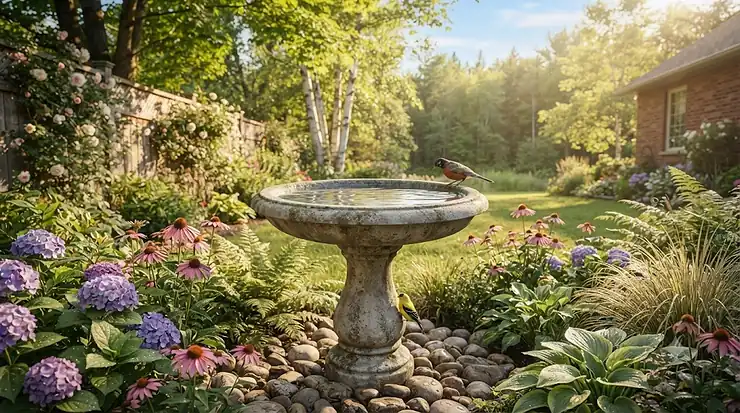
Somewhere between “cute lawn ornament” and “backyard infrastructure,” the humble concrete bird bath quietly does more heavy lifting than almost anything else you’ll put in your garden. A concrete bird bath is a heavy, freestanding basin — usually cast from cement, sand, and fine aggregate, sometimes reinforced with glass fibres — designed to hold shallow water outdoors for birds to drink and bathe in year-round. That’s the textbook version. The lived version is a robin splashing at 7 a.m. while you drink your coffee, wondering why you didn’t get one sooner.

Here’s the thing nobody tells you before you start shopping: not all concrete is created equal, and Canadian winters are brutally honest critics of cheap materials. A bird bath that survives a Californian patio might crack apart after one Ottawa February. That’s why this guide leans hard into the stuff that actually matters here — freeze-thaw resilience, aggregate quality, weight and stability, and honest pricing in Canadian dollars — instead of just repeating spec sheets. The Canadian Wildlife Federation notes that offering a shallow water source is one of the simplest ways to support backyard birds year-round, and a well-chosen concrete bird bath is one of the most durable ways to do exactly that.
We’ll walk through seven real, currently available products spanning budget to premium, break down what “freeze-thaw durability” actually means for something sitting in your yard from March to December, and hand you a decision framework so you’re not just guessing at checkout. No fabricated five-star gushing here — just spec comparisons, aggregated review patterns, and straight talk about what C$60 buys you versus what C$400 buys you.
Quick Comparison Table
| Bird Bath | Material | Height | Best For |
|---|---|---|---|
| Sunnydaze Grecian Column | GFRC concrete | 20.25″ (51.4 cm) | Best budget entry point |
| Sunnydaze Simply Square | GFRC concrete | 23″ (58.4 cm) | Best modern aesthetic |
| SKYFIRE Geometric | Fibre-reinforced concrete | 21.8″ (55.4 cm) | Best textured basin for grip |
| VerveArt Vintage Pedestal | Fibre-reinforced concrete | 24.4″ (62 cm) | Best traditional statement piece |
| Sunnydaze Façade du Soleil | GFRC concrete | 26″ (66 cm) | Best tall design-forward pick |
| NVA Creative Granite | Natural granite stone | 3.15″ (8 cm), ground-level | Best true heavy-duty stone |
| Campania Concept Birdbath | Cast stone | 31″ (78.7 cm) | Best premium, longest lifespan |
Looking at this lineup, you’ll notice a split worth paying attention to: the GFRC (glass fibre reinforced concrete) models trade some raw mass for easier handling, while the cast stone and natural granite options sacrifice portability for near-permanent durability. If you’re renting or rearranging your garden often, that lighter GFRC construction is a real advantage, not just a marketing footnote. Buyers in colder provinces should weigh the freeze-thaw section further down before deciding between the two camps.
💬 Just one click — help others make better buying decisions too!😊
Top 7 Concrete Bird Baths: Expert Analysis
Before diving into all seven, here’s the specs-at-a-glance most people search for first:
| Product | Weight | Basin Depth | Price Range (CAD) |
|---|---|---|---|
| Sunnydaze Grecian Column | 6.4 kg (14.2 lb) | 5 cm (2″) | C$60–C$95 |
| Sunnydaze Simply Square | 9.2 kg (20.2 lb) | 5.7 cm (2.25″) | C$90–C$135 |
| SKYFIRE Geometric | ~8 kg (17.6 lb) | ~5 cm (2″) | C$100–C$150 |
| VerveArt Vintage Pedestal | ~13.5 kg (30 lb) | ~5 cm (2″) | C$140–C$200 |
| Sunnydaze Façade du Soleil | 13 kg (28.6 lb) | 5 cm (2″) | C$170–C$240 |
| NVA Creative Granite | 19.5 kg (43 lb) | 8 cm (3.15″) | C$110–C$170 |
| Campania Concept Birdbath | 88.9 kg (196 lb) | 4.4 cm (1.75″) | C$350–C$600 |
That weight column tells the real story here. Anything under roughly 10 kg is easy to reposition seasonally but will need a sheltered spot in high-wind areas, while the Campania piece at nearly 90 kg isn’t going anywhere — including during a windstorm that would send lighter models tumbling across the lawn. Reviewers of GFRC birdbaths consistently mention how much easier they are to carry solo compared to older solid-concrete designs, which matters more than it sounds like once you’re the one lugging it up porch stairs in November.
1. Sunnydaze Grecian Column Bird Bath — lightest way into real concrete construction
The Grecian Column earns its spot as the entry point because it doesn’t cut corners on material just to hit a lower price. Standing 20.25 inches (51.4 cm) tall with a 16-inch (40.6 cm) diameter basin, it’s built from glass fibre reinforced concrete rather than solid poured cement, which is exactly why it weighs a manageable 6.4 kg instead of the 20+ kg you’d expect from traditional concrete of similar size. That lighter build isn’t a durability compromise so much as an engineering trade-off — GFRC distributes tensile strength through embedded glass fibres, letting manufacturers use less raw material while keeping structural integrity intact. Based on the spec comparison against pure poured-concrete competitors, this is the better pick for anyone on a second-floor balcony, in a condo courtyard, or simply tired of concrete that requires a dolly to move. Reviewers consistently note the sealant coating handles moisture well through a full season, though several mention the antique white finish shows dirt streaks faster than darker colourways. It’s a two-piece assembly (bowl twists onto pedestal), which beginners appreciate for the five-minute setup.
Pros:
- ✅ Lightest true-concrete option in this roundup
- ✅ Classic Grecian styling suits traditional gardens
- ✅ Quick twist-lock assembly, no tools needed
Cons:
- ❌ Lighter weight means less wind resistance
- ❌ Light finish shows staining more visibly
At around C$60–C$95, this sits firmly in impulse-buy territory, and for a first-time bird bath owner testing the waters (pun intended), it’s a genuinely reasonable value.
2. Sunnydaze Simply Square Bird Bath — best all-rounder for modern landscaping
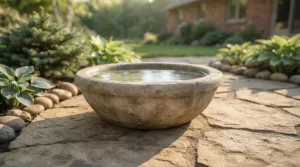
Where the Grecian Column leans traditional, the Simply Square goes the opposite direction entirely — clean geometric lines, a 15.25-inch square basin, and a brown or patina-green finish that reads more architectural than ornamental. At 23 inches (58.4 cm) tall and 9.2 kg, it splits the difference between the featherweight budget model and the heavier pedestal designs further down this list. What most buyers overlook about square-basin bird baths is that the flat sides actually make cleaning noticeably easier than curved bowls — no awkward corners for a scrub brush to fight against, just straight edges you can wipe in one pass. The GFRC construction here again means it resists moisture absorption thanks to a factory-applied sealant, which is the detail that actually determines whether cracks form after a wet freeze rather than the concrete formula alone. Aggregated review sentiment across similar GFRC square designs points to strong stability once filled with water, since the added weight of 1.9 litres (0.5 gallons) lowers the centre of gravity meaningfully.
Pros:
- ✅ Flat square basin is easiest design to clean
- ✅ Contemporary look pairs with modern hardscaping
- ✅ Mid-weight build balances stability and portability
Cons:
- ❌ Shallower basin holds fewer birds at once
- ❌ Square shape looks out of place in cottage-style gardens
Expect this one in the C$90–C$135 range, positioning it as the best all-rounder if your patio style skews modern rather than classical.
3. SKYFIRE Geometric Fibre-Reinforced Concrete Bird Bath — best textured basin for bird grip
The SKYFIRE model takes a different design cue entirely: an open teardrop pedestal paired with a deliberately textured, stone-like basin surface. That texture isn’t purely cosmetic — a rough basin floor gives small birds actual traction while bathing, which matters more than most listings admit. Smooth glazed or overly polished basins can genuinely spook cautious species like chickadees and juncos, who won’t commit to a bath where their footing feels unstable. Here’s what the spec sheet won’t tell you, but bird-behaviour observations do: basin texture is one of the underrated factors separating a birdbath that gets used daily from one that just sits there looking pretty. Built from fibre-reinforced concrete at roughly 21.8 inches (55.4 cm) tall, it’s engineered to resist fading and chipping through freezing winters and intense summer sun alike, and the two-step, tool-free assembly is genuinely fast. The one-year manufacturer warranty is a nice inclusion, though it’s worth noting that’s shorter coverage than some competitors offer.
Pros:
- ✅ Textured basin improves footing and bird confidence
- ✅ Ancient stone-inspired look suits rustic gardens
- ✅ Tool-free two-step assembly
Cons:
- ❌ One-year warranty is shorter than category average
- ❌ Textured surface takes slightly longer to scrub clean
Priced around C$100–C$150, it earns its keep specifically for yards where attracting more cautious, ground-shy species is the goal.
4. VerveArt Vintage Carved Pedestal Bird Bath — best traditional statement piece
If the square modern models feel too minimalist, the VerveArt swings hard toward vintage — a fluted, building-pillar-style pedestal topped with a generous 20-inch (50.8 cm) diameter basin, standing 24.4 inches (62 cm) overall. This is fibre-reinforced concrete finished with a protective sealant against water absorption, the same underlying logic as the GFRC models above but wrapped in noticeably more ornate detailing. What that added detail actually costs you is cleaning time — carved pedestals collect debris in their grooves in a way flat-sided baths simply don’t, so factor an extra few minutes into your monthly maintenance routine. On the upside, that same fibre-reinforced structure is what lets this design hold up to repeated seasonal handling without the material fatigue you’d see in a cheaper resin knockoff attempting the same look. Reviewers of similarly styled carved pedestal bird baths tend to highlight the dual-purpose appeal — it reads as a garden fountain focal point even before a single bird shows up.
Pros:
- ✅ Substantial dual-purpose fountain-and-bath aesthetic
- ✅ Fibre-reinforced build resists long-term wear
- ✅ Sizeable basin accommodates multiple birds
Cons:
- ❌ Carved detailing collects debris, needs more cleaning
- ❌ Bulkier profile needs more floor space than modern designs
At roughly C$140–C$200, this is the pick for gardeners who want their bird bath to double as a landscape centrepiece, not just a functional accessory.
5. Sunnydaze Façade du Soleil Bird Bath — best tall design-forward pick
At 26 inches (66 cm), the Façade du Soleil is the tallest GFRC option here, and its sun-face motif with a worn patina finish is designed to be looked at as much as used. Weighing in at 13 kg, it’s heavier than the entry-level Sunnydaze models but still nowhere near the mass of the true cast stone options further down — a genuinely useful middle ground for buyers who want extra stability without needing a hand truck to move it. Based on the spec comparison, the taller pedestal height here also matters practically: it puts the basin further from ground-level predators like outdoor cats, which is a real consideration in suburban Canadian neighbourhoods where free-roaming cats remain one of the biggest threats to backyard bird populations. The 21-inch (53.3 cm) diameter bowl holds 1.9 litres, enough for several small birds simultaneously without the water disappearing in an afternoon.
Pros:
- ✅ Tallest GFRC design keeps birds further from predators
- ✅ Sculptural sun-face motif works as standalone garden art
- ✅ Generous 1.9-litre basin capacity
Cons:
- ❌ Premium styling comes at a premium price point
- ❌ Taller profile is less stable in exposed, high-wind yards
Expect a C$170–C$240 range here — genuinely one of the better-looking GFRC pieces on the market, provided your patio has some wind shelter.
6. NVA Creative Garden Granite Natural Shape Bird Bath — best true heavy-duty stone option
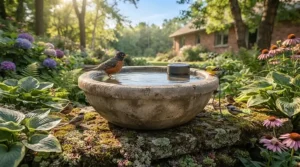
This is where the “concrete” conversation shifts into “natural stone” territory, and it’s worth including precisely because the two get confused constantly. The NVA granite bath is hand-carved from a single solid block of natural pink granite — no aggregate mix, no fibre reinforcement, just quarried rock. At 16 inches (40.6 cm) long and only 3.15 inches (8 cm) high, it’s a ground-level or low-perch design rather than a pedestal, and at 19.5 kg it’s genuinely difficult for wind or wildlife to displace. Real customer reviews are refreshingly specific here rather than generic: several owners note the interior surface arrives quite rough-textured, with at least one long-term reviewer describing sanding it down slightly with a grinding wheel to make it more comfortable for bathing birds, while also praising it as durable enough to outlast “the last bird bath you ever buy.” That’s an honest trade-off worth knowing before purchase — natural stone’s texture is a feature for grip but can be a rough edge, literally, for delicate feet. It’s also worth noting this model reportedly took a few days for local birds to start using consistently, which lines up with general advice that any new bird bath benefits from a settling-in period.
Pros:
- ✅ Solid natural granite resists freeze-thaw indefinitely
- ✅ Extremely heavy, virtually immovable by wind
- ✅ Genuinely one-time purchase for most owners
Cons:
- ❌ Rough interior texture may need light sanding
- ❌ Shallow, ground-level design isn’t ideal near off-leash areas
Priced around C$110–C$170, this natural stone bird bath outdoor option is the pick for buyers who specifically want to avoid manufactured concrete altogether and are fine trading refinement for near-permanent durability.
7. Campania International Concept Birdbath in Cast Stone — best premium, longest lifespan
At the top of this lineup sits genuine cast stone — not concrete dressed up to look like stone, but a high-density cast stone mix specifically formulated to mimic quarried limestone’s texture and aging pattern. Standing 31 inches (78.7 cm) tall on an 8.5-inch square base and weighing a substantial 88.9 kg (196 lb), the Concept Birdbath is not a piece you reposition on a whim — it’s a piece you plan your garden layout around. Here’s what most spec sheets skip entirely: cast stone’s higher cement-to-aggregate ratio and denser mix produce noticeably better freeze-thaw performance than standard poured concrete, which is precisely why manufacturers like Campania explicitly warn that birdbath tops left full of water over winter can still crack once ice forms and expands. Even premium cast stone isn’t magic — it’s simply built to a tighter engineering tolerance, and following winter drainage instructions still matters enormously regardless of price paid. The available stain finishes (limestone, alpine stone, brownstone) are hand-applied and will weather naturally outdoors, meaning the patina genuinely deepens with age rather than just fading.
Pros:
- ✅ Densest cast stone mix in this comparison
- ✅ Substantial weight makes it essentially permanent
- ✅ Ages into a richer natural patina over years
Cons:
- ❌ Requires proper winter drainage regardless of price
- ❌ Heaviest option, difficult to relocate once placed
This one lands in the C$350–C$600 range depending on stain finish, making it a genuine long-term landscape investment rather than a casual purchase — but for buyers planning to stay put for a decade or more, the cost-per-year math often works out favourably.
Practical Usage Guide: Setup, Placement & Seasonal Care
Getting a concrete bird bath right isn’t complicated, but the first 30 days trip up more people than you’d expect. Start with placement: birds want a clear sightline to spot predators, paired with nearby shrubs or low branches within a few metres for a quick escape route. Full, direct sun all day heats water fast and encourages algae, so partial shade is the sweet spot most experienced backyard birders land on.
For GFRC and cast stone models, assembly is almost always a two-piece twist-lock — align the grooves, twist clockwise, and you’re done in under five minutes. Skip abrasive cleaners entirely; a stiff brush with plain water handles bird droppings and light algae just fine, and harsh chemicals can strip the protective sealant that’s doing most of the freeze-resistance work. Refill every one to two days in summer heat, since evaporation moves faster than most new owners expect.
Winter is where mistakes get expensive. Before the first hard freeze, fully drain the basin and, ideally, cover it or bring the bowl indoors — Campania’s own care guidance explicitly warns that a frozen, ice-filled bowl left outdoors can crack even on their densest cast stone models. If you want water access through winter, a dedicated heated bird bath insert is a safer bet than leaving a standard basin full and hoping. The Canadian Wildlife Federation’s seasonal wildlife tips reinforce a broader point worth remembering: consistent, clean, appropriately shallow water matters more to birds than any single design feature you’ll pay extra for.
Real-World Scenarios: Which Concrete Bird Bath Fits Your Yard
Picture Priya, a condo-balcony gardener in Mississauga with maybe two square metres of usable space and a strict weight limit from her building’s balcony guidelines. She doesn’t need permanence — she needs something she can lift solo and bring in before winter. The Sunnydaze Grecian Column at 6.4 kg is the obvious answer, small enough to store in a hall closet through the cold months.
Now consider Marc, a retired homeowner in rural Quebec with a sprawling perennial garden and genuinely brutal winters. He’s less concerned with moving the piece and far more concerned with something that survives forty freeze-thaw cycles without babysitting. The Campania cast stone Concept Birdbath, or the NVA natural granite option, both make more sense here — the extra mass is a feature, not a drawback, when high winds and heavy snow loads are a yearly reality.
Then there’s Jasmine, a young family in suburban Calgary wanting to teach her kids about backyard wildlife without turning the yard into a museum piece. Budget matters, but so does something visually interesting enough to hold a seven-year-old’s attention. The SKYFIRE geometric design, with its textured basin encouraging more visible bird activity, splits that difference nicely — affordable, engaging, and durable enough for an active family yard.
Problem → Solution: Fixing Common Concrete Bird Bath Issues
Problem: Water disappears within a day. Direct afternoon sun is almost always the culprit. Relocate to partial shade, or add a drip fountain to offset evaporation while creating the movement sound that genuinely attracts more bird species.
Problem: Cracks appear after winter. This is nearly always leftover standing water freezing and expanding inside the basin. Drain thoroughly every autumn, regardless of which of the seven products above you own — density helps but doesn’t eliminate this risk entirely.
Problem: Birds aren’t using it. Give it time; a settling-in period of several days to two weeks is completely normal, as multiple real owners of the granite model above independently reported. Adding a few flat stones for extra footing can speed things along.
Problem: Green algae buildup. Reduce direct sunlight exposure and increase cleaning frequency to two to three times weekly during peak summer heat, using plain water and a stiff brush rather than soap.
Problem: Bath tips over in wind. Lighter GFRC models are more vulnerable here. Either upgrade to a heavier cast stone or granite option, or anchor the pedestal base with decorative garden stones for added ballast.

How to Choose a Concrete Bird Bath
- Confirm the actual material. “Concrete,” “cast stone,” and “cement” get used loosely in listings — cast stone typically has a denser mix and better freeze resistance than standard poured concrete.
- Weigh portability against permanence. Renters and balcony gardeners want GFRC’s lighter build; homeowners planning to stay put benefit more from heavier, more wind-stable options.
- Check basin depth and diameter. Shallower basins (under 6 cm) suit smaller songbirds better than deep bowls designed more for visual drama than actual bird comfort.
- Look for a textured basin floor. Smooth surfaces reduce bird confidence; texture improves footing and, aggregated reviews suggest, actual usage rates.
- Verify winter care instructions upfront. Every material here needs draining before freeze — buying without knowing this leads directly to the most common return complaint.
- Match the finish to your climate exposure. Sealant-coated GFRC needs gentler cleaning products than raw natural stone, which can handle more aggressive scrubbing.
- Set your price range by intended lifespan. A C$70 bath replaced every few years can cost more over a decade than a C$400 cast stone piece bought once.
Concrete Bird Bath vs Natural Stone Bird Bath: Which Wins?
This comparison trips up more shoppers than any other on this list, mostly because “stone-look” concrete and genuine natural stone get photographed to look nearly identical online. The real differences show up in performance, not appearance.
| Factor | Concrete / Cast Stone | Natural Stone (Granite) |
|---|---|---|
| Freeze-thaw resilience | Good to excellent, sealant-dependent | Essentially permanent |
| Weight for stability | Moderate to very heavy | Very heavy for its size |
| Surface texture | Can be smooth or textured by design | Naturally rough, may need light sanding |
| Typical price (CAD) | C$60–C$600 | C$110–C$300+ |
| Best For | Design variety and budget flexibility | Buyers wanting a one-time, indestructible purchase |
Manufactured concrete wins decisively on design variety and price accessibility — you can find a GFRC bath in nearly any style for under C$150. Natural granite wins on raw permanence; there’s no sealant to eventually wear through and no formulated mix to fail early, because it’s simply solid rock that’s already survived millions of years of actual weather. What most buyers overlook is that “natural” doesn’t automatically mean “more comfortable for birds” — the NVA granite reviews above show real owners sanding down rough interior surfaces, something a factory-finished GFRC basin rarely requires.
Freeze-Thaw Cycle Durability: What Actually Happens in Canadian Winters
The freeze-thaw cycle is deceptively simple physics with genuinely destructive consequences. Water seeps into any porous surface, and when temperatures drop below zero, that water expands by roughly nine percent as it turns to ice. That expansion creates internal pressure that microscopic cracks can’t absorb, and every subsequent freeze-thaw cycle widens those cracks a little further. Canadian shoulder seasons make this especially punishing — a single week in November can swing through several full freeze-thaw cycles as daytime highs climb above zero before overnight lows plunge back down.
This isn’t just backyard folklore. Canadian concrete engineering standards take it seriously enough that CSA A23.1 explicitly mandates minimum strength thresholds and curing regimes for concrete exposed to freeze-thaw cycling, requiring outdoor concrete to reach significantly higher strength ratings than concrete used indoors. Bird baths obviously aren’t structural concrete pours, but the underlying chemistry is identical — denser, higher-quality mixes with proper sealant coatings resist water absorption better, which is the actual mechanism protecting against cracking, not the marketing term used to describe the material.
Practically, here’s what that means for the seven products above: the GFRC options rely on their factory sealant doing consistent work, so reapplying a concrete sealant every couple of years extends their winter survival meaningfully. The cast stone Campania piece has a denser base mix but explicitly still requires drainage, because no amount of density fully offsets standing water freezing solid inside a basin. Only the solid granite option sidesteps this entire conversation, since there’s no porous aggregate structure for water to exploit in the first place.
Aggregate Concrete Mix: Why the Recipe Behind Your Bird Bath Matters
Most shoppers never think about aggregate concrete mix until something cracks, but it’s genuinely the single biggest factor separating a bird bath that lasts five years from one that lasts twenty. Standard concrete is a blend of cement, water, sand, and coarse aggregate like crushed stone or gravel — the ratio and quality of that aggregate directly determines porosity, and porosity is what freeze-thaw damage exploits.
Fibre-reinforced and glass fibre reinforced concrete (GFRC) change this recipe by adding fine aggregate and embedding fibres throughout the mix rather than relying purely on rebar or mesh reinforcement, which is how manufacturers achieve thinner, lighter walls without sacrificing tensile strength. Cast stone pushes the aggregate ratio even further toward a denser, finer mix specifically engineered to minimize the air pockets and micro-voids where water collects. On paper, this means a higher-density product should theoretically survive more freeze-thaw cycles before showing surface scaling — the flaking, pitted look that signals concrete deterioration has begun. In practice, sealant maintenance and proper winter drainage still outweigh raw mix density for most homeowners, since even premium aggregate can’t compensate for water sitting frozen inside a basin all winter.
Features That Actually Matter (And Those That Don’t)
Actually matters: basin depth under 6 cm, textured interior surface, factory sealant coating, and total weight relative to your local wind exposure. These directly affect whether birds use the bath and whether it survives its first Canadian winter intact.
Doesn’t matter nearly as much: decorative bird figurines cast into the design, elaborate “ancient stone” branding language, and marketing claims of “lifetime durability” without any accompanying care instructions. A birdbath with genuine winter drainage guidance beats one with vague durability promises every time — the spec sheet won’t tell you this, but the aggregated complaint patterns across review sections consistently do.
Colour and finish are somewhere in the middle — they matter for your garden’s aesthetic, but darker finishes objectively hide algae staining and water spots longer than antique white or light grey options, which is a practical consideration hiding inside what looks like a purely cosmetic choice.
Common Mistakes When Buying a Concrete Bird Bath
The single most common error is buying based purely on photos without checking actual weight and material type, then being surprised when a “concrete” bath arrives lighter than expected because it’s GFRC rather than solid poured cement — not a defect, just a mismatch in expectations. A close second is skipping winter drainage entirely in year one, assuming density alone protects against freezing, which the freeze-thaw section above should make clear is never fully true. Buyers also frequently underestimate basin depth requirements, purchasing a dramatic, deep decorative bowl that ends up too intimidating for smaller songbirds to actually use. Finally, plenty of shoppers skip checking base stability relative to their yard’s wind exposure, then find a lightweight model tipped over after the season’s first real storm.
Long-Term Cost, Maintenance & Weatherproof Garden Ornament Care
| Ownership Factor | Budget GFRC (~C$70) | Premium Cast Stone (~C$450) |
|---|---|---|
| Expected lifespan with care | 5–8 years | 15–25+ years |
| Annual maintenance cost | Sealant reapplication every 2–3 years | Minimal, occasional patina check |
| Replacement risk from freeze-thaw | Moderate without diligent draining | Low with proper winter drainage |
| Cost per year (rough) | ~C$9–C$14 | ~C$18–C$30 |
The table above surprises people — the cheaper option isn’t automatically the better long-term value once replacement risk and periodic sealant reapplication are factored in. That said, for buyers who genuinely enjoy refreshing their garden’s look every few years, the lower upfront cost of GFRC still makes sense, since you’re not “wasting” a premium investment on a style choice you’ll want to change anyway.
Treating any concrete or cast stone piece as a weatherproof garden ornament rather than a maintenance-free one is really the whole game here. A quick seasonal routine — spring inspection for winter cracks, monthly cleaning through summer, autumn draining before frost — is genuinely all it takes. Resources like Nature Canada’s bird-friendly gardening guidance reinforce that consistent upkeep matters more to bird usage and product longevity than the specific brand or price tier chosen.
✨ Ready to Bring More Birdsong to Your Backyard?
🔍 Compare current prices and availability on any of the seven picks above before the season’s stock shifts. A little research now saves you from a spring scramble later — click through to check what’s in stock today!

FAQ
❓ How much does a concrete bird bath cost in Canada?
❓ Do concrete bird baths crack in winter?
❓ Is cast stone better than regular concrete for a bird bath?
❓ What is the best material for an outdoor bird bath?
❓ How deep should a bird bath basin be for small birds?
Conclusion
A concrete bird bath is one of those rare backyard purchases where the boring-sounding details — aggregate density, sealant maintenance, basin texture — end up mattering more than the flashy design photos that first catch your eye. Across the seven options here, the honest takeaway is that there’s no single universal winner: a Mississauga balcony gardener and a rural Quebec homeowner have genuinely different correct answers, shaped by wind exposure, storage space, and how many winters you’re planning to ask this thing to survive.
What stays consistent regardless of budget is the maintenance rhythm — drain before freeze, clean through summer, and match basin depth to the birds you actually want visiting. Get those fundamentals right, and even the most budget-friendly Sunnydaze model earns its keep for years. Get them wrong, and even the densest Campania cast stone piece can crack its first winter. The material matters, but the care matters more.
✨ Found Your Perfect Match Among These Seven?
🔍 Take the next step and check today’s availability and pricing on your top pick. Your backyard birds — and your morning coffee routine — are waiting! 🐦☕
Recommended for You
- Ceramic Bird Bath 2026: 7 Best Picks That Actually Last
- 7 Best Plastic Bird Bath Picks for Canadian Yards (2026)
- 7 Best Bird Baths for Summer Heat in Canada (2026 Guide)
Disclaimer: This article contains affiliate links. As an Amazon Associate, I earn from qualifying purchases. If you purchase products through these links, we may earn a small commission at no additional cost to you.
✨ Found this helpful? Share it with your friends! 💬🤗
