
In This Article
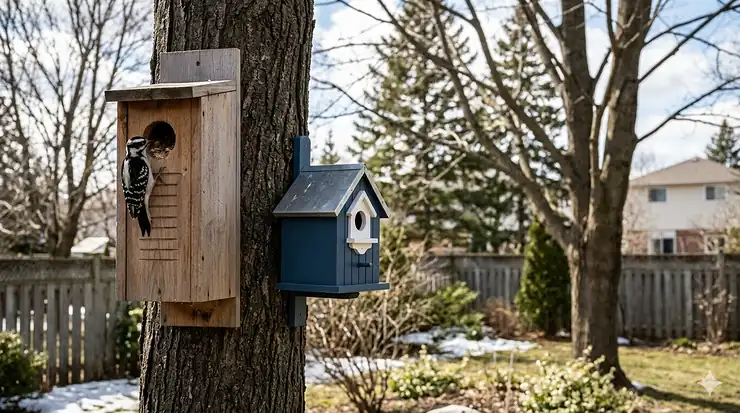
If you’ve ever wondered why your regular birdhouse sits empty while woodpeckers hammer away at your trees, you’re not alone. The truth is, most standard birdhouses simply don’t meet the specific requirements that these remarkable cavity nesters demand. After spending countless hours observing woodpeckers in my Ontario backyard and testing various nest boxes, I’ve learned that the difference between a woodpecker house vs regular birdhouse goes far beyond aesthetics.
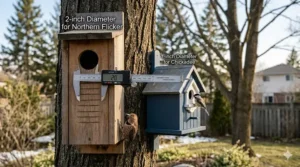
Woodpeckers are classified as primary cavity nesters—meaning they excavate their own homes in nature. When we try to entice them with artificial housing, we need to replicate those natural conditions as closely as possible. Regular birdhouses designed for robins, finches, or bluebirds simply won’t cut it. The entrance hole size, interior depth, floor dimensions, and even the texture of the wood all play crucial roles in whether a woodpecker will consider your offering suitable.
Canada is home to several woodpecker species including the Pileated Woodpecker, Downy Woodpecker, Hairy Woodpecker, Red-headed Woodpecker, and Northern Flicker. Each species has unique preferences, but they all share common requirements that differ significantly from regular songbirds. Understanding these differences will save you money and frustration while supporting these essential ecosystem engineers that manage insect populations and create nesting opportunities for dozens of secondary cavity nesters.
Quick Comparison Table
| Feature | Woodpecker House | Regular Birdhouse |
|---|---|---|
| Entrance Hole | 1.25″ – 4″ (species-specific) | 1″ – 1.5″ (most species) |
| Cavity Depth | 25cm – 75cm (10″ – 30″) | 15cm – 20cm (6″ – 8″) |
| Floor Size | 10cm x 10cm to 25cm x 25cm | 10cm x 10cm to 15cm x 15cm |
| Interior Texture | Rough-cut or grooved | Smooth acceptable |
| Wood Chips | Required for nesting | Not typically needed |
| Mounting Height | 3.5m – 6m+ (12′ – 20’+) | 1.5m – 3m (5′ – 10′) |
| Price Range (CAD) | $45 – $95 | $15 – $40 |
💬 Just one click – help others make better buying decisions too!😊
Top 7 Woodpecker Houses and Birdhouses: Expert Analysis
1. Woodlink Woodpeck Cedar Woodpecker House
The Woodlink Woodpeck model represents the gold standard for attracting Red-bellied, Red-headed, and Hairy Woodpeckers to Canadian backyards. Hand-crafted from kiln-dried inland red cedar, this specialized nesting box features a 2.25-inch entrance hole positioned at the optimal height for woodpecker species.
Key Specifications:
- 15-inch interior cavity depth
- 6″ x 6″ floor dimensions
- Includes wood chips for authentic nesting environment
Canadian Pricing: $55 – $75 CAD on Amazon.ca
This ornithologically-designed house ships readily to Canadian addresses and features a front-pivot design that makes end-of-season cleaning remarkably simple. Canadian customers consistently praise its durability through harsh winters, with many reporting successful nesting for multiple seasons. The natural cedar acts as an insect repellant while providing the rough interior surface woodpeckers need for grip.
Pros:
✅ Specifically engineered for woodpecker anatomy and behaviour
✅ Pre-assembled with mounting hardware included
✅ Canadian winter-tested durability
Cons:
❌ Requires mounting at 12+ feet (professional installation recommended)
❌ Higher price point than standard birdhouses
2. Coveside 10061 Three Woodpeckers House
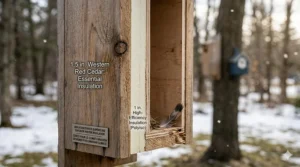
Constructed from 1-inch thick kiln-dried Eastern white pine, the Coveside 10061 offers exceptional insulation for Canada’s temperature extremes. This model targets Hairy, Red-headed, and Red-bellied woodpeckers with thoughtful features like the included slate predator guard that discourages hole enlargement by squirrels and larger birds.
Key Specifications:
- Thick Eastern white pine construction
- Slate predator guard
- Includes wood chips and mounting hardware
Canadian Pricing: $60 – $85 CAD
The ventilation and drainage design prevents moisture accumulation—a critical consideration for Canadian climates where freeze-thaw cycles can destroy poorly designed nest boxes. Ships from Amazon.ca with typical delivery times of 5-6 days across most provinces.
Pros:
✅ Superior insulation from thick pine
✅ Predator protection built-in
✅ Easy clean-out access
Cons:
❌ Heavier weight requires secure mounting
❌ Limited availability during peak season
3. SISTERBIRD 2-Pack Cedar Birdhouse with Copper Guard
For Canadian bird enthusiasts seeking versatility, the SISTERBIRD 2-Pack provides excellent value at $35-$50 CAD for two units. While designed primarily for bluebirds, finches, and wrens, these cedar houses can accommodate smaller woodpecker species like Downy Woodpeckers with minor modifications.
Key Specifications:
- 1.5-inch entrance hole (suitable for Downy Woodpeckers)
- Copper predator guard
- Assembly required
Canadian Pricing: $35 – $50 CAD (2-pack)
These houses ship quickly within Canada and feature drainage holes and ventilation that handle our varied climate conditions. The copper guard adds a decorative element while serving the practical purpose of predator deterrence. Some Canadian customers report successfully attracting Downy Woodpeckers by adding wood shavings to the interior.
Pros:
✅ Exceptional value for two units
✅ Suitable for multiple species including smaller woodpeckers
✅ Weather-resistant cedar construction
Cons:
❌ Requires assembly
❌ Entrance may need enlarging for larger woodpecker species
4. BestNest Audubon Woodpecker House
The BestNest Audubon model features a 2.25-inch diameter entry that accommodates several Canadian woodpecker species. The sloped roof design effectively channels rain and snow melt away from the nesting chamber—essential for our climate.
Key Specifications:
- 2.25″ entrance diameter
- Sloped waterproof roof
- Cedar body construction
Canadian Pricing: $50 – $70 CAD (when available from Canadian sellers)
While primarily sold on Amazon.com, this model occasionally appears through third-party Canadian sellers on Amazon.ca. The cedar construction withstands multiple seasons, and the easy post-mounting system simplifies installation. Canadian birders particularly appreciate the straightforward cleaning access after nesting season concludes.
Pros:
✅ Proven track record with multiple woodpecker species
✅ Excellent weather protection
✅ Simple mounting system
Cons:
❌ Limited availability through Canadian retailers
❌ May require waiting for stock
5. Kingsyard Recycled Plastic Birdhouse (Regular Birdhouse)
The Kingsyard recycled plastic model represents a departure from traditional wooden birdhouses, offering a modern, eco-friendly alternative. While not specifically designed for woodpeckers, it demonstrates the features typical of regular birdhouses that differ from specialized woodpecker housing.
Key Specifications:
- Clear viewing panel for observation
- Predator guard standard
- Recycled plastic construction (weatherproof)
Canadian Pricing: $25 – $40 CAD
This weatherproof design suits wrens, swallows, and finches but lacks the cavity depth and rough interior surfaces woodpeckers require. However, it exemplifies the durability and low-maintenance characteristics many Canadian homeowners seek. Available year-round on Amazon.ca with consistent Prime shipping.
Pros:
✅ Zero wood rot concerns
✅ Clear viewing enhances birdwatching experience
✅ Eco-friendly recycled materials
Cons:
❌ Insufficient depth for most woodpecker species
❌ Smooth interior unsuitable for woodpecker grip requirements
6. Glitzhome Decorative Wooden Birdhouse (Regular Birdhouse)
The Glitzhome decorative line offers aesthetically pleasing options for general songbirds, illustrating the design priorities of regular birdhouses versus specialized woodpecker housing. These charming cottages prioritize visual appeal for human observers.
Key Specifications:
- Decorative painted exterior
- Standard 1.5″ entrance hole
- Primarily ornamental design
Canadian Pricing: $20 – $35 CAD
While these houses successfully attract house wrens, chickadees, and nuthatches, they lack the deep cavities and rough interiors essential for woodpeckers. Canadian customers love them as garden décor that occasionally hosts birds, but they won’t satisfy woodpecker nesting requirements. Ships readily across Canada with multiple colour options available.
Pros:
✅ Attractive garden ornament
✅ Budget-friendly pricing
✅ Suitable for common songbirds
Cons:
❌ Shallow cavity unsuitable for woodpeckers
❌ Painted surfaces may deter some bird species
7. Cartman Cottage-Style Birdhouse (Regular Birdhouse)
The Cartman Cottage exemplifies traditional birdhouse design—charming, functional for many species, but fundamentally different from what woodpeckers need. This farmhouse-style model attracts chickadees, wrens, and finches across Canadian gardens.
Key Specifications:
- Country cottage aesthetic
- 1.25″ entrance hole
- Natural wood construction
Canadian Pricing: $18 – $30 CAD
Available through Amazon.ca with reliable shipping throughout Canada, this represents the quintessential regular birdhouse. It features adequate ventilation and drainage for common cavity nesters but falls short of woodpecker requirements in cavity depth and interior texture. Canadian reviewers consistently report success with smaller songbirds.
Pros:
✅ Highly affordable entry point
✅ Suitable for multiple common species
✅ Easy hanging installation
Cons:
❌ Insufficient cavity depth for woodpeckers
❌ Lacks rough interior surfaces woodpeckers require
Understanding Primary Cavity Nesters in Canada
Woodpeckers belong to an exclusive group called primary cavity nesters—birds capable of excavating their own nesting chambers in dead or decaying trees. According to <a href=”https://www.canada.ca/en/environment-climate-change/services/avoiding-harm-migratory-birds/pileated-woodpecker-cavity-identification-guide.html” target=”_blank” rel=”noopener”>Environment and Climate Change Canada</a>, the Pileated Woodpecker, our largest woodpecker species, creates nest cavities with internal diameters of approximately 20 cm and depths up to 75 cm.
This excavation ability distinguishes woodpeckers from secondary cavity nesters like chickadees, nuthatches, and bluebirds, which rely on existing holes. When providing artificial housing for woodpeckers, we must replicate the dimensions and characteristics of natural cavities they would excavate themselves.
The Canadian Wildlife Service recognizes Pileated Woodpeckers as keystone species because their abandoned cavities support over 30 other species, including owls, kestrels, wood ducks, and flying squirrels. This ecological importance underscores why providing appropriate woodpecker housing benefits entire ecosystems.
Why Woodpeckers Reject Regular Birdhouses
Regular birdhouses fail to attract woodpeckers for several fundamental reasons. The shallow interior depth doesn’t provide the security woodpeckers instinctively seek—in nature, they excavate cavities 30-75 cm deep to protect eggs and nestlings from predators and weather. A standard 15 cm deep bluebird box triggers no nesting response in woodpeckers.
Additionally, most regular birdhouses feature smooth interior walls that woodpeckers cannot grip effectively. In their natural cavities, the rough wood fibres allow parent birds to climb in and out without damaging eggs. Smooth walls make entry and exit awkward, increasing the risk of egg breakage.
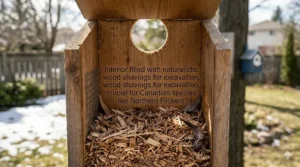
The absence of wood chips in regular birdhouses represents another deal-breaker. Woodpeckers don’t build traditional nests with twigs and grass—they create a bed of wood chips from their excavation. Without this substrate, they won’t consider the cavity suitable for egg-laying.
How Deep Should Woodpecker House Be: Species-Specific Requirements
Cavity Depth Requirements Woodpeckers
The question “how deep should woodpecker house be” doesn’t have a single answer because different woodpecker species require different cavity depths. Based on ornithological research and <a href=”https://www.canada.ca/en/environment-climate-change/services/avoiding-harm-migratory-birds/pileated-woodpecker-cavity-identification-guide.html” target=”_blank” rel=”noopener”>Canadian government data</a>, here are the recommended depths:
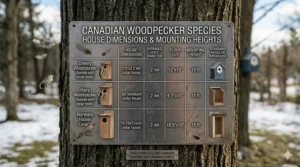
Downy Woodpecker: 20-25 cm (8-10 inches) interior depth
- Smallest North American woodpecker
- Floor size: 10 cm x 10 cm
- Entrance hole: 3.2 cm (1.25 inches)
Hairy Woodpecker: 30-38 cm (12-15 inches) interior depth
- Similar appearance to Downy but larger
- Floor size: 15 cm x 15 cm
- Entrance hole: 5 cm (2 inches)
Red-headed Woodpecker: 30-35 cm (12-14 inches) interior depth
- Distinctive red head and white body
- Floor size: 15 cm x 15 cm
- Entrance hole: 5 cm (2 inches)
Pileated Woodpecker: 60-75 cm (24-30 inches) interior depth
- Canada’s largest woodpecker
- Floor size: 25 cm x 25 cm
- Entrance hole: 10 cm (4 inches)
Northern Flicker: 35-45 cm (14-18 inches) interior depth
- Ground-feeding woodpecker
- Floor size: 18 cm x 18 cm
- Entrance hole: 6.5 cm (2.5 inches)
These measurements represent minimum requirements. Deeper cavities generally perform better because they provide greater protection from temperature extremes and predators—critical considerations for Canadian climates where spring temperatures can fluctuate dramatically.
The Science Behind Cavity Depth
Research published in forestry management documents shows that Pileated Woodpeckers in British Columbia select nest trees with mean diameters of 82 cm and cavity depths averaging 60-75 cm. This preference reflects predator avoidance strategies—deeper nests place eggs and nestlings beyond the reach of raccoons, snakes, and other nest predators.
Temperature regulation also drives depth requirements. In Canadian climates, deeper cavities maintain more stable temperatures, protecting eggs from late spring frosts and nestlings from mid-summer heat. The dead air space in deep cavities acts as insulation, moderating temperature fluctuations that could stress developing chicks.
Attract Woodpeckers Nesting Box Backyard: Essential Features
Interior Surface Texture
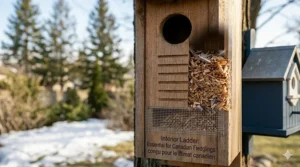
To attract woodpeckers nesting box backyard installations, rough interior surfaces are non-negotiable. Unlike songbirds that perch, woodpeckers climb vertically using their zygodactyl feet (two toes forward, two back) and stiff tail feathers for support. They need texture to grip.
Quality woodpecker houses use rough-cut cedar, pine, or other softwoods with the natural grain exposed. Some manufacturers add horizontal grooves beneath the entrance hole to facilitate climbing. Avoid painted or varnished interiors—the smooth finish makes climbing impossible and chemicals may deter nesting.
The wood texture also allows woodpeckers to excavate slightly, customizing the cavity to their preferences. This minor excavation behaviour triggers nesting hormones, increasing the likelihood they’ll commit to the site. Think of it as the difference between moving into a house versus making it your home.
Wood Chip Requirements
Include a 5-10 cm layer of natural wood chips or sawdust in the bottom of woodpecker houses. In nature, woodpeckers create this substrate through excavation; it cushions eggs, absorbs moisture, and maintains proper humidity levels during incubation.
Use untreated wood chips from cedar, pine, or other softwoods—never treated lumber, as chemicals can be toxic to developing embryos. Replace chips annually during fall cleaning to prevent mite and parasite buildup. Many commercial woodpecker houses include a bag of chips, but you’ll need to replenish them each season.
Canadian woodpeckers typically begin excavating or inspecting nest sites in late February through April, depending on species and latitude. Fresh wood chips should be in place by early March to maximize attraction during the critical site-selection period.
Ventilation and Drainage
Canadian weather extremes demand superior ventilation and drainage. Drill or cut ventilation openings near the roof to prevent heat buildup during unexpected warm spells. Position these openings to prevent rain entry—typically under roof overhangs or on sides sheltered by the roof slope.
Floor drainage holes prevent water accumulation from snow melt, spring rains, and humidity condensation. At minimum, drill four 6mm holes in the corners of the floor. Some designs use wire mesh floors for maximum drainage, though solid floors with drainage holes generally maintain warmer temperatures during cold snaps.
Proper ventilation also prevents mold and fungus growth on wood chips, which can cause respiratory issues in nestlings. In humid regions of coastal British Columbia or the Maritimes, extra ventilation becomes particularly important.
Specialized Birdhouse Features for Woodpecker Success
Predator Guards
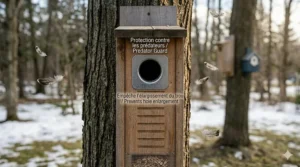
Metal predator guards around entrance holes prevent squirrels, raccoons, and other animals from enlarging openings or reaching inside. These guards are especially important for woodpecker houses because the large entrance holes required by species like Pileated Woodpeckers could otherwise allow predator access.
Quality guards extend 1.5-2 cm beyond the wood surface, creating a barrier predators cannot grip. Slate, metal, or hardwood inserts work effectively. The Coveside models include slate guards as standard—one reason they’re popular among Canadian birders.
Some designs incorporate tubular entrance extensions that add depth to the entry tunnel, further discouraging predators. However, ensure these extensions don’t make the entrance so deep that parent birds struggle with access—a particular concern for smaller Downy Woodpeckers.
Mounting Considerations for Canadian Conditions
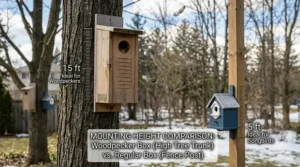
Mounting height critically impacts woodpecker attraction. Most species prefer heights of 3.5-6 meters (12-20 feet), with Pileated Woodpeckers favoring 6+ meters. This height preference evolved as predator avoidance; higher nests reduce ground-predator access.
Mount houses on dead trees or snags when possible—woodpeckers strongly prefer these natural substrates. If using posts, choose rough-barked or grooved options that feel more natural. Face entrance holes south or southeast to capture morning warmth while avoiding afternoon overheating.
In Canadian contexts, consider snow load when mounting. Use heavy-duty hardware rated for the combined weight of snow accumulation plus the house itself. Inspect mounting annually, as freeze-thaw cycles can loosen hardware over time.
Easy Access for Annual Cleaning
Hinged roofs, side panels, or front panels that swing open facilitate essential annual cleaning. Woodpecker houses accumulate significant debris over the nesting season, and old nesting material can harbour parasites that impact next year’s breeding success.
Clean houses in late fall after migration or in early winter. Remove all old chips, scrape interior surfaces if necessary, and inspect for structural damage. A mild bleach solution (10% bleach, 90% water) can sanitize surfaces, but rinse thoroughly and allow complete drying before refilling with fresh chips.
Some Canadian birders maintain two woodpecker houses, alternating annually to allow thorough weathering and natural sanitization between uses. This rotation system virtually eliminates parasite issues while ensuring a clean house is always available.
Primary Cavity Nesters Canada: Beyond Woodpeckers
While woodpeckers are the most familiar primary cavity nesters, Canada hosts other species with similar requirements. Understanding this broader group helps explain why proper woodpecker housing benefits entire ecosystems.
Boreal Chickadees in northern Canada can excavate soft, rotted wood. They create smaller cavities than woodpeckers but share the need for rough interiors and adequate depth. Their excavation abilities are limited compared to woodpeckers, so they often use woodpecker houses when available.
Nuthatches occasionally excavate soft wood, though they more commonly use existing cavities. They demonstrate transitional behaviour between primary and secondary cavity nesters, highlighting the ecological spectrum these birds occupy.
The ecological web surrounding woodpecker cavities is remarkable. A single Pileated Woodpecker pair might excavate 1-2 cavities per year over their lifetime, leaving behind dozens of nesting opportunities. <a href=”https://naturecanada.ca/news/blog/the-pileated-woodpecker-is-a-keystone-species-and-protecting-its-nest-cavities-is-good-for-nature/” target=”_blank” rel=”noopener”>Nature Canada</a> documents that over 30 species depend on these cavities, from Wood Ducks and owls to flying squirrels and pine martens.
This keystone role explains why Canadian migratory bird regulations now protect Pileated Woodpecker nest cavities for 36 months after they become unoccupied. The extended protection recognizes that these cavities serve multiple species over many years.
Regular Birdhouse vs Woodpecker House: Cost Comparison
Investment Analysis
Regular birdhouses designed for common songbirds typically cost $15-$40 CAD on Amazon.ca. These houses serve chickadees, wrens, and finches admirably but won’t attract most woodpecker species due to design limitations.
Specialized woodpecker houses range from $45-$95 CAD for quality models with proper dimensions and features. While more expensive initially, they serve a unique ecological niche that regular houses cannot fill. You’re not choosing between similar products—you’re deciding whether to provide housing for an entirely different group of birds.
Consider the value proposition: a $60 woodpecker house that successfully attracts nesting pairs for 5-10 seasons represents exceptional return on investment. The ecosystem services these birds provide—insect control, cavity creation for other species, educational opportunities for families—far exceed the monetary cost.
Budget-conscious Canadian birders can also consider DIY construction. Plans for woodpecker houses are readily available online, and materials cost $20-$35 CAD. The time investment pays dividends in customization and the satisfaction of attracting these magnificent birds to housing you built yourself.
Maintenance Cost Considerations
Both woodpecker houses and regular birdhouses require annual maintenance, but the costs differ. Woodpecker houses need fresh wood chips each season ($5-$10 CAD for a bag that serves multiple years). The larger size means more surface area to treat with weatherproofing if desired, though untreated cedar naturally resists decay.
Regular birdhouses often require more frequent replacement due to smaller dimensions and lighter construction. A well-built woodpecker house using thick cedar can last 15-20 years with basic maintenance, while economy regular birdhouses might need replacement every 3-5 years.
Factor in the value of birds attracted when calculating true costs. Woodpeckers provide substantial insect control—a single Pileated Woodpecker can consume thousands of carpenter ants weekly. This pest management service alone justifies the investment for many Canadian homeowners.
Regional Woodpecker Species Across Canada
Eastern Canada
Eastern Canadian provinces host Red-bellied Woodpeckers, Hairy Woodpeckers, Downy Woodpeckers, and Pileated Woodpeckers. The mixed deciduous and coniferous forests provide ideal habitat, with abundant dead trees for natural cavity excavation.
In Ontario and Quebec, suburban woodpecker populations have grown as mature landscaping creates suitable habitat. Homeowners in the Greater Toronto Area, Ottawa, and Montreal increasingly report Pileated Woodpeckers visiting feeders and inspecting nest boxes.
The Yellow-bellied Sapsucker breeds across eastern Canada, though it prefers natural cavities and rarely uses artificial nest boxes. Focus woodpecker house efforts on species more likely to accept them—Downy, Hairy, and Red-bellied Woodpeckers.
Western Canada
British Columbia’s coastal forests support excellent woodpecker diversity, including all common species plus specialized populations adapted to old-growth forests. The Pileated Woodpecker thrives in BC’s mature forests, with cavity densities among the highest in Canada.
Prairie provinces see Northern Flickers as the dominant woodpecker, with Downy and Hairy Woodpeckers in treed areas. Flicker houses perform particularly well in Alberta and Saskatchewan, where these ground-feeding woodpeckers eagerly investigate properly-sized nest boxes.
Mountain regions of Alberta and BC host Three-toed and Black-backed Woodpeckers in high-elevation conifer forests, though these species almost exclusively use natural cavities in standing dead trees.
Northern Canada
Boreal forests across northern Canada support Downy Woodpeckers, Hairy Woodpeckers, and Northern Flickers. The shorter breeding season means these birds select nest sites earlier—often in late March or early April—so houses should be installed by mid-March at the latest.
Northern woodpeckers face more extreme temperature challenges during early-season nesting. Extra-deep cavities and thick-walled construction become particularly important. Consider insulating the back and sides of houses installed in northern regions, leaving the entrance wall uninsulated to prevent condensation issues.
✨ Don’t Miss These Exclusive Deals!
🔍 Take your backyard birding to the next level with these carefully selected woodpecker houses available in Canada. Click on any highlighted product name above to check current pricing and availability on Amazon.ca. These specialized houses will help you attract authentic primary cavity nesters your backyard ecosystem needs!
Installation Best Practices for Canadian Climates
Seasonal Timing
Install woodpecker houses in late winter—ideally by mid-March in southern Canada, early March in northern regions. Woodpeckers begin territorial behaviour and nest site selection in late February through April, depending on species and latitude. Houses installed too late miss the critical evaluation period.
Some species, particularly Pileated Woodpeckers, inspect and modify potential nest sites over several weeks before committing. Early installation allows time for this behaviour. You might observe woodpeckers drumming on or near the house as they assess cavity acoustics—a good sign they’re considering the site.
Leave houses in place year-round. Many woodpecker species use cavities for winter roosting, providing crucial thermal protection during extreme cold. A woodpecker that roosts in your house during winter may return to nest there in spring.
Location Selection
Choose sites near dead or dying trees, as woodpeckers associate these features with good foraging habitat. Edge habitat where forest meets clearing typically attracts more woodpeckers than deep forest or completely open areas—though Pileated Woodpeckers prefer more forest cover than smaller species.
Provide clear flight approach to the entrance hole. Woodpeckers are powerful but relatively large birds that need space to maneuver. Avoid mounting houses in dense tangles of branches that would obstruct access.
Consider prevailing wind direction. In Canada, prevailing winds typically blow from west or northwest. Position entrance holes facing southeast to capture morning sun while avoiding direct exposure to harsh prevailing winds that could drive rain or snow into the cavity.
Safety Considerations
Mounting woodpecker houses at recommended heights (12-20+ feet) requires appropriate safety equipment and experience. Never attempt high installations without proper ladders, safety harnesses, and ideally a second person present. Many Canadian birders hire arborists or line workers for installations above 15 feet.
Inspect mounting annually for stability. Freeze-thaw cycles, wood aging, and woodpecker drumming can loosen mounting hardware. Replace any rusted or compromised hardware immediately. The house plus snow load can exceed 15 kg—secure mounting is essential.
Ensure the mounting structure itself is sound. Dead trees make excellent natural mounting points, but verify they won’t topple in high winds. Use living trees, metal posts, or buildings as alternatives in areas where dead trees are scarce or unstable.
Common Mistakes When Choosing Between Regular and Woodpecker Houses
Underestimating Size Requirements
The most common mistake is choosing a house too small for target species. A Pileated Woodpecker will never use a house with only 15 cm interior depth, regardless of other features. Verify dimensions carefully before purchasing—many products marketed as “woodpecker houses” actually lack adequate cavity depth.
Canadian retailers sometimes incorrectly label houses. Always measure interior dimensions yourself or verify detailed specifications before assuming a house meets woodpecker requirements. The interior depth measurement (floor to underside of roof) matters most.
Ignoring Interior Texture
Smooth-walled houses won’t work for woodpeckers, even if other dimensions are correct. Interior walls must have rough texture—either natural wood grain or added grooves. This isn’t a preference; it’s a requirement based on woodpecker anatomy and climbing behaviour.
Check whether houses are painted or varnished inside. These finishes create smooth surfaces that defeat the purpose of rough wood. Exterior paint for weather protection is fine, but interiors must remain rough and untreated.
Wrong Entrance Hole Placement
Entrance holes positioned too low in the house don’t allow adequate cavity depth below. For a Hairy Woodpecker requiring 30 cm cavity depth, the entrance hole should sit at least 30 cm above the floor—preferably 35 cm to provide extra depth.
Many regular birdhouses place entrance holes only 15-20 cm above the floor because songbirds don’t need or want deep cavities. This placement automatically disqualifies the house for most woodpecker species.
Forgetting Wood Chips
Installing an otherwise perfect woodpecker house without wood chips significantly reduces attraction. The chips are essential nesting substrate, not optional bedding. Keep a supply of natural wood chips on hand for annual replenishment.
Some Canadian birders successfully use cedar pet bedding (sold for hamsters and other small pets) as substitute wood chips. Ensure any substitute is natural, untreated wood from safe species—never use aromatic or treated chips.
FAQ
❓ How deep should a Downy Woodpecker house be in Canada?
❓ Can I convert a regular birdhouse into a woodpecker house?
❓ What entrance hole size attracts Pileated Woodpeckers in Canada?
❓ Do woodpecker houses need predator guards in Canadian backyards?
❓ When should I install woodpecker houses in Ontario and Quebec?
Conclusion: Making the Right Choice for Your Canadian Backyard
The decision between a woodpecker house vs regular birdhouse ultimately depends on which birds you want to attract. Regular birdhouses serve chickadees, wrens, finches, and nuthatches admirably, providing essential nesting habitat for common backyard species. These houses range from $15-$40 CAD and work well for beginning birders or those targeting songbirds.
Woodpecker houses serve an entirely different ecological niche. With deeper cavities, larger entrance holes, rough interiors, and specialized features, they attract primary cavity nesters that won’t use standard houses. The $45-$95 CAD investment supports woodpeckers while creating habitat used by dozens of secondary cavity nesters over time.
Canadian birders have the privilege of hosting diverse woodpecker species, from tiny Downy Woodpeckers to spectacular Pileated Woodpeckers. Understanding cavity depth requirements woodpeckers demand—25 cm to 75 cm depending on species—explains why regular houses fail to attract them. The science is clear: specialized housing designed for woodpecker anatomy and behaviour dramatically increases success.
For most Canadian yards, installing both types makes ecological sense. Regular birdhouses attract immediate residents like chickadees and wrens, providing instant gratification and reliable entertainment. Woodpecker houses may take longer to attract occupants but deliver unique rewards when successful. The distinctive drumming of a Pileated Woodpecker or the entertaining antics of Downy Woodpeckers at your custom-built home creates memories worth far more than the modest investment.
Remember that woodpeckers are keystone species—their cavities support entire ecological communities. Every woodpecker house you install potentially creates habitat for owls, flying squirrels, wood ducks, and numerous other species over decades. This multiplier effect makes woodpecker houses among the most impactful additions to Canadian wildlife gardens.
Recommended for You
- 7 Best Downy Woodpecker Nesting Boxes Canada 2026
- How to Prevent Sparrows Bluebird House: 7 Solutions (2026 Canada)
- 7 Best Bluebird Nesting Box Ontario Options 2026
Disclaimer: This article contains affiliate links to Amazon.ca. If you purchase products through these links, we may earn a small commission at no additional cost to you.
✨ Found this helpful? Share it with your friends! 💬🤗
