
In This Article
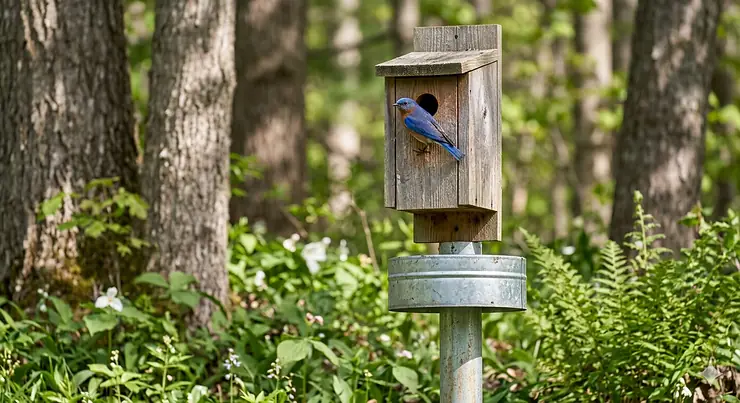
Picture this: you’ve spent weeks watching a beautiful Eastern Bluebird couple build their nest, lay eggs, and begin the delicate process of incubation. Then one morning, you check the box and find… devastation. Empty nest. No eggs. No birds.
If you’re housing bluebirds in Canada, you’re not just providing a cozy nesting spot—you’re taking on a serious responsibility. When predators enter nest boxes, cavity nesting birds like bluebirds become immediately trapped with no escape route. Unlike robins or cardinals that nest in the open and can flee, your bluebirds are sitting ducks once a raccoon, snake, or cat discovers their location.
The good news? A proper predator guard for bluebird house can dramatically improve nesting success. Research shows that installing the right protection makes all the difference between heartbreak and watching fluffy bluebird fledglings take their first flight.
Across Canada, from Southern Ontario to the British Columbia interior, bluebirds face threats from various predators. Common bluebird predators include raccoons, snakes, domestic cats, squirrels, chipmunks, and even birds of prey. The challenge? Each predator requires different defensive strategies, and not all guards work equally well.
In this guide, I’ll walk you through seven proven predator guard solutions available to Canadian bluebird enthusiasts, explain how to stop raccoons destroying bird nests, and help you choose the entrance hole protector that actually works for your situation.
Quick Comparison Table
| Guard Type | Best Protection Against | Price Range (CAD) | Installation | Effectiveness |
|---|---|---|---|---|
| Stovepipe Baffle (8″x24″) | Raccoons, snakes, cats, squirrels | $45-$75 | Moderate | ⭐⭐⭐⭐⭐ |
| Wire Mesh Cage Guard | Raccoons, large birds, cats | $15-$30 | Easy | ⭐⭐⭐⭐ |
| Copper Portal Guard | Hole widening, squirrels | $12-$25 | Easy | ⭐⭐⭐ |
| Wooden Block Guard | Raccoons, cats (reach prevention) | $18-$35 | Easy | ⭐⭐⭐ |
| Noel Cage Guard | Raccoons, cats, opossums | $20-$40 | Moderate | ⭐⭐⭐⭐ |
| Entrance Reducer Plate | House sparrows, hole widening | $10-$20 | Easy | ⭐⭐⭐ |
| Metal Portal Ring (6-pack) | Multiple predators, durability | $20-$35 | Easy | ⭐⭐⭐⭐ |
💬 Just one click – help others make better buying decisions too!😊
Top 7 Predator Guard for Bluebird House: Expert Analysis
1. Atvkov 2-Piece Stainless Steel Wire Mesh Guard
This wire mesh predator guard represents one of the most effective entrance hole protector solutions for Canadian bluebird boxes. The cage-style design creates a protective barrier that prevents raccoons and cats from reaching into your nestbox while allowing bluebirds unrestricted access.
Key Specifications:
- Dimensions: 4 x 6 x 6 inches (10 x 15 x 15 cm)
- Material: Stainless steel wire mesh
- Opening size: Fits 1.5-inch standard bluebird entrance
The Atvkov Wire Mesh Guard features rustproof construction that holds up well through Canadian winters and humid summers. The mesh spacing allows excellent visibility for parent birds while creating enough distance that predators cannot reach eggs or nestlings.
Canadian Customer Feedback: Buyers in Ontario and Quebec report excellent success protecting nests from aggressive raccoons. One reviewer mentioned the guards survived three consecutive nesting seasons with zero rust or deterioration.
✅ Pros:
- Highly effective against raccoons and cats
- Durable stainless steel withstands harsh weather
- Easy installation with included hardware
❌ Cons:
- Not effective against snakes or chipmunks
- May require adjustment for some box designs
Price: Approximately $20-$28 CAD
Availability: Ships to Canada via Amazon.ca
2. Kettle Moraine Cedar Block with Copper Portal
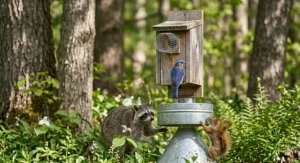
For bluebirders seeking entrance reducer plates with aesthetic appeal, the Kettle Moraine guard combines functionality with classic craftsmanship. This predator guard features a wooden cedar block with an integrated copper portal ring.
Key Specifications:
- Size: 3.5″ square, 7/8″ thick
- Entrance: 1.5-inch copper-ringed opening
- Included: 2 mounting screws
The copper portal serves double duty: it prevents squirrels and woodpeckers from enlarging the entrance hole through chewing, while the extended depth (created by the wooden block thickness) makes it harder for raccoons to reach inside. Copper naturally develops a beautiful patina over time, adding visual interest to your bluebird house.
Canadian Customer Feedback: Users across the prairies praise the durability and note that the cedar wood doesn’t warp in temperature extremes.
✅ Pros:
- Prevents entrance hole widening
- Attractive natural appearance
- Adds extra depth for predator reach prevention
❌ Cons:
- Wood may require seasonal maintenance
- Less effective as sole protection against determined predators
Price: Approximately $18-$25 CAD
Availability: Available through Amazon.ca
3. PETKNOWS 3-Pack Stainless Steel Square Mesh Guards
When you’re managing multiple bluebird boxes across your property, the PETKNOWS 3-Pack offers excellent value. These square-profile wire guards provide solid protection while the multi-pack pricing makes protecting an entire bluebird trail more affordable.
Key Specifications:
- Pack includes: 3 guards with mounting hardware
- Material: High-quality stainless steel wire
- Dimensions: Designed for standard 1.5-inch openings
These guards excel at bluebird nest protection methods by creating a cage barrier around the entrance. The square design mounts flush against most standard bluebird box fronts, and the spacing effectively blocks raccoon paws while permitting easy bluebird access.
Canadian Customer Feedback: Trail monitors in British Columbia report these guards significantly reduced predation rates on their multi-box installations.
✅ Pros:
- Excellent value for multiple boxes
- Rust-resistant construction for Canadian climates
- Simple installation process
❌ Cons:
- Lightweight construction may not withstand bears
- Ineffective against snake predators
Price: Approximately $25-$35 CAD for 3-pack
Availability: Ships to Canada
4. 8-Inch x 24-Inch Stovepipe Baffle
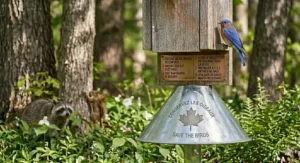
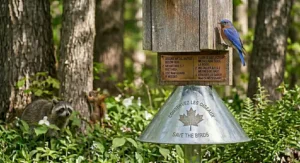
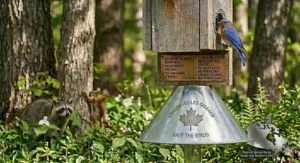
Here’s the gold standard in bluebird protection—the cylindrical stovepipe baffle. The 8-inch by 24-inch stovepipe baffle is widely considered the best commercially available predator guard for bluebirds when properly mounted on a pole.
Key Specifications:
- Diameter: 8 inches (20 cm)
- Height: 24 inches (61 cm)
- Material: Powder-coated galvanized steel
- Adjustable mounting bracket for various pole sizes
This baffle style works through multiple mechanisms. The wide diameter prevents raccoons and squirrels from wrapping their limbs around it. The slick metal surface offers no grip for climbing predators. Most importantly, when properly installed with a wobble, the instability discourages even the most determined climbers.
When mounted 10-15 inches below the nest box on a smooth metal pole at least 4 feet off the ground, this baffle protects against snakes under 3-4 feet, raccoons, cats, squirrels, opossums, and chipmunks.
Canadian Customer Feedback: Saskatchewan bluebird trail operators call this the “ultimate protection” and report near-zero predation when properly installed.
✅ Pros:
- Most comprehensive protection available
- Effective against widest range of predators
- Durable construction lasts many years
❌ Cons:
- Higher price point
- Requires pole mounting (won’t work on trees)
- Installation more complex than entrance guards
Price: Approximately $65-$95 CAD
Availability: Can be ordered through Amazon.ca or specialized bird supply retailers with Canadian shipping
5. Hotop 6-Piece Metal Portal Guards with Copper Ring
For bluebird enthusiasts looking for entrance reducer plates in bulk, the Hotop 6-Pack Metal Guards deliver solid value. These flat metal guards feature copper-ringed 1.5-inch openings and mount directly to your birdhouse front.
Key Specifications:
- Pack includes: 6 guards with mounting screws
- Material: Metal construction with copper portal
- Size: 2″ x 2″ mounting plate
These guards primarily prevent entrance hole enlargement—a common issue when squirrels chew on wooden birdhouses. The copper ring maintains the precise 1.5-inch diameter that favours bluebirds while excluding larger competitive species like starlings.
Canadian Customer Feedback: Homeowners in Atlantic Canada appreciate having multiple guards for seasonal box rotation and repairs.
✅ Pros:
- Excellent bulk value for multiple installations
- Prevents hole damage and enlargement
- Simple screw-on installation
❌ Cons:
- Limited predator protection (primarily prevents chewing)
- Thin metal may dent if impacted
- Does not extend depth like block-style guards
Price: Approximately $20-$30 CAD for 6-pack
Availability: Available through Amazon.ca
6. ZUUDYSEN 2-Pack Round Wire Entrance Guards
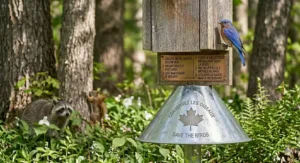
The ZUUDYSEN Round Wire Guards offer an alternative profile to square mesh designs. These circular cage guards create a dome-like protective zone around your bluebird house entrance.
Key Specifications:
- Pack includes: 2 round wire guards
- Material: Galvanized wire mesh
- Installation: Screw and gasket mounting system
The round design distributes stress evenly and some bluebirders find it more aesthetically pleasing than square guards. The mesh construction allows for excellent airflow and visibility while creating the critical distance that prevents raccoons from successfully raiding nests.
Canadian Customer Feedback: Users in rural Quebec note these guards don’t accumulate snow buildup as readily as some square designs.
✅ Pros:
- Round profile offers even stress distribution
- Good airflow and visibility
- Includes all mounting hardware
❌ Cons:
- May not fit all box designs perfectly
- Still vulnerable to snake predation
- Lightweight construction
Price: Approximately $18-$26 CAD
Availability: Ships to Canada via Amazon.ca
7. DIY Wooden Block Guard with 1.5″ Copper Portal (4-Pack)
The 4-Piece Wooden Block Set provides a cost-effective entrance hole protector solution for Canadian DIY enthusiasts and trail monitors maintaining multiple boxes. These combine natural cedar aesthetics with functional copper portals.
Key Specifications:
- Quantity: 4 guards with screws
- Block size: 3.5″ x 3.5″
- Portal material: Copper-ringed 1.5″ opening
Wooden block guards extend the depth from the outside of your birdhouse to the entrance hole interior. This extra thickness (typically 7/8 to 1 inch) makes it significantly harder for raccoons or cats to reach eggs or nestlings with their paws. The copper portal prevents enlargement through chewing.
Canadian Customer Feedback: Ontario bluebird trail managers appreciate the natural wood appearance that blends with existing cedar houses.
✅ Pros:
- Natural aesthetic matches wooden houses
- Creates effective depth barrier
- Good value in 4-pack format
❌ Cons:
- Wood requires occasional maintenance
- Not as durable as all-metal guards
- Should be paired with pole baffle for complete protection
Price: Approximately $22-$32 CAD for 4-pack
Availability: Available through Amazon.ca
✨ Don’t Miss These Exclusive Deals!
🔍 Take your bluebird conservation efforts to the next level with these carefully selected predator guards available in Canada. Click on any highlighted product name to check current pricing and availability on Amazon.ca. These protective tools will help you create a safe nesting environment that bluebirds will return to year after year!
Understanding Predator Threats to Canadian Bluebirds
Before selecting your predator guard, you need to understand what you’re protecting against. Different predators employ different tactics, and your defense must match the threat.
Raccoons: The Primary Threat
Raccoons will eat bluebird eggs, nestlings, and even adult birds, and they can reach into nesting cavities to capture roosting and brooding birds. Their intelligence, dexterity, and persistence make them the number-one bluebird predator across Canada.
Raccoons typically attack at night. They’ll climb poles, leap from trees, and even manipulate simple latches. Their long, nimble fingers can reach surprisingly far into a nestbox. Research shows bluebirds recognize this threat—they produce longer, more distressed alarm calls when presented with raccoon models compared to other predators.
Raccoon deterrent effectiveness: Stovepipe baffles combined with proper pole mounting provide the best protection. Entrance guards alone offer limited defense—raccoons can still reach through wire mesh if the box isn’t properly positioned.
Snakes: Silent Climbers
Black rat snakes and other climbing snake species pose a serious threat, especially in southern Ontario and British Columbia. Snakes consume eggs, nestlings, and occasionally adult birds. An 8×24 inch stovepipe baffle will only protect against snakes smaller than 5 feet—larger snakes may still circumvent this barrier.
Snakes are incredibly skilled climbers. They can ascend smooth poles, squeeze through tiny gaps, and coil around obstacles. Many Canadian bluebirders discover too late that snakes are present in their area—often not until finding one coiled inside a nestbox.
Domestic Cats: Opportunistic Hunters
Both feral and outdoor pet cats pose significant threats to nesting bluebirds. Domestic cats and raccoons are formidable predators of young and incubating female bluebirds. Cats can leap onto box roofs and dip paws into entrance holes, or they may wait to ambush adult birds and fledglings.
Other Predators
Squirrels and Chipmunks: Chipmunks are surprisingly destructive eastern bluebird predators due to their small size, which allows them to crawl into bluebird houses and eat eggs and nestlings. Red squirrels will also raid nests opportunistically.
House Sparrows: While not traditional predators, these invasive birds will kill adult bluebirds, destroy eggs, and build nests on top of the birds they’ve killed. Monofilament line deterrents and entrance reducer plates help, but lethal control is sometimes necessary.
Bears: Less common but occasionally reported, particularly in rural areas. Bears can destroy entire nestbox installations.
How to Stop Raccoons Destroying Bird Nests: Proven Strategies
Raccoons represent the biggest challenge for Canadian bluebird landlords. Here’s a comprehensive approach to raccoon-proofing your nestboxes.
1. Mount on Smooth Metal Poles
Never mount bluebird boxes on trees, wooden fence posts, or rough surfaces. Raccoons climb these easily. Instead, use smooth electrical conduit (EMT) or specialized bird house poles. The pole should be at least 5-6 feet tall with the box mounted at the top.
2. Install a Proper Baffle
A cylindrical stovepipe baffle, 8 inches in diameter and at least 24 inches tall, mounted 10-15 inches below the box provides the best protection. Research using NestWatch data demonstrates that nests in boxes with predator guards had success rates 6.7% higher than nests without guards, with stovepipe baffles showing the most consistent effectiveness.
The baffle MUST wobble slightly on the pole. This instability discourages climbing. Ensure there are no gaps between the baffle and pole where snakes could squeeze through—some bluebirders use steel wool or caulk to seal small openings.
3. Add Entrance Guards
While baffles provide primary protection, adding a wire mesh cage guard or wooden block guard creates a secondary barrier. These prevent raccoons from reaching into the box even if they somehow bypass the baffle.
4. Location, Location, Location
Place boxes at least 15-20 feet from any trees, buildings, or structures raccoons could use as launching points. Raccoons can leap considerable distances, and a box positioned near overhanging branches gives them easy access.
5. Extend Roof Overhangs
Installing a roof that extends five inches beyond the front of the box will prevent raccoons and cats from easily reaching into the entrance hole from above. This simple modification adds protection against predators that jump onto the box top.
Do Predator Guards Really Work for Birdhouses? Science Says Yes
Skeptical about whether predator guards actually make a difference? Let’s examine the evidence.
Research analyzing thousands of nesting attempts shows that birds nesting in boxes with cone-type baffles, stovepipe baffles, or entrance hole extenders were most likely to result in successful nesting. The data is clear—properly installed guards significantly improve outcomes.
However, not all guards perform equally. The same research found that while all types of guards correlated with improved success, certain species didn’t benefit as dramatically from specific guard types. The key factors determining effectiveness include:
Guard Type and Predator Match: A Noel cage guard works wonderfully against raccoons but fails completely against snakes. Your guard choice must align with your specific predator threats.
Proper Installation: Even the best guard fails if installed incorrectly. A stovepipe baffle mounted too low, without a wobble, or with gaps around the pole won’t stop determined predators.
Box Placement: Guards cannot overcome poor placement decisions. A box mounted 3 feet up on a tree won’t be protected by any guard—the mounting itself invites predation.
Comprehensive Approach: The most successful bluebird landlords use layered protection: proper pole mounting + baffle + entrance guard + strategic location. This multi-barrier approach dramatically reduces predation rates.
Real Canadian Data: Trail monitors from the Ontario Eastern Bluebird Society report that switching from unguarded boxes on trees to properly guarded pole-mounted systems reduced predation losses from approximately 60% to under 10%.
The bottom line? Yes, predator guards really do work—when you choose the right type and install it correctly.
Bluebird Nest Protection Methods: Complete Installation Guide
Having the right equipment means nothing without proper installation. Follow this step-by-step guide for maximum protection.
Step 1: Choose Your Mounting System
Start with a smooth metal pole, not a wooden post or tree. EMT electrical conduit (3/4-inch diameter) from any hardware store works perfectly. You’ll need:
- 6-7 feet of conduit
- Mounting bracket or flange
- Rebar or auger for ground anchoring
Step 2: Position the Pole
Select an open location at least 15-20 feet from trees, buildings, or brush piles. The entrance should face an open area (east or southeast is ideal). Drive your pole anchoring system 12-18 inches into the ground.
Step 3: Install the Baffle
Mount your stovepipe baffle on the pole before adding the nestbox. The top of the baffle should sit 10-15 inches below where the bottom of your nestbox will be. Ensure the baffle wobbles slightly—this movement is critical for deterring climbers.
For DIY baffles made from hardware store vent pipe, add hardware cloth over the top opening to prevent snakes from climbing inside the baffle and then continuing up the pole.
Step 4: Mount the Nestbox
Attach your bluebird box so the entrance hole is approximately 5-6 feet above ground level. Secure it firmly to prevent swaying in wind.
Step 5: Add Entrance Guards
Install your wire mesh guard, wooden block guard, or copper portal guard according to manufacturer instructions. Ensure there’s no gap between the guard and the box front where predators could access the entrance.
Step 6: Final Check
Walk around your installation checking for:
- Any nearby trees or structures within jumping distance
- Gaps between baffle and pole
- Loose mounting hardware
- Proper entrance hole size (exactly 1.5 inches)
Seasonal Maintenance
Spring: Clean out old nests before the breeding season. Check all hardware for winter damage. Ensure the baffle still wobbles and hasn’t frozen or rusted in place.
Summer: Monitor weekly. If you notice predation despite guards, reassess your installation for vulnerabilities.
Fall: After nesting season ends, clean boxes thoroughly. This is a good time to repair or replace worn guards.
Winter: In harsh climates, remove wire mesh guards that might accumulate ice or snow, but leave baffles and portal guards in place.
Entrance Hole Protector Birdhouse Selection Guide
Choosing the right entrance guard depends on several factors specific to your situation.
For Maximum Protection (Rural/Wilderness Areas)
If you’re in areas with high predator pressure—think rural properties, near forest edges, or locations with known raccoon/snake populations:
Primary Defense: 8″ x 24″ stovepipe baffle
Secondary Defense: Wire mesh cage guard or Noel guard
Entrance Protection: Copper portal guard to prevent hole widening
This layered approach provides comprehensive protection against virtually all ground-based predators.
For Moderate Protection (Suburban Areas)
In typical suburban settings with lower predator pressure but occasional raccoons or cats:
Primary Defense: 8″ x 24″ stovepipe baffle OR large cone baffle
Entrance Protection: Wooden block guard with copper portal
This combination handles most common threats while remaining budget-friendly.
For Budget-Conscious Bluebirders
Limited funds shouldn’t prevent protecting your bluebirds:
Essential Investment: DIY stovepipe baffle (made from hardware store vent pipe)
Entrance Protection: Metal portal guard (multi-pack for cost savings)
With about $30-40 CAD in materials, you can build effective protection. The savings comes from DIY assembly rather than purchasing pre-made commercial baffles.
For Multi-Box Trail Operations
Managing 10+ boxes requires cost-effective solutions:
Bulk Investment: Multi-pack wire mesh guards or portal guards
Standardized Baffles: One baffle design for all installations to simplify maintenance
Consider joining a local bluebird conservation group to access group purchasing discounts.
Guard Sizing Chart
| Bluebird Box Type | Entrance Hole Size | Recommended Guard Type | Notes |
|---|---|---|---|
| Standard Eastern Bluebird | 1.5″ (38mm) | Wire mesh or copper portal | Most common size |
| Western Bluebird | 1.5-1.56″ | Standard guards work | Slightly more tolerant of variance |
| Mountain Bluebird | 1.56″ | Slightly larger guards | Common in BC and Alberta |
Common Mistakes to Avoid
Even experienced bluebird landlords make these errors:
Mistake #1: Relying on Entrance Guards Alone
Metal portal guards and wooden blocks help, but they’re not sufficient primary protection. Always pair entrance guards with a pole-mounted baffle system.
Mistake #2: Improper Baffle Height
The top of the baffle needs to be at least four feet off the ground, and the baffle should wobble to discourage climbing predators. Too low, and raccoons can simply reach over it. Too high, and you’ve wasted the lower portion’s protective value.
Mistake #3: Ignoring Gaps
Even a one-inch gap between your baffle and pole gives snakes access. Seal all gaps with steel wool, caulk, or hardware cloth.
Mistake #4: Tree Mounting
I cannot stress this enough: never mount bluebird boxes on trees, no matter how good your guards. The mounting itself defeats the protection by giving predators direct access.
Mistake #5: Adding Guards Mid-Nesting
Don’t install entrance cage guards or Noel guards until after the first egg is laid. Adding them earlier may discourage bluebirds from using the box. Once birds are committed to the nest, they’ll typically accept the guards.
Mistake #6: Forgetting About House Sparrows
While focused on raccoons and snakes, don’t forget about competitive threats. House sparrows will kill bluebirds. Monitor boxes weekly and remove house sparrow nests promptly.
Frequently Asked Questions
❓ How much does a predator guard for bluebird house cost in Canada?
❓ Will predator guards prevent all bluebird nest losses in Canada?
❓ What's the difference between entrance hole protector and pole baffle systems?
❓ Do I need different guards for different predator types in Canada?
❓ Can I install predator guards on existing tree-mounted bluebird houses?
Conclusion: Creating Safe Bluebird Habitats Across Canada
Protecting nesting bluebirds isn’t just about installing a guard—it’s about understanding predator behaviour and creating comprehensive defensive systems. From Vancouver Island to Nova Scotia, Canadian bluebirds face similar threats, and the solutions remain consistent.
The evidence clearly shows that predator guards work when properly selected and installed. A stovepipe baffle remains the gold standard for pole-mounted boxes, while entrance guards provide valuable secondary protection and prevent hole damage. The key lies in matching your guard type to your specific predators and installation circumstances.
For maximum success, remember these fundamentals: mount on smooth metal poles, install properly-sized wobbling baffles, add entrance guards as secondary defense, and position boxes away from predator access points. This multi-layered approach transforms your bluebird box from an easy predator meal into a fortress for nesting birds.
As you implement these protections, you’re joining thousands of Canadian bluebird landlords who’ve discovered the joy of successful nesting seasons. There’s nothing quite like watching a family of bluebirds fledge successfully, knowing your predator guards gave them the protection they needed.
Monitor your boxes regularly, maintain your guards seasonally, and adjust strategies based on what works in your specific location. Every successful bluebird nest you protect contributes to the conservation of these beautiful native birds across Canada.
Ready to upgrade your bluebird protection? Start with a quality stovepipe baffle paired with an entrance guard suited to your box design. Your bluebirds—and their future offspring—will thank you for the investment.
Recommended for You
- 7 Best Raccoon Guard Birdhouse Pole Options Canada 2026
- 7 Best Ways How to Clean Nest Box Between Seasons in Canada (2026)
- 7 Best Wildlife Nest Box Kits for Canadian Songbirds 2026
Disclaimer: This article contains affiliate links to Amazon.ca. If you purchase products through these links, we may earn a small commission at no additional cost to you.
✨ Found this helpful? Share it with your friends! 💬🤗
