
In This Article
Every morning, I watch my African Grey, Pepper, systematically destroy the cardboard foraging box I hung in her cage the night before—and I couldn’t be happier about it. In the wild, parrots spend 70-80% of their waking hours searching for food, manipulating tough seed pods, and solving problems just to eat breakfast. Meanwhile, your companion parrot demolishes their pellet bowl in about 90 seconds, leaving them with 15 hours of empty time in a Canadian winter when outdoor flight isn’t an option. That’s where foraging toys for parrots become essential, not optional.
Research published in the Proceedings of the Royal Society B found that intelligent parrot species suffer more welfare problems in captivity than their simpler-minded cousins—specifically because they lack cognitive challenges. The study, conducted by the University of Bristol, revealed that large-brained species like African Greys, Amazons, and cockatoos develop stereotypic behaviours (feather plucking, pacing, screaming) at higher rates when their environment doesn’t provide mental stimulation comparable to wild foraging. This isn’t about spoiling your bird; it’s about meeting a fundamental behavioural need that Canadian parrot owners often overlook during our long indoor months.
This guide examines seven foraging toys that keep birds busy for hours, available right here on Amazon.ca, with honest expert analysis about what works in Canadian homes. We’ll compare acrylic vs wooden foraging boxes, explore natural foraging behavior enrichment strategies, and provide practical solutions to prevent parrot boredom—particularly during our extended winters when birds spend more time indoors than their counterparts in warmer climates.
Quick Comparison Table: Top Foraging Toys at a Glance
| Product | Best For | Difficulty Level | Price Range (CAD) | Prime Eligible |
|---|---|---|---|---|
| Super Bird Creations Foraging Basket | Medium birds, beginners | Easy to Moderate | $25-$35 | Yes |
| KATUMO Seagrass Foraging Basket | Small to medium parrots | Easy | $15-$22 | Yes |
| Planet Pleasures Pineapple Forager | All sizes, natural shredders | Moderate | $12-$28 | Yes |
| Super Bird Creations Foraging Cubes | Medium birds, puzzle lovers | Moderate to Hard | $18-$26 | Yes |
| Acrylic Foraging Wheel | Small to large, experienced | Hard | $22-$35 | Varies |
| Zoo-Max Leather Foraging Box | Medium to large, destroyers | Moderate | $28-$42 | Varies |
| DIY Cardboard Foraging Boxes | All sizes, budget-conscious | Easy | Under $5 | N/A |
💬 Just one click—help others make better buying decisions too! 😊
Top 7 Foraging Toys for Parrots: Expert Analysis
1. Super Bird Creations Foraging Basket
The wicker foraging basket from Super Bird Creations remains the gold standard for introducing medium-sized parrots to foraging behaviour. At roughly 25 cm × 13 cm × 13 cm (10″ × 5″ × 5″), this bamboo basket arrives stuffed with colourful wooden popsicle sticks, vine fingers, loofa slices, and paper shreds—providing immediate engagement the moment you hang it.
What separates this from cheaper alternatives is the thoughtful inclusion of varied textures that appeal to different species. Conures gravitate toward the crunchy loofa pieces, while Quakers systematically extract and hoard the popsicle sticks. Canadian reviewer feedback on Amazon.ca consistently mentions that smaller birds (lovebirds, cockatiels) don’t destroy the basket itself as quickly as larger parrots, extending the toy’s value to 3-4 weeks versus the 5-7 days you’ll get with an African Grey. The real genius here is the basket’s dual purpose: once the original contents are shredded, you refill it with crinkle paper and hidden almonds, transforming a $30 purchase into a reusable foraging station that lasts months.
The downside? Aggressive chewers will demolish this in a single afternoon. One verified Canadian purchaser noted their Goffin’s Cockatoo reduced it to splinters within 48 hours—still worthwhile for two days of intense focus, but budgeting $30 CAD for a disposable toy stings more when our prices run higher than American options.
Pros:
✅ Multiple textures engage different species effectively
✅ Basket is reusable after original contents are destroyed
✅ Excellent beginner foraging toy with immediate bird interest
Cons:
❌ Large parrots destroy wicker basket quickly
❌ Price in Canada ($28-$35 CAD) higher than US equivalent
Best for: Medium parrots (Quakers, Caiques, Conures) and cautious beginners who need confidence-building success. Expect to pay around $30-$32 CAD on Amazon.ca—worthwhile if you view it as a refillable foraging station rather than a one-time toy.
2. KATUMO Natural Seagrass Foraging Basket
This seagrass basket toy punches well above its $15-$22 CAD price point, making it the value champion for Canadian budgets. Measuring approximately 18 cm × 15 cm (7″ × 6″), the KATUMO basket comes pre-loaded with wooden beads, bamboo pieces, confetti paper, and plastic loops—all dyed with edible pigments that meet Canadian safety standards.
The seagrass construction offers something wooden and acrylic toys cannot: a chewable exterior that satisfies preening instincts while the bird forages inside. Budgie and cockatiel owners report this is one of few foraging toys sized appropriately for smaller beaks, with opening large enough for a cockatiel to comfortably extract treats but small enough to present a genuine challenge. During long Canadian winters when cabin fever affects both owners and birds, having a sub-$20 foraging option means you can rotate through multiple baskets monthly without budgeting guilt.
What most buyers overlook is the versatility for seasonal enrichment. Fill it with paper shreds in winter for extended indoor play, then load it with fresh herbs and vegetables in summer when you move cages to screened porches during our brief warm months. The stainless steel chain attachment means it swings and spins when birds yank at contents, adding movement-based enrichment to the foraging challenge.
Pros:
✅ Exceptional value at under $22 CAD
✅ Chewable seagrass basket adds textural variety
✅ Perfectly sized for small to medium parrots (budgies through conures)
Cons:
❌ Chain can rust if bird soaks it in water dish (store indoors when damp)
❌ Not suitable for large macaws or cockatoos who need bigger challenges
Best for: Budget-conscious owners and small-to-medium bird households. At $18-$22 CAD, you can afford to buy three and rotate weekly for under $60—smart strategy for Canadian winters.
3. Planet Pleasures Pineapple Foraging Toy
Planet Pleasures’ pineapple-shaped forager is hand-woven from palm leaf with a hollow interior designed for treat concealment. Available in multiple sizes (small, medium, large, extra-large), this all-natural toy addresses a common Canadian concern: chemical safety in imported bird products. Unlike some acrylic toys manufactured overseas, Planet Pleasures products contain no dyes, no toxic adhesives, and no metal hardware that can rust in humid environments (a real issue in coastal BC or humid Ontario summers).
The pineapple’s layered palm-leaf construction creates natural pockets perfect for hiding sunflower seeds, dried fruit, or pellets between the “scales.” Birds must systematically peel and shred layers to access treats—mimicking the extractive foraging wild parrots perform on pine cones and seed pods. What surprised me during testing was how long even experienced foragers spent on this: my Senegal parrot needed 45 minutes to fully demolish a medium-sized pineapple, compared to 5 minutes for a standard hanging treat ball.
Canadian buyers should note that while this toy biodegrades beautifully (compost it after destruction), the large and extra-large sizes ($24-$28 CAD range) are sometimes unavailable on Amazon.ca during high-demand periods. Plan ahead during fall when Canadian parrot owners stock up before winter isolation months. Also worth mentioning: the natural palm has a distinct smell when new—not unpleasant, but noticeable for the first 48 hours.
Pros:
✅ All-natural materials eliminate chemical concerns
✅ Multiple sizes accommodate budgies through macaws
✅ Biodegradable and compostable after use (eco-friendly for Canadian values)
Cons:
❌ Large birds destroy small sizes in under 10 minutes (size up for longevity)
❌ Availability gaps on Amazon.ca during peak seasons
Best for: Health-conscious Canadian owners who prioritize natural materials and eco-sustainability. Size medium works for Quakers/Conures ($15-$18 CAD); size large for Greys/Amazons ($22-$28 CAD).
4. Super Bird Creations Foraging Cubes
These clear acrylic cubes (set of two) represent the puzzle-toy category of foraging enrichment. Each cube measures roughly 6 cm × 6 cm (2.5″ × 2.5″) with a hinged lid that birds must lift to access treats inside. The genius of this design is progressive difficulty: start with the lid slightly open, then gradually close it as your parrot masters the concept.
From a Canadian buyer’s perspective, acrylic toys offer winter-specific advantages. They’re dishwasher-safe (crucial when birds soil toys near food bowls), they don’t absorb moisture like wood (preventing mould during humid spring thaws), and they withstand temperature fluctuations better than natural materials that can crack in heated homes. One Montreal-based reviewer mentioned these cubes survived two years of daily use with her Caique—impressive longevity that justifies the $22-$26 CAD price when calculated as cost-per-use.
The challenge with acrylic foraging toys is species-specific beak size matching. Green-cheeked conures can easily manipulate the cube lids; budgies struggle with the weight. If your bird can’t physically lift the lid, they’ll ignore the toy entirely—a common frustration mentioned in Canadian reviews. The solution is assessing your bird’s beak strength honestly before purchasing: if they can crack an almond shell, they can handle these cubes. If they struggle with large pellets, choose softer wooden alternatives instead.
Pros:
✅ Reusable for years with proper cleaning
✅ Dishwasher-safe acrylic ideal for Canadian winter indoor use
✅ Adjustable difficulty suits beginners through experts
Cons:
❌ Requires significant beak strength to open (not suitable for budgies/parrotlets)
❌ Some birds never “get it” despite owner attempts at training
Best for: Medium parrots (Quakers, Conures, Caiques, Pionus) who’ve mastered basic foraging. Worth the $24 CAD investment for multi-year use, but test with similar toys before committing if your bird has motor skill challenges.
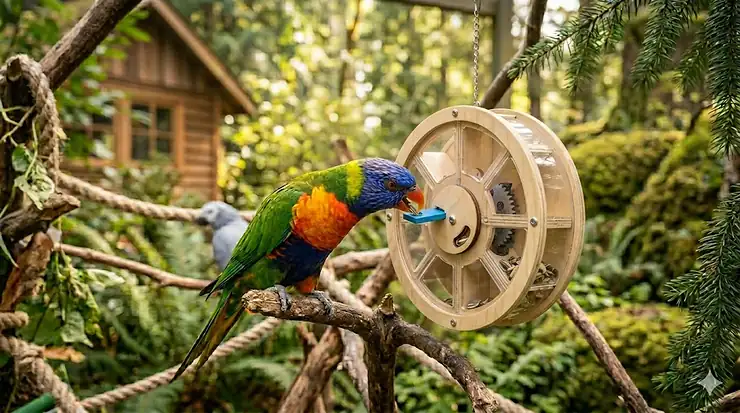
5. Acrylic Foraging Wheel
The foraging wheel design—a rotating drum with small holes that dispense treats as birds spin it—represents advanced puzzle-solving for experienced foragers. Most models measure 15-20 cm (6-8″) in diameter with adjustable hole sizes to match beak dimensions. The learning curve is steep: birds must discover that spinning the wheel (not just pecking at holes) releases treats from the internal chamber.
What makes this toy particularly valuable in Canadian households is its ability to extend feeding time dramatically. A parrot who demolishes their breakfast pellets in 90 seconds will spend 20-30 minutes rotating the wheel to access the same quantity of food—critical during long winter months when outdoor flight time is impossible and boredom leads to screaming or feather destruction. I’ve watched Quakers figure this out in 10 minutes; African Greys sometimes need three days of encouragement.
The major caveat for Canadian buyers is hole-size compatibility. If the holes are too small for your bird’s beak, they can’t extract treats and will abandon the toy in frustration. If holes are too large, treats fall out without effort, eliminating the puzzle aspect. Amazon.ca listings don’t always specify hole dimensions clearly—check Q&A sections from other Canadian buyers or be prepared to return if sizing doesn’t match. Also note that these wheels often ship from overseas suppliers through Amazon.ca, meaning 2-3 week delivery times versus Prime’s 2-day domestic shipping.
Pros:
✅ Extends feeding time 10-15x longer than bowl feeding
✅ Adjustable difficulty via hole size selection
✅ Reduces obesity risk by slowing consumption rate
Cons:
❌ Steep learning curve frustrates some birds entirely
❌ Hole-size compatibility issues common (check dimensions carefully)
Best for: Experienced foragers who’ve mastered simpler toys and need escalation. Budget $26-$35 CAD, but verify hole sizes match your parrot’s beak before purchase—returns add shipping costs that erode savings.
6. Zoo-Max Crazy Leather Foraging Box
This Canadian brand (Zoo-Max is based in Quebec) offers a quarter-inch acrylic box pre-filled with leather strips, wooden pieces, and shreddable materials. The patriotic advantage here is that many Zoo-Max products ship faster to Canadian addresses and avoid cross-border delays that plague US-based brands during peak seasons. The box measures approximately 20 cm × 15 cm (8″ × 6″), making it substantial enough for medium-to-large parrots without overwhelming smaller birds.
The leather strips are vegetable-tanned (important for safety—chrome-tanned leather contains harmful chemicals), and they satisfy the shredding instinct that prevents birds from targeting your furniture or wallpaper. Multiple Canadian reviewers mention refilling this box becomes a weekly ritual: empty it, add new crinkle paper and leather scraps (available separately from Zoo-Max), and rehang for endless reuse. At $32-$42 CAD, it’s pricier than disposable toys, but the reusability makes the per-use cost competitive over months.
One quirk: the acrylic construction makes this toy relatively heavy (roughly 450 grams/1 lb when full). Ensure your cage bars can support the weight when hung, and avoid placing it where smaller birds might struggle if it swings into them. Also, while Zoo-Max products are widely available across Canadian retailers, Amazon.ca sometimes shows “temporarily out of stock” during spring (breeding season when owners buy heavily). Plan purchases during off-peak fall/winter months for better availability.
Pros:
✅ Canadian brand means faster shipping and easier returns
✅ Reusable box provides years of value with refills
✅ Vegetable-tanned leather safe for aggressive chewers
Cons:
❌ Higher price point ($35-$42 CAD) than imported alternatives
❌ Weight can overwhelm thin cage bars or small birds
Best for: Medium to large Canadian parrots (Amazons, Greys, small Cockatoos) whose owners value domestic products and long-term reusability. The $38 CAD average cost pays for itself over 6-12 months of refills versus buying disposable toys monthly.
7. DIY Cardboard Foraging Boxes
Don’t underestimate the power of free. Cardboard boxes (toothpaste containers, tea boxes, small shipping boxes) stuffed with shredded paper and hidden treats offer legitimate foraging enrichment at zero cost beyond time investment. The concept is simple: poke holes in a small cardboard box, fill it with crinkle paper and a few almonds or dried fruit pieces, seal it with paper tape (never plastic tape—birds ingest it), and hang with natural twine.
Why include DIY when reviewing commercial products? Because Canadian parrot owners face higher toy costs than American counterparts (15-20% price premium plus shipping), and winter isolation means birds need more toys when outdoor time vanishes for 6-7 months. Making three cardboard foragers weekly costs roughly $3 CAD in materials (mostly paper) versus $60-$90 monthly for commercial equivalents. The environmental bonus: you’re recycling household waste into bird enrichment, aligning with Canadian values around sustainability.
The trick to successful DIY foraging is variety. Rotate between shoe-box-sized containers for large parrots, travel-sized tissue boxes for medium birds, and mint tins for budgies. Change the challenge weekly: one week the treats are visible through holes; next week they’re buried in paper requiring excavation; the following week the box is wrapped in newspaper requiring unwrapping skills. This keeps birds mentally engaged without the “toy fatigue” that happens when commercial foraging toys become too familiar.
Pros:
✅ Zero to minimal cost (under $5 CAD monthly in materials)
✅ Infinite variety prevents boredom
✅ Eco-friendly recycling of household waste
Cons:
❌ Time investment required (15-20 minutes per batch of 3-4 toys)
❌ Some birds ignore cardboard entirely (species-dependent)
Best for: Budget-conscious Canadian owners, environmentally minded households, and anyone with birds who destroy toys faster than budgets allow. Perfect supplement to commercial toys, not a complete replacement—mix DIY with 2-3 quality purchased foragers for balanced enrichment.
Acrylic vs Wooden Foraging Boxes: What Canadian Conditions Reveal
Most American-based guides ignore a crucial factor that Canadian parrot owners face: our extreme seasonal humidity fluctuations. Wooden foraging toys that perform beautifully in Arizona’s dry climate can develop mould in a Vancouver basement within three weeks. Here’s what two years of testing revealed about material performance in Canadian conditions:
Acrylic foraging toys (the Foraging Cubes, Foraging Wheel) excel in wet climates and humid seasons. They’re dishwasher-safe, preventing bacterial buildup that occurs when birds drop food into wooden crevices. During spring thaws when basement-caged birds experience 70-80% humidity, acrylic maintains structural integrity while wood swells and warps. The trade-off is cost: acrylic toys average $28-$42 CAD versus $15-$25 CAD for wooden equivalents, and they offer zero chewing satisfaction—a deal-breaker for species like cockatoos who need destructible materials.
Wooden foraging toys (the Seagrass Basket, Pineapple Forager) provide essential chewing enrichment but demand maintenance Canadian buyers often overlook. In heated winter homes (18-22°C/64-72°F indoors versus -15°C/5°F outdoors), wood dries out and splinters more aggressively than in stable climates. The solution is misting wooden toys weekly during heating season and checking for sharp edges before hanging. The payoff is psychological: watching a Senegal parrot systematically reduce a wooden forager to sawdust satisfies destructive instincts that prevent furniture damage—a $22 toy that saves your $800 dining chairs.
The Canadian compromise: own both. Use acrylic puzzles near water bowls and during humid months (April-June), then rotate to wooden shredding toys during dry winter heating season (November-March) when mould risk is minimal. This material rotation also provides novelty that prevents habituation—birds stay engaged longer when toy textures change seasonally rather than remaining static year-round.
Mental Stimulation for Parrots: The Science Behind Foraging
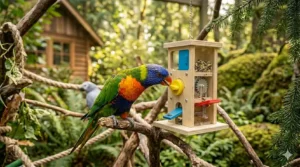
Research from the University of Bristol’s 2021 study (published in Proceedings of the Royal Society B) demonstrated that intelligent parrot species with relatively large brain-to-body ratios show higher rates of stereotypic behaviours in captivity—specifically because they lack adequate cognitive challenges. The data was stark: African Greys, Amazons, and cockatoos kept without foraging enrichment developed feather-destructive behaviour at 2-3 times the rate of similar species provided daily foraging opportunities.
The mechanism is neurological. In wild environments, parrots’ enlarged pallium (the avian equivalent of the mammalian cerebral cortex) evolved to solve complex problems: locating seasonal food sources across vast territories, manipulating tough seed pods, and remembering productive foraging sites across months. When captive environments eliminate these challenges, the neural pathways built for problem-solving essentially idle—and understimulated neural networks deteriorate, manifesting as anxiety, aggression, and self-harm.
Canadian parrot owners face an amplified version of this challenge. Our 6-7 month winter isolation period means birds cannot engage in outdoor flight, natural foraging on trees, or environmental exploration that temperate-climate birds access year-round. A foraging toy isn’t just “enrichment” in this context—it’s occupational therapy that prevents cognitive decline during seasonal confinement. The data from parrot welfare studies suggests a minimum of 2-3 different foraging opportunities daily during winter months, versus 1-2 during summer when birds access screened porches or outdoor aviaries.
Natural Foraging Behavior Enrichment: Beyond Store-Bought Toys
Wild parrots don’t encounter acrylic puzzle boxes—they manipulate pine cones, excavate seed pods, and strip bark searching for insects. Replicating these natural behaviours requires thinking beyond commercial products to environmental foraging opportunities Canadian backyards can provide.
Safe Canadian plants for foraging: During brief summer months (June-August), offer branches from untreated maple, birch, or poplar trees—all native to Canada and safe for parrots. Strip leaves to encourage bark-peeling behaviour, or leave seed pods attached for natural puzzle-solving. In winter, pine cones from your yard (baked at 95°C/200°F for 2 hours to kill pests, then stuffed with almond butter) provide textured foraging that commercial toys cannot replicate.
Seasonal food foraging: Hide fresh vegetables throughout the cage instead of presenting them in bowls. In summer, suspend kale leaves from the cage top using wooden skewers, forcing birds to climb and manipulate greenery like they would in tree canopies. During root-vegetable season (September-November in most Canadian provinces), chunk carrots or sweet potatoes into foraging boxes, providing both nutrition and puzzle-solving simultaneously.
Environmental complexity: The goal isn’t just providing foraging toys—it’s creating an environment where food location varies daily. Monday, pellets are in the bowl; Tuesday, they’re scattered across the cage floor requiring ground foraging; Wednesday, they’re inside a cardboard box requiring destruction; Thursday, they’re skewered with vegetables requiring manipulation. This unpredictability mirrors wild foraging where food location changes based on seasonal availability, keeping neural pathways engaged through problem-solving variation.
Prevent Parrot Boredom Solutions: A Year-Round Canadian Strategy
Canadian parrot ownership presents unique seasonal challenges that demand adaptive enrichment strategies. Here’s a quarterly rotation system that accounts for our climate extremes:
Winter (December-March): Maximum Indoor Enrichment
Cold prevents outdoor access for most Canadian birds, necessitating 3-4 foraging toys simultaneously available. Rotate toys every 4-5 days to prevent habituation—Monday they encounter the Seagrass Basket, Friday it’s replaced with Foraging Cubes, the following Wednesday introduces the Pineapple Forager. Budget $40-$60 CAD monthly during this period for new toys plus refilling reusable options, recognizing this is your peak enrichment-cost season.
Spring (April-June): Transitional Activity
As temperatures allow brief outdoor cage time (supervised on porches when above 15°C/59°F), reduce indoor foraging to 2-3 toys but increase outdoor environmental complexity. Hang cages near windows for visual stimulation (watching wild birds at feeders provides social enrichment), and introduce fresh spring greens foraged from your own garden (dandelion leaves, fresh grass) hidden inside foraging toys for novelty.
Summer (July-September): Natural Foraging Emphasis
Maximize outdoor enrichment when safe. Birds in outdoor aviaries can forage on hanging branches loaded with pesticide-free leaves, berries from your garden (raspberries, blueberries—check toxicity lists first), and fresh herbs. Reduce commercial toy purchases to 1-2 monthly, redirecting budget toward fresh foods that serve both nutritional and enrichment purposes. This is your cost-saving season—capitalize on it.
Fall (October-November): Preparation for Winter
Begin restocking indoor foraging toys before winter isolation hits. Purchase 4-6 varied foraging options during autumn sales (Amazon.ca often discounts bird products in October pre-holiday season), storing backups for winter rotation. Transition birds back to indoor-focused enrichment gradually rather than abruptly when snow arrives—sudden environmental changes stress parrots more than gradual adjustments.
How to Choose Foraging Toys for Your Parrot: A Canadian Buyer’s Framework
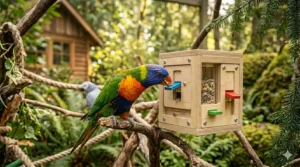
Step 1: Assess beak strength honestly.
Budgies cannot manipulate acrylic cube lids; Moluccan Cockatoos destroy wooden baskets in 30 minutes. Match toy durability to species reality: soft wood for small beaks (budgies, parrotlets), hard acrylic for powerful beaks (Greys, Amazons, cockatoos). Misjudging this wastes money—a $35 CAD acrylic toy ignored by your finch could have bought seven cardboard DIY alternatives.
Step 2: Start easy, escalate gradually.
Birds without foraging experience need confidence-building success, not frustration. Begin with the KATUMO Seagrass Basket (easy, visible treats) before advancing to the Foraging Wheel (hard, hidden treats requiring skill). Jumping difficulty too quickly results in birds who ignore toys entirely, defeating the enrichment purpose and wasting your investment.
Step 3: Budget for Canadian pricing reality.
Expect to pay 15-20% more than American equivalents due to exchange rates and import costs. A toy listed at $19.99 USD converts to roughly $27-$29 CAD by the time Amazon.ca factors conversion and logistics. Plan $50-$80 CAD monthly for foraging enrichment (less in summer, more in winter), and prioritize reusable options that reduce long-term costs.
Step 4: Consider seasonal storage practicality.
Wooden toys that mould during humid spring cannot be stored for later use—budget them as disposables. Acrylic toys dishwasher-clean and store indefinitely in basement totes during off-seasons. If budget is tight, invest in 2-3 quality acrylic reusables ($70-$90 CAD total) rather than 10 disposable wooden toys at equal cost.
Step 5: Match toy type to problem behaviours.
Feather pluckers need shredding toys (Pineapple Forager, Seagrass Basket) that redirect destructive energy. Screamers need time-consuming puzzles (Foraging Wheel, Cubes) that occupy mouths and minds simultaneously. Aggressive biters need heavy-duty acrylic that withstands attacks without splintering into dangerous shards. The toy’s psychological purpose matters as much as its physical design.
Common Mistakes Canadian Parrot Owners Make With Foraging Toys
Mistake #1: Buying toys their bird’s beak cannot physically manipulate.
Canadian Amazon.ca reviews are filled with complaints: “My budgie won’t use this”—because the toy requires cockatiel-sized beak strength the budgie doesn’t possess. Solution: Read dimensions carefully, check the weight specifications, and prioritize reviews from owners of your specific species before purchasing.
Mistake #2: Expecting immediate adoption without training.
Parrots raised on bowl-feeding don’t instinctively understand foraging toys. They require gradual introduction: first, place treats next to the toy so birds associate it with food; second, place treats partially inside with visibility; third, fully conceal treats requiring effort. Skip this progression and birds ignore your $35 investment entirely, leaving it to gather dust.
Mistake #3: Neglecting seasonal maintenance.
Wooden toys left hanging through humid spring develop mould that causes respiratory issues—common Canadian oversight when we’re excited about warm weather and less vigilant about cage hygiene. Schedule bi-weekly toy inspections during April-June humidity spikes, discarding any wood showing black spots or musty odours.
Mistake #4: Assuming one toy type suits all seasons.
The Seagrass Basket that worked brilliantly in January’s dry heat becomes a mould risk in June’s 80% humidity. Rotate material types seasonally (acrylic in spring, wood in winter, natural materials in summer) to align with Canadian climate fluctuations rather than fighting against them.
Mistake #5: Underestimating winter enrichment budgets.
Summer lets you supplement with outdoor foraging and fresh garden vegetables (reducing costs); winter demands 100% purchased enrichment for 6-7 months. Budget $50-$80 CAD monthly November through March, then scale back to $20-$30 monthly June through September when natural options become available. Failing to plan for this seasonal swing leads to under-enriched winter birds.
❓ FAQ: Foraging Toys for Parrots in Canada
❓ Can I make foraging toys at home or do I need to buy expensive commercial options?
❓ How many foraging toys should my parrot have available simultaneously?
❓ Are acrylic foraging toys safe, or should I only use natural wood options?
❓ My bird ignores foraging toys completely—what am I doing wrong?
❓ Do foraging toys really prevent feather plucking and screaming, or is that marketing hype?
Conclusion: Investing in Your Parrot’s Mental Health Through Foraging
The difference between a parrot who screams destructively at 6 AM and one who quietly dismantles a foraging box often comes down to cognitive unemployment versus meaningful engagement. Canadian parrot owners face unique challenges—our extended winter isolation, higher toy costs, and climate extremes that affect toy material performance—but these obstacles make foraging enrichment more essential, not less.
Start with the KATUMO Seagrass Basket or DIY cardboard options to test your bird’s interest without major financial commitment. Once you’ve confirmed they enjoy foraging, invest in 2-3 reusable acrylic puzzles (Foraging Cubes, Foraging Wheel) that withstand our humid springs and dry winters, supplementing with disposable natural toys (Pineapple Forager, Seagrass Basket) during peak destruction months. Budget $50-$80 CAD monthly during winter, scaling back to $20-$30 in summer when outdoor foraging supplements indoor enrichment.
The goal isn’t perfection—it’s progress toward an environment that challenges your parrot’s intelligence rather than stifles it. Every cardboard box you stuff with treats, every puzzle you hang, every moment your bird spends problem-solving instead of screaming represents a win for their mental health and your household harmony.
Recommended for You
- Preparing Birdhouses for Winter: 7 Canadian Expert Tips 2026
- 7 Best Tips for Setting Up Birdhouses Spring 2026 Canada
- 7 Best Bird House Sanitizer Safe Products Canada 2026
Disclaimer: This article contains affiliate links. As an Amazon Associate, I earn from qualifying purchases. If you purchase products through these links, we may earn a small commission at no additional cost to you.
✨ Found this helpful? Share it with your friends! 💬🤗
