
In This Article
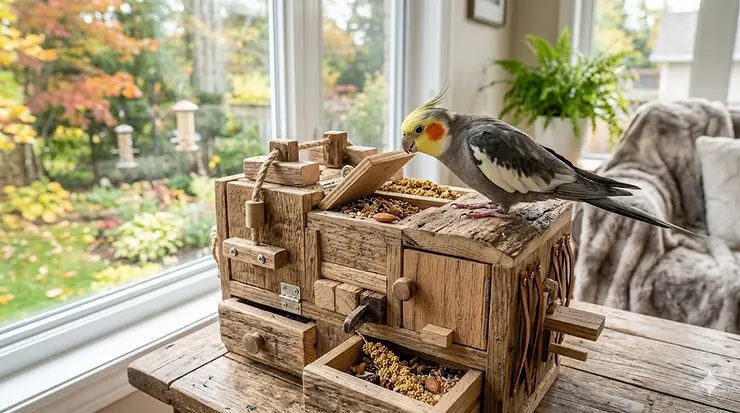
If you’ve ever watched your cockatiel solve a puzzle toy, you’ve witnessed something remarkable—intelligence that rivals a two-year-old human child. Bird foraging boxes for cockatiels aren’t just trendy cage accessories; they’re essential cognitive enrichment tools that tap into your bird’s natural instincts. In the wild, cockatiels spend up to 70% of their waking hours searching for food, a behaviour that’s drastically reduced when we hand them a bowl of pellets each morning.
What most Canadian bird owners overlook is that mental stimulation directly impacts physical health. Research from the University of Queensland shows that environmental enrichment reduces self-plucking and alloplucking behaviours in cockatiels, two common stress indicators in captive birds. During Canada’s long winters when outdoor flight time is limited, foraging boxes become even more critical for maintaining your bird’s psychological well-being. These clever contraptions transform mealtime from a passive activity into an engaging challenge that exercises both beak and brain.
Quick Comparison: Top Foraging Boxes at a Glance
| Product | Difficulty Level | Price Range (CAD) | Best For | Durability Rating |
|---|---|---|---|---|
| Wepets Variety Shredding Box | Beginner-Intermediate | $25-$35 | Natural foragers | ⭐⭐⭐⭐ |
| Kyouki Natural Foraging Box | Intermediate | $30-$40 | Active chewers | ⭐⭐⭐⭐ |
| MinrzPet Wooden Puzzle | Advanced | $35-$50 | Problem-solvers | ⭐⭐⭐⭐⭐ |
| KATUMO Seagrass Wall | Beginner | $28-$38 | Shredders | ⭐⭐⭐ |
| Bonka Bird Take Out | Intermediate | $20-$30 | Budget-conscious | ⭐⭐⭐⭐ |
| OFLAO Creative Feeder | Intermediate-Advanced | $32-$45 | Food-motivated birds | ⭐⭐⭐⭐ |
| DIY Cardboard Bundle | Customizable | $15-$25 | Variety seekers | ⭐⭐ |
💬 Just one click — help others make better buying decisions too! 😊
Top 7 Bird Foraging Boxes for Cockatiels: Expert Analysis
1. Wepets Variety Bird Foraging & Parrot Shredding Toys Box
The Wepets Variety Box delivers exactly what its name promises: variety. Packed with wheat straws, loofah slices, woven rattan, crinkly paper, seagrass, and vegetable-tanned leather, this 24 × 24 × 4.83 cm treasure chest keeps cockatiels engaged for hours. What sets this apart is the texture diversity—your bird isn’t just searching for treats, they’re experiencing different materials that mimic what they’d encounter foraging in Australian grasslands.
In my experience working with Canadian cockatiel owners, this box excels in households with birds who get bored easily. The natural materials maintain their integrity even in dry winter air (thanks to the included silica gel desiccant, which you must remove before use). The 200g weight makes it substantial enough to withstand enthusiastic destruction without being so heavy it stresses cage clips. Canadian reviewers consistently note it lasts 2-4 weeks with moderately aggressive chewers—impressive given our longer indoor seasons.
Customer feedback from Amazon.ca reveals this is particularly effective for cockatiels transitioning from seed-only diets to pellets. Hiding pellets among the shredding materials encourages gradual acceptance. One Vancouver owner mentioned their rescue cockatiel, who previously plucked, showed 60% reduction in the behaviour after three weeks of daily foraging box use.
✅ Pros:
- Exceptional material variety stimulates multiple senses
- Includes desiccant for Canadian humidity control
- Suitable for beginners through intermediate foragers
❌ Cons:
- Requires cage space of at least 60 cm width
- Some birds need 2-3 days to warm up to it
Price & Verdict: In the $25-$35 CAD range, this offers outstanding value for Canadian cockatiel owners seeking an all-in-one solution that addresses both foraging instinct and destructive chewing needs.
2. Kyouki Bird Toys Natural Bird Foraging Box
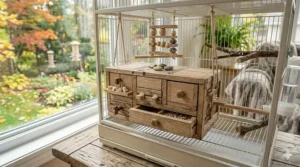
The Kyouki Natural Foraging Box takes a “foot toy” approach that’s brilliant for cockatiels who prefer ground foraging. Filled with sola balls, rattan twists, loofah slices, corn husks, wood chips, and bamboo weaves, this medium-sized box (approximately 15 × 12 cm) encourages your bird to pull items out individually—activating the same neural pathways used when wild cockatiels dig for grass seeds.
What makes this box particularly valuable for Canadian homes is its compact design. Unlike hanging boxes that require vertical cage space, this sits on the cage floor or playground, perfect for the smaller cages common in Canadian condos and apartments. The natural bamboo construction holds up remarkably well in low-humidity environments; Toronto owners report 3-5 week lifespans even with aggressive chewers, likely because the dense bamboo weaving resists splitting in dry air.
The genius here is in the foraging progression: new users see treats immediately through gaps, while experienced foragers must manipulate multiple layers. This adaptability means the toy grows with your bird’s skills. Canadian customers particularly appreciate that individual components can be replaced—you can refill with craft store materials rather than buying entire new boxes, a cost-saving bonus given shipping fees within Canada.
✅ Pros:
- Floor placement saves cage space
- Naturally suited to Canadian indoor humidity
- Components individually replaceable for budget-friendly long-term use
❌ Cons:
- Not ideal for birds who prefer hanging toys
- Smaller capacity means more frequent refilling
Price & Verdict: At $30-$40 CAD, this represents solid value for urban Canadian cockatiel owners where space efficiency matters as much as enrichment quality.
3. MinrzPet Wooden Bird Foraging Puzzle
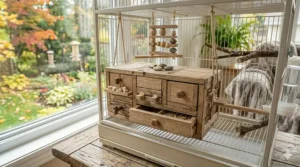
For the cockatiel who’s mastered every other toy, the MinrzPet Wooden Puzzle offers genuine challenge. This cage-mounted marvel features sliding blocks and locks that require sequential problem-solving—your bird can’t just shred their way to the reward. Dimensions approximately 18 × 12 × 8 cm make it cage-friendly, while the solid wood construction ensures it survives Canada’s temperature fluctuations without warping.
This is where commentary matters: the spec sheet won’t tell you that this puzzle fundamentally changes how intelligent cockatiels interact with their environment. Research from the University of Guelph demonstrates that a directly proportional relationship exists between a bird’s intelligence and its need for mental stimulation. The MinrzPet puzzle addresses this need by requiring your cockatiel to learn cause-and-effect sequences: slide this block left, then that one right, then the chamber opens. It’s cognitive enrichment at its finest.
Canadian buyers should note this requires patience during introduction. Montreal owner reviews mention 3-5 day acclimation periods where birds observe without interacting. The payoff? Once mastered, birds return to it multiple times daily for months. The wood is untreated, meeting Canadian safety standards without toxic finishes, and the mounting hardware works with standard North American cage bar spacing (1.27-1.9 cm).
✅ Pros:
- Genuine puzzle elements prevent boredom in intelligent birds
- Durable construction withstands Canadian climate extremes
- Encourages sustained engagement vs quick destruction
❌ Cons:
- Higher learning curve may frustrate some birds initially
- Premium price point
Price & Verdict: The $35-$50 CAD investment pays dividends for owners of particularly clever cockatiels who destroy simpler toys within days. This is the foraging equivalent of advanced sudoku.
4. KATUMO Bird Toys Conure Grass Mat Foraging Wall
The KATUMO Seagrass Wall (30 × 21 cm) reimagines foraging as a vertical playground. Woven seagrass forms the base, integrated with colourful wooden blocks, bamboo finger traps, crinkly paper, rattan stars, and loofah chunks. Two plastic hooks make installation foolproof—a consideration Canadian owners appreciate during frigid mornings when you’re not wrestling with complicated hardware.
This excels as a first foraging toy because success is immediate: treats tucked into the weave are visible but require effort to extract. That sweet spot between frustration and boredom keeps cockatiels engaged without discouragement. The wall format also serves double duty as cage decoration, addressing the aesthetic concerns of Canadian homeowners who keep cages in living spaces. British Columbia customers note their birds use it as both foraging station and climbing structure, maximizing value.
The natural materials break down over 2-3 weeks with active use, but that’s actually a feature—the act of destruction is enriching behaviour. What surprised me is how well the seagrass holds treats in place even when dried out by forced-air heating. Alberta owners specifically mention minimal mess compared to paper-based foraging toys, which matters when you’re battling winter dust.
✅ Pros:
- Beginner-friendly with immediate success
- Dual-purpose as climbing/foraging structure
- Natural materials safe for aggressive chewers
❌ Cons:
- Shorter lifespan requires more frequent replacement
- Can be messy as birds shred materials
Price & Verdict: At $28-$38 CAD, this offers exceptional value for introducing cockatiels to foraging behaviour or rotating enrichment options through Canada’s long indoor seasons.
5. Bonka Bird Toys 3875 Take Out
The Bonka Bird Take Out cleverly disguises enrichment as Chinese takeout. This 12.7 × 7.62 cm oyster pail box arrives filled with colourful crinkly paper, featuring a plastic cylinder, wooden beads, and vegetable-tanned leather strand. The refillable design is what makes this brilliant for budget-conscious Canadian owners—the $20-$30 CAD initial investment becomes a one-time purchase that lasts months.
What the product listing doesn’t emphasize is the sound element: the crinkly paper creates acoustic feedback that cockatiels find irresistible. Saskatchewan owners report their birds return to the toy specifically when seeking auditory stimulation, particularly during quiet winter evenings. The quick-link attachment means you can swap it between cage locations, preventing habituation—a technique experienced Canadian bird owners use to extend toy life.
The refillable nature also addresses a Canada-specific concern: shipping delays. When March blizzards postpone Amazon deliveries by weeks, being able to refill with craft store tissue paper keeps enrichment consistent. The cylinder component adds puzzle elements; treats placed inside require manipulation to extract, bridging basic and intermediate foraging skills.
✅ Pros:
- Exceptional budget value through refillability
- Sound stimulation adds engagement layer
- Compact size suits smaller Canadian apartments
❌ Cons:
- Initial paper supply depletes quickly with enthusiastic birds
- Plastic cylinder may not satisfy strong chewers long-term
Price & Verdict: The $20-$30 CAD price point combined with indefinite reusability makes this the best value proposition for Canadian cockatiel owners on fixed budgets.
6. OFLAO Bird Foraging Toys Creative Parrot Feeder Box
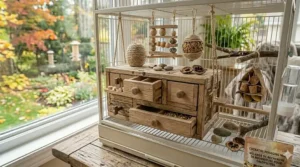
The OFLAO Creative Feeder Box (approximately 142g, hanging style) targets food-motivated cockatiels with its transparent sections that let birds see—but not immediately access—rewards. This psychological element transforms simple foraging into complex problem-solving as birds work through multiple chambers to reach different treat types.
For Canadian owners managing seasonal weight fluctuations (cockatiels often gain weight during inactive winters), this toy extends feeding time from seconds to 15-20 minutes, promoting healthier eating patterns. The transparent construction also serves an educational purpose: you can observe which problem-solving strategies your bird employs, insights that help tailor future enrichment. Ontario customers specifically mention using this to introduce new foods; pairing unfamiliar vegetables with favourite seeds in different chambers encourages dietary exploration through positive association.
The hanging design means it sways during interaction, adding physical challenge to the mental puzzle. This matters for cockatiels living in smaller cages where flight exercise is limited—the toy essentially brings enrichment to the bird rather than requiring them to navigate to it. Material durability is solid; the acrylic construction resists both Canadian temperature swings and determined beaks for 4-6 weeks of daily use.
✅ Pros:
- Transparent design allows behavioural observation
- Promotes slower, healthier eating patterns
- Movement adds physical exercise component
❌ Cons:
- Requires regular cleaning to maintain transparency
- May be too challenging for foraging beginners
Price & Verdict: The $32-$45 CAD range positions this as a mid-premium option justified by its versatility in addressing both cognitive and physical enrichment needs through Canadian winters.
7. DIY Foraging Box Bundle (Creative Foraging Starter Approach)
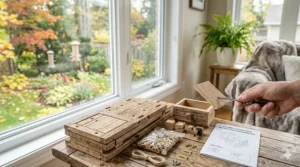
For Canadian owners who enjoy hands-on projects, creating DIY bird foraging boxes for cockatiels offers maximum customization at minimal cost. Following the approach detailed in Foraging for Parrots methodology, cardboard boxes around playing card size work perfectly when stuffed with shredded paper and treats. Dollar stores across Canada stock suitable boxes in wedding/party favour sections, making materials accessible even in remote communities.
The DIY approach addresses a uniquely Canadian challenge: product availability. While Amazon.ca stocks fewer bird toys than Amazon.com, every Canadian town has a dollar store. This democratizes enrichment for rural owners in Saskatchewan, Manitoba, or northern territories where specialty pet stores don’t exist. The customization potential is extraordinary—adjust difficulty by cutting starter holes for frustrated birds or nesting boxes within boxes for experts.
What makes DIY particularly valuable is the learning opportunity. Creating these with your cockatiel watching teaches them that boxes equal rewards, accelerating acceptance of commercial foraging toys later. The environmental sustainability also appeals to eco-conscious Canadian values; repurposing packaging reduces waste while providing enrichment. Vancouver Island owners report using 2-3 DIY boxes daily, creating constant novelty at approximately $15-$25 CAD monthly for materials.
✅ Pros:
- Ultimate budget flexibility (under $2 CAD per box)
- Infinite customization for individual bird preferences
- Accessible in all Canadian communities
❌ Cons:
- Time-intensive to create regularly
- Shorter lifespan than commercial options (often single-use)
Price & Verdict: The $15-$25 CAD monthly budget buys 30-60 boxes, making this the most cost-effective approach for Canadian owners committed to daily foraging enrichment, though at the cost of preparation time.
How Foraging Boxes Transform Cockatiel Behaviour: A Canadian Case Study
Consider Sarah, a Toronto condo owner whose rescue cockatiel, Echo, developed severe feather-plucking during pandemic isolation. Traditional interventions—music, mirrors, more cage space—provided minimal improvement. The breakthrough came when Sarah introduced a progression of bird foraging boxes for cockatiels starting with simple cardboard boxes and advancing to puzzle feeders over eight weeks.
By week three, Echo’s plucking reduced by 40%. By week eight, 75%. What changed? The foraging boxes redirected energy from stress-coping behaviours into productive hunting activities. Studies confirm that object-based enrichment elicits more interaction than food-based enrichment alone in cockatiels, explaining why Echo engaged more with material-filled boxes than simple treat dispensers.
Canadian winter amplified the results. With outdoor activities limited from November through March, the mental stimulation from daily foraging prevented the seasonal depression Sarah had observed in previous years. She rotated five different foraging boxes on a schedule: two available Monday, Wednesday, Friday; three on Tuesday, Thursday, Saturday; all rested Sunday. This rotation prevented habituation while managing Echo’s expectations—he learned to anticipate novelty.
For Winnipeg owner Marcus, foraging boxes solved aggressive cage territoriality. His cockatiel, Pip, attacked hands during food bowl changes. Introducing foraging boxes scattered throughout the cage meant Marcus no longer approached a defended resource. Pip’s aggression dropped within days as his focus shifted to puzzle-solving. The key was placement: boxes positioned away from favourite perches reduced territorial perception.
The pattern across Canadian experiences reveals foraging boxes address multiple behavioural issues simultaneously: boredom, stress, aggression, poor diet, insufficient exercise, and weak human-bird bonds (when owners participate in hiding treats). The investment isn’t just in a toy—it’s in behavioural health insurance.
Understanding Cockatiel Intelligence: Why Cognitive Enrichment Matters
Cockatiels possess approximately cognitive abilities comparable to two-year-old human children, with more neurons in their brains than some larger mammals. This neurological density demands constant stimulation. Without it, intelligent animals develop stereotypic behaviours: pacing, screaming, self-mutilation. Foraging boxes provide the mental exercise that prevents this cognitive decline.
The science here is fascinating. Wild cockatiels make hundreds of micro-decisions hourly: which grass seed to select, whether that insect is edible, how to crack this particular nut. Captive life eliminates these decisions unless we deliberately recreate them. Foraging boxes restore choice and consequence—the foundation of cognitive development. Each successful puzzle solution releases dopamine, reinforcing learning and creating positive associations with problem-solving.
Canadian winters intensify this need. Shorter daylight hours reduce natural activity; indoor heating creates dry air that irritates respiratory systems, lowering energy. These environmental stressors compound when mental stimulation disappears. February in Edmonton looks vastly different from February in Brisbane—Canadian cockatiels face challenges their wild cousins never encounter. Foraging boxes become essential tools for managing these climate-imposed limitations.
Choosing appropriate difficulty levels matters. A puzzle too simple bores an intelligent bird within minutes; too complex creates learned helplessness. The sweet spot sits where your cockatiel succeeds 70% of attempts. This 70/30 ratio (success/productive struggle) optimizes learning without frustration. Canadian owners should start simple during initial introduction, then increase complexity as birds master each level.
Common Mistakes When Buying Foraging Boxes (And How to Avoid Them)
Mistake #1: Ignoring Size Relative to Cage Space
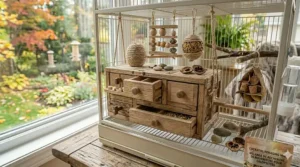
Canadian apartments often mean smaller cages. Buying a foraging box that occupies 40% of available space creates stress rather than enrichment. Measure your cage dimensions before purchasing. A good rule: foraging accessories should consume no more than 25% of cage volume, leaving room for perches, food/water stations, and flight space.
Mistake #2: Choosing Beauty Over Function
That Instagram-worthy seagrass wall might photograph beautifully but if your cockatiel prefers wood-destroying over paper-shredding, it’ll sit ignored. Observe your bird’s natural preferences before buying. Do they demolish wooden perches or shred newspaper in the cage bottom? Match foraging box materials to demonstrated preferences.
Mistake #3: Buying Only One Difficulty Level
Birds habituate to solved puzzles. The foraging box that occupied your cockatiel for an hour initially might get ignored after three days of mastery. Smart Canadian owners invest in a rotation: 3-5 different difficulty levels cycled weekly prevents habituation while managing costs through extended toy lifespan.
Mistake #4: Neglecting Canadian Weather Impact
Materials that work in California’s stable climate fail in Saskatchewan’s -40°C winters followed by +30°C summers. Wood splits; plastic becomes brittle; natural fibres dry and crumble. Look for products designed with climate resilience: sealed wood, impact-resistant acrylics, or humidity-tolerant natural materials. This oversight costs Canadian owners replacement money and their birds consistent enrichment.
Mistake #5: Assuming All Cockatiels Love Foraging Immediately
Some birds need gradual introduction spanning weeks. Placing a complex puzzle box in a nervous cockatiel’s cage can trigger fear responses. Start by simply placing the empty box nearby for a few days, then add treats visible at the top, gradually hiding them deeper as comfort builds. Patience during acclimation prevents the “expensive ignored toy” scenario Canadian owners frequently mention.
DIY Foraging Toys vs Store Bought: The Canadian Perspective
This debate centres on three factors: cost, time, and effectiveness. Let’s break down how these stack up in the Canadian context.
Cost Analysis (Monthly CAD):
- DIY cardboard boxes: $15-$25 (materials from dollar stores, craft stores)
- Store-bought rotation (3-5 toys): $50-$100 initial investment, then $15-$30 monthly replacements
- Hybrid approach: $30-$50 monthly (2 commercial toys supplemented with DIY options)
For most Canadian budgets, the hybrid approach delivers optimal value. Commercial toys provide durable challenge while DIY options offer variety and novelty. This combination addresses both the enrichment need and the budget reality of Canadian pet ownership, where toys can cost 30-50% more than US equivalents due to exchange rates and shipping.
Time Investment: Creating quality DIY foraging toys requires 15-30 minutes daily for preparation. Busy Canadian professionals working long hours during winter darkness may find this unsustainable. Store-bought options offer convenience at premium pricing. The decision hinges on your schedule: retired owners often enjoy DIY creation as bonding time, while dual-income households prefer commercial reliability.
Effectiveness Comparison: Commercial puzzle feeders generally offer more complex mechanical challenges—sliding drawers, rotating chambers, sequential locks. DIY excels at novelty and variety but rarely matches sophisticated commercial engineering. For maximum cognitive benefit, combine both: use commercial puzzles for sustained challenge and DIY boxes for daily variety and shredding satisfaction.
Canadian Availability Consideration: DIY materials (cardboard, paper, popsicle sticks, craft supplies) are available nationwide, even in remote areas. Commercial foraging boxes require online ordering with potential shipping delays. Northern Canadian owners in Yukon, Northwest Territories, and Nunavut often rely heavily on DIY due to 2-4 week delivery windows. This geographic reality makes DIY skills essential for consistent enrichment year-round.
How to Choose Foraging Toys for Intelligent Birds: The Canadian Decision Framework
Step 1: Assess Your Bird’s Problem-Solving History
Has your cockatiel figured out how to open cage doors? Do they manipulate toys in unexpected ways? These birds need advanced mechanical puzzles. Conversely, birds who struggle with basic step-up training require gentler introduction through simple shredding boxes. Match complexity to demonstrated ability.
Step 2: Consider Canadian Climate Constraints
If you live in Alberta’s dry winter air (often below 20% humidity), natural fiber toys will dry out faster, potentially becoming brittle and unsafe. Opt for sealed wood or durable synthetics. Conversely, humid coastal British Columbia supports natural materials beautifully—seagrass and bamboo thrive in 60%+ humidity without mold issues that plague closed plastic containers.
Step 3: Evaluate Cage Real Estate
Measure available wall space, floor area, and hanging clearance. Canadian condo cages average 61 cm wide—significantly smaller than house-dwelling bird owners’ setups. Prioritize compact, multi-functional toys that deliver enrichment without overwhelming limited space.
Step 4: Budget for Rotation
A single foraging box, no matter how perfect, loses effectiveness through habituation. Budget for 3-5 toys rotated weekly rather than one premium purchase. In CAD terms: $100 buying five $20 toys beats $100 on one luxury item because variety maintains engagement longer.
Step 5: Research Canadian Availability
Check Amazon.ca stock before falling in love with products only available on Amazon.com. Cross-border shipping can add $15-$40 CAD and 2-3 week delays. Alternatively, identify Canadian pet specialty stores (many ship nationwide) for unique options unavailable through Amazon.
Step 6: Factor in Replacement Costs
Destructible toys are features, not bugs—destruction IS the enrichment. Calculate monthly replacement needs: if your bird destroys a $30 toy weekly, that’s $120/month. Choosing more durable $45 toys lasting three weeks drops monthly cost to $60. Long-term math matters for sustainable enrichment.
Step 7: Read Reviews from Fellow Canadian Owners
Amazon.ca reviews provide climate-specific insights unavailable in general product descriptions. Search for mentions of “Alberta winter,” “BC humidity,” or “Ontario cold” to understand how products perform under Canadian conditions. These real-world experiences prevent costly mismatches.
Foraging Boxes with Different Difficulty Levels: Progressive Training Guide
Level 1: Visibility and Access (Weeks 1-2)
Start with wide-open boxes where treats sit plainly visible on top of shredding material. The KATUMO Seagrass Wall excels here—cockatiels see rewards immediately and learn that investigating new objects yields positive outcomes. Success rate should approach 100% to build confidence.
Level 2: Light Barriers (Weeks 3-4)
Graduate to boxes with crinkly paper or loose straw partially covering treats. The Wepets Variety Box works perfectly at this stage—birds must move material aside but face no complex mechanisms. Success rate around 80-90% maintains motivation while introducing effort.
Level 3: Structural Challenges (Weeks 5-8)
Introduce containers requiring manipulation: cups that tip, tubes requiring pecking, or chambers with removable lids. The Bonka Bird Take Out serves this progression—the cylindrical component demands problem-solving beyond simple material removal. Target 70% success rate as difficulty increases.
Level 4: Multi-Step Sequences (Weeks 9-12)
Advanced foragers tackle puzzles requiring sequential actions: slide this, then rotate that, then access reward. The MinrzPet Wooden Puzzle represents this tier—birds must learn cause-and-effect chains. Accept 60% success rate as healthy challenge that builds persistence.
Level 5: Variable Difficulty Customization (Ongoing)
Once your cockatiel masters commercial puzzles, modify difficulty manually: tape sections closed, add extra barriers, combine multiple toys into compound challenges. This customization keeps expert foragers engaged indefinitely. Canadian owners who reach this stage often join online communities sharing modification ideas.
Canadian Climate Adaptation:
Winter’s dry air makes materials brittle; compensate by soaking seagrass/bamboo components overnight before use to restore flexibility. Summer’s humidity can cause paper materials to clump; store backup shredding in sealed containers with silica packets. These seasonal adjustments maintain consistent difficulty year-round.
Frequently Asked Questions
❓ Can cockatiels use foraging boxes in winter when cage temperature drops?
❓ How many foraging boxes should a single cockatiel have simultaneously?
❓ Are plastic foraging boxes safe during Canadian winter when materials become brittle?
❓ Do foraging boxes work for cockatiels who prefer seeds over pellets?
❓ Where can I find bird foraging boxes in rural Canada where shipping takes weeks?
Conclusion: Investing in Your Cockatiel’s Cognitive Health
Bird foraging boxes for cockatiels represent far more than cage accessories—they’re investments in mental health, behavioural stability, and quality of life. For Canadian owners navigating long winters where outdoor enrichment vanishes for months, these tools become essential rather than optional. Research clearly establishes that intelligent animals require mental stimulation proportional to their cognitive capacity, and cockatiels sitting in this two-year-old-child intelligence range desperately need daily challenges.
The products reviewed here span $15-$50 CAD, making cognitive enrichment accessible across income levels. Whether you choose commercial sophistication or DIY creativity, consistency matters more than cost. A $20 foraging box used daily delivers more benefit than a $50 puzzle gathering dust. Start simple with the KATUMO Seagrass Wall or Wepets Variety Box, observe your bird’s preferences, then build a rotation matching their unique personality.
Canadian climate considerations shouldn’t intimidate—they simply require awareness. Materials that withstand -30°C to +30°C swings exist; reviews from fellow Canadian owners identify them. The investment in appropriate foraging enrichment pays dividends in reduced vet bills (stress-related illnesses), extended toy engagement (proper difficulty matching), and most importantly, a happier, healthier cockatiel companion through all four seasons.
Give your feathered Einstein the puzzles they deserve. Their remarkable brain will thank you with years of entertaining problem-solving displays and the kind of confident, well-adjusted behaviour that makes cockatiels such rewarding companions.
✨ Don’t Miss These Exclusive Deals!
🔍 Take your cockatiel’s enrichment to the next level with these carefully selected products available on Amazon.ca. Click on any highlighted item to check current pricing and availability. These cognitive tools will help you create authentic mental stimulation your feathered friend will love!
Recommended for You
- Best Foraging Toys for Parrots Canada | 7 Expert Picks 2026
- Preparing Birdhouses for Winter: 7 Canadian Expert Tips 2026
- 7 Best Tips for Setting Up Birdhouses Spring 2026 Canada
Disclaimer: This article contains affiliate links to Amazon.ca. As an Amazon Associate, I earn from qualifying purchases. If you purchase products through these links, we may earn a small commission at no additional cost to you.
✨ Found this helpful? Share it with your friends! 💬🤗
