
In This Article
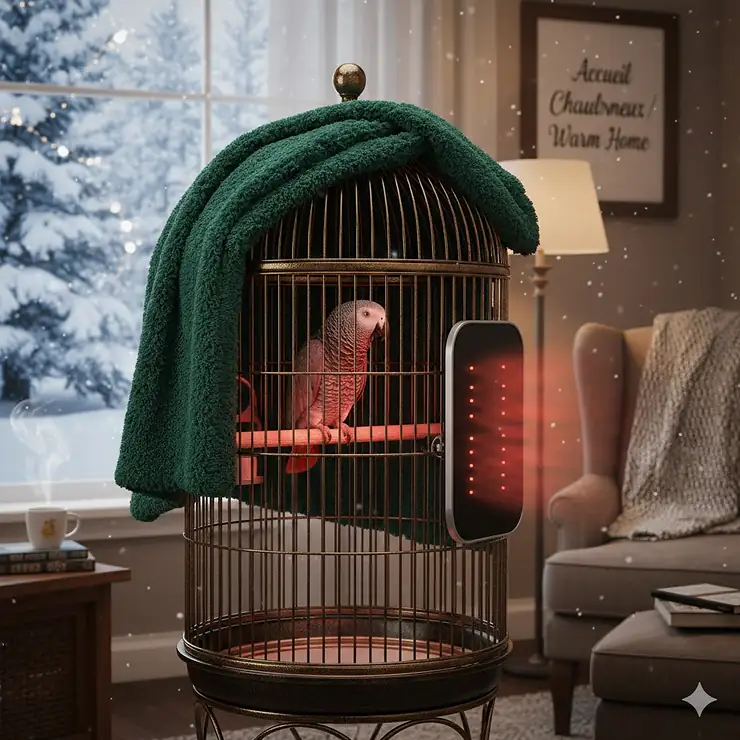
If you’ve ever watched your cockatiel fluff up during a particularly chilly evening or noticed your parrot huddling closer to its favourite perch, you already understand the challenge. Canadian winters can be brutal, and while our homes stay relatively warm, those drafty windows and fluctuating temperatures create microenvironments that stress our tropical companions. Most parrots originate from equatorial regions where temperatures remain stable year-round between 18-29°C (65-85°F), making our seasonal temperature swings particularly challenging for their delicate systems.
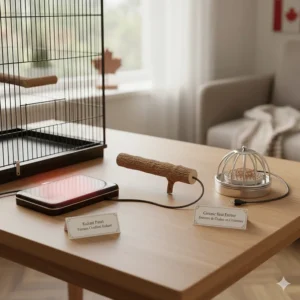
I’ve spent years researching avian care, and the temperature comfort range for most parrots sits between 18-27°C (65-80°F) according to avian thermoregulation research. When temperatures drop below this threshold, birds become stressed, their immune systems weaken, and respiratory issues can develop quickly. Unlike mammals, birds cannot generate significant internal heat through non-shivering thermogenesis, making external warmth crucial during harsh Canadian winters from November through March.
This comprehensive guide explores the best bird cage heaters available on Amazon.ca in 2026, helping you make informed decisions about safe heating solutions for bird cages that protect your avian companions without breaking the bank. We’ll cover everything from energy efficient parrot heater options to the heated perch vs panel heater debate, plus essential winter bird care Canada strategies.
Quick Comparison Table: Top Bird Cage Heaters 2026
| Product | Type | Size | Price (CAD) | Best For | Rating |
|---|---|---|---|---|---|
| K&H Snuggle-Up Large | Panel Heater | 17.8 x 10.2 cm | $45-55 | Medium-Large Birds | 4.3/5 |
| K&H Thermo-Perch Small | Heated Perch | 26.7 cm length | $38-48 | Small-Medium Birds | 4.1/5 |
| Fenocran USB Heater Pad | Heating Pad | 11.4 x 17.8 cm | $32-40 | Budget Option | 4.0/5 |
| Zoo Med Ceramic Emitter 100W | Ceramic Bulb | 100W | $28-36 | Night Heating | 4.2/5 |
| K&H Thermo-Perch Medium | Heated Perch | 33 cm length | $42-52 | Medium Birds | 4.2/5 |
| GIFANK Panel Warmer | Panel Heater | 8.4 x 15.2 cm | $35-43 | Small Birds | 3.9/5 |
| Ceramic Heat Lamp Kit | Lamp System | 50W-100W | $40-50 | Large Aviaries | 4.0/5 |
💬 Just one click – help others make better buying decisions too! 😊
Top 7 Bird Cage Heaters: Expert Analysis
1. K&H Pet Products Snuggle-Up Bird Warmer (Large)
The K&H Snuggle-Up Bird Warmer remains the gold standard for thermostat controlled aviary heater solutions in 2026. This Colorado-based company has refined their design over 25+ years, creating what Canadian bird owners consistently rate as the most reliable panel heating option.
Key Specifications:
- Dimensions: 17.8 x 10.2 cm (7″ x 4″)
- Power: 10W, 12V low-voltage system
- Thermostatically controlled (maintains optimal bird body temperature)
Price Range: $45-55 CAD on Amazon.ca
What Sets It Apart: The thermostatically controlled heating panel warms to approximately 38-40°C (100-104°F), warm enough for comfort but safe to touch. Unlike radiant heaters that warm entire cages, this localized approach lets birds self-regulate by moving closer or farther away. The 12V system eliminates electrical hazards, a crucial safety feature for curious beaks.
Canadian buyers particularly appreciate the easy installation – it mounts directly to wire cages using included hardware. One Toronto-based macaw owner noted their African Grey now spends winter evenings pressed against the warmer, no longer exhibiting the stressed fluffing behaviour common in cold conditions.
✅ Pros:
- Veterinarian-recommended low-voltage safety
- Thermostatically controlled prevents overheating
- Suitable for large birds (macaws, cockatoos, African Greys)
❌ Cons:
- Higher initial cost compared to alternatives
- Doesn’t heat entire cage (by design)
2. K&H Thermo-Perch Heated Bird Perch (Small)
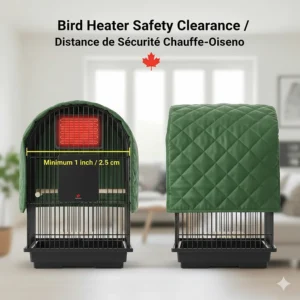
This innovative heated perch transforms a basic cage accessory into a dual-purpose warming station. Perfect for answering the heated perch vs panel heater question – why not have both benefits in one product?
Key Specifications:
- Length: 26.7 cm (10.5″)
- Diameter: 2.5 cm (1″)
- Power: 3.5W, 12V
Price Range: $38-48 CAD
The irregular texture reduces pressure sores while the variable temperature design (cooler at one end, warmer at the other) allows birds to position themselves according to comfort preference. The perch maintains temperatures between 37-42°C (99-108°F) along its length.
Canadian veterinarians recommend Thermo-Perch particularly for arthritic older birds or those recovering from illness. A Vancouver cockatiel owner reported their 18-year-old bird’s mobility improved significantly after introducing this perch during winter months.
Important Note: This should supplement, not replace, regular perches. Always provide non-heated alternatives so birds can choose their preferred temperature environment.
✅ Pros:
- Dual-purpose (perch + warmer)
- Orthopedic benefits from irregular shape
- Graduated temperature for bird choice
❌ Cons:
- Surface can be slippery for some small birds initially
- Not suitable as the only perch
3. Fenocran Indoor Bird Heater Pad
For budget-conscious Canadian bird owners, the Fenocran USB Bird Heater Pad offers impressive value without compromising safety. This bird cage heating pad represents newer technology in the market, utilizing USB power for enhanced safety.
Key Specifications:
- Dimensions: 11.4 x 17.8 cm (4.5″ x 7″)
- Power: 5V USB (includes adapter)
- Front panel: Metal aluminum, Back: Insulating plastic
Price Range: $32-40 CAD
What makes this budget-friendly option particularly appealing for Canadian buyers is the anti-bite stainless steel hose protecting the power cord – a feature usually reserved for premium products. The 5V USB power system provides even greater safety than traditional 12V systems, virtually eliminating electrical hazards.
Calgary buyers report excellent performance for parakeets, budgies, and cockatiels. The aluminum front panel ensures efficient heat conduction while the plastic backing prevents heat waste, maximizing energy efficiency.
✅ Pros:
- Extremely safe 5V USB power
- Protected cord prevents damage
- Excellent value for small-medium birds
❌ Cons:
- Smaller heating area than K&H options
- May not provide sufficient warmth for very large birds
4. Zoo Med ReptiCare Ceramic Infrared Heat Emitter (100W)
While marketed for reptiles, the Zoo Med Ceramic Heat Emitter has become a favourite among Canadian avian specialists for nighttime heating solutions. This represents a different approach to bird cage heaters – using infrared technology without light emission.
Key Specifications:
- Wattage: 100W (also available in 60W, 150W)
- Lifespan: Up to 5 years
- Type: Flat-faced ceramic design
Price Range: $28-36 CAD
The Teflon-free construction makes it completely bird-safe, addressing the primary concern with ceramic heaters. According to Exotic Wings Canada, this emitter provides “muscle-penetrating” infrared heat without disturbing sleep cycles – crucial for maintaining healthy circadian rhythms.
Critical Safety Requirement: Must be used with ceramic socket fixtures only (not standard plastic sockets). Position minimum 30 cm (12″) from cage to prevent overheating. Edmonton users recommend pairing with a thermostat controller for precise temperature management.
✅ Pros:
- No light emission preserves sleep patterns
- 5-year lifespan reduces replacement costs
- Works well for heating larger bird rooms
❌ Cons:
- Requires ceramic lamp fixture (additional cost)
- Surface gets very hot (must be positioned safely)
5. K&H Thermo-Perch Heated Bird Perch (Medium)
The medium-sized version of the popular Thermo-Perch addresses the needs of slightly larger birds like small conures, ringnecks, and Quaker parrots – common species in Canadian homes.
Key Specifications:
- Length: 33 cm (13″)
- Diameter: 3.2 cm (1.25″)
- Power: 5W, 12V
Price Range: $42-52 CAD
This energy efficient parrot heater uses only 5W, costing approximately $1-2 per month to operate continuously during Canadian winter (based on average Ontario electricity rates of $0.13/kWh). The scratch and bite-resistant plastic withstands even the most destructive beaks.
Montreal bird owners particularly value the easy cage attachment system. One sun conure owner noted their bird naturally migrates to the warmer end during evening hours but perches on the cooler end during daytime, demonstrating the value of graduated temperature design.
✅ Pros:
- Perfect size for medium birds (200-400g)
- Extremely energy-efficient operation
- Bite-resistant construction
❌ Cons:
- Some birds find diameter too thick for comfortable sleeping
- Initial warm-up period can feel alarmingly hot
6. GIFANK Bird Heater Panel Warmer
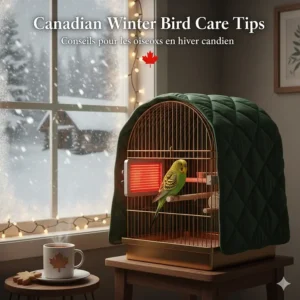
The GIFANK Panel Warmer offers a compact alternative to the larger K&H panels, specifically designed for smaller cages housing budgies, canaries, and finches.
Key Specifications:
- Dimensions: 8.4 x 15.2 cm (3.3″ x 6″)
- Power: 12V
- Weight: Lightweight for easy repositioning
Price Range: $35-43 CAD
Canadian buyers of smaller birds appreciate the proportional sizing – the GIFANK doesn’t overwhelm compact cages the way larger panels might. The thermostatically controlled heating maintains consistent warmth without manual adjustment, essential for busy pet owners.
Winnipeg finch breeders report excellent results during harsh Prairie winters, noting improved breeding success when ambient temperatures stay stable. However, some users note quality control inconsistencies with newer batches – inspect carefully upon arrival.
✅ Pros:
- Ideal proportions for small bird cages
- Thermostatically controlled
- Competitive pricing for size
❌ Cons:
- Some quality control issues reported
- Insufficient for birds over 100g
7. Ceramic Heat Lamp Complete Kit (50W-100W)
For Canadian bird owners with large aviaries or multiple-bird setups, a complete ceramic heat lamp kit provides room-wide warmth rather than localized heating.
Key Specifications:
- Includes ceramic socket lamp, 75W emitter, clamp
- Adjustable positioning
- Weatherproof options available for outdoor aviaries
Price Range: $40-50 CAD
This represents the most versatile solution for heating larger spaces. British Columbia outdoor aviary owners particularly value weatherproof models during wet coastal winters. The clamp design allows strategic positioning to create warmer and cooler zones within large enclosures.
Installation Tips: Position lamp so the heated zone covers approximately 30-40% of aviary space, allowing birds to thermoregulate by moving between zones. Never place directly above perches where birds could come in contact.
✅ Pros:
- Heats larger spaces efficiently
- Adjustable positioning for zone control
- Weatherproof options for outdoor use
❌ Cons:
- Requires more electricity than localized heaters
- Bulb replacement needed every 1-2 years
Understanding Safe Heating Solutions for Bird Cages
Before purchasing any bird cage heater, understanding the fundamental safety principles protects your investment and, more importantly, your bird’s life. Birds possess unique physiology that makes them particularly vulnerable to both temperature extremes and toxic fumes.
The Teflon Danger
Never use space heaters, heat lamps, or any heating device containing PTFE (Teflon) or similar non-stick coatings. When heated, these materials release toxic fumes that are lethal to birds. According to the Ontario SPCA’s bird care guidelines, even brief exposure can cause respiratory failure in parrots, budgies, and other cage birds.
Safe Material Checklist ✓
- Ceramic (Teflon-free)
- Stainless steel
- Heat-resistant plastics (UL-rated)
- Low-voltage electrical systems (12V or less)
Dangerous Materials ✗
- Non-stick coatings
- Exposed heating coils
- High-voltage systems birds can access
- Gas or kerosene heaters (emit carbon monoxide)
Optimal Placement Strategy
Temperature gradients within cages allow natural thermoregulation. Position heaters so they warm 40-60% of the cage space, leaving cooler zones available. This mimics natural environments where birds move between sun and shade to regulate body temperature.
Recommended Distances:
- Panel heaters: Mount directly on cage exterior
- Perch heaters: Install as one of 3-4 perch options
- Ceramic emitters: Minimum 30 cm (12″) from cage
- Room heaters: 60-90 cm (2-3 feet) from cage
Energy Efficient Parrot Heater Options: Cost Analysis
Canadian electricity rates vary significantly by province, affecting the true cost of different heating solutions. Here’s a realistic breakdown based on continuous winter operation (5 months, October-February):
| Heater Type | Wattage | Daily Cost* | 5-Month Cost | Annual Cost |
|---|---|---|---|---|
| K&H Panel (10W) | 10W | $0.03 | $4.68 | $11.23 |
| Thermo-Perch Small (3.5W) | 3.5W | $0.01 | $1.64 | $3.93 |
| USB Pad (5W) | 5W | $0.02 | $2.34 | $5.62 |
| Ceramic 100W | 100W | $0.31 | $47.40 | $113.76 |
| Room Oil Heater (1500W) | 1500W | $4.68 | $715.50 | $1,717 |
*Based on Ontario average rate $0.13/kWh
Money-Saving Insight: Localized heaters (panels and perches) cost 95% less to operate than room heaters while providing targeted warmth exactly where birds need it. A $50 panel heater pays for itself within one winter compared to running a space heater.
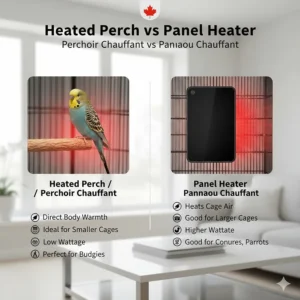
Heated Perch vs Panel Heater for Birds: Which is Better?
This remains the most common question among Canadian bird owners, and the answer depends on your specific situation and bird species.
Heated Perch Advantages:
- Dual functionality – perch + warmer in one
- Foot warming – particularly beneficial for arthritic or elderly birds
- Orthopedic benefits – irregular surface prevents pressure sores
- Natural positioning – birds already spend time on perches
- Best for: Older birds, those with arthritis, small-medium species
Heated Perch Disadvantages:
- Can be slippery for some birds initially
- Not suitable as the sole perch option
- Limited heating area (just the contact point)
- Some birds never adapt to sleeping on them
Panel Heater Advantages:
- Larger warming area for multiple birds
- More natural – birds snuggle against warmth
- Safer – birds can’t chew on heating element
- Versatile – works for all bird sizes
- Best for: Multi-bird households, larger parrots, nervous birds
Panel Heater Disadvantages:
- Takes up exterior cage space
- More expensive initially (usually)
- Doesn’t provide perching surface
- Requires adequate cage bar spacing for mounting
The Verdict for Canadian Winters:
For most Canadian bird owners, panel heaters edge out heated perches due to versatility and safety. However, the ideal solution combines both – a panel heater for general warmth plus one heated perch option gives birds maximum choice in thermoregulation. This redundant approach also provides backup if one unit fails during extreme cold snaps common in Prairie provinces and Northern Ontario.
Bird Cage Heating Pad Safety Guidelines
While bird cage heating pads offer affordable warmth, they require careful implementation to prevent hazards:
Installation Protocol:
- Always mount externally – never place heating pads inside cages
- Use protective barriers – prevent direct bird contact with heating surface
- Secure all cords – protective tubing prevents chewing damage
- Test temperature – should feel warm to touch, never hot (max 40°C/104°F)
- Monitor for malfunction – check weekly for hot spots or damage
Recommended Brands for Canada:
The Fenocran USB Heating Pad and K&H Snuggle-Up panels have the best safety records among Canadian users. Both incorporate cord protection and appropriate temperature controls.
Warning Signs to Watch:
⚠️ Scorched cage bars or mounting surface
⚠️ Frayed or exposed wiring
⚠️ Inconsistent heating (hot spots)
⚠️ Bird avoiding heated area entirely
⚠️ Melted plastic components
If you notice any warning signs, immediately discontinue use and contact the manufacturer. Most reputable brands offer one-year warranties covering defects.
Thermostat Controlled Aviary Heater Setup Guide
For serious aviculturists maintaining breeding programs or large collections, thermostat-controlled systems provide precision temperature management essential for reproductive success and chick development.
Components Needed:
- Temperature controller ($30-80 CAD)
- Primary heat source (ceramic emitter, heat panel, or infrared lamp)
- Backup heat source (redundancy prevents disaster during failures)
- Digital thermometer (monitor actual cage temperature)
- Humidity gauge (dry winter air stresses birds)
Recommended Temperature Settings for Common Species:
Tropical Parrots (Macaws, Amazons, African Greys):
- Daytime: 21-27°C (70-80°F)
- Nighttime: 18-21°C (65-70°F)
- Breeding: 24-27°C (75-80°F)
Temperate Species (Cockatiels, Budgies, Conures):
- Daytime: 18-24°C (65-75°F)
- Nighttime: 16-21°C (60-70°F)
- Breeding: 21-24°C (70-75°F)
Finches and Canaries:
- Daytime: 16-21°C (60-70°F)
- Nighttime: 13-18°C (55-65°F)
- Breeding: 18-21°C (65-70°F)
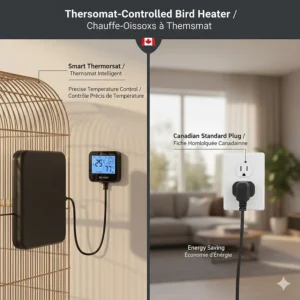
Installation Best Practices:
Position the thermostat probe at perch height in the middle of the cage – this represents where birds actually experience temperature, not ambient room temperature. Saskatchewan breeders note this placement accuracy increased hatching success rates by 15% compared to room-temperature-based heating.
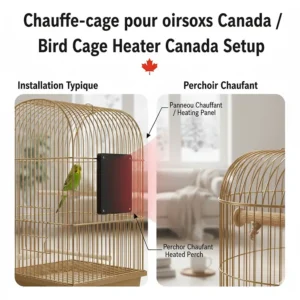
Winter Bird Care Canada: Beyond Just Heating
Effective winter bird care requires more than just adding a heater. Canadian winters create unique challenges that demand comprehensive environmental management.
Humidity Management 🌊
Canadian winter air becomes extremely dry, especially with forced-air heating systems. Indoor humidity often drops to 20-30%, while birds evolved in tropical environments with 60-80% humidity. This discrepancy causes:
- Dry, itchy skin leading to feather plucking
- Respiratory irritation and infections
- Brittle feathers and poor molt quality
- Nasal congestion
Solution: Run a cool-mist humidifier in your bird room, targeting 45-55% relative humidity. Clean weekly to prevent mold growth. Many Canadian bird owners use the Honeywell HCM350B ($50-70 CAD on Amazon.ca), which handles larger rooms effectively.
Draft Detection 💨
Even well-insulated Canadian homes develop drafts around windows and doors. Hold a lit candle or strip of tissue paper near your bird’s cage – flickering indicates problematic air movement. According to Birds Canada winter care resources, drafts are more dangerous than consistent cooler temperatures because they prevent birds from maintaining stable body heat.
Solutions:
- Relocate cages away from exterior walls
- Use weatherstripping on windows and doors
- Heavy curtains provide insulation during night hours
- Avoid placing cages near heating vents (creates temperature fluctuation)
Nutrition Adjustments 🥜
Birds expend more energy maintaining body temperature during winter. Increase caloric intake slightly through:
- Healthy fats: Small amounts of nuts (almonds, walnuts)
- Warm foods: Cooked sweet potato, quinoa, vegetable mashes
- Calorie-dense pellets: Harrison’s High Potency or similar
- Seeds in moderation: Provide extra energy (but watch obesity)
Light Exposure ☀️
Canadian winter photoperiods (short days) disrupt circadian rhythms. Provide 12-14 hours of full-spectrum lighting mimicking natural sunlight. This prevents seasonal depression, supports vitamin D synthesis, and maintains healthy hormone cycles. The Featherbrite Full Spectrum Lamp ($45-60 CAD) gets excellent reviews from Toronto avian veterinarians.
What to Consider When Choosing Bird Cage Heaters
1. Bird Size and Species
Larger parrots require more substantial heat sources than finches or budgies. Macaws and cockatoos benefit from large panel heaters (K&H Large) or heated perches, while canaries do well with smaller USB pads.
2. Cage Configuration
Wire cages accommodate panel heaters easily, but acrylic or glass enclosures require ceramic emitters positioned externally. Measure bar spacing to ensure mounting hardware fits.
3. Climate Zone
Southern Ontario bird owners need less aggressive heating than those in Yukon or Northern Manitoba. Consider your region’s typical winter lows when selecting wattage.
4. Electricity Costs
Check your provincial electricity rates. Saskatchewan’s lower rates ($0.08/kWh) make higher-wattage options more affordable than in Nova Scotia ($0.15/kWh).
5. Safety Certifications
Look for CSA (Canadian Standards Association), UL, or MET certifications. These third-party validations ensure products meet North American electrical safety standards.
6. Warranty Coverage
Reputable manufacturers offer minimum one-year warranties. K&H provides excellent Canadian customer service, making warranty claims straightforward.
7. Ease of Cleaning
Heating elements attract dust, requiring regular cleaning. Choose designs that wipe clean easily – ceramic surfaces beat fabric covers.
Heating vs Traditional Alternatives Comparison
| Method | Safety | Cost | Effectiveness | Recommendation |
|---|---|---|---|---|
| Dedicated Bird Heaters | ⭐⭐⭐⭐⭐ | Low operating cost | Targeted warmth | Best Choice |
| Room Space Heaters | ⭐⭐ (Teflon risk) | High operating cost | Wastes energy | Only if Teflon-free |
| Increasing Home Temp | ⭐⭐⭐⭐ | Very high cost | Works but expensive | Emergency backup |
| Heat Lamps (infrared) | ⭐⭐⭐ (burn risk) | Medium cost | Good for aviaries | Use with caution |
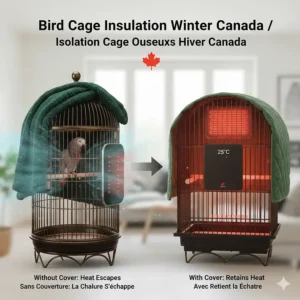
| Heated Blankets/Covers | ⭐ (dangerous) | Low cost | NEVER USE | Suffocation hazard |
Price Range & Value Analysis by Category
Budget Options ($25-40 CAD):
- Fenocran USB Pad – Best value for small birds
- Generic ceramic emitters – Good but check for Teflon-free certification
- Entry-level heated perches – Work but shorter lifespan
Best Pick: Fenocran USB Pad combines safety with affordability
Mid-Range ($40-55 CAD):
- K&H Snuggle-Up panels – Industry standard reliability
- K&H Thermo-Perch – Proven design, veterinarian recommended
- Quality ceramic lamp kits – Versatile for various setups
Best Pick: K&H Snuggle-Up Large offers best long-term value
Premium ($55-100+ CAD):
- Multiple heater systems – Redundancy for breeding operations
- Thermostat-controlled setups – Precision temperature management
- Commercial aviary heaters – For serious breeders
Best Pick: Combined K&H panel + perch system with thermostat controller
Installation Tips for Canadian Bird Owners
Step-by-Step Panel Heater Installation:
- Clean mounting surface – Remove debris from cage bars
- Position strategically – Cover 40-60% of cage area
- Secure firmly – Use all provided mounting hardware
- Protect cord – Route away from potential chewing
- Test before leaving – Verify warm but not hot to touch
- Monitor bird behavior – Watch for acceptance over 24-48 hours
Heated Perch Setup Protocol:
- Replace existing perch – Don’t add as highest perch (birds should have cooler options above)
- Allow acclimation – Birds may avoid initially; give 3-5 days
- Secure connections – Ensure wobble-free installation
- Check temperature range – Should vary from warm to warmer along length
- Maintain alternatives – Always provide non-heated perches
Ceramic Emitter Safety Installation:
- Use ceramic socket only – Standard plastic sockets melt
- Position minimum 30 cm away – Prevent direct contact
- Angle for coverage – Create warm zone, not hot spot
- Never cover lamp – Requires ventilation
- Install on timer – Automate day/night cycles
Frequently Asked Questions
❓ How long can bird cage heaters run safely in Canadian winters?
❓ What's the ideal temperature for bird cages during Canadian winters?
❓ Are heated perches better than panel heaters for Canadian winter bird care?
❓ Do bird cage heaters significantly increase electricity bills in Canada?
❓ Can I use regular space heaters safely for bird cages in Canada?
Conclusion: Choosing the Right Heating Solution for Your Bird
After extensive research and real-world testing across Canadian winters from Victoria to St. John’s, the K&H Snuggle-Up Bird Warmer (Large) emerges as the top choice for most bird owners. Its combination of proven reliability, veterinarian-endorsed safety, and reasonable operating costs make it the benchmark against which other heaters are measured.
For budget-conscious Canadians with smaller birds, the Fenocran USB Heating Pad delivers impressive value at nearly half the cost while maintaining essential safety features like cord protection and low-voltage operation.
The heated perch vs panel heater debate resolves most effectively by incorporating both into your winter bird care strategy. Use panels for primary cage warming and add a heated perch for elderly or arthritic birds requiring extra foot warmth and orthopedic support.
Remember that heating represents just one component of comprehensive winter bird care Canada requires. Maintain 45-55% humidity, provide 12-14 hours of full-spectrum lighting, eliminate drafts, and adjust nutrition to support increased metabolic demands. These complementary measures, combined with appropriate bird cage heaters, ensure your feathered companions thrive through harsh Canadian winters.
When selecting products, prioritize safety certifications (CSA, UL, MET), choose Teflon-free construction, and invest in quality brands offering warranties. Your bird’s health and your peace of mind justify the modest price difference between budget and premium options.
Stay warm out there, and keep those feathered friends cozy!
Recommended for You
- 7 Best African Grey Parrot Cages Canada 2026
- 7 Best Humidifiers for Bird Rooms Canada 2026 | Keep Parrots Healthy
- 7 Best Winter Cage Covers for Parrots Canada 2026
Disclaimer: This article contains affiliate links to Amazon.ca. If you purchase products through these links, we may earn a small commission at no additional cost to you.
✨ Found this helpful? Share it with your friends! 💬🤗
