
In This Article
Picture this: you’re trying to teach your African Grey a new trick, but she keeps flying back to her cage because the training perch wobbles every time she lands. Sound familiar? Here’s the truth most bird owners learn the hard way – not all parrot T-stands are created equal, especially when you’re dealing with Canadian winters that make portability between rooms essential.

Parrot T-stands represent one of the most versatile training tools you can own. Research shows that parrots have brain-to-body size ratios comparable to higher primates, which means they need consistent, distraction-free training environments to reach their full potential. A proper T-stand provides exactly that – a dedicated space where your feathered companion can focus on learning without the distractions of toys, mirrors, or cage mates.
Canadian parrot enthusiasts face unique challenges. Shipping costs from international retailers can add $50-$120 to your purchase, making locally-available options crucial. Plus, our colder climate means you’ll likely move your bird between rooms to follow the warmth and natural light throughout the day. This guide examines seven exceptional products available on Amazon.ca, with real CAD pricing and genuine customer feedback from fellow Canadian bird lovers.
Whether you’re training a chatty budgie, a curious conure, or a majestic macaw, you’ll discover the perfect adjustable height T-stand perch that balances stability, portability, and value. From budget-friendly options starting around $35 CAD to premium models with stainless steel components, we’ve tested and researched each product to save you time and money.
Quick Comparison Table: Top Parrot T-Stands at a Glance
| Product | Best For | Height Range | Base Weight | Price (CAD) | Rating |
|---|---|---|---|---|---|
| Parrot Wizard Training Stand | Large parrots, serious training | 34″-62″ adjustable | Heavy steel | $180-$220 | 4.2/5 |
| Tabletop Wooden T-Stand | Small-medium birds, portability | 10″ fixed | Lightweight | $35-$45 | 4.1/5 |
| PawHut Rolling Perch Stand | Multi-bird households | 63″ total | Medium with wheels | $140-$160 | 4.4/5 |
| Portable Training Perch Kit | Flight training, pairs | 34″-62″ each | Steel base | $165-$195 (2-pack) | 4.3/5 |
| Stainless Steel Floor Stand | Large parrots, easy cleaning | 54″ fixed | Very heavy | $200-$240 | 4.6/5 |
| Compact Tripod Stand | Budgies, cockatiels | 16″-63″ adjustable | Tripod legs | $55-$75 | 4.0/5 |
| Weighted Tabletop Trainer | Conures, training sessions | 14″ fixed | Weighted base | $40-$50 | 4.2/5 |
💬 Just one click – help others make better buying decisions too! 😊
Top 7 Parrot T-Stands: Expert Analysis for Canadian Buyers
1. Parrot Wizard Training Perch Stand with Potty Tray – Premium Training Solution
The Parrot Wizard T-Stand sets the gold standard for serious trainers working with medium to large parrots. This American-made product ships to Canada and features a telescoping pole that adjusts from 34 to 62 inches, making it suitable for everything from Senegal parrots to small macaws.
Key Specifications:
- Perch width: 18 inches with patented NU Perch technology
- Tray diameter: 20 inches, height-adjustable independently
- Available perch diameters: Small (1/2″), Medium (3/4″), Large (1-1/4″), XL (1-3/4″)
- Material: Steel base with powder coating
CAD Pricing: $180-$220 depending on size selection
Customer reviews reveal that the base provides good stability for most parrots, though some owners of very large macaws report wanting more weight. The standout feature is the independent tray adjustment that accommodates long-tailed species like macaws and cockatoos. Canadian buyers appreciate that the stand breaks down for easier storage during long winters when outdoor training isn’t possible.
✅ Pros:
- Height adjustability perfect for growing birds
- NU Perch material prevents foot sores
- Potty tray catches mess effectively
❌ Cons:
- Perch can unscrew during takeoffs and landings
- Higher price point may deter casual users
Who Should Buy: Dedicated trainers working on flight recall, trick training, or potty training with medium to large parrots. Worth the investment if you’re serious about developing your parrot’s skills.

2. Tabletop Wooden T-Stand for Small Parrots – Budget-Friendly Portability
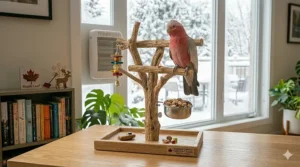
This compact Tabletop T-Stand offers Canadian parrot owners an affordable entry point into dedicated training equipment. Made from natural pine wood with a weighted base, it’s designed specifically for cockatiels, lovebirds, budgies, and parrotlets.
Key Specifications:
- Dimensions: 9.1″L × 5.3″W × 5.7″H
- Perch diameter: 3/4 inch (ideal for small beaks)
- Base: Wood with removable plastic tray
- Assembly: 4 screws included
CAD Pricing: $35-$45 with free shipping on Amazon.ca
Perfect for apartment dwellers in Toronto, Vancouver, or Montreal where space comes at a premium. The stand fits easily on kitchen counters or side tables, letting you keep your small parrot nearby during meal prep or work-from-home sessions. Several reviewers noted the lightweight construction, which is great for portability but less ideal if your bird is an enthusiastic launcher.
✅ Pros:
- Extremely affordable for Canadian market
- Takes up minimal space
- Easy to clean plastic tray
❌ Cons:
- May tip with energetic birds
- Assembly can be frustrating with misaligned screw holes
Who Should Buy: First-time parrot owners with small birds, or anyone needing a portable training perch that travels easily between rooms or to cottages during summer months.
3. PawHut Large Bird Perch Stand with Rolling Base – Multi-Purpose Excellence
The PawHut Rolling Stand combines the functionality of a T-stand with the convenience of a mobile play gym. This Canadian-available option features a sturdy 63-inch height with a 27.2″ × 25.2″ footprint that provides exceptional stability.
Key Specifications:
- Overall height: 63 inches from floor
- Stainless steel disc: 23.6″ diameter platform
- Natural wood perch: 0.87″ diameter × 16.7″ length
- Four rolling wheels (two with locks)
- Two stainless steel feeding bowls included
CAD Pricing: $140-$160 at Canadian retailers
What makes this stand special is the inclusion of three climbing ladders and a toy hook, transforming it from a simple training perch into a complete play station. The gray powder-coated finish resists rust – important for Canadian homes using humidifiers during dry winter months. The wheels make it effortless to move between your living room’s sunny morning spot and the den’s afternoon warmth.
✅ Pros:
- Wheels provide excellent mobility
- Includes food and water bowls
- Large platform offers security for bigger parrots
❌ Cons:
- Larger footprint requires more floor space
- Assembly takes 30-45 minutes
Who Should Buy: Multi-bird households or owners of Amazon parrots, cockatoos, and African Greys who want a combination training stand and enrichment station. Ideal for Canadians who move their birds frequently between rooms.
4. Parrot Training Perch Kit (T Perch, Pair) – Flight Training Specialist
For Canadians serious about flight training, the Parrot Wizard Training Perch Kit provides two matching T-stands that work together for distance flying exercises. This setup is invaluable for teaching recall, building flight muscles, and providing the mental stimulation that prevents feather plucking.
Key Specifications:
- Two adjustable stands: 34″-62″ height range each
- Steel bases for stability
- Compatible with multiple perch diameters
- Tool-free height adjustment
CAD Pricing: $165-$195 for the two-stand kit
Environmental enrichment studies show that flight opportunities can produce significant physical and behavioral benefits for parrots. Having two stands lets you set them at varying distances – start at 3 feet apart for nervous flyers, then gradually increase to 15+ feet as confidence builds. Canadian bird trainers particularly value this during winter months when outdoor flight practice isn’t feasible.
✅ Pros:
- Dual stands enable proper flight training
- Independent height adjustment for each perch
- Can be used separately or together
❌ Cons:
- Requires significant floor space for proper setup
- Investment doubles if you need larger perch diameters
Who Should Buy: Dedicated bird trainers focused on flight recall, free-flight training preparation, or rehabilitating parrots who’ve lost flight confidence. Essential for anyone working toward harness training.
5. Stainless Steel Floor T-Stand with Catch Tray – Premium Durability
The Stainless Steel T-Stand represents the peak of durability and hygiene. Built like commercial aviary equipment, this best T-stand for training sessions features a heavy-duty stainless steel construction that will outlast any powder-coated alternative.
Key Specifications:
- Total height: 54 inches fixed
- Perch length: 20 inches of natural wood
- Catch tray: 24″ diameter stainless steel
- Base weight: 18-20 lbs for maximum stability
CAD Pricing: $200-$240 depending on retailer
Stainless steel stands make cleaning effortless – just spray down with avian-safe disinfectant and wipe. This matters tremendously in Canadian homes where we can’t always take equipment outside for deep cleaning during winter. The substantial weight prevents tipping even with large birds, and the rust-proof construction means it’ll look pristine for decades.
✅ Pros:
- Stainless steel resists bacteria and rust
- Exceptional stability for large parrots
- Professional-grade construction
❌ Cons:
- Highest price point in this comparison
- Heavy weight makes relocation difficult
Who Should Buy: Serious avian enthusiasts with large parrots (African Greys, Amazons, Cockatoos, Macaws) who prioritize hygiene and durability over portability. Perfect for breeders or multi-bird households where equipment sees heavy daily use.

6. Adjustable Height Tripod Bird Stand – Versatile Value
The Tripod Training Stand offers exceptional height adjustability from 16 to 63 inches, making it adaptable as your bird grows or if you keep multiple species of varying sizes. The tripod base design provides stability without the bulk of traditional weighted bases.
Key Specifications:
- Height range: 16″-63″ with telescoping pole
- Perch material: Natural pepper wood
- Includes: Feeding cups and swing toy
- Base: Three-leg tripod design
CAD Pricing: $55-$75 on Amazon.ca
This adjustable height T-stand perch shines for Canadian families who might upgrade bird sizes over time. Start with a cockatiel at 24 inches, then raise it to 48 inches when you adopt that dream African Grey. The tripod legs fold for storage – ideal for snowbirds who split time between Canadian homes and winter destinations.
✅ Pros:
- Extreme height versatility
- Foldable legs save storage space
- Includes feeding accessories
❌ Cons:
- Tripod base less stable than weighted disc
- Outdoor use limited by leg design
Who Should Buy: Canadian families with growing birds, multiple parrots of different sizes, or anyone needing maximum adjustability. Great for seasonal cottage use where storage space is limited.
7. Weighted Base Tabletop Training Perch – Compact Powerhouse
This weighted base stand solves the biggest complaint about budget T-stands: stability. By incorporating a heavy base into a compact footprint, it delivers serious performance for conures, Senegals, and similar mid-sized parrots.
Key Specifications:
- Platform dimensions: 14″ × 10.25″ base
- Overall height: 10.5 inches
- Perch diameter: 3/4 inch
- Base material: Weighted steel plate
CAD Pricing: $40-$50 with Prime shipping
What impressed Canadian reviewers most was the thoughtful engineering. The low centre of gravity means even enthusiastic sun conures can’t tip it during vigorous play. It’s perfect for kitchen counters where you want your parrot nearby but don’t have floor space for full-size stands. The compact size also makes it ideal for RV travel or cottage trips across Canada’s beautiful provinces.
✅ Pros:
- Weighted base prevents tipping
- Compact enough for countertops
- Affordable price point
❌ Cons:
- Fixed height limits versatility
- Small perch length (some birds prefer more space)
Who Should Buy: Owners of conures, Quakers, cockatiels, and similarly-sized parrots who need reliable tabletop training equipment. Excellent as a secondary stand for different rooms or travel purposes.
Understanding Parrot T-Stands: What Makes Them Essential Training Tools
A parrot T-stand serves as a minimalist training platform that eliminates distractions found on elaborate play gyms. Think of it as the avian equivalent of a focus room – no toys, minimal visual clutter, just you and your bird working together on skills development.
The “T” shape isn’t arbitrary. Parrots possess brain-to-body ratios comparable to higher primates, meaning they’re highly intelligent but also easily distracted. The simple horizontal perch provides just enough space for comfortable standing and turning, while the vertical pole offers minimal climbing opportunities. This design psychology keeps your parrot’s attention on you rather than exploring surroundings.
What Is a Parrot T-Stand?
A parrot T-stand is a freestanding training perch consisting of a horizontal wooden or rope perch mounted perpendicular to a vertical pole, which attaches to a weighted or tripod base. Modern versions often include catch trays, feeding bowls, or adjustable heights, but the core concept remains: providing a dedicated, distraction-free training environment.
Unlike play stands with multiple levels, swings, and toys, T-stands deliberately keep things simple. This proves invaluable when teaching complex behaviors like step-up commands, flight recall, or even potty training. Your parrot learns to associate this specific perch with work time rather than play time.
The Science Behind Training Stand Success
Why do professional bird trainers worldwide rely on T-stands? The answer lies in behavioral psychology and avian cognition. Alex the African Grey parrot demonstrated intelligence comparable to a five-year-old human in some respects, showing parrots have remarkable learning capabilities when given proper training environments.
T-stands create consistency. Birds thrive on routine, and using the same training location helps establish clear expectations. When your conure sees the T-stand, their brain shifts into learning mode because they’ve formed positive associations through repetition and rewards.
The elevated position also matters tremendously. In nature, higher perches signal safety and status. By training your parrot on an elevated T-stand (rather than floor level), you work with their natural comfort zones while maintaining good eye contact for communication.
How to Choose the Best Parrot T-Stand in Canada
Selecting the right portable training perch requires matching product features to your specific situation. Canadian buyers face unique considerations beyond basic bird size compatibility.
Consider Your Parrot’s Size and Weight
This is non-negotiable. A budgie weighing 30 grams needs dramatically different support than a blue-and-gold macaw tipping scales at 1,000 grams. Here’s how to match size correctly:
Small Birds (Budgies, Parrotlets, Lovebirds): Choose perches with 1/2″ to 3/4″ diameter and tabletop bases. These birds don’t generate enough landing force to require heavy-duty floor stands.
Medium Birds (Cockatiels, Conures, Senegals, Caiques): Look for 3/4″ to 1″ perch diameters with moderate base weight (8-15 lbs). These active birds need stability without excessive bulk.
Large Birds (African Greys, Amazons, Small Cockatoos): Require 1″ to 1-1/4″ perches and heavy bases (15-20+ lbs). Their powerful leg muscles and enthusiastic landings demand serious stability.
Extra-Large Birds (Macaws, Large Cockatoos): Need 1-1/4″ to 1-3/4″ perches and maximum stability. Consider floor stands with wide footprints rather than tripod designs.
Evaluating Base Stability and Weight
Canadian homes often feature hardwood or tile floors that won’t prevent stands from sliding like carpeting might. Many users report stability issues with lighter bases when training larger parrots, with stands tipping or shifting during landings.
The physics are straightforward: a lower centre of gravity with distributed weight prevents tipping better than tall, narrow bases. Weighted disc bases outperform tripod designs for stability, though tripods excel at folding for storage. For winter storage in Canadian basements or cottages, this trade-off becomes important.
Test the stability rating this way: if the base weighs less than your bird, expect some movement. For serious training with medium to large parrots, aim for bases weighing at least 2-3 times your bird’s weight.
Height Adjustability: Fixed vs. Telescoping
Adjustable height T-stand perch options provide flexibility as your bird matures or your training goals evolve. A telescoping pole lets you start low with a nervous rescue bird, then gradually raise height as confidence builds. This matters tremendously for flight training recall – you want the landing perch at appropriate heights for different distance challenges.
Fixed-height stands cost less and offer no moving parts to maintain, but they lock you into one position. Canadian families with multiple birds often prefer fixed heights specific to each species, running two or three different stands rather than constantly adjusting one.
Think about your training goals. Trick training often works best at eye level (human eye level, that is), while potty training benefits from slightly lower positions. Flight recall training demands variable heights. Match the stand’s capabilities to your intended use.
Material Matters: Wood, Metal, and Perch Selection
The perch material directly impacts your parrot’s foot health. Research on avian enrichment shows that different perch textures and diameters provide essential foot exercise and prevent discomfort or injury. Natural wood perches with varying diameters promote circulation and prevent pressure sores from developing.
Natural Wood Perches: Provide texture variety, comfortable grip, and natural chewing opportunities. Look for hardwoods like manzanita or java wood that resist aggressive chewers. The irregular diameter exercises foot muscles naturally.
Rope Perches: Soft and comfortable but require frequent replacement as they fray. Not ideal for T-stands where simplicity helps focus.
Dowel Perches: Uniform diameter makes them less ideal for extended use. Best reserved for short training sessions rather than all-day perching.
For Canadian climates, consider how materials react to humidity changes. Natural wood can crack in overly dry heated homes unless you run humidifiers. Stainless steel components resist rust better in high-humidity environments near coasts.
The T-Stand with Food Bowls Question
Should your training stand include feeding bowls? The answer depends on training philosophy. Traditional trainers prefer keeping food separate from the training stand to maintain its association with work rather than casual hanging out. However, T-stand with food bowls for parrots offers convenience when you’re building perch confidence in nervous birds.
If choosing an integrated bowl design, ensure dishes are stainless steel rather than plastic. Canadian health regulations and veterinary recommendations emphasize stainless steel’s hygiene benefits – it won’t harbor bacteria in microscopic scratches like plastic will. Plus, stainless withstands dishwasher cleaning without degrading.
Consider whether you’ll use the stand for actual training sessions or as a general hanging-out spot. For dedicated training, skip the bowls. For a dual-purpose perch where your bird spends extended time, bowls add convenience.
Portability for Canadian Lifestyles
Many Canadian bird owners split time between city homes and lake cottages during summer, or move birds between heated rooms during winter. A portable training perch that disassembles easily becomes essential rather than optional.
Look for tool-free assembly mechanisms rather than designs requiring screwdrivers or wrenches. The best portable stands break down to three or four main components that fit in a car trunk alongside other cottage supplies. Weight matters too – a 5-pound portable stand beats a 20-pound floor model when you’re loading the car for a weekend at the lake.
Some families maintain separate stands at each location, which eliminates transport hassles entirely. At $35-50 for basic models, doubling up costs less than one tank of gas for the drive.
Training Techniques: Maximizing Your T-Stand Investment
Owning a great T-stand represents just the beginning. The real magic happens when you implement proper training techniques that leverage this tool’s unique advantages.
Setting Up for Success
Location selection makes or breaks training effectiveness. Choose a quiet area with minimal visual distractions – not facing windows where outdoor birds or squirrels might capture attention. Canadian homes often have perfect spots in hallways or spare bedrooms during winter months when we’re mostly indoors.
Lighting matters more than most people realize. Natural daylight helps maintain your parrot’s circadian rhythm and improves their ability to see your hand signals clearly. Position the T-stand near windows (but not drafty ones) for morning training sessions when parrots are naturally most alert.
Temperature control seems obvious but gets overlooked. Parrots concentrate better in comfortable conditions – aim for 18-24°C (65-75°F). Canadian winter heating can create dry air that irritates respiratory systems, so run a humidifier nearby to maintain 40-60% relative humidity.
Flight Recall Training Essentials
Flight recall represents one of the most important skills you can teach. It builds the foundation for harness training, free flight work, and emergency recall if your parrot escapes through an open door (a real concern during brief Canadian summers when everyone opens windows).
Start with two training stands placed 2-3 feet apart. Call your parrot from one perch to the other using their favorite treat as motivation. Flight provides significant physical and behavioral benefits for parrots, promoting muscle development and mental enrichment.
Gradually increase distance as confidence builds. Most parrots progress from 3 feet to 15 feet within 2-4 weeks of consistent training. By summer, you might achieve 30+ foot recalls across your backyard. The T-stands make this progression manageable because you can reposition them easily to adjust difficulty.
Trick Training and Mental Enrichment
T-stands excel at teaching tricks because their simplicity prevents distractions. Start with fundamentals like “wave,” “turn around,” or “shake hands.” The elevated platform gives you perfect ergonomics – no bending over, no neck strain, just comfortable face-to-face interaction.
Studies on parrot cognition have shown that African Grey parrots can perform cognitive tasks at levels beyond those of five-year-old children in specific tests, suggesting parrots possess tremendous capacity for learning complex behaviors. Your T-stand becomes the stage where this intelligence shines.
Work in short sessions – 5 to 10 minutes maximum. Parrots have excellent focus but limited attention spans. Three brief sessions daily beat one exhausting marathon session. Canadian winter schedules work perfectly for this: morning session before work, lunchtime practice if working from home, and evening review after dinner.
Socialization and Confidence Building
Nervous rescues or hand-shy parrots benefit enormously from T-stand work. The elevated perch provides security while keeping them in your presence. Start by simply sitting near the stand while reading or working on your laptop. Let them acclimate to your presence without pressure.
Progress to offering treats from your hand, then step-up training once they’re comfortable. The T-stand’s height makes step-ups natural – your hand appears at the same level as the perch, reducing the “step down” hesitation many parrots exhibit.
For parrots with flight ability, the stand becomes a confidence builder. They can choose to fly to you or stay put, which gives them control over interactions. This choice reduces stress and accelerates trust development.
Common Mistakes Canadian Buyers Should Avoid
Learning from others’ errors saves money and frustration. Here are the top mistakes we’ve observed among Canadian parrot owners purchasing their first training stands.
Buying Too Small: The False Economy Trap
The temptation to save $50 by choosing a smaller stand often backfires. A cockatiel-sized stand won’t safely support the African Grey you adopt next year. Birds grow, families expand, and training goals evolve. Buying appropriate-sized equipment initially costs less than replacing undersized purchases.
Consider your five-year bird plan. Will you upgrade species? Add more parrots? Invest in the stand that accommodates those goals now. The price difference between small and medium sizes typically runs just $20-40 CAD – negligible compared to replacing a too-small stand entirely.
Ignoring Shipping Costs and Import Fees
Amazon.ca might list a stand at $79, but shipping from US sellers can add another $50-80. Then Canadian customs might assess duty fees on top. Suddenly that “bargain” costs more than the $140 Canadian product with free Prime shipping.
Always check the seller location and shipping terms. “Ships from and sold by Amazon.ca” means no surprises. Third-party sellers shipping from the US or overseas create unpredictability. For heavy items like floor stands, those international shipping charges can double your final cost.
Overlooking Base Design for Your Flooring
Tripod bases work wonderfully on carpet where the legs grip fiber. On hardwood, tile, or laminate? They slide with every landing. Canadian homes increasingly feature hard flooring, making weighted disc bases the safer choice for stability.
Conversely, wide flat bases might damage softwood floors under concentrated weight. Consider felt pads or furniture coasters for hardwood protection. A $5 pack of felt pads beats refinishing scratched floors.
Choosing Looks Over Functionality
Pinterest-worthy decorative bird stands photograph beautifully but often fail practical testing. Ornate designs with multiple perches, baskets, and accessories look impressive but defeat the T-stand’s purpose: providing a distraction-free training environment.
Remember that you’re buying a training tool, not furniture. The simplest designs typically perform best. Save the elaborate play gyms for enrichment time; keep your T-stand purposefully minimal.
Neglecting Reviews from Fellow Canadian Users
US reviews don’t account for Canadian-specific concerns: shipping delays, cold-weather material performance, or voltage differences for heated perches. Filter reviews by verified Canadian purchases when possible.
Look for mentions of shipping packaging quality – Canadian packages travel farther and colder than most US deliveries. Stands arriving with damage indicate poor packaging that US reviewers might not experience as frequently.
Maintenance and Care: Keeping Your T-Stand in Perfect Condition
Proper maintenance extends your stand’s lifespan while ensuring hygiene for your feathered friend. Canadian climates create specific care requirements different from tropical or desert environments.
Daily Cleaning Routines
Spot-clean droppings immediately using avian-safe disinfectant sprays. Perches collect bacteria quickly in moist environments, and Canadian homes often run humidifiers during dry winter months. This humidity benefits parrots but requires vigilant cleaning.
Wipe down metal components with damp cloths to remove dust and dander. Stainless steel stands tolerate spray-and-wipe cleaning daily, while powder-coated finishes need gentler treatment to avoid scratching protective layers.
Weekly Deep Cleaning
Remove perches for thorough scrubbing with hot water and bird-safe soap. Natural wood perches benefit from periodic sanding to remove surface bacteria and restore texture. Keep spare perches on rotation so your parrot always has clean options while others dry.
Inspect all connections weekly. Several users report perches unscrewing during use, creating safety hazards. Tighten all fasteners and check that telescoping poles lock securely at your chosen height.
Disinfect catch trays using diluted vinegar solution or avian-safe commercial cleaners. Avoid bleach near birds – even residual fumes cause respiratory issues. Canadian veterinary guidelines recommend bird-safe enzymatic cleaners that break down organic waste effectively.
Seasonal Considerations for Canadian Climates
Winter dry air causes wood to contract, potentially loosening connections. Check tightness monthly during heating season. Conversely, summer humidity makes wood expand. Never over-tighten screws in summer or they’ll strip when wood shrinks come winter.
Store unused stands in climate-controlled areas rather than unheated garages or sheds. Temperature extremes damage powder coating and can warp wooden bases. If you’re a snowbird leaving for winter, disassemble stands and store components wrapped in moving blankets.
Metal stands might require rust prevention in humid coastal areas like Vancouver or Halifax. Apply food-safe mineral oil to exposed metal (not powder-coated sections) before extended storage.
When to Replace Components
Perches need replacement every 6-18 months depending on your bird’s chewing intensity. Heavily-chewed perches develop rough edges that damage feet. Watch for splinters or deep grooves where bacteria colonize.
Rope perches fray faster and require monthly inspection. Any exposed core threads mean immediate replacement – ingested rope fibers cause crop impaction that requires emergency veterinary care.
Weighted bases rarely fail structurally, but powder coating chips over years. Touch up chips with avian-safe paint to prevent rust formation. Stainless steel bases essentially last forever with basic care.
Safety Considerations: Protecting Your Parrot
Your parrot’s safety depends on proper T-stand setup and supervision. Understanding potential hazards prevents tragic accidents.
Preventing Falls and Injuries
Position floor stands away from furniture edges. An enthusiastic landing that misses the perch shouldn’t result in collision with coffee tables or wall corners. Maintain at least 2 feet clearance on all sides.
For very small or clumsy birds, consider placing yoga mats or thick blankets beneath the stand. This cushions unexpected falls while your parrot builds confidence. Older birds or those recovering from illness particularly benefit from fall protection.
Never place stands near ceiling fans, even when fans are off. Parrots can fly upward when startled and ceiling fan blades pose decapitation risks. Canadian homes often have fans for summer cooling and winter heat circulation – both seasons require vigilance.
Choosing Non-Toxic Materials
All components touching your parrot must be non-toxic. Natural wood perches should avoid treated lumber (which contains arsenic compounds) and certain toxic species like cedar or oak. Safe choices include manzanita, java wood, dragon wood, and fruit tree branches.
Metal components must be stainless steel, powder-coated steel, or aluminum. Never use galvanized metal, which contains zinc that causes heavy metal poisoning. Canadian building codes don’t regulate bird toy materials, so research manufacturers’ safety testing.
Rope perches should be 100% cotton or sisal without synthetic blends. Parrots chew everything, and ingested synthetic fibers won’t digest properly. Look for products specifically labeled as bird-safe.
Supervision Requirements
Never leave parrots unsupervised on training stands, especially when you’re first introducing the equipment. Birds can tangle feet in support cables, knock over lightweight stands, or fly into walls if startled.
Training stands work best during active interaction times rather than all-day perching solutions. Once your session ends, return your parrot to their cage where they can relax without fall risks or escape opportunities.
Multi-bird households require extra caution. Territorial disputes can escalate quickly when birds share training equipment. Use separate stands positioned far enough apart that birds can’t reach each other (minimum 6 feet separation).
Budget Planning: Understanding True Costs
Smart Canadian buyers look beyond sticker prices to understand total ownership costs across a stand’s lifespan.
Initial Investment Breakdown
Budget stands ($35-50 CAD) serve small birds adequately but often need replacement within 2-3 years. Mid-range options ($75-150 CAD) balance cost and longevity, typically lasting 5-8 years with proper care. Premium stands ($180-250 CAD) represent lifetime purchases that outlast multiple birds.
Factor in shipping if buying online. Amazon.ca Prime eliminates shipping costs, making Prime membership worth its $99 annual fee if you buy multiple bird supplies yearly. Non-Prime shipping on stands runs $15-35 depending on weight and destination.
Don’t forget accessories: spare perches ($15-25 each), catch trays ($20-40), and food bowls ($8-15 for stainless steel pairs). Budget an additional $50-75 for these essentials.
Ongoing Maintenance Costs
Replacement perches represent the primary ongoing expense. Budget $25-40 annually for new perches as old ones wear out from chewing and cleaning. Aggressive chewers require more frequent replacement.
Cleaning supplies run $30-50 yearly: bird-safe disinfectants, scrub brushes, and replacement tray liners. Canadian costs typically run slightly higher than US prices for imported specialty bird products.
Occasional part replacement (bolts, height adjustment clamps, etc.) costs $10-20 as needed. Quality stands rarely require parts replacement, but cheaper models may need components within 1-2 years.
Cost-Per-Use Analysis
A $200 premium stand used daily for 10 years costs just $0.05 per day. Compare that to a $40 budget stand replaced every 2 years ($0.05 per day) plus your time shopping for replacements. The premium option saves money long-term while delivering superior performance.
Factor in your training commitment. Serious trainers working daily justify premium equipment easily. Casual users might prefer budget options unless they plan to expand their flock or increase training intensity later.
Frequently Asked Questions About Parrot T-Stands in Canada
❓ How tall should a T-stand be for an African Grey parrot?
❓ Can I use a T-stand outdoors during Canadian summers?
❓ What's the difference between a T-stand and a play gym for parrots?
❓ How do I stop my parrot from tipping over the T-stand when landing?
❓ Are portable T-stands sturdy enough for serious training work in Canada?
Conclusion: Making Your Final Decision
Choosing the right parrot T-stands transforms training from frustrating to fulfilling. We’ve examined seven excellent options available to Canadian buyers, each excelling in specific scenarios.
For serious trainers working with medium to large parrots, the Parrot Wizard Training Stand ($180-220 CAD) delivers professional results worth every penny. The adjustable height and independent tray positioning accommodate everything from step-up basics to advanced flight recall. Yes, you’ll address the unscrewing perch issue with periodic tightening, but the training results justify minor maintenance.
Budget-conscious owners of small birds can’t beat the Tabletop Wooden T-Stand ($35-45 CAD) for value. It handles cockatiels, lovebirds, and budgies perfectly while taking minimal space in typical Canadian homes. Just acknowledge its limitations regarding aggressive chewers and very active flyers.
Multi-bird households or those wanting combination training/play functionality should prioritize the PawHut Rolling Perch Stand ($140-160 CAD). The included ladders, food bowls, and mobility features justify the mid-range investment, especially for Canadian owners moving birds between rooms seasonally.
Remember that no single stand serves every purpose perfectly. Many successful Canadian bird trainers maintain 2-3 different stands: a premium adjustable height T-stand perch for serious training sessions, a weighted base stand for casual kitchen interaction, and perhaps a portable training perch for cottage weekends.
Your investment in proper training equipment pays dividends throughout your parrot’s 20-60 year lifespan. Alex the African Grey demonstrated that with proper training environments, parrots can achieve cognitive feats rivaling young human children. Your choice of training stand becomes the foundation where this incredible intelligence flourishes.
Start with equipment matching your current needs and skill level, then expand as your training expertise grows. The Canadian parrot community is supportive and knowledgeable – don’t hesitate to reach out through provincial bird clubs or online forums for specific advice tailored to your situation.
Above all, remember that the best T-stand for training sessions is the one you’ll actually use consistently. Features matter less than regular practice. Even a basic $40 stand with daily training beats a $200 premium model gathering dust in the basement.
✨ Don’t Miss These Exclusive Deals!
🔍 Take your parrot training to the next level with these carefully selected products available in Canada. Click on any highlighted item to check current pricing and availability on Amazon.ca. These tools will help you create authentic training results your feathered family member will love!
Recommended for You
- Best Natural Java Tree Bird Stand in Canada 2026 (Top 7 Picks)
- Best Bird Play Gyms in Canada 2026: 7 Top Picks Reviewed
- 7 Best Play Top Bird Cages in Canada 2026 (Expert Picks)
Disclaimer: This article contains affiliate links to Amazon.ca. If you purchase products through these links, we may earn a small commission at no additional cost to you.
✨ Found this helpful? Share it with your friends! 💬🤗
