
In This Article
Picture this: you’ve just bought a beautiful cedar birdhouse, eager to welcome chickadees and nuthatches to your backyard. But then you pause—should you mount it on that sturdy oak tree or invest in a standalone pole? This decision matters more than you might think, and honestly, I’ve seen too many well-intentioned bird lovers make choices that leave their nests vulnerable.
The tree vs pole mount which is better debate isn’t just about aesthetics or convenience. According to research from the Cornell Lab of Ornithology, pole-mounted boxes with predator guards show 6.7% higher nesting success rates compared to tree-mounted alternatives. That’s the difference between watching baby birds fledge successfully and finding an empty nest raided by predators.
In Canada, where we share our spaces with raccoons, squirrels, cats, and even the occasional black bear depending on your province, your mounting choice becomes even more critical. Whether you’re in suburban Toronto dealing with urban raccoons or rural Saskatchewan watching for climbing predators, understanding the nuances between tree mount birdhouse bracket systems and pole installations will help you create a safer haven for cavity-nesting birds.
Throughout this guide, we’ll explore everything from tree mount birdhouse bracket designs to fence post birdhouse adapter options, diving deep into birdhouse mounting hardware stainless steel choices, mounting location considerations, stability comparison methods, and crucial predator access prevention strategies. By the end, you’ll know exactly which system works best for your specific situation.
Quick Comparison Table
| Feature | Tree Mount | Pole Mount |
|---|---|---|
| Installation Time | 10-15 minutes | 20-30 minutes |
| Predator Protection | Moderate (requires guards) | Excellent (with baffles) |
| Cost (CAD) | $15-$45 | $55-$125 |
| Stability | Excellent (grows with tree) | Very Good (requires solid base) |
| Maintenance Access | Moderate difficulty | Easy access |
| Location Flexibility | Limited to tree placement | High flexibility |
| Longevity | 5-10 years | 10-20 years |
| Best For | Established wooded yards | Open spaces, gardens |
💬 Just one click – help others make better buying decisions too!😊
Top 7 Birdhouse Mounting Solutions: Expert Analysis
1. Blulu Bird House Hanger Bracket – Best Budget Tree Mount
The Blulu Bird House Hanger Bracket delivers exceptional value for Canadian backyard birders who want reliable tree mounting without breaking the bank. This galvanized steel mounting system features a clever keyhole design that makes seasonal maintenance remarkably simple.
Key Specifications:
- Material: Galvanized steel with rust-proof coating
- Dimensions: 15.2 cm x 2.5 cm
- Weight capacity: Up to 6.8 kg (15 lbs)
Canadian Pricing: $18-$24 CAD for a 2-pack set
This mounting bracket works beautifully on mature trees with bark thickness of at least 2.5 cm. Canadian customers particularly appreciate how the galvanized finish holds up through our harsh winters—one reviewer from Thunder Bay reported zero rust after three full winter seasons. The raised hook design allows you to lift your birdhouse off for cleaning in about five seconds, which is perfect for maintaining bluebird houses that need frequent monitoring.
✅ Pros:
- Excellent rust resistance for Canadian winters
- Quick-release design for easy cleaning
- Includes all mounting screws
- Budget-friendly for multiple installations
❌ Cons:
- May require pilot holes in hardwood trees
- Not suitable for young saplings
2. Sungaryard 90-Inch Heavy Duty Bird House Pole Mount Kit – Premium Pole Solution
For those serious about pole mounting, the Sungaryard 90-Inch Heavy Duty Bird House Pole Mount Kit represents the gold standard available on Amazon.ca. This isn’t just a pole stuck in the ground—it’s an engineered system designed to withstand prairie winds and keep predators at bay.
Key Specifications:
- Total height: 228 cm (90 inches) adjustable
- Pole diameter: 2.5 cm with powder-coated finish
- Base: 5-prong steel design, 38 cm width
Canadian Pricing: $75-$95 CAD
The adjustable height feature (you can set it at 76 cm, 114 cm, 152 cm, 190 cm, or full 228 cm) makes this perfect for attracting different species. Bluebirds prefer 122-152 cm heights, while wrens and chickadees feel safer at 183-244 cm according to Canadian Wildlife Federation guidelines. Manitoba customers love how the auger base digs deep enough to stay solid through spring thaw cycles.
✅ Pros:
- Multiple height configurations
- Heavy-duty construction handles Canadian weather
- 5-prong base provides exceptional stability
- Includes mounting platforms
❌ Cons:
- Higher initial investment
- Requires space for auger installation
3. Erva Birdhouse Mounting Flange – Professional-Grade Tree Adapter
The Erva Birdhouse Mounting Flange offers a professional solution that serious bird enthusiasts across Canada trust. Made in the USA with a durable black powder-coat finish, this 7.6 cm diameter flange provides rock-solid mounting for wooden or recycled plastic birdhouses.
Key Specifications:
- Material: Powder-coated steel
- Flange diameter: 7.6 cm (3 inches)
- Compatible with standard mounting holes
Canadian Pricing: $22-$28 CAD
This system works exceptionally well as both a tree mount birdhouse bracket and a fence post birdhouse adapter. The generous flange size distributes weight effectively, preventing the bark damage that can occur with smaller brackets over time. Wildlife rehabilitators in British Columbia recommend this for mounting bluebird trails because it creates minimal tree stress while maintaining accessibility.
✅ Pros:
- Versatile mounting (trees, posts, or fences)
- Distributes weight to prevent bark damage
- Professional-grade construction
- Compatible with most birdhouse designs
❌ Cons:
- Requires proper screw selection for different surfaces
- More expensive than basic brackets
4. Mokeyder 90-Inch Adjustable Bird Feeder Pole – Best Value Pole System
The Mokeyder 90-Inch Adjustable Bird Feeder Pole brings remarkable features to the mid-range price category. This Canadian-favourite pole system includes innovative design elements that make installation and adjustment straightforward even for first-time birders.
Key Specifications:
- Maximum height: 228 cm with 5 extension sections
- Base: 38 cm extended 5-fork ground anchor
- Maximum load: 15.9 kg (35 lbs)
Canadian Pricing: $62-$78 CAD
What sets Mokeyder apart is the dual-style mounting plate system. You can attach your birdhouse to the top mounting platform or use the side-mounting bracket—perfect for creating multi-level feeding and nesting stations. Customers in Saskatchewan praise how the extended 5-fork base stays secure in clay soils that challenge shorter stakes. The rust-proof coating withstands our temperature swings from -40°C winters to +35°C summers.
✅ Pros:
- Exceptional stability in various soil types
- Dual mounting options (top and side)
- Adjustable to multiple heights
- Great value for features offered
❌ Cons:
- Assembly requires 30-40 minutes
- Heavy when fully extended (consider wind exposure)
5. LOVYNO Stainless Steel Bird Nest Mounting Bracket – Premium Tree Mount
The LOVYNO Stainless Steel Bird Nest Mounting Bracket represents the top tier of tree mounting hardware. Unlike galvanized options, true stainless steel offers unmatched corrosion resistance—essential for coastal Canadian environments or areas with acid rain concerns.
Key Specifications:
- Material: Grade 304 stainless steel
- Load capacity: 9 kg (20 lbs)
- Includes 8 screws and expansion hardware
Canadian Pricing: $28-$36 CAD for 2-pack
This birdhouse mounting hardware stainless steel option proves its worth in challenging conditions. Bird enthusiasts in Halifax and Vancouver—both cities with high humidity and salt air—report zero corrosion even after five years. The reinforced design handles heavier cedar or recycled plastic houses without sagging. Each set includes both wood screws for tree mounting and expansion screws for fence posts, making it incredibly versatile.
✅ Pros:
- Superior corrosion resistance (ideal for coastal areas)
- Higher weight capacity than standard brackets
- Versatile hardware for different surfaces
- Lifetime durability
❌ Cons:
- Premium price point
- Overkill for lightweight houses
6. Gtongoko Smart Bird Feeder Pole 79-Inch – Modern Integration Design
The Gtongoko Smart Bird Feeder Pole 79-Inch addresses the growing trend of smart birdhouses with camera systems. This heavy-duty metal mounting kit provides stable support for tech-enabled birdhouses that require steady positioning for clear video capture.
Key Specifications:
- Height: 200 cm (79 inches)
- Pole diameter: 2.5 cm
- Base: 5-prong reinforced ground anchor
Canadian Pricing: $58-$72 CAD
Canadian bird watchers using products like Bird Buddy cameras appreciate how this pole minimizes vibration—crucial for clear photo and video capture. The black powder coating doesn’t just prevent rust; it also reduces glare that might startle birds. Quebec customers note how the design handles freeze-thaw cycles without loosening, maintaining camera stability through seasonal changes.
✅ Pros:
- Minimal vibration for camera equipment
- Sleek modern appearance
- Excellent for tech-integrated birdhouses
- Strong performance in freeze-thaw conditions
❌ Cons:
- Slightly shorter than some competitors
- Limited height adjustment options
7. Urban Nature Store Birdhouse Mounting Bracket – Canadian Small Business Choice
Supporting Canadian businesses while getting quality products? The Urban Nature Store Birdhouse Mounting Bracket from St. Catharines, Ontario, delivers both. This zinc-plated bracket with brass-colour finish combines functionality with aesthetic appeal.
Key Specifications:
- Length: 13.3 cm (5.25 inches)
- Width: 2.5 cm (1 inch)
- Finish: Zinc plated with brass coating
Canadian Pricing: $16-$21 CAD
This locally-made product features keyhole cutouts that make seasonal maintenance effortless—a critical feature since the Canadian Wildlife Federation recommends cleaning birdhouses at least once annually to eliminate parasites. The brass finish provides extreme corrosion resistance while blending beautifully with natural wood birdhouses. Ontario birders appreciate supporting a local company that understands Canadian wildlife needs.
✅ Pros:
- Canadian company with local customer service
- Beautiful brass finish complements wood
- Quick-release keyhole design
- Includes wood screws
❌ Cons:
- Regional shipping may be slower for Western Canada
- Smaller than some heavy-duty options
✨ Don’t Miss These Exclusive Deals!
🔍 Take your backyard birding to the next level with these carefully selected products available in Canada. Click on any highlighted item to check current pricing and availability on Amazon.ca. These tools will help you create authentic nesting habitats your feathered friends will love!
Understanding Mounting Location Considerations
Choosing where to mount your birdhouse involves more than just picking a convenient spot. Mounting location considerations encompass height requirements, predator proximity, sunlight exposure, and species-specific preferences that vary across Canada’s diverse ecosystems.
Height Requirements by Species
Different cavity-nesting birds have distinct height preferences based on their natural nesting behaviours. Bluebirds, which historically nested in old fence posts and low tree cavities, prefer heights between 122-183 cm (4-6 feet). This places them above ground predators while remaining accessible for nest checks. Chickadees and nuthatches, being more arboreal, feel comfortable at 183-305 cm (6-10 feet), heights that mimic natural tree cavities.
According to research cited by the Texas Parks and Wildlife Department, mounting at species-appropriate heights can increase nesting success by up to 40%. In Canadian contexts, this becomes even more important when dealing with regional variations. For instance, Western Bluebirds in British Columbia may accept slightly higher placements than Eastern Bluebirds in Ontario, reflecting their different habitat adaptations.
Distance from Trees and Structures
The proximity rule matters tremendously for predator access prevention. Cats can leap up to 152 cm (5 feet) vertically and 244 cm (8 feet) horizontally. Raccoons possess remarkable problem-solving abilities and can bridge gaps of 122 cm between structures. Therefore, pole-mounted houses should stand at least 244 cm from trees, fences, or buildings that could serve as launching points.
Tree-mounted installations face different challenges. While the tree itself provides the mounting point, overhanging branches from nearby trees can create predator highways. Ontario birders report that red squirrels excel at tight-rope walking along thin branches that seem impossibly narrow, making branch clearance of at least 183 cm essential in areas with active squirrel populations.
Directional Orientation
The birdhouse entrance should face east to southeast in most Canadian regions. This orientation provides morning sun warmth—critical during spring when temperatures can still dip below freezing at night—while avoiding harsh afternoon western sun that can overheat nestlings. In southern Ontario and British Columbia’s Lower Mainland, where summer temperatures regularly exceed 30°C, eastern orientation becomes essential for temperature regulation.
However, prevailing winds require consideration too. Prairie provinces experience strong westerly and northwesterly winds that can drive rain into east-facing entrances. In these regions, a southeast orientation (around 135 degrees) provides the best compromise between morning sun and wind protection.

Stability Comparison Methods: Testing Your Setup
How do you know if your mounting system will withstand a season’s worth of weather, curious predators, and active nesting birds? Stability comparison methods help you evaluate whether your installation will last or fail at the worst possible moment.
The Shake Test
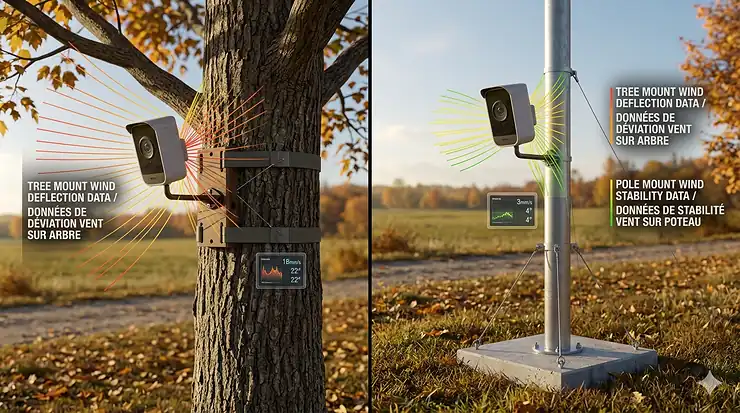
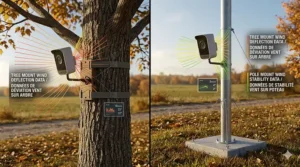
After installation, grasp the birdhouse firmly and apply moderate side-to-side pressure. A properly mounted pole system should exhibit less than 2.5 cm of movement at the top. Tree-mounted brackets should show virtually zero movement—the tree itself provides the stability. If you detect significant wobbling, the mounting isn’t secure enough.
For pole systems, check the base separately. Step on the ground around the base while watching for movement. The pole should remain rigid even when you apply your full weight (within reason) to the surrounding soil. In areas with clay soils that expand and contract with moisture, seasonal checking becomes necessary—spring thaw often reveals loosened installations that need tightening.
Load Testing
Before introducing birds, test your mounting hardware with weight. Most birdhouses weigh 900-1800 grams empty. Add 450 grams for nesting material, 150 grams for an adult bird, and potentially 600 grams for a full clutch of nestlings. Your mounting system should comfortably support 2.3-3.2 kg (5-7 lbs) without sagging or tilting.
Place a weight approximating a fully occupied nest inside the house and monitor for 48 hours. Check for gradual tilting, bracket sagging, or screw withdrawal. Tree mount birdhouse bracket systems particularly need this verification—wood screws can gradually pull out of softer woods like pine under sustained load.
Weather Resistance Evaluation
Canadian weather tests every outdoor structure. Simulate wind loading by gently pushing on the house from different angles, mimicking 40-50 km/h wind gusts. The system should resist without significant deflection. For pole mounts in exposed locations, consider how seasonal storms might impact stability.
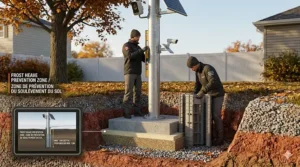
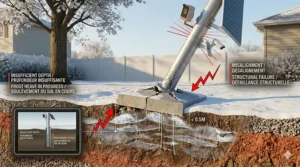
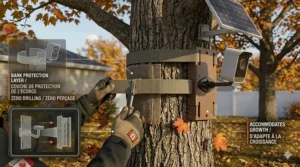
Winter presents unique challenges. In regions experiencing freeze-thaw cycles, ground-mounted poles can heave upward or tilt as soil freezes and expands. Check installations after the first hard freeze and again in early spring. Tree-mounted systems must account for bark expansion and contraction—screws too tight in summer can girdle growing bark, while loose summer mounting may fail in winter when wood contracts.
Predator Access Prevention: Your First Line of Defense
Nothing breaks a bird lover’s heart faster than discovering a raided nest. Predator access prevention strategies form the critical difference between successful nesting and tragedy, and the mounting method you choose fundamentally shapes your defensive options.
Understanding Canadian Predators
Canada hosts several primary nest predators, each requiring different deterrent strategies. Raccoons remain the most problematic across both urban and rural areas. These intelligent omnivores possess remarkable problem-solving abilities and opposable thumbs that can manipulate simple latches. They typically raid nests at night, reaching into entrance holes from atop the birdhouse.
Domestic and feral cats present the next major threat, particularly in suburban environments. While cats can’t typically reach into a properly designed house, they excel at timing—waiting at the entrance for fledglings to emerge. Red squirrels and chipmunks raid eggs and nestlings opportunistically, often during midday when parent birds forage.
In some Canadian regions, additional predators complicate matters. Black rat snakes (in southern Ontario) climb with remarkable efficiency. Crows and Blue Jays sometimes raid accessible nests. Even black bears have been known to destroy poorly mounted houses in search of protein-rich nestlings.
Tree Mount Protective Measures
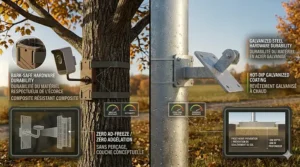
Tree-mounted houses face inherent predator challenges because the tree itself provides predator access. Wrapping sheet metal around the trunk below the house creates a climbing barrier, but it must extend at least 61 cm above and below the mounting point to prevent predators from simply reaching around it. The metal should be smooth and at least 60 cm tall to prevent climbing entirely.
Noel predator guards—entrance hole extenders that project outward 10-13 cm—prevent raccoons from reaching inside while birds can easily navigate the tunnel. According to Cornell’s NestWatch research, these guards combined with proper roof overhangs significantly reduce predation. The roof must extend at least 13 cm beyond the entrance to prevent roof-sitting predators from reaching inside.
Entrance hole size matters tremendously for predator exclusion. Chickadees and nuthatches successfully nest in 2.8 cm (1-1/8 inch) holes—too small for European Starlings. Bluebirds require 3.8 cm (1-1/2 inch) openings, but metal entrance hole guards prevent squirrels from gnawing the wood to enlarge access.
Pole Mount Protective Measures
Pole mounting offers superior predator protection opportunities. Stovepipe baffles represent the gold standard for climbing predator prevention. These cylindrical guards, typically 15-20 cm diameter and 61 cm long, encircle the pole 122-152 cm above ground. The smooth metal provides no grip, and the diameter prevents predators from reaching around.
Research shows stovepipe baffles significantly reduce nest predation compared to cone-style alternatives. Cone baffles work adequately for bird feeders but prove less reliable for protecting nests—determined raccoons and athletic squirrels sometimes overcome cone designs through persistence and agility.
Placement distance from trees remains crucial even with baffles. A pole standing within 244 cm of a tree allows squirrels and raccoons to leap directly onto the house, bypassing ground-level defenses entirely. In wooded yards, this often means creating clearing zones around pole mounts—sometimes challenging in established landscapes.
Fence Post Adaptations
Fence post birdhouse adapter installations occupy a middle ground between tree and pole mounting. Metal fence posts offer smooth surfaces that resist climbing, while wooden fence posts allow predator access similar to trees. For wooden fence posts, applying a band of sheet metal 46-61 cm wide around the post below the house creates an effective climbing barrier.
T-posts and square metal fence posts provide natural climbing resistance but still require baffles in high-predator areas. The Canadian Wildlife Federation emphasizes that fence-mounted houses should be isolated fence posts rather than sections of continuous fencing, which provides predator highways.
Climate Considerations Across Canadian Regions
Eastern Canada: Humidity and Freeze-Thaw
Ontario, Quebec, and the Maritime provinces experience high humidity and dramatic freeze-thaw cycles that test mounting hardware. Stainless steel components perform better than galvanized options in these conditions, resisting rust even in salt-spray coastal areas. Check all mounting hardware after spring thaw—ground heaving often loosens pole installations that seemed rock-solid in fall.
Prairie Provinces: Wind and Temperature Extremes
Saskatchewan, Manitoba, and Alberta birders contend with powerful winds and temperature swings from -40°C to +35°C. Pole systems need deeper ground anchors here—minimum 61 cm depth prevents wind uplift. Tree bark in these regions becomes extremely brittle in winter; avoid tightening tree-mounted hardware during cold snaps to prevent bark cracking.
Western Canada: Rainfall and Mild Winters
British Columbia’s coastal regions see extreme rainfall, making rust resistance paramount. The mild winters mean year-round bird activity, so mounting systems must accommodate continuous use rather than seasonal installation. Interior BC faces drier conditions but extreme winter cold similar to prairie provinces.
Top 7 Products Comparison Table
| Product | Type | Material | Height/Size | Price (CAD) | Best For | Rating |
|---|---|---|---|---|---|---|
| Blulu Bracket | Tree Mount | Galvanized Steel | 15.2 x 2.5 cm | $18-$24 | Budget tree mounting | ⭐⭐⭐⭐½ |
| Sungaryard 90″ | Pole System | Powder-Coated Steel | 228 cm adjustable | $75-$95 | Premium pole solution | ⭐⭐⭐⭐⭐ |
| Erva Flange | Tree/Fence | Powder-Coated Steel | 7.6 cm flange | $22-$28 | Professional mounting | ⭐⭐⭐⭐⭐ |
| Mokeyder 90″ | Pole System | Rust-Proof Steel | 228 cm adjustable | $62-$78 | Best value pole | ⭐⭐⭐⭐½ |
| LOVYNO Stainless | Tree Mount | SS 304 | 15.2 x 2.5 cm | $28-$36 | Coastal/harsh conditions | ⭐⭐⭐⭐⭐ |
| Gtongoko 79″ | Pole System | Heavy-Duty Metal | 200 cm | $58-$72 | Smart birdhouses | ⭐⭐⭐⭐ |
| Urban Nature | Tree Mount | Zinc/Brass Plated | 13.3 x 2.5 cm | $16-$21 | Canadian-made option | ⭐⭐⭐⭐ |
Benefits Comparison: Tree Mount vs Pole Mount
| Benefit Category | Tree Mount | Pole Mount |
|---|---|---|
| Natural Integration | Blends seamlessly with landscape | More visible but intentional |
| Predator Protection | Requires additional guards/metal wrapping | Excellent with proper baffles |
| Installation Effort | Quick and simple | More complex, requires auger/digging |
| Seasonal Adjustment | Fixed location | Can be relocated easily |
| Maintenance Access | Must climb or use ladder | Ground-level access |
| Cost Over 10 Years | Lower initial, possible replacement | Higher initial, longer lifespan |
| Suitability for Rental Properties | May not be allowed | Easier to remove when moving |
✨ Don’t Miss These Exclusive Deals!
🔍 Take your backyard birding to the next level with these carefully selected products available in Canada. Click on any highlighted item to check current pricing and availability on Amazon.ca. These mounting systems will help you create safe nesting habitats your feathered friends will love!
Installation Best Practices
Tree Mount Installation Steps
- Select the Mounting Tree: Choose a mature, healthy tree with bark thickness of at least 2.5 cm. Avoid trees showing signs of disease or decay. Ensure the mounting location receives morning sun exposure while providing afternoon shade.
- Determine Mounting Height: Measure from ground level to your target height (122-244 cm depending on species). Mark the mounting point with chalk or removable marker.
- Attach the Bracket: Position your tree mount birdhouse bracket against the tree bark. For best results, locate a relatively smooth section of bark. Drill pilot holes using a bit slightly smaller than your screws—this prevents bark cracking while ensuring secure threading.
- Secure Mounting Screws: Insert screws at a slight upward angle (about 10 degrees) to counteract the weight pull. Tighten firmly but not excessively—over-tightening can damage living bark tissue and potentially girdle the tree as it grows.
- Hang the Birdhouse: Lift your prepared birdhouse onto the mounted bracket. Ensure it hangs level—use a small bubble level to verify. An off-kilter house can cause eggs to roll or nestlings to crowd uncomfortably.
Pole Mount Installation Steps
- Choose the Installation Site: Select an open location at least 244 cm from trees, fences, or structures. Ensure the area receives appropriate sun exposure and isn’t prone to standing water.
- Prepare the Ground: Remove sod or vegetation from a 61 cm diameter circle around your planned pole location. This prevents future grass growth from destabilizing the base.
- Install the Auger Base: If using a screw-in auger, step on the base flanges while turning the pole clockwise. Apply steady downward pressure—rushing this step can result in a crooked installation. The auger should penetrate at least 46-61 cm deep.
- Assemble Pole Sections: Connect extension poles according to manufacturer instructions. Most quality systems use threaded connections or locking collars—ensure each connection tightens completely to prevent separation under wind load.
- Attach the Mounting Platform: Secure the top platform or mounting flange. Double-check that any included mounting screws or bolts are tightened firmly—vibration from wind can gradually loosen connections.
- Add Predator Baffles: Install stovepipe or cone baffles 122-152 cm above ground level. The baffle should encircle the pole completely with no gaps that small predators might exploit.
- Mount the Birdhouse: Attach your birdhouse to the platform and verify it’s level and secure. Test stability by gently pushing from multiple directions.
Tree vs Pole Mount: Which is Better for YOUR Situation?
The tree vs pole mount which is better question doesn’t have a universal answer—it depends entirely on your specific circumstances, goals, and backyard environment.
Choose Tree Mounting If:
- You have mature trees in appropriate locations
- Budget is a primary concern ($15-45 CAD vs $55-125 CAD)
- You prefer natural aesthetic integration
- Installation time is limited (15 minutes vs 30+ minutes)
- The yard has limited open space
- You’re willing to implement additional predator protection measures
- Permanent placement is acceptable
Choose Pole Mounting If:
- Predator protection is your top priority
- You have open yard space away from trees
- Easy maintenance access matters to you
- You want location flexibility (can relocate poles)
- Nesting success rate is more important than aesthetics
- You’re establishing a bluebird trail or monitoring program
- Budget allows for higher initial investment with long-term payoff
Consider Hybrid Approaches:
Some experienced Canadian birders use both systems strategically. Tree mounts work well for chickadees and nuthatches that naturally nest in wooded areas, while pole mounts in open spaces attract bluebirds and Tree Swallows that prefer edge habitats. This approach maximizes species diversity while playing to each mounting method’s strengths.
Common Mistakes to Avoid
Mounting Too Close to Bird Feeders
Placing birdhouses near active feeding stations creates multiple problems. Feeders attract House Sparrows and European Starlings—aggressive species that often usurp native bird nests. Feeders also concentrate predators who learn that birds gather there regularly. Maintain at least 9-15 metres between feeders and nesting boxes.
Ignoring Maintenance Requirements
Both mounting systems require seasonal attention. Tree-mounted brackets need annual checking for bark overgrowth that might crack or girdle the tree. Pole systems require ground-level stability checks, particularly after freeze-thaw cycles. Canadian birders should inspect all mounting hardware in early March before nesting season begins.
Using Inappropriate Hardware
Standard deck screws rust quickly in outdoor conditions. Invest in proper birdhouse mounting hardware stainless steel or at least galvanized fasteners. Similarly, using household staples or wire to attach brackets creates failure points that often give way at the worst possible time—during active nesting.
Overlooking Provincial Regulations
While backyard birdhouse installation generally doesn’t require permits, some provinces have specific regulations about disturbing nests. The Migratory Birds Regulations, 2022 prohibit disturbing or destroying nests containing live birds or viable eggs. Understanding these rules helps you time your maintenance activities appropriately.
Frequently Asked Questions
❓ What is the best height to mount a birdhouse in Canada?
❓ How do I prevent raccoons from raiding my birdhouse?
❓ Can I mount a birdhouse on a fence post in Canada?
❓ What's the price range for birdhouse mounting systems in Canada?
❓ How often should I clean my mounted birdhouse?
Conclusion: Making Your Final Decision
After exploring the tree vs pole mount which is better debate from every angle—stability comparison methods, predator access prevention strategies, mounting location considerations, and examining seven top products with real Canadian pricing—you’re equipped to make an informed choice.
Remember that the “better” option depends on your specific situation. Tree mounts offer quick installation, natural aesthetics, and lower costs, making them ideal for established wooded properties where predator pressure is moderate. Pole mounts provide superior predator protection, easier maintenance, and location flexibility—worth the additional investment if nesting success is your priority.
Whatever you choose, proper installation and predator protection measures matter more than the mounting method itself. A well-protected tree mount outperforms a poorly installed pole mount every time. Use quality birdhouse mounting hardware stainless steel or galvanized components, follow species-specific height recommendations, and implement the defensive strategies outlined above.
Canadian birders have unique advantages—our diverse habitats support dozens of cavity-nesting species, from Maritime chickadees to prairie bluebirds to coastal wrens. By providing properly mounted, well-protected housing, you’re contributing to conservation while enjoying the irreplaceable experience of watching birds raise their families mere metres from your window.
Start with one properly installed house. Monitor it through a season. Learn from your observations. Then expand your backyard habitat using the knowledge you’ve gained. Your feathered neighbours—and future generations of bird lovers—will thank you.
Recommended for You
- 7 Best Birdhouse Pole Mounting Kit Options Canada 2026
- 7 Best Predator Guard for Bluebird House Canada 2026
- 7 Best Raccoon Guard Birdhouse Pole Options Canada 2026
Disclaimer: This article contains affiliate links to Amazon.ca. If you purchase products through these links, we may earn a small commission at no additional cost to you.
✨ Found this helpful? Share it with your friends! 💬🤗
