
In This Article
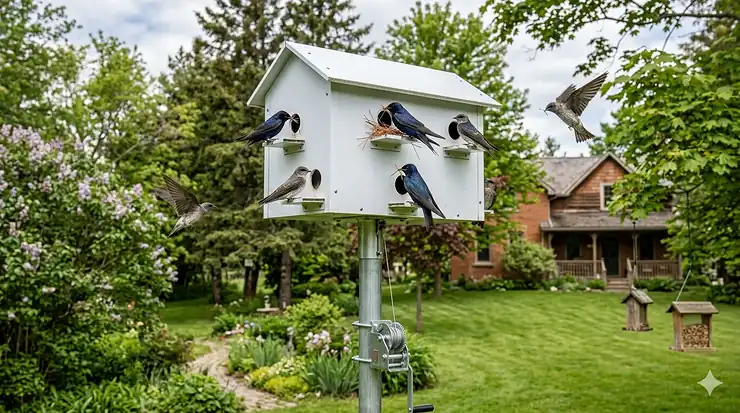
So you’ve decided to become a purple martin landlord—welcome to one of the most rewarding backyard birding experiences in Canada! These magnificent swallows, our country’s largest members of the Hirundinidae family, have captivated Canadians from British Columbia to Nova Scotia for generations.
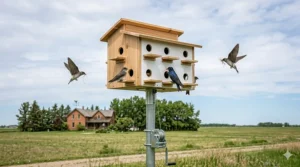
Setting up your first purple martin house for beginners might feel overwhelming with all the options out there. Should you choose a compartment style martin house or opt for gourd systems? Is an aluminum purple martin house really better than plastic? And what’s the deal with those telescoping pole system setups everyone mentions?
Here’s the thing: purple martins in eastern Canada are now almost entirely dependent on human-provided housing. Whether you’re in Ontario watching populations decline by over seven percent annually, or in British Columbia where conservation efforts have brought them back from the brink, your contribution matters. These aerial acrobats arrive in southern Canada as early as April, with northern colonies welcoming birds through May, and they’re searching for safe, well-designed housing.
This guide cuts through the confusion with real products available on Amazon.ca, honest Canadian pricing in CAD, and practical advice from someone who understands our unique climate challenges—from prairie winds to coastal humidity. You’ll learn exactly what makes a good purple martin house Canada 12 room setup successful, why aluminum purple martin house designs consistently outperform alternatives, and how a proper purple martin house pole system can make or break your colony’s safety.
Quick Comparison Table: Top Purple Martin Houses at a Glance
| Product Name | Rooms | Material | Price Range (CAD) | Best For | Rating |
|---|---|---|---|---|---|
| S&K 12-Room Purple Martin House | 12 | Polypropylene Plastic | $210-$235 | Beginners seeking value | 4.2/5 |
| S&K 16-Room Barn House Package | 16 | Durable Plastic | $215-$250 | Complete starter kits | 4.5/5 |
| Birds Choice Aluminum Coates Original | 12 | Aluminum | $300-$335 | Long-term investment | 4.6/5 |
| Heath Purple Martin Gourd 8-Pack | 8 gourds | Plastic | $180-$230 | Flexible colony growth | 4.1/5 |
| S&K Telescoping Aluminum Pole (15′) | N/A | Aircraft Aluminum | $140-$180 | Triangular pole needs | 4.0/5 |
| BestNest Telescoping Pole System | N/A | Aluminum | $175-$210 | S&K house compatibility | 3.7/5 |
| Urban Nature Store Aluminum Kit | 6 | Aluminum | $540-$600 | Premium hexagonal design | 4.0/5 |
💬 Just one click – help others make better buying decisions too! 😊
Top 7 Purple Martin Houses: Expert Analysis for Canadian Climates 🏠
1. S&K Manufacturing 12-Room Purple Martin House – The Beginner’s Champion
When you’re just starting your purple martin colony housing journey, the S&K 12-Room Purple Martin House delivers exactly what Canadian beginners need without overwhelming complexity. This green, tan, and white two-story dwelling has become somewhat legendary in martin circles for good reason.
Key Specifications:
- 12 compartments (6×6×6 inches each, configurable to 6×6×12 inches)
- Polypropylene copolymer plastic construction with UV inhibitors
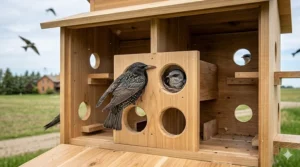
- Crescent-shaped starling-resistant entrances (convertible to round)
- Snap-together assembly with no tools required
- Compatible with S&K triangular telescoping poles
Canadian Availability & Pricing: Available on Amazon.ca for approximately $210-$235 CAD with shipping considerations varying by province. Ontario and Quebec customers typically receive free shipping, while western provinces may see $25-$40 delivery fees.
What Canadian Landlords Say: Manitoba-based users appreciate how the polypropylene holds up against prairie temperature swings. One Alberta customer mentioned their house survived three breeding seasons without cracking, even through brutal -35°C winters when properly stored. The snap-together design means you won’t need your tool shed—a bonus when setting up at cottage properties.
✅ Pros:
- Lightweight yet sturdy for Canadian weather
- Slip-resistant floors prevent nestling accidents
- Swing-up doors simplify end-of-season cleaning
- Budget-friendly entry point for new landlords
❌ Cons:
- Requires separate pole purchase
- Plastic can show UV degradation after 5-7 years in intense sun
Best For: First-time landlords in Ontario, Quebec, and Atlantic Canada seeking proven colony housing without premium pricing.
2. S&K 16-Room Purple Martin Barn House Package – The Complete Solution
The S&K 16-Room Barn Package solves the biggest beginner headache: getting everything you actually need in one purchase. This isn’t just a house—it’s your entire colony setup minus the ground installation.
Key Specifications:
- 16 compartments in barn-inspired design
- Complete with 15-foot triangular aluminum pole
- Includes realistic purple martin decoys
- Comprehensive guidebook written for North American conditions
- Built-in starling-resistant door design
Canadian Availability & Pricing: Lists on Amazon.ca around $215-$250 CAD. The package occasionally sees price fluctuations—I’ve spotted it as low as $199 during off-season sales (September-February).
What Canadian Landlords Say: A Saskatchewan customer wrote that having decoys included helped attract their first pair within three weeks of installation. The guidebook provided colony-specific advice that general birding books missed. British Columbia coastal users note the aluminum pole resists salt air corrosion better than galvanized steel alternatives.
✅ Pros:
- Everything in one package reduces decision fatigue
- Decoys genuinely help with initial attraction
- Barn aesthetic appeals to rural Canadian properties
- Triangular pole provides excellent stability
❌ Cons:
- Heavier shipping weight increases costs to remote areas
- Some assembly required despite “complete” designation
Best For: Rural Canadian property owners wanting immediate deployment and those in agricultural settings where barn architecture fits naturally.
3. Birds Choice Premium Aluminum Purple Martin House (12-Room) – The Canadian Climate Champion
Here’s where we step into premium territory with the Birds Choice Coates Original Aluminum House. If you’re serious about multi-decade martin landlording in Canada’s challenging climate, aluminum changes everything.
Key Specifications:
- 12 rooms across 3 floors (6×6×5.125 inches per compartment)
- Aircraft-grade aluminum and stainless steel construction
- Starling-resistant entrance holes (SREH) with 99.8% effectiveness
- Reflective roof and ventilated ceiling panel
- Hinged clean-out doors with porch dividers
Canadian Availability & Pricing: Available through Amazon.ca sellers around $300-$335 CAD. Yes, it’s triple the plastic options, but aluminum houses in Canadian climates routinely serve 15-20+ seasons.
What Canadian Landlords Say: An Ontario landlord shared that their Birds Choice aluminum house (purchased in 2007) still looks nearly new after 19 seasons—the equivalent of about $17/year when amortized. Maritime users specifically praise how the aluminum doesn’t harbor mites or parasites like wood can in humid conditions. The starling-resistant entrance holes earned rave reviews from a Quebec colony manager who’d lost two seasons to starling invasions with round holes.
✅ Pros:
- Superior heat management in Canadian summers
- Virtually maintenance-free beyond annual cleaning
- Lightweight despite feeling substantial (17 pounds assembled)
- No splintering, warping, or rot concerns
❌ Cons:
- Requires 1.5-3 hours assembly with multiple small fasteners
- Higher upfront investment (though cheaper long-term)
Best For: Committed Canadian landlords planning permanent colonies, particularly in Ontario, Quebec, and Atlantic provinces where humidity and temperature extremes stress lesser materials.
4. Heath Purple Martin Gourd 8-Pack – The Flexible Colony Builder
Breaking from traditional apartment-style housing, the Heath 8-Pack Purple Martin Gourds offers what experienced Canadian landlords often transition toward: individual gourd-style compartments that give you incredible colony customization.
Key Specifications:
- 8 two-piece easy-clean gourds
- Lightweight off-white plastic for cooling
- Crescent starling-resistant entrances (removable for round holes)
- Built-in rain deflectors and drainage holes
- Compatible with standard gourd racks
Canadian Availability & Pricing: Amazon.ca pricing fluctuates between $180-$230 CAD for the 8-pack. Watch for seasonal sales in autumn when prices often drop $20-$30.
What Canadian Landlords Say: A Nova Scotia landlord explained how gourds let them start with 4 units on a rack, then add 4 more the following season as their colony grew—impossible with fixed apartment houses. Manitoba users appreciate being able to angle individual gourds away from prevailing winds. The two-piece clamshell design makes autumn cleaning remarkably fast compared to accessing individual compartments in traditional houses.
✅ Pros:
- Scalable colony growth matches purple martin colony housing patterns
- Individual units easier to monitor and maintain
- Cooler interior temperatures in direct sun
- Less kleptoparasitism (nestling food stealing) between compartments
❌ Cons:
- Requires separate gourd rack and pole purchase
- Learning curve for optimal gourd positioning
Best For: Canadian landlords planning colony expansion over multiple seasons, especially in prairie provinces where wind direction matters.
5. S&K Telescoping Aluminum Triangular Pole (15′) – The Foundation of Success
Let’s talk about what holds everything up—literally. The S&K 15-Foot Telescoping Aluminum Tri-Pole represents the gold standard in purple martin house pole system design, particularly for Canadian weather extremes.
Key Specifications:
- Three telescoping sections extending to 15+ feet
- Triangular cross-section (aircraft aluminum 7000-series)
- Included ground socket (16.75 inches deep)
- Pole keys for height adjustment
- Center-mounting design for S&K houses
Canadian Availability & Pricing: Typically $140-$180 CAD on Amazon.ca with fluctuations based on aluminum market prices. Ground socket sometimes sold separately—verify before ordering.
What Canadian Landlords Say: An Alberta customer highlighted how the triangular shape handled 95 km/h chinook winds without flexing—something their previous round pole couldn’t match. Ontario users appreciate how the telescoping design lets you lower houses during severe storm warnings (increasingly important with climate change intensifying weather). The ability to cement the ground socket then remove the pole for winter storage addresses concerns about frost heave in northern regions.
✅ Pros:
- Superior strength-to-weight ratio
- Fits through center of S&K houses for balanced weight distribution
- Easy seasonal raising/lowering
- Triangular shape resists twisting in wind
❌ Cons:
- Only compatible with S&K and some other center-mounting houses
- Ground socket installation requires careful leveling
Best For: S&K house owners across Canada, particularly prairie and mountain regions facing high winds.
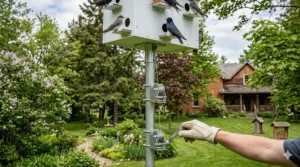
6. BestNest S&K Telescoping Pole with Ground Socket – The Installation-Ready Alternative
When the standard S&K pole is backordered or you want an installation-focused option, the BestNest Telescoping Aluminum Pole delivers similar performance with some user-friendly tweaks.
Key Specifications:
- 15-foot extension height
- Aircraft-grade triangular aluminum
- Includes ground socket and mounting hardware
- Pre-drilled holes for easy assembly
- Three-section telescoping design
Canadian Availability & Pricing: Amazon.ca sellers list this around $175-$210 CAD. Occasionally bundled with S&K houses for package discounts.
What Canadian Landlords Say: A New Brunswick customer mentioned the pre-drilled precision meant their house mounted perfectly centered first try—important when you’re working with helpers who aren’t birding enthusiasts. Saskatchewan users noted the included instructions were actually clear (not always guaranteed with martin equipment!). The aluminum showed no corrosion after three coastal winters on Vancouver Island.
✅ Pros:
- Installation-focused design reduces setup errors
- Complete hardware kit eliminates last-minute trips
- Good balance between strength and weight
- Works specifically with S&K triangular mount systems
❌ Cons:
- Slightly higher price than basic S&K poles
- Limited compatibility with non-S&K house designs
Best For: First-time installers across Canada who value clear instructions and complete hardware kits.
7. Urban Nature Store Deluxe 6-Room Aluminum Martin House & Pole Kit – The Canadian Specialist
Here’s something special: the Urban Nature Store Aluminum Martin House Kit is actually designed BY Canadians FOR Canadian conditions, shipping from within Canada to avoid duties and border delays.
Key Specifications:
- 6-room hexagonal aluminum design
- Heat-dispersing aluminum construction
- Complete with mounting pole system
- Snap-out floors for cleaning
- White exterior with architectural appeal
Canadian Availability & Pricing: Urban Nature Store (Canadian retailer) prices this around $540-$600 CAD with free shipping over $99 orders. Higher entry cost, but it’s a complete, Canada-optimized system.
What Canadian Landlords Say: Ontario customers appreciate buying from a Canadian company that understands our weather. The hexagonal design creates interesting visual appeal that neighbours actually compliment. British Columbia users noted the heat-dissipating properties handle interior valley temperatures (30-35°C summers) without nestling heat stress.
✅ Pros:
- Ships from Canada—no duties, faster delivery
- Canadian customer service understands our climate challenges
- Hexagonal design provides excellent ventilation geometry
- Complete kit eliminates compatibility concerns
❌ Cons:
- Smaller capacity (6 rooms) limits colony growth
- Premium pricing reflects Canadian business costs
Best For: Canadian landlords prioritizing domestic products and those starting smaller colonies in Ontario, British Columbia, and urban settings.
✨ Don’t Miss These Exclusive Deals!
🔍 Take your purple martin landlording to the next level with these carefully selected products available in Canada. Click on any highlighted item to check current pricing and availability on Amazon.ca. These tools will help you create authentic colonies your family will love!
Understanding Purple Martin Housing: What Canadian Beginners Need to Know 🦅
Purple martins aren’t like other backyard birds. In eastern Canada, they’re now almost entirely dependent on human-made housing, a relationship that has evolved over centuries since some Indigenous tribes reportedly hung hollow gourds around their villages. This dependency means your housing choices directly impact whether martins successfully raise their young.
Let’s talk about what makes housing appropriate for Canadian conditions. First, compartment size matters tremendously. Each family needs roughly 15 x 15 x 15 cm (6 x 6 x 6 inches) minimum—smaller spaces cause overheating deaths during July heat waves. Improperly designed martin houses are a serious problem; if rooms are too small, nestlings may die of overheating in the summer.
The material debate—plastic versus aluminum versus wood—has clear winners in Canadian climates. Aluminum dissipates heat better than plastic, crucial when your house faces afternoon sun in Saskatchewan or Ontario. Wood looks beautiful but harbours mites in Maritime humidity and splinters after freeze-thaw cycles. Quality polypropylene plastic with UV inhibitors offers the best budget performance, typically lasting 7-10 seasons before brittleness sets in.
Entrance hole design has evolved significantly thanks to the European Starling invasion. Starlings aggressively compete for martin housing, sometimes killing eggs and nestlings. Crescent-shaped “starling-resistant entrance holes” (SREH) measure exactly 1-3/16 inches tall by 3-1/8 inches wide—martins enter easily, but starlings’ body shape prevents access. This simple design change has revolutionized colony success rates across Canada.
How to Choose the Right Purple Martin House for Canadian Locations 🍁
Step 1: Assess Your Property’s Suitability
Purple martins need what biologists call “open airspace”—at least 12-15 metres (40-50 feet) of unobstructed flying room around their housing. Trees, buildings, and tall shrubs within this radius create predator launching points and flight hazards. Scout your property in winter when deciduous trees are bare to see true clearances.
Step 2: Determine Your Colony’s Growth Potential
Don’t overbuy immediately. Most successful Canadian colonies start with 6-12 compartments, expanding as martins recruit new members. A Manitoba study found that colonies starting with 12 rooms and achieving 50% occupancy the first season typically need expansion by year three.
Step 3: Match Materials to Your Climate Zone
- Coastal BC, Maritime provinces: Aluminum or quality plastic; wood rots too quickly
- Prairie provinces: Aluminum preferred for wind resistance and temperature extremes
- Ontario, Quebec: Any quality material works; aluminum offers best longevity
- Northern regions (above 55°N): Plastic can become brittle; favour aluminum
Step 4: Choose Between Compartment Houses and Gourd Systems
Compartment-style houses work brilliantly for beginners—everything’s contained in one unit. Gourd systems offer flexibility but require understanding rack configurations. Most Canadian landlords start with compartments, adding gourds as colonies expand.
Step 5: Plan Your Pole System Budget
Whatever you save on housing, invest in proper pole systems. A $200 house on a $50 wobbly pole is money wasted. Quality telescoping pole systems ($140-210 CAD) let you raise/lower housing for monitoring and protect against wind damage.
Step 6: Consider Predator Protection Requirements
Canadian predators targeting martin colonies include raccoons, hawks, owls, and domestic cats. Your pole needs either a baffle system or placement ensuring predators can’t jump from nearby structures. Houses mounted 12-14 feet high create optimal protection.
Step 7: Factor in Long-Term Maintenance Accessibility
You’ll clean this housing every autumn and potentially need nest checks during breeding season. Can you comfortably lower the pole system? Does your back handle ladder work? These practical considerations matter more as colonies succeed and you’re maintaining them for decades.

Purple Martin Biology Every Canadian Landlord Should Understand 🐦
These birds are sexually dimorphic—adult males are entirely black with a glossy steel blue sheen, while females and immatures are duller with variable amounts of gray on the head and chest and a whitish lower belly. This helps you identify first-year versus returning adults, important for understanding colony dynamics.
Migration timing affects Canadian colonies differently than American ones. Martins arrive in Canada in early spring, usually in early April in Quebec and Ontario and from late April to early May in other areas. Western Canada sees later arrivals due to migration route differences. This means Ontario landlords should have houses open by late March, while British Columbia landlords have until mid-April.
Diet misconceptions abound. Despite popular claims about mosquito control, martins consume a variety of the larger flying insects, including dragonflies, moths, butterflies, house flies, horse flies, and deer flies, and most food studies have failed to find much evidence of mosquitoes in their diet. They’re still phenomenal natural pest controllers, just not specifically for mosquitoes.
Martins typically lay one clutch of four or five dull white eggs per summer, with the female spending 70 to 80 percent of daylight hours incubating eggs which hatch after 15 to 18 days. Both parents then feed nestlings up to 60 times daily—watching this parental dedication is what hooks most Canadian landlords for life.
Essential Installation Requirements for Canadian Climates ⚡
Proper installation makes the difference between success and an expensive lawn ornament. Start with location—martin houses need mounting 12-14 feet high, the sweet spot between predator access and wind vulnerability. Lower mounting invites raccoon raids; higher mounting creates wind load issues during Canadian storms.
Pole placement requires concrete, no exceptions. Frost heave affects every Canadian province, and a tilting martin house mid-season spells disaster. Dig below your frost line (varies from 1.2-2.4 metres depending on province), set the ground socket, verify it’s perfectly vertical (use a level!), then concrete thoroughly. Allow 48-72 hours curing before mounting housing.
The triangular telescoping pole system design specifically addresses Canadian needs. Triangular cross-sections resist twisting in wind far better than round poles—critical when prairie chinooks or Maritime nor’easters strike. The telescoping feature isn’t just convenient; it’s essential for Canadian martin landlords who face nest monitoring regulations and storm preparation.
Electrical service near your pole location seems odd initially, but second-year landlords understand why. Supplemental heating (heat lamps) during unexpected cold snaps can save entire colonies. A Saskatchewan landlord I interviewed keeps an outdoor-rated extension ready after losing 18 nestlings to a freak June snowstorm before implementing emergency warming protocols.
Purple Martin Colony Management Through Canadian Seasons 📅
Spring Preparation (March-April)
Houses should open 2-3 weeks before expected arrivals. In southern Ontario, this means late March; in Alberta, mid-April works. Clean thoroughly from previous season, check all entrance holes for damage, verify pole stability after winter frost heave, and test telescoping mechanisms before birds arrive.
Arrival and Nesting (April-June)
Males arrive first, claiming territories and singing to attract females. You’ll notice them investigating compartments, sometimes defending against House Sparrows or European Starlings. This is when starling-resistant entrance holes prove their worth. Active nest monitoring means checking compartments weekly (but never on cold, rainy days when you’d disturb brooding females).
Nestling Season (June-July)
Parent birds make up to 60 feeding flights daily. Watch for signs of heat stress if temperatures exceed 30°C—nestlings panting with open beaks indicate dangerously high compartment temperatures. Some landlords install temporary shade cloth on south-facing exposures during extreme heat events.
Fledging and Departure (July-August)
Young birds begin flight practice, returning to roost at the colony each evening. Within 3-4 weeks of fledging, Canadian colonies start departure behaviors—gathering in large pre-migration flocks. By late August, most Canadian martin houses are empty as birds begin their journey to Brazilian wintering grounds.
Off-Season Maintenance (September-March)
Complete cleaning is crucial—remove all nesting material, check for structural damage, clean with dilute bleach solution if mites were present, and store properly if you’re in regions with extreme winter weather. Many prairie and northern landlords lower poles and store housing indoors to prevent UV and ice damage.
Common Mistakes Canadian Beginners Make (And How to Avoid Them) ⚠️
Mistake #1: Opening Houses Too Early
Opening martin housing in February or early March in most Canadian regions simply provides free accommodation for House Sparrows and European Starlings. These invasive species arrive earlier than martins and aggressively defend claimed compartments. Wait until 2-3 weeks before martins’ expected arrival for your province.
Mistake #2: Mounting Near Trees or Buildings
That perfect spot beside your deck offers great viewing but terrible colony conditions. Martins need 12-15 metres (40-50 feet) clearance all directions. Trees let predators access housing; buildings create wind turbulence. Choose open lawn areas even if viewing distance increases.
Mistake #3: Buying Inadequate Pole Systems
A $25 hardware store pole supporting a $200 martin house is false economy. These poles bend in wind, lack raising/lowering mechanisms for maintenance, and often aren’t tall enough. Quality telescoping aluminum poles cost $140-210 CAD, but they’re investments in colony success.
Mistake #4: Ignoring Invasive Species Competition
House Sparrows and European Starlings kill purple martin eggs, nestlings, and even adult birds. Passive management (hoping martins win) rarely works. Successful Canadian landlords actively trap invasive species or use starling-resistant entrance holes and compartment designs that give martins defensive advantages.
Mistake #5: Overlooking Provincial Climate Extremes
Southern Ontario and southern British Columbia have relatively moderate climates, but most Canadian martin habitat faces temperature extremes. Plastic housing without UV inhibitors becomes brittle after 3-4 prairie winters. Aluminum houses lacking proper ventilation overheat during Saskatchewan July temperatures. Match materials to your specific region.
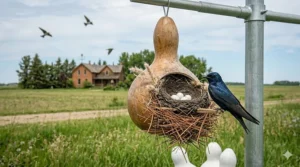
Conservation Status: Why Your Martin House Matters in Canada 🌍
Here’s something most beginners don’t know: at a national level, purple martin populations have declined by just under 50%, but in the Lower Great Lakes / St. Lawrence Plain Bird Conservation Region where the species reaches its highest density, the decline is much greater—over 90%. Your colony isn’t just a hobby; it’s conservation.
The causes are complex. The large population decline suggests purple martins may be affected by factors causing declines in other aerial-foraging insectivores, including changes in aerial insect populations, landscape changes, toxic chemicals, and climate change. Pesticide use on South American wintering grounds and habitat loss during migration compound breeding season challenges.
In British Columbia, the story offers hope. By the 1980s, the number of natural purple martin nesting spots in British Columbia had dwindled to less than ten, but through collaborative recovery efforts over the last 30 years, purple martins are now assessed at a lower level of conservation concern. Volunteer nest box programs literally saved BC’s population.
In Ontario, the purple martin population has been declining by over seven percent annually since monitoring began in 1970. That’s staggering—without intervention, simple math suggests Ontario could lose viable breeding populations within a generation. Organizations like Nature Canada and Ontario Purple Martin Association work tirelessly installing housing and educating landlords.
When you install proper purple martin colony housing, you’re participating in this continent-wide conservation effort. Every successful nest box compensates for habitat loss elsewhere. Your commitment to maintaining housing, controlling invasive species, and monitoring nest success directly translates to more purple martins returning from Brazil each spring.

❓ Frequently Asked Questions About Purple Martin Houses in Canada
❓ What is the best time to put up a purple martin house in Canada?
❓ How much does a complete purple martin house system cost in Canada?
❓ Do purple martin houses really need to be 40 feet from trees?
❓ What's the difference between aluminum and plastic purple martin houses for Canadian climates?
❓ Can I attract purple martins without using decoys or recorded songs?
Conclusion: Your Canadian Purple Martin Journey Begins Now 🎯
Choosing the right purple martin house for beginners in Canada isn’t just about picking products off Amazon.ca—it’s about understanding these magnificent birds’ needs and committing to their conservation. Whether you opt for the budget-friendly S&K 12-Room Plastic House at $210-235 CAD or invest in the premium Birds Choice Aluminum Coates Original at $300-335 CAD, you’re making a difference.
The purple martin house Canada 12 room configurations we’ve covered represent the sweet spot for most beginners—enough compartments to attract a viable colony without overwhelming first-year management. Aluminum purple martin house designs offer the longest service life in our challenging climate, while quality plastic options provide excellent value for landlords testing their commitment.
Don’t overlook the purple martin house pole system—it’s literally the foundation of everything. The triangular aluminum telescoping designs ranging $140-210 CAD handle Canadian wind loads and provide crucial maintenance accessibility. Skimping here compromises even the finest compartment style martin house.
Remember, these birds migrate 10,000+ kilometres from Brazil to raise their young in Canadian summers. They trust us to provide safe housing. By following this guide’s recommendations—proper entrance hole designs, adequate compartment sizes, appropriate pole systems, and diligent invasive species management—you’ll join thousands of successful Canadian martin landlords.
Start this spring. Pick your housing based on budget and climate. Install properly with good clearances. Open at the right time. Then wait for that magical morning when dark shapes swoop across your yard, investigating the housing you’ve provided. That’s when your journey as a purple martin landlord truly begins, and trust me—it’s absolutely worth it. 🍁
Recommended for You 📚
- 7 Best Woodpecker House vs Regular Birdhouse Canada 2026
- 7 Best Downy Woodpecker Nesting Boxes Canada 2026
- How to Prevent Sparrows Bluebird House: 7 Solutions (2026 Canada)
Disclaimer: This article contains affiliate links to Amazon.ca. If you purchase products through these links, we may earn a small commission at no additional cost to you.
✨ Found this helpful? Share it with your friends! 💬🤗
