
In This Article
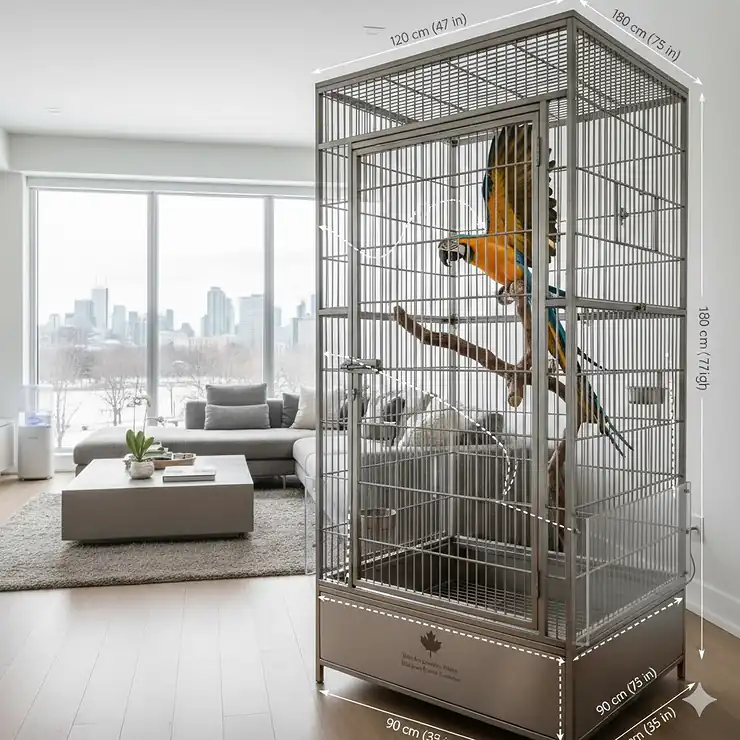
Imagine walking into your living room and seeing your vibrant blue-and-gold macaw stretching its impressive wingspan—only to realize those magnificent feathers are hitting the cage bars. That heart-sinking moment is exactly what we’re here to prevent.
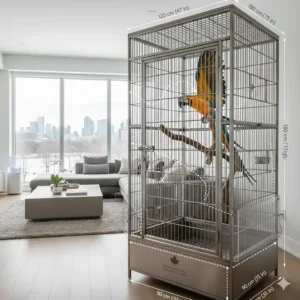
Macaws are among the largest and most intelligent parrots in the world, with some species reaching lengths of up to 100 centimetres (40 inches). These spectacular birds require spacious, durable housing that accommodates their powerful beaks, extensive wingspans, and playful personalities. As someone who’s spent years working with Canadian macaw owners, I’ve seen firsthand how the right cage transforms a bird’s quality of life—and the wrong one can lead to feather plucking, aggression, and thousands of dollars in vet bills.
Finding the best macaw cages in Canada isn’t just about picking the biggest option on Amazon.ca. You need to balance proper dimensions, bar spacing, durability, and budget while ensuring Canadian availability and reasonable shipping costs. Whether you’re bringing home a mini Hahn’s macaw or a magnificent hyacinth macaw, this guide will walk you through everything you need to know to make the right choice for your feathered companion.
Quick Comparison Table
| Cage Model | Size (L×W×H) | Bar Spacing | Price Range (CAD) | Best For |
|---|---|---|---|---|
| Yaheetech 69″ Play Top | 46×36×69″ | 1″ | $210-$250 | Budget-conscious buyers |
| Prevue Hendryx F050 Flight | 64×21×64″ | ¾” | $280-$330 | Multiple small macaws |
| A&E Double Macaw Cage | 64×32×74″ | 1-1.5″ | $650-$850 | Breeding pairs/multiple birds |
| Yaheetech 63″ Open Top | 44×24×63″ | 1″ | $190-$230 | Mini macaws |
| Stainless Steel Premium | 36×48×60″ | 1-1.5″ | $900-$1,200 | Long-term investment |
| Walk-In Aviary Custom | 6×6×8 ft | 1″ | $1,500-$2,500+ | Ultimate luxury |
| Prevue Silverado Dome | 46×36×66″ | 1″ | $320-$400 | Play-top enthusiasts |
💬 Just one click – help others make better buying decisions too! 😊
Top 7 Best Macaw Cages: Expert Analysis
1. Yaheetech 69-Inch Wrought Iron Play Top Large Parrot Cage
If you’re looking for a solid entry-level cage that won’t devastate your wallet, the Yaheetech 69-Inch deserves serious consideration. This powder-coated wrought iron cage offers 46″ × 36″ × 69″ of living space—adequate for smaller macaw species or as temporary housing during cage cleaning days.
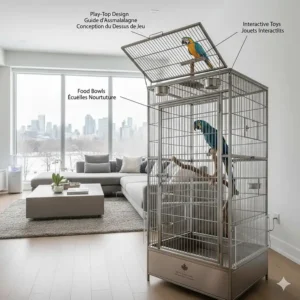
The cage features a Victorian-style open play top with a ladder and perch, allowing your macaw supervised out-of-cage time right on their home. Four 360-degree caster wheels (two with locks) make repositioning effortless across hardwood or tile floors. Canadian buyers consistently praise the straightforward assembly process, with most completing setup in under 90 minutes using the included tools.
Key Specifications:
- Dimensions: 46″L × 36″W × 69″H (117 cm × 91 cm × 175 cm)
- Bar spacing: 1 inch
- Price: $210-$250 CAD
Canadian customers report this cage ships well-packaged from Amazon.ca warehouses, typically arriving within 5-7 business days in Ontario and Quebec, slightly longer for Western provinces. One Vancouver owner mentioned: “Assembly was easier than IKEA furniture, and my Green-Winged Macaw loves the play top area.”
✅ Pros:
- Affordable entry point for new macaw owners
- Easy mobility with locking wheels
- Includes feeding bowls and perches
❌ Cons:
- Powder coating may chip with aggressive chewers
- Smaller footprint than ideal for large macaw species
2. Prevue Hendryx F050 Wrought Iron Flight Cage
The Prevue Hendryx F050 takes a different approach—prioritizing flight space over height. At 64″ × 21″ × 64″, this flight cage provides exceptional horizontal movement, which is actually more beneficial for macaws than vertical space.
This American-made cage features heavy-duty 9-gauge wire construction with ¾-inch bar spacing, perfect for mini macaws like Hahn’s or Severe macaws. The hammertone black powder-coat finish resists scratches better than standard paint, while the pull-out tray and debris guard make daily cleaning remarkably simple.
Key Specifications:
- Dimensions: 64″L × 21″W × 64″H (163 cm × 53 cm × 163 cm)
- Bar spacing: ¾ inch
- Price: $280-$330 CAD
Canadian retailers like PetOnly.ca stock this model, though Amazon.ca occasionally offers competitive pricing during seasonal sales. The horizontal configuration works beautifully for flight training indoors, and several Ontario breeders use multiple F050s in their facilities.
✅ Pros:
- Excellent horizontal flight space
- Heavy-duty American construction
- Easy-clean sliding tray system
❌ Cons:
- Narrow depth limits toy placement
- No play-top feature
3. A&E Double Macaw Cage with Removable Divider
For serious macaw enthusiasts or breeding pairs, the A&E Double Macaw Cage (Model 6432) represents the gold standard. This massive 64″ × 32″ × 74″ enclosure can house two large macaws separately or, with the divider removed, provides palatial space for a single bird.
The 304-grade stainless steel construction justifies the premium price tag—this cage will literally outlast your macaw’s 60-80 year lifespan. Each side includes two swing-out feeder doors, bird-proof locks, and dedicated perches. The slide-out grilles and trays separate birds from waste, maintaining superior hygiene.
Key Specifications:
- Dimensions: 64″L × 32″W × 74″H (163 cm × 81 cm × 188 cm)
- Bar spacing: 1-1.5 inches (adjustable)
- Price: $650-$850 CAD
This model ships from U.S. suppliers to Canada, so factor in potential customs duties (typically 6.5% GST plus provincial taxes). However, Canadian macaw forums consistently rate this as the best investment cage under $1,000. One Alberta breeder noted: “I’ve had mine for 12 years—zero rust, zero issues. My Blue-and-Gold macaws treat it like a playground.”
✅ Pros:
- True stainless steel construction
- Removable divider offers flexibility
- Built for decades of use
❌ Cons:
- Higher upfront investment
- Requires floor space of 5.5 × 3 feet
- Potential import duties to Canada
4. Yaheetech 63-Inch Open Top Bird Cage
The Yaheetech 63-Inch Open Top splits the difference between budget and premium options. At 44″ × 24″ × 63″, it’s specifically sized for mini macaws (Hahn’s, Noble, Severe) or as a secondary cage for larger species.
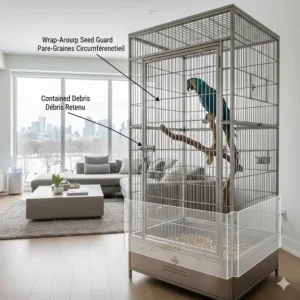
What sets this model apart is the convenient open-top design that converts to a play area without requiring a separate play stand. The cage includes stainless steel feeding bowls, natural wood perches, and a seed guard to minimize floor mess—a godsend for apartment dwellers.
Key Specifications:
- Dimensions: 44″L × 24″W × 63″H (112 cm × 61 cm × 160 cm)
- Bar spacing: 1 inch
- Price: $190-$230 CAD
Available through Amazon.ca with Prime shipping, most Canadian buyers receive this within 3-5 days. The metal construction holds up well to moderate chewing, though extremely destructive macaws may eventually bend the thinner bars. Montreal customer feedback highlights excellent value for Iliger’s and Yellow-Collared macaws.
✅ Pros:
- Open-top versatility
- Amazon.ca Prime eligible
- Solid build for the price
❌ Cons:
- Not suitable for large macaw species
- Basic powder coating
5. Stainless Steel Premium Macaw Cage (Various Brands)
For those seeking the absolute best without compromise, premium stainless steel cages from manufacturers like Prevue, Kings Cages, or Custom Cages represent the pinnacle. These typically measure 36″ × 48″ × 60″ minimum, with 1-1.5 inch bar spacing and genuine 304-grade stainless steel throughout.
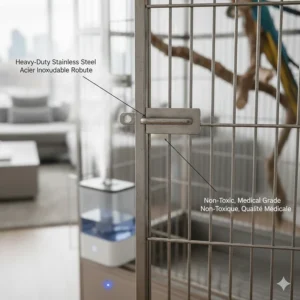
Unlike powder-coated options, stainless steel cages never chip, peel, or rust—even in humid Canadian climates. They’re completely non-toxic, resist the strongest macaw beaks, and maintain pristine appearance for decades. Most include integrated play tops, multiple access doors, and premium cup systems.
Key Specifications:
- Dimensions: 36″W × 48″D × 60″H (91 cm × 122 cm × 152 cm) minimum
- Bar spacing: 1-1.5 inches
- Price: $900-$1,200 CAD
Canadian buyers typically order these through specialty bird supply stores or directly from manufacturers’ U.S. websites. While shipping can add $200-300 CAD, the lifetime warranty and zero maintenance costs offset the investment. According to avian enrichment experts, proper cage size directly impacts parrot welfare and longevity.
✅ Pros:
- Lifetime durability
- Completely non-toxic and safe
- Best resale value
❌ Cons:
- Significant upfront cost
- Limited Canadian retail availability
- Heavy weight (150+ lbs)
6. Walk-In Macaw Aviary (Custom Build)
The dream setup for dedicated macaw owners is a walk-in aviary, typically 6′ × 6′ × 8′ minimum. These indoor or outdoor structures allow macaws to truly fly, climb, and exhibit natural behaviours impossible in traditional cages.
Custom builders in Canada (particularly in British Columbia and Ontario) create powder-coated or stainless steel aviaries tailored to your space and budget. Expect professional-grade 1-inch bar spacing, multiple access doors, feeding stations, and weather-resistant finishes for outdoor installations.
Key Specifications:
- Dimensions: 6’W × 6’D × 8’H minimum (customizable)
- Bar spacing: 1 inch
- Price: $1,500-$2,500+ CAD
Canadian climate considerations require heated outdoor aviaries in most provinces. Indoor walk-ins work year-round but demand significant square footage. Toronto-area macaw rescues exclusively use walk-in setups, reporting dramatically reduced behavioral issues and improved feather quality.
✅ Pros:
- Ultimate space for natural behavior
- Can accommodate multiple macaws
- Customized to your specific needs
❌ Cons:
- Highest cost option
- Requires significant home space
- Professional installation recommended
7. Prevue Hendryx Silverado Macaw Dome Top
The Prevue Silverado (Model 3155) offers dome-top elegance at mid-range pricing. Measuring 46″ × 36″ × 66″, this grey powder-coated cage provides ample space for medium to large macaws with a distinctive curved top that maximizes vertical space.
The dome design allows for longer perches and hanging toys compared to flat-top cages. Nine-gauge wire construction and 1-inch bar spacing strike the perfect balance for most macaw species. The cage includes three stainless steel cups, two hardwood perches, and a substantial seed guard set.
Key Specifications:
- Dimensions: 46″L × 36″W × 66″H (117 cm × 91 cm × 168 cm)
- Bar spacing: 1 inch
- Price: $320-$400 CAD
Occasionally available through Canadian retailers or Amazon.ca marketplace sellers, expect 7-14 day shipping from U.S. warehouses. The silver finish hides scratches better than black cages, while the sturdy castered base allows easy relocation for cleaning underneath.
✅ Pros:
- Dome top adds vertical interest
- Premium Prevue quality
- Suitable for most macaw species
❌ Cons:
- Limited Canadian stock
- Heavier than comparable cages
- Assembly requires two people
✨ Don’t Miss These Exclusive Deals!
🔍 Take your macaw’s living space to the next level with these carefully selected products available in Canada. Click on any highlighted item to check current pricing and availability on Amazon.ca. These cages will help you create an authentic home environment your feathered friend will love!
Understanding Macaw Cage Size Requirements and Setup
Choosing the right cage dimensions isn’t just about reading product specifications—it’s about understanding your specific macaw’s needs. Macaw species vary dramatically in size, from the 30 cm (12-inch) Hahn’s macaw to the massive 100 cm (40-inch) hyacinth macaw.
Minimum Size Requirements by Species
Mini Macaws (Hahn’s, Noble, Yellow-Collared):
- Minimum: 34″W × 24″D × 36″H (86 × 61 × 91 cm)
- Recommended: 40″W × 30″D × 48″H (102 × 76 × 122 cm)
- Bar spacing: ¾ to 1 inch
Medium Macaws (Severe, Illiger’s, Blue-Headed):
- Minimum: 36″W × 30″D × 48″H (91 × 76 × 122 cm)
- Recommended: 42″W × 36″D × 60″H (107 × 91 × 152 cm)
- Bar spacing: 1 inch
Large Macaws (Blue-and-Gold, Scarlet, Green-Winged):
- Minimum: 36″W × 48″D × 60″H (91 × 122 × 152 cm)
- Recommended: 48″W × 48″D × 72″H (122 × 122 × 183 cm)
- Bar spacing: 1 to 1.5 inches
The “wingspan rule” offers a practical guideline: your macaw should extend both wings fully without touching the cage sides. A Blue-and-Gold macaw’s wingspan reaches approximately 4 feet (122 cm), meaning the cage width should exceed this measurement. Remember, these are absolute minimums—bigger is always better.
The Critical Importance of Bar Spacing
Bar spacing prevents potentially fatal accidents. Too wide, and your macaw’s head gets trapped (jaw hinges prevent backward movement). Too narrow, and toes or wing tips can wedge between bars during climbing.
Most macaw cages feature either horizontal or vertical bars. Horizontal bars facilitate climbing, which macaws love and need for exercise. However, purely horizontal configurations can accumulate more droppings as waste slides down multiple bars. Mixed horizontal-vertical patterns offer the best of both worlds.
Best Investment Macaw Cage Under $1000
Finding quality macaw housing under $1,000 CAD requires strategic shopping and understanding what features deliver real value versus marketing fluff. Based on extensive research and Canadian buyer feedback, three cages stand out in this category.
Top Pick: A&E Cage Co. Model 9004030
At approximately $750-$850 CAD delivered to Canada, the A&E 9004030 dome-top cage offers 40″ × 30″ × 70″ dimensions with serious 304 stainless steel construction. The investment pays dividends through:
- Longevity: Canadian owners report 15+ years without rust or structural degradation
- Safety: No toxic coatings to chip into food bowls
- Resale Value: Stainless cages retain 60-70% of purchase price
- Easy Cleaning: Stainless steel wipes clean without staining
Runner-Up: Prevue Hendryx Signature Series
The Prevue Signature Select (various models) typically runs $400-$600 CAD and delivers exceptional quality for powder-coated construction. Key advantages include:
- Heavy 9-gauge wire resists bending
- Integrated play-top with accessories
- Multiple color options (black, white, pewter)
- Readily available through Canadian pet stores
Budget Champion: Yaheetech Professional Series
For under $300 CAD, the Yaheetech Professional Series (69″ or 63″ models) provides surprising durability. While not lifetime investments, they serve well for 3-5 years with proper maintenance:
- Adequate size for most macaw species
- Rolling casters for easy movement
- Included accessories reduce setup costs
- Amazon.ca Prime shipping to most provinces
The investment sweet spot sits around $600-$800 CAD—enough to ensure quality construction without entering custom cage territory. Focus spending on proper dimensions and bar gauge rather than aesthetic features like colored coatings or decorative accents.
Extra Large Bird Cage with Strong Bars
Macaws possess remarkably powerful beaks—a hyacinth macaw generates approximately 400 PSI bite force, capable of cracking Brazil nuts and even crushing metal. This necessitates extra-strength cage construction that goes beyond standard parakeet housing.
What Constitutes “Strong Bars”?
Wire gauge determines strength: lower numbers mean thicker, stronger bars. Here’s the breakdown:
- 12-gauge wire: Minimum for mini macaws (under 10 oz)
- 9-gauge wire: Recommended for medium macaws (10-26 oz)
- 4-gauge wire: Required for large macaws (26+ oz)
Many budget cages use 14-16 gauge wire with powder coating that appears thick but bends easily. When evaluating strength, examine:
- Bar diameter: Measure the actual metal, not the coating
- Joint construction: Welded joints outlast crimped connections
- Material composition: Iron alloys vary in tensile strength
Top Extra-Strong Options
A&E Stainless Steel Series: Constructed with 304-grade stainless steel rods (approximately 3mm diameter), these cages resist even determined hyacinth macaws. Canadian buyers report zero bar damage after years of use.
Kings Cages European Style: Features 5mm stainless steel bars with robotically-welded joints. The European design prioritizes durability over aesthetics, with prices ranging $800-$1,400 CAD depending on size.
Custom Cages Hybrid Series: Offers customizable bar thickness up to 6mm for extreme situations. While expensive ($1,500+ CAD), the lifetime warranty and Canadian-friendly shipping make them worthwhile for owners of destructive species.
Testing Bar Strength
Before purchasing, apply this simple test to display models:
- Grasp two adjacent bars firmly
- Attempt to twist or bend them
- Quality bars should show zero flex
If bars move even slightly under hand pressure, they’ll bend significantly under macaw beak pressure. This test immediately disqualifies many cheap imports available online.
Walk-In Macaw Aviary: The Ultimate Setup
Walk-in aviaries represent the gold standard of macaw housing, transforming captive care into something approaching natural living conditions. These structures allow flight, extensive climbing, and proper social groupings impossible in traditional cages.
Indoor vs. Outdoor Considerations for Canada
Indoor Walk-Ins:
- Year-round usability across all provinces
- Climate-controlled for sensitive species
- Typical size: 6’W × 8’D × 8’H minimum
- Canadian building code compliant (check local regulations)
- Cost: $1,500-$3,500 CAD installed
Outdoor Aviaries:
- Require heating in most Canadian climates (-40°C winters in Prairies/Territories)
- Larger potential size: 8’W × 12’D × 10’H or bigger
- Must include weather-resistant roofing
- Provincial wildlife regulations apply
- Cost: $3,000-$8,000+ CAD
British Columbia and Southern Ontario offer the most favorable outdoor aviary climates, though insulated designs work elsewhere with proper heating systems.
Essential Design Elements
Double-Door Entry System: Prevents escapes during access. The outer door closes before opening the inner door, creating an airlock-style safety buffer.
Proper Substrate: Concrete floors with drainage work for outdoor setups. Indoor aviaries benefit from removable grating over catch trays for easier cleaning.
Natural Perching: Incorporate various diameter branches (1-3 inches) from safe wood species. Canadian wood options include untreated maple, apple, and willow.
Enrichment Zones: Dedicated areas for feeding, bathing, and play prevent territorial disputes in multi-bird setups.
Canadian Builders and Resources
Several companies specialize in custom aviaries for Canadian climates:
- Custom Cages (ships to Canada): Premium powder-coated or stainless designs
- Local welding shops: Can fabricate custom designs from your specifications
- DIY options: PVC-coated chain link fencing over lumber frames costs $800-$1,500 for materials
Toronto, Vancouver, and Calgary have established avian communities with contractors experienced in macaw-specific requirements. Budget 3-6 months from planning to completion for custom builds.
Heavy Duty Cage Wheels: Mobility Matters
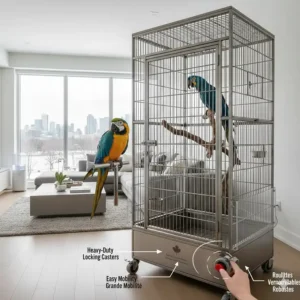
Caster wheels transform stationary cages into mobile cleaning stations, but not all wheels handle macaw cage weights appropriately. A fully-equipped large macaw cage can weigh 100-200 pounds (45-90 kg) before adding bird, toys, and food.
Wheel Specifications That Matter
Load Rating: Each wheel should support minimum 75-100 lbs (34-45 kg). Four wheels rated at 75 lbs each handle 300 lbs total capacity, providing adequate safety margin.
Diameter: Larger wheels (3-4 inches / 7.5-10 cm) roll more smoothly over carpet, transition strips, and minor floor irregularities. Small 2-inch wheels catch on everything.
Material Construction:
- Plastic wheels: Adequate for smooth hardwood/tile
- Rubber wheels: Better floor protection, quieter rolling
- Ball-bearing wheels: Smoothest operation, longest lifespan
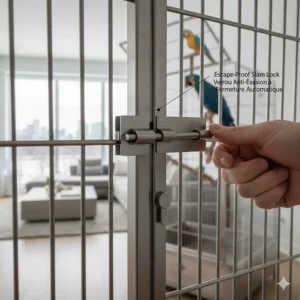
Locking Mechanism: Essential for stability. Look for wheels with:
- Foot-activated locks (easier than hand locks when managing a bird)
- Dual-lock design (prevents both rolling and swiveling)
- Metal lock components (plastic breaks after repeated use)
Common Wheel Problems
Canadian macaw owners frequently report these wheel-related issues:
- Carpet Snagging: Standard wheels catch in medium-pile carpet. Solution: Upgrade to 4-inch rubber wheels or use protective mats under the cage.
- Lock Failure: Plastic locks crack during Canadian winter dryness. Replace with after-market metal locks available at hardware stores.
- Floor Damage: Metal wheels scratch hardwood. Apply furniture pads or switch to rubber-coated options.
- Weight Distribution: Cages with uneven weight (heavy play-tops) stress front wheels. Redistribute weight by moving heavy accessories toward the cage rear.
Upgrade Options
Most cages include basic wheels that disappoint during actual use. Replacement options available at Canadian Home Depot or Rona stores include:
- 3-inch locking casters: $25-$35 CAD per set of four
- 4-inch industrial wheels: $45-$65 CAD per set
- Premium ball-bearing casters: $70-$100 CAD per set
Installation typically requires removing existing wheels and drilling new mounting holes. Use stainless steel or zinc-plated bolts (available at any Canadian hardware store) to prevent rust.
Rust-Resistant Bird Cage: Long-Term Durability
Rust destroys cages from the inside out, contaminating food and water while weakening structural integrity. Canadian climates—particularly humid coastal regions and homes with humidifiers—accelerate rust formation on inadequate cages.
The Rust Problem Explained
Standard powder-coated cages use iron-based wire covered in paint. When macaws chip coating through chewing, aggressive climbing, or simple wear, exposed metal oxidizes. Rust stains develop within weeks, structural weakness within months.
High-quality powder coating delays but doesn’t prevent this process. Even $500 cages eventually rust if coating integrity fails. Only true stainless steel eliminates rust entirely.
Material Options Ranked
1. 304-Grade Stainless Steel (Best):
- Zero rust potential
- Lifespan: 50+ years
- Cost: $800-$2,000+ CAD
- Canadian availability: Specialty retailers, online
2. 316-Grade Stainless Steel (Overkill):
- Marine-grade corrosion resistance
- Unnecessary for indoor use
- Cost: 30-40% premium over 304-grade
3. Galvanized Steel (Dangerous):
- Zinc coating toxic to birds
- Never use for macaws
- Found in cheap imports—avoid completely
4. Powder-Coated Iron (Temporary):
- Adequate for 3-7 years with care
- Cost: $200-$600 CAD
- Requires coating maintenance
5. Aluminum (Inadequate):
- Too soft for macaw beaks
- Bends and dents easily
- Avoid for medium/large macaws
Extending Powder-Coated Cage Life
If budget constraints limit you to powder-coated options, these maintenance steps maximize lifespan:
Monthly Inspection: Check corners, joints, and frequently-chewed areas for coating damage. Touch up immediately with bird-safe epoxy paint.
Humidity Control: Maintain 40-60% relative humidity. Lower causes coating to crack; higher promotes rust.
Prompt Repairs: Clean any rust spots to bare metal using fine steel wool. Apply rust converter, then cover with bird-safe paint.
Strategic Upgrades: Replace severely damaged sections (if possible) rather than entire cages. Some manufacturers sell replacement panels.
Canadian Climate Considerations
Prairie provinces with extreme temperature swings stress powder coatings through expansion/contraction cycles. Coastal regions face constant humidity. Only heated homes in moderate climates (Southern BC, Southern Ontario) provide ideal powder-coating conditions.
For Canadian conditions, stainless steel cages offer the only truly rust-proof solution. The higher upfront cost divides across decades of use, ultimately costing less than replacing powder-coated cages every 5 years.
Essential Macaw Cage Setup and Accessories
Beyond the cage itself, proper accessories transform bare housing into enriching environments. Based on avian veterinarian recommendations and experienced Canadian macaw keeper input, here’s what every cage needs.
Perching Systems
Natural Wood Branches (Primary):
- Diameter: 1-3 inches (2.5-7.5 cm) varying sizes
- Canadian-safe woods: untreated maple, apple, willow, birch
- Replace every 2-3 months as they get chewed
- Cost: Free if you harvest responsibly / $15-$30 CAD from suppliers
Rope Perches (Secondary):
- Cotton or sisal construction only (avoid synthetic fibers)
- Bendable for creative positioning
- Monitor for fraying—replace when threads exceed ½ inch loose
- Cost: $20-$40 CAD
Platform Perches (Resting Areas):
- Flat surfaces reduce foot pressure during sleep
- Minimum 12″ × 8″ for large macaws
- Natural wood or textured surfaces prevent slipping
- Cost: $25-$50 CAD
Avoid sandpaper-covered perches—they cause foot sores and don’t effectively trim nails despite marketing claims.
Feeding and Water Systems
Stainless Steel Bowls (Essential):
- Minimum two bowls: one for fresh food, one for pellets
- Secure locking mechanisms prevent dumping
- Dishwasher-safe for proper sanitation
- Cost: $15-$30 CAD each
Water Bottles vs. Bowls: Controversy exists here. Bowls allow natural drinking behavior but require twice-daily cleaning. Bottles stay cleaner but some macaws refuse them. Offer both initially and let your bird indicate preference.
Treat Skewers: Stainless steel kabob holders let you offer fruits and vegetables safely. Avoid cage-mounted wooden skewers that become contaminated with droppings.
Toy Rotation System
Macaws need 8-12 toys minimum, rotated weekly to prevent boredom. Categories include:
Destructible Toys (Weekly rotation):
- Paper, cardboard, soft woods
- Budget-friendly: make your own from untreated materials
- Cost: $5-$15 CAD each
Durable Toys (Monthly rotation):
- Stainless steel chains, acrylic parts
- Puzzle toys with treats inside
- Cost: $25-$60 CAD
Foraging Opportunities (Daily):
- Hide pellets in paper bags, cardboard tubes
- Essentially free using household items
- Stimulates natural behavior
Toys to Avoid:
- Jingle bells (can trap toes/beaks)
- Brittle plastics (sharp edges when broken)
- Zinc or lead components (toxic)
- Small parts under 1 inch (choking hazard)
Cage Placement Guidelines
Position cages where macaws feel secure yet socially engaged:
- Height: Top perch at or slightly above human eye level
- Wall Protection: Place against a wall (birds feel exposed with 360° visibility)
- Social Access: Common areas like living rooms—not isolated bedrooms
- Avoid: Near kitchens (toxic fumes), direct heating vents, windows with drafts
Canadian homes with forced-air heating require humidifier use to prevent respiratory issues during winter. Maintain 45-55% humidity year-round.
Cleaning and Maintenance Schedule
Consistent cleaning prevents disease while extending cage lifespan. This schedule applies to all cage types but adjust frequency based on bird mess levels.
Daily Tasks (5-10 minutes):
- Empty and wash food/water bowls
- Spot-clean obvious droppings from perches
- Remove uneaten fresh foods (prevents mold)
- Quick visual inspection for damage
Weekly Tasks (30-45 minutes):
- Replace cage floor substrate/liner
- Wash all perches thoroughly
- Rotate toys (swap 2-3 for freshly-cleaned ones)
- Wipe down cage bars with bird-safe cleaner
Monthly Deep Clean (2-3 hours):
- Completely empty cage
- Pressure wash (outdoor) or bathtub scrub (indoor)
- Descale water deposits with vinegar solution
- Inspect all welds, joints, and lock mechanisms
- Replace any questionable accessories
Canadian Winter Considerations
Winter cleaning presents unique challenges:
- Outdoor pressure washing impossible in freezing temperatures
- Indoor cleaning creates humidity (crack windows slightly)
- Accelerated rust risk from water + dry air (dry thoroughly)
Many Canadian owners dedicate one spring weekend to complete cage overhaul—stripping everything, re-coating touch-up areas, replacing worn components.
✨ Don’t Miss These Exclusive Deals!
🔍 Take your macaw care routine to the next level with these carefully selected cleaning and accessory products available in Canada. Click on any highlighted item to check current pricing and availability on Amazon.ca!
Common Mistakes Canadian Buyers Make
Through consulting with dozens of Canadian macaw owners, certain purchasing mistakes appear repeatedly. Avoiding these saves money, stress, and potential harm to your birds.
Mistake #1: Buying Too Small Initially
New owners often start with smaller cages thinking they’ll “upgrade later.” This costs more (buying twice) while subjecting young birds to inadequate space during critical development periods. Buy correctly from day one.
Mistake #2: Ignoring Bar Spacing
Those cute decorative cages with ½-inch spacing? Death traps for macaws. Heads get stuck, wings break attempting extraction. Verify spacing matches your specific macaw species before purchasing anything.
Mistake #3: Prioritizing Aesthetics Over Function
White cages photograph beautifully but show every dropping. Ornate Victorian designs trap debris and complicate cleaning. Choose function-first designs in forgiving colors (black, grey, hammertone).
Mistake #4: Skimping on Wheel Quality
$200 savings on a cheap cage means nothing when you can’t move it for cleaning. Quality wheels add $50-$100 to cost but save thousands in flooring repairs and chiropractic bills.
Mistake #5: Forgetting Canadian Import Costs
That $500 USD cage becomes $850+ CAD after exchange rates, shipping ($150-$250), duties, and provincial taxes. Always calculate total landed cost for U.S. purchases.
Mistake #6: Inadequate Assembly Time
Complex cages require 3-6 hours assembly. Rushed installation leads to misaligned doors, missing parts, and frustration. Schedule adequate time and enlist help.
Mistake #7: No Backup Plan
When your cage needs deep cleaning or repair, where does your macaw go? Have a secondary cage or safe room ready. This prevents dangerous shortcuts during maintenance.
FAQ: Your Macaw Cage Questions Answered
❓ What size cage do I need for a blue and gold macaw in Canada?
❓ Are stainless steel cages worth the extra cost for Canadian climates?
❓ Can I keep my macaw cage outside in Canadian weather?
❓ How often should I replace a powder-coated macaw cage?
❓ What's the best macaw cage under $500 CAD available in Canada?
Conclusion: Making Your Final Cage Decision
Selecting the best macaw cages for your feathered companion ultimately balances three critical factors: adequate space for natural behavior, construction quality that survives decades of use, and budget reality. Whether you’re investing $250 in a Yaheetech starter cage or $2,000 in a custom stainless steel aviary, the right choice supports your macaw’s physical and psychological well-being.
Canadian buyers face unique considerations—currency exchange rates, import duties, extended shipping times, and climate-appropriate materials. While this complicates purchasing, it also protects your investment by forcing careful evaluation of true total costs.
Remember that your macaw cage is home, playground, and safe haven rolled into one. These intelligent birds spend significant time inside their enclosures, even in the most enriched households. Insufficient space leads to behavior problems, feather destruction, and expensive veterinary interventions that far exceed any cage savings.
Start with proper dimensions for your specific macaw species. Prioritize bar spacing that prevents injury. Choose materials appropriate for your budget and timeline—powder-coated for shorter terms, stainless steel for lifetime use. Add quality wheels, accessories, and maintenance plans.
Your macaw may outlive you. The cage you select today could house them for 60+ years or require replacement in 3-5 years. Make the choice that serves your bird’s needs first, your aesthetics second, and you’ll both enjoy decades of companionship in a home that truly fits.
Recommended for You
- 7 Best African Grey Parrot Cages Canada 2026
- 7 Best Humidifiers for Bird Rooms Canada 2026 | Keep Parrots Healthy
- 7 Best Winter Cage Covers for Parrots Canada 2026
Disclaimer: This article contains affiliate links to Amazon.ca. If you purchase products through these links, we may earn a small commission at no additional cost to you.
✨ Found this helpful? Share it with your friends! 💬🤗
