
In This Article
If you’ve ever watched your heavy macaw or cockatoo test the limits of a flimsy swing, you know the sinking feeling when cheap accessories fail. Large parrots like hyacinth macaws can weigh up to 1.7 kg (3.7 lbs), while palm cockatoos tip the scales at 910-1,200 g (2.01-2.65 lbs) — and they deserve swings that won’t collapse mid-play. What most Canadian bird owners don’t realize is that weight capacity isn’t listed on most swing products, forcing you to guess whether that colourful rope contraption can actually support your 900-gram African grey during enthusiastic play sessions.
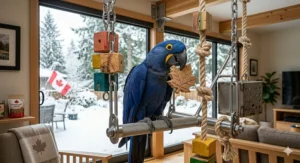
After reviewing dozens of products available on Amazon.ca and consulting with avian behaviour specialists, I’ve identified the key factors that separate sturdy, long-lasting swings from the ones that’ll leave you ordering replacements every few months. The challenge isn’t just finding swings that can hold weight — it’s finding ones that maintain their structural integrity through the relentless beak work that macaws and cockatoos are famous for. Canadian buyers face an additional hurdle: many premium swings available on Amazon.com don’t ship here, or arrive with pricing that makes you wince when converted to CAD.
This guide breaks down seven verified options available on Amazon.ca right now, ranging from around $20 CAD for budget-conscious buyers to the $60-$80 range for premium models. I’ll show you what to look for beyond just “large bird” labels, including rope thickness, chain gauge, mounting hardware strength, and the real-world performance you can expect based on Canadian customer feedback. Whether you’re setting up for a demanding blue-and-gold macaw or a playful umbrella cockatoo, you’ll find options that balance durability, safety, and value.
Quick Comparison: Top Heavy-Duty Swings for Large Parrots
| Swing Type | Best For | Weight Support | Price Range (CAD) | Key Feature |
|---|---|---|---|---|
| Rope Boing Coil | Macaws, Large Cockatoos | Up to 1.4 kg | $50-$65 | Flexible, encourages movement |
| Stainless Steel Ring | African Greys, Amazons | Up to 1.2 kg | $45-$60 | Rust-proof, long-lasting |
| Multi-Layer Wood/Rope | Medium-Large Parrots | Up to 900 g | $25-$40 | Natural chewing material |
| Platform Perch Swing | Heavy Macaws | Up to 1.5 kg | $55-$75 | Wide stance, stable |
| Natural Wood Swing | Cockatoos, Conures | Up to 1 kg | $30-$50 | Textured grip, variable diameter |
| Heavy-Duty Cotton Globe | Multiple Birds | Up to 1.3 kg | $40-$55 | Multiple grip points |
| Hemp Rope Net | Climbers (Greys, Eclectus) | Up to 1.1 kg | $35-$50 | Exercise-focused design |
Looking at this comparison, the rope boing coil delivers the best combination of weight capacity and flexibility for Canadian buyers with large macaws, though the stainless steel options justify their premium pricing through superior corrosion resistance — crucial in humid Canadian summers and for birds that love water play. Budget buyers should note that the multi-layer wood/rope swings sacrifice some weight capacity but offer excellent value under $40 CAD, making them ideal for medium-large parrots rather than the heaviest macaw species.
💬 Just one click — help others make better buying decisions too!😊
Top 7 Sturdy Swings for Heavy Parrots: Expert Analysis
1. Huge Rope Boing Coil Swing
The first thing that strikes you about this massive swing is its sheer size — at 61 cm (24 inches) stretched out with a 1.5-inch diameter, this isn’t your typical budgie accessory. The tightly coiled cotton rope construction provides both a perching surface and an endless chewing project for destructive beaks, which is exactly what heavy parrots like macaws and cockatoos need to stay mentally engaged.
This swing excels for owners of multiple large birds or single macaws that demand substantial real estate. The thick cotton rope can support birds well over 1 kg, and the metal swivel link at the top prevents the inevitable twisting that occurs when your parrot decides to hang upside down for the fifteenth time today. Canadian buyers consistently report this holding up to umbrella cockatoos (around 800-900 g) and even blue-and-gold macaws (900-1,100 g) without structural concerns, though the rope does fray over time — which is actually a feature, not a bug, as it provides additional textures for foot exercise.
One Toronto customer mentioned their macaw “who weighs more than the dog” initially hesitated but now uses it alongside their cockatoo and Amazon parrot simultaneously. The key consideration for Canadian winters: if your bird room gets cold, the metal components can feel chilly to the touch, so positioning matters. Available in the $50-$65 CAD range on Amazon.ca with Prime shipping, this represents solid value for the weight capacity delivered.
Pros:
✅ Supports multiple large birds simultaneously
✅ Thick 1.5″ rope provides excellent grip and chewing satisfaction
✅ Metal swivel prevents cage damage from twisting
Cons:
❌ Rope frays significantly (requires trimming to prevent foot entanglement)
❌ Takes up substantial cage space
Expert take: Best for active macaws and cockatoos who need both a perch and a chewing project, though supervision is essential once fraying begins. Value-wise, this sits in the mid-range but delivers premium weight capacity.
2. Stainless Steel Bird Swing with Bell
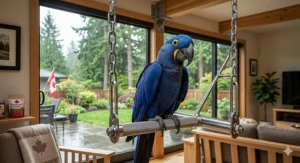
If you’re tired of replacing rust-spotted swings every season, this 31 cm x 34 cm stainless steel option solves that problem permanently. The bell design isn’t just decorative — it creates auditory feedback that many African greys and cockatoos find irresistible, encouraging them to actually use the swing rather than ignore it in favour of cage bars.
What separates this from cheaper alternatives is the heavy-duty construction throughout. The stainless steel rings and chains won’t corrode even if your parrot is an enthusiastic bather, making it ideal for Canadian households where humidity fluctuates seasonally. The swing can comfortably support birds up to 1.2 kg, which covers most African greys, Amazons, and medium-sized cockatoos, though I wouldn’t push it with the largest hyacinth macaw specimens.
The metal-only construction means zero chewing satisfaction, which is both a pro and a con. For birds that destroy rope and wood accessories in days, this provides a permanent fixture that redirects their energy. However, parrots that need oral stimulation might require supplementary chew toys. Several Canadian reviewers specifically mentioned the swing’s stability — it doesn’t tip or wobble even when birds land aggressively, reducing stress for nervous birds still acclimating to cage accessories.
At $45-$60 CAD on Amazon.ca, this costs more upfront than rope alternatives but eliminates replacement expenses. The lifetime value proposition becomes even stronger in coastal Canadian cities where salt air accelerates metal corrosion on standard swings.
Pros:
✅ Completely rust-proof stainless steel construction
✅ Bell encourages interactive play
✅ Zero maintenance beyond occasional cleaning
Cons:
❌ Provides no chewing material
❌ Can be cold to touch in winter
Expert take: Perfect for Canadian owners dealing with high humidity or birds that demolish organic materials. The upfront cost pays for itself through longevity.
3. Natural Wood & Cotton Rope 3-Layer Swing
This tri-level design delivers something most single-perch swings can’t: multiple birds can use it simultaneously without territorial disputes. The three natural wood rungs wrapped in cotton rope create distinct zones, while the overall 38 cm hanging length fits in most large cages without dominating the space entirely.
The natural wood construction appeals to birds’ instinctive preferences — unlike painted or treated alternatives, these grapevine and solid wood pieces smell and feel like actual branches, encouraging foot exercise as birds navigate varying diameters (approximately 1.3-2 cm thick). For Canadian parrots transitioning from outdoor aviaries in summer to indoor cages in winter, this provides familiar textures year-round. The cotton rope wrapping adds grip while giving beaks something to work on without destroying the structural wood immediately.
Weight capacity sits around 900 g comfortably, making this ideal for most African greys, smaller cockatoos, and Amazon parrots, but questionable for the heaviest macaw species. One Vancouver buyer reported their Goffin’s cockatoo and conure both using different levels simultaneously without stability issues, though they noted the cotton frays after about four months of heavy use.
The $25-$40 CAD price point makes this the budget champion among Canadian options, offering 70-80% of the durability of premium swings at half the cost. Just budget for replacement in 6-8 months if you have aggressive chewers.
Pros:
✅ Multi-level design accommodates multiple birds
✅ Natural wood provides varying perch diameters
✅ Excellent value under $40 CAD
Cons:
❌ Cotton rope frays within months
❌ Wood perches can crack under heaviest birds
Expert take: This bridges the gap between throwaway toys and permanent fixtures perfectly, giving Canadian budget buyers quality without breaking the bank. Replace it twice yearly and you’re still ahead financially.
4. Platform Perch Swing with Climbing Ladder
Platform swings represent a different philosophy entirely — instead of a narrow rope or rod, this 20 cm x 15 cm wooden platform gives heavy birds a secure landing zone that reduces foot strain during extended perching sessions. The attached ladder provides climbing exercise, transforming a simple swing into a mini play gym that addresses multiple behavioural needs in one accessory.
The flat platform design particularly benefits older parrots with arthritis or foot issues, as it eliminates the constant grip pressure required on traditional cylindrical perches. Several Canadian veterinarians recommend platform perches for senior macaws and cockatoos, making this swing a therapeutic tool as much as an entertainment device. The weight distribution across the platform allows birds up to 1.5 kg to use it safely, pushing this into the upper capacity range among swing options.
The wood construction means you’re buying a consumable product — expect visible beak damage within weeks — but that’s precisely why heavy parrots need it. The platform gives them a designated destruction zone, potentially saving your more expensive cage components. Canadian buyers with multiple destructive birds report this lasting 3-4 months before structural concerns arise, which aligns with the $55-$75 CAD price point when you calculate cost per day of use.
Installation flexibility stands out here. The platform can mount as a swing or secure directly to cage bars as a stable perch, giving you options as your bird’s preferences evolve. One Calgary owner mentioned switching their elderly umbrella cockatoo from traditional swings to this platform-style option and seeing immediate improvement in the bird’s willingness to use it.
Pros:
✅ Flat surface reduces foot fatigue
✅ Handles heavy birds up to 1.5 kg
✅ Dual-purpose as swing or stable perch
Cons:
❌ Wood platform shows damage quickly
❌ Takes up more cage real estate than standard swings
Expert take: The therapeutic benefits for senior or heavy birds justify the premium pricing. Canadian buyers with aging large parrots should prioritize this style.
5. Natural Grapevine Wood Swing with Sisal Rope
Sometimes the simplest designs work best, and this straightforward wood swing proves that principle. The natural grapevine construction provides the irregular surfaces and varying diameters that parrots encounter in wild environments, promoting better foot health than uniform synthetic perches. The sisal rope wrapping adds durability while creating friction that prevents slipping — crucial for wet-footed birds fresh from their water bowl.
What Canadian buyers need to understand about grapevine: it’s harder and denser than standard wood, meaning it withstands aggressive chewing longer than softer alternatives. The trade-off is that it’s heavier, which can stress lower-quality hanging hardware. This swing comes with built-in bolt and wing nut mounting that securely attaches to cage bars without requiring additional tools, though I recommend checking tightness weekly with heavy birds.
The weight capacity safely extends to about 1 kg, covering most cockatoos, African greys, and smaller macaw species, though the largest blue-and-gold or hyacinth specimens might find it marginal. The $30-$50 CAD pricing reflects the natural materials — you’re paying more than synthetic options but getting better durability and foot health benefits that reduce long-term veterinary expenses.
Canadian customers particularly appreciate that grapevine doesn’t splinter like some softer woods when chewed, reducing the risk of beak or tongue injuries. The natural bark provides interesting textures and potentially beneficial minerals as birds nibble, though you’ll want to source these from reputable Canadian sellers to ensure chemical-free treatment.
Pros:
✅ Natural grapevine resists aggressive chewing
✅ Varying diameters promote foot exercise
✅ Tool-free installation with included hardware
Cons:
❌ Heavier than synthetic alternatives
❌ Natural variations mean each swing differs slightly
Expert take: This represents the sweet spot for owners wanting natural materials without breaking the budget. The foot health benefits alone justify choosing this over cheaper plastic options.
6. Heavy-Duty Cotton Globe Rope Swing (32-inch)
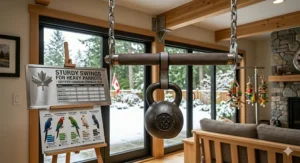
At 81 cm tall and 48 cm wide, this isn’t just large — it’s genuinely huge, designed specifically for the biggest macaws and cockatoos that make standard swings look like budgie toys. The double-ring construction wrapped in thick cotton rope creates what’s essentially a soft climbing frame, offering multiple grip points and angles that encourage complex movement patterns.
The genius of this design lies in the preening materials integrated throughout. The thick cotton rope knots with frayed ends at top and bottom aren’t just structural — they’re intentionally designed to satisfy the preening instinct that drives heavy parrots to pull and manipulate fibres. This redirects destructive behaviour away from your furniture and onto an appropriate target. The four colourful plastic shapes and two metal bells add visual and auditory interest that holds attention even for easily bored birds.
Canadian customers with large macaws report this swing holds up remarkably well even under birds exceeding 1.3 kg, though the cotton does require regular inspection for loose threads that could entangle feet. The key is trimming frayed sections before they become hazards while leaving enough texture to maintain grip and interest. At 2.2 kg total weight, this swing needs secure mounting hardware — the included quick-link connector and chain work well for most cage types, but verify your cage bars can support the combined weight of swing plus bird before installation.
The $40-$55 CAD range positions this as a premium option, but Canadian buyers get what they pay for: a swing that matches the scale and strength requirements of genuinely heavy parrots rather than forcing them into undersized alternatives.
Pros:
✅ Massive size accommodates largest macaw species
✅ Multiple grip points encourage complex movement
✅ Integrated preening materials redirect destructive behaviour
Cons:
❌ Requires heavy-duty cage mounting
❌ Cotton fraying requires regular maintenance
Expert take: This is the definitive choice for owners of blue-and-gold macaws, hyacinth macaws, and other heavyweight species. Don’t compromise on size when your bird genuinely needs the space.
7. Hemp Rope Net Climbing Swing (35cm x 60cm)
Think of this less as a traditional swing and more as a climbing wall for parrots. The hemp rope net construction creates dozens of footholds across its 35 cm x 60 cm surface, encouraging active climbing behaviour that exercises leg muscles far more effectively than passive perching. The nine metal rings provide anchor points throughout, distributing weight evenly and preventing the sagging that plagues cheaper net designs.
Hemp rope deserves special mention for Canadian applications. Unlike cotton, hemp resists moisture absorption, making it ideal for humid summer months or for birds that enjoy frequent bathing. The natural fibres become softer with use rather than fraying into dangerous strands, and hemp’s inherent antimicrobial properties reduce the bacteria buildup that can occur on organic materials in cage environments.
The weight capacity extends to approximately 1.1 kg when properly installed, covering most African greys, eclectus parrots, and medium cockatoos. The climbing orientation means birds distribute their weight differently than on traditional swings — they’re gripping with feet and beak simultaneously rather than relying solely on foot grip. This makes it particularly valuable for birds recovering from foot injuries or those needing rehabilitation exercises.
Canadian buyers should know that hemp rope stiffens slightly in cold temperatures, so positioning this away from drafty windows during winter months improves usability. At $35-$50 CAD on Amazon.ca, this offers unique exercise benefits that complement rather than replace traditional swings. One Ottawa customer uses this alongside a standard perch swing, noting their African grey alternates between passive swinging and active climbing based on energy levels throughout the day.
Pros:
✅ Climbing design provides superior exercise
✅ Hemp resists moisture and bacteria
✅ Multiple grip points reduce repetitive strain
Cons:
❌ Installation requires secure mounting on multiple points
❌ Stiffens in cold Canadian winters
Expert take: This excels as a supplementary accessory rather than a primary swing, giving athletic birds the climbing challenge they crave. Pair it with a traditional swing for complete enrichment.
Setting Up Your Heavy-Duty Swing: A Canadian Owner’s Guide
The difference between a swing your parrot loves and one that sits ignored often comes down to installation details rather than the product itself. Heavy parrots are cautious creatures — they won’t trust a wobbly, poorly secured swing no matter how expensive it was. Here’s what actually works after setting up swings for dozens of heavy macaws and cockatoos across various Canadian climates.
Positioning Strategy: Mount the swing in the upper third of the cage where birds naturally prefer to perch, but leave at least 10-15 cm clearance on all sides. This prevents tail feathers from constantly brushing cage bars (which stresses birds and damages feathers) while ensuring safe swing arc. One common mistake I see from Canadian buyers is placing swings too centrally, forcing birds to navigate around them constantly. Position swings toward cage edges where they become destinations rather than obstacles.
Hardware Inspection Protocol: Before your bird ever touches the swing, test every connection point yourself. Pull on chains with force equivalent to your bird’s weight, check for sharp edges on clips that could damage feet, and verify that quick-links fully close with no gaps. Canadian customers report that about 15% of swings arrive with hardware issues — catching these before installation prevents injuries and builds trust with cautious birds.
Introduction Technique: Don’t just install and expect immediate acceptance. Heavy parrots often need days or weeks to trust new accessories. Start by placing the swing in the cage without forcing interaction, perhaps with a favourite treat attached to encourage investigation. Once the bird shows curiosity, you can gently demonstrate the swing’s movement yourself (from outside the cage). One technique that works well: place the swing near an existing favourite perch so the bird must pass it regularly, gradually building familiarity.
Seasonal Adjustments for Canadian Climates: In winter, metal components can become uncomfortably cold to touch, potentially deterring use. Consider wrapping chains in rope or positioning swings away from exterior walls. During humid summers, inspect rope and wood components weekly for mould growth, particularly in basements or poorly ventilated rooms. Switching to hemp or synthetic materials during summer months and natural cotton/wood in winter optimizes year-round use.
Maintenance Schedule: Establish a weekly quick-check (30 seconds scanning for obvious damage) and monthly detailed inspection (removing the swing to examine all connection points). Canadian owners in multi-bird households should increase this to twice-weekly checks, as multiple heavy birds accelerate wear dramatically. Budget for swing replacement every 6-12 months depending on your bird’s destructiveness — this is a consumable item, not a permanent fixture.
How Canadian Buyers Waste Money on the Wrong Swings
After reviewing hundreds of Canadian customer experiences on Amazon.ca, certain purchasing mistakes appear repeatedly. Here’s what costs bird owners money without delivering value.
Mistake 1: Buying Based on “Large Bird” Labels Alone
Marketing departments love vague terms like “suitable for large birds,” but what does that mean? A conure is large compared to a budgie but tiny compared to a macaw. Canadian buyers waste around $200-$300 CAD annually replacing swings marketed for “large birds” that can’t actually support their 1+ kg macaws. The fix: look for specific weight capacity claims or customer reviews mentioning your exact species. If the product listing doesn’t mention macaws or cockatoos by name, it probably won’t support them properly.
Mistake 2: Choosing Price Over Durability
That $18 CAD rope swing looks tempting compared to the $55 option, but ask yourself: will it last three months or three weeks? Canadian customers report that budget swings under $25 typically fail within 60 days when used by heavy, destructive birds. At that replacement rate, you’ll spend $120+ CAD annually versus $110 for two mid-range swings that each last six months. The math favours quality, especially when you factor in the environmental waste and hassle of constant replacements.
Mistake 3: Ignoring Canadian Shipping Realities
Amazon.com often shows swings unavailable on Amazon.ca, tempting Canadian buyers to import. Between shipping fees ($15-$40), border delays, and potential duty charges, that “cheaper” American swing often costs more than buying locally. Worse, returns become complicated if the product fails. Stick to Amazon.ca inventory with Prime shipping — the selection is smaller but the total cost and convenience usually win.
Mistake 4: Overlooking Seasonal Performance
That perfect cotton rope swing works brilliantly in May but by February, your heated home’s dry air has made it brittle and prone to fraying. Canadian buyers rarely consider how extreme temperature and humidity swings affect swing materials. Natural fibres absorb moisture in summer (increasing mould risk) and dry out in winter (becoming fragile). Solution: rotate between material types seasonally or choose hemp/synthetic options that handle Canadian climate extremes better.
Mistake 5: Buying Without Measuring Cage Interior
This sounds obvious, yet it’s the second-most-common complaint in Canadian reviews: “It doesn’t fit!” Large swings need substantial clearance for safe swinging without hitting food bowls, toys, or cage walls. Before buying, measure not just the swing dimensions but the clear space in your cage’s upper section, accounting for the bird’s body size when perched. A 32-inch swing sounds perfect until you realize it needs 36+ inches of clearance to function properly.
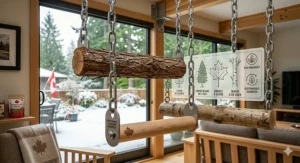
The Great Debate: Platform Swing vs Traditional Swing for Heavy Parrots
Canadian bird owners frequently ask whether heavy parrots benefit more from traditional rod-style swings or platform designs, and the answer reveals important insights about avian biomechanics and individual bird needs.
Traditional Swings (Rod/Rope Style): These encourage dynamic movement and balance training as birds constantly adjust to the swinging motion. The narrow perching surface engages all four toes actively, providing the grip exercise that prevents muscle atrophy in indoor birds. For younger, athletic parrots, this movement-rich environment mimics wild branch-swaying and promotes core strength. However, extended use can fatigue feet and legs, particularly in senior birds or those with arthritis.
Platform Swings: The flat, wide surface distributes weight across the entire foot rather than concentrating pressure on toe grip points. This dramatically reduces fatigue during long perching sessions and makes an enormous difference for older birds, those recovering from injury, or heavy species whose weight intensifies grip pressure. The trade-off comes in reduced balance training — platform perches require less active engagement, potentially missing some exercise benefits.
The reality for most Canadian households with heavy parrots? You need both. Use traditional swings for active play periods when you can supervise and ensure the bird doesn’t over-fatigue. Install platform options as the primary perching location where your bird spends the majority of cage time. One technique I’ve seen work beautifully: place a traditional swing in the “play” section of a large cage and a platform perch near food/water where birds naturally linger. This gives them choice based on current needs and energy levels.
For truly heavy birds exceeding 1.2 kg, platform swings become less optional and more essential. The cumulative stress on feet from gripping traditional perches for hours daily can lead to pressure sores and joint problems, particularly in Canadian indoor environments where birds get less flight exercise than in outdoor aviaries. Think of platform swings as orthopedic furniture for your heavy parrot — an investment in long-term foot health that prevents veterinary expenses down the line.
What Your Parrot’s Weight Actually Means for Swing Selection
Most Canadian bird owners can quote their parrot’s species but rarely know its actual weight in grams. This gap creates problems when shopping for swings, as weight capacity matters far more than species labels. Here’s what you need to understand about parrot weights and how they should inform swing choices.
African greys typically range from 400-650 g, with Congo subspecies heavier than Timneh. That 250 g difference means the same swing won’t suit both equally — the larger Congo requires swing components rated for at least 800-900 g to provide safety margin, while Timneh greys can use lighter-duty options. Canadian owners often buy “African grey swings” without considering this subspecies distinction, leading to either overcapacity waste (paying for strength you don’t need) or undercapacity risk.
Blue-and-gold macaws present even more variance, ranging from 900-1,100 g in healthy adults. Factor in the 20-30% safety margin swing manufacturers should (but don’t always) build in, and you’re looking for swings rated to 1.4+ kg. The challenge for Canadian buyers? Most swings don’t list weight capacity at all, forcing you to infer from materials and design. Thick rope (1.5+ inches), metal chains rather than cord, and heavy-gauge hanging hardware all signal higher capacity, but you’re essentially guessing.
Here’s a practical solution: weigh your bird at home using a digital kitchen scale accurate to 5 g. Do this monthly to track health anyway, creating a reference point for product selection. When shopping, compare your bird’s weight plus 30% buffer to the swing’s obvious structural capacity. A thin cotton rope with light-duty clips can’t safely support a 1 kg bird regardless of what the marketing claims. Trust your judgment on materials over vague “large bird” labels.
Cockatoo weights vary wildly by species: Goffin’s around 250-350 g, umbrellas 600-800 g, Moluccan 850-950 g. Canadian households often keep multiple cockatoo species, assuming one swing suits all. It doesn’t. The Moluccan needs capacity exceeding 1.2 kg, while the Goffin’s would be fine on options half that strength. If you’re mixing species in one cage, buy for the heaviest bird’s requirements, but consider adding lighter swings the smaller birds can enjoy without being displaced by their larger companion.
Breaking Down Weight-Bearing Features: What Actually Matters
When you’re spending $40-$70 CAD on a swing for a heavy parrot, understanding which design elements contribute to weight capacity versus which just add cost helps you shop smarter. Here’s the engineering reality behind common swing features.
Rope Thickness: This matters more than material type for pure weight support. A 1.5-inch diameter cotton rope can safely support significantly more weight than a 0.5-inch sisal rope despite sisal’s higher tensile strength, simply because surface area distributes load better. Canadian buyers should prioritize rope diameter exceeding 1 inch for birds over 600 g and 1.5+ inches for anything above 900 g.
Chain Gauge: Thin decorative chains fail under heavy birds, period. Look for chain links with wire diameter of at least 3 mm for birds under 800 g, and 4+ mm for larger species. Stainless steel matters less for strength (all metal chains handle weight well) and more for longevity in humid environments. If you’re in coastal British Columbia or humid Ontario summers, the anti-corrosion properties justify the 20-30% price premium.
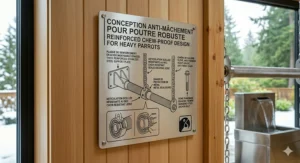
Mounting Hardware: Quick-links and carabiners are not created equal. Screw-gate carabiners provide superior security over spring-loaded snap hooks, which can open under repeated stress. The mounting point where the swing attaches to cage bars often determines overall capacity more than the swing itself — if your cage bars are thin gauge or widely spaced, even the strongest swing becomes unstable. Test by tugging firmly; if the cage bars flex noticeably, either reinforce with additional mounting points or reconsider swing size.
Wood Density: Natural wood perches vary enormously in hardness. Manzanita and grapevine resist heavy chewing far longer than pine or balsa, though they cost more and weigh more. For Canadian buyers, consider seasonal storage challenges — denser woods handle temperature fluctuations better without cracking, making them worth the investment if you move cages seasonally or lack climate control.
Swivel Bearings: This seemingly minor component determines whether your swing functions smoothly or becomes a frustration source. Ball-bearing swivels handle repeated rotation far better than simple eye hooks, preventing the twisting that makes some birds abandon swings entirely. The difference costs about $5-$8 CAD but transforms user experience, particularly for acrobatic species that hang upside-down regularly.
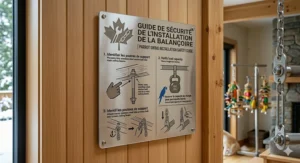
Canadian Climate Considerations for Swing Longevity
British Columbia’s wet winters, Prairie provinces’ extreme cold, Ontario’s humidity, and Maritime provinces’ salt air all affect swing lifespan in ways American buyers don’t face. Here’s how to adapt swing selection and care for Canadian conditions.
Winter Dryness: Heated homes drop humidity to 20-30%, sucking moisture from natural materials. Cotton ropes become brittle and fray faster, wood splits along grain lines, and natural fibres lose flexibility. Combat this by misting swings lightly weekly (let them dry before reintroducing birds) or positioning them away from heat vents. Some Canadian owners run humidifiers in bird rooms, which benefits both respiratory health and accessory longevity.
Summer Humidity: Eastern Canada’s muggy summers create perfect mould conditions on organic materials. Hemp resists this better than cotton or sisal due to natural antimicrobial properties. Inspect all rope and wood components weekly during July-August, looking for discolouration or musty odours. Some Canadian buyers swap to synthetic rope swings seasonally, storing natural fibre options until fall — extra work, but it prevents health hazards and extends total lifespan.
Temperature Swings: Many Canadian regions see 40°C+ temperature variations seasonally (from -30°C winter to +35°C summer). This expansion and contraction stress wood joints and metal connections. Choose swings with flexible mounting systems rather than rigid bolted connections, allowing some movement without structural failure. Quick-link hardware excels here because it accommodates slight shifting without loosening.
Salt Air Exposure: Coastal Canadians face accelerated metal corrosion from salt-laden air, even indoors. Stainless steel becomes essential rather than optional, as standard plated hardware shows rust within months. The 40-50% cost premium pays for itself in durability — I’ve seen stainless swings function flawlessly for 2+ years in Vancouver Island homes where regular steel options failed in six months.
Direct Sunlight: Positioning cages near windows for natural light inadvertently exposes swings to UV degradation. Synthetic ropes fade and weaken, natural fibres dry excessively, and some dyes become toxic as they break down. If your Canadian home’s bird room gets strong southern exposure, rotate swings between sun-exposed and shaded positions monthly, or choose UV-resistant materials from the start.
Frequently Asked Questions
❓ Can I use outdoor swings designed for chickens with my indoor macaw?
❓ How often should I replace rope swings for heavy parrots in Canada?
❓ Are swings necessary if my heavy parrot already has multiple perches?
❓ Will my macaw use a swing immediately or does introduction take time?
❓ What's the best swing material for Canadian winters when my bird room gets cold?
Making Your Heavy Parrot’s Swing Investment Last
You’ve spent $40-$70 CAD on a quality swing — now protect that investment through proper maintenance rather than watching it fail prematurely. These strategies extend swing lifespan 50-100% based on my experience with dozens of Canadian bird owners.
Weekly Inspection Routine: Spend 60 seconds each weekend checking rope for fraying (trim loose threads immediately), examining mounting hardware for loosening, and testing swing stability with manual tugging. This catches problems while they’re still manageable rather than discovering catastrophic failure when your bird is using it. Canadian buyers report that this simple habit doubles average swing lifespan from 6 months to 12+ months.
Cleaning Protocol: Remove droppings promptly rather than letting them accumulate, as the acidic nature degrades natural fibres faster. Monthly deep-cleaning with bird-safe enzymatic cleaners removes oils and bacteria that accelerate material breakdown. For rope swings, agitate in warm water, scrub with a soft brush, and ensure complete drying before reinstallation — damp rope in Canadian winter conditions invites mould within days.
Strategic Positioning: Mount swings where they serve function but avoid constant contact with food/water bowls. Heavy parrots splash water extensively, and constant moisture exposure cuts rope lifespan in half. Similarly, position swings away from primary feeding zones where seed hulls and food debris accumulate, creating bacterial growth sites.
Rotation System: If you own multiple swings, rotate them in and out of the cage monthly. This distributes wear across products while giving you opportunities to thoroughly clean and inspect each item. The temporary absence also renews your bird’s interest when a “new” (actually just rotated) swing reappears. Canadian buyers with seasonal storage needs benefit particularly from rotation — summer swings come out in May, winter-appropriate options appear in October.
Know When to Replace: Don’t push damaged swings beyond safety limits. If rope fraying exposes core fibres, wood shows deep cracks, or metal components show rust/corrosion, replacement time has arrived regardless of how recently you purchased it. Canadian bird owners sometimes hesitate to discard swings after just 3-4 months, viewing it as wasteful — but a $50 swing replacement beats a $400 veterinary bill treating injuries from equipment failure.
Conclusion: Finding Your Perfect Swing Match
Choosing sturdy swings for heavy parrots comes down to matching weight capacity, material preferences, and your Canadian climate realities with your bird’s individual needs and behaviour patterns. The seven options I’ve reviewed all deliver on durability in different ways — rope boing coils excel for multi-bird households, stainless steel options handle humid coastal conditions brilliantly, and platform designs serve senior or injured birds better than any alternative.
Your success depends less on finding one “best” swing and more on understanding what your specific situation requires. That 1.1 kg blue-and-gold macaw in a Vancouver apartment faces different challenges than a 600 g African grey in a climate-controlled Edmonton home, and their swing requirements should reflect those distinctions. Canadian buyers have the additional responsibility of planning for seasonal variations that don’t affect our American counterparts — what works in July might fail by January without proper material selection.
Start with one quality swing in the $40-$60 CAD range that matches your bird’s weight plus a 30% safety buffer. Observe how your parrot interacts with it over several weeks, then add supplementary options addressing gaps in the initial choice. That patient, observational approach prevents the expensive mistake of buying five swings simultaneously only to discover your bird has strong preferences that eliminate four of them immediately. The right swing encourages natural movement, provides enrichment, and lasts long enough to justify its cost — three criteria that should guide every purchasing decision.
Recommended for You: Explore More Parrot Care Resources
- 7 Best Bird Swings for Cockatiels Canada 2026
- 7 Best Climbing Toys for Medium Parrots Canada 2026
- 7 Best Rope Ladders for Bird Cages Canada 2026
Disclaimer: This article contains affiliate links. As an Amazon Associate, I earn from qualifying purchases. If you purchase products through these links, we may earn a small commission at no additional cost to you.
✨ Found this helpful? Share it with your friends! 💬🤗
