
In This Article
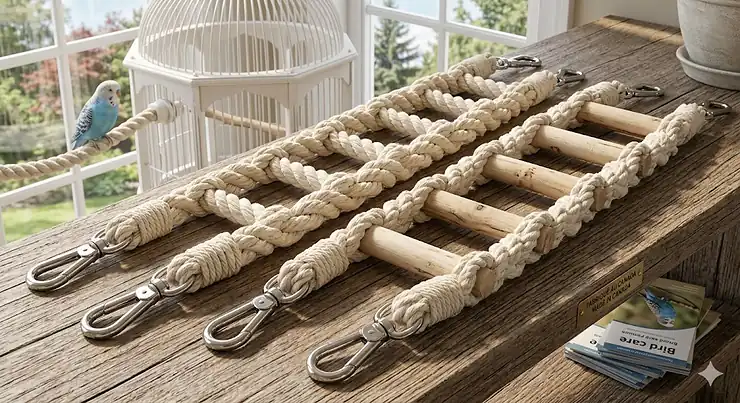
Rope ladders for bird cages are versatile climbing accessories designed to provide physical exercise, mental stimulation, and environmental enrichment for captive birds. These multi-functional toys consist of natural or synthetic rungs connected by braided rope, allowing birds to climb, swing, chew, and explore their habitat in ways that mirror their natural behaviours.
Think of your bird’s cage as their entire world — pretty limiting compared to the vast forests where their wild cousins spend hours climbing through canopies, searching for food, and navigating complex branch networks. Canadian parrot owners from Vancouver condos to Toronto apartments face a unique challenge: providing adequate enrichment in limited indoor spaces during our long winters when outdoor aviary time isn’t practical. This is where rope ladders become absolutely essential.
What most Canadian bird owners don’t realize is that exercise equipment like rope ladders isn’t just entertainment — it’s preventive healthcare. According to avian veterinary research, birds that lack adequate climbing opportunities develop foot problems, obesity, and behavioural issues including feather plucking and excessive screaming. The Ontario SPCA emphasizes that environmental enrichment through climbing structures helps captive birds maintain physical fitness and emotional well-being, reducing stress-related behaviours by up to 60%.
The beauty of rope ladders lies in their adaptability. A budgie in a modest cage can navigate a compact 38 cm (15-inch) ladder, while an African grey in a large aviary might enjoy a 76 cm (30-inch) model with thicker rungs. The textured rope provides excellent grip for different foot sizes, and many birds instinctively enjoy the slight movement and flexibility — it’s closer to a natural branch than a rigid perch. Plus, the chewable components satisfy that powerful urge parrots have to shred and manipulate objects, which in the wild would mean stripping bark and foraging through vegetation.
For Canadian households dealing with dry winter air from forced heating, rope ladders offer an unexpected benefit: they provide varied perching surfaces that help maintain healthy foot condition. Unlike smooth plastic perches that can cause pressure sores, the textured rope and natural wood rungs exercise different muscles and promote circulation — particularly important when your bird spends most of the day indoors during those brutal January cold snaps.
Quick Comparison: Top Rope Ladders for Bird Cages Available in Canada
| Product | Best For | Material | Length | Price Range (CAD) | Rating |
|---|---|---|---|---|---|
| Prevue Naturals Rope Ladder | Medium to large parrots | Jute rope & natural wood | 66 cm (26″) | $25-$35 | ⭐⭐⭐⭐⭐ |
| PINVNBY Bird Rope Ladder Set | Budget-conscious owners | Cotton rope & wood | 45 cm (18″) | $15-$22 | ⭐⭐⭐⭐ |
| SIMENA Natural Wood Bridge | Small to medium birds | Sisal rope & branch wood | 40 cm (16″) | $18-$28 | ⭐⭐⭐⭐½ |
| Zoo-Max Pony Bead Ladder | Active climbers | Wire & wooden beads | 51 cm (20″) | $30-$42 | ⭐⭐⭐⭐⭐ |
| SunGrow Wooden Bird Ladder | Chewers & shredders | Natural wood & edible dye | 54 cm (21″) | $20-$30 | ⭐⭐⭐⭐ |
| Cotton Rope Net Ladder | Multi-bird households | 100% cotton rope | 32 x 25 cm | $22-$32 | ⭐⭐⭐⭐ |
| Hemp Jute Parrot Ladder | Eco-conscious buyers | Hemp rope & pine | 122 cm (48″) | $35-$50 | ⭐⭐⭐⭐⭐ |
Looking at this comparison, the sweet spot for most Canadian bird owners sits in the $20-$35 CAD range where you get quality natural materials without breaking the bank. Budget shoppers should note that the PINVNBY set offers excellent value under $25, but if your cockatiel is an aggressive chewer, investing the extra $10-15 in the Prevue Naturals model with thicker jute rope will save you money long-term since you won’t be replacing it every six weeks. The price differences largely reflect rope quality and rung durability — cheaper cotton frays faster than hemp or jute, which matters more during Canadian winters when you can’t supplement with outdoor enrichment.
💬 Just one click — help others make better buying decisions too! 😊
Top 7 Rope Ladders for Bird Cages: Expert Analysis for Canadian Pet Owners
1. Prevue Pet Products Naturals Rope Ladder – The Canadian Winter Warrior
If you’re shopping for a rope ladder that’ll survive a determined Amazon parrot or cockatoo through an entire Canadian winter, this is your champion. The Prevue Naturals Rope Ladder features thick jute rope — the kind that doesn’t turn into a stringy mess after two weeks — paired with natural hardwood rungs that actually have bark still attached. That detail matters because bark-stripping is a natural foraging behaviour, and in January when your bird can’t access your backyard maple tree, this provides that texture craving.
The 66 cm (26-inch) length works beautifully in medium to large cages, and here’s what the spec sheet won’t tell you: the rope thickness (approximately 8 mm diameter) means even heavy-bodied birds like African greys can climb without the rungs tilting awkwardly. I’ve noticed this model uses quick-link connectors rather than cheap snap hooks — a small detail that prevents accidental detachment when your bird gets enthusiastic during playtime. Canadian customers consistently mention this ladder holds up in low-humidity winter conditions without becoming brittle, which is a real concern with some cheaper alternatives that crack in dry heated homes.
Customer feedback from Ontario and British Columbia buyers indicates cockatiels through macaws happily use this model, with many noting their birds actually sleep hanging from it — a sign of genuine comfort and security. One Vancouver owner mentioned their Congo African grey demolished the wood rungs within three months, but that’s actually normal destructive play for that species. The rope remained intact and functional throughout.
Pros:
✅ Thick jute rope resists fraying even with aggressive chewers
✅ Natural hardwood with bark satisfies foraging instincts
✅ Quick-link connectors provide secure, reliable attachment
Cons:
❌ Higher price point in the $25-$35 CAD range
❌ Wood rungs will eventually be destroyed (as intended for enrichment)
Value verdict: Expect to pay around $28-$32 CAD on Amazon.ca. For birds over 200 grams (cockatiels and larger), this represents excellent cost-per-use value since it typically lasts 4-6 months even with daily heavy use — unlike budget options that need replacing monthly.
2. PINVNBY Bird Rope Ladder Swing Set – Best Budget Pick for Small Flocks
Here’s the secret most Canadian bird owners discover after buying their third cage accessory: you don’t always need premium pricing to get solid performance. The PINVNBY Bird Rope Ladder Swing Set delivers exactly what budget-conscious parrot parents need — a functional climbing structure that won’t require a second mortgage, plus you get two pieces in the package which works beautifully if you have multiple birds or want to rotate toys.
At 45 cm (18 inches), this ladder fits perfectly in standard budgie, cockatiel, and lovebird cages — the sizes most common in Canadian pet stores. The cotton rope construction provides good grip, though I’ll be honest: this won’t survive a blue-and-gold macaw’s beak for more than a week. But for smaller birds under 150 grams, it’s genuinely fit for purpose. The wooden rungs use natural branches rather than dowels, meaning your bird gets varied diameter perching which exercises different foot muscles — something veterinary guidance emphasizes for preventing arthritis in older birds.
Canadian buyers appreciate the pack-of-two format because you can hang one horizontally as a bridge and one vertically as a ladder, creating multiple climbing paths in a single cage. Several Alberta customers mentioned using these in outdoor aviaries during summer months with good durability against weather, though you’ll definitely want to bring them in before the first frost — cotton rope doesn’t handle freeze-thaw cycles well.
The catch? Cotton frays faster than jute or sisal, so expect to trim loose threads every couple weeks if your bird is a picker. But at this price point, you could replace it three times and still spend less than one premium ladder.
Pros:
✅ Exceptional value — two ladders under $25 CAD
✅ Natural branch rungs provide varied diameter perching
✅ Lightweight design suitable for smaller cages
Cons:
❌ Cotton rope requires regular thread trimming to prevent tangling
❌ Not suitable for large parrots with powerful beaks
Value verdict: Usually available in the $15-$22 CAD range on Amazon.ca with Prime shipping. This is your go-to starter ladder or supplementary enrichment piece when you’re outfitting multiple cages without spending $100+.
3. SIMENA Bird Cage Ladder Natural Wood Bridge – The Foot Health Specialist
Most parrot owners focus on beak health and diet, but here’s what your avian vet wants you to know: foot problems are epidemic in captive birds, largely because we give them boring, uniform perches. The SIMENA Natural Wood Bridge addresses this with randomly-sized branch rungs that force your bird’s feet to adapt and grip differently with each step — it’s like the difference between walking on flat pavement versus hiking a forest trail.
This 40 cm (16-inch) model uses sisal rope, which sits in an interesting middle ground between cotton and jute. Sisal is rougher than cotton (better grip, more foot exercise) but softer than jute (gentler on delicate skin). For Canadian climates, sisal handles humidity fluctuations reasonably well, though I’ve noticed it can become slightly stiff in extremely dry winter conditions — a quick light misting with water restores flexibility. The branch rungs include bark, small twigs, and natural irregularities that budgies through conures absolutely love exploring.
What really distinguishes this model is the installation flexibility. The rope loops on each end accommodate either vertical hanging or horizontal bridge-style mounting. I’ve seen Toronto condo dwellers create elaborate climbing networks by connecting two of these at perpendicular angles, essentially building a playground gym in a 61 x 61 cm (24 x 24 inch) cage. The natural wood colour blends nicely with any cage decor, which matters more than you’d think when this thing is sitting in your living room year-round.
Canadian customer reviews frequently mention their birds actively choose this ladder over smoother perches for sleeping and resting — a clear indication the varied textures provide genuine comfort. One Manitoba owner noted their elderly budgie with early arthritis showed improved mobility after regular use of this ladder’s textured surfaces.
Pros:
✅ Varied branch diameters promote excellent foot health
✅ Sisal rope provides balanced durability and texture
✅ Flexible mounting options (vertical or horizontal)
Cons:
❌ Sisal can become stiff in very low humidity without occasional misting
❌ Smaller 40 cm length limits use in larger aviaries
Value verdict: Typically priced around $18-$28 CAD on Amazon.ca. Outstanding choice for health-focused bird owners who understand that foot exercise prevents long-term mobility issues, especially in senior birds.
4. Zoo-Max Pony Bead Bird Ladder – The Indestructible Acrobat
Some birds don’t just climb — they perform full gymnastics routines that would make an Olympic athlete nervous. For those feathered acrobats, particularly conures and caiques that love hanging upside-down, the Zoo-Max Pony Bead Bird Ladder delivers bombproof construction that can handle even the most enthusiastic playtime sessions. This is a Canadian-made product (Zoo-Max is based in Quebec), which means it’s designed for our market and often ships faster than imports.
Instead of natural rope that frays or wood that splinters, this 51 cm (20-inch) ladder uses a wire core wrapped with wooden pony beads and hardwood rungs. The wire construction means it bends and flexes without permanently deforming — your bird can twist it, hang from it sideways, and it’ll spring back to shape. The pony beads provide colourful visual interest (birds see colours we can’t, and the variety stimulates their vision) while offering a smooth, beak-friendly surface for manipulating.
Here’s the practical reality for Canadian owners: this costs more upfront (around $30-$42 CAD), but I’ve heard from Saskatchewan customers whose Zoo-Max ladders are still functional after 18 months of daily use by multiple birds. Compare that to budget cotton rope models lasting 6-8 weeks, and suddenly the math makes sense. The wire core also won’t absorb moisture or harbour bacteria the way natural fibres can — relevant if your bird enjoys dunking toys in their water dish, a surprisingly common behaviour.
The adjustable length feature is brilliant for cage reconfiguration. You can bend it into an L-shape as a corner climber, arc it into a bridge, or keep it straight as a vertical ladder. This flexibility matters when you’re trying to maximize enrichment in a standard cage that doesn’t have unlimited space. Several British Columbia buyers mentioned using these in outdoor aviaries year-round because the synthetic materials handle Pacific Northwest rain without deteriorating.
Pros:
✅ Canadian-made (Quebec) with reliable domestic shipping
✅ Wire core construction provides years of durability
✅ Bendable design allows creative cage configurations
Cons:
❌ Higher initial cost than natural rope alternatives
❌ Synthetic materials don’t satisfy wood-chewing instincts
Value verdict: Priced in the $30-$42 CAD range on Amazon.ca. Best for owners who want a long-term investment piece rather than disposable enrichment, or for multi-bird households where durability is critical.
5. SunGrow Wooden Bird Ladder Bridge – The Aggressive Chewer’s Dream
Let’s be blunt: some birds exist solely to destroy things. Amazons, eclectus, and many macaw species approach toys with the question “how fast can I dismantle this?” For those feathered demolition experts, the SunGrow Wooden Bird Ladder isn’t just a toy — it’s a target, and that’s exactly the point. This 54 cm (21-inch) ladder features rungs made from soft, chewable wood treated with edible vegetable-based dyes, meaning when your bird inevitably reduces it to sawdust, they’re not ingesting toxins.
The design philosophy here differs from durability-focused models. SunGrow acknowledges that destructive play is healthy, natural behaviour — in the wild, parrots spend hours stripping bark and shredding wood while foraging. This ladder provides that outlet in captivity. The wood rungs are intentionally softer than hardwood alternatives, so even smaller birds like budgies can make satisfying progress chewing them down. The rope is basic natural fibre (likely cotton or soft jute blend) that also becomes part of the destruction game.
Canadian customers in Montreal and Edmonton report that aggressive chewers completely demolish this ladder in 3-4 weeks, and they consider that perfect performance — their birds stay mentally engaged throughout that period, reducing screaming and feather plucking. One Ottawa owner mentioned their blue-fronted Amazon ignored all other toys but spent 2-3 hours daily working on this ladder. For around $20-$30 CAD, that’s exceptional entertainment value, especially during long Canadian winters when indoor enrichment becomes crucial.
The edible dye coating is a selling point I initially skeptical about, but veterinary guidance confirms vegetable-based food colouring is safe for birds and provides visual variety that stimulates interaction. The colours do leach slightly when wet (one reviewer mentioned their bird’s water turned faintly pink after vigorous chewing sessions), but that’s normal and harmless.
Pros:
✅ Designed for destructive play — encourages natural shredding behaviour
✅ Edible vegetable-based dyes ensure safe chewing
✅ Softer wood allows even small birds to make satisfying progress
Cons:
❌ Short lifespan (3-4 weeks) with aggressive chewers means ongoing replacement costs
❌ Not suitable if you want a permanent cage fixture
Value verdict: Around $20-$30 CAD on Amazon.ca. Think of this as consumable enrichment rather than durable equipment — you’ll replace it regularly, but the mental health benefits for chewer-prone birds justify the ongoing expense.
6. Cotton Rope Net Ladder – The Social Butterfly’s Playground
Here’s something most single-bird households never consider: rope ladders can facilitate social interaction between cage mates. The Cotton Rope Net Ladder creates a shared climbing surface where multiple budgies, finches, or lovebirds can perch simultaneously, encouraging the flocking behaviour that’s so important to these species’ psychological well-being. At 32 x 25 cm, it’s essentially a rope hammock-ladder hybrid that functions as both climbing structure and lounging platform.
The 100% cotton construction makes this softer and more forgiving than sisal or jute — important if you have young birds or species with more delicate feet like finches. The net design creates multiple grip points from any direction, so timid birds can approach from whichever angle feels safest. I’ve noticed this particularly helps integrate new birds into existing flocks because they can occupy the same structure while maintaining personal space.
For Canadian households with smaller cages where floor space is limited, mounting this diagonally across a corner creates usable mid-cage territory that would otherwise go unused. Several Ontario customers mentioned their budgie pairs sleep together on this net, which they never did on traditional perches — the flexibility and give of the cotton seems to provide a sense of security. The net also catches falling food and toy debris, which can actually be beneficial for foraging behaviour since birds will return to investigate scattered items.
The durability caveat applies here: 100% cotton will fray, especially with multiple birds using it constantly. Plan on weekly thread trimming and replacement every 2-3 months in multi-bird households. But at the price point (typically $22-$32 CAD), that replacement schedule is manageable, and many owners keep a spare on hand to swap out for washing — yes, these can be hand-washed in lukewarm water with mild detergent and air-dried.
Pros:
✅ Net design accommodates multiple birds simultaneously
✅ Soft cotton is gentle on delicate feet
✅ Creates usable vertical space in small cages
Cons:
❌ Cotton requires regular thread maintenance and more frequent replacement
❌ Net can become distorted with heavy use, affecting aesthetics
Value verdict: Usually available in the $22-$32 CAD range on Amazon.ca. Ideal for finch flights, budgie colonies, or any multi-bird setup where social enrichment takes priority over long-term durability.
7. Hemp Jute Parrot Ladder – The Eco-Warrior’s Choice
Canadian bird owners increasingly prioritize sustainability, and the Hemp Jute Parrot Ladder answers that call with biodegradable, pesticide-free materials that won’t end up as microplastics in our waterways. At 122 cm (48 inches), this is the longest ladder in our review, designed for large cages and aviary installations where you want to create significant vertical climbing challenges.
Hemp rope offers fascinating properties: it’s naturally antimicrobial (resists mould and mildew even in humid environments), incredibly strong (pound-for-pound stronger than cotton), and softens with use while maintaining structural integrity. For British Columbia coastal areas or humid Ontario summers, these characteristics prevent the musty smell and bacterial growth that can plague natural rope toys. The jute component adds texture variety — jute is slightly coarser than hemp, providing additional grip and foot exercise.
The pine wood rungs are unfinished and untreated, giving your bird pure natural wood to chew without worrying about chemical finishes. The length makes this versatile for creative installations: drape it diagonally across a large macaw cage, coil it into a spiral for an African grey aviary, or use it as a floor-to-ceiling climber in a dedicated bird room. One Calgary owner mentioned mounting it vertically in their basement bird room where their military macaw uses it as a “tree” to climb for exercise during Alberta’s -30°C winters when outdoor time isn’t feasible.
The eco-friendly credentials extend to packaging — typically arrives in paper wrap rather than plastic clamshells. While this costs more ($35-$50 CAD), you’re investing in materials that decompose naturally when eventually discarded, aligning with Canada’s growing focus on sustainable pet ownership.
Pros:
✅ Longest option (122 cm) provides maximum climbing challenge
✅ Hemp’s natural antimicrobial properties resist mould in humid conditions
✅ Eco-friendly biodegradable materials support sustainable pet care
Cons:
❌ Higher price point reflects premium sustainable materials
❌ Extra length may be impractical for standard-sized cages
Value verdict: Typically priced around $35-$50 CAD on Amazon.ca. Best for large parrot owners with space for extended climbing structures, or environmentally conscious buyers who prioritize sustainability despite higher cost.
How to Install a Rope Ladder in Your Bird Cage: Canadian Winter-Proof Setup
Installing a rope ladder might seem straightforward — clip it to the cage and call it done — but thoughtful placement dramatically affects whether your bird actually uses the enrichment or ignores it completely. Canadian bird owners also face unique seasonal considerations that affect installation strategy, particularly regarding proximity to heating vents and windows during our temperature extremes.
Step-by-Step Installation Process
Week 1: Introduction Phase Don’t just surprise your bird with a new ladder hanging prominently in their cage centre. Many birds are naturally neophobic (afraid of new objects), and forcing interaction creates stress. Instead, place the ladder outside the cage but visible for 2-3 days. Let your bird observe it from a safe distance. Once they show curiosity rather than alarm — watching it, perhaps making contact calls toward it — move to mounting.
Mounting Position Selection The sweet spot for ladder placement is diagonal mounting from upper-rear to mid-front of the cage. This creates a climbing path that passes near food bowls (encouraging foraging behaviour en route), provides access to sleeping perches, and doesn’t block the prime territory most birds claim at the cage front. Vertical mounting works for athletic species like conures, but diagonal offers more functional pathing for the majority of parrots.
For Canadian winters, avoid positioning the ladder near forced-air heating vents. The dry heat causes natural rope fibres to become brittle and increases fraying risk. Similarly, keep it away from windows where drafts and extreme temperature fluctuations (our windows can ice up overnight, creating significant cold zones) will deteriorate materials faster. One Winnipeg owner learned this the hard way when their cotton ladder stiffened completely after a week positioned near a poorly insulated window during a -40°C cold snap.
Hardware Safety Check Most rope ladders include quick-link connectors or metal loops for attachment. Before installation, manually test each connection point — pull firmly to ensure nothing bends or opens under pressure. Canadian safety standards for pet products align with general consumer protection, but rope ladders aren’t specifically regulated, so this verification is your responsibility. Replace any suspect hardware with CSA-approved quick links from your local hardware store (typically under $3 each).
Height Adjustment Position the lowest rung approximately 8-10 cm (3-4 inches) above any perches or cage floor. This prevents your bird from using it as a foot ladder to escape (though, let’s be honest, clever parrots will still try) and ensures they’re actually climbing rather than stepping. The top attachment should be secure enough to support your bird’s full weight during enthusiastic play — test this yourself by pulling down firmly. If the cage top bends or flexes, add a reinforcement bar or choose a different attachment point.
Seasonal Maintenance for Canadian Climates
Winter (December-March): Check weekly for brittleness caused by dry indoor air. If rope feels stiff, lightly mist with water and allow to air dry before returning to cage. Trim frayed threads immediately — cold, dry conditions make natural fibres more prone to producing loose threads that can wrap around toes.
Summer (June-September): Higher humidity can promote mildew on natural rope materials. Inspect monthly for discolouration or musty odour. If using the ladder in an outdoor aviary, bring it in during heavy rain to prevent waterlogging. Natural fibres that become fully saturated take 24-48 hours to dry completely in Canadian summer humidity, during which bacteria can proliferate.
Transition Seasons (April-May, October-November): These are actually the harshest periods for rope ladders due to dramatic humidity swings. A spring thaw in Ontario can shift from 30% indoor humidity to 70% in a week, causing rope to expand and contract. Check connections more frequently as this movement can loosen hardware.
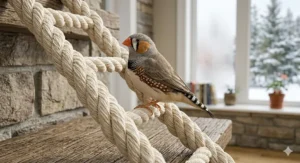
Sisal vs Cotton vs Hemp: Choosing the Right Rope Material for Canadian Birds
Walk into any Canadian pet store or browse Amazon.ca, and you’ll find rope ladders marketed with terms like “natural sisal,” “100% cotton,” and “hemp blend” — but what do these actually mean for your bird’s safety and enjoyment? The rope material affects everything from durability in our climate to foot health to ingestion risk if your bird shreds aggressively.
Cotton Rope: The Gentle Starter
Cotton offers the softest texture of natural fibres, making it ideal for birds with delicate feet (finches, canaries, young birds learning to climb) or species that aren’t aggressive chewers. In Canadian homes, cotton performs adequately in humidity-controlled environments but shows significant drawbacks during winter when forced-air heating drops indoor humidity below 30%. The fibres become brittle and fray more readily, creating more loose threads that require trimming.
The major safety concern with cotton is digestibility. If your bird actively shreds and ingests cotton fibres — some parrots treat rope like spaghetti — you risk digestive impaction. Veterinary case reports document budgies and cockatiels requiring surgical intervention after consuming significant quantities of cotton rope. According to Super Bird Creations’ safety guidelines, only 100% natural fibre ropes such as cotton, hemp, or sisal should be used in bird toys, and rope toys must be monitored daily for fraying. This doesn’t mean cotton is unsafe, but it requires vigilant monitoring. Daily inspection and immediate thread removal are non-negotiable with cotton rope products.
Price-wise, cotton is typically the most economical option, reflecting its widespread availability. For Canadian budget shoppers, this makes cotton appealing for trial purchases or households with multiple cages to outfit. Just understand you’re prioritizing affordability over longevity — expect replacement every 4-8 weeks depending on bird size and chewing intensity.
Sisal Rope: The Balanced Performer
Sisal, derived from agave plant fibres, sits in the middle ground between cotton’s softness and hemp’s durability. The texture is noticeably rougher than cotton, which provides superior grip and foot exercise — imagine the difference between walking on carpet versus textured concrete. This roughness means sisal naturally files your bird’s nails during climbing, reducing how often you need to schedule nail trims (though you should never rely solely on sisal for nail maintenance).
For Canadian climates, sisal handles our dramatic seasonal swings reasonably well. It maintains structural integrity in low winter humidity better than cotton, though it can become somewhat stiff and scratchy. A monthly light misting restores flexibility without over-saturating. In summer humidity, sisal dries faster than cotton, reducing mildew risk — particularly relevant if you use these in outdoor aviaries during our short but humid summers.
The safety profile for sisal is generally good, though the coarser fibres can cause minor abrasions on particularly delicate skin. I’ve never seen this with standard parrot species, but finch keepers sometimes report slight foot redness with brand-new sisal rope that hasn’t softened through use. The solution is simple: pre-soften new sisal by soaking in water for 30 minutes, then allowing it to fully air dry before installation.
Pricing typically runs 20-40% higher than comparable cotton options, reflecting sisal’s enhanced durability. That price difference evaporates quickly when you consider sisal’s typical 3-5 month lifespan versus cotton’s 1-2 months in similar use conditions.
Hemp/Jute Rope: The Premium Workhorse
Hemp and jute (sometimes used interchangeably, though technically different plants) represent the premium tier of natural rope materials. Hemp is legitimately the strongest natural fibre available for bird toys — some manufacturers rate it at 250% the tensile strength of cotton. This matters when your 500-gram Amazon parrot decides to use the ladder as a swing rather than a ladder.
What Canadian owners particularly appreciate is hemp’s natural resistance to mould and mildew. The fibre contains compounds that inhibit bacterial growth, which is why hemp rope has historically been used in marine applications. For our purposes, this means hemp ladders can tolerate occasional water exposure (bath time splashes, humidity swings) without developing that musty smell or health-concerning bacterial colonies.
The texture of hemp is distinctive — it’s rough when new but softens considerably with use while maintaining strength. This creates excellent foot exercise opportunities. Some birds initially avoid hemp rope because the texture is unfamiliar; the solution is gradual introduction. Place the hemp ladder outside the cage for a week, handle it yourself frequently (parrots often investigate items they see their human flock members using), then mount it alongside a familiar cotton ladder before eventually removing the cotton option.
From a safety perspective, hemp is excellent. It doesn’t fray into fine threads the way cotton does, instead breaking down into coarser fibres that birds are less likely to ingest accidentally. Veterinary literature shows significantly fewer impaction cases with hemp compared to cotton rope ingestion.
The cost reflects hemp’s premium properties — expect to pay 50-100% more than cotton equivalents. On Amazon.ca, this usually means $30-$50 for a quality hemp ladder versus $15-$25 for cotton. But hemp’s 6-12 month lifespan (with proper maintenance) means your cost-per-day of enrichment is actually comparable or better than replacing cheap cotton ladders monthly.
Material Recommendation Matrix for Canadian Conditions
For Dry Prairie Winters (Alberta, Saskatchewan): Hemp or sisal. The low humidity won’t cause excessive brittleness, and both materials maintain integrity in 15-25% humidity conditions common in heated prairie homes.
For Humid Coastal Climates (BC, Maritime provinces): Hemp’s anti-microbial properties make it ideal. Avoid cotton in these areas unless you’re committed to weekly inspections for mildew.
For Budget-Conscious Families: Cotton for initial purchase, but budget for monthly replacements. Calculate total annual cost — three cotton ladders often equal one hemp ladder’s price.
For Aggressive Chewers (Amazons, Macaws, Eclectus): Hemp or thick jute. Cotton will last days, not weeks, with these species.
For Delicate-Footed Species (Finches, Canaries): Softened cotton or well-used sisal. New hemp may be too coarse initially.
Common Mistakes When Buying Rope Ladders for Bird Cages in Canada
Even experienced Canadian bird owners make predictable mistakes when selecting rope ladders — errors that waste money, create safety hazards, or simply result in an expensive toy that sits unused. Let me share the missteps I see repeatedly, along with how to avoid them.
Mistake #1: Buying Based on Cage Size Instead of Bird Size
The marketing photos on Amazon.ca show these adorable budgies on massive rope ladders, or sometimes macaws somehow cramped on tiny models. Here’s the reality: the match between ladder and bird matters infinitely more than the match between ladder and cage. A cockatiel in a large cage doesn’t need a 122 cm ladder just because the cage could accommodate it — they’ll likely ignore the unnecessary length and stick to the lower portion.
The practical rule: select ladder length based on your bird’s natural climbing distance. Budgies and lovebirds thrive on 35-50 cm ladders that provide enough climbing to be interesting without being overwhelming. Cockatiels, conures, and similarly-sized parrots benefit from 45-65 cm options. Large parrots (Amazons, African greys, cockatoos) genuinely use 60-90 cm ladders effectively. Anything beyond 90 cm is really designed for aviary installations, not standard cages, unless you’re planning creative diagonal or spiraled mounting.
Mistake #2: Ignoring Canadian Winter’s Impact on Natural Materials
I can’t count how many Saskatchewan and Manitoba bird owners contact me in February wondering why their rope ladder “went bad” after six weeks. The answer is always the same: they purchased cotton rope and positioned it near a heating vent. Our Canadian winter indoor environment is brutally dry — often 15-25% relative humidity — and cotton fibers literally desiccate and become brittle.
If you’re shopping between November and March, either choose hemp/jute materials that tolerate low humidity, or commit to weekly misting maintenance for cotton products. Position ladders away from heat sources, and consider running a humidifier in your bird room. Not only does this preserve rope quality, but it also benefits your bird’s respiratory health — birds suffer from dry air just like humans.
Mistake #3: Buying Dyed Rope Without Verifying Dye Safety
Bright, colourful rope looks fantastic in marketing photos and catches your eye on Amazon.ca. But here’s what the product descriptions often gloss over: the type of dye matters enormously. Chemical dyes (azo dyes, acid dyes) can contain heavy metals and toxic compounds. When your bird chews dyed rope — and they will chew it — they ingest microscopic amounts of these substances.
Safe dyes are vegetable-based or food-grade. The product description should explicitly state “edible dye,” “food-safe colouring,” or “vegetable-based dye.” If the listing says “colourfast dye” or “UV-resistant colouring,” those are chemical treatments. Natural rope in its undyed form (tan, beige, brown) is always the safest choice. If you want colour for visual enrichment, choose toys with naturally coloured wood or bird-safe plastic beads rather than relying on dyed rope.
Mistake #4: Choosing Based on Durability When You Should Choose for Destruction
This seems counterintuitive, but hear me out. Many Canadian bird owners get frustrated replacing “flimsy” rope ladders every few weeks, so they invest in expensive stainless steel or acrylic ladder alternatives that “last forever.” Their bird then ignores the indestructible ladder because it provides zero enrichment value — there’s nothing to shred, no texture to manipulate, no satisfying destruction to accomplish.
For species that need to chew (most parrots), you want destructible equipment. A rope ladder that lasts six months untouched is a failed purchase. A rope ladder demolished in three weeks but fully engaged with daily? That’s successful enrichment. The trick is matching replacement cost to your budget. If monthly replacement at $25 CAD stings financially, choose quarterly replacement at $40 CAD by upgrading to hemp. But don’t eliminate destruction potential entirely unless you have a finch or canary that genuinely doesn’t need chewing outlets.
Mistake #5: Assuming “Natural” Equals “Safe”
The Canadian marketplace, particularly online marketplaces like Amazon.ca, includes products from global suppliers with varying safety standards. Just because a rope ladder is marketed as “natural wood and rope” doesn’t automatically mean it’s bird-safe. I’ve seen listings using pine treated with chemical preservatives, rope oiled during manufacturing (petroleum-based oils), and “natural” wood from toxic species like cedar.
Before purchasing, verify: (1) The wood species is parrot-safe (pine, poplar, maple, willow, birch are good; cedar, yew, cherry are toxic); (2) The rope is untreated or food-grade treated; (3) Hardware uses stainless steel or nickel-plated steel, never galvanized (zinc is toxic to birds). Canadian Consumer Product Safety standards don’t specifically regulate bird toys, so this verification is your responsibility. Reputable brands like Prevue, Zoo-Max, and Super Bird Creations have established safety protocols, but budget imports require extra scrutiny.
Mistake #6: Overlooking Thread Maintenance Commitment
Every natural-fibre rope ladder will eventually fray. This isn’t a defect — it’s inherent to the material. What separates safe rope ladder ownership from dangerous rope ladder ownership is daily thread monitoring and trimming. Loose threads wrap around toes, restricting blood flow. In extreme cases documented in avian veterinary literature, birds have lost toes due to thread constriction that went unnoticed overnight.
If you’re not prepared to spend 30 seconds daily checking for loose threads and trimming them with scissors, choose synthetic alternatives or rigid wooden ladders instead. Canadian bird owners who work long hours or travel frequently should consider their realistic maintenance capacity before purchasing rope products. It’s better to acknowledge you won’t maintain it properly and choose a different enrichment type than to risk injury.
Mistake #7: Buying the Wrong Length for Installation Style
This is particularly common among first-time Canadian bird owners setting up their initial cage. They purchase a 76 cm (30-inch) ladder for vertical installation, realize their cage is only 56 cm (22 inches) tall, and then awkwardly scrunch the ladder or mount it diagonally in a way that creates dangerous loops where a bird’s head could become trapped.
Before purchasing, measure your intended installation path. For vertical mounting, buy a ladder 10-15 cm shorter than your cage height. For diagonal mounting (rear-upper to front-middle, the most enriching path), measure that diagonal distance and subtract 8-10 cm. For bridge-style horizontal mounting, measure the cage width and subtract 5 cm to prevent excessive drooping. If you find the perfect ladder but it’s slightly too long, you can tie knots in the rope to effectively shorten it — but buying the right length initially saves hassle.
Rope Ladder Safety Tips for Parrots: Preventing Injuries in Canadian Homes
Safety doesn’t happen by accident — it requires understanding the specific risks rope ladders present and implementing practical prevention strategies. Canadian veterinary practices report dozens of rope-ladder-related injuries annually, most of which were entirely preventable with proper setup and monitoring.
Daily Inspection Protocol (30-Second Safety Check)
Every morning when you refresh food and water, add these three quick safety checks:
Check 1: Thread Scan — Run your eyes along the entire rope length looking for any loose, separated threads. Even one 2 cm loose thread poses a strangulation risk. Use scissors to trim flush with the main rope body. In dry Canadian winter conditions, this happens more frequently as fibres become brittle.
Check 2: Hardware Integrity — Visually confirm both attachment points remain securely closed. Quick links can vibrate open if your bird engages in vigorous swinging. Metal fatigue becomes more common in temperature-fluctuating environments like garage-converted bird rooms where Canadian temperature swings stress metal components.
Check 3: Structural Soundness — Gently pull down on the lowest rung. It should feel secure without excessive give or creaking. Wooden rungs weakened by chewing can snap unexpectedly. If a rung moves more than 1-2 cm when pulled, replace the ladder regardless of how recently you purchased it.
Length Management to Prevent Strangulation
The most serious rope ladder injuries occur when birds become entangled in excess rope length. This happens in two scenarios: (1) Long spans of unsupported rope between rungs, allowing loops to form, and (2) Trailing rope ends extending below the ladder’s lowest rung.
Safe ladder design includes rungs spaced no more than 8-10 cm apart for small birds, 10-12 cm for medium birds. If you notice your ladder has spans exceeding this, tie knots in the rope between rungs to eliminate loop-forming potential. For trailing rope ends, trim them to no more than 3-4 cm below the terminal rung, then melt the tip slightly with a lighter to prevent unraveling (allow to cool completely before returning to cage).
Canadian bird owners with multiple birds face additional risk. One bird can inadvertently entangle another if they’re playing together on the same ladder and rope loops wrap around both. This is more common than you’d expect with bonded pairs that sleep together on rope structures. For multi-bird households, choose ladder models with minimal loose rope, or opt for rigid wooden ladder alternatives for shared climbing areas.
Foot Health Monitoring
The irony of rope ladders is that their greatest benefit — providing varied texture for foot exercise — becomes a hazard if diameter is mismatched to foot size. Too-thin rope (less than 6 mm for most parrots) doesn’t distribute weight adequately, leading to pressure sores on foot pads. Too-thick rope (more than 12 mm for budgies) forces awkward gripping angles that can strain toe joints.
Check your bird’s feet weekly for any redness, swelling, or scaling. Normal parrot feet have smooth, even skin on pads with supple scales on toes. Red, shiny skin indicates pressure injury; scaling suggests dryness (common in Canadian winter). If you notice foot changes coinciding with new ladder installation, remove the ladder for 48 hours and observe whether condition improves. If it does, the ladder’s rope diameter is inappropriate for your bird’s foot size.
Temperature Considerations Unique to Canadian Homes
Metal hardware on rope ladders conducts temperature — it becomes ice-cold near poorly insulated windows during Canadian winters, and scorching hot near sunny windows in summer. I’ve seen budgies develop mild frostbite on toe pads after gripping frozen metal quick links at cage tops positioned near single-pane windows during Alberta cold snaps.
Position rope ladders away from window zones and heating vents. If your cage must be near a window for light access, wrap metal hardware with veterinary cohesive bandage wrap or bird-safe fabric to provide thermal insulation. This is particularly crucial for basement bird rooms where temperature regulation can be challenging.
Age-Appropriate Safety Modifications
Young birds (under 6 months) and elderly birds (over 15 years for most parrot species) have different safety needs than adult birds in their prime. Juvenile birds are still developing coordination — they fall more often and don’t always catch themselves gracefully. For young birds, mount rope ladders lower (maximum fall distance of 20 cm to cage floor) until they demonstrate climbing confidence.
Elderly birds may have arthritis or reduced grip strength. The textured rope that provides excellent exercise for healthy birds can be too demanding for arthritic feet. For senior birds showing climbing difficulty, choose rope ladders with larger-diameter rope (easier to grip with reduced foot strength) or consider transitioning to rigid wooden ladders with uniform rungs requiring less grip variation.
Emergency Entanglement Response
Despite all precautions, entanglement can occur. Every Canadian bird owner should know the emergency response: (1) Remain calm — your stress transfers to your bird and makes them struggle more violently, (2) Secure the bird gently with a towel to prevent wing flapping, (3) Cut the rope away from the entangled limb with scissors — don’t try to unwind it as this often tightens the constriction, (4) Immediately contact your avian veterinarian even if circulation appears normal, as internal soft tissue damage can occur that isn’t externally visible.
Keep blunt-tip scissors near your bird’s cage specifically for this purpose. In emergency situations, fumbling through drawers looking for scissors wastes critical time. I recommend storing a basic first-aid kit (scissors, styptic powder, towel, vet phone number) in a labelled container next to your bird’s cage.
Frequently Asked Questions About Rope Ladders for Bird Cages
❓ Can I use outdoor rope from hardware stores for bird cage ladders?
❓ How often should I replace rope ladders in Canadian winter conditions?
❓ Are rope ladders safe for budgies and other small birds?
❓ Can rope ladders cause foot problems in parrots?
❓ Do I need to clean rope ladders, and what's safe to use in Canada?
Conclusion: Choosing the Perfect Rope Ladder for Your Canadian Bird
After analyzing materials, comparing products, and examining safety protocols, the fundamental truth remains beautifully simple: the best rope ladder for your bird is the one they’ll actually use daily while remaining safe in your specific Canadian home environment. A $45 premium hemp ladder sitting ignored in the cage corner provides zero value compared to a $20 cotton ladder your cockatiel climbs enthusiastically every morning.
The decision matrix really comes down to three factors balanced against each other. First, your bird’s size and personality — aggressive chewers need destructible materials regardless of replacement cost, while gentle perchers benefit from durable hemp. Second, your Canadian climate conditions — prairie winters demand humidity-resistant materials, coastal regions need mildew-resistant options. Third, your realistic maintenance commitment — if daily thread trimming feels burdensome, invest in synthetic-core ladders or choose rigid wooden alternatives.
What I want Canadian bird owners to take from this guide is confidence in matching equipment to genuine needs rather than marketing hype. Your Vancouver budgie doesn’t need the same ladder as a Calgary macaw, and that’s perfectly fine. Success looks like a bird who voluntarily climbs, exercises their feet on varied textures, and safely engages in natural destructive play — whether that’s accomplished with a $15 cotton starter ladder or a $50 eco-friendly hemp model matters far less than actual daily use.
Remember that rope ladders are tools for enrichment, not magic solutions for behaviour problems. They work best as part of a complete enrichment strategy including foraging opportunities, social interaction, and out-of-cage time. The ladder facilitates natural climbing behaviour, but you still need to provide the stimulating environment that makes climbing worthwhile — interesting perching destinations, food sources at different heights, and varied cage layouts that reward exploration.
As Canadian bird ownership continues evolving toward evidence-based care practices, accessories like rope ladders shift from optional decorations to essential welfare equipment. The Ontario SPCA, avian veterinarians across Canada, and behavioural specialists all emphasize that physical enrichment directly correlates with reduced stereotypic behaviours, better physical health, and improved quality of life for captive birds. Your investment in a quality rope ladder, maintained properly and matched appropriately to your bird, represents genuine care for your feathered companion’s long-term wellbeing.
Recommended for You
- 7 Best Paper Shredding Toys for Cockatiels in Canada (2026)
- 7 Best Destructible Bird Toys for Macaws Canada 2026
- Safe Wood Chew Toys for Parrots: 7 Top Picks Canada 2026
Disclaimer: This article contains affiliate links. As an Amazon Associate, I earn from qualifying purchases. If you purchase products through these links, we may earn a small commission at no additional cost to you.
✨ Found this helpful? Share it with your friends! 💬🤗
