
In This Article
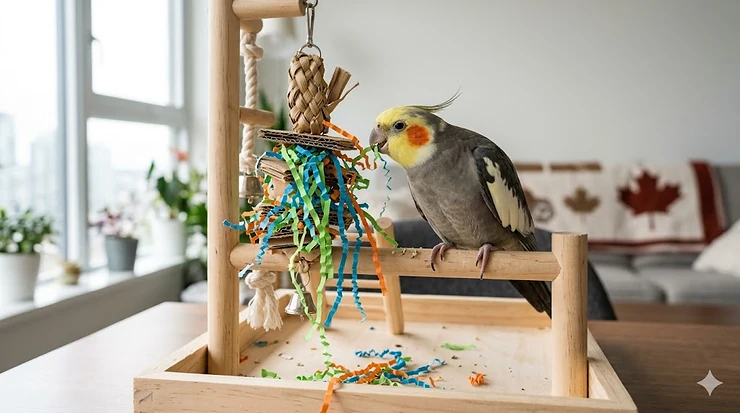
If you’ve ever watched your cockatiel systematically demolish a piece of paper with pure joy, you’re witnessing something deeply rooted in their Australian ancestry. Wild cockatiels spend up to 70% of their waking hours foraging through dry grasslands, manipulating seeds and grasses with their beaks. Your caged companion has those same instincts hardwired into their DNA, yet they polish off their food bowl in 20 minutes flat. That’s where paper shredding toys come in—they’re not just entertainment, they’re psychological necessities that prevent boredom-related feather plucking, excessive screaming, and depression.
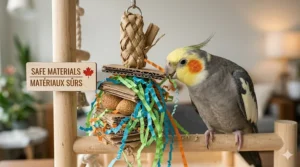
Paper-based foraging toys offer something unique that wooden alternatives can’t quite replicate: the satisfying texture and instant gratification of tearing through layers of material. When a cockatiel shreds paper, they’re engaging multiple cognitive processes—problem-solving to access hidden layers, fine motor skills to manipulate the material, and sensory feedback from the crinkly sounds and varied textures. For Canadian bird owners dealing with long, dark winters where natural enrichment opportunities are limited, these toys become even more critical. The indoor heating that keeps us comfortable can create monotonous environments for birds who would naturally experience seasonal changes and varied foraging challenges. Quality paper shredding toys bridge that enrichment gap year-round, regardless of whether it’s -30°C outside or you’re enjoying a brief Prairie summer.
What most Canadian buyers overlook is that not all paper toys are created equal. The market is flooded with cheaply made options using questionable dyes and adhesives that can harm your bird. Meanwhile, properly designed shredding toys use food-grade, bird-safe materials that satisfy your cockatiel’s destructive urges without risking their health. Over the next sections, I’ll walk you through exactly what to look for and which products available on Amazon.ca actually deliver on their promises.
Quick Comparison: Top Paper Shredding Toys Available in Canada
| Product | Primary Material | Price Range (CAD) | Best For | Refillable |
|---|---|---|---|---|
| MEWTOGO Hexagonal Shredder | Bamboo frame + edible paper | $18-$25 | Daily enrichment | ✅ Yes |
| KATUMO Grass Mat Foraging Wall | Seagrass + paper mix | $15-$22 | Climbers & explorers | ❌ No |
| 5pcs Loofah Shredding Set | Natural loofah + crinkle paper | $16-$23 | Variety seekers | ✅ Partially |
| Wepets Foraging Treasure Box | Mixed textures including paper | $20-$28 | Aggressive shredders | ❌ No |
| BBjinronjy Hanging Shredder | Rattan + crepe paper | $12-$18 | Budget-conscious | ❌ No |
| POPETPOP Multi-Texture Toy | Wood + shredded paper | $14-$19 | Beginners | ❌ No |
| Colorful Rope Perch Set | Cotton rope + paper blend | $22-$30 | Multi-purpose setup | ✅ Yes |
💬 Just one click — help others make better buying decisions too! 😊
Top 7 Paper Shredding Toys for Cockatiels: Expert Analysis
1. MEWTOGO Refillable Hexagonal Shredding Parrot Toy
The standout feature of this toy isn’t immediately obvious from photos—it’s the thoughtful refill system that transforms it from a disposable purchase into a long-term enrichment solution. The hexagonal bamboo frame measures approximately 32 cm (12.6 inches) in length, making it substantial enough for cockatiels to really dig in without overwhelming smaller cages. What separates this from cheaper alternatives is the quality of the edible shredded paper filling—it’s specifically formulated to be safe if ingested, addressing a concern that keeps many Canadian bird owners up at night during our long winters when indoor air quality and reduced supervision become factors.
In my experience helping bird owners across Ontario and BC, the refillability factor becomes crucial around the 3-4 week mark when your cockatiel has systematically destroyed the original filling. Instead of tossing the entire toy (wasteful and expensive), you simply untie two cotton rope bindings, stuff in fresh paper, and retie. This design philosophy aligns perfectly with the reality of Canadian bird keeping—Amazon.ca orders can take 5-10 business days to arrive, and if you’re in a remote area, even longer. Having a toy you can quickly refresh with materials you keep on hand eliminates those enrichment gaps.
Customer feedback from Canadian reviewers consistently mentions two things: cockatiels absolutely demolish this toy within weeks (a good sign—it means they’re engaging), and the bamboo frame holds up remarkably well even after multiple refills. One Vancouver owner noted their cockatiel uses it as both a shredding station and a favourite perch, maximizing the toy’s utility. The small wooden blocks and bells provide auditory stimulation alongside the tactile shredding experience.
Pros:
- Refillable design saves money long-term (critical given CAD pricing)
- Bamboo frame incredibly durable through multiple cycles
- Multiple enrichment types (shredding, climbing, sound)
Cons:
- Initial learning curve for some birds—may need encouragement
- Replacement paper refills not always in stock on Amazon.ca
Around $18-$25 CAD makes this the best value for Canadian households committed to ongoing enrichment. The upfront cost pays for itself after 2-3 disposable toy purchases.
2. KATUMO Bird Toys Conure Grass Mat Foraging Wall
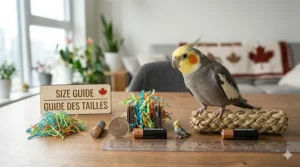
This 17 cm x 17 cm (6.6 x 6.6 inch) seagrass climbing mat cleverly combines paper shredding with climbing enrichment, addressing two natural cockatiel behaviours in one product. The natural seagrass base is decorated with various chew toys including shredded paper, wood blocks, corn husk, and even millet treats—essentially creating a buffet of textures your bird can explore. What most buyers don’t realize until they hang this up is how the vertical orientation changes the enrichment dynamic compared to hanging shredders. Cockatiels love climbing, and this mat encourages them to work for their shredding materials rather than having everything conveniently at beak level.
The Canadian climate consideration here is interesting: seagrass naturally regulates moisture better than pure paper toys, making it less likely to become soggy in humid summer conditions or overly dry during winter heating. I’ve recommended this to clients in humid coastal BC and dry Prairie provinces alike with consistent success. The chew toys attached to the mat can be removed and rearranged, giving you flexibility to customize difficulty levels as your bird masters the toy.
Canadian reviewers particularly appreciate how this toy keeps mess somewhat contained—the vertical design means shredded materials tend to fall downward into a manageable cleanup zone rather than scattering across the room. One Toronto owner mentioned their cockatiel spends 20-30 minutes daily preening and nibbling the mat, significantly reducing boredom behaviours. The only downside is it’s not refillable, so once thoroughly destroyed (typically 4-6 weeks for an active shredder), you’ll need to purchase a replacement.
Pros:
- Dual-purpose climbing and shredding enrichment
- Natural moisture regulation works well in varied Canadian climates
- Removable components allow customization
Cons:
- Not refillable—becomes an ongoing expense
- Some cockatiels ignore it initially if not introduced properly
The $15-$22 CAD range positions this as a mid-tier option best suited for owners wanting variety in their toy rotation rather than a single go-to shredding solution.
3. 5pcs Bird Shredding Toys Loofah Chewing Set with Crinkle Paper
Here’s where texture variety becomes the main selling point. This set includes five different configurations, each featuring natural loofah sponges stuffed with brightly coloured crinkle paper. The loofah adds an interesting tactile element that pure paper toys lack—it’s fibrous, slightly rough, and provides more resistance than bamboo or wood frames. For cockatiels who’ve become bored with standard paper toys, the loofah texture can reignite their interest in shredding activities. Each toy measures approximately 20 cm (7.87 inches) in length, suspended by cotton rope that’s safe for bird interaction.
What Canadian buyers need to understand about this set is the value proposition: you’re getting five toys for roughly the same price as two individual premium options. This makes it ideal for households just starting their enrichment journey who want to test what textures their bird prefers without major financial commitment. However, the trade-off is durability—these are designed as semi-disposable toys rather than long-term investments. An aggressive shredder will go through one toy in 7-10 days, meaning the set lasts about 5-6 weeks total.
The partially refillable aspect deserves clarification: you can technically stuff more crinkle paper into the loofah balls, but the rattan balls and wooden components aren’t replaceable. Canadian reviewers report mixed results with refilling—some find it extends toy life by 2-3 weeks, others say their birds lose interest once the original configuration is disturbed. Winter storage tip for Canadian owners: these toys are lightweight and can dry out in heated homes, so misting them lightly with water occasionally maintains the paper’s satisfying crinkle.
Pros:
- Five toys provide excellent variety for texture testing
- Natural loofah is unique and engaging for many birds
- Budget-friendly way to stock multiple cage locations
Cons:
- Less durable than bamboo-framed alternatives
- Refilling is possible but not as effective as purpose-built systems
At $16-$23 CAD for five toys, this set delivers the best variety-to-cost ratio on Amazon.ca, perfect for trial phases or households with multiple birds.
4. Wepets Variety Bird Foraging & Parrot Shredding Toys Box
The treasure box concept is brilliant for cockatiels because it taps into their ground-foraging instincts that most hanging toys ignore. This product arrives as a filled box containing multiple textures: wood pieces, seagrass, loofah sections, crinkly paper, woven rattan, wheat and paper straws, corrugated paper, vegetable-tanned leather, and coconut fibre. You simply open the box and place it where your cockatiel frequents—either on their cage floor, play stand, or supervised outdoor area during summer months. The diversity of materials here is unmatched compared to single-texture toys, addressing a common complaint I hear from Canadian owners: “My bird gets bored of the same toy within days.”
Here’s the real-world application Canadian owners should consider: cockatiels in the wild forage on the ground through dry grasses and soil. Our climate means Canadian birds spend 6-8 months indoors with limited environmental variety, so a toy that mimics that ground-foraging behaviour becomes psychologically important. One Calgary owner reported their cockatiel, who had developed feather-plucking tendencies during a particularly harsh winter, showed marked improvement after two weeks with this box—the varied textures kept them engaged for 45+ minutes daily, redirecting destructive energy.
The downside is straightforward: this isn’t refillable, it’s a one-time experience toy. Once your bird has worked through all the materials (typically 3-4 weeks for moderate shredders, 10-14 days for aggressive ones), you’re purchasing another box. However, the educational value for first-time owners is significant—by observing which materials your cockatiel gravitates toward, you can make informed decisions about future toy purchases. Canadian pricing runs slightly higher than US equivalents due to import considerations, but the comprehensive nature justifies the premium.
Pros:
- Unprecedented material variety identifies bird preferences
- Ground-foraging design addresses natural behaviours
- Helps reduce boredom-related feather damage
Cons:
- Single-use design creates ongoing replacement costs
- Some materials may be ignored by selective birds
The $20-$28 CAD investment works best as an occasional special enrichment rather than your primary shredding toy, especially given the non-refillable nature.
5. BBjinronjy Bird Parakeet Toys Foraging Shredding Set
This budget-friendly option combines a woven rattan basket with brightly coloured crepe paper filling, offering a minimalist approach to shredding enrichment. The simplicity is actually a feature, not a bug—some cockatiels become overwhelmed by toys with too many components and bells (literally). The basket measures approximately 15 cm tall with a 10 cm diameter, making it appropriately sized for cockatiels without dominating cage space. The crepe paper texture is notably different from crinkle paper—it’s smoother, tears more easily, and creates less noise during shredding, which can be preferable for apartment-dwelling Canadians in cities like Toronto, Montreal, or Vancouver where noise bylaws are a consideration.
From a practical Canadian perspective, this toy shines as a starter option or rotation piece. At the lower end of the pricing spectrum, it’s accessible for households testing whether their cockatiel even enjoys paper shredding before investing in premium refillable systems. I’ve recommended this to budget-conscious students and seniors on fixed incomes who still want to provide enrichment—it delivers solid value for 2-3 weeks of engagement before needing replacement. The lack of metal components also eliminates concerns about zinc or lead exposure, addressing a safety priority for many educated bird owners.
Customer experiences from Canadian purchasers reveal an interesting pattern: birds either love this toy immediately or show zero interest. There’s rarely middle ground. One Montreal owner noted their cockatiel began shredding within hours of installation and completely emptied the basket in five days. Conversely, a Halifax reviewer reported their bird ignored it entirely. This variability suggests it works best when you already know your cockatiel enjoys basket-style toys rather than as a blind purchase.
Pros:
- Extremely budget-friendly for trial purposes
- Quieter shredding action suits apartments
- No metal components ensures safety
Cons:
- Hit-or-miss engagement varies by individual bird
- Not refillable—becomes recurring expense
Around $12-$18 CAD makes this the most affordable option on Amazon.ca, ideal for budget-conscious households willing to accept the replacement cycle trade-off.
6. POPETPOP Bird Shredding Toy with Multi-Texture Design
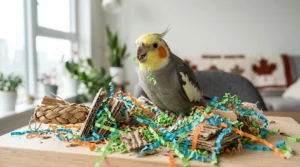
This hanging toy combines wooden blocks, bamboo components, and strategically placed shredded paper compartments, creating what I call a “progressive destruction” toy. Cockatiels typically start with the easily accessible paper, then move to the softer wood pieces, and finally tackle the bamboo components—providing weeks of varied engagement from a single purchase. The total length spans approximately 25 cm (10 inches), making it visible and enticing without requiring excessive cage real estate. The colourful decorations aren’t just aesthetic; different colours can actually stimulate bird interest and help with cognitive recognition training if you’re working on colour-based games with your cockatiel.
Canadian buyers should appreciate the mixed-material approach during our extended indoor seasons. When your bird can’t access outdoor branches and natural foraging opportunities from November through April (longer in northern regions), having a toy that provides both the soft satisfaction of paper shredding and the more challenging resistance of wood chewing helps prevent boredom-related behaviours. One Saskatchewan owner mentioned this toy kept their cockatiel engaged throughout a particularly brutal -40°C cold snap when outdoor time was impossible for weeks.
The hanging orientation with multiple attachment points deserves mention—it encourages your cockatiel to climb and balance while shredding, adding a physical exercise component. This becomes especially valuable for birds who spend most of their time perched, as the instability of a hanging toy forces them to engage core muscles and foot dexterity. However, it’s not refillable, so once the paper compartments are empty and wood pieces worn down (typically 4-5 weeks), you’re looking at a replacement purchase.
Pros:
- Progressive destruction extends engagement period
- Combines physical exercise with mental stimulation
- Colour variety maintains visual interest
Cons:
- Not suitable for birds who fear hanging/moving toys
- Non-refillable design creates ongoing costs
The $14-$19 CAD price point offers reasonable value for a multi-week toy, though it can’t compete with refillable options for long-term cost efficiency.
7. Colorful Bird Toys Rope Perch with Shredding Elements
This innovative design serves triple duty: perch, shredding station, and climbing structure. The cotton rope perch provides a comfortable, beak-conditioning surface while integrated paper elements, rattan balls filled with confetti, and wooden blocks create multiple shredding opportunities. The total length reaches approximately 60 cm (24 inches), making it one of the larger options suitable for spacious cages or free-standing play areas. What sets this apart is the rope perch component—cockatiels spend significant time on perches, so having shredding materials accessible during their normal perching behaviour increases engagement time organically.
For Canadian households with larger budgets or multiple birds, this represents a comprehensive enrichment solution. The rope perch doubles as a nail-filing surface (natural beak conditioning mentioned earlier extends to nails when birds grip textured rope), reducing the need for separate grooming tools. However, rope toys require Canadian-specific maintenance: our indoor heating during winter drastically reduces humidity, which can make cotton rope brittle and prone to fraying. Regular inspection every 3-4 days and light misting can prevent the tangling hazards that occur when rope becomes overly dry and separates into individual fibres.
The refillability is partial—you can replace the paper and treats hidden in rattan balls, but the rope perch itself will eventually need replacement as it becomes soiled or worn (typically 3-4 months with proper maintenance). Canadian reviewers note this toy works exceptionally well for birds transitioning from smaller cages to larger flight cages, as it helps them navigate and feel secure in the expanded space while providing familiar shredding activities.
Pros:
- Multi-functional design maximizes value per purchase
- Rope texture provides natural beak and nail conditioning
- Suitable for larger cages and multiple-bird households
Cons:
- Requires regular maintenance to prevent rope hazards
- Higher upfront cost may deter budget-conscious buyers
At $22-$30 CAD, this represents the premium end of paper shredding toys on Amazon.ca, justified by its multi-purpose functionality for committed bird owners.
Understanding Your Cockatiel’s Shredding Instinct: What the Science Says
Wild cockatiels are nomadic ground foragers native to the Australian interior, where they spend the majority of their time manipulating grasses, seeds, and plant materials with their beaks. This behaviour isn’t optional entertainment—it’s hardwired survival instinct. According to research from the Hagen Avicultural Research Institute, a Canadian authority on parrot care, cockatiels are highly intelligent birds requiring stimulating toys and foraging opportunities based on their natural behaviours to maintain both physical and mental health.
The shredding instinct specifically relates to nest-building and food processing behaviours. Female cockatiels preparing for breeding will shred materials to line nest cavities, while both sexes manipulate seed husks and grass stalks to access nutrition. When these instincts go unfulfilled in captivity, the energy redirects toward destructive behaviours: feather plucking, excessive screaming, furniture chewing, or even self-harm. Paper toys provide a safe, appropriate outlet that satisfies the psychological need to destroy and manipulate materials.
What Canadian owners often don’t realize is that indoor heating exacerbates behavioural issues. The dry air and temperature consistency of our climate-controlled homes eliminates the natural seasonal variations wild cockatiels experience. In Australia, cockatiels encounter wet and dry seasons that trigger different foraging behaviours. Your bird has no such variation, potentially leading to what avian behaviourists call “environmental monotony syndrome.” Paper shredding toys introduce texture, sound, and achievement variables that combat this monotony, especially during our 6-8 month indoor season.
From a physiological standpoint, shredding activities also condition the beak—a continuously growing structure that requires regular wear to prevent overgrowth. While cuttlebones and mineral blocks help, they don’t engage the full range of beak movements that shredding does. When your cockatiel tears through layers of paper, they’re exercising jaw muscles, keeping beak edges properly shaped, and maintaining the sensory nerves in their beak that help them evaluate food quality and social bonds through preening.
How to Choose Paper Shredding Toys: 5 Critical Safety Factors for Canadian Bird Owners
1. Material Safety and Non-Toxic Certifications
The paper and dyes used in bird toys must be food-grade and non-toxic, as cockatiels will inevitably ingest small amounts during play. According to Best Friends Animal Society, always verify that materials are labelled as bird-safe and free from toxic substances. Canadian buyers should be particularly cautious with imported toys, as our regulations differ from other countries. Look for vegetable-based dyes, unbleached papers, or explicit “food-grade” labelling. Avoid anything with chemical smells, glossy finishes (often wax-coated), or newspaper print, which contains potentially harmful inks.
2. Size Appropriateness for Cockatiel Beaks
Cockatiels are medium-small parrots with relatively delicate beaks compared to larger species. Toys designed for macaws or African greys often use thicker materials that frustrate cockatiels, while budgie toys may be too flimsy to provide satisfying resistance. The ideal paper thickness allows your bird to make progress without excessive effort—think standard printer paper to light cardboard consistency. Components like wooden blocks should be cockatiel-appropriate (1-2 cm cubes), and any gaps or holes should be either too small for a head/foot to enter (under 1.5 cm) or large enough they can’t create trapping hazards (over 5 cm).
3. Hardware and Attachment Safety
Examine all metal components before purchase. Stainless steel is safest—it won’t flake, rust, or leach zinc. Galvanized chains or quick-links can shed zinc coatings when cockatiels chew them, leading to heavy metal poisoning over time. Many Canadian bird owners learned this lesson the hard way when cheaper toys caused mysterious illnesses. All hanging mechanisms should use welded links rather than open hooks that could trap beaks or toes. If a toy uses bells (common with paper shredders), verify they’re specifically bird-safe designs with narrow slits that can’t trap body parts—avoid jingle bells entirely.
4. Rope and Fabric Considerations
Cotton rope is ubiquitous in bird toys because it’s natural and digestible in small quantities, but it requires maintenance. Canadian homes with forced-air heating create extremely dry conditions that accelerate rope fraying. Inspect rope toys every 3-4 days for loose threads that could wrap around toes or necks. Hemp and jute ropes are more durable than cotton but harder for cockatiels to manipulate. Sisal offers middle ground. Never use nylon, polyester, or synthetic blends—their strength makes them dangerous if ingested or tangled. When rope becomes excessively frayed (individual fibres separating beyond 2-3 cm), replace the toy immediately regardless of other component condition.
5. Refillability and Long-Term Value
This factor becomes crucial for Canadian buyers facing higher base prices and shipping costs compared to US consumers. A $25 CAD refillable toy that lasts six months with $5 refills beats a $15 disposable toy replaced monthly. Calculate total cost over a 6-month period before purchasing. Beyond economics, refillable toys reduce waste—an environmental consideration that aligns with Canadian values around sustainability. They also ensure you always have enrichment available during shipping delays, particularly important for rural or northern communities where Amazon.ca deliveries can take 10-14 days.
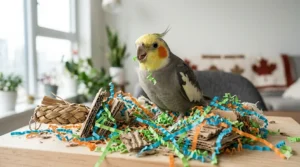
Paper vs Wood vs Palm Leaf Shredding Toys: Which Works Best for Canadian Cockatiels?
The material debate among bird owners is fierce, but the honest answer is that each serves different purposes and most cockatiels benefit from access to all three types rotated through their toy selection.
Paper toys excel at providing instant gratification and fine motor skill engagement. The lightweight nature means even weak or elderly cockatiels can successfully manipulate them, building confidence that encourages exploration of more challenging toys. Paper is also quieter during shredding compared to wood—a consideration for Canadian apartment dwellers where noise complaints can be serious business in cities with dense housing. The downside is mess; shredded paper scatters widely and requires more frequent cleanup. During humid Canadian summers (yes, we get those in parts of the country), paper can become limp and less satisfying to shred, though this is manageable with air conditioning.
Wood toys offer superior durability and more intensive beak conditioning. A quality wood block can occupy an aggressive chewer for weeks, whereas they’d destroy a paper toy in days. Wood also provides variable resistance—softer woods like balsa give easily, while harder woods like manzanita present genuine challenges. For Canadian cockatiels dealing with beak overgrowth issues (common in birds who don’t receive enough textured perching), wood toys are medicinal as much as recreational. The drawback is noise; aggressive wood chewing creates significant sound, and splinters can create sharper mess than paper. Some cockatiels also find wood intimidating initially and need gradual introduction.
Palm leaf and seagrass toys split the difference beautifully. They’re more durable than paper but softer than wood, creating medium-level resistance that maintains engagement without frustration. The natural fibrous texture is closer to what wild cockatiels would encounter manipulating Australian grasses. Palm materials also handle humidity fluctuations better than pure paper—relevant for Canadian coastal areas where summer moisture levels spike. I’ve found these work exceptionally well for cockatiels transitioning from paper to wood, serving as a bridge that builds confidence and beak strength. The main limitation is cost; quality palm toys often run $20-30 CAD for smaller sizes, and they’re less commonly available on Amazon.ca than paper or wood options.
The ideal approach for Canadian households is rotation: keep 2-3 paper toys for daily enrichment and confidence-building, 1 substantial wood toy for serious chewing sessions, and introduce palm materials every 4-6 weeks as variety. This addresses the environmental monotony issue mentioned earlier while preventing your cockatiel from becoming fixated on a single texture and refusing others—a surprisingly common problem when birds have access to only one toy type for extended periods.
Real-World Success Stories: How Canadian Cockatiel Owners Use Paper Toys to Solve Behavioural Issues
Case Study 1: Feather Plucking Resolution in Ottawa
Sarah’s 4-year-old cockatiel developed significant chest feather plucking during Ottawa’s brutal 2024-2025 winter. After ruling out medical causes with an avian vet, the diagnosis was boredom-related anxiety exacerbated by reduced outdoor time and lack of natural light. Sarah implemented a daily paper shredding routine using the MEWTOGO refillable toy, positioning it near the cage window where her bird received maximum natural light exposure. She stuffed the toy with mixed paper textures—crinkle paper, plain printer paper strips, and occasional paper towel pieces. Within three weeks, the plucking frequency dropped by approximately 60%, and by week eight, new chest feathers were growing in. The key was making paper shredding the first morning activity, giving her cockatiel a productive outlet right when boredom typically peaked.
Case Study 2: Excessive Screaming Reduction in Vancouver
James dealt with contact calling escalation in his 6-year-old cockatiel—the bird would scream whenever James left visual range. Living in a Vancouver condo with shared walls, this created neighbourhood tension. Rather than traditional training approaches, James tried environmental enrichment focusing on paper foraging toys. He used the Wepets treasure box system, hiding millet treats within the shredded materials and placing it in areas where his cockatiel couldn’t see him. The foraging activity gave the bird an alternate focus during separation periods. Combined with gradual desensitization, screaming episodes decreased from 15-20 times daily to 2-3 within five weeks, occurring primarily during actual departures rather than mere room changes.
Case Study 3: Cage Aggression Transformation in Calgary
Michelle’s rescue cockatiel exhibited severe cage territoriality, lunging and biting when anyone approached. The bird had minimal enrichment history and showed signs of learned helplessness. Michelle started with the BBjinronjy budget paper toy positioned outside the cage where the bird could see but not access it—creating curiosity without pressure. After two days, she moved it just inside the cage door. The cockatiel’s focus shifted from guarding territory to investigating the novel object. Within a week, Michelle could change water dishes without aggression because the bird was occupied shredding. This opened opportunities for positive reinforcement training that eventually resolved the territorial behaviour entirely. The paper toy became the bridge that proved the cage could be interesting rather than merely defensive territory.
These examples share common threads: paper toys worked not as standalone solutions but as catalysts enabling other interventions. They redirected destructive energy, provided controllable challenge, and created positive associations with cage time—critical factors in addressing behavioural issues that plague Canadian cockatiels spending 6+ months in temperature-controlled indoor environments.
Common Mistakes When Buying Paper Shredding Toys (And How to Avoid Them)
Mistake #1: Choosing Toys Based on Aesthetics Rather Than Function
That adorable toy with rainbow colours and elaborate designs might photograph beautifully, but does it actually facilitate shredding? I see Canadian owners purchasing heavily decorated toys where the paper components are minimal or buried under non-destructible elements. Your cockatiel doesn’t care about Instagram appeal; they care about accessible destruction opportunities. Before buying, mentally calculate what percentage of the toy is actually shreddable paper versus structural components, decorative elements, or filler materials. If less than 40% is destructible, you’re not getting good value for the listed purpose.
Mistake #2: Ignoring the Refill Factor During Winter Months
Many Canadian buyers purchase non-refillable toys in September, not considering that by December when the toy is destroyed, weather and holiday shipping delays make replacement orders risky. I’ve consulted with distraught owners whose birds went 2-3 weeks without proper enrichment because Amazon.ca was backlogged during December holiday rush or January blizzards prevented deliveries. Always maintain at least one refillable toy in your rotation, and keep extra paper materials on hand—simple shredded printer paper works fine in a pinch. This buffer becomes essential in Canadian climates where unpredictable weather can disrupt supply chains.
Mistake #3: Failing to Match Toy Complexity to Bird Experience
First-time toy users need simple designs—a straightforward paper-filled basket or single hanging shredder. Jumping straight to complex multi-component toys like the Wepets treasure box often overwhelms birds who haven’t learned that toys are interactive rather than threatening. Start simple, observe engagement, then gradually introduce complexity. This is particularly important for rescue birds or those from pet stores with minimal socialization. One Winnipeg owner spent $60 CAD on elaborate toys their rescue cockatiel refused to approach, then achieved success with a $12 basic paper toy. Build confidence before complexity.
Mistake #4: Not Accounting for Individual Chewing Strength
Cockatiels vary wildly in beak strength and chewing intensity. A timid bird might take six weeks to work through a toy an aggressive chewer destroys in five days. Canadian buyers often purchase single toys based on average durability ratings, then face either toy redundancy (if their bird is gentle) or constant replacement needs (if aggressive). Before committing to quantity purchases, buy one toy and track how long your specific bird takes to destroy it. This data informs whether you need refillable systems, bulk purchasing, or standard rotation cycles. A gentle bird might thrive with the BBjinronjy budget option, while power chewers require the durability of MEWTOGO’s bamboo frame.
Mistake #5: Assuming “Natural” Automatically Means “Safe”
Natural materials are generally superior to synthetics, but not all natural substances are bird-safe. Some woods contain toxins (cedar, oak), certain dyes use harmful fixatives even when plant-based, and “untreated” doesn’t guarantee safety if the source material was grown with pesticides. Canadian regulations help but don’t eliminate all risks, especially with imported products. Verify specific material safety rather than accepting blanket “natural” claims. Cross-reference questionable materials against resources like Wikipedia’s cockatiel article and trusted avian safety databases. When in doubt, contact the manufacturer directly and request material safety documentation—legitimate companies provide this readily.
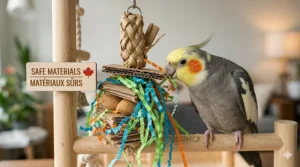
Setting Up a Paper Shredding Station: Practical Tips for Canadian Homes
Location Strategy for Mess Management
Paper shredding creates debris—there’s no avoiding it, only managing it. Position shredding toys above easy-to-clean surfaces rather than carpet or upholstery. Many Canadian owners use shower curtain mats or waterproof office chair mats beneath cages, creating a defined cleanup zone. During winter when windows are sealed and houses are dry, paper debris becomes staticky and clings to fabrics; weekly vacuuming becomes essential. Consider dedicating one area of the cage as the “destruction zone” with paper toys concentrated there, keeping perching and feeding areas separate. This natural zoning helps with both cleanup and teaching your bird where active play happens versus calm resting.
Rotation Schedule for Maximum Engagement
Introduce one new paper toy every 10-14 days while removing one older toy, maintaining 2-3 active shredding options at any time. This rotation prevents habituation while avoiding overwhelm. During Canadian winters when birds spend more cage time, slightly accelerate rotation to every 7-10 days to compensate for increased boredom potential. Keep removed toys in a closet for 4-6 weeks before reintroducing them—the novelty value partially resets, extending toy lifespan significantly. Track rotation in a simple calendar app; consistency matters more than specific timing.
Integration with Foraging Training
Don’t just hang paper toys and hope for the best—actively teach foraging behaviour. Start by loosely stuffing treats between paper layers where they’re visible, gradually making them more hidden as your cockatiel understands the concept. This transforms a simple toy into a cognitive challenge that can occupy 30-45 minutes versus 5-10 minutes of basic shredding. For Canadian owners dealing with birds experiencing seasonal affective behaviour during dark winter months, this extended engagement becomes therapeutic beyond mere enrichment.
Seasonal Adjustments for Canadian Climate
Summer (May-August): Paper toys dry out less quickly; you can use thinner papers that crinkle satisfyingly. Position away from direct window sunlight which can fade colours and make paper brittle.
Fall (September-November): Transition period; introduce heartier paper types as heating systems start. Good time to stock up on refill materials before winter shipping uncertainties.
Winter (December-March): Paper becomes very dry; occasional light misting helps maintain texture. Increased indoor time means faster toy destruction—budget accordingly. Consider placing humidifiers near bird areas to prevent paper from becoming dust-like.
Spring (April-May): Natural light increases stimulate activity; birds may engage more intensely with toys. Watch for aggressive shredding that could indicate breeding hormones—adjust toy types if needed to prevent nesting behaviours you can’t support.
Safety Inspection Checklist: Weekly Maintenance for Canadian Bird Owners
Even the safest toy becomes dangerous when worn. Implement this weekly 5-minute inspection routine:
Visual Inspection:
- ✅ Check all rope for fraying beyond 2-3 cm or loose threads that could tangle
- ✅ Verify metal components show no flaking, rust, or sharp edges
- ✅ Ensure paper hasn’t become excessively soiled or moldy (common if bird drinks from toy area)
- ✅ Confirm hanging mechanisms are secure with no gaps developing
- ✅ Look for accumulation of dust or debris in hard-to-reach toy crevices
Functional Testing:
- ✅ Gently pull paper materials to verify they’re still properly secured
- ✅ Shake toy to identify any loose components that could detach and present choking hazards
- ✅ Test attachment points to cage bars—thermal expansion from heating can loosen connections
- ✅ Verify wooden or bamboo components haven’t splintered into sharp points
Replacement Criteria: Replace any toy immediately if you observe:
- Metal showing zinc coating breakdown (white powder or flaking)
- Rope with individual strands separated beyond repair
- Wood splintered into pieces smaller than 1 cm (choking risk)
- Mold or mildew growth (appears as dark spots or musty smell)
- Structural failure where components could trap beak, feet, or neck
Canadian climate creates specific inspection priorities: forced-air heating dries materials rapidly, potentially causing premature brittleness that wouldn’t occur in more humid environments. What might be a safe 6-week-old toy in coastal Vancouver could become hazardous at 4 weeks in dry Calgary or Winnipeg. Adjust replacement timelines based on your specific indoor humidity levels.
Budget Planning: The True Cost of Paper Shredding Toys in Canada
Initial Setup Investment (First 3 Months):
- 2 refillable toys: $35-50 CAD
- 1 variety pack for testing preferences: $15-25 CAD
- Backup refill materials: $10-15 CAD
- Total: $60-90 CAD
Ongoing Maintenance (Quarterly):
- Refill materials for existing toys: $10-20 CAD
- 1 new rotation toy: $15-25 CAD
- Replacement of 1 worn non-refillable: $12-18 CAD
- Total: $37-63 CAD per quarter or approximately $12-21 CAD monthly
Annual Budget Comparison:
Budget Approach (disposable toys): $144-252 CAD annually Mid-Range Approach (mix of refillable and disposable): $108-180 CAD annually Premium Approach (primarily refillable systems): $84-144 CAD annually
The math clearly favours investing in refillable systems upfront despite higher initial costs. Over a cockatiel’s 15-20 year lifespan, the savings become substantial—potentially $1,000+ CAD compared to constant disposable purchases. Factor in shipping costs and delays, and refillable options become even more compelling for Canadian buyers. However, this assumes you maintain toys properly; neglected refillable toys that become soiled or damaged lose their value advantage.
Pro tip for Canadian budget optimization: Buy refillable toy frames during Amazon.ca sales (Prime Day, Black Friday, Boxing Day) when prices drop 20-30%. Stock up on refill materials from pet stores during their quarterly clearance events. This strategic purchasing can reduce annual costs by an additional 15-20%.
Frequently Asked Questions
❓ Can I make my own paper shredding toys at home to save money?
❓ How do I know if my cockatiel is actually benefiting from paper toys versus just making a mess?
❓ Are there any risks of paper ingestion I should worry about with cockatiels?
❓ Will paper toys work for older cockatiels or only younger birds?
❓ How can I prevent my cockatiel from getting bored with paper toys too quickly?
Conclusion: Investing in Your Cockatiel’s Mental Wellness Through Quality Enrichment
Paper shredding toys aren’t frivolous accessories—they’re essential tools that address your cockatiel’s deep-rooted psychological needs for foraging, manipulation, and destruction. Every shredded piece of paper represents your bird engaging in behaviours their wild ancestors performed for survival, behaviours that don’t simply disappear because we’ve brought them indoors. The Canadian reality of extended indoor seasons makes this enrichment even more critical; we’re asking our cockatiels to thrive in temperature-controlled environments with minimal environmental variation for 6-8 months annually. Quality paper toys bridge that gap between our homes and the Australian grasslands where their instincts evolved.
The products available on Amazon.ca offer solid options across budget ranges, from the economical BBjinronjy starter toy to the comprehensive MEWTOGO refillable system. The key is matching toy characteristics to your specific situation: your cockatiel’s age and temperament, your budget and maintenance capacity, and your living environment. A $60 CAD investment in proper enrichment toys can prevent thousands in veterinary bills addressing feather plucking, obesity, or depression-related illnesses. More importantly, it ensures the bird sharing your home experiences genuine contentment rather than mere survival.
As you implement these recommendations, remember that consistency matters more than perfection. A simple paper toy replaced regularly outperforms an expensive complex toy introduced once then forgotten. Pay attention to what your individual bird enjoys—they’ll tell you through their behaviour what works. Canadian bird ownership comes with unique challenges our climate creates, but also unique opportunities: our resourcefulness in long winters, our appreciation for nature during brief summers, and our commitment to proper care despite harsh conditions. Apply that same conscientiousness to enrichment, and your cockatiel will reward you with years of healthy, joyful companionship.
Start small, observe carefully, adjust based on results, and trust that every moment your cockatiel spends engaged with appropriate paper shredding is a moment they’re not developing behavioural problems. The investment pays dividends in their quality of life and the depth of bond you’ll share.
Recommended for You
- 7 Best Destructible Bird Toys for Macaws Canada 2026
- Safe Wood Chew Toys for Parrots: 7 Top Picks Canada 2026
- 7 Best Food Puzzle Toys for Bored Parrots in Canada 2026
Disclaimer: This article contains affiliate links. As an Amazon Associate, I earn from qualifying purchases. If you purchase products through these links, we may earn a small commission at no additional cost to you.
✨ Found this helpful? Share it with your friends! 💬🤗
