
In This Article
You’ve just brought home a gorgeous green-cheeked conure or a sassy cockatiel — congratulations! Now comes the fun part: filling that cage with toys. You browse Amazon.ca and you’re immediately hit with two very different worlds: rustle-y seagrass balls and untreated wood on one side, and a dazzling rainbow of plastic rings, painted beads, and shiny chains on the other. Which do you choose?
The debate around organic bird toys vs conventional is more than just an aesthetic preference — it touches on your bird’s health, longevity, and day-to-day wellbeing. In Canada, where discerning pet owners increasingly scrutinize ingredient lists and material sources, the shift toward chemical-free bird products and natural material safety has been noticeable in what sells on Amazon.ca over the past few years.
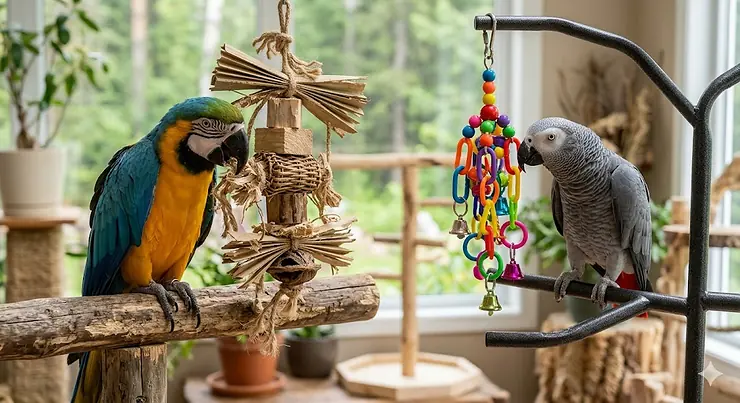
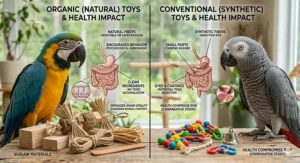
What exactly does “organic” mean in the context of bird toys? For the purposes of this guide, organic bird toys vs conventional comes down to this: organic or natural bird toys use untreated, undyed, pesticide-free materials — think balsa wood, seagrass, palm leaves, cork, and hemp rope — while conventional toys typically incorporate synthetic plastics, chemical dyes, galvanized metal hardware, and treated woods. It’s a distinction that, as we’ll explore below, can literally be a matter of life and death for your feathered companion.
I’ve spent considerable time researching what’s actually available on Amazon.ca in 2026, cross-referencing with avian veterinarian guidance, and sifting through Canadian buyer feedback. This guide is the result — an honest, comprehensive comparison of the seven best products available to Canadians right now, alongside practical advice rooted in real-world bird ownership.
Quick Comparison: Organic Bird Toys vs Conventional at a Glance
| Feature | Organic / Natural Toys | Conventional Toys |
|---|---|---|
| Primary Materials | Balsa, seagrass, hemp, palm, cork | PVC plastic, galvanized metal, treated wood |
| Dye Safety | Food-grade or dye-free | Often synthetic; dye type varies |
| Heavy Metal Risk | Very low | Moderate to high (zinc, lead in cheap hardware) |
| Enrichment Type | Shredding, foraging, chewing | Chewing, swinging, puzzle |
| Environmental Impact | Biodegradable, low-waste | Non-biodegradable plastic waste |
| Price Range (CAD) | $10–$35 range | $8–$50+ range |
| Best For | All birds; especially chewers & foragers | Durable birds needing long-lasting play |
| Amazon.ca Availability | ✅ Wide selection | ✅ Wide selection |
Looking at this comparison, the case for natural toys becomes compelling even before you dive into the specifics. Organic options win clearly on material safety, and the price gap is narrower than most Canadian buyers expect — you don’t need to spend significantly more to protect your bird. That said, conventional toys aren’t all bad; a well-made acrylic or stainless steel toy from a reputable brand can be perfectly safe. The problem, as we’ll explore throughout this guide, is that not all conventional toys are well-made.
💬 Just one click — help others make better buying decisions too! 😊
✨ Don’t Miss These Exclusive Deals!
🔍 Take your bird’s enrichment to the next level with these carefully selected natural and vet-approved toys. Click any highlighted product to check current pricing and availability on Amazon.ca. These choices will help you create a safe, stimulating environment your feathered friend will absolutely love!
Top 7 Organic and Natural Bird Toys on Amazon.ca: Expert Analysis
1. VildrooHowl Natural Bird Foraging Box Toy
If you want one toy that hits three instincts at once — chewing, shredding, and foraging — VildrooHowl’s natural foraging box is where I’d start. This interactive chewing and shredding kit is built from corn husk, untreated vine, natural wood, and leather cord, combining textures that replicate what a bird would encounter in the wild.
The practical significance here is real: a bird that can shred, forage, and gnaw at its own pace is a bird that’s mentally occupied for hours rather than minutes. Canadian bird owners living in apartments — think condos in Vancouver, Toronto, or Calgary — where their birds spend most of the day inside will find this toy particularly valuable for reducing boredom-driven feather plucking. The corn husk and vine materials are completely biodegradable, which also means replacement is guilt-free.
Customer feedback from Canadian buyers highlights how quickly birds take to the varied textures. The leather cord is vegetable-tanned (key — avoid chrome-tanned leather, which contains hexavalent chromium), meaning it’s safe even when chewed through. The only mild drawback is mess — this toy is designed to be destroyed, so daily spot-cleaning of the cage floor is part of the deal.
✅ Uses natural, pesticide-free materials
✅ Engages foraging, chewing, and shredding instincts simultaneously
✅ Leather cord is vegetable-tanned and bird-safe
❌ Creates significant mess as intended — not ideal for low-maintenance setups
❌ Not suitable for large destructive birds like macaws (better for small to medium species)
Price range: around $15–$25 CAD — excellent value for the enrichment it provides.
2. KATUMO Bird Toys Seagrass Mat Foraging Wall
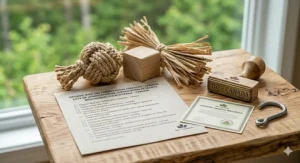
KATUMO has built a solid reputation on Amazon.ca for natural seagrass and grass mat toys, and their foraging wall toy is the standout. Made from tightly woven seagrass, chewy bamboo, and nut pieces, with edible food-grade pigments for colour, this toy functions as both a shredding target and a foraging challenge.
What most Canadian buyers overlook about this toy is the cognitive workout it provides. Birds don’t just chew on it — they problem-solve, picking apart the weave to reach hidden textures and treat pockets you can stuff yourself. For cockatiels, conures, lovebirds, and parakeets, this level of engagement is genuinely enriching in ways a simple plastic swing simply isn’t. The food-grade dye detail matters enormously: it means the vivid colours that attract your bird to the toy aren’t coming from synthetic inks that could leach during extended chewing.
Canadian buyers note this toy holds up reasonably well even when a bird attacks it enthusiastically, and that it can be re-stuffed with dried herbs or small treats to extend its lifespan. Ships to all Canadian provinces via Amazon.ca, including Prime-eligible delivery.
✅ Food-grade dyes — genuinely non-toxic colouring
✅ Multi-texture design for extended cognitive enrichment
✅ Re-stuffable for ongoing foraging stimulation
❌ Medium-sized birds may demolish it faster than expected
❌ Natural seagrass can retain moisture — monitor in humid environments
Price range: $12–$22 CAD — one of the best value natural foraging options on Amazon.ca.
3. Bissap Bird Chew Toys 7-Pack Natural Wood Parrot Set
Bissap’s 7-pack of natural wood chew toys is one of the most frequently appearing sets in Amazon.ca’s bird toy bestsellers, and for good reason: it offers variety, affordability, and verified non-toxic materials in a single purchase. The set includes hanging cage toys and perch stands made from natural wood pieces coloured with edible pigments.
The spec sheet says “natural wood,” and here’s what that actually means for your bird: no formaldehyde-based adhesives, no synthetic varnish, no treated lumber. The woods used are consistent with avian-safe species — think pine and birch rather than cedar or cherry, both of which can be toxic to birds. For Canadian buyers, a 7-pack makes particular sense because avian veterinarians consistently recommend rotating toys every 5–7 days to prevent habituation and maintain novelty. With seven pieces in one purchase, you have a full rotation covered.
Canadian buyer reviews highlight durability as better-than-expected for the price, though larger conures and ringnecks will chew through individual pieces within a few days — which is actually ideal for beak health and mental stimulation.
✅ 7-piece variety provides a full toy rotation without repeat purchasing
✅ Natural wood with food-grade dyes — no hidden chemical treatments
✅ Versatile sizing suits cockatiels, conures, lovebirds, and parakeets
❌ Not suitable for large or “heavy chewer” species like Amazons or cockatoos
❌ No foraging element — purely a chew and perch toy set
Price range: $15–$28 CAD for the full set — breaks down to under $5 per toy.
4. Bird Toys for Large Birds — Natural Corn Cob and Loofah Slices Chew Toy
Here’s the toy that bridges the gap between organic enrichment and large-bird durability. This colourful set uses natural corn cob pieces and dried loofah slices — both genuinely organic, agricultural by-products — as the primary chew material, making it a standout chemical-free bird product for bigger species often underserved by the natural toy market.
African Greys, Amazon parrots, cockatoos, and macaws need toys that can handle serious beak pressure. Most natural toys in this category fail quickly — but corn cob has a satisfying density that keeps large birds occupied far longer than balsa or seagrass. The loofah adds a fibrous shredding texture that mimics stripping bark, a natural foraging behaviour in wild parrots. The colourful presentation helps attract initially reluctant birds (large parrots can be toy-shy with unfamiliar textures).
Canadian buyers with African Greys report this toy lasting one to two weeks under daily use — a solid return for the investment, especially compared to conventional plastic toys that large birds can sometimes demolish in under an hour.
✅ Genuinely natural materials (corn cob + loofah) — no synthetic binders
✅ Built for large birds that destroy smaller natural toys instantly
✅ Foraging-stimulating fibrous shred texture mimics wild behaviour
❌ The colourful appearance uses dyes — verify food-grade status on current listings
❌ Corn cob pieces can accumulate bacteria if caged bird soils them — inspect daily
Price range: around $18–$30 CAD — an investment that pays off in enrichment hours for large species.
5. Bird Seagrass Mat Hammock — 76 cm × 18 cm Climbing & Chew Mat
Sometimes the best toy isn’t a toy at all — it’s a habitat upgrade. This large-format seagrass mat functions simultaneously as a climbing surface, chewing target, and resting hammock, offering passive and active enrichment without demanding your bird’s constant focused attention.
The practical value here lies in how birds actually use it. A bird that’s tired from playing, or simply wants ambient tactile stimulation, can chew lazily at seagrass fibres while perching. This is the bird equivalent of fidgeting — low-effort, stress-reducing sensory engagement. Avian behaviourists increasingly emphasize that passive enrichment like this reduces the cortisol baseline in captive birds. For Canadian bird owners who work long hours and can’t always actively engage their pets, a seagrass mat ensures there’s always something worth doing in the cage.
The all-natural woven grass construction contains no metal hardware of concern, no chemical treatments, and no synthetic binders. It ships flat and hangs easily from standard cage bars. Great for cockatiels, conures, budgies, and even smaller ringnecks.
✅ Passive + active enrichment in one accessory
✅ Zero chemical treatments — pure natural seagrass
✅ Large surface area suits multiple birds in shared cages
❌ Natural fibres absorb moisture — requires regular replacement in humid climates
❌ Very determined chewers will reduce it to bare hooks faster than expected
Price range: $14–$24 CAD — one of the most durable natural options in this price tier.
6. ROOJUNE Natural Bird Toys Foraging Set for Small and Medium Birds
ROOJUNE’s foraging set occupies a clever niche on Amazon.ca — it’s specifically designed around the cognitive challenge of foraging rather than just the physical act of chewing. The set incorporates natural wood, woven elements, and textured pieces that encourage investigative behaviour, helping birds develop problem-solving habits that reduce boredom-related issues like screaming and feather destruction.
What sets this apart from similar natural toy bundles is the attention to assembly safety. The hanging attachments use stainless steel hooks — not galvanized zinc links — which matters significantly for health-conscious Canadian buyers. Zinc toxicity in parrots is a genuine and well-documented veterinary concern (more on this below), and a toy built from organic seagrass but attached with zinc-coated hardware defeats the purpose entirely. ROOJUNE avoids this contradiction.
Canadian buyer reviews specifically praise this set for birds that were previously uninterested in toys — the varied natural textures tend to re-engage even toy-shy birds that have become habituated to their current cage contents.
✅ Stainless steel hardware avoids zinc toxicity risk
✅ Cognitive foraging design rather than passive chew-only construction
✅ Good for re-engaging toy-shy or habituated birds
❌ Smaller in scale — medium-sized conures will exhaust it within a week
❌ Individual pieces vary in quality within the same set
Price range: $16–$26 CAD — strong value for the hardware quality and cognitive design.
7. Bird Parrot Chewing Toys — Multicoloured Natural Wooden Blocks Tearing Set
Rounding out this list is a versatile multicoloured natural wooden block tearing set suitable for African Greys, Amazons, macaws, and cockatoos. Unlike the smaller-bird-focused entries above, this set is built to survive heavy beak pressure while still maintaining natural material integrity — the blocks use edible food-grade colouring to achieve their attractive multicolour appearance.
The key insight here is that “conventional-looking” doesn’t have to mean “conventional in material composition.” This toy looks like a classic brightly-coloured bird toy, which is good because reluctant birds are more easily introduced to natural materials when they don’t look dramatically different from what they’re used to. Think of it as a gateway toy — it brings in birds accustomed to plastic and painted options while quietly upgrading them to a safer material baseline.
For large-bird owners in Canada, this toy’s wooden block construction also provides excellent beak conditioning — essential for parrots whose beaks require wear to prevent overgrowth. The tearing action replicates stripping bark in the wild, fulfilling an instinct that caged birds rarely get to express naturally.
✅ Designed for large and heavy-chewing species
✅ Familiar visual appeal helps transition toy-resistant birds to natural materials
✅ Beak-conditioning block density is appropriate for Amazons and Greys
❌ Coloured blocks — always verify food-grade dye status before purchase
❌ Larger birds may go through this set quickly; buy in multiples
Price range: around $18–$35 CAD — worth the investment for large birds whose chewing velocity destroys cheaper options in days.
How Organic Bird Toys vs Conventional Actually Perform: A Canadian Owner’s Perspective
Let me walk you through three realistic Canadian bird-owner scenarios and match each to the right approach.
Scenario 1 — Maria in a Toronto Condo, Two Cockatiels Maria works from home four days a week but leaves for eight-hour stretches on Fridays. Her two cockatiels, Bruno and Cleo, start screaming and feather-picking when under-stimulated. Maria’s ideal solution isn’t a single impressive toy — it’s a rotation of small, varied natural toys that offer something new every five days. The KATUMO seagrass mat wall provides passive enrichment throughout the day, the VildrooHowl foraging box keeps them busy during her Friday absence, and the Bissap 7-pack gives her a full two-week rotation without repeat purchasing. Total investment: around $55–$65 CAD. Result: Bruno and Cleo have eight hours of unprompted independent engagement.
Scenario 2 — David in Suburban Calgary, One African Grey David’s Grey, Einstein, is a notorious destroyer of conventional plastic toys. Einstein loses interest in new toys within 24 hours and has shown anxiety-driven plucking behaviours. David needs cognitively complex, physically durable natural options. The corn cob and loofah large-bird toy provides destruction-satisfying density, the ROOJUNE foraging set keeps Einstein problem-solving, and the multicoloured wooden block tearing set offers familiar visual appeal as a bridge toy. David also needs to rotate frequently — Greys are among the most intelligent bird species, requiring novelty to maintain psychological health. Total investment: around $75 CAD for a two-month rotation.
Scenario 3 — Sophie in Charlottetown, PEI, Three Budgies Sophie lives in a region where Amazon.ca delivery can take an extra day or two, and she wants durable toys that don’t need replacing weekly. The seagrass mat hammock is her best bet for longevity and passive enrichment, supplemented by one or two Bissap wood perch toys rotated on alternating weeks. For Sophie, shipping economics matter — consolidating to one larger order above $35 CAD unlocks free shipping on Amazon.ca, making the seagrass mat plus wood toy bundle a smart consolidated purchase.
The Serious Health Case for Chemical-Free Bird Products
This isn’t fear-mongering — it’s avian medicine. Veterinary literature is unambiguous: heavy metal toxicity is one of the most common preventable causes of illness and death in pet parrots. According to veterinary toxicology research published by Today’s Veterinary Practice, sources of zinc exposure in documented avian toxicoses include galvanized wire, cage accessories, hardware, and metallic toys. The clinical signs are alarming — lethargy, seizures, passive regurgitation, feather-picking, and in severe cases, death.
What does this mean for toy shopping? Cheap conventional toys assembled with galvanized (zinc-coated) chain links and hardware are a direct exposure risk for any bird that does what birds are designed to do: chew everything within reach. A toy made from natural seagrass and hung on a stainless steel hook eliminates this risk entirely.
The Hagen Avicultural Research Institute (HARI), a Canadian avian research institution based in Montreal, specifically identifies welded wire toys and cage accessories containing galvanized metal parts as the most common sources of significant zinc exposure in pet birds. This is a Canadian research body telling Canadian bird owners to watch their hardware — and yet many popular conventional toys on the market today still use galvanized components.
Beyond metals, the issue of synthetic chemical dyes warrants attention. Best Friends Animal Society’s bird toy safety guide notes that wood in bird toys must be untreated, or dyes used must be verified non-toxic — a standard that not all budget conventional toys reliably meet.
Canada’s own Health Canada oversees the Canada Consumer Product Safety Act and associated Toy Regulations, which set mandatory safety requirements including toxicological hazards. While these apply specifically to children’s toys, the underlying chemistry is directly relevant: if a dye or chemical treatment is hazardous enough to regulate in products children might mouth, it warrants equal caution in products birds will actively chew and ingest. The takeaway is simple: chemical-free bird products aren’t a premium-tier luxury — they’re a baseline safety standard.
✨ Don’t Miss These Natural Bird Toy Deals!
🔍 Your bird deserves safe, enriching play every single day. Click any highlighted product above to check current pricing and Prime availability on Amazon.ca. Canadian orders over $35 CAD often qualify for free shipping — consider bundling two or three toys for a complete enrichment rotation!
How to Choose Organic Bird Toys vs Conventional in Canada: 7-Step Framework
Choosing between organic bird toys vs conventional doesn’t have to be confusing. Follow this decision sequence before every purchase.
1. Confirm your bird’s size and chewing strength. A budgie and a macaw are not interchangeable toy consumers. Size-matching isn’t just about fit — it’s about safety. A cockatiel toy with small parts becomes a choking and entanglement hazard for a large bird. Always check the manufacturer’s species and size guidance.
2. Identify the primary enrichment need. Is your bird a chewer, a forager, a climber, or a shredder? Organic toys tend to shine in chewing and foraging categories. If your bird primarily needs a swinging perch or mirror play, a conventional well-made acrylic or stainless steel option may be equally appropriate.
3. Check all hardware, not just the toy body. This is the step most buyers skip. A natural sisal rope toy with a zinc-plated bell or galvanized chain link is not a safe natural toy — it’s a natural toy with a dangerous attachment. Look for stainless steel hooks and quick links specifically.
4. Verify dye type. When a natural toy is coloured, the label should state “food-grade” or “edible” dyes. If no dye information is provided, contact the seller before purchasing. Reputable brands will disclose this readily.
5. Research the wood species. Safe avian wood species include pine, balsa, birch, basswood, maple, and manzanita. Toxic species include cedar, oak, cherry, and plywood/MDF bonded with formaldehyde adhesives. Most Amazon.ca listings for natural toys specify the wood type — if they don’t, ask.
6. Consider your Canadian climate. In humid coastal climates like Vancouver Island or the Maritimes, natural materials like seagrass and palm can absorb moisture and develop mould faster than in drier Prairie cities. In these regions, rotate natural toys more frequently and inspect them weekly for any moisture retention.
7. Price in CAD and shipping realities. Most natural bird toys on Amazon.ca fall in the $12–$35 CAD range. For Prime members, free shipping applies to most orders. Non-Prime buyers should target the $35+ threshold for free standard shipping. For northern and remote communities, add 3–7 business days to estimated delivery.
Common Mistakes Canadian Bird Owners Make When Buying Toys
Mistake 1: Trusting “natural” labelling without verifying the hardware. “Natural wood toy” on the product title doesn’t guarantee the associated metal rings, chain links, or bells are equally safe. Many budget toys combine natural bodies with galvanized zinc fittings — the precise combination that makes zinc toxicity most likely. Always look for stainless steel hardware specifications.
Mistake 2: Buying one type of toy and wondering why the bird loses interest. Birds need novelty. An intelligent grey that has the same three toys in rotation for three months isn’t enriched — it’s habituated. Avian veterinarians consistently recommend a minimum rotation of 8–12 toys cycled weekly. Natural toys support this economically: you can buy several small natural foraging pieces for the price of one conventional puzzle toy.
Mistake 3: Dismissing conventional toys entirely. This is the overcorrection trap. A food-safe acrylic foraging puzzle or a well-made stainless steel swing isn’t dangerous — it’s a perfectly valid enrichment option. The problem is specifically cheap galvanized hardware, unknown dye chemistry, and treated woods. A premium conventional toy from a known brand often meets all the same material safety standards as a natural toy.
Mistake 4: Ignoring bird size in toy design. Canadian buyers often purchase toys that are visually appealing rather than species-appropriate. A medium conure toy listed for cockatiels may have openings large enough for a conure’s head to become entrapped. Always cross-reference species compatibility, not just general “small/medium/large” labels.
Mistake 5: Overlooking Canadian warranty and return policies. Unlike U.S. buyers, Canadians purchasing through Amazon.ca benefit from Canadian consumer protection laws and cleaner return pathways. If a toy arrives with sharp metal burrs, suspicious chemical odour, or incorrect sizing, returning via Amazon.ca’s Canadian fulfilment network is generally straightforward.
Sustainable Toy Options and Eco-Friendly Parrot Accessories: The Bigger Picture
Here’s something that doesn’t get discussed enough in the bird toy space: the environmental cost of conventional plastic bird toys. A bird that destroys a plastic toy produces non-biodegradable waste. Multiply that across Canada’s estimated 1.5 million pet bird households, and the scale becomes significant.
Organic and natural bird toys built from palm leaves, seagrass, cork, and untreated wood are genuinely compostable — you can add shredded natural toy remnants to a backyard compost bin without concern. This matters for environmentally conscious Canadian pet owners who already prioritize sustainability in other areas of their lives.
Eco-friendly parrot accessories also extend beyond just the toy material. Stainless steel hardware, natural leather cord, and plant-based dyes round out a genuinely low-impact product. Some Canadian specialty stores, including Things for Wings based in Canada, have built their entire catalogue around this philosophy — offering balsa, pine, and natural fibre toys with zero synthetic inputs.
From a total-cost-of-ownership perspective, sustainable toy options in the $15–$25 CAD range often outlast the $8 budget conventional options when you account for replacement frequency. A natural seagrass mat lasts weeks; a cheap plastic toy that a determined conure hates might sit ignored in the cage indefinitely — waste in a different sense entirely.
Features That Actually Matter in Bird Toys (And Those That Don’t)
Features That Matter:
- 🌿 Material safety — non-toxic wood, food-grade dyes, stainless or nickel-plated hardware
- 🧠 Enrichment type match — does this toy serve your bird’s dominant instinct (foraging, chewing, climbing, socialising)?
- 📏 Species and size appropriateness — prevents entanglement, choking, and behavioural frustration
- 🔄 Replaceability and rotation — can you easily re-stock this toy type on Amazon.ca?
- 🧹 Cleanability — can you sanitise it weekly without destroying it?
Features That Don’t Matter Much:
- 💫 Number of pieces — more attachments doesn’t mean more enrichment; it often means more hardware risk
- 🎨 Colour intensity — bright synthetic colours attract human buyers, not necessarily birds; natural food-dyed colours are equally appealing to most species
- 💰 High price — there is no demonstrated correlation between price and safety in bird toys; some of the safest natural toys cost under $20 CAD
- 🏆 Brand fame — well-known pet brands don’t always have better material standards than smaller natural-focused makers
FAQ: Organic Bird Toys vs Conventional in Canada
❓ Are organic bird toys actually safer than conventional ones for Canadian parrots?
❓ What non-toxic bird toy materials should I look for on Amazon.ca?
❓ Can I find veterinarian recommended bird toys on Amazon.ca in Canada?
❓ Do eco-friendly parrot accessories cost more than conventional toys in Canada?
❓ Are there Canadian regulations on the materials used in pet bird toys?
Conclusion: Making the Smarter Choice for Your Canadian Bird in 2026
The organic bird toys vs conventional decision isn’t black-and-white. The real question is whether you’re choosing toys with intention — understanding what the materials are, what enrichment type your bird actually needs, and whether the hardware and dyes meet a reasonable safety standard.
For most Canadian bird owners, the practical answer in 2026 leans toward natural and organic options — not out of trend-following, but because the evidence around zinc toxicity, synthetic dye risks, and the genuine cognitive benefits of foraging-style enrichment is clear. The products on Amazon.ca have caught up: a strong selection of natural seagrass, untreated wood, palm, and cork toys is readily available, Prime-eligible, and reasonably priced in CAD.
Start with a rotation of three to five natural toys covering different enrichment types — a shredding toy, a foraging toy, and a passive climbing/chewing surface. Inspect toys weekly, replace hardware-compromised or soiled pieces promptly, and rotate the lineup every five to seven days to maintain novelty.
Your bird can’t tell you when a toy is making it sick — that’s your job as its guardian. Choose wisely, buy smart, and your feathered companion will reward you with the best possible indicator of good health: enthusiastic, happy play.
✨ Ready to Upgrade Your Bird’s Toy Box?
🔍 Browse the natural bird toys highlighted in this guide on Amazon.ca and give your parrot the chemical-free, enrichment-focused environment it deserves. Click any product name above to check current pricing, Prime eligibility, and Canadian shipping estimates. Happy shopping, Canada! 🇨🇦🦜
Recommended for You
- Best Bird Toy Starter Kit for New Owners in Canada 2026
- Bird Toy Subscription Box vs Individual Toys: 7 Best Picks in Canada 2026
- Best Cost-Effective Bird Enrichment: 7 Parrot Toys Under $30 CAD (2026)
Disclaimer: This article contains affiliate links. As an Amazon Associate, I earn from qualifying purchases. If you purchase products through these links, we may earn a small commission at no additional cost to you.
✨ Found this helpful? Share it with your fellow bird lovers! 💬🤗
